
Maintaining a consistent annual fire alarm testing schedule is essential for life safety and regulatory compliance. Regular inspections ensure your detection systems function correctly during emergencies, protecting occupants and property from unforeseen hazards. Establishing a routine prevents equipment failure and fulfills legal obligations for building owners. To help you organize your maintenance plan, below are some ready to use template.
Image cover: Annual Fire Alarm Inspection Calendar: Essential Testing Templates and Schedules
Letter Samples List
- Annual Fire Alarm Testing Schedule Notice Letter
- Property Management Fire Alarm Inspection Schedule Letter
- Tenant Notification Letter For Annual Fire Alarm Testing
- Mandatory Annual Fire Alarm Schedule Advisory Letter
- Building Fire Alarm System Testing Schedule Letter
- Commercial Property Fire Alarm Testing Notice Letter
- Residential Fire Alarm Annual Inspection Schedule Letter
- Upcoming Annual Fire Alarm Testing Informational Letter
- Property Wide Fire Alarm Testing Schedule Letter
- Routine Annual Fire Alarm Maintenance Schedule Letter
- Official Letter Regarding Annual Fire Alarm Testing Dates
- Fire Alarm Sounding And Testing Schedule Warning Letter
Annual Fire Alarm Testing Schedule Notice Letter
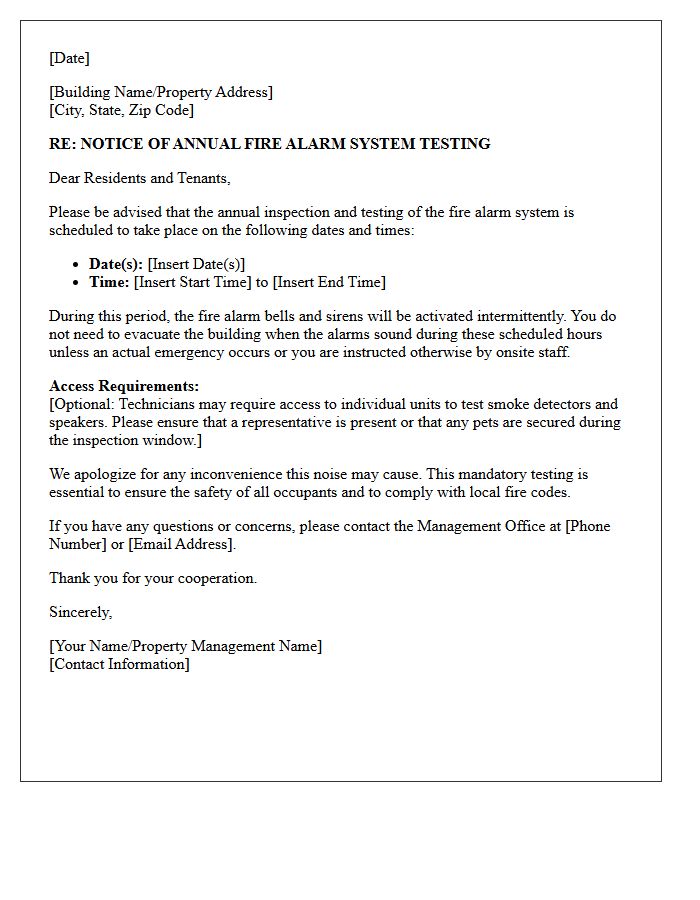
An Annual Fire Alarm Testing Schedule Notice Letter is a critical communication informing occupants of mandatory safety inspections. It must clearly state the date and time of the testing to ensure transparency and compliance. Residents should expect intermittent audible alarms and strobe light activations throughout the building. This process verifies that smoke detectors, pull stations, and notification systems function correctly during emergencies. Compliance with local fire codes is mandatory, and clear access to individual units may be required by technicians to ensure comprehensive property protection and life safety standards.
Property Management Fire Alarm Inspection Schedule Letter
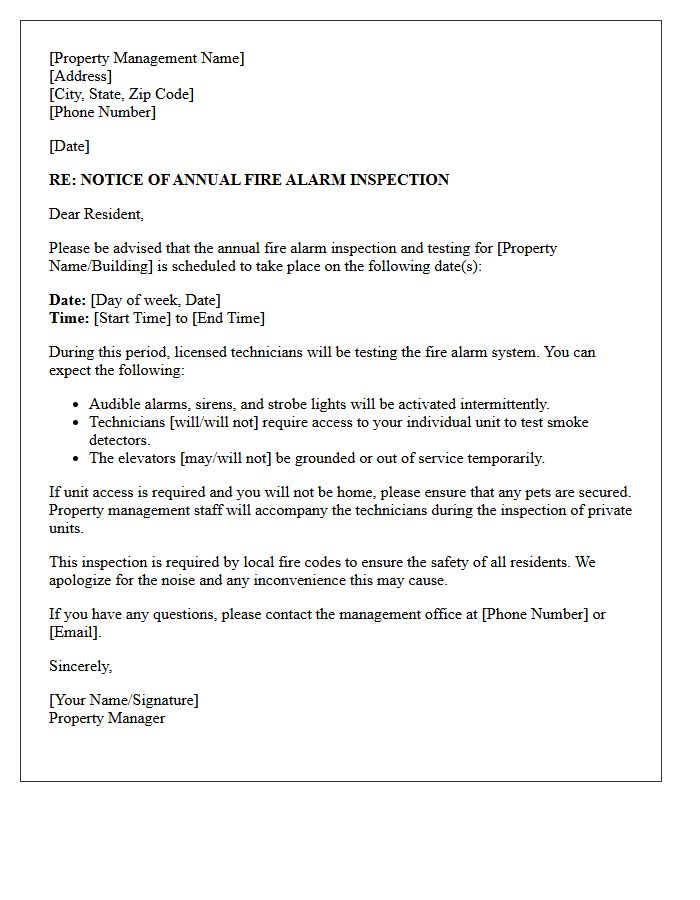
A property management fire alarm inspection schedule letter is a mandatory notice sent to tenants to ensure regulatory compliance with local fire codes. This document must clearly state the specific date and time of the upcoming testing to allow for unit access. Building managers use these letters to maintain life safety systems while minimizing resident disruption. Timely communication is essential, as functional alarms protect the entire community. Always include contact information for any rescheduling needs to guarantee that every smoke detector and notification device undergoes its essential annual certification.
Tenant Notification Letter For Annual Fire Alarm Testing
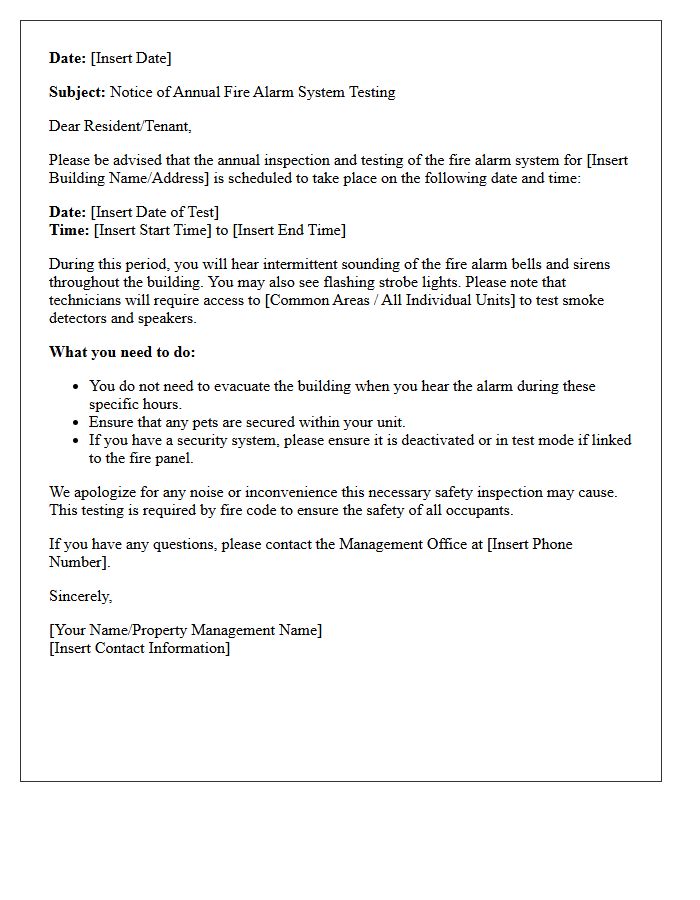
A Tenant Notification Letter is a mandatory document informing residents of upcoming annual fire alarm testing. It must clearly state the specific date and time window to ensure compliance and safety. This notice allows tenants to prepare for loud sirens, strobe lights, and potential unit access by technicians. Providing at least 24 to 48 hours notice is essential for legal transparency and minimizing distress. Clear communication ensures all occupants understand the testing is a routine procedure to verify the building's life safety systems are fully operational.
Mandatory Annual Fire Alarm Schedule Advisory Letter
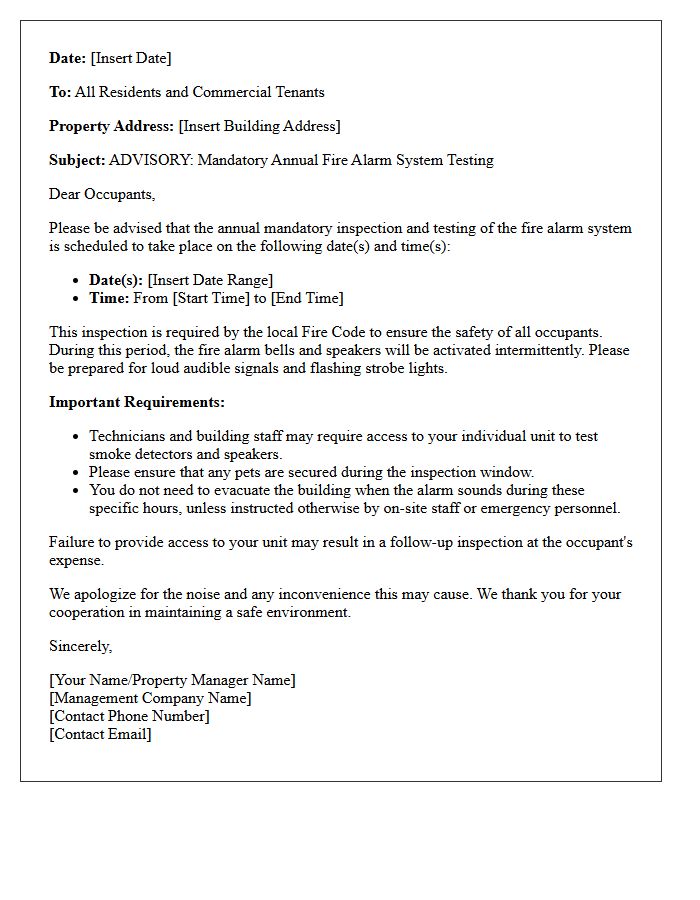
The Mandatory Annual Fire Alarm Schedule Advisory Letter is a critical legal notification informing tenants of upcoming safety inspections. It is essential for ensuring building compliance with local fire codes and verifying the operational integrity of detection systems. Property owners must distribute this notice in advance to grant technicians access to individual units. Failure to facilitate these mandated tests can compromise resident safety and result in significant regulatory penalties. Always prioritize these scheduled dates to maintain a secure living environment and ensure full life-safety system functionality throughout the premises.
Building Fire Alarm System Testing Schedule Letter
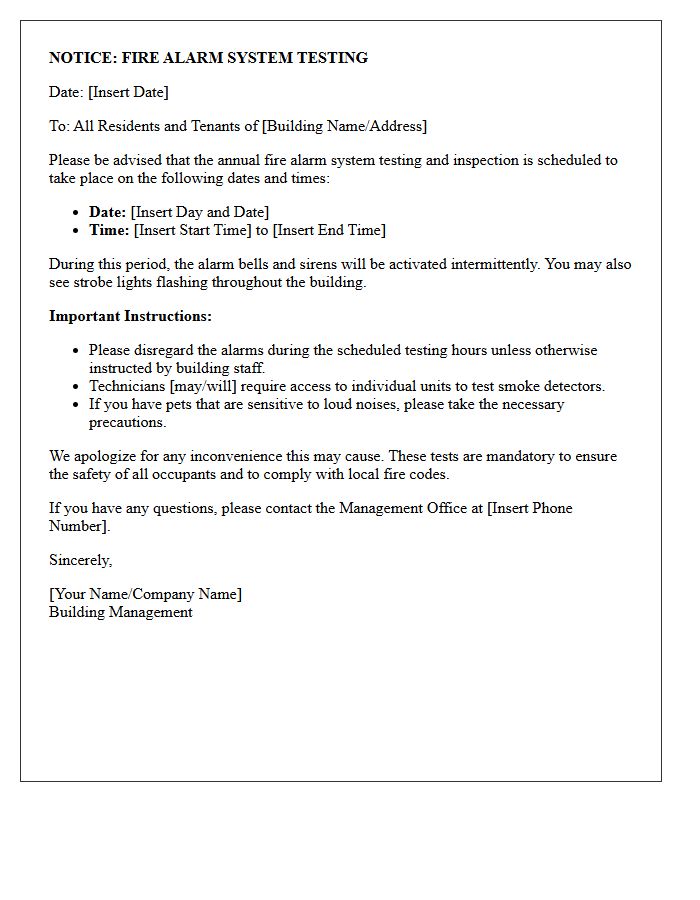
A Building Fire Alarm System Testing Schedule Letter is a critical notification informing occupants of upcoming safety inspections. It must clearly state the date and time of the functional testing to prevent panic during audible alarm activations. Property managers use this document to ensure compliance with local fire codes and to guarantee building-wide accessibility for technicians. Timely communication ensures resident safety, minimizes disruption, and confirms that all detection devices are operating correctly in accordance with legal safety standards.
Commercial Property Fire Alarm Testing Notice Letter
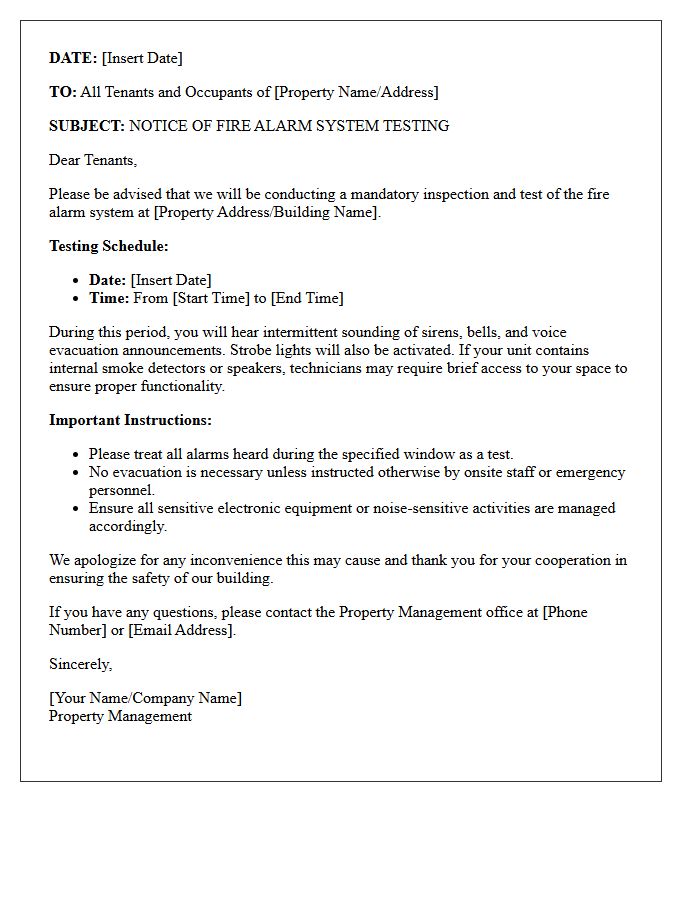
A Commercial Property Fire Alarm Testing Notice Letter is a formal document informing tenants of scheduled safety inspections. It must clearly state the date and time of testing to ensure legal compliance and minimize business disruption. Owners should emphasize that alarms may sound intermittently, advising occupants that no evacuation is necessary unless an actual emergency occurs. Providing a direct contact person for questions helps maintain transparency and safety standards within the building. Timely notification is essential to meet local fire codes and ensure the functional reliability of life-safety systems.
Residential Fire Alarm Annual Inspection Schedule Letter
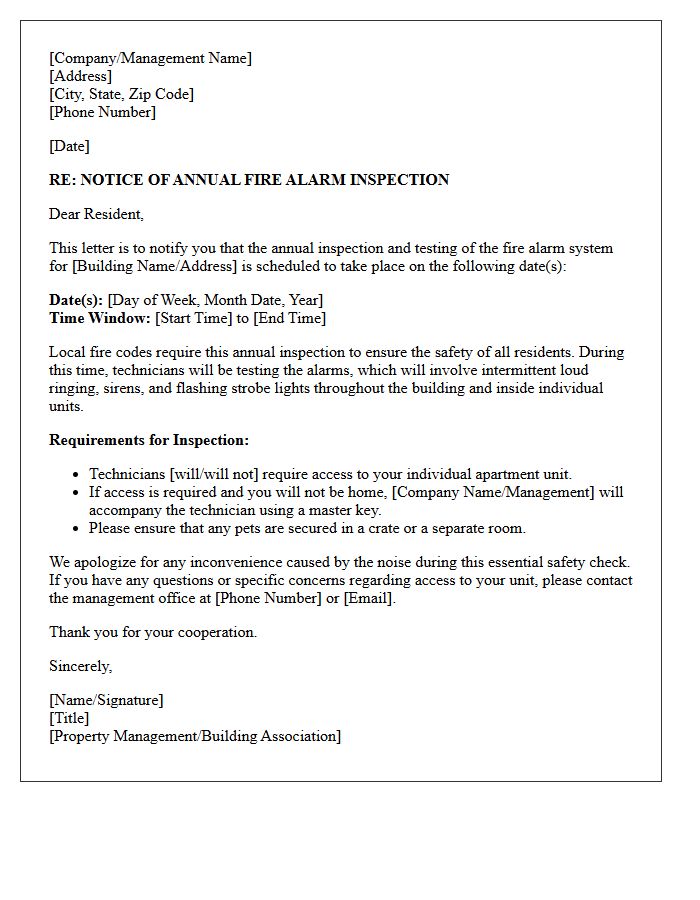
A residential fire alarm annual inspection schedule letter is a mandatory notification sent by property management to tenants. This formal document outlines the specific date and time for system testing to ensure compliance with local safety codes. It is essential for residents to provide clear access to smoke detectors and alarms within their units. Regular maintenance prevents equipment failure and enhances building safety. Keep this letter as a reference for scheduled safety inspections to avoid potential fines or re-inspection fees while ensuring the protection of all occupants and property.
Upcoming Annual Fire Alarm Testing Informational Letter
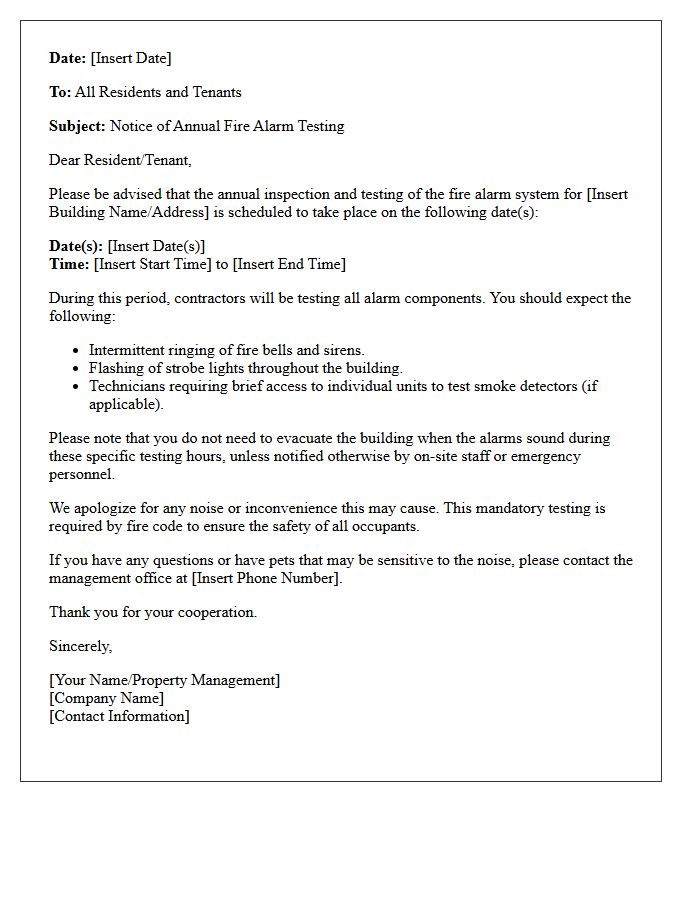
Our building's Annual Fire Alarm Testing is scheduled soon to ensure resident safety. This mandatory inspection involves testing smoke detectors, horns, and strobe lights within individual units and common areas. Residents should expect intermittent loud sirens and flashing lights during service hours. Please ensure technicians have access to your unit as required by local fire codes. This preventative maintenance verifies that all life-safety systems function correctly in an emergency. Thank you for your cooperation in maintaining a secure environment for everyone.
Property Wide Fire Alarm Testing Schedule Letter
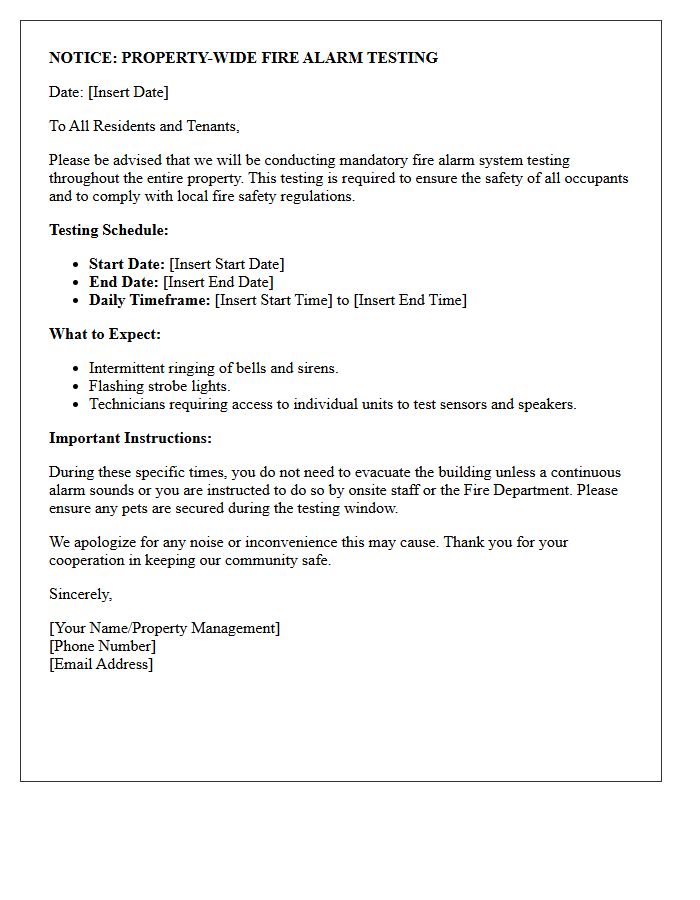
A property-wide fire alarm testing schedule letter is a critical notice informing residents of upcoming safety inspections. It outlines specific dates and times when alarms will sound, ensuring everyone is prepared for potential noise disruptions. Advance notification is essential for compliance and to prevent unnecessary panic during functional checks. Tenants should ensure clear access to smoke detectors and internal units as required by fire codes. Understanding this schedule helps maintain building security and verifies that life-saving equipment functions correctly during an emergency.
Routine Annual Fire Alarm Maintenance Schedule Letter
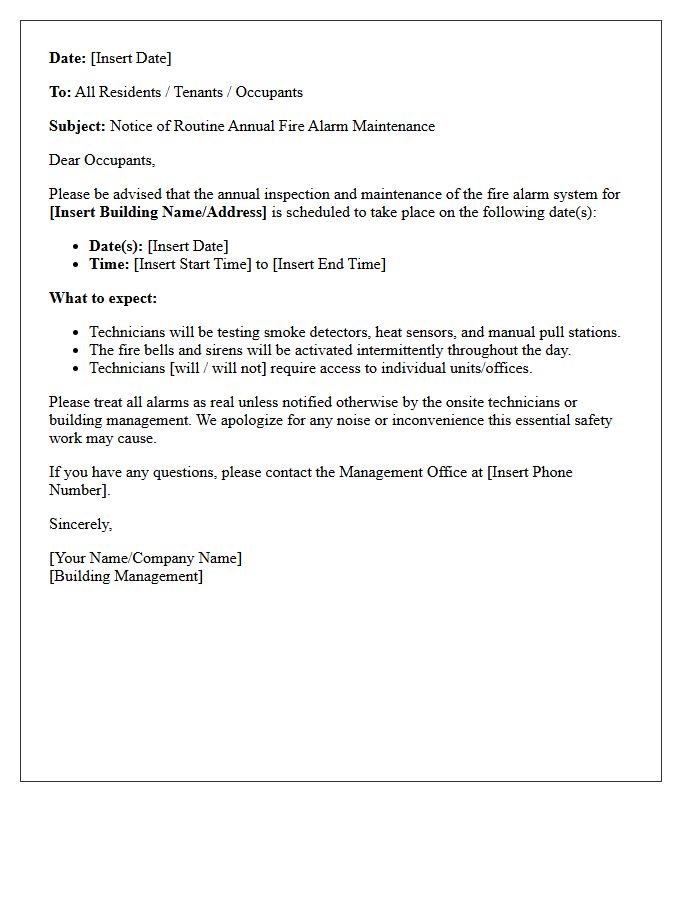
Property owners must distribute a Routine Annual Fire Alarm Maintenance Schedule Letter to notify occupants of mandatory safety inspections. This official notification ensures compliance with local fire codes and guarantees that detection systems, sirens, and strobe lights function correctly. The letter should clearly specify the date and time of testing to minimize disruption. Regular maintenance is essential for life safety, preventing false alarms, and maintaining insurance validity. Occupants must provide access to units, as professional technicians must verify that every device is operational to protect the entire building from fire hazards.
Official Letter Regarding Annual Fire Alarm Testing Dates
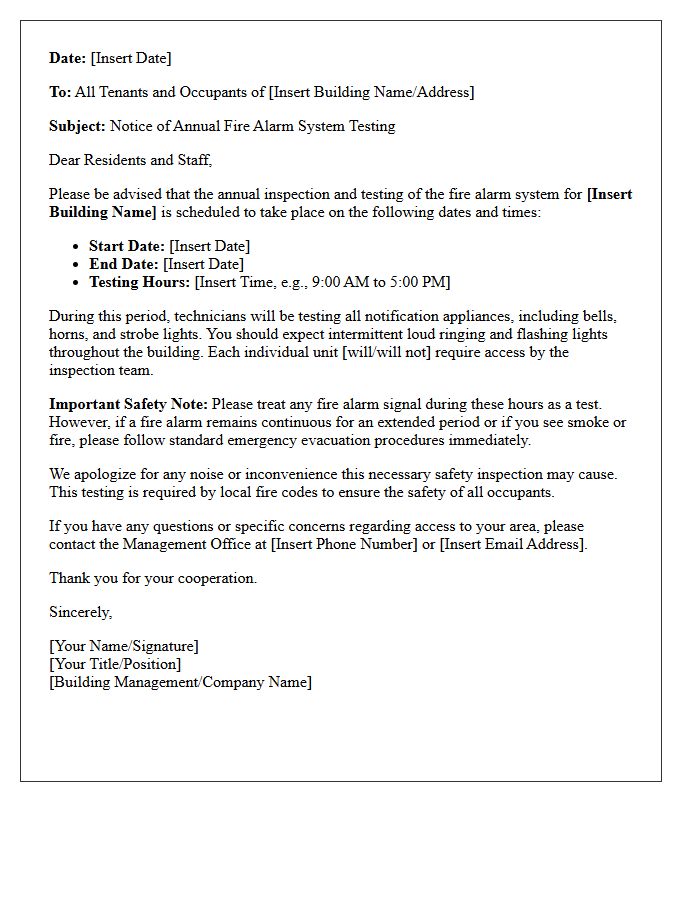
The Official Letter Regarding Annual Fire Alarm Testing Dates is a critical safety notice issued by building management. It specifies the mandatory inspection schedule to ensure life-safety systems function correctly. Residents and staff must be aware that technicians will access all units to test detectors and sirens. During these periods, audible alarms will sound intermittently throughout the facility. This proactive measure is essential for regulatory compliance and resident security. Please ensure pets are secured and clear paths are provided for inspectors during the designated testing windows.
Fire Alarm Sounding And Testing Schedule Warning Letter
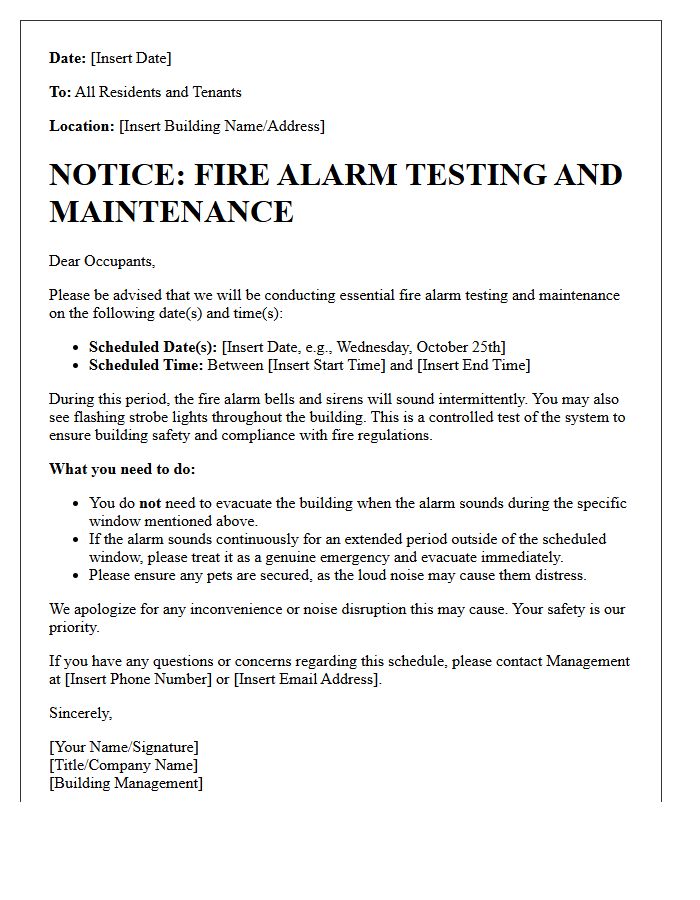
A Fire Alarm Warning Letter informs residents and staff about upcoming maintenance to ensure safety and compliance. It is crucial to highlight the scheduled date and time of the testing to prevent unnecessary panic or false emergency calls. The notice should clearly state whether building evacuation is required or if the sound is merely a momentary check. Clear communication reduces stress and ensures everyone understands the emergency procedures. Always verify that smoke detectors and notification appliances are fully operational during these mandatory safety inspections.
How often is annual fire alarm testing required by law?
According to NFPA 72 standards, commercial fire alarm systems must undergo a comprehensive functional inspection and test at least once every 12 months to ensure compliance with local building and fire codes.
What is included in a standard annual fire alarm inspection schedule?
The annual schedule includes testing smoke and heat detectors, checking pull stations, verifying audible and visual notification appliances, testing the control panel, and ensuring the emergency signal reaches the monitoring station.
Do I need to notify occupants before the annual fire alarm test begins?
Yes, building owners should provide at least 24 to 48 hours of notice to occupants and notify the monitoring company and local fire department to prevent false emergency dispatches during the testing window.
Can fire alarm testing be performed during normal business hours?
While testing can occur during business hours, it is often scheduled during "off-hours" or weekends to minimize disruption, as the process requires sounding loud sirens and flashing strobe lights throughout the facility.
What documentation is required after the annual fire alarm test is completed?
Upon completion, a certified technician must provide a formal Inspection and Status Report. This documentation must be kept on-site for fire marshal review to prove the system is operational and compliant with safety regulations.


Comments