
Managing overdue accounts requires clear communication and professional documentation. A Notice of Late Fee Assessment informs clients about penalties incurred due to delayed payments, helping maintain steady cash flow and encouraging timely settlements. This guide explains how to draft effective warnings while maintaining positive business relationships. To simplify your administrative tasks, below are some ready to use template options.

Image cover: Late Fee Assessment Notice: Professional Templates and Examples
Letter Samples List
- First Notice of Late Fee Assessment Letter
- Standard Property Management Late Fee Assessment Letter
- Residential Lease Late Rent Fee Assessment Letter
- Commercial Property Late Fee Assessment Letter
- Formal Notice of Late Fee Assessment Letter
- Tenant Notice of Late Fee Assessment Letter
- Notice of Late Fee Assessment and Grace Period Expiration Letter
- Overdue Rent and Late Fee Assessment Letter
- Notice of Outstanding Balance and Late Fee Assessment Letter
- Warning of Additional Late Fee Assessment Letter
- Monthly HOA Dues Late Fee Assessment Letter
- Final Notice of Late Fee Assessment Letter
First Notice of Late Fee Assessment Letter
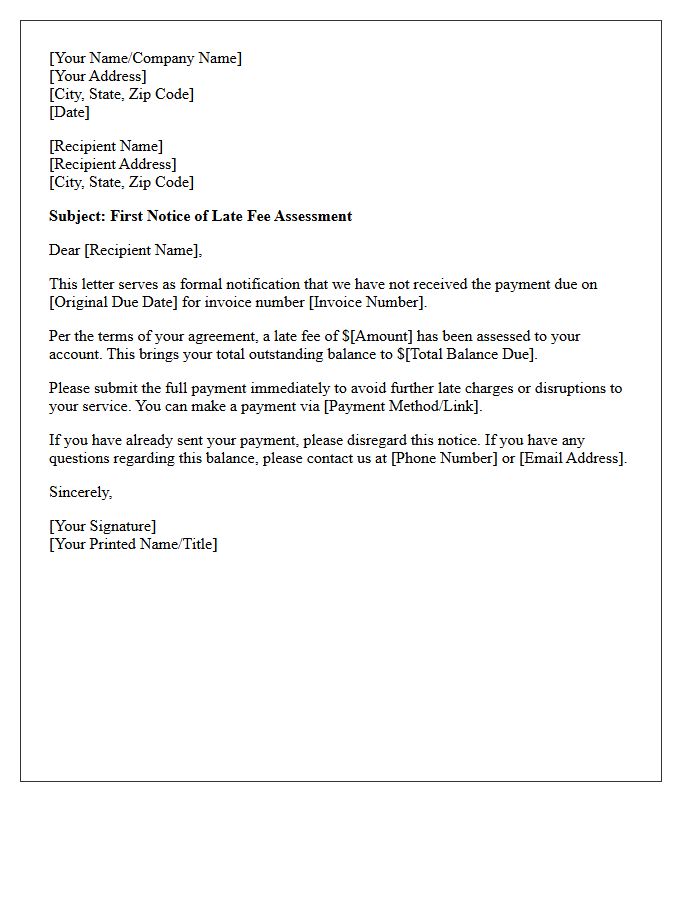
A First Notice of Late Fee Assessment Letter is a formal document notifying a debtor that their payment is overdue. It serves as an official record that a financial penalty has been applied according to the agreed terms. This letter clearly states the outstanding balance, the specific fee amount, and the revised deadline for payment. It is a critical step in debt collection, providing the recipient with a final opportunity to settle the account and avoid further escalation, such as credit reporting or legal action.
Standard Property Management Late Fee Assessment Letter
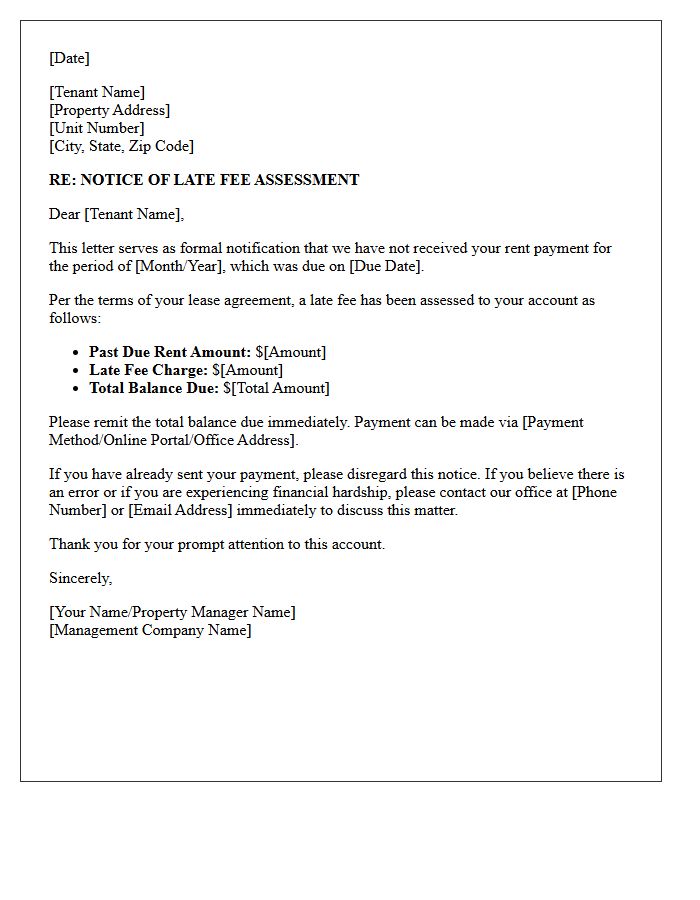
A Late Fee Assessment Letter is a formal notice sent to tenants who fail to pay rent by the established deadline. This document serves as a legal record of non-compliance, clearly detailing the overdue balance and the specific late charges applied per the lease agreement. It provides a final opportunity for payment before further action, such as eviction proceedings, occurs. Using a standardized template ensures consistency, maintains professional communication, and protects the property manager's interests by providing documented evidence of payment requests in potential court cases.
Residential Lease Late Rent Fee Assessment Letter
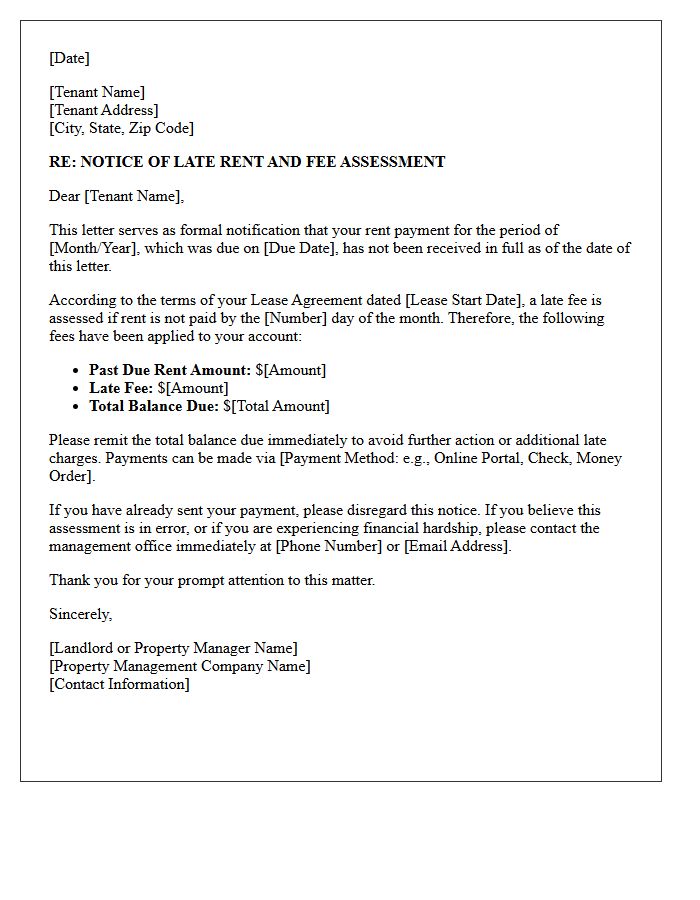
A Residential Lease Late Rent Fee Assessment Letter serves as formal notice that a tenant has missed the payment deadline. This document clearly outlines the overdue amount, the specific late charges applied per the lease agreement, and the new total balance due. To ensure legal compliance, the letter must include the date, property address, and a firm payment deadline. Sending this written notification helps landlords maintain accurate records for potential legal action or eviction proceedings while professionally reminding tenants of their contractual financial obligations.
Commercial Property Late Fee Assessment Letter
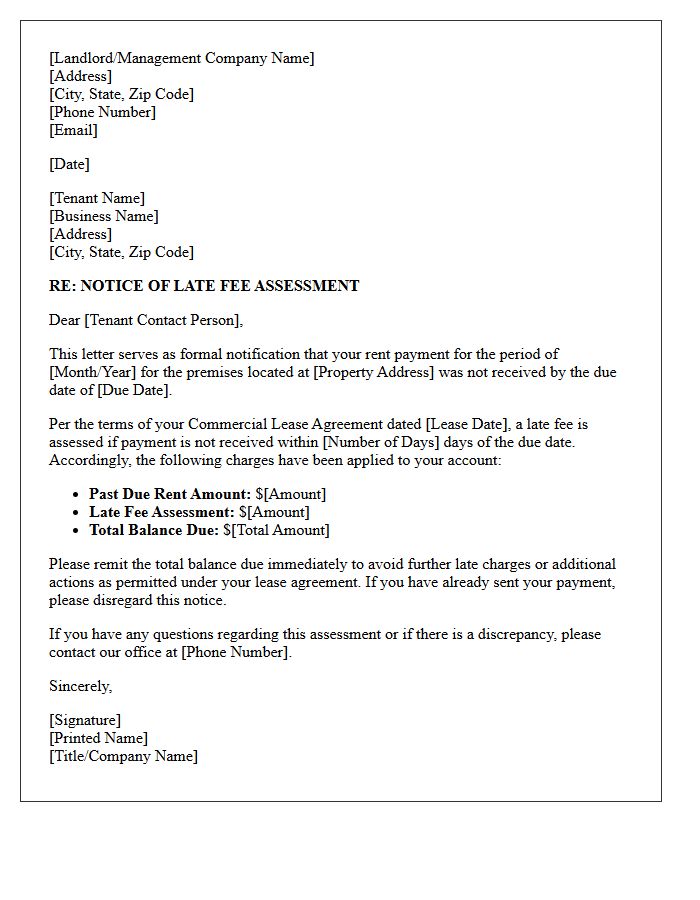
A Commercial Property Late Fee Assessment Letter is a formal notification sent to tenants who fail to pay rent by the grace period deadline. This document serves as a legal record of non-compliance, detailing the specific outstanding balance and the calculated penalty according to the lease agreement. Providing clear payment instructions and a firm deadline helps protect the landlord's rights while encouraging immediate settlement. Ensuring precise documentation is essential for maintaining professional tenant relations and establishing a necessary paper trail for potential future legal actions or eviction proceedings.
Formal Notice of Late Fee Assessment Letter
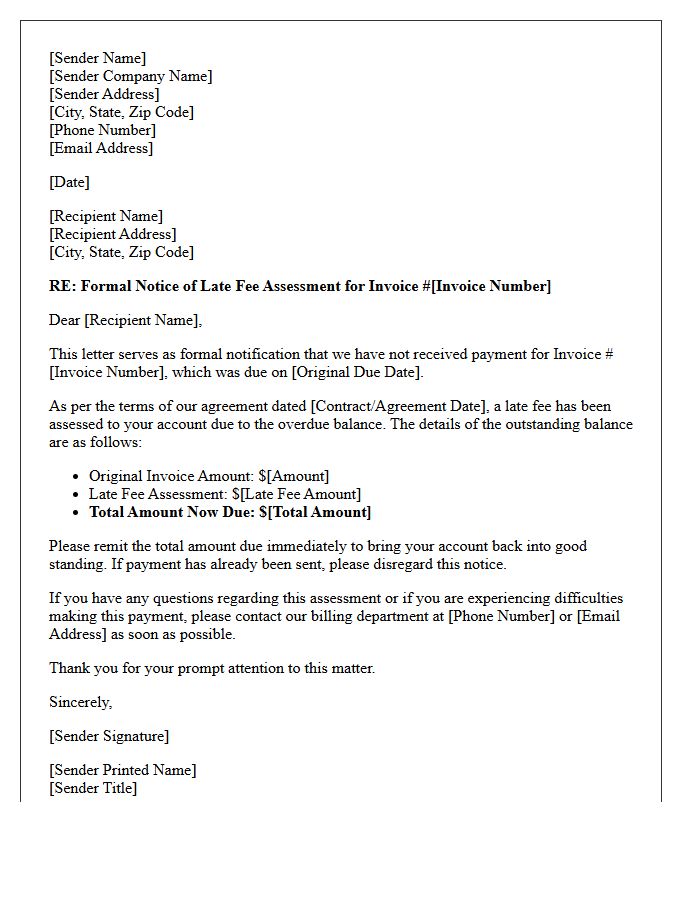
A formal notice of late fee assessment is a critical legal document issued when a payment deadline is missed. It serves as an official notification that a financial penalty has been applied to an outstanding balance. This letter must clearly state the original amount due, the specific accrual date of the late charge, and the total revised balance. Timely response is essential to prevent further interest accumulation or negative impacts on your credit rating. Always verify your original contract terms to ensure the fee complies with agreed-upon late payment policies.
Tenant Notice of Late Fee Assessment Letter
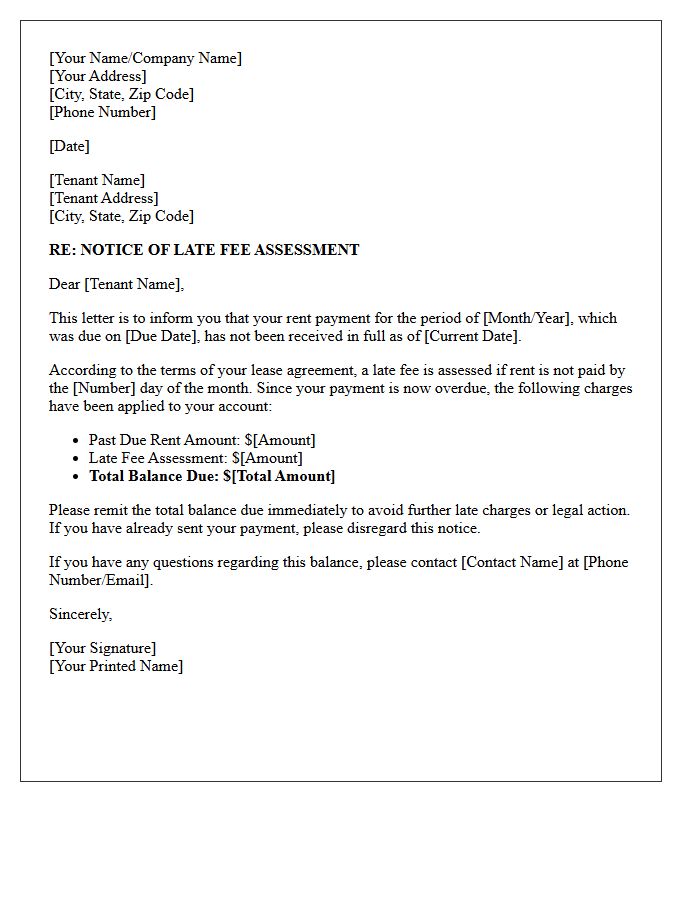
A Tenant Notice of Late Fee Assessment Letter is a formal document notifying a renter that their payment missed the grace period specified in the lease. This written record ensures legal compliance and clear communication regarding the specific amount owed. It should clearly state the original due date, the calculated penalty, and the total balance now required. Maintaining accurate documentation is essential for landlord-tenant transparency and provides necessary evidence should the non-payment lead to future eviction proceedings or official dispute resolutions.
Notice of Late Fee Assessment and Grace Period Expiration Letter
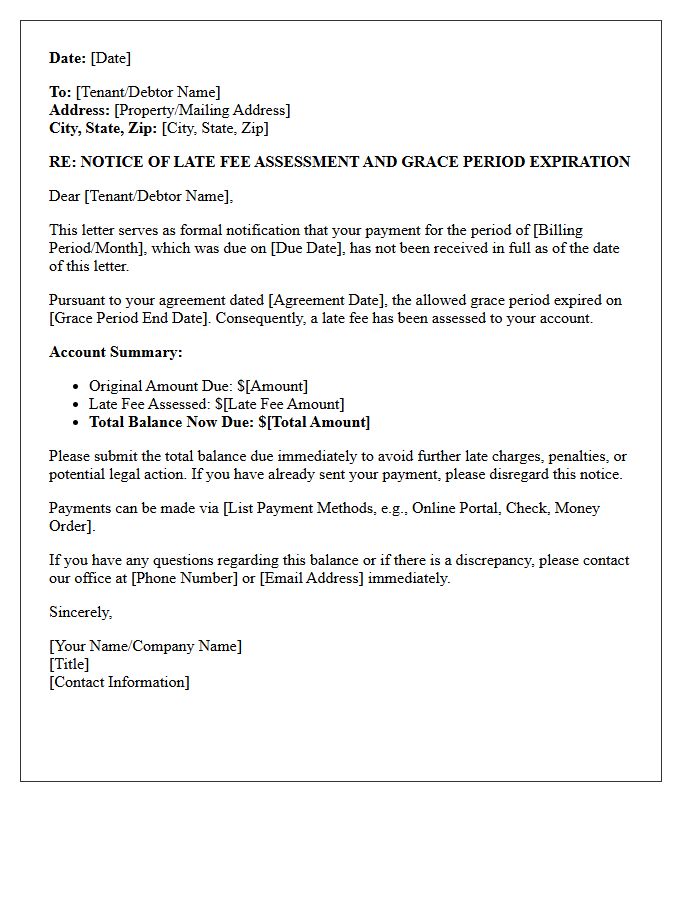
A Notice of Late Fee Assessment and Grace Period Expiration Letter serves as a formal communication notifying a debtor that their payment window has closed. This document officially confirms the application of monetary penalties to an outstanding balance. It is a critical step in debt collection, establishing a clear legal record of non-payment. For tenants or borrowers, receiving this letter signals an immediate need to settle the debt to avoid further legal action, negative credit reporting, or potential eviction proceedings. Timely response is essential to mitigate additional financial consequences.
Overdue Rent and Late Fee Assessment Letter
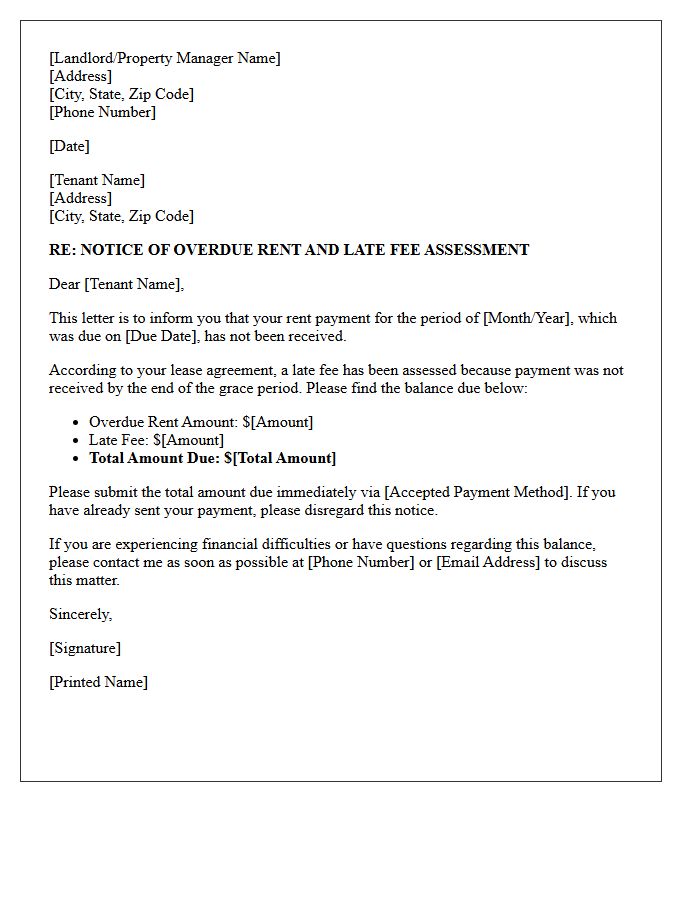
An Overdue Rent and Late Fee Assessment Letter is a formal notice sent by landlords to tenants when a payment is missed. It serves as a legal record documenting the specific amount owed and any penalties incurred. The letter must clearly outline the past-due balance, the late fee amount, and the required deadline for payment. Issuing this document promptly is essential for maintaining consistent cash flow and provides necessary evidence if formal eviction proceedings or debt recovery actions become necessary in the future.
Notice of Outstanding Balance and Late Fee Assessment Letter
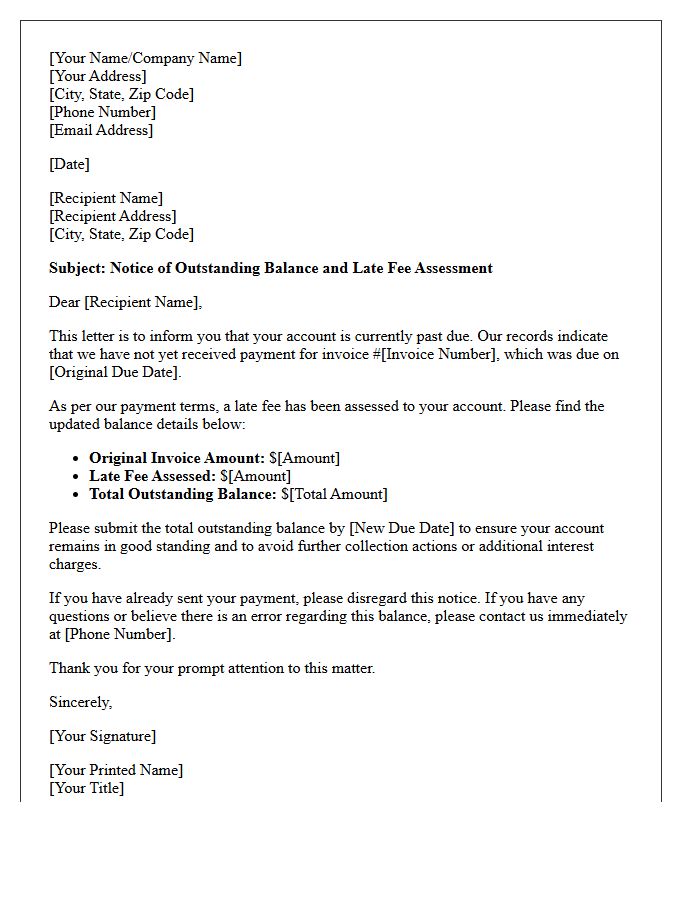
A Notice of Outstanding Balance and Late Fee Assessment Letter is a formal notification sent to debtors regarding unpaid invoices. It serves as a legal record of delinquent accounts, specifying the overdue amount and the additional penalties incurred. To maintain financial health, recipients should verify the debt accuracy immediately to avoid credit damage or further legal action. Timely communication with the creditor is essential for debt resolution and potentially waiving fees through negotiation. Understanding these notices ensures better management of your financial obligations and helps protect your overall credit standing.
Warning of Additional Late Fee Assessment Letter
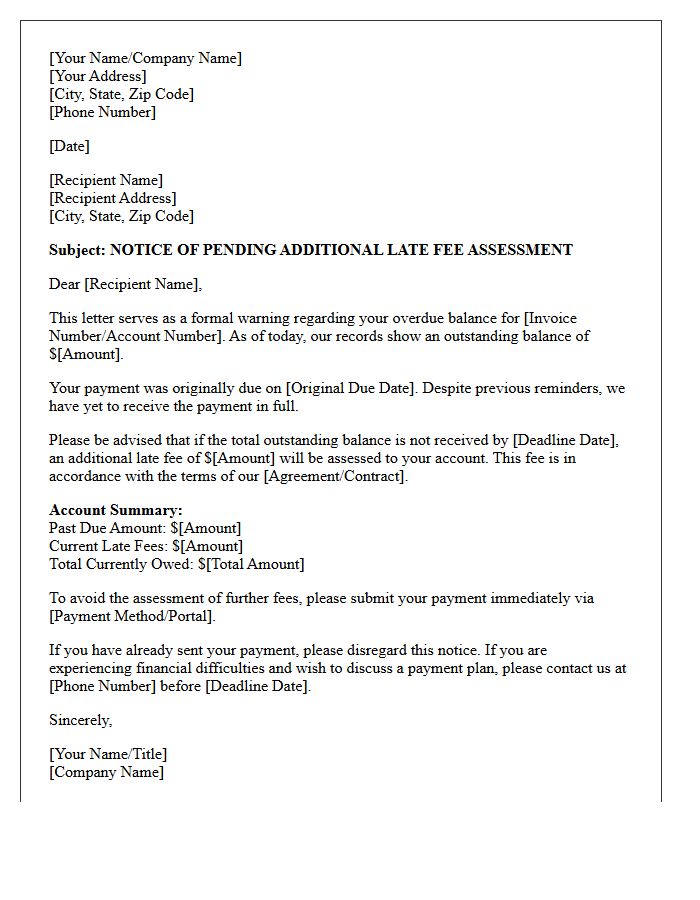
A Warning of Additional Late Fee Assessment Letter serves as a final notice before financial penalties escalate. It signifies that your account is past due and immediate payment is required to avoid compounding charges or collection actions. Receiving this formal notification means your grace period has expired, and the creditor intends to levy further administrative costs. To protect your credit score and minimize total debt, you must respond promptly by settling the outstanding balance or establishing a repayment plan before the specified deadline to prevent legal escalation.
Monthly HOA Dues Late Fee Assessment Letter
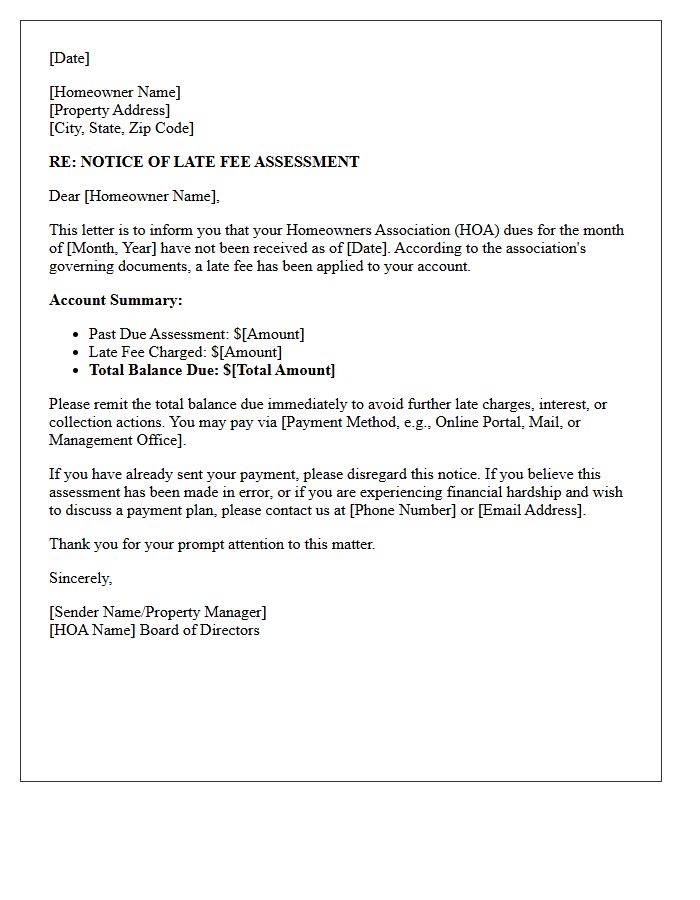
A Monthly HOA Dues Late Fee Assessment Letter serves as a formal notification that a homeowner has missed a payment deadline. This legal notice outlines the specific outstanding balance, including accrued interest and administrative penalties as defined by the association's bylaws. It is crucial to address this document immediately to avoid further financial escalation, potential property liens, or loss of community privileges. Clear communication with the board can often resolve disputes or establish a payment plan, ensuring the homeowner remains in good standing within the community.
Final Notice of Late Fee Assessment Letter
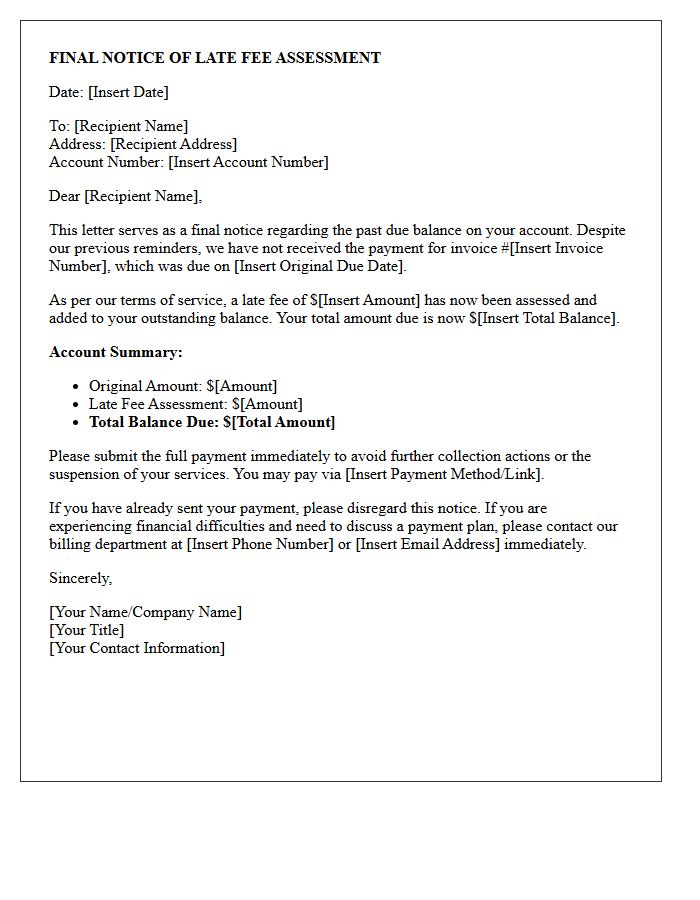
A Final Notice of Late Fee Assessment is a formal legal notification sent to a debtor before penalties are officially applied. This document serves as a last warning regarding an overdue balance, clearly outlining the total amount due, the specific due date, and the consequences of further non-payment. Receiving this letter indicates that the grace period has ended. To avoid damaging your credit score or facing additional collection actions, you must settle the outstanding debt or contact the creditor immediately to discuss a payment arrangement or dispute the charges.
What is a Notice of Late Fee Assessment?
A Notice of Late Fee Assessment is a formal notification sent to a debtor or tenant stating that a specific penalty has been charged to their account due to a failure to make a payment by the agreed-upon due date.
Why did I receive a late fee notification?
You received this notice because your payment was not received within the grace period defined in your contract or lease agreement. The assessment serves as a record of the overdue payment and the resulting administrative penalty.
How much is the late fee, and how is it calculated?
The late fee amount is determined by the terms of your original agreement. It may be a flat dollar amount or a percentage of the total overdue balance, as permitted by local and state usury laws.
Can a late fee assessment be waived?
Late fee waivers are typically granted at the discretion of the billing entity. Common grounds for a waiver include first-time occurrences, documented technical errors, or extreme financial hardship, provided the original balance is paid immediately.
What happens if I do not pay the assessed late fee?
Failure to pay a late fee can result in the amount being deducted from future payments, potential reporting to credit bureaus, or the initiation of further collection actions, including legal proceedings or eviction in rental scenarios.


Comments