
Unpaid utility bills can disrupt essential services and impact credit scores. Sending a formal Demand for Payment of Past Due Utilities is a critical legal step to recover outstanding balances for water, electricity, or gas. This notice outlines the amount owed and sets a clear deadline for settlement to avoid litigation. To help you draft a professional notice, below are some ready to use templates.

Image cover: Professional Utility Past Due Notice Templates and Payment Demand Guide
Letter Samples List
- First Notice Letter for Past Due Utility Payment
- Final Demand Letter for Outstanding Utility Bills
- Urgent Letter Regarding Past Due Property Utilities
- Official Demand Letter for Delinquent Utility Balance
- Second Notice Letter for Unpaid Utility Charges
- Property Management Letter for Overdue Utility Payment
- Formal Demand Letter for Past Due Tenant Utilities
- Notice Letter Demanding Payment for Utility Arrears
- Action Required Letter for Past Due Utility Invoices
- Pre-Eviction Utility Demand Letter for Unpaid Balances
- Past Due Utility Collection Letter for Leased Properties
- Immediate Payment Demand Letter for Outstanding Utilities
First Notice Letter for Past Due Utility Payment
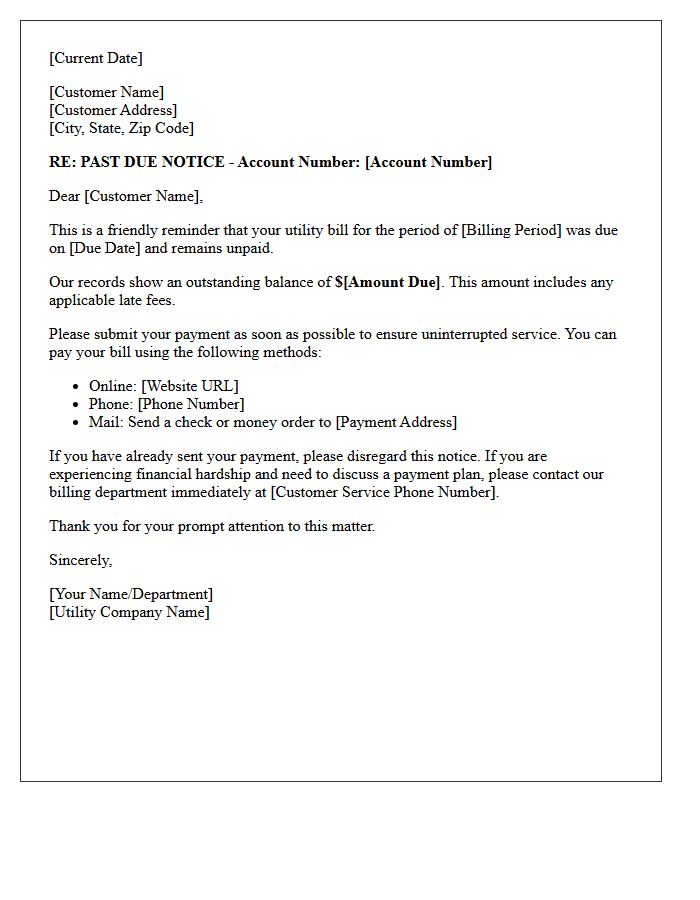
A First Notice Letter serves as an official alert from your service provider regarding a past due utility payment. It typically outlines the outstanding balance, the original due date, and available payment methods to rectify the account. Receiving this document is a critical warning to act immediately to avoid late fees or a potential service interruption. Many providers offer payment arrangements or financial assistance programs at this stage to help customers maintain essential services. Prompt communication is the most effective way to resolve the delinquency and protect your credit standing.
Final Demand Letter for Outstanding Utility Bills
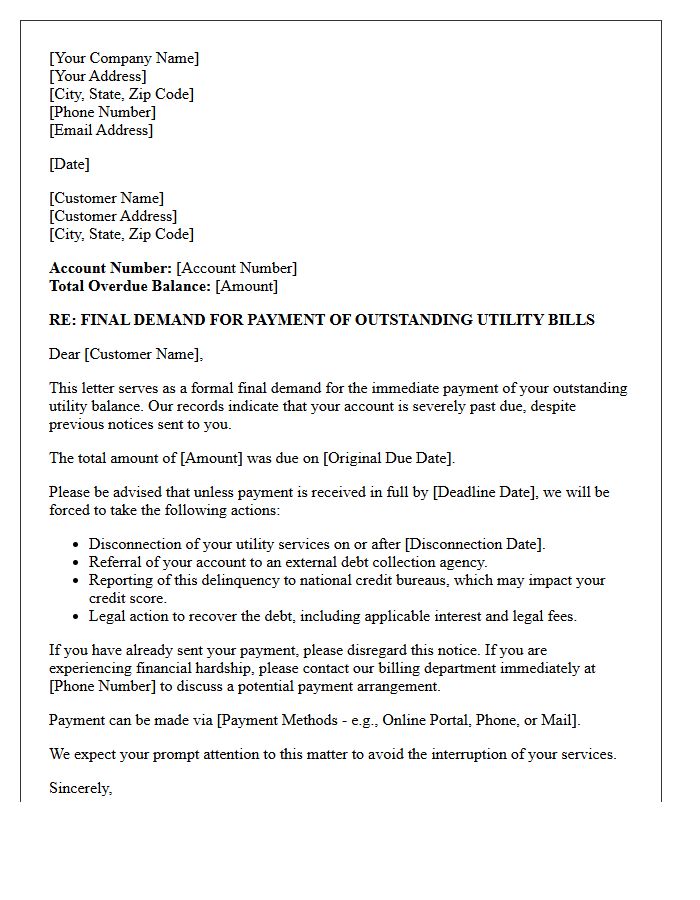
A Final Demand Letter is the last formal notice sent before a utility provider initiates legal action or disconnects services. It serves as a critical warning that your account is severely overdue. To avoid credit score damage or court fees, you must prioritize immediate payment or contact the provider to establish a payment plan. Ignoring this document often leads to debt collection involvement. Always verify the balance and deadline mentioned to ensure accuracy and prevent service termination. Acting quickly is the most effective way to resolve outstanding utility liabilities.
Urgent Letter Regarding Past Due Property Utilities
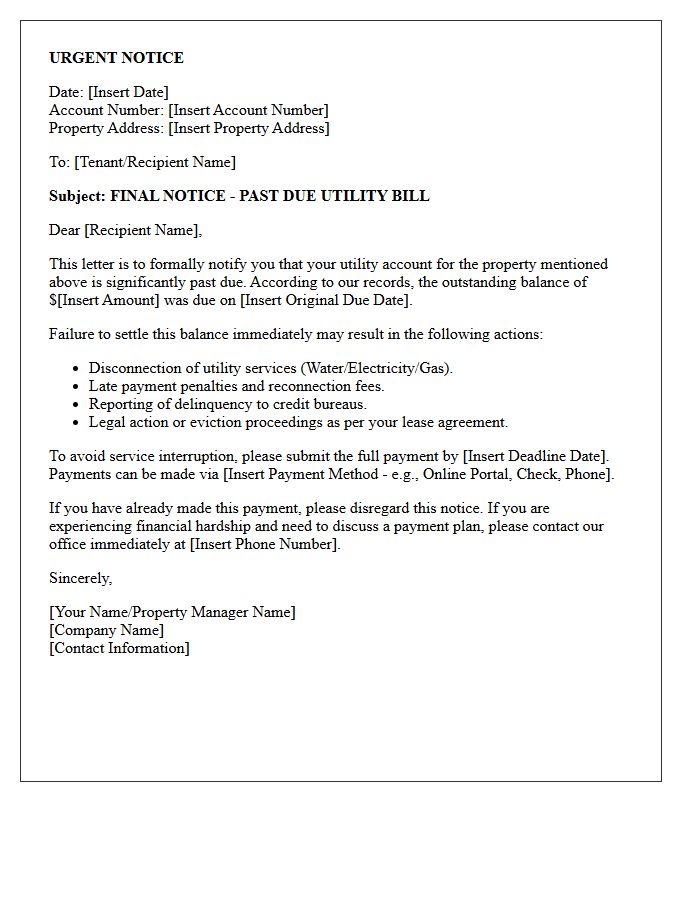
An Urgent Letter Regarding Past Due Property Utilities serves as a final formal notice to settle outstanding balances. It is crucial to address this disconnection warning immediately to avoid the termination of essential services like water, electricity, or gas. Most providers offer payment arrangements or financial assistance programs to resolve debt. Ignoring this communication may lead to service interruption, additional late fees, and negative impacts on your credit score. Prompt action ensures your property remains habitable and prevents costly reconnection charges or legal proceedings initiated by utility companies.
Official Demand Letter for Delinquent Utility Balance
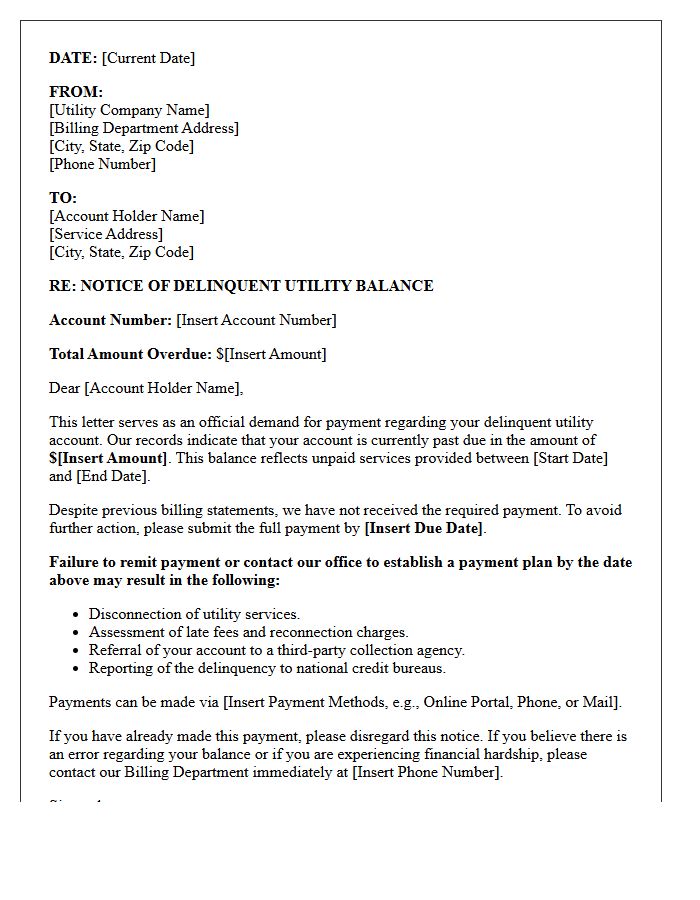
An official demand letter serves as a formal notification regarding a delinquent utility balance, acting as a final warning before service disconnection or legal action. This document clearly outlines the outstanding amount, specific deadlines for payment, and potential consequences of non-compliance. It provides a crucial opportunity for consumers to settle debts or establish payment arrangements to maintain essential services. Receiving this letter indicates that the account is in serious arrears, making immediate communication with the utility provider essential to avoid service interruption or negative impacts on credit reporting.
Second Notice Letter for Unpaid Utility Charges
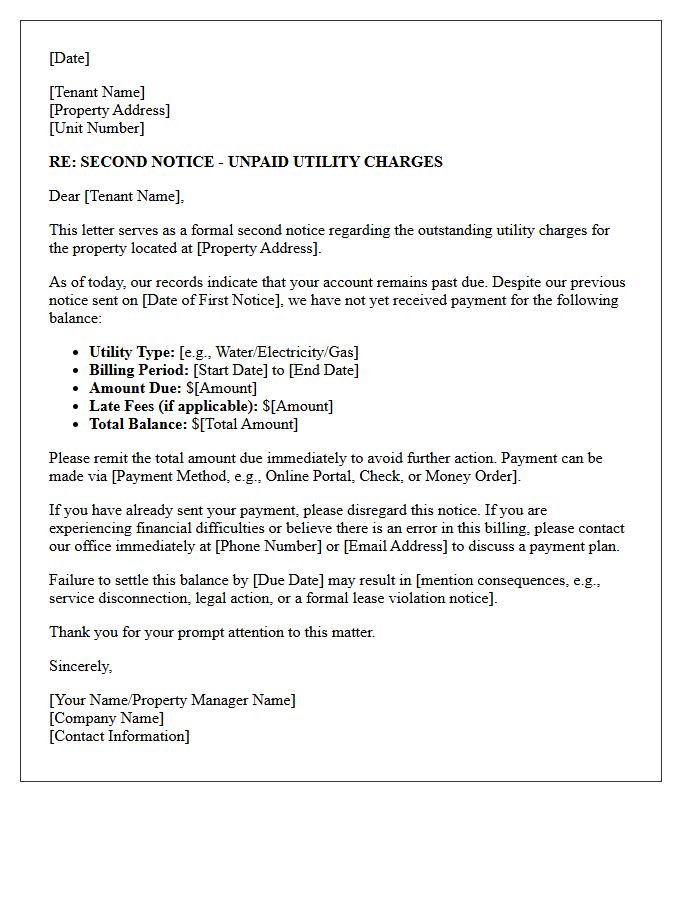
A Second Notice Letter serves as a formal warning regarding outstanding utility balances. This document indicates that your initial bill remains unpaid and immediate action is required to avoid service disconnection. It typically includes the total amount due, any late fees, and a final deadline for payment. To prevent utility shut-offs, it is crucial to contact your provider immediately to settle the debt or establish a payment plan. Ignoring this notice can negatively impact your credit score and result in additional restoration charges once services are terminated.
Property Management Letter for Overdue Utility Payment
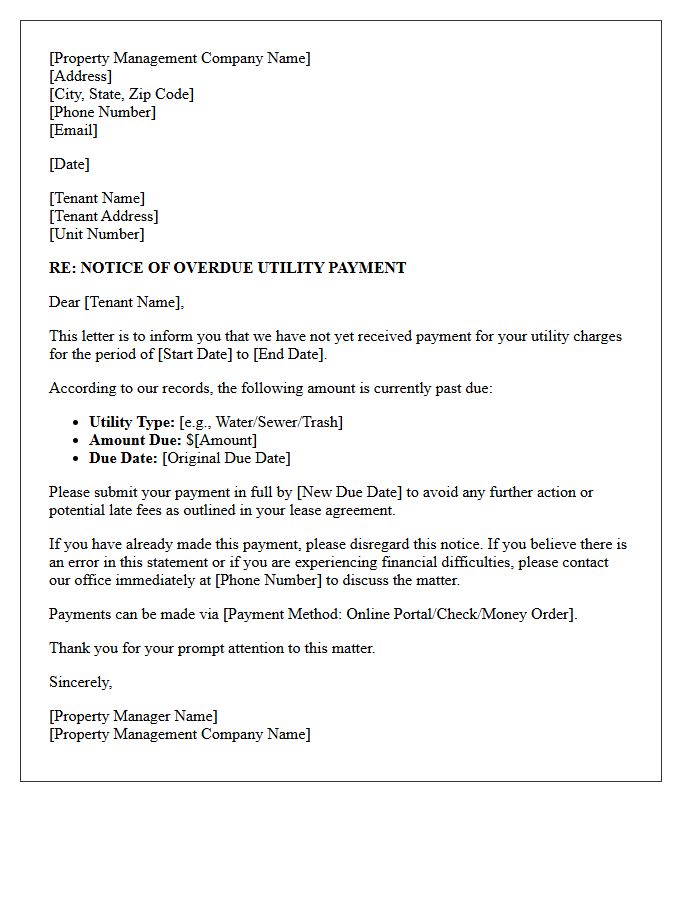
A property management letter for overdue utility payments serves as a formal notification to tenants regarding unpaid balances. It must clearly state the outstanding amount, the specific utility service, and the original due date to ensure transparency. Providing a firm payment deadline and outlining potential consequences, such as late fees or service interruption, encourages immediate action. Including multiple payment methods simplifies the resolution process. This document acts as an essential written record for legal compliance and effective property oversight, helping maintain consistent cash flow and clear communication between landlords and residents.
Formal Demand Letter for Past Due Tenant Utilities
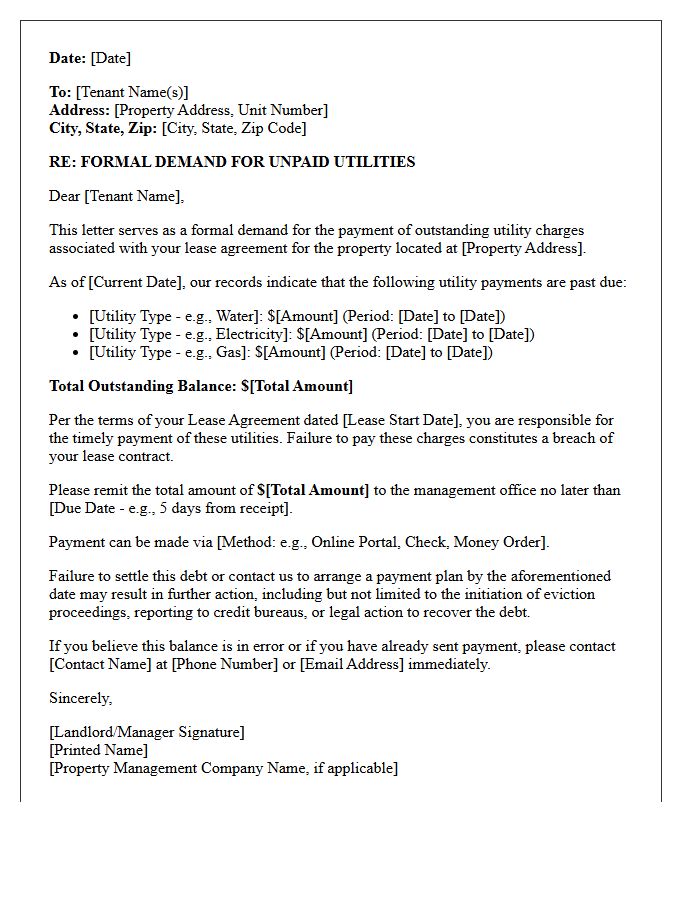
A formal demand letter is a critical legal step to recover unpaid utility charges from a tenant. It serves as official notice, clearly documenting the specific amount owed and the original due date. To ensure validity, include a copy of the outstanding bills and set a firm deadline for reimbursement. This document creates a vital paper trail for potential eviction proceedings or small claims court. Professional communication often encourages immediate payment while protecting the landlord's rights under the lease agreement and local housing regulations.
Notice Letter Demanding Payment for Utility Arrears
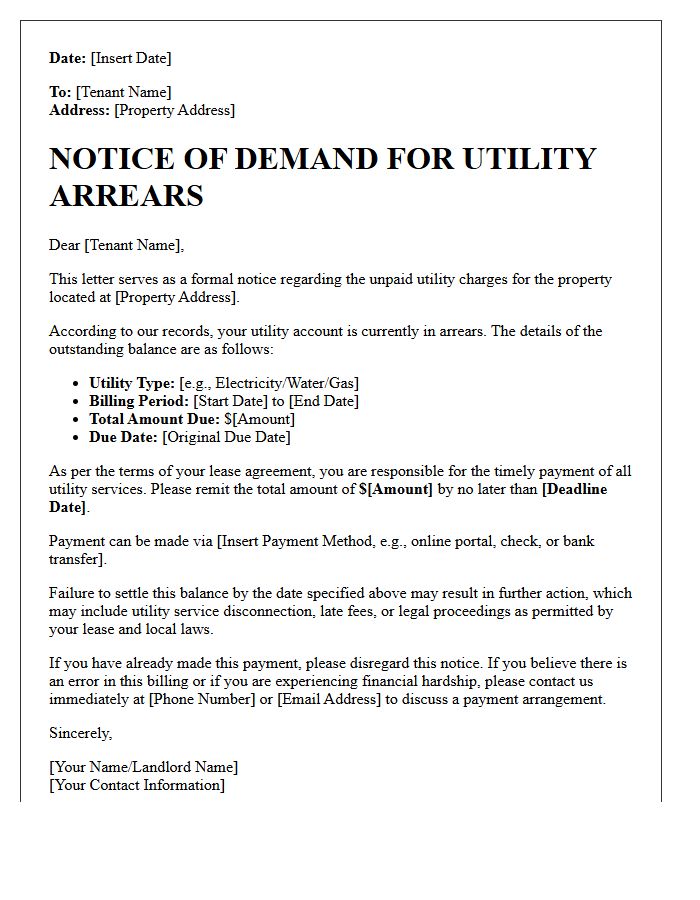
A utility arrears notice is a formal legal demand for unpaid energy or water bills. It serves as a final warning before the provider initiates disconnection procedures or credit reporting. To protect your access to essential services, you must prioritize communication with the utility company immediately. Many providers offer hardship programs or flexible installment plans to settle the debt. Ignoring this notice can lead to additional late fees, legal action, and a significant negative impact on your credit score. Always verify the balance accuracy before making a payment.
Action Required Letter for Past Due Utility Invoices
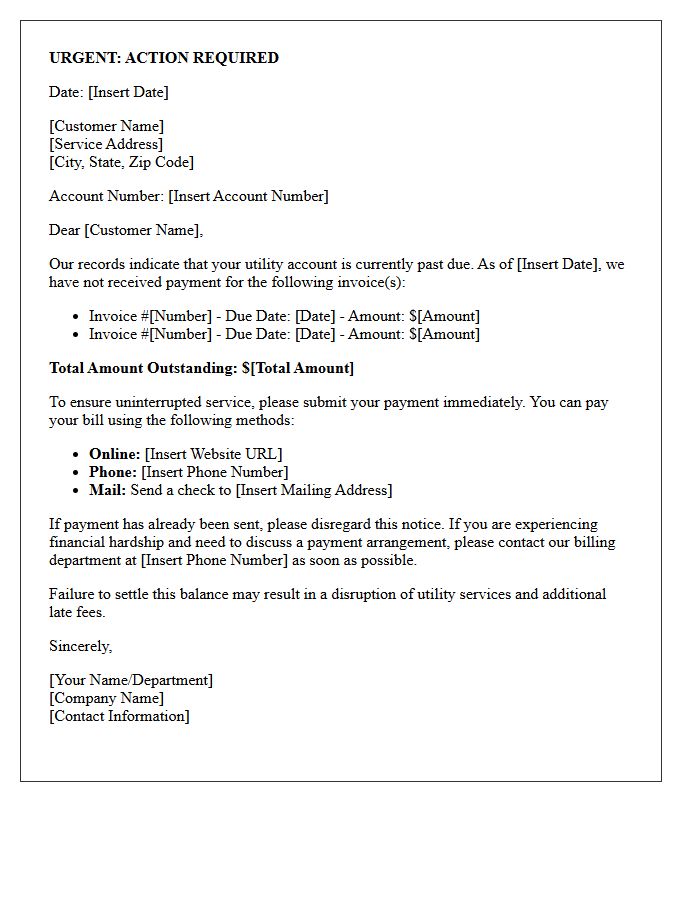
An Action Required Letter serves as a formal notification regarding unpaid utility invoices. This document warns consumers that their service is at risk of disconnection unless immediate payment is arranged. It typically outlines the total balance due, the deadline for payment, and available repayment plans to avoid service interruption. Receiving this notice requires urgent attention to ensure essential services like electricity or water remain active. Always contact your provider promptly to discuss financial assistance or resolve billing discrepancies before the specified cutoff date.
Pre-Eviction Utility Demand Letter for Unpaid Balances
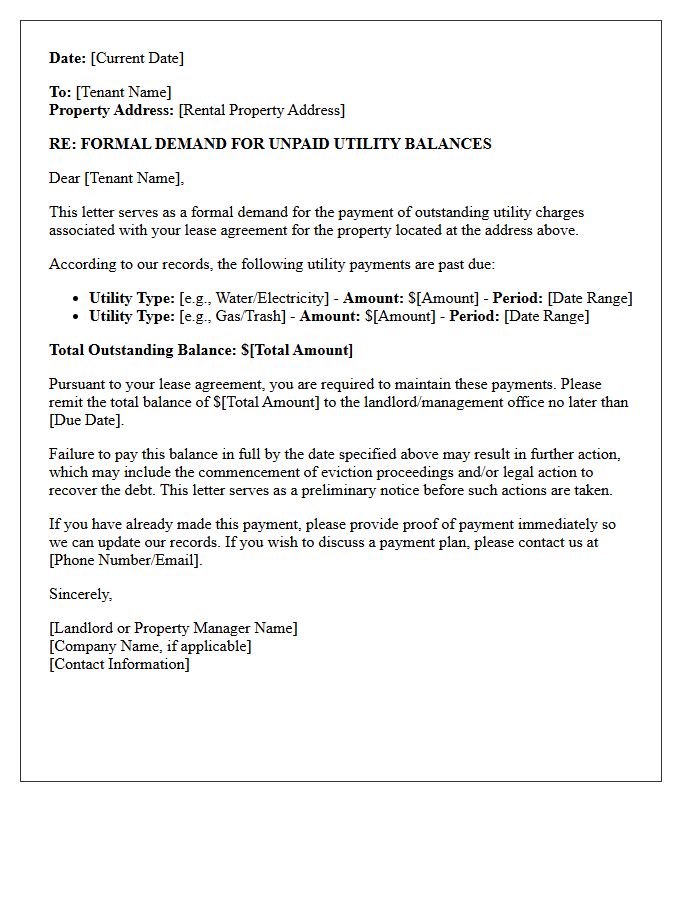
A Pre-Eviction Utility Demand Letter is a formal notice sent to tenants regarding unpaid balances for essential services. This document serves as a critical legal step before initiating formal eviction proceedings. It clearly outlines the total debt owed, provides a specific deadline for payment, and explains the consequences of non-compliance. Property owners use this letter to establish a written record of delinquency, ensuring compliance with local housing laws. Providing this notice allows tenants a final opportunity to settle arrears and maintain their utility services and housing stability.
Past Due Utility Collection Letter for Leased Properties
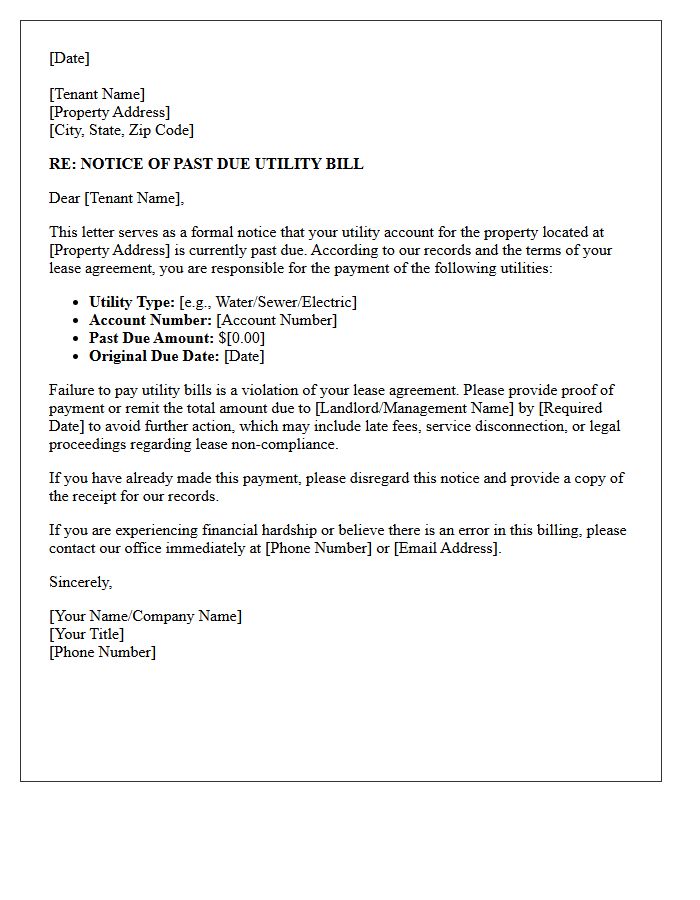
A past due utility collection letter serves as a formal notice to tenants regarding unpaid balances on essential services. For leased properties, timely communication is vital to prevent service disconnection and potential lease violations. Property managers should clearly outline the overdue amount, the specific utility service, and a strict payment deadline. Including instructions for late fees and repayment options ensures transparency. This document protects the landlord's interests and provides a necessary legal paper trail should further eviction proceedings or debt recovery actions become necessary to resolve the outstanding delinquency.
Immediate Payment Demand Letter for Outstanding Utilities
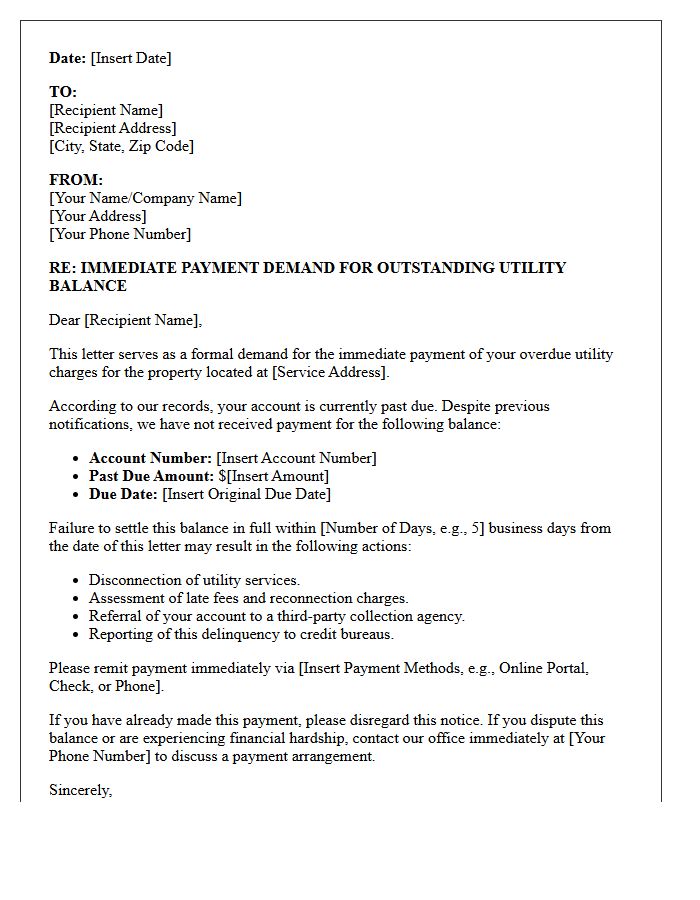
An Immediate Payment Demand Letter serves as a formal notice to resolve delinquent utility balances before service disconnection occurs. This document outlines the exact amount owed, the original due date, and a final settlement deadline. It acts as a critical legal precursor to collection actions or litigation. To avoid utility shut-offs, recipients must prioritize immediate payment or establish a repayment plan. Ensuring accurate account details and clear payment instructions is essential for effective debt recovery and maintaining essential services like water, electricity, or gas.
What is a Demand for Payment of Past Due Utilities?
A Demand for Payment is a formal legal notice sent to a tenant or property owner requesting the immediate settlement of unpaid utility bills. This letter serves as a final warning before the provider or landlord initiates service disconnection, legal action, or debt collection processes.
What information should be included in a utility payment demand letter?
The notice must include the total outstanding balance, a breakdown of specific utility services (water, electricity, gas), the original due dates, any applicable late fees, a deadline for payment, and the acceptable methods of remittance to avoid further penalties.
How many days do I have to respond to a demand for past due utilities?
Response timelines typically range from 3 to 14 days, depending on local landlord-tenant laws and the specific terms of the utility contract. Failure to pay or arrange a payment plan within this window usually results in a formal notice of disconnection.
Can utility services be shut off immediately after a demand for payment?
Generally, no. Most jurisdictions require providers or landlords to provide a specific "Notice of Intent to Disconnect" following the initial demand for payment. There are also seasonal protections in many areas that prevent utility shut-offs during extreme winter or summer months.
What are the consequences of ignoring a demand for past due utilities?
Ignoring a formal demand can lead to the termination of essential services, a negative impact on your credit score, the forfeiture of security deposits, legal summons for debt recovery, and potential eviction if utilities are a mandatory condition of your lease agreement.

Comments