
A Notice of Intent to Retain Security Deposit is a formal legal document used by landlords to notify tenants that part or all of their deposit will be withheld for repairs or unpaid rent. Sending this notice is essential to comply with state laws and avoid legal disputes during the move-out process. Below are some ready to use templates.
Image cover: Security Deposit Retention: Essential Templates and Legal Notice Samples
Letter Samples List
- Notice Of Intent To Retain Security Deposit Letter
- Security Deposit Retention Intent Letter
- Property Management Security Deposit Withholding Letter
- Official Intent To Retain Security Deposit Letter
- Tenant Security Deposit Deduction Notice Letter
- Notice Of Security Deposit Forfeiture Letter
- Itemized Security Deposit Retention Notice Letter
- Final Notice Of Intent To Keep Security Deposit Letter
- Property Damage Security Deposit Withholding Letter
- Lease Termination Security Deposit Retention Letter
- Notice Of Intent To Claim Security Deposit Letter
- Partial Security Deposit Retention Notice Letter
- Move-Out Security Deposit Deduction Intent Letter
Notice Of Intent To Retain Security Deposit Letter
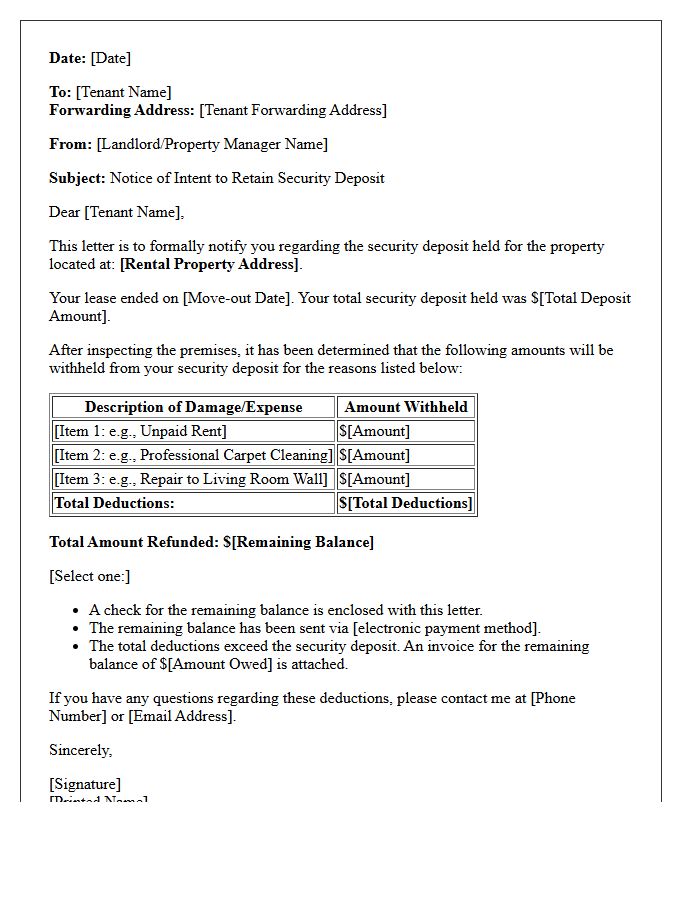
A Notice of Intent to Retain Security Deposit is a formal legal document sent by landlords to tenants explaining why all or part of a deposit is being withheld. It must include an itemized list of specific deductions, such as unpaid rent or repairs for damages exceeding normal wear and tear. To remain compliant with local laws, this letter must be sent within a strict statutory deadline after the lease ends. Providing clear evidence, like receipts or photos, helps prevent legal disputes and ensures a transparent move-out process.
Security Deposit Retention Intent Letter
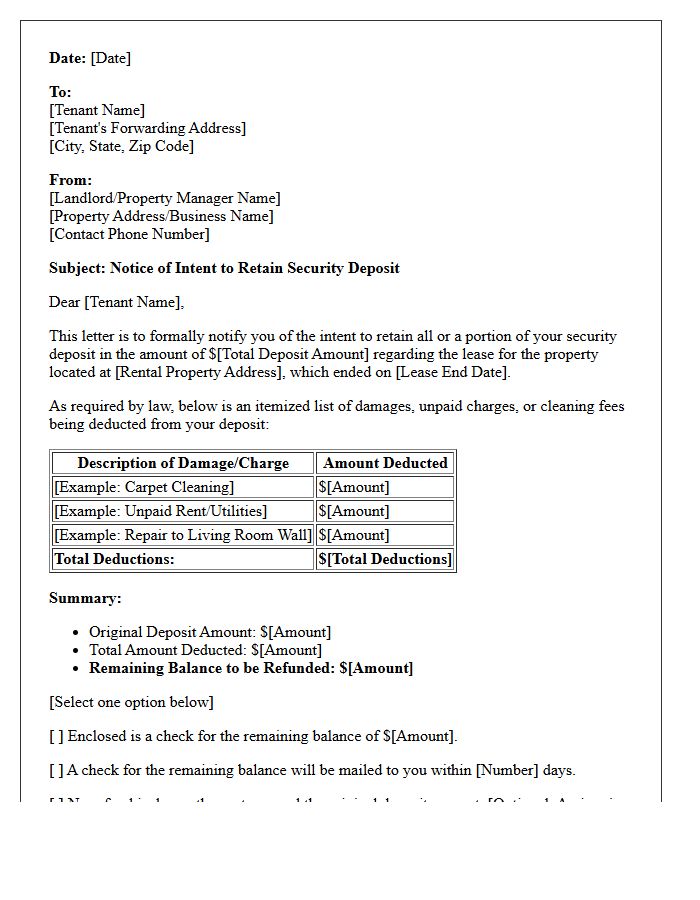
A Security Deposit Retention Intent Letter is a formal notice sent by a landlord to a tenant explaining why all or part of the deposit is being withheld. It must include an itemized list of deductions for specific damages, unpaid rent, or cleaning fees beyond normal wear and tear. Sending this document within the legal notice period-typically 14 to 30 days depending on local statutes-is mandatory to avoid penalties. Providing clear documentation and receipts ensures transparency and protects the landlord from potential legal disputes regarding the refund.
Property Management Security Deposit Withholding Letter
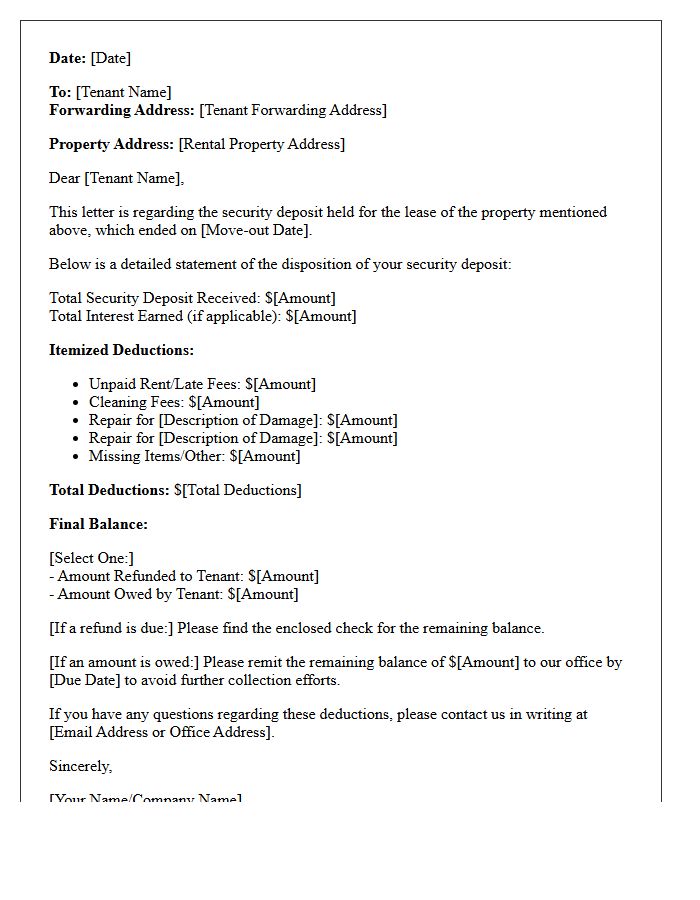
A security deposit withholding letter is a mandatory legal notice sent by property managers to former tenants. It must provide an itemized list detailing specific deductions for damages beyond normal wear and tear or unpaid rent. To ensure compliance, landlords must mail this statement within the state's statutory deadline, typically 14 to 30 days after move-out. Including repair receipts and photos strengthens your case. Failure to provide this written accounting in a timely manner may result in legal penalties or the forfeiture of your right to withhold any funds.
Official Intent To Retain Security Deposit Letter
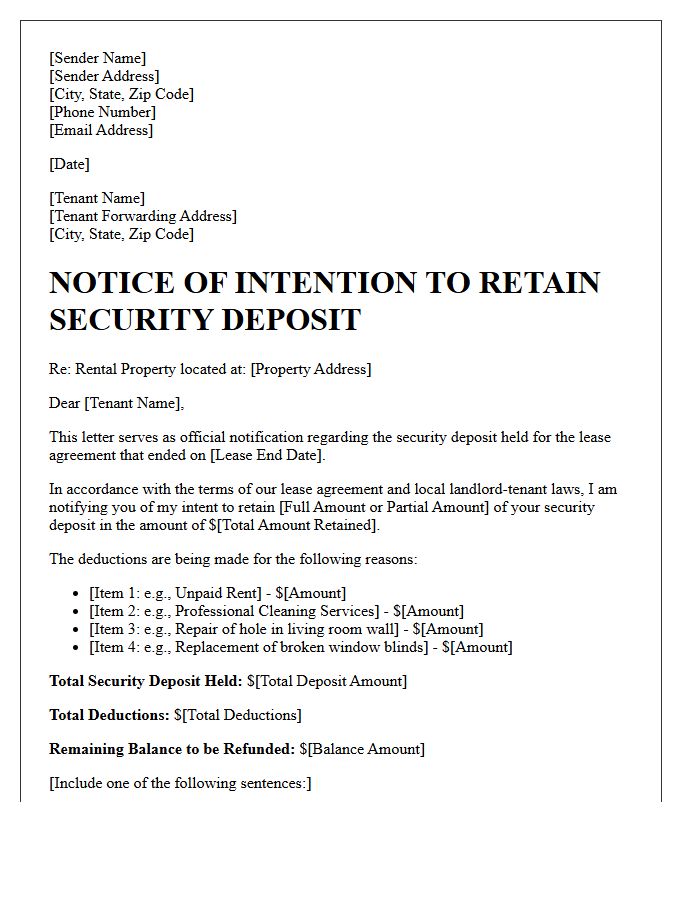
An Official Intent To Retain Security Deposit Letter is a formal notice sent by a landlord to a tenant explaining why all or part of the deposit is being withheld. It must include an itemized list of deductions for repairs, cleaning, or unpaid rent. Sending this document within the state-mandated legal deadline is crucial to avoid penalties or lawsuits. Providing clear photographic evidence and receipts alongside the letter ensures transparency and protects the landlord's legal position during the move-out process.
Tenant Security Deposit Deduction Notice Letter
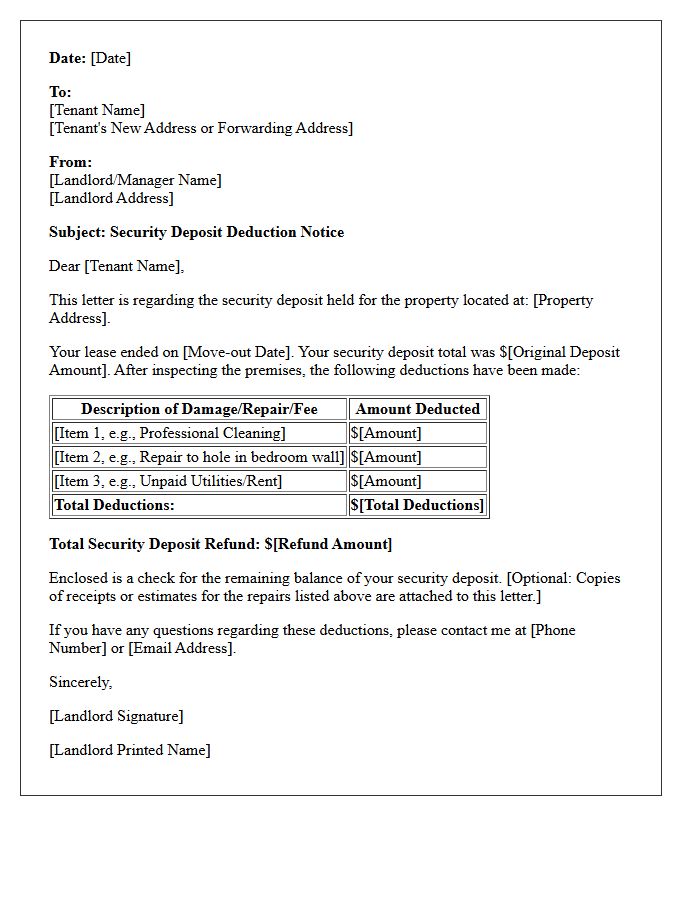
A Tenant Security Deposit Deduction Notice Letter is a formal document a landlord must provide to explain any funds withheld from a security deposit. It must include an itemized list of specific charges for damages or unpaid rent. To ensure legal compliance, landlords should send this notice within the state's statutory timeframe, typically 14 to 30 days after move-out. Providing proof of repairs, such as receipts or photos, helps prevent legal disputes. This letter ensures transparency and protects both parties during the lease termination process.
Notice Of Security Deposit Forfeiture Letter
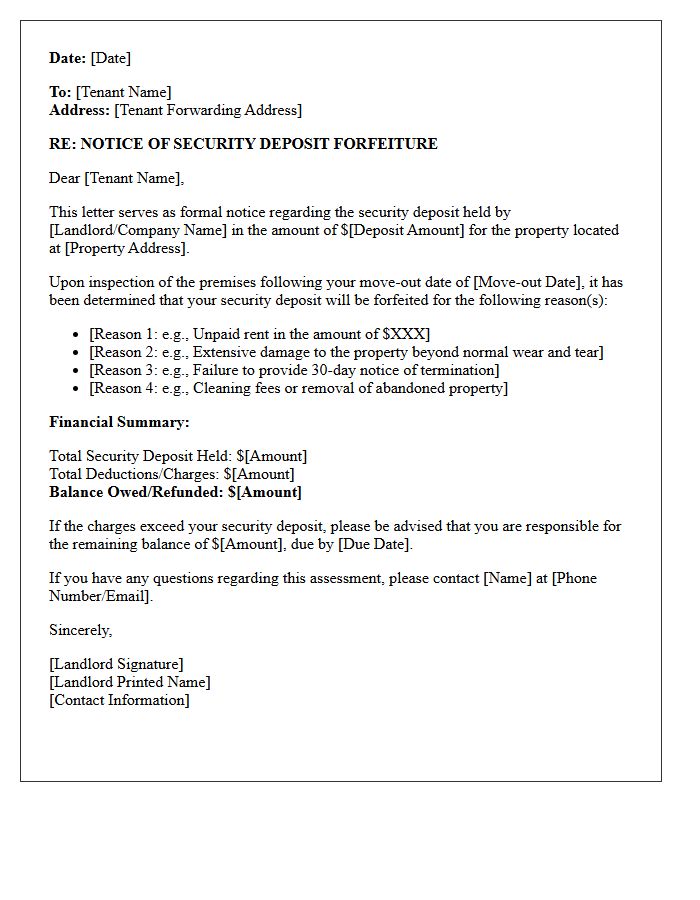
A Notice of Security Deposit Forfeiture Letter is a formal document issued by a landlord to inform a tenant that their deposit will not be returned. It must clearly outline the specific legal reasons for withholding funds, such as unpaid rent, property damage beyond normal wear, or lease violations. To remain compliant with local housing laws, the letter should include an itemized list of costs and be sent within the state-mandated timeframe. Providing clear documentation and repair invoices helps prevent potential legal disputes or small claims court actions regarding the security deposit.
Itemized Security Deposit Retention Notice Letter
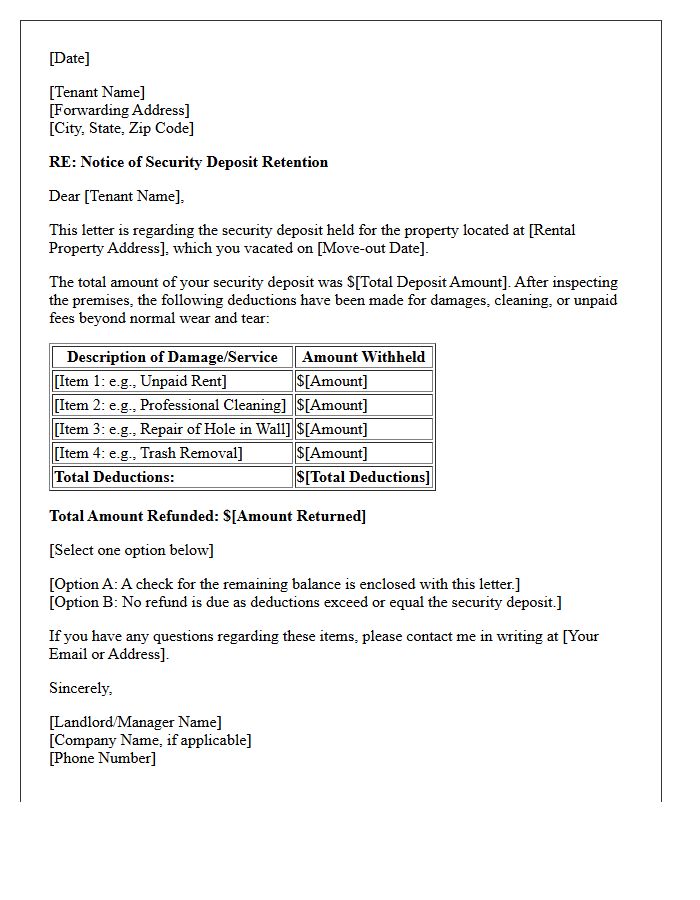
An Itemized Security Deposit Retention Notice Letter is a legally required document that explains why a landlord is withholding funds from a tenant's deposit. It must detail specific deductions for unpaid rent, cleaning fees, or repairs beyond normal wear and tear. Landlords must send this notice within strict state-mandated deadlines to avoid legal penalties. Providing clear documentation, such as repair receipts and photos, protects the property owner during potential disputes. Always ensure the letter is sent via certified mail to maintain a legal record of compliance.
Final Notice Of Intent To Keep Security Deposit Letter
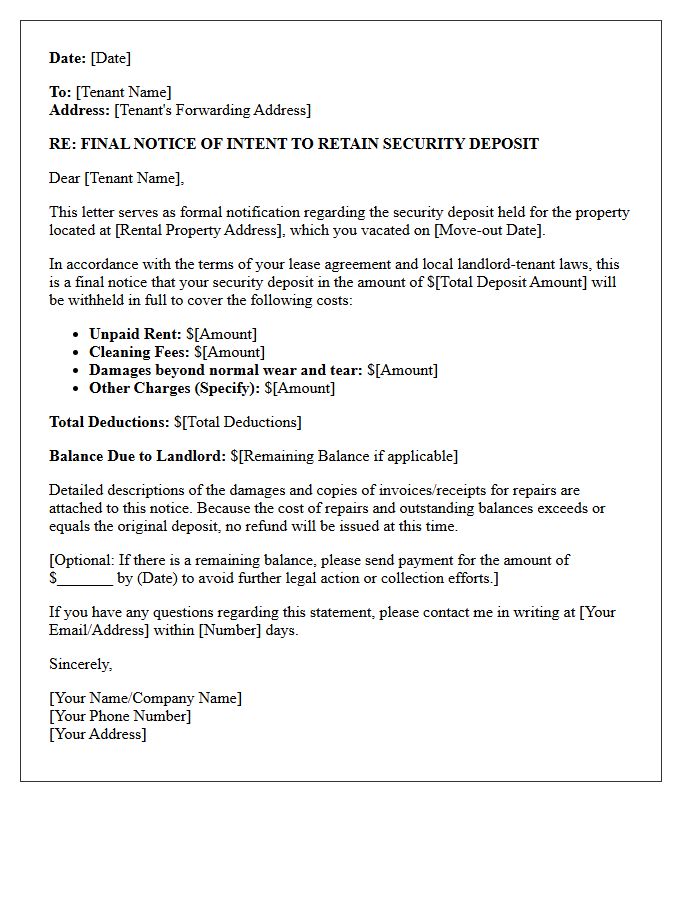
A Final Notice of Intent to Keep Security Deposit is a formal document sent by landlords to inform tenants that their deposit will not be returned. It must include a detailed, itemized list of deductions for damages beyond normal wear and tear or unpaid rent. Sending this letter is a legal requirement in most jurisdictions to justify withholding funds. To avoid legal disputes, landlords must ensure the notice is delivered within state-mandated deadlines and provides clear evidence, such as repair receipts or photos, to support the financial claims made against the balance.
Property Damage Security Deposit Withholding Letter
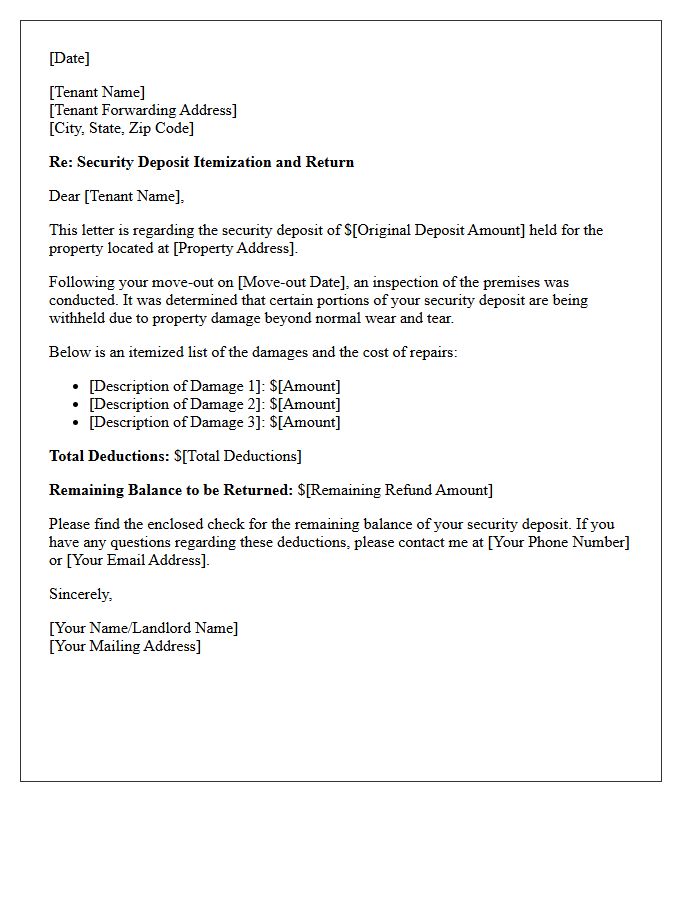
A Property Damage Security Deposit Withholding Letter is a formal notice sent by landlords to tenants explaining why a portion of the security deposit is being retained. It must include an itemized list of specific damages beyond normal wear and tear, along with the associated repair costs. Sending this document within the state-mandated legal deadline is crucial to avoid penalties or lawsuits. Ensure you attach photographic evidence and receipts to justify deductions, maintaining transparency and protecting yourself from potential legal disputes regarding the remaining balance returned.
Lease Termination Security Deposit Retention Letter
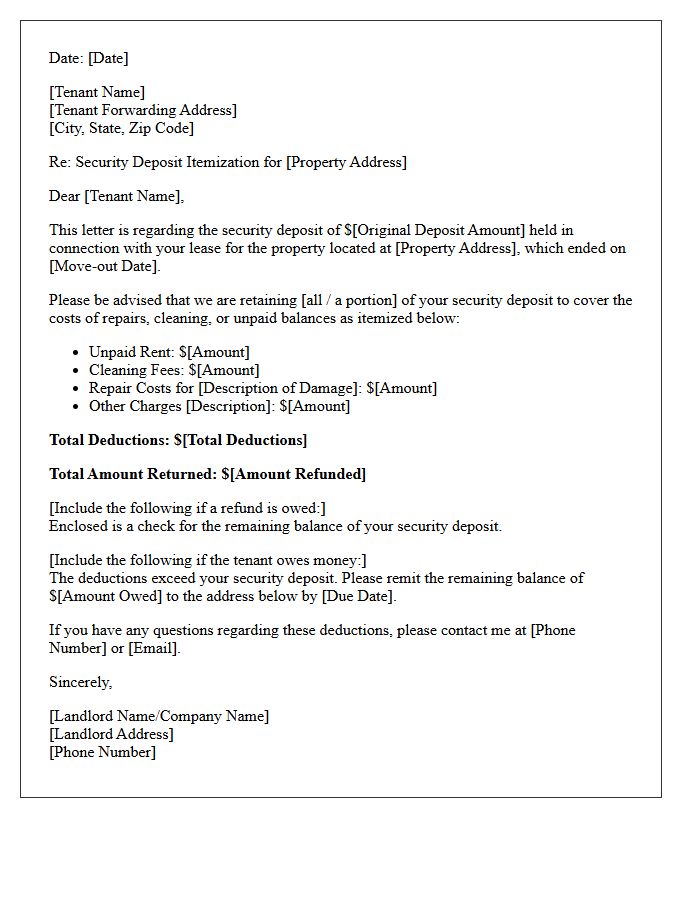
A Lease Termination Security Deposit Retention Letter is a formal notice sent by a landlord to explain why all or part of a security deposit is being withheld. It must include an itemized list of specific deductions, such as unpaid rent or repairs for damages beyond normal wear and tear. To remain legally compliant, landlords must mail this written statement within the statutory timeframe required by local laws. Providing clear documentation and receipts helps prevent future legal disputes regarding security deposit refunds during the move-out process.
Notice Of Intent To Claim Security Deposit Letter
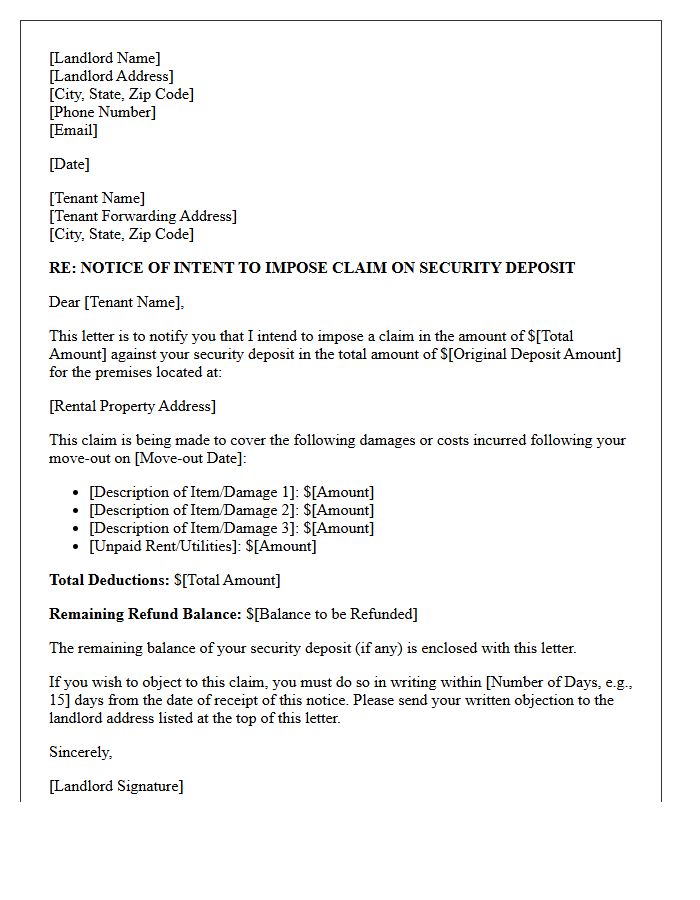
A Notice of Intent to Claim Security Deposit is a critical legal document used by landlords to justify withholding funds for damages or unpaid rent. To ensure compliance, this letter must include an itemized list of deductions and be sent within the state-mandated timeframe. If the landlord fails to provide this written notice properly, they may forfeit their right to keep any portion of the deposit. Tenants should review these charges carefully to ensure they exceed normal wear and tear before the final settlement is processed.
Partial Security Deposit Retention Notice Letter
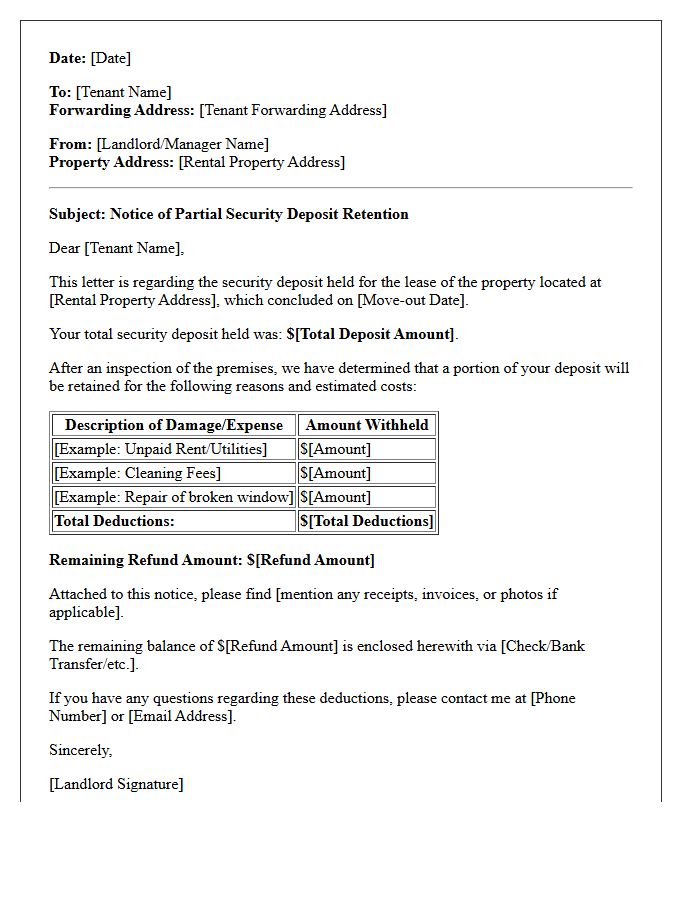
A Partial Security Deposit Retention Notice Letter is a legal document used by landlords to explain why only a portion of a tenant's deposit is being returned. It must include an itemized list of deductions for specific costs, such as property damage beyond normal wear and tear or unpaid rent. Providing this written notice within the state-mandated timeframe is critical to avoid legal disputes and potential penalties. Clear communication ensures transparency regarding the final settlement of the rental agreement while protecting the landlord's right to recover repair expenses.
Move-Out Security Deposit Deduction Intent Letter
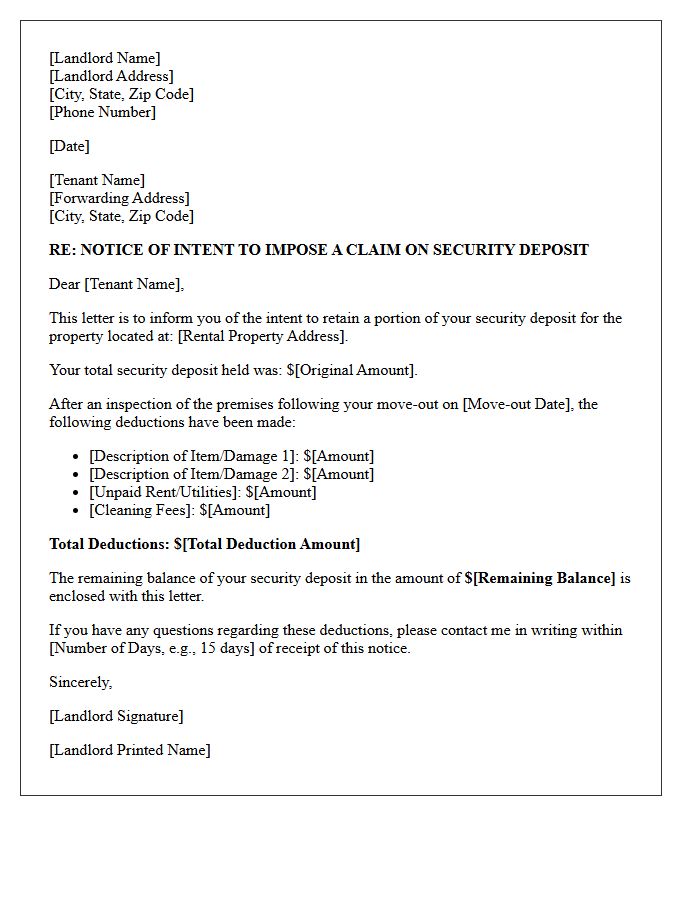
A Move-Out Security Deposit Deduction Intent Letter is a legal notice sent by landlords to itemized expenses being withheld from a tenant's deposit. To comply with State Laws, this document must clearly list specific repairs, cleaning fees, or unpaid rent. Providing this written notice within the mandatory statutory deadline-typically 14 to 30 days-is essential to avoid penalties or legal disputes. Always include receipts or estimates to justify costs, ensuring a transparent Security Deposit Settlement process while protecting both parties from potential litigation after the lease ends.
What is a Notice of Intent to Retain Security Deposit?
A Notice of Intent to Retain Security Deposit is a formal written document sent by a landlord to a tenant explaining that all or a portion of the security deposit will not be refunded. This notice must include a detailed itemization of damages or unpaid costs that justify the withholding of funds.
When must a landlord send a Notice of Intent to Retain Security Deposit?
The timeframe varies by state law, but most jurisdictions require landlords to send this notice within 14 to 30 days after the tenant vacates the property. Failure to provide this notice within the statutory deadline may result in the landlord forfeiting their right to keep any portion of the deposit.
What items can be legally deducted from a security deposit?
Landlords can typically deduct for unpaid rent, late fees, professional cleaning required to return the unit to its initial state, and repairs for damages that exceed "normal wear and tear." Improvements or repairs for pre-existing conditions cannot be deducted.
What is the difference between normal wear and tear and damage?
Normal wear and tear refers to the natural deterioration of a property from everyday use, such as faded paint or worn carpet fibers, which cannot be deducted. Damage refers to avoidable destruction caused by abuse or negligence, such as holes in walls, broken windows, or deep carpet stains, which are valid reasons for retention.
How should a tenant respond to a Notice of Intent to Retain Security Deposit?
If a tenant disagrees with the deductions, they should respond in writing with a formal dispute letter. This letter should reference the move-out inspection, provide evidence such as photos or videos of the property's condition, and request a corrected refund amount before pursuing legal action in small claims court.


Comments