
Protect your rights as a landlord or tenant by understanding the Notice of Security Deposit Deduction. This essential legal document itemizes costs for repairs or unpaid rent after a lease ends. Clear communication ensures transparency and prevents future legal disputes over financial holdbacks. Learn how to draft a professional notice effectively. Below are some ready to use templates.
Image cover: Official Notice of Security Deposit Deductions: Professional Templates and Examples
Letter Samples List
- Standard Security Deposit Deduction Notice Letter
- Itemized Security Deposit Deduction Letter
- Move-Out Inspection And Deposit Deduction Letter
- Partial Security Deposit Refund And Deduction Letter
- Pet Damage Security Deposit Deduction Letter
- Cleaning Fee Security Deposit Deduction Letter
- Property Damage Security Deposit Deduction Letter
- Unpaid Rent And Security Deposit Deduction Letter
- Lease Break Penalty Security Deposit Deduction Letter
- Maintenance Repair Security Deposit Deduction Letter
- Final Account Statement And Deposit Deduction Letter
- Eviction Damage Security Deposit Deduction Letter
Standard Security Deposit Deduction Notice Letter
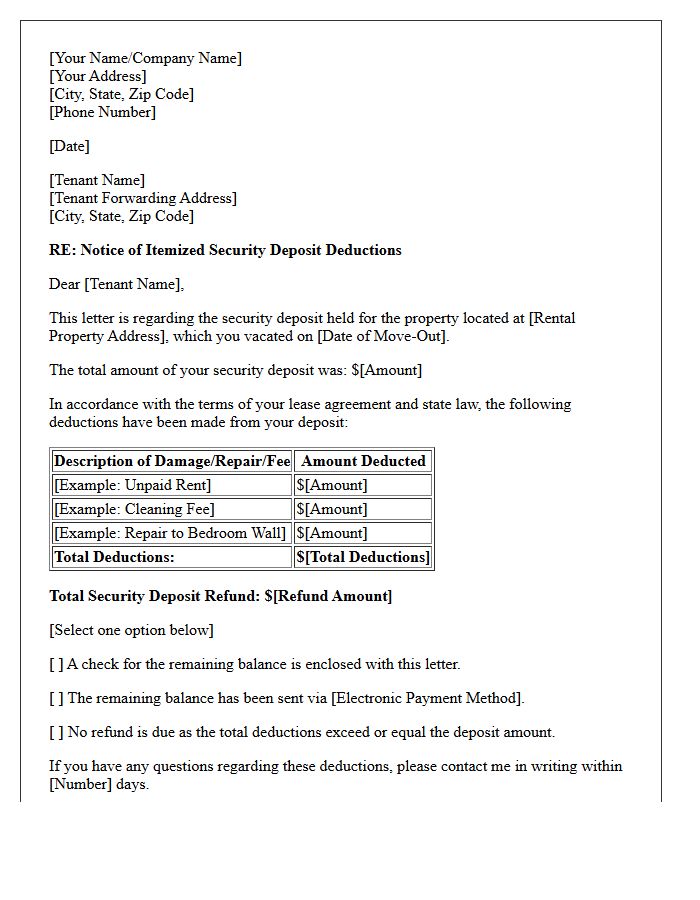
A Standard Security Deposit Deduction Notice Letter is a legal document landlords must send to tenants explaining why funds were withheld. It must include an itemized list of specific repairs, cleaning fees, or unpaid rent. To ensure compliance, landlords must provide proof of costs, such as receipts or estimates. Most jurisdictions require this notice within a strict legal deadline, typically 14 to 30 days after move-out. Failing to send this formal statement can result in a landlord being ordered to return the entire security deposit regardless of property damage.
Itemized Security Deposit Deduction Letter
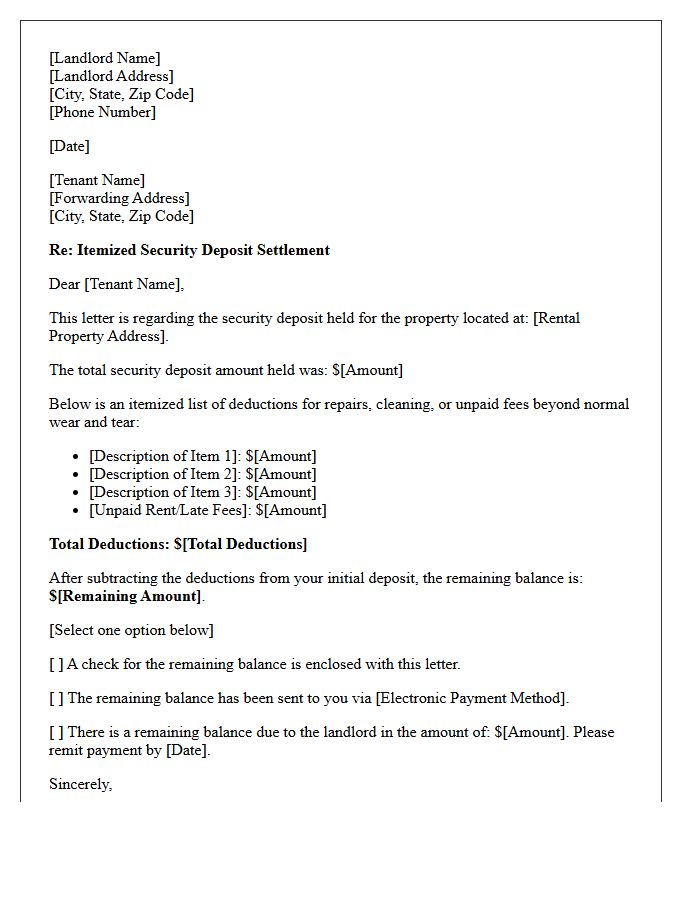
An Itemized Security Deposit Deduction Letter is a formal document landlords must provide to explain any funds withheld from a tenant's deposit. It is essential to list specific repairs, cleaning costs, or unpaid rent with supporting receipts or estimates. Most jurisdictions require this notice within a legal deadline, often 14 to 30 days after move-out. Providing a clear, documented breakdown protects landlords from legal disputes and ensures tenants understand why they did not receive a full refund, maintaining transparency in the rental transition process.
Move-Out Inspection And Deposit Deduction Letter
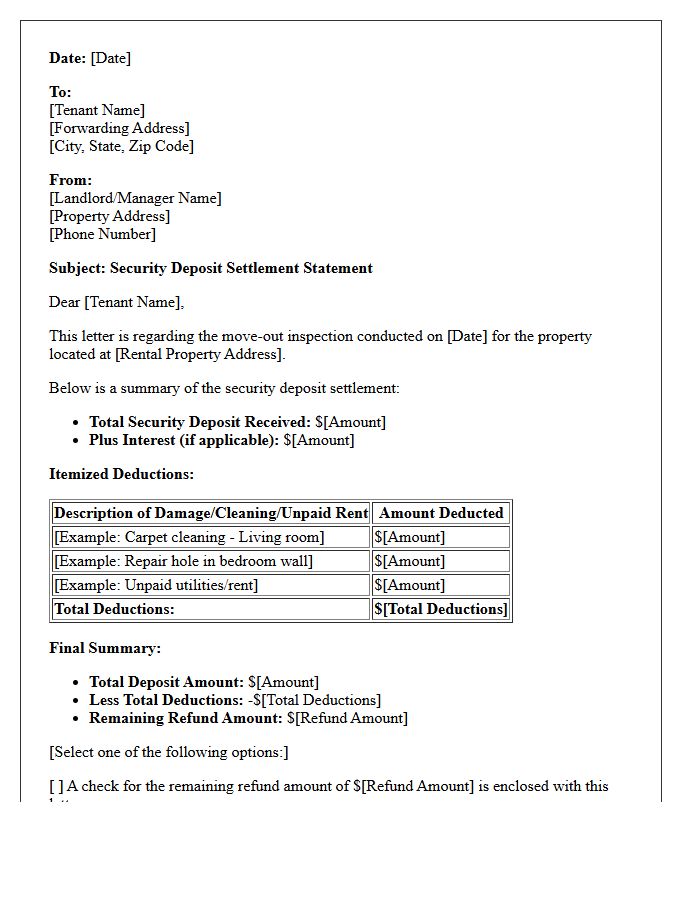
A Move-Out Inspection is a critical process where landlords document property conditions after a tenant leaves. To protect your rights, always compare the final walkthrough against the initial move-in checklist. Landlords must provide a formal Deposit Deduction Letter within state-mandated deadlines, typically 14 to 30 days. This itemized statement must clearly explain any security deposit withholdings for repairs beyond normal wear and tear. If the landlord fails to provide this written accounting or keeps funds unfairly, the tenant may have legal grounds to dispute the charges in small claims court.
Partial Security Deposit Refund And Deduction Letter
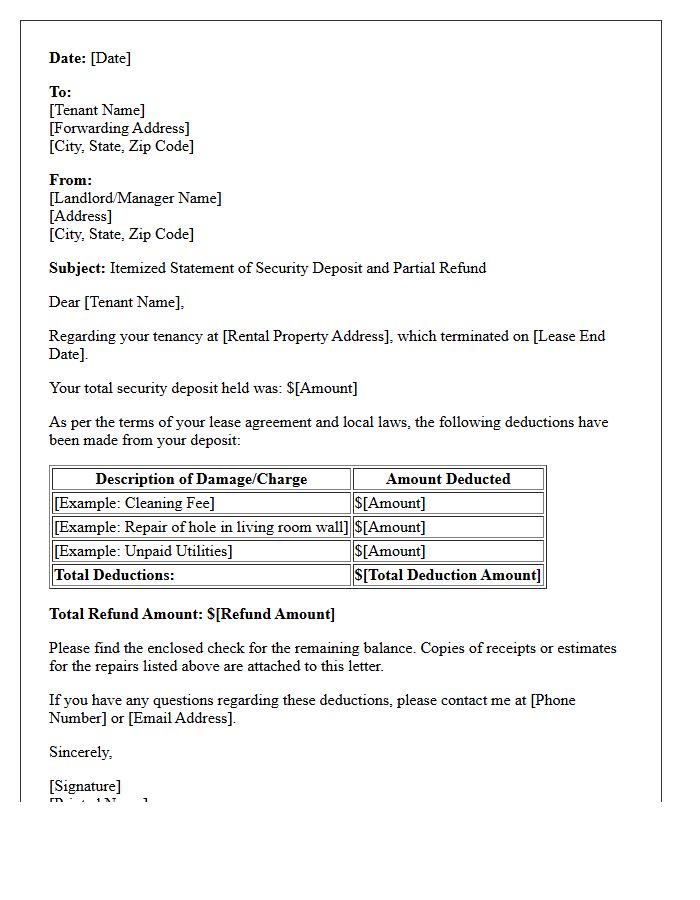
A Partial Security Deposit Refund and Deduction Letter is a formal notice sent by a landlord to a tenant explaining why the full deposit was not returned. It must include an itemized list of specific charges, such as unpaid rent or damages beyond normal wear and tear. Legally, this document must be sent within a strict state-mandated timeframe to avoid penalties. Providing clear receipts and descriptions protects the landlord from disputes while ensuring the tenant understands the exact deductions applied to their original balance.
Pet Damage Security Deposit Deduction Letter
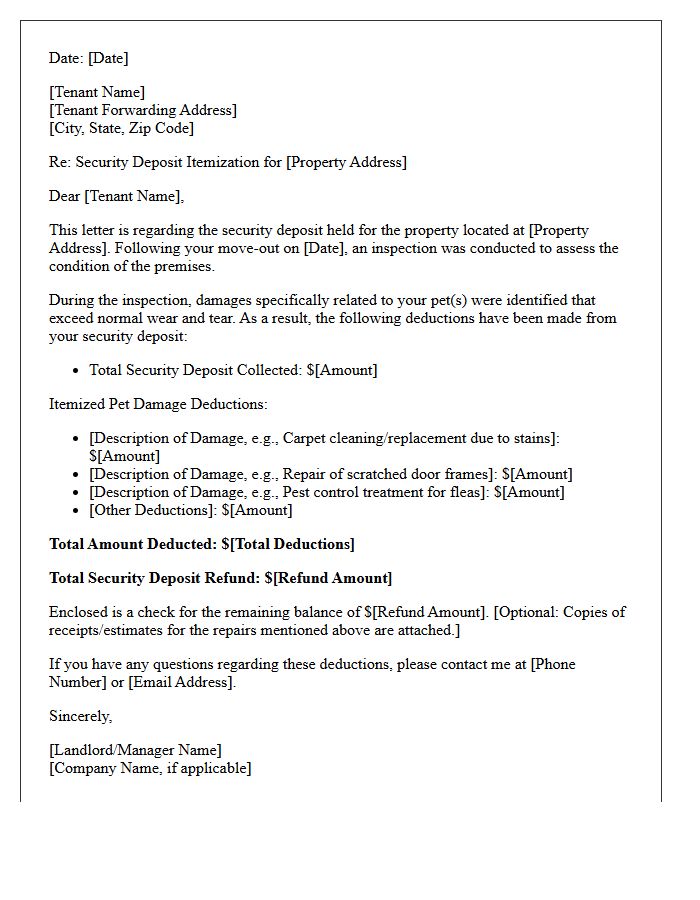
A Pet Damage Security Deposit Deduction Letter is a formal legal notice sent by a landlord to a former tenant. It must include an itemized list of specific repair costs caused by pets, such as stained carpets or scratched woodwork. To remain compliant with local laws, you must send this document within the statutory timeframe, typically 14 to 30 days. Attaching invoices or receipts is crucial to justify withholding funds. Clear documentation ensures transparency and helps prevent potential legal disputes over the remaining security deposit refund.
Cleaning Fee Security Deposit Deduction Letter
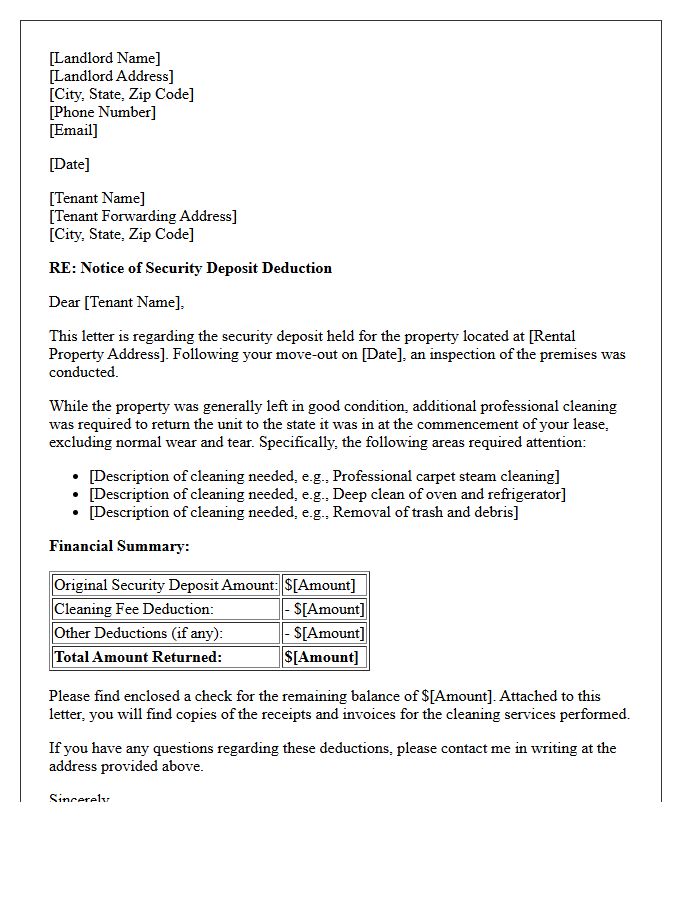
A Cleaning Fee Security Deposit Deduction Letter is a formal notice sent by landlords to explain why specific cleaning costs were withheld from a tenant's refund. It must include an itemized list of services performed to justify the charges. To ensure legal compliance, attach receipts or invoices as proof of professional cleaning or specialized restoration. Sending this document within the state-mandated timeframe is crucial to avoid disputes. This letter serves as essential legal documentation to protect the landlord's right to maintain the property's condition after a lease ends.
Property Damage Security Deposit Deduction Letter
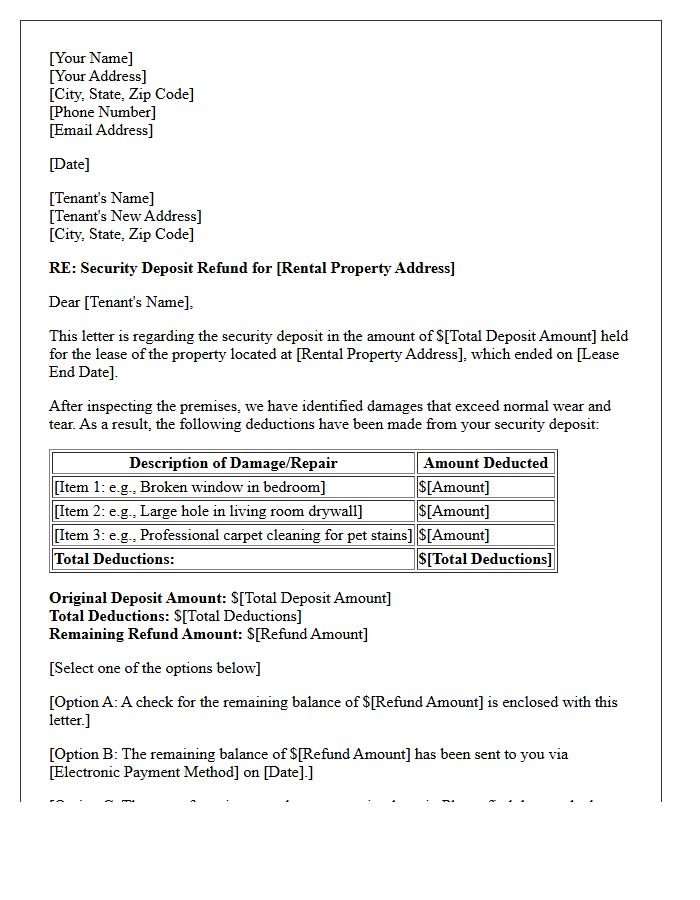
A Property Damage Security Deposit Deduction Letter is a formal notice sent by landlords to tenants explaining why a portion of the security deposit is being withheld. It must include an itemized list of specific damages beyond normal wear and tear, along with the associated repair costs. To ensure legal compliance, this document should be sent within the state-mandated deadline. Providing clear evidence, such as receipts and before-and-after photos, helps prevent potential legal disputes and ensures transparency throughout the move-out process.
Unpaid Rent And Security Deposit Deduction Letter
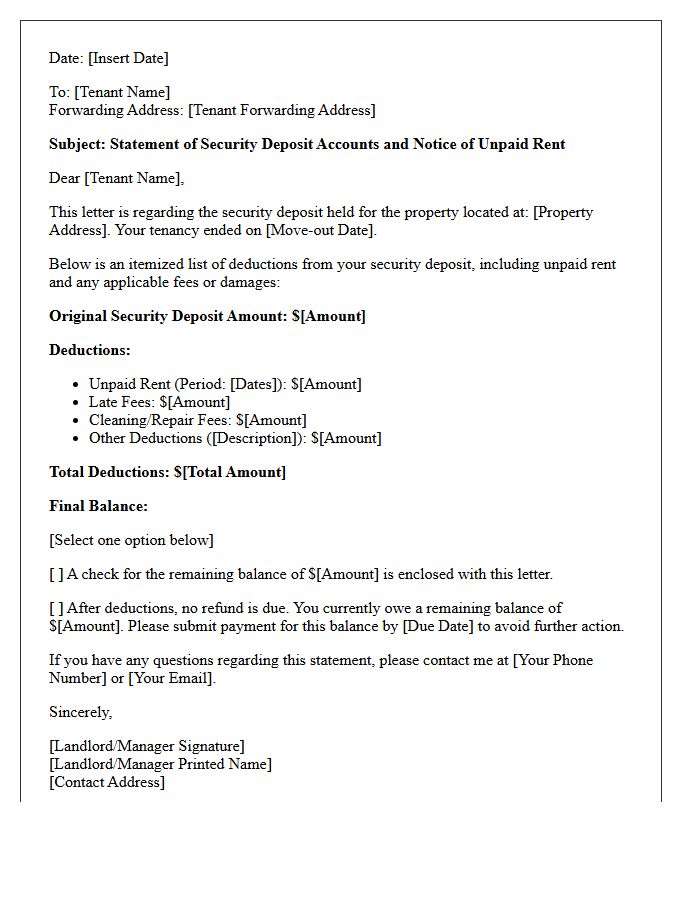
An unpaid rent and security deposit deduction letter is a mandatory formal notice sent by landlords to tenants after move-out. This document must provide an itemized statement detailing any outstanding rent or cleaning and repair costs deducted from the original deposit. State laws strictly govern the deadline for sending this letter to avoid legal penalties. To ensure compliance, landlords should include copies of invoices and clear explanations for each charge, returning any remaining balance to the tenant's last known address to conclude the lease settlement properly.
Lease Break Penalty Security Deposit Deduction Letter
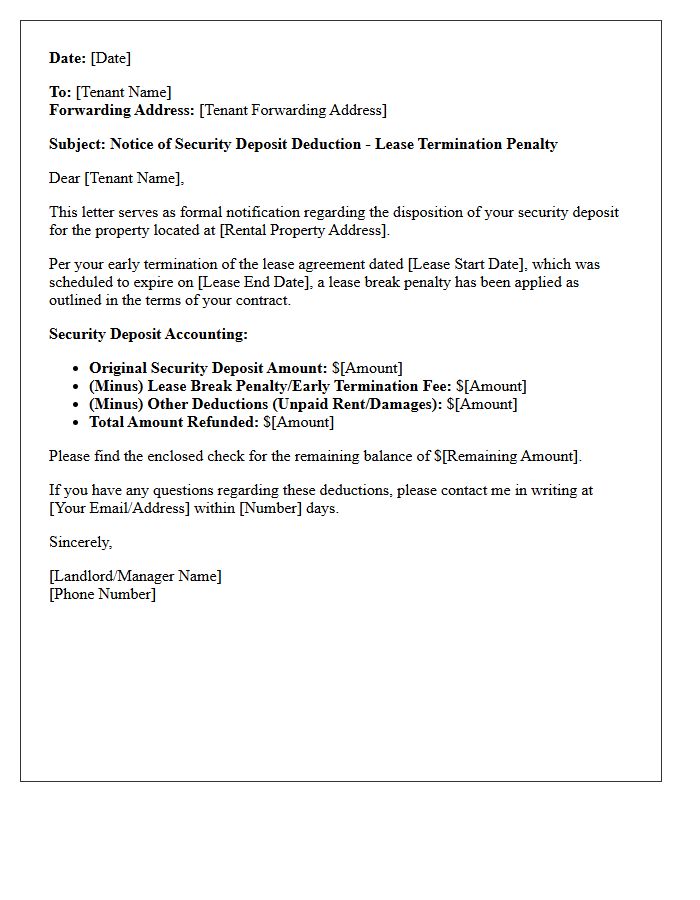
A Lease Break Penalty Security Deposit Deduction Letter is a formal notice sent by a landlord to a tenant explaining why funds were withheld. When a lease is terminated early, the landlord uses this document to itemize contractual penalties and unpaid rent deducted from the security deposit. It ensures legal transparency and helps prevent future disputes. To be valid, the letter must adhere to state-specific notice periods and clearly justify how the penalty was calculated according to the original rental agreement.
Maintenance Repair Security Deposit Deduction Letter
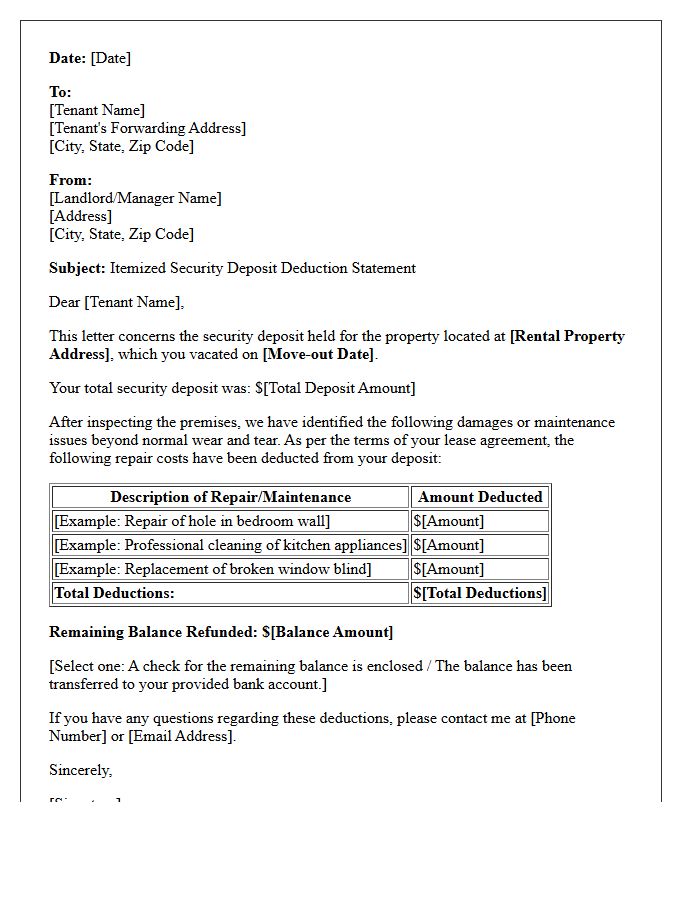
A Security Deposit Deduction Letter provides a legal, itemized statement explaining why a landlord withheld funds. It must clearly detail costs for property damage exceeding normal wear and tear, including specific maintenance and repair expenses. To ensure compliance, landlords should attach invoices or receipts and send the notice within the state's required statutory deadline. Providing this transparent documentation protects owners from legal disputes while ensuring tenants understand the exact reasons for each reduction in their refunded balance. Clear communication is the key to resolving post-tenancy financial obligations fairly.
Final Account Statement And Deposit Deduction Letter
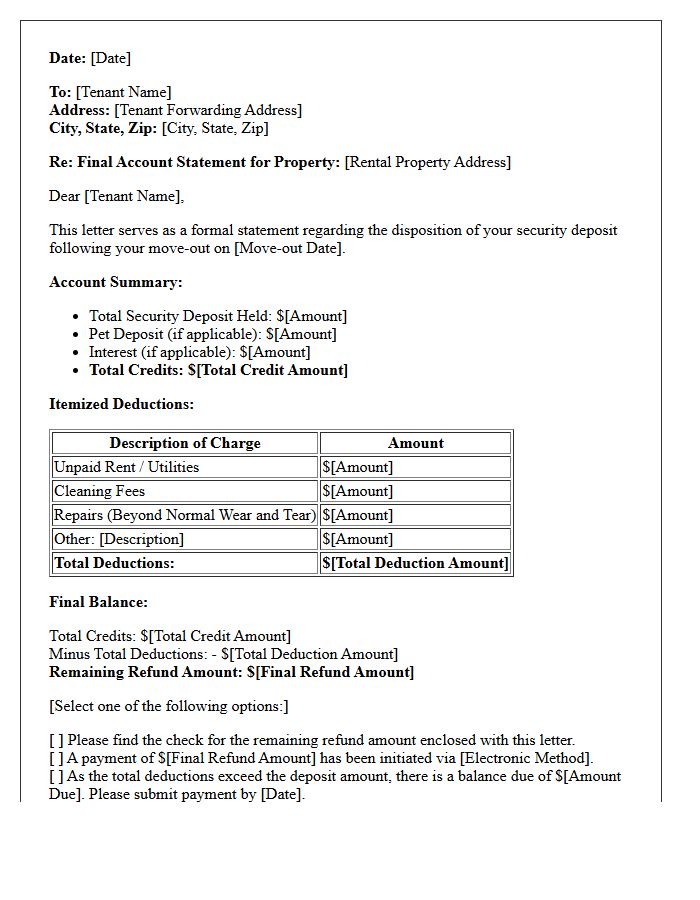
A Final Account Statement serves as a transparent financial summary provided by landlords when a lease concludes. This document itemizes any deposit deductions taken for unpaid rent or property damages exceeding normal wear and tear. It is crucial for tenants to review these charges against their initial move-in inspection to ensure accuracy. If disputes arise, this letter acts as the primary legal record for reclaiming a security deposit. Always keep a copy of this statement and any supporting evidence to protect your rights during the tenancy reconciliation process.
Eviction Damage Security Deposit Deduction Letter
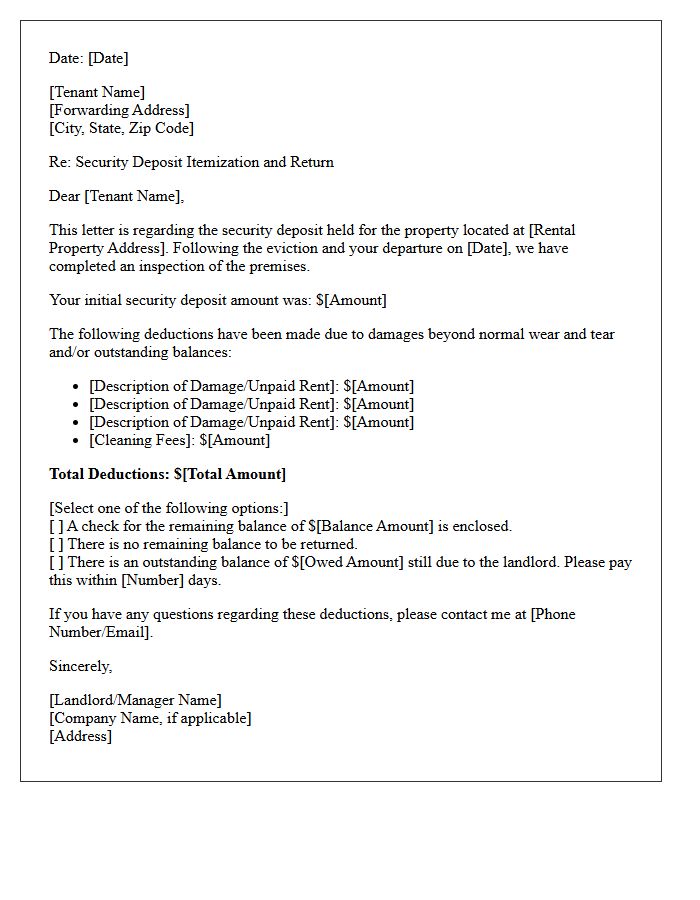
An Eviction Damage Security Deposit Deduction Letter is a formal notice sent by landlords to former tenants. It itemizes specific costs subtracted from the security deposit for repairs beyond normal wear and tear. To ensure legal compliance, the letter must include detailed receipts, descriptions of damage, and the remaining refund amount. Sending this document within the statutory deadline is critical to avoid legal penalties or small claims disputes. Providing clear evidence and transparent calculations protects the landlord's rights while fulfilling their legal obligation to account for withheld funds after an eviction.
What is a Notice of Security Deposit Deduction?
A Notice of Security Deposit Deduction is a written statement provided by a landlord to a tenant explaining why a portion or all of the security deposit is being withheld. It typically includes an itemized list of costs for repairs beyond normal wear and tear, unpaid rent, or cleaning fees.
How long does a landlord have to provide an itemized list of deductions?
The timeframe varies by state, but most jurisdictions require landlords to send the itemized notice and any remaining funds within 14 to 30 days after the tenant moves out and returns the keys.
What can a landlord legally deduct from a security deposit?
Landlords can legally deduct for damages that exceed "normal wear and tear," such as broken windows, large holes in walls, or deep carpet stains. They may also deduct for unpaid rent, unpaid utility bills, and excessive cleaning required to return the unit to its original move-in condition.
Can a landlord deduct for "normal wear and tear"?
No, landlords cannot deduct for normal wear and tear, which includes minor scuffs on walls, faded paint, or naturally worn carpet. Deductions are strictly reserved for damage caused by negligence, misuse, or breach of the lease agreement.
What should I do if I disagree with the security deposit deductions?
If you disagree with the deductions, you should send a formal dispute letter to the landlord via certified mail. Include evidence such as move-in/move-out photos and receipts to support your claim, and if the issue remains unresolved, you may pursue the matter in small claims court.

Comments