
Routine fire alarm and sprinkler system testing is vital for building safety and regulatory compliance. Regular inspections ensure life-saving equipment functions correctly during emergencies, protecting occupants and property. Proper notification informs residents and staff of upcoming maintenance to prevent unnecessary panic. To help you communicate effectively with your building occupants, below are some ready to use template.
Image cover: Official Fire Alarm and Sprinkler Testing Notices: Professional Templates and Examples
Letter Samples List
- Annual Fire Alarm and Sprinkler System Testing Notice Letter
- Mandatory Fire Sprinkler and Alarm Inspection Letter
- Tenant Notice Letter for Fire Alarm and Sprinkler Testing
- Commercial Property Fire System Testing Notification Letter
- Residential Fire Alarm and Sprinkler Maintenance Letter
- Upcoming Fire Alarm and Sprinkler System Evaluation Letter
- Property Management Fire System Testing Advisory Letter
- Routine Fire Sprinkler and Alarm Testing Notice Letter
- Building-Wide Fire Alarm and Sprinkler Inspection Letter
- Quarterly Fire System Testing and Maintenance Letter
- Urgent Notice Letter for Fire Alarm and Sprinkler Testing
- Fire Alarm and Sprinkler System Compliance Testing Letter
Annual Fire Alarm and Sprinkler System Testing Notice Letter
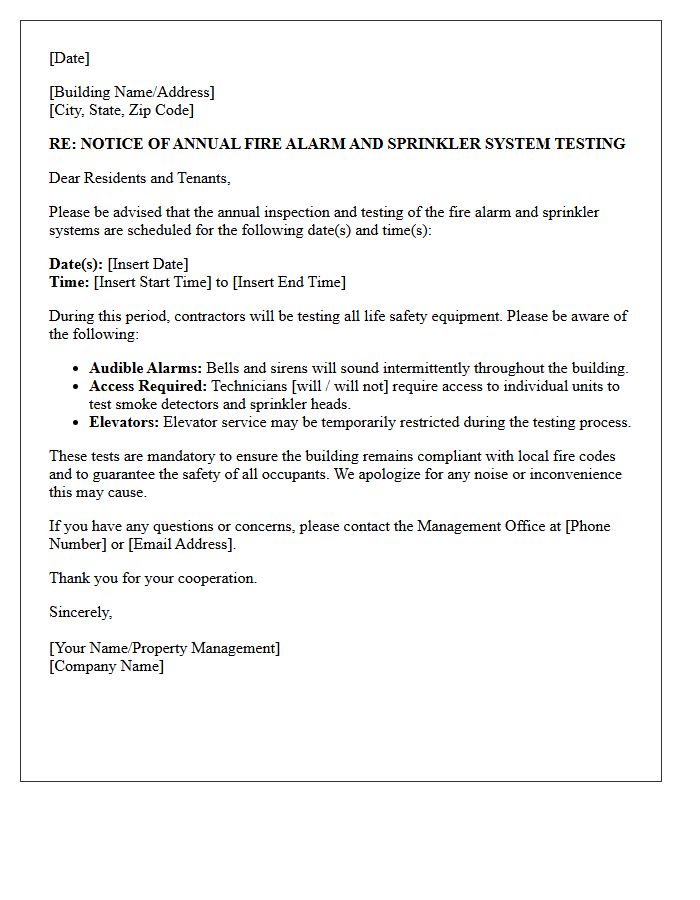
An Annual Fire Alarm and Sprinkler System Testing Notice is a critical communication informing occupants of mandatory safety inspections. This compliance procedure ensures that life-safety equipment, including smoke detectors and water suppressors, functions correctly during emergencies. Property managers must provide advance warning, as testing often involves audible alarms and requires building-wide access to individual units. Residents should prepare for brief noise disruptions and potential water pressure fluctuations. Timely testing is essential to meet local fire codes, maintain insurance coverage, and guarantee the maximum protection of all lives and property.
Mandatory Fire Sprinkler and Alarm Inspection Letter
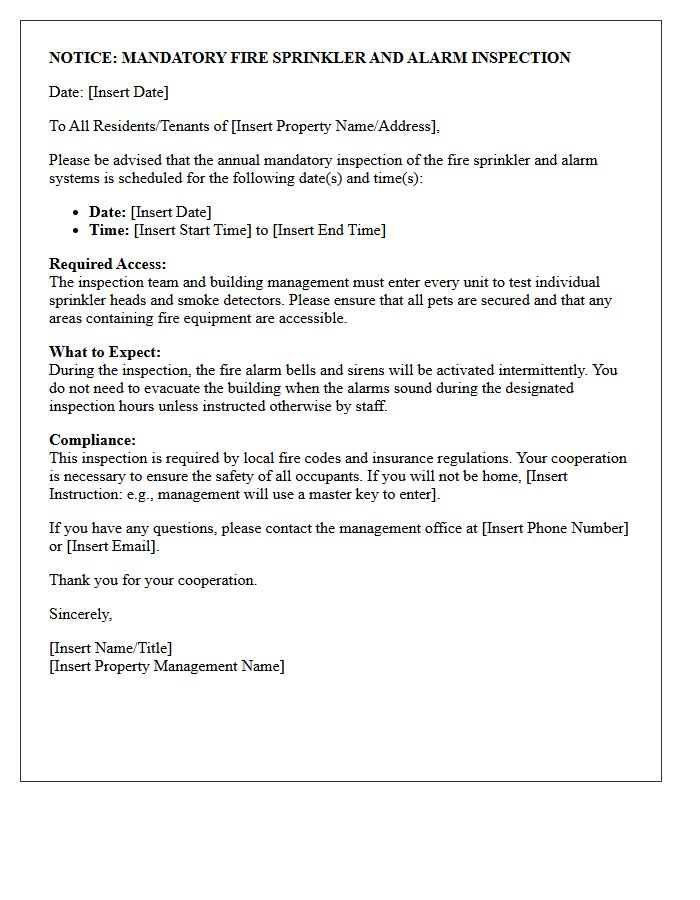
A mandatory fire sprinkler and alarm inspection letter is an official notice requiring property owners to schedule annual safety certifications. Compliance is essential to meet local fire codes and ensure life-saving systems function during emergencies. These inspections verify that sensors, pull stations, and water pressure levels adhere to legal standards. Failure to address this notice can result in heavy fines, insurance cancellations, or building closures. Always use a certified contractor to perform the testing and submit the necessary documentation to the fire marshal to maintain your occupancy permit.
Tenant Notice Letter for Fire Alarm and Sprinkler Testing
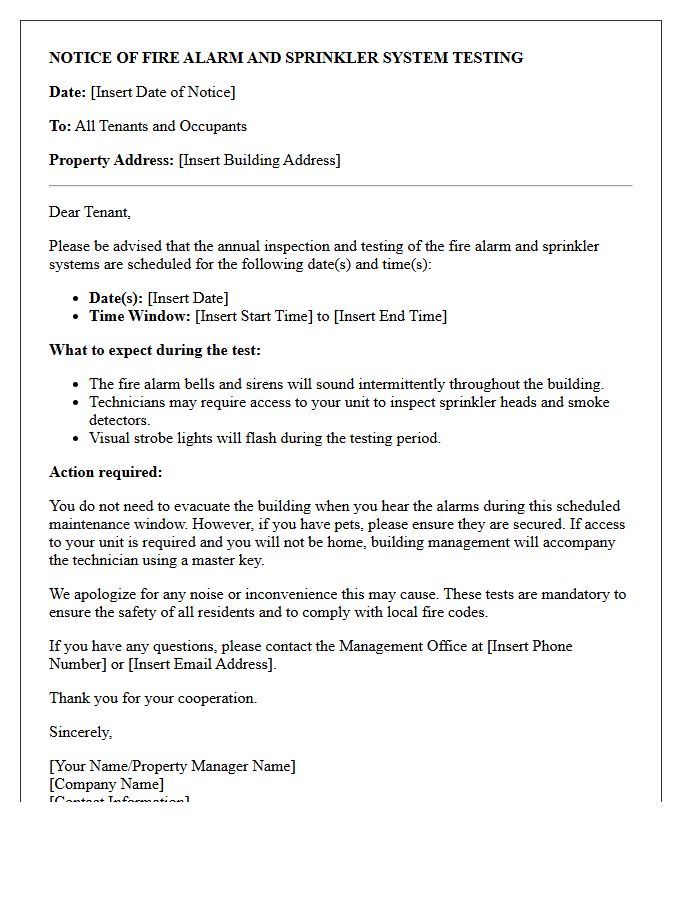
A Tenant Notice Letter is a mandatory document informing residents about upcoming fire safety inspections. It must clearly state the scheduled date and time to ensure property access for technicians. Landlords are legally required to provide advance notice, typically 24 to 48 hours, before testing fire alarms and sprinkler systems. This communication minimizes disruption, as audible sirens and strobe lights will be activated. Ensuring compliance with local fire codes through regular testing is essential for building safety, preventing emergencies, and maintaining valid insurance coverage for the premises.
Commercial Property Fire System Testing Notification Letter
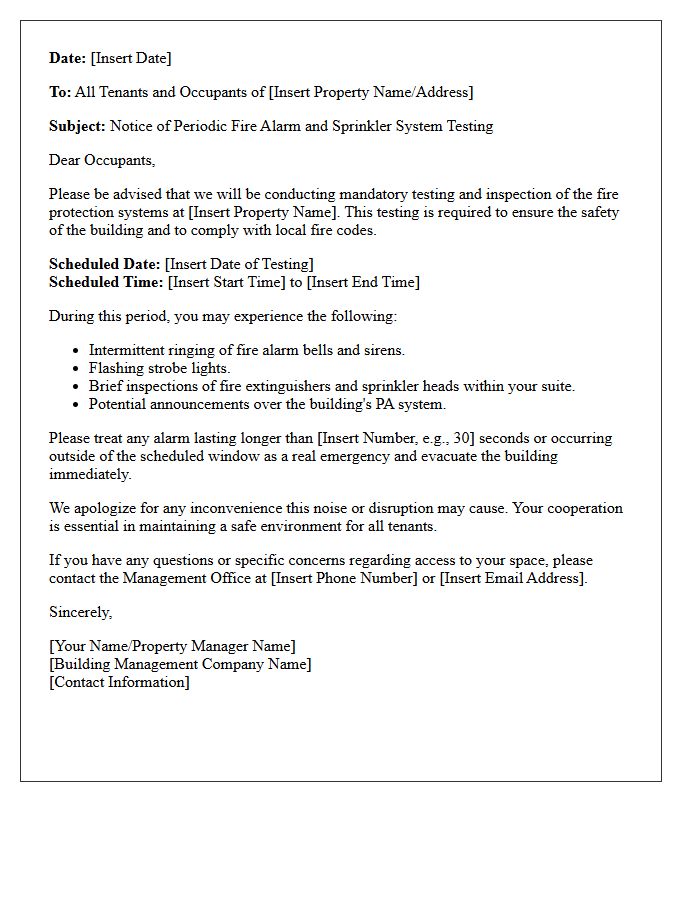
A Commercial Property Fire System Testing Notification Letter is an essential legal document sent to tenants to ensure building safety and compliance. It must clearly state the scheduled date and time of inspection to minimize business disruption. The letter informs occupants of potential alarm activations, strobe testing, and mandatory access requirements for technicians. Providing advanced notice is a regulatory obligation that ensures operational transparency, maintains insurance validity, and guarantees that all life-safety equipment functions correctly during an emergency. Always keep a record of these communications for fire marshal audits.
Residential Fire Alarm and Sprinkler Maintenance Letter
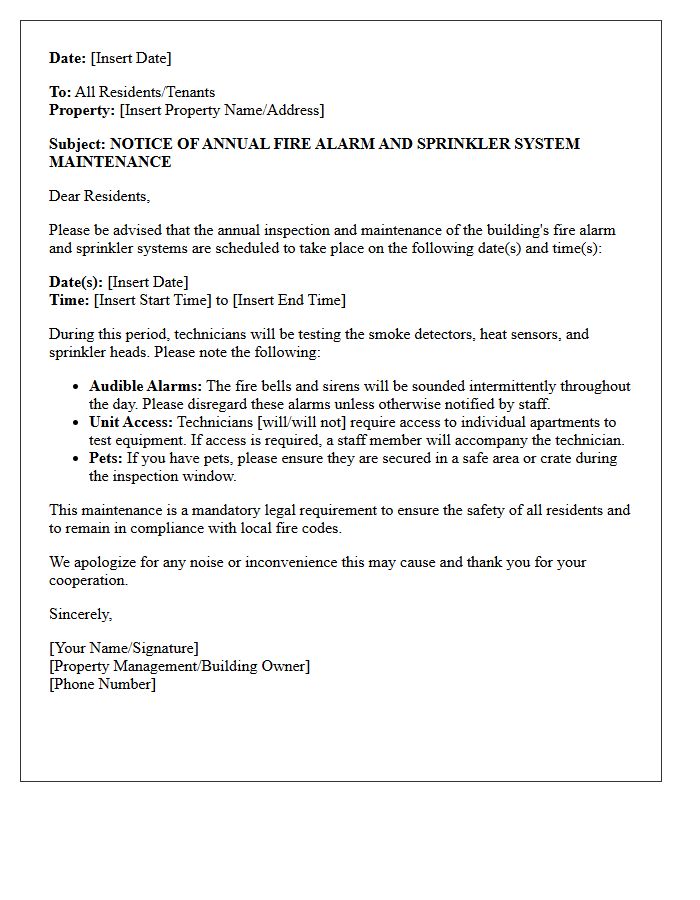
A Residential Fire Alarm and Sprinkler Maintenance Letter is a vital document confirming that life-safety systems are fully functional and compliant with local codes. Property owners must ensure regular professional inspections of smoke detectors, control panels, and water pressure levels. This letter serves as official proof for insurance providers and fire departments that the building remains safe for inhabitants. Timely maintenance prevents accidental discharges and ensures rapid response during emergencies. Keeping these records organized is essential for legal protection and maintaining the overall integrity of your property's fire protection strategy.
Upcoming Fire Alarm and Sprinkler System Evaluation Letter
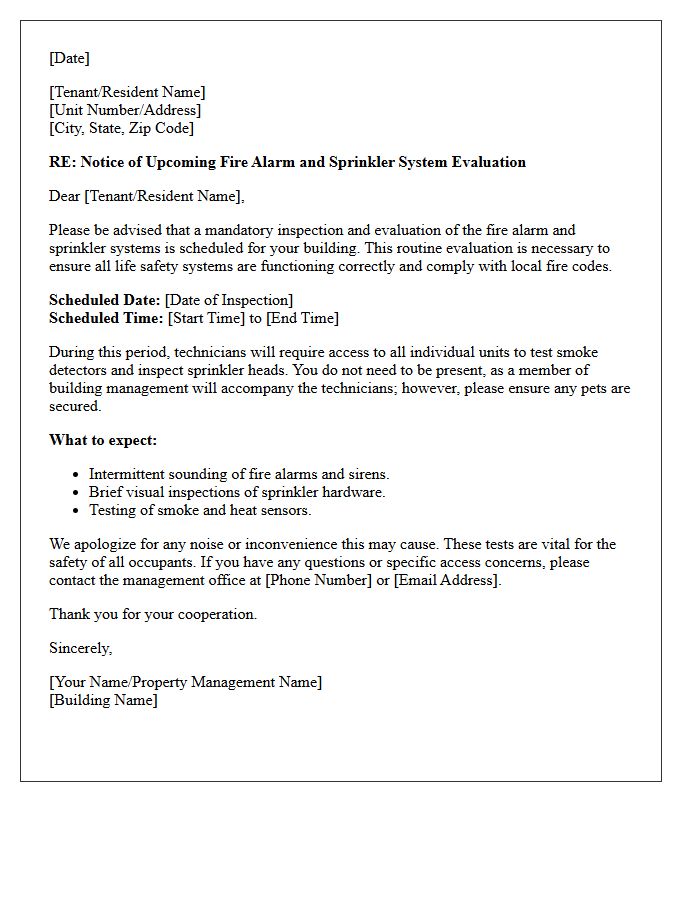
An upcoming fire alarm and sprinkler system evaluation is a mandatory safety inspection to ensure life-saving equipment functions correctly. Residents must provide authorized access to all units during the scheduled timeframe to allow technicians to test smoke detectors, alarms, and suppression heads. This proactive maintenance identifies potential mechanical failures and ensures compliance with local fire codes. Please secure any pets and ensure unobstructed access to devices. Your cooperation is essential for maintaining a fire-safe environment and protecting the entire building's integrity through professional regulatory verification.
Property Management Fire System Testing Advisory Letter
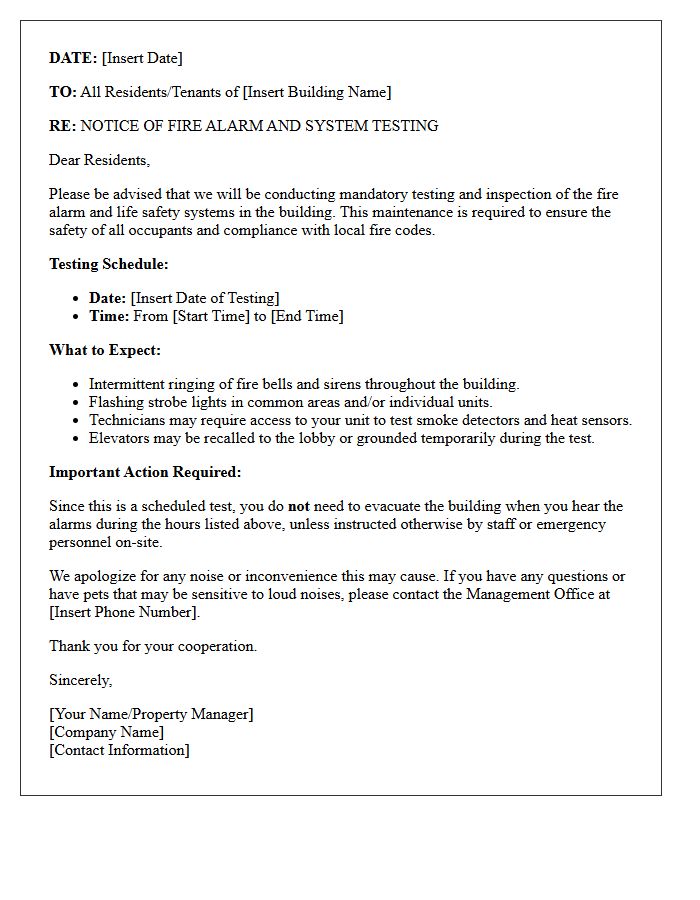
A Property Management Fire System Testing Advisory Letter is a critical communication informing tenants of upcoming safety inspections. This mandatory notification ensures compliance with local fire codes while maintaining building safety standards. The document outlines the specific testing schedule and potential disruptions, such as audible alarms or strobe light activation. Residents must provide authorized access to individual units for smoke detector and sprinkler verification. Clear communication helps minimize tenant anxiety and ensures that life-saving equipment remains fully operational and certified by qualified technicians.
Routine Fire Sprinkler and Alarm Testing Notice Letter
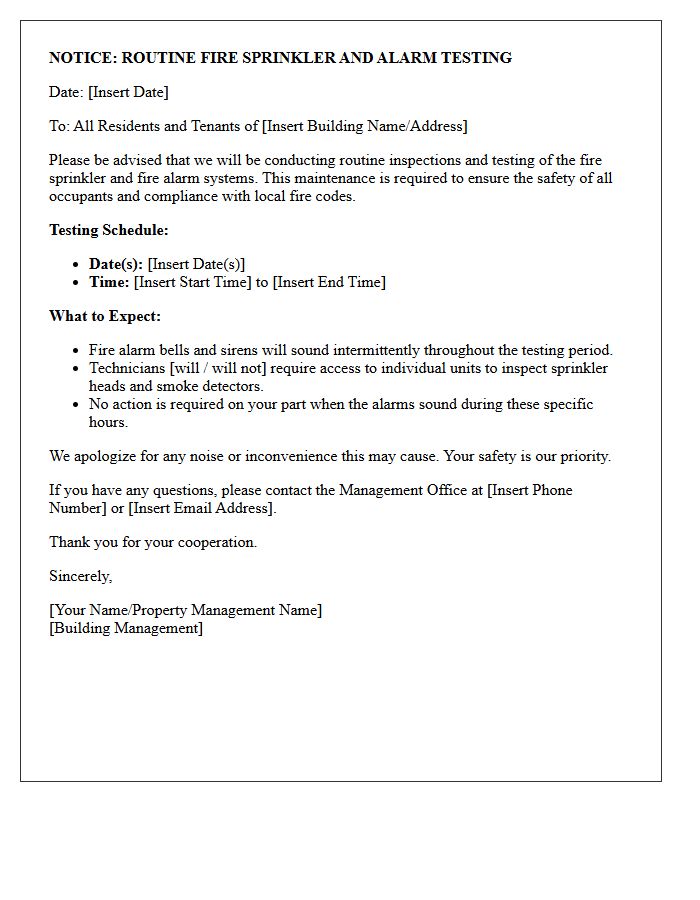
A Routine Fire Sprinkler and Alarm Testing Notice is a vital communication ensuring building safety and regulatory compliance. It informs occupants of upcoming maintenance to verify that suppression systems and emergency alerts function correctly. The letter must clearly state the scheduled date and time to prevent panic during audible tests. Residents should be advised on whether unit access is required and how to handle potential false alarms. Regular inspections are mandatory by law to mitigate fire risks, protect lives, and maintain insurance coverage through proactive equipment verification.
Building-Wide Fire Alarm and Sprinkler Inspection Letter
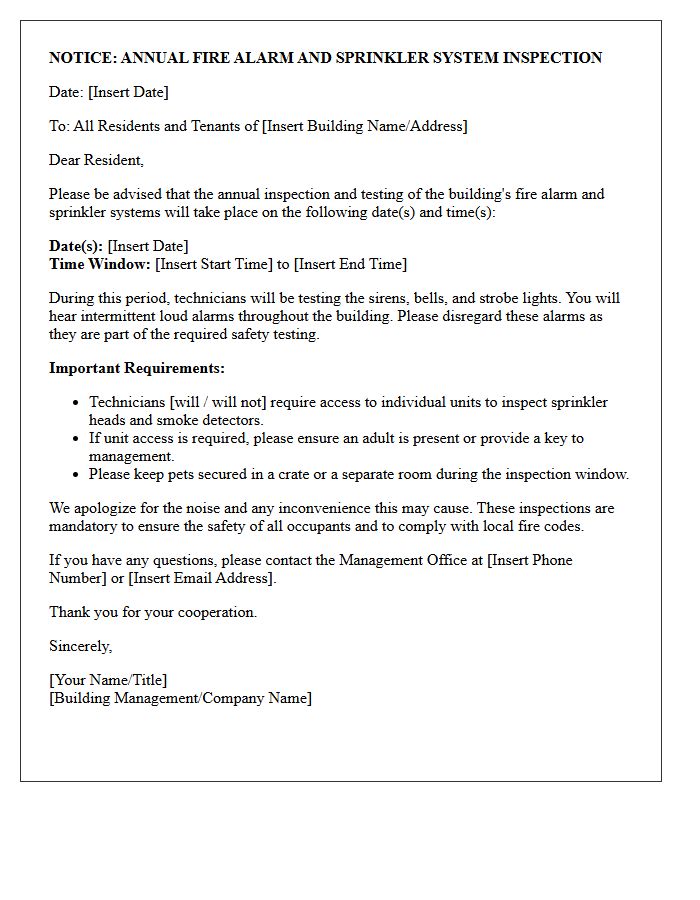
A Building-Wide Fire Alarm and Sprinkler Inspection Letter is a formal notice informing tenants of scheduled safety testing. It is crucial to provide clear dates and times to ensure building-wide access for technicians. These inspections verify that life-safety systems, including smoke detectors and suppression units, meet local fire codes. Residents should prepare for intermittent audible alarms and visual strobe testing during the process. Timely cooperation ensures the property remains compliant, minimizes liability, and, most importantly, guarantees the safety of all occupants in the event of an emergency.
Quarterly Fire System Testing and Maintenance Letter
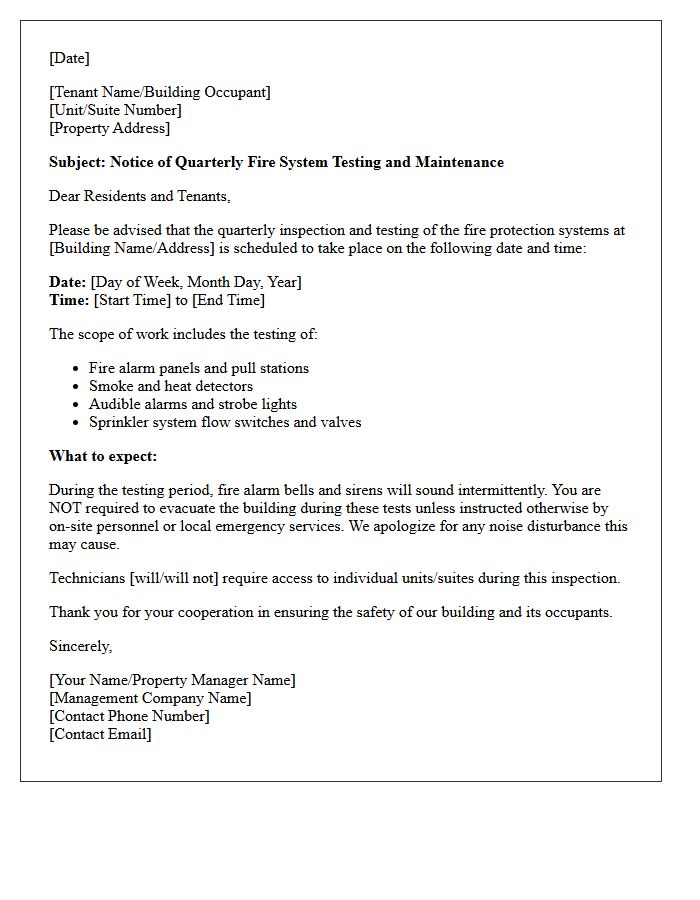
A Quarterly Fire System Testing and Maintenance Letter is a formal document confirming that your facility's fire protection equipment has been professionally inspected. This compliance record ensures that alarms, sprinklers, and sensors function correctly according to safety codes. Property owners must retain these letters to satisfy insurance requirements and local fire department regulations. Regular maintenance prevents system failure, minimizes liability risks, and ensures the safety of all building occupants. Receiving this letter verifies that your systems are reliable and legally compliant every three months.
Urgent Notice Letter for Fire Alarm and Sprinkler Testing
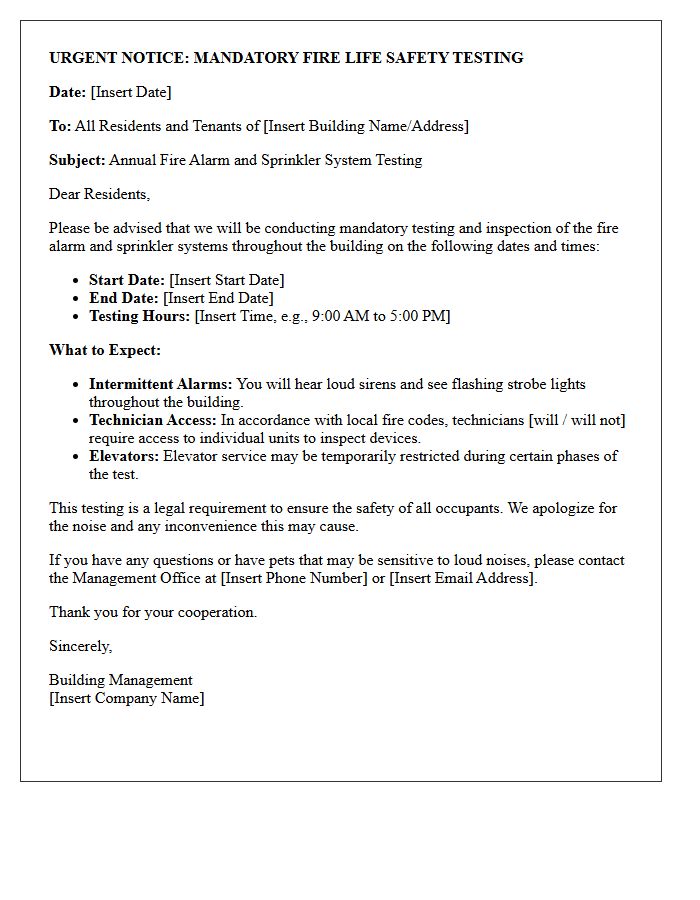
An Urgent Notice Letter for fire alarm and sprinkler testing is a critical communication ensuring building safety and regulatory compliance. Residents and tenants must be informed of specific testing dates and times to minimize panic during audible alarms. The notice typically requires authorized access to individual units for device inspections. Cooperation is essential to verify that life-safety systems function correctly during emergencies. Please ensure all obstructions near sprinkler heads or sensors are removed prior to the technician's arrival to avoid potential fines or re-inspection fees.
Fire Alarm and Sprinkler System Compliance Testing Letter
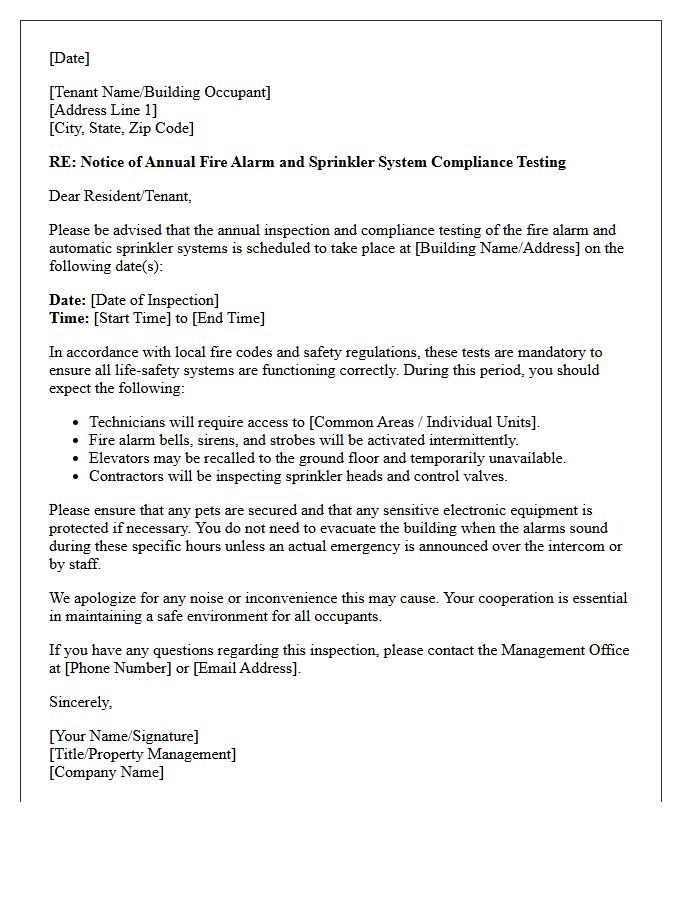
A Fire Alarm and Sprinkler System Compliance Testing Letter is a critical document certifying that your life safety equipment meets local NFPA codes and municipal regulations. Issued after professional inspection, this letter proves that sensors, alarms, and suppression systems function correctly during emergencies. Building owners must maintain these records to ensure legal compliance, avoid costly fines, and satisfy insurance requirements. Timely testing mitigates liability and confirms that the property is safe for occupants, providing essential verification that your fire protection infrastructure is fully operational and reliable.
Why is my building undergoing fire alarm and sprinkler system testing?
Routine testing is legally required by fire codes to ensure all sensors, notification devices, and suppression systems function correctly during an emergency to protect life and property.
Will the fire alarm bells and sirens be activated during the inspection?
Yes, audible and visual alarms will be activated intermittently throughout the testing period. Please treat all alarms as a test during the scheduled window unless otherwise notified by building staff.
Do I need to evacuate the building when I hear the fire alarm during the test?
No evacuation is necessary during the pre-announced testing window. However, if the alarm continues for an extended period outside of the scheduled time, follow standard emergency evacuation procedures.
Will the water in the fire sprinkler system be discharged into my unit or office?
No, standard testing involves checking water pressure and flow through specialized drain valves. Sprinkler heads will not discharge water unless they are exposed to actual fire-level temperatures.
How will this fire safety test affect elevator and electronic door access?
Elevators may temporarily recall to the ground floor and electronic security doors may unlock or release during the integration test. Normal operation will be restored immediately following the completion of the system check.

Comments