
Streamline your hiring process and mitigate operational risks by mastering Contractor Compliance and Onboarding. Ensuring that every external worker meets legal standards and safety requirements protects your business from liability while fostering professional collaboration. Efficient documentation is the foundation of a secure workforce. To help you get started immediately, below are some ready to use template.
Image cover: Streamlining Onboarding: Essential Contractor Compliance Templates and Letter Samples
Letter Samples List
- Contractor Welcome and General Onboarding Letter
- Certificate of Insurance and Liability Compliance Letter
- Contractor Health and Safety Protocol Letter
- Property Management Vendor Agreement Acknowledgment Letter
- Contractor Background Check and Security Clearance Letter
- Tax Identification and Financial Document Request Letter
- On-Site Code of Conduct and Property Rules Letter
- Contractor Invoicing and Payment Procedure Letter
- Trade License and Certification Verification Letter
- Site Access and Key Release Authorization Letter
- Confidentiality and Tenant Privacy Acknowledgment Letter
- Approved Subcontractor Policy and Compliance Letter
- Routine Compliance Audit and Performance Review Letter
Contractor Welcome and General Onboarding Letter
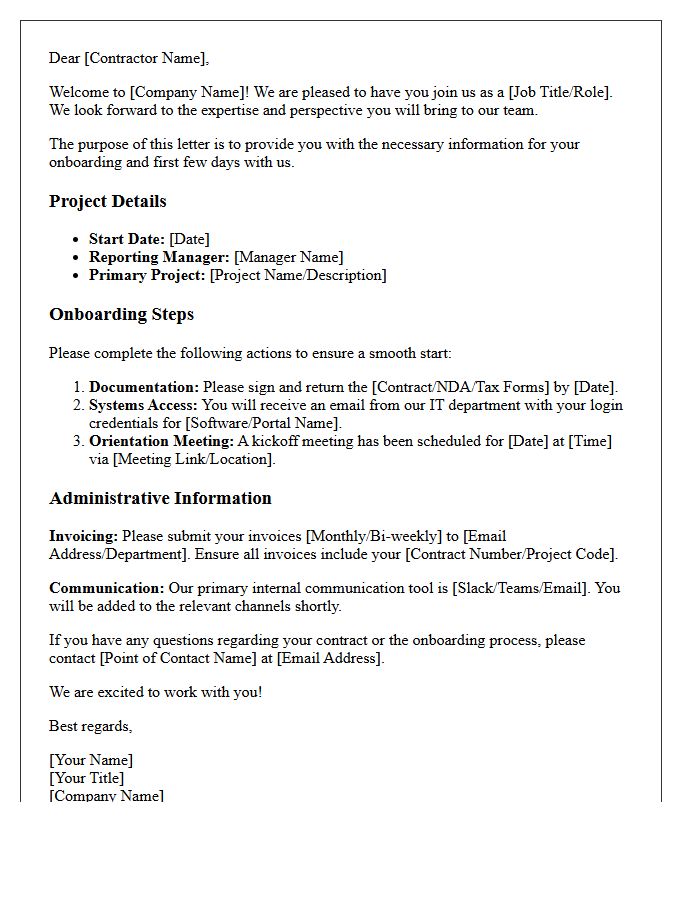
A Contractor Welcome and General Onboarding Letter is a professional document that initiates a successful business partnership. It clarifies the scope of work, project timelines, and payment terms to ensure legal compliance and alignment. By providing essential contact information and system access early, you foster operational efficiency. This letter sets clear expectations, protects intellectual property through confidentiality clauses, and establishes a foundation for seamless collaboration. Use this onboarding tool to integrate independent talent quickly while maintaining professional boundaries and project transparency from day one.
Certificate of Insurance and Liability Compliance Letter
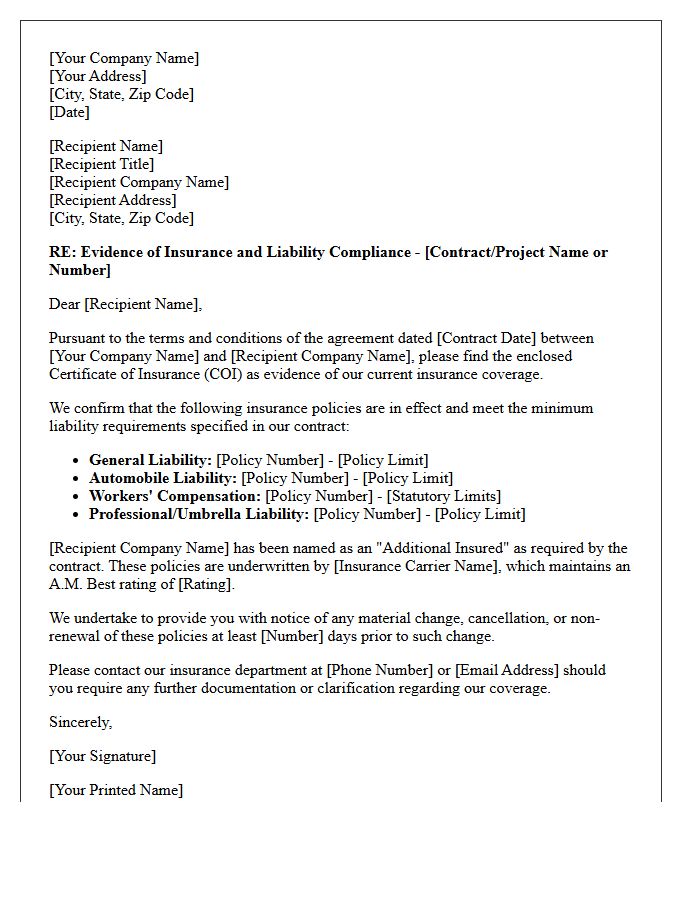
A Certificate of Insurance (COI) serves as formal proof of active coverage, detailing policy limits and expiration dates. It is essential for verifying that a contractor or vendor meets specific insurance requirements. Conversely, a Liability Compliance Letter confirms that an entity adheres to contractual obligations or legal safety standards. Both documents are critical for risk management, ensuring all parties are protected against financial loss. Always verify that these records are current and issued by an authorized broker to maintain contractual integrity and operational security within your business agreements.
Contractor Health and Safety Protocol Letter
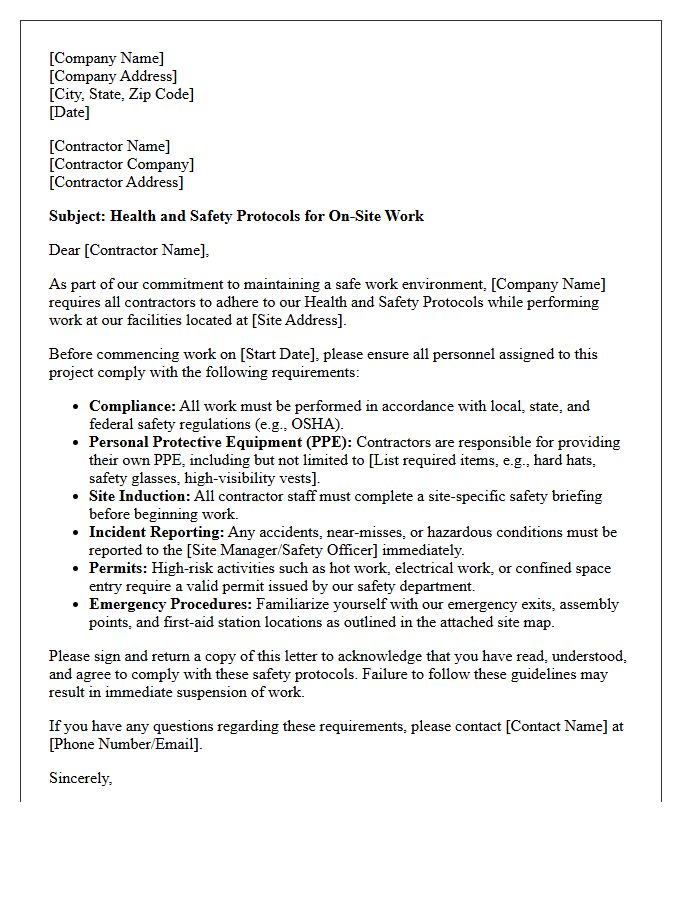
A Contractor Health and Safety Protocol Letter is a vital document ensuring workplace safety compliance. It outlines specific mandatory requirements, hazards, and emergency procedures contractors must follow while on-site. This letter establishes a legal and professional framework for risk management, protecting both the client and the worker. By signing, contractors confirm their commitment to regulatory standards and internal safety policies. Clear communication via this protocol minimizes accidents, ensures legal accountability, and maintains a secure operational environment for all personnel involved in the project.
Property Management Vendor Agreement Acknowledgment Letter
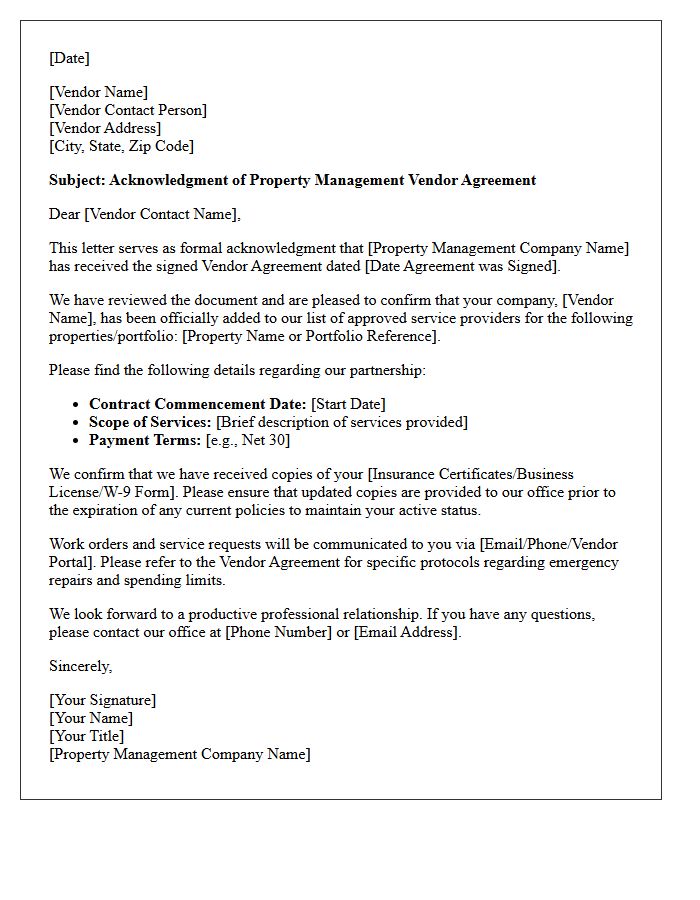
A Property Management Vendor Agreement Acknowledgment Letter is a formal document confirming that a service provider understands and accepts the contractual obligations outlined in their partnership. This letter serves as a legal record, ensuring all parties agree on service standards, insurance requirements, and payment terms. By signing, vendors verify their commitment to compliance and operational protocols, minimizing potential disputes. It is an essential step in maintaining accountability and professional transparency within real estate maintenance and property operations.
Contractor Background Check and Security Clearance Letter
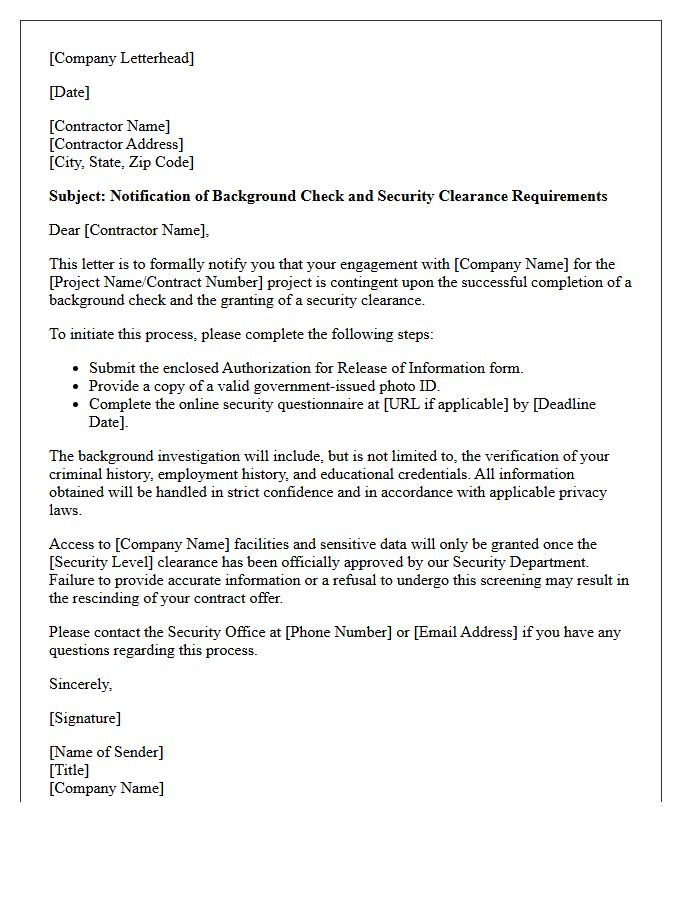
A Contractor Background Check verifies an individual's criminal history, identity, and employment eligibility to mitigate workplace risks. For sensitive roles, a Security Clearance Letter (or Letter of Consent) serves as official documentation that the government has vetted the person for access to classified information. These credentials ensure compliance with federal regulations and corporate safety standards. Understanding the distinction between a standard screening and a formal security clearance is essential for maintaining site security and meeting contractual obligations in regulated industries.
Tax Identification and Financial Document Request Letter
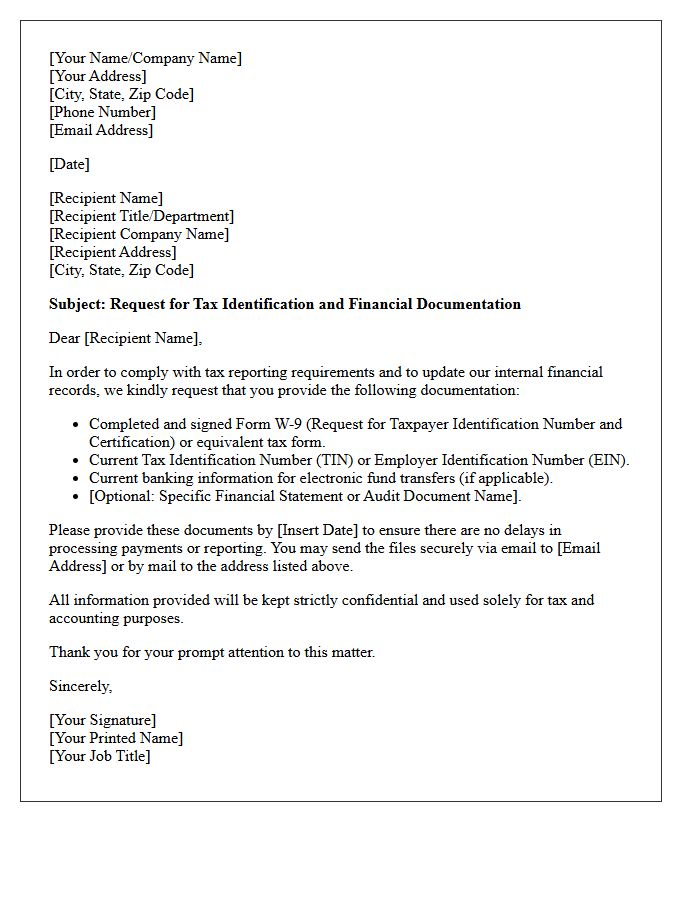
A Tax Identification and Financial Document Request Letter is a formal notice used to collect essential compliance data from vendors or contractors. Its primary purpose is to secure a Form W-9 or similar tax ID details to ensure accurate IRS reporting. Businesses use these requests to verify legal identities, mitigate financial risks, and maintain organized audit trails. Providing complete documentation promptly prevents payment delays and ensures adherence to withholding regulations. Always verify the sender's identity before sharing sensitive financial information to maintain high levels of data security.
On-Site Code of Conduct and Property Rules Letter
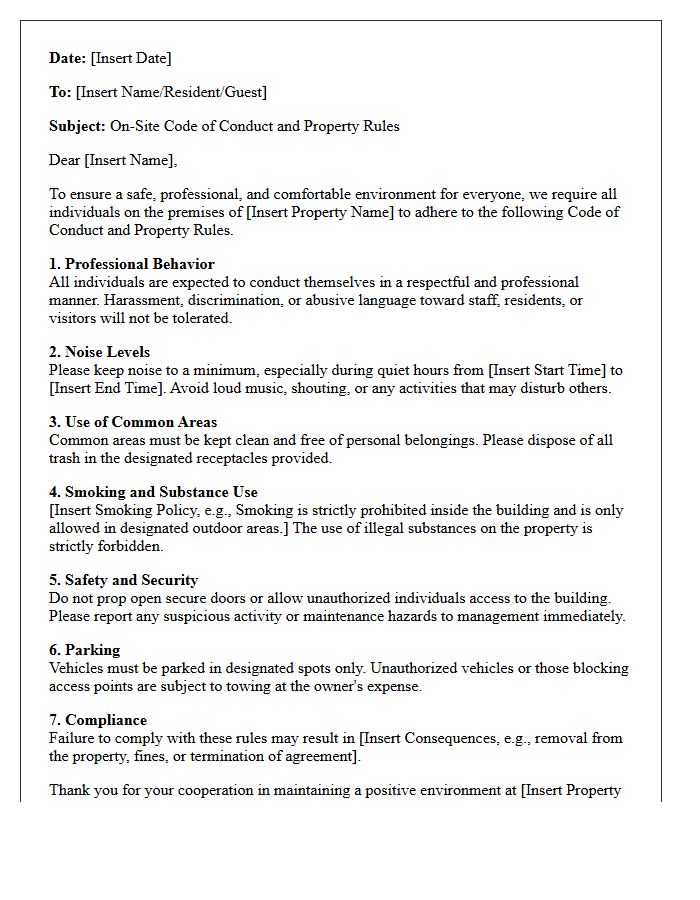
An On-Site Code of Conduct and Property Rules Letter is an essential document that establishes clear behavioral expectations for residents and visitors. It outlines mandatory regulations regarding noise levels, common area usage, and safety protocols to ensure a harmonious environment. By clearly defining prohibited actions and potential enforcement measures, this letter mitigates legal risks and maintains property standards. Providing this written notice fosters accountability, protects property value, and ensures all individuals understand their responsibilities while on the premises to prevent future disputes or misunderstandings.
Contractor Invoicing and Payment Procedure Letter
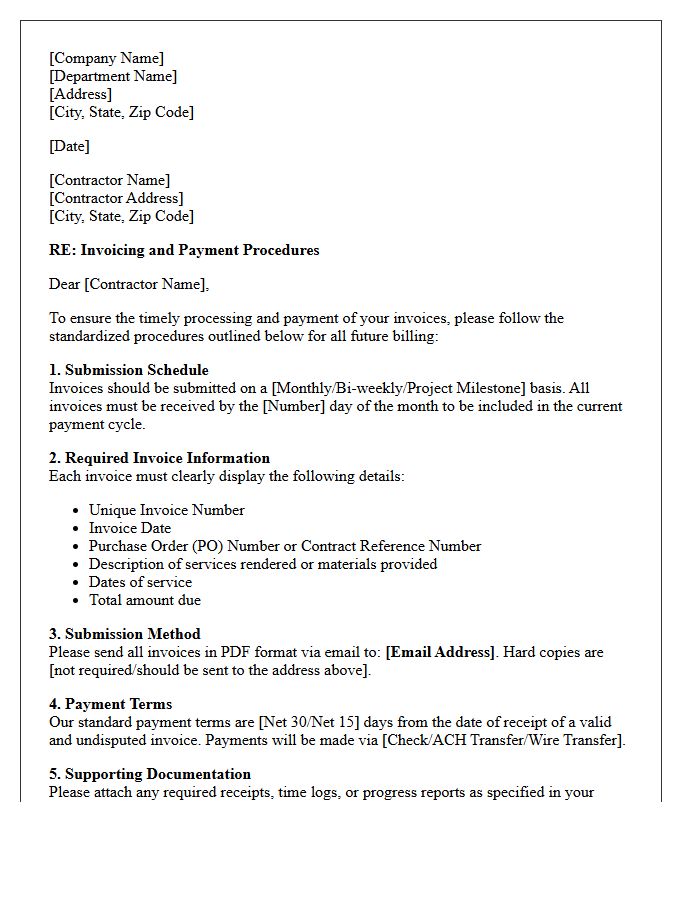
A Contractor Invoicing and Payment Procedure Letter serves as a formal guide to ensure billing accuracy and timely compensation. This document outlines specific submission deadlines, required documentation like receipts or progress reports, and payment terms. By clearly defining the approval workflow and electronic transfer methods, it minimizes administrative errors and prevents payment delays. Establishing these standardized protocols fosters transparency and professional accountability between the hiring entity and the service provider, ensuring a smooth financial reconciliation process for all project milestones completed.
Trade License and Certification Verification Letter
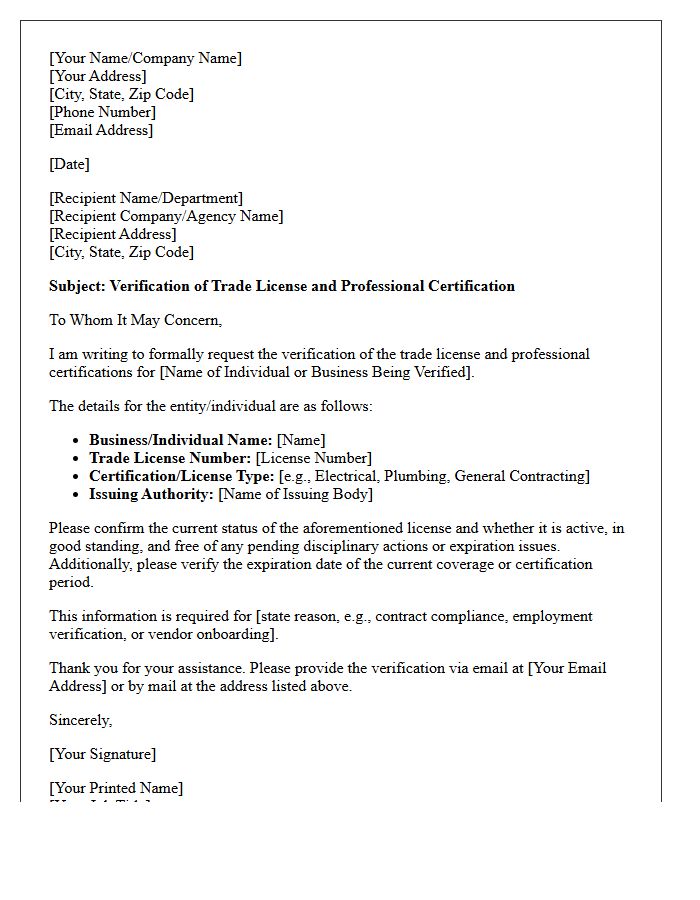
A Trade License and Certification Verification Letter is an official document confirming that a professional or business holds a valid, active license. It serves as legal authentication of credentials, ensuring compliance with local regulatory standards. Employers and clients use this letter to mitigate risks and verify technical competence before hiring. To obtain one, you must typically apply through the relevant regulatory authority or licensing board. This verification protects consumers by guaranteeing that the service provider meets all legal requirements and industry safety protocols necessary to operate legally in their specific jurisdiction.
Site Access and Key Release Authorization Letter
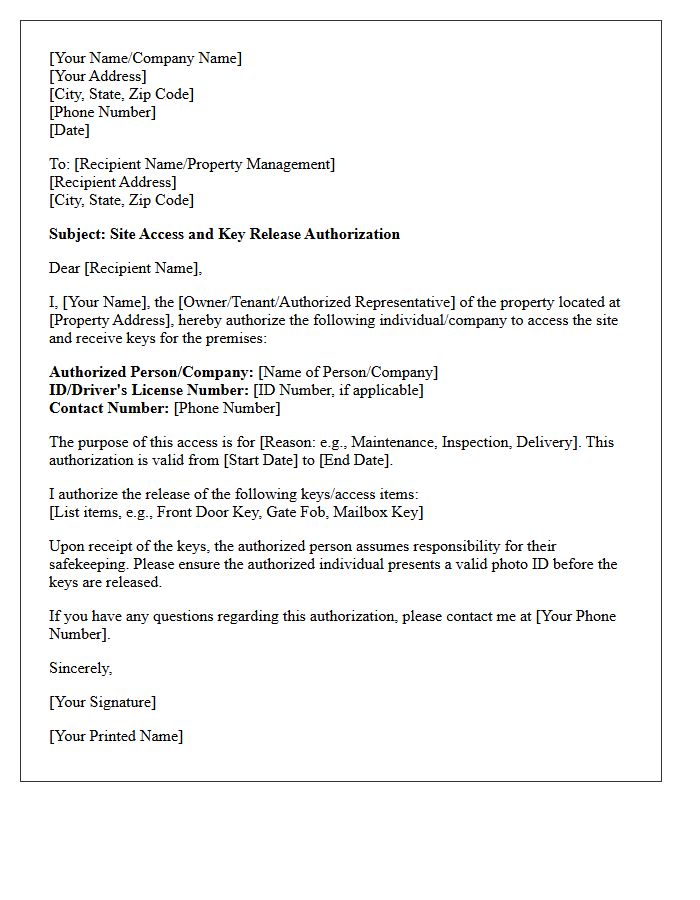
A Site Access and Key Release Authorization Letter is a formal document granting specific individuals or contractors permission to enter a property. It serves as legal proof of consent, ensuring that property managers or security personnel can securely release keys to authorized parties. The letter must clearly state the property address, the authorized person's full name, and the specific duration of access. This protocol is essential for maintaining building security, establishing accountability, and protecting the owner against unauthorized entry or liability during maintenance or inspections.
Confidentiality and Tenant Privacy Acknowledgment Letter
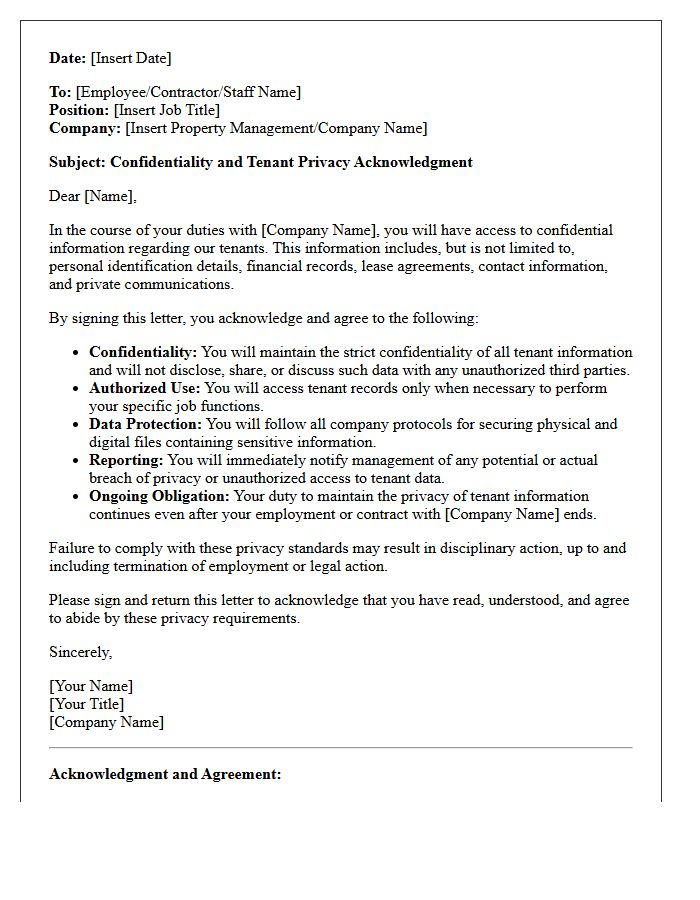
A Confidentiality and Tenant Privacy Acknowledgment Letter is a formal document ensuring that sensitive personal data remains protected. It confirms that property managers and staff understand their legal duty to safeguard identifiable information, such as financial records and background checks. By signing this agreement, employees commit to preventing unauthorized disclosure, which minimizes identity theft risks and ensures compliance with privacy laws. Establishing clear protocols through this letter builds trust and provides essential legal protection for both the landlord and the resident regarding their private data.
Approved Subcontractor Policy and Compliance Letter
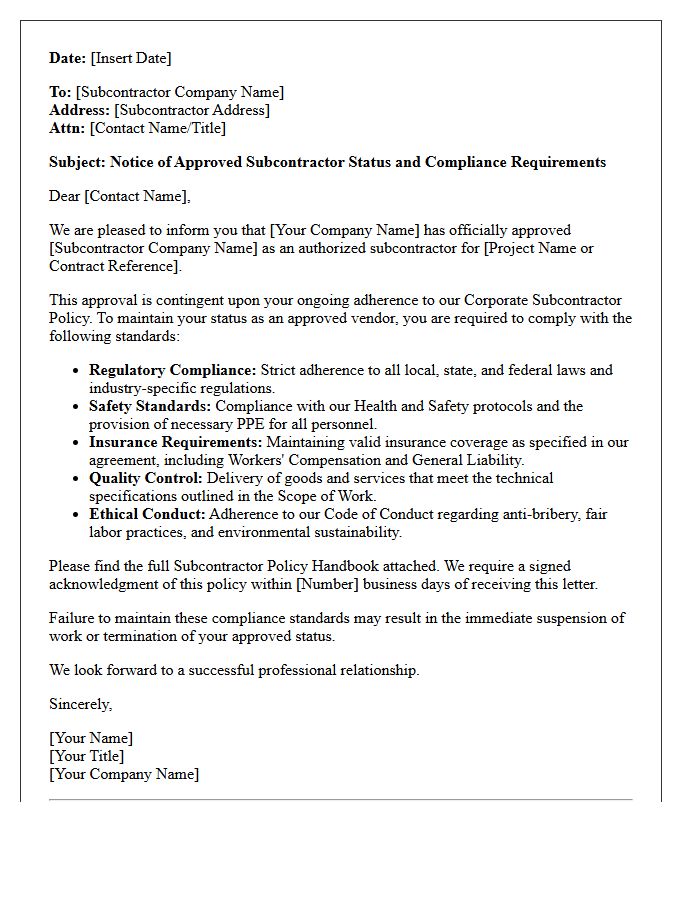
An Approved Subcontractor Policy establishes mandatory standards for outsourcing work, ensuring all third parties meet specific safety, quality, and legal requirements. Complementing this, a Compliance Letter serves as formal verification that a subcontractor adheres to these predefined regulations. Together, these documents mitigate operational risks, protect project integrity, and ensure contractual alignment. Organizations must enforce these protocols to maintain regulatory compliance and uphold accountability across the entire supply chain. Reviewing these records regularly is essential for sustained risk management and successful project delivery within professional industries.
Routine Compliance Audit and Performance Review Letter
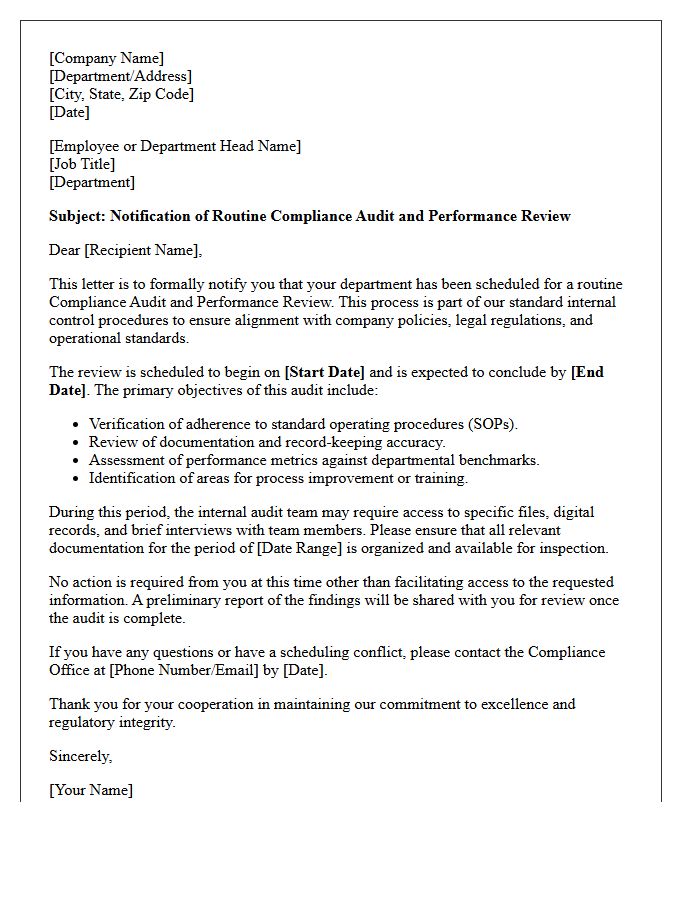
A Routine Compliance Audit and Performance Review Letter is a formal notification from regulatory bodies or management evaluating an organization's adherence to legal standards. These reviews ensure operational integrity and identify governance gaps before they lead to penalties. The letter typically outlines the audit scope, key findings, and required corrective actions. Understanding this document is essential for maintaining regulatory compliance and optimizing internal processes. Timely responses to these evaluations demonstrate accountability and help sustain long-term business performance while mitigating significant legal or financial risks.
What is a Contractor Compliance and Onboarding Letter?
A Contractor Compliance and Onboarding Letter is a formal document sent to new independent contractors outlining the necessary legal, financial, and safety requirements they must meet before beginning work. It ensures that the contractor adheres to company policies and regulatory standards.
What key documents are typically requested in a compliance letter?
The letter usually requests a signed Independent Contractor Agreement, tax forms (such as Form W-9), proof of professional liability insurance (COI), non-disclosure agreements (NDA), and any industry-specific certifications or safety permits.
Why is a formal onboarding process important for contractor compliance?
A formal process mitigates legal risks by clearly defining the contractor's status, preventing worker misclassification, ensuring data security protocols are met, and verifying that the vendor carries adequate insurance coverage to protect the hiring entity.
How does a compliance letter help prevent worker misclassification?
By explicitly stating the terms of the independent contractor relationship and requiring the completion of business-to-business documentation, the letter serves as evidence that the worker is a separate legal entity and not an employee for tax and benefit purposes.
Can the contractor onboarding letter be signed electronically?
Yes, most modern compliance workflows utilize electronic signature platforms to distribute and collect onboarding letters. Digital signatures are legally binding and allow for automated tracking and storage of compliance documentation for auditing purposes.

Comments