
Ensure your recruitment process complies with privacy regulations by using a Candidate Consent and Data Protection Verification Letter. This essential document confirms that applicants authorize the processing of their personal information according to GDPR standards, safeguarding your organization from legal risks. Streamline your compliance workflow effectively. Below are some ready to use templates.
Image cover: Essential Templates for Candidate Consent and Data Protection Verification Letters
Letter Samples List
- Candidate Consent and Data Protection Verification Letter
- Recruitment Agency Candidate Privacy Acknowledgment Letter
- Applicant Data Processing and Sharing Consent Letter
- Background Check and Data Verification Consent Letter
- Candidate Representation and Information Disclosure Letter
- Employment Agency Privacy Policy Acknowledgment Letter
- Resume Submission and Data Handling Consent Letter
- Candidate Reference Check Privacy Agreement Letter
- Talent Pool Data Retention and Processing Letter
- Recruitment Marketing and Job Alerts Consent Letter
- Third-Party Client Data Transfer Authorization Letter
- Candidate Right to Erasure and Data Portability Letter
- Pre-Employment Screening Data Protection Verification Letter
Candidate Consent and Data Protection Verification Letter
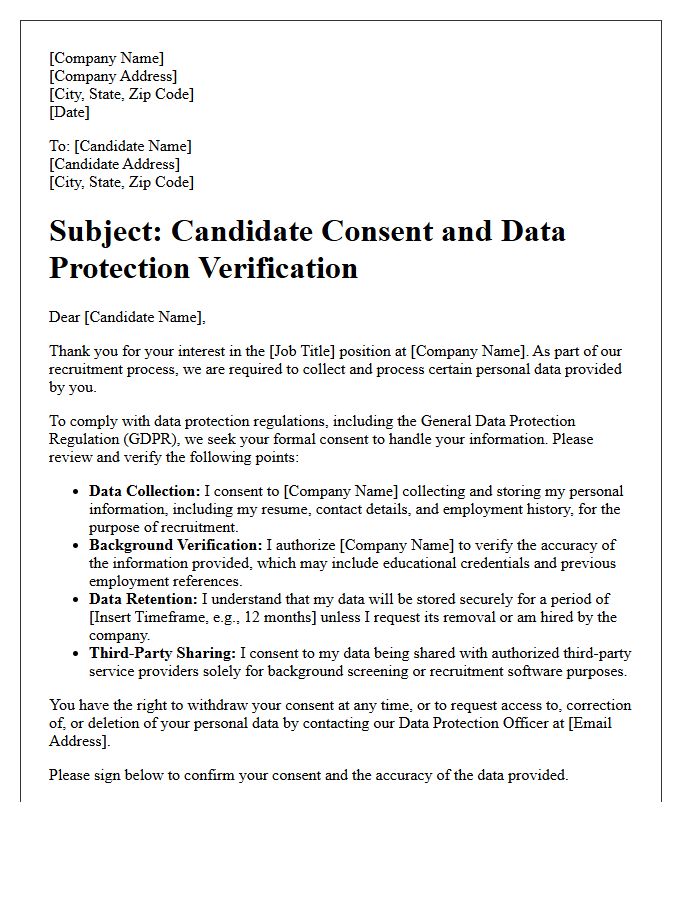
A Candidate Consent and Data Protection Verification Letter is a critical document used to confirm that an applicant has provided explicit permission for background checks. It ensures compliance with GDPR and local privacy laws by outlining how personal information is collected, stored, and processed. This letter protects the employer from legal liability while maintaining transparency with the candidate. Verifying data protection standards is essential to safeguard sensitive details and maintain ethical recruitment practices throughout the hiring lifecycle. Clear documentation prevents unauthorized data usage and builds professional trust.
Recruitment Agency Candidate Privacy Acknowledgment Letter
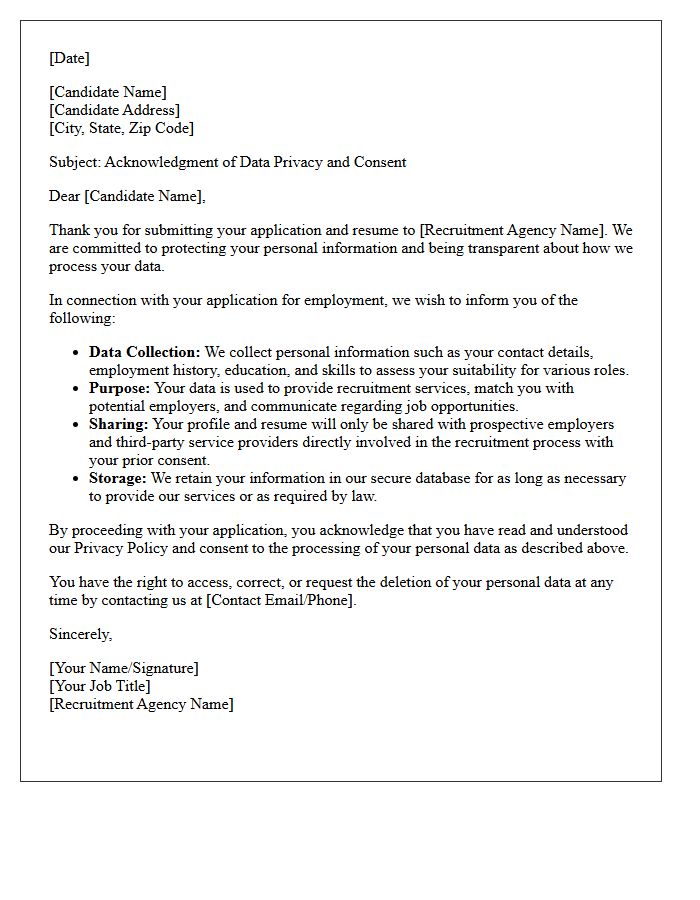
A Recruitment Agency Candidate Privacy Acknowledgment Letter is a vital document ensuring compliance with data protection laws like GDPR. It formally informs job seekers how their personal data is collected, stored, and shared with potential employers. By signing, candidates confirm they understand their privacy rights and grant explicit consent for the agency to process their sensitive information. This transparency builds trust between the recruiter and applicant while protecting the agency from legal liabilities regarding data mismanagement. Always ensure the letter clearly outlines the retention period and the candidate's right to data deletion.
Applicant Data Processing and Sharing Consent Letter
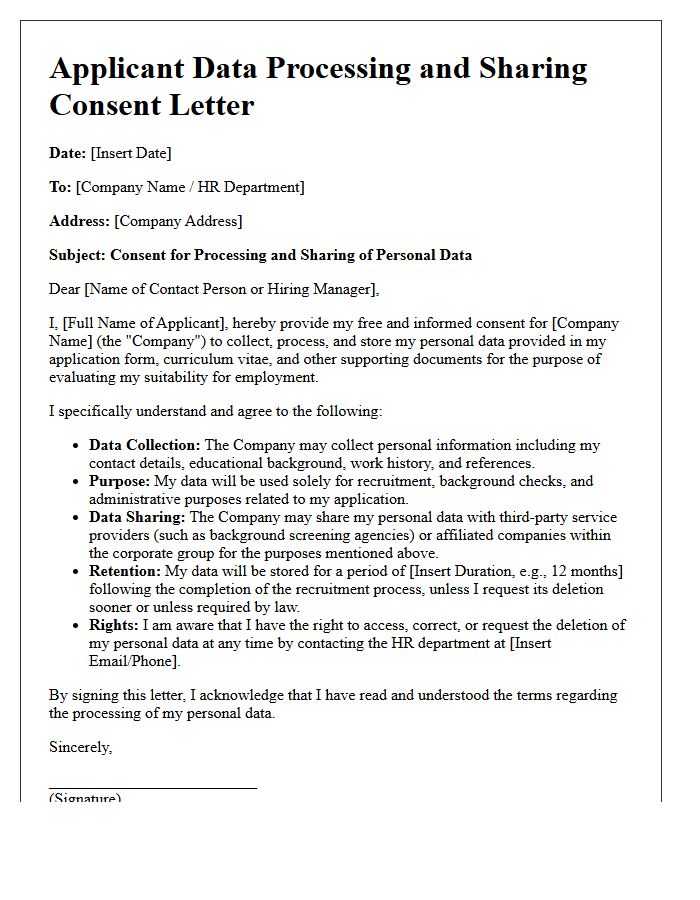
An Applicant Data Processing and Sharing Consent Letter is a legal document where job seekers grant employers permission to manage their personal information. It ensures compliance with data protection laws like GDPR by outlining how sensitive details are collected, stored, and distributed. This letter protects your privacy rights while allowing recruitment teams to perform background checks and share profiles with relevant departments. Understanding this document is essential for informed consent and maintaining control over your digital identity during the hiring process.
Background Check and Data Verification Consent Letter
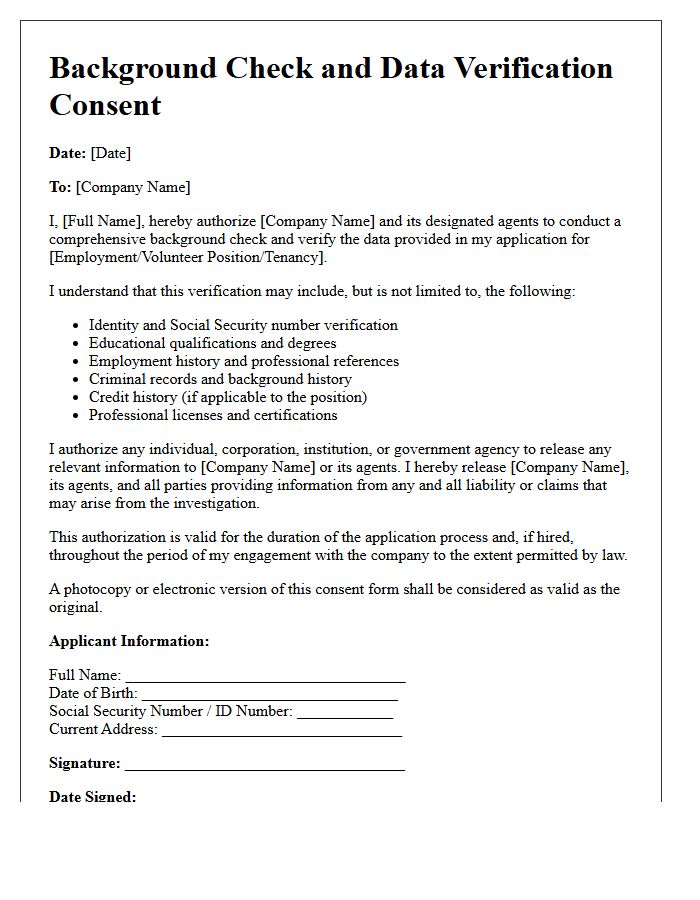
A Background Check and Data Verification Consent Letter is a legal document where an individual grants explicit permission to an organization to investigate their personal history. It typically authorizes the review of criminal records, employment dates, and educational credentials. Providing this informed consent is a mandatory step in most hiring processes to ensure compliance with privacy laws. Accurate data verification protects both parties by confirming the truthfulness of provided information while upholding the candidate's legal rights regarding data protection and sensitive information handling.
Candidate Representation and Information Disclosure Letter
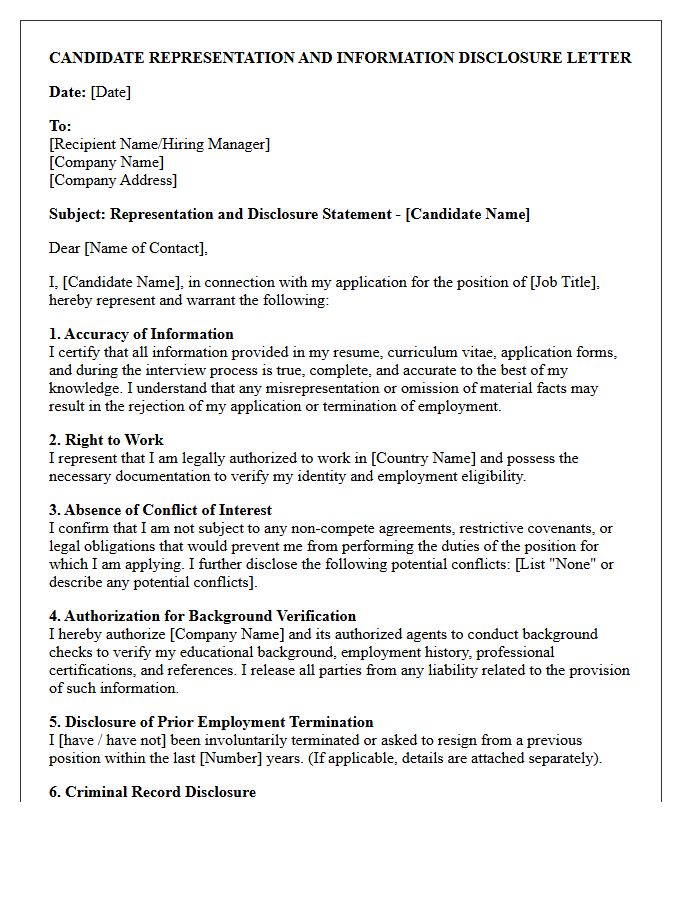
A Candidate Representation and Information Disclosure Letter is a formal document used during corporate transactions, such as mergers or private placements. It requires investors or potential partners to verify their legal status and disclose material financial information. This letter ensures compliance with securities laws and protects the company by confirming the investor's eligibility and sophistication. Providing accurate details is essential to mitigate legal risks, prevent fraud, and establish transparency between all parties involved in the investment process before final agreements are signed.
Employment Agency Privacy Policy Acknowledgment Letter
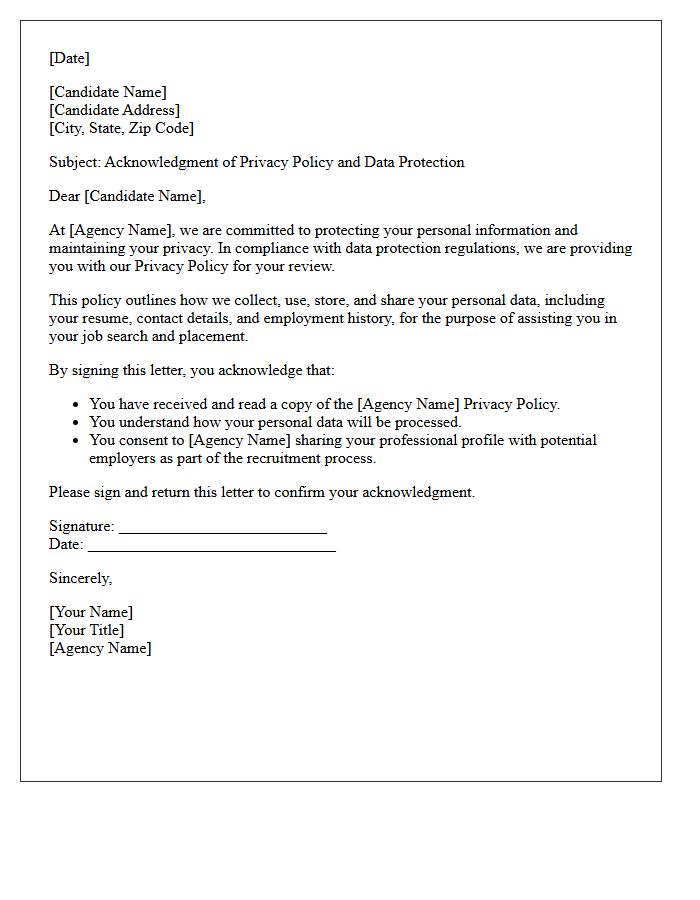
An Employment Agency Privacy Policy Acknowledgment Letter is a formal document confirming that a candidate has received and understands how their personal data will be handled. This letter ensures compliance with data protection laws like GDPR or CCPA. It details how the agency collects, stores, and shares sensitive information with potential employers. Signing this acknowledgment protects your privacy rights and provides the agency with legal consent to facilitate your job search. It is a critical step in maintaining transparency and security during the professional recruitment process.
Resume Submission and Data Handling Consent Letter
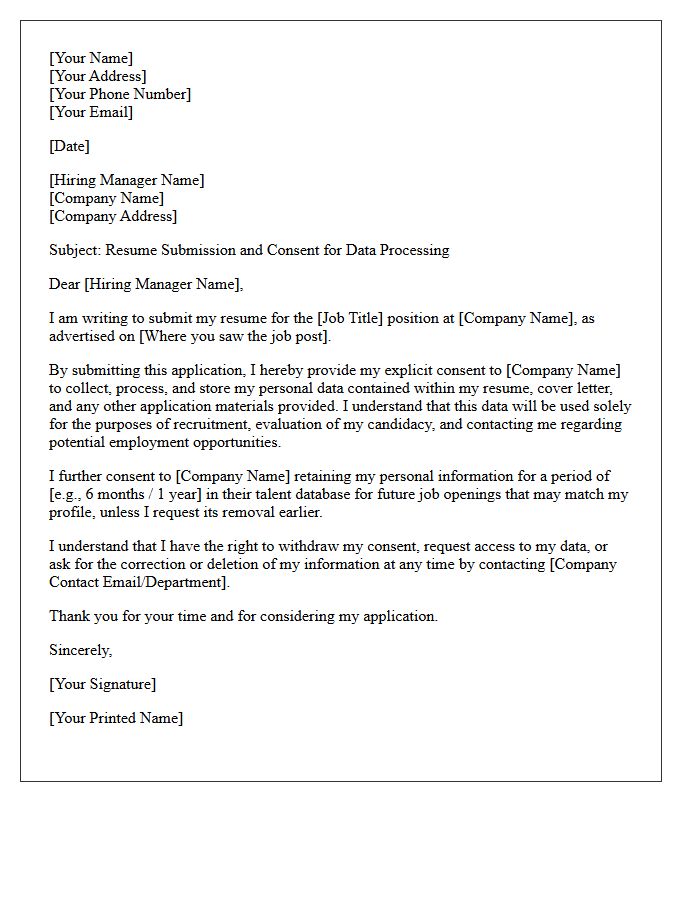
A Resume Submission and Data Handling Consent Letter is a formal document where candidates grant employers explicit permission to process their personal information. It ensures compliance with data protection laws like GDPR or CCPA. By signing, you acknowledge how your sensitive data will be stored, shared, and utilized during the recruitment cycle. This legal transparency protects your privacy rights while allowing companies to legally evaluate your application. Always verify the retention period and data security protocols mentioned to ensure your professional information remains confidential and is handled ethically throughout the hiring process.
Candidate Reference Check Privacy Agreement Letter
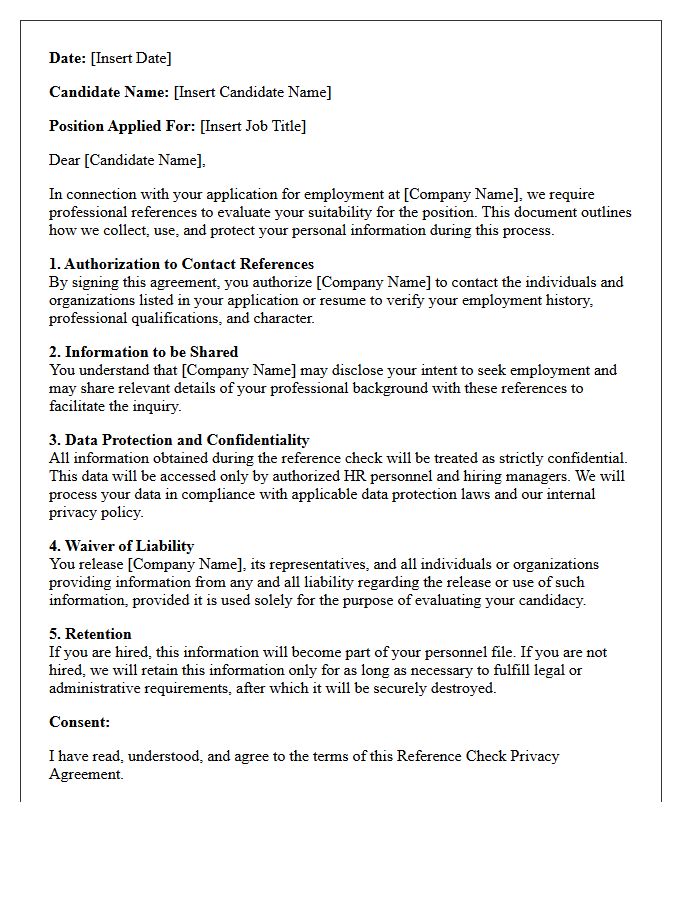
A Candidate Reference Check Privacy Agreement Letter is a formal document ensuring confidentiality during the background verification process. It establishes legal consent, allowing employers to contact third parties while protecting the applicant's personal data rights. This agreement outlines how information is collected, stored, and shared, ensuring compliance with global privacy regulations like GDPR. For candidates, it provides transparency regarding their data protection, while for employers, it mitigates legal risks. Signing this letter confirms that the individual understands and authorizes the professional inquiry into their past employment history and performance.
Talent Pool Data Retention and Processing Letter
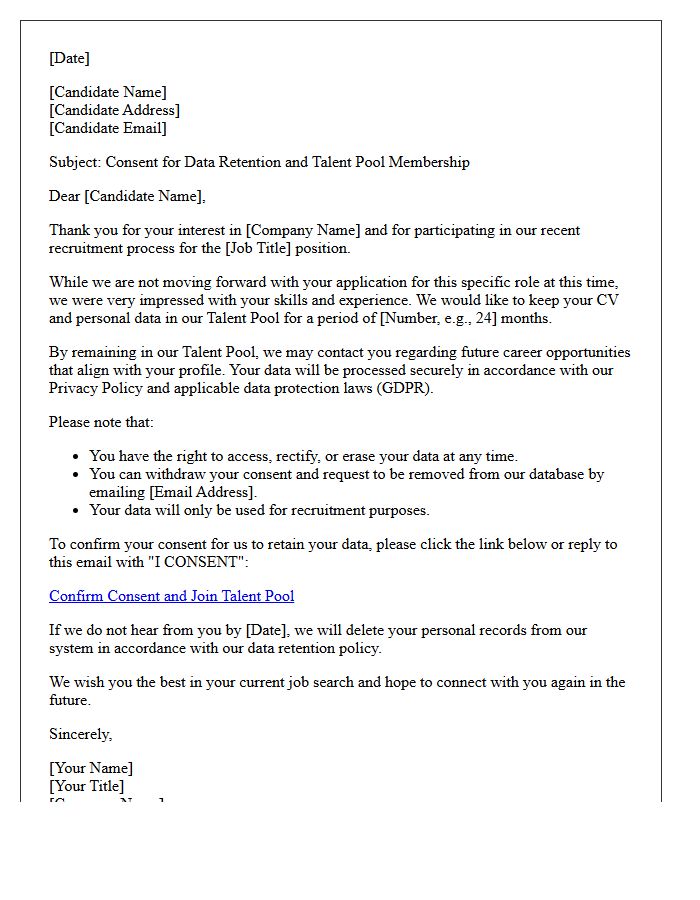
A Talent Pool Data Retention and Processing Letter is a formal document used by recruiters to obtain explicit consent from candidates to store their personal information for future job openings. It ensures compliance with data protection regulations like GDPR by detailing how long the data will be kept and the specific purpose of processing. This transparency builds trust and protects the organization from legal risks. Candidates must be informed of their right to withdraw consent or request data deletion at any time, maintaining their control over private information within the recruitment ecosystem.
Recruitment Marketing and Job Alerts Consent Letter
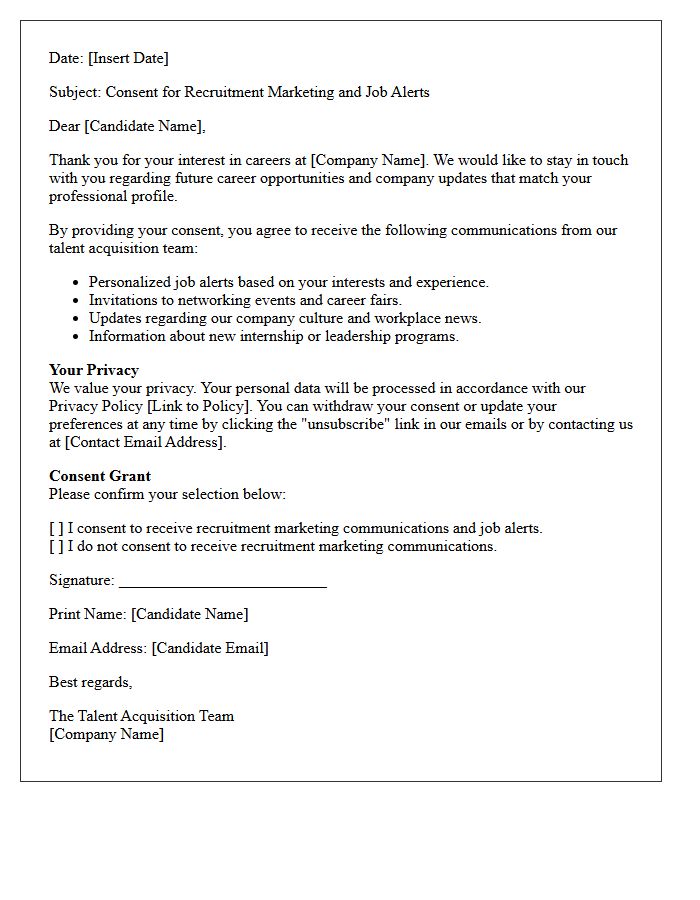
A Recruitment Marketing and Job Alerts Consent Letter is a critical document for GDPR compliance and data privacy. It ensures candidates provide explicit permission for employers to store their personal information and send future career updates. By formalizing this agreement, organizations build a transparent talent pipeline while protecting legal interests. This letter must clearly outline how data is used, the duration of storage, and the individual's right to withdraw consent at any time. Proper implementation fosters trust and enhances the overall employer brand through ethical communication practices.
Third-Party Client Data Transfer Authorization Letter
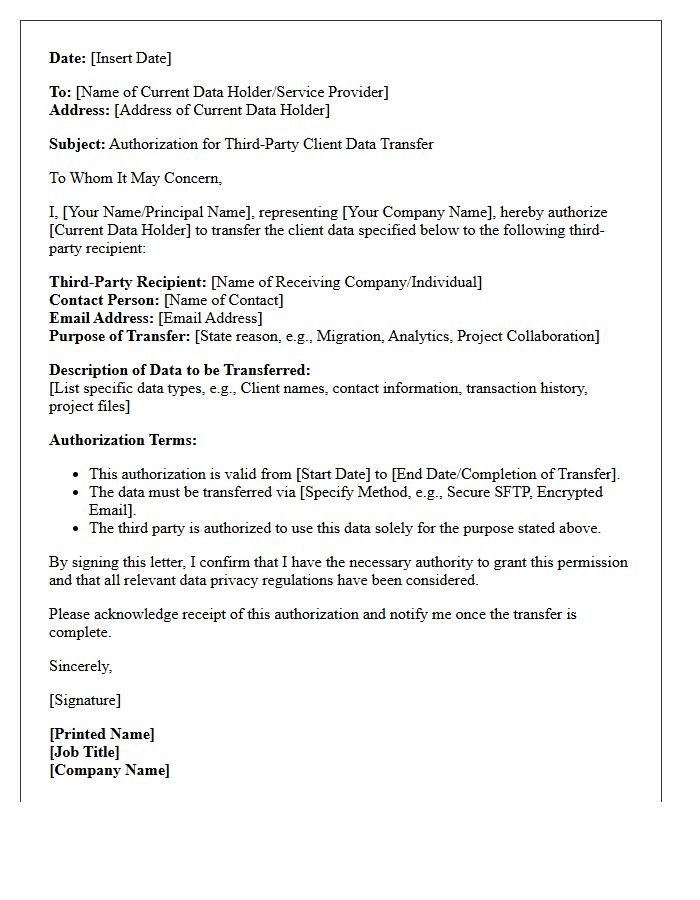
A Third-Party Client Data Transfer Authorization Letter is a legal document that grants formal permission for a service provider to share sensitive information with an external entity. It ensures compliance with data privacy regulations like GDPR or CCPA by documenting explicit consent. This letter must clearly define the scope of data, the authorized recipient, and the specific purpose of the exchange. Utilizing this authorization protects all parties from liability and prevents unauthorized access, maintaining strict confidentiality and security standards during the migration or integration of client records.
Candidate Right to Erasure and Data Portability Letter
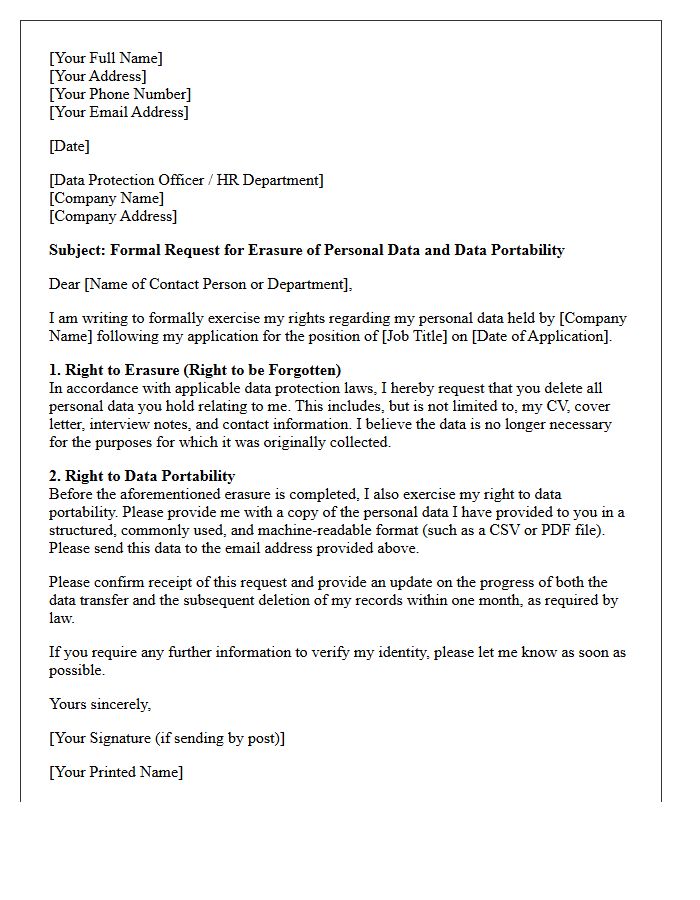
A Candidate Right to Erasure and Data Portability Letter is a formal request used by job seekers to manage their personal information. Under privacy laws like GDPR, you have the right to be forgotten, requiring recruiters to delete your stored profile and CV. Additionally, data portability allows you to request your information in a structured, machine-readable format to transfer it to other platforms. Using this letter ensures your data privacy is respected and gives you full control over how organizations handle your professional records after the recruitment process ends.
Pre-Employment Screening Data Protection Verification Letter
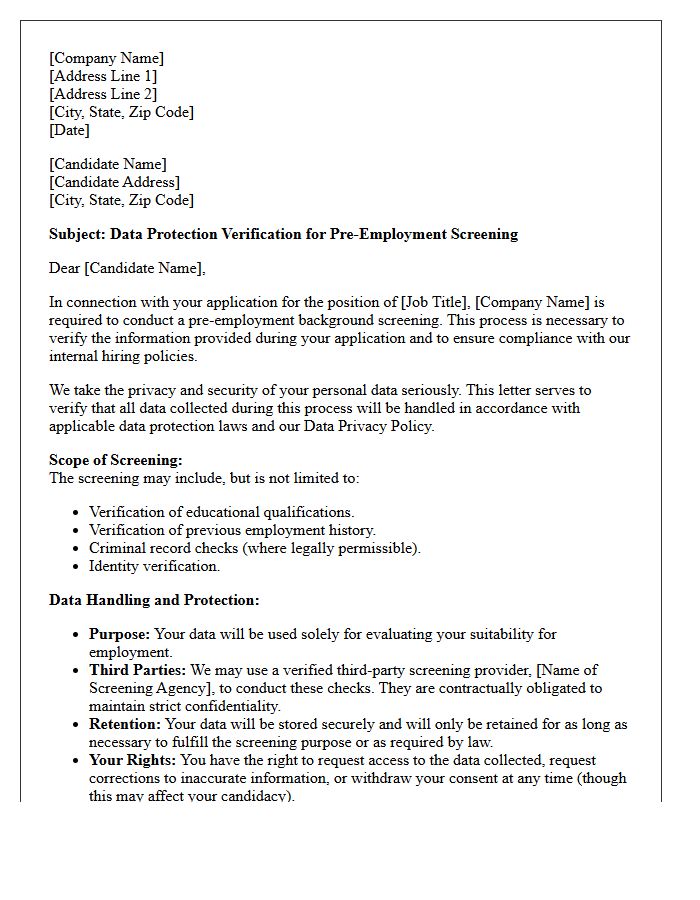
A Pre-Employment Screening Data Protection Verification Letter is a formal document ensuring that a background check company complies with GDPR and local privacy laws. It serves as essential proof that a service provider maintains robust security protocols when handling sensitive candidate information. Employers must obtain this verification to mitigate legal risks and ensure ethical data processing. This letter confirms that personal identifiers, criminal records, and financial history are managed with strict confidentiality and stored only for the legally permitted duration, protecting both the organization and the prospective employee.
What is a Candidate Consent and Data Protection Verification Letter?
This letter is a formal document used by employers or recruitment agencies to confirm that a job applicant has provided explicit consent for their personal data to be processed, stored, and shared for background screening and recruitment purposes in compliance with data protection laws like GDPR.
Why is a Candidate Consent Letter required for background checks?
A consent letter is required to ensure legal compliance with privacy regulations. It verifies that the candidate is aware of what specific information is being collected, who will have access to it, and how it will be used to validate their professional history and credentials.
What information is typically covered in a Data Protection Verification Letter?
The letter typically covers the scope of data collection, including employment history, educational qualifications, criminal record checks, and credit history. It also outlines the candidate's rights regarding data rectification, the duration of data retention, and the third-party entities involved in the verification process.
How does this letter protect a candidate's privacy?
The letter protects privacy by establishing a transparent framework for data usage. It prevents the unauthorized distribution of sensitive information and ensures that the employer only collects data that is strictly relevant to the specific job role and hiring criteria.
Can a candidate withdraw their consent after signing the verification letter?
Yes, under most data protection frameworks, a candidate has the right to withdraw their consent at any time. However, withdrawing consent during the hiring process may result in the inability of the employer to complete the necessary background checks, which could affect the final hiring decision.


Comments