
Securing a Client-Approved Project Extension Letter is essential for formalizing timeline adjustments while maintaining professional trust. A well-structured request justifies the need for additional time due to scope changes or unforeseen hurdles, ensuring all parties remain aligned on deliverables. Formalizing this agreement protects your agency and clarifies updated expectations. Below are some ready to use templates.

Image cover: Professional Templates for Requesting Client-Approved Project Extensions
Letter Samples List
- Client-Approved Temporary Staff Extension Letter
- Recruitment Project Timeline Extension Letter
- Approved Contingent Workforce Extension Letter
- Talent Acquisition Partnership Extension Letter
- Candidate Secondment Extension Approval Letter
- Extended Executive Search Mandate Letter
- Client-Sanctioned Placement Extension Letter
- Approved Volume Hiring Project Extension Letter
- Temporary Contractor Assignment Extension Letter
- Client-Backed Staffing Campaign Extension Letter
- Recruitment Process Outsourcing Extension Letter
- Extended Staffing Service Agreement Letter
Client-Approved Temporary Staff Extension Letter
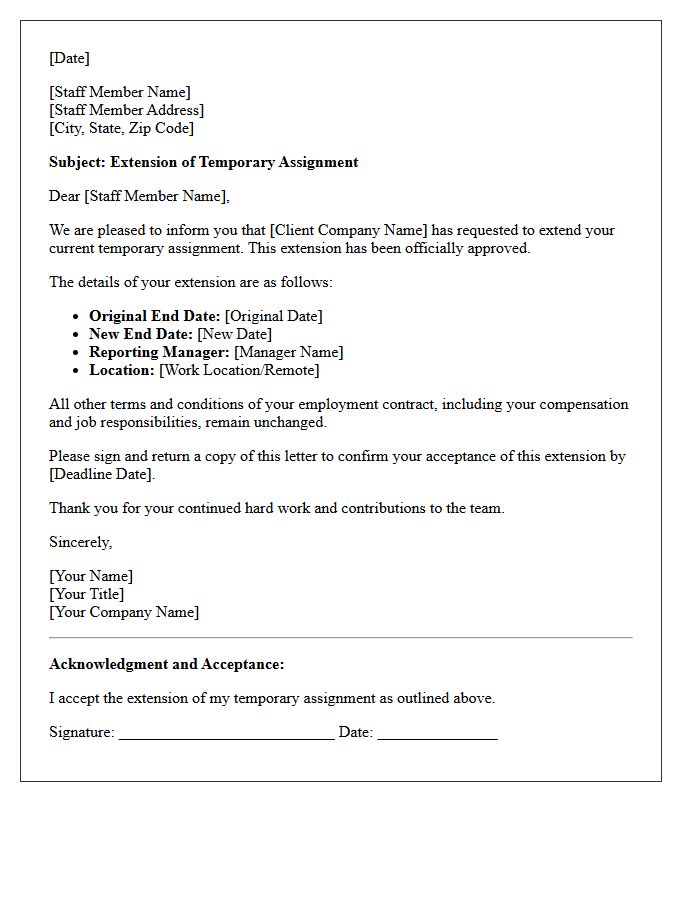
A Client-Approved Temporary Staff Extension Letter is a formal document used to prolong a contractual assignment beyond its initial end date. This letter serves as written authorization from the client, ensuring that the staffing agency and the temporary employee are legally aligned on new timelines. It must clearly outline the extended duration, revised completion dates, and any updated work responsibilities. Maintaining this documentation is essential for payroll accuracy, compliance, and seamless continuity of service during ongoing projects.
Recruitment Project Timeline Extension Letter
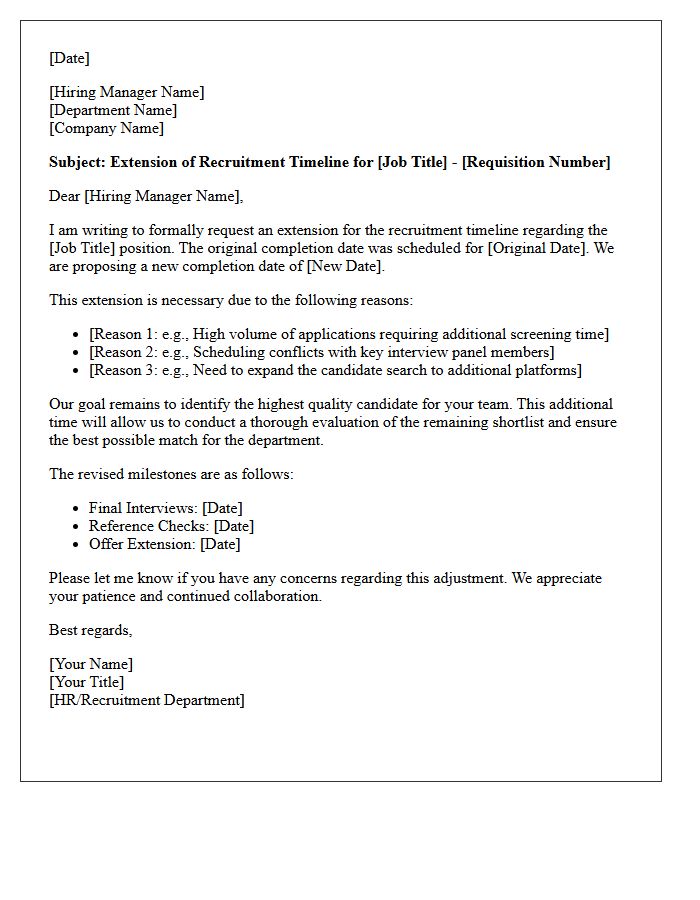
A Recruitment Project Timeline Extension Letter is a formal document sent to candidates to notify them of delays in the hiring process. It is essential for maintaining candidate engagement and protecting your employer brand. The letter should clearly state the reason for the extended deadline, express continued interest in the applicant, and provide a revised timeframe for the next steps. Proactive communication reduces uncertainty, prevents top talent from withdrawing their applications, and ensures a professional recruitment experience for all parties involved in the selection cycle.
Approved Contingent Workforce Extension Letter
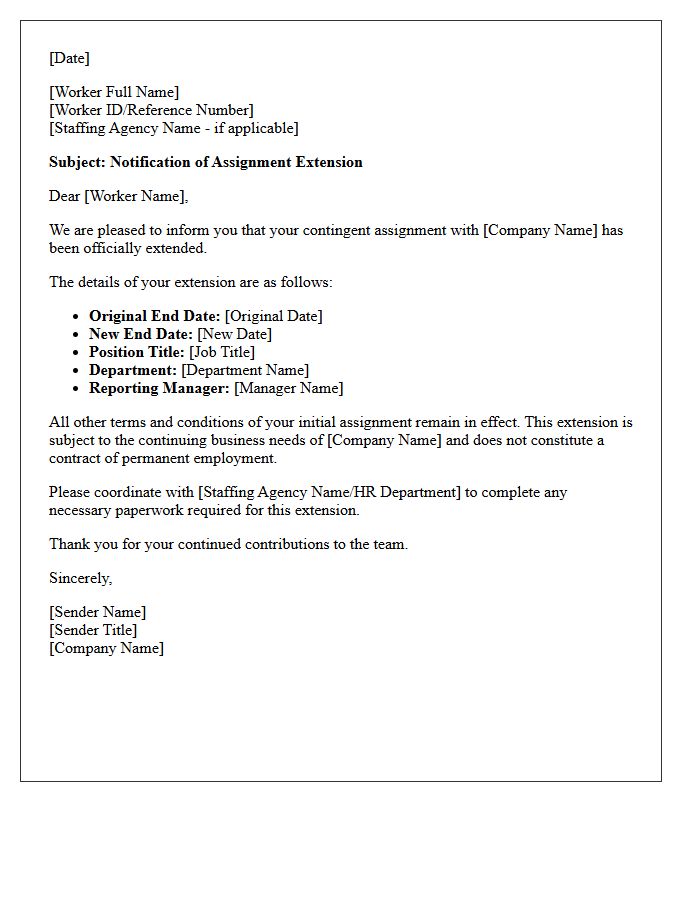
An Approved Contingent Workforce Extension Letter is a formal document confirming the prolongation of a contract for temporary staff or freelancers. It officially authorizes continued services beyond the original end date, ensuring compliance with company policies and budget allocations. This letter serves as a critical legal record for both the organization and the worker, outlining updated engagement terms, new expiration dates, and any changes in compensation. Receiving this approval is essential to maintain operational continuity without violating labor regulations or internal procurement protocols.
Talent Acquisition Partnership Extension Letter
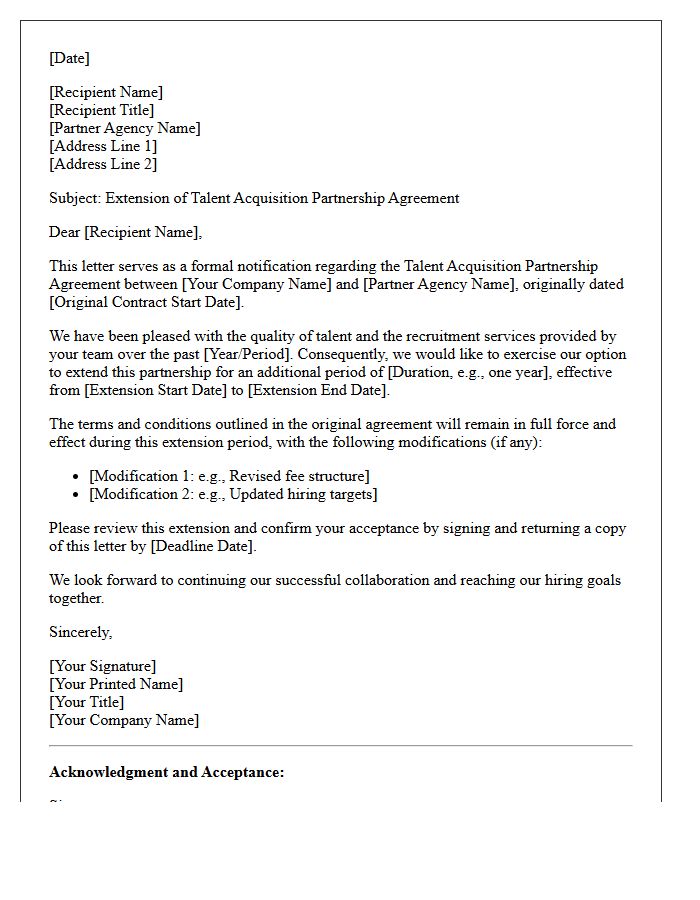
A Talent Acquisition Partnership Extension Letter is a formal document used to prolong a recruitment contract between a company and an external agency. This agreement ensures the continuity of hiring services by updating key terms, such as the new expiration date, revised fee structures, and specific performance metrics. It serves as a legal amendment to the original contract, maintaining operational stability during ongoing growth phases. Clear communication in this letter prevents service gaps and aligns both parties on future talent sourcing goals while securing essential recruitment resources for the business.
Candidate Secondment Extension Approval Letter
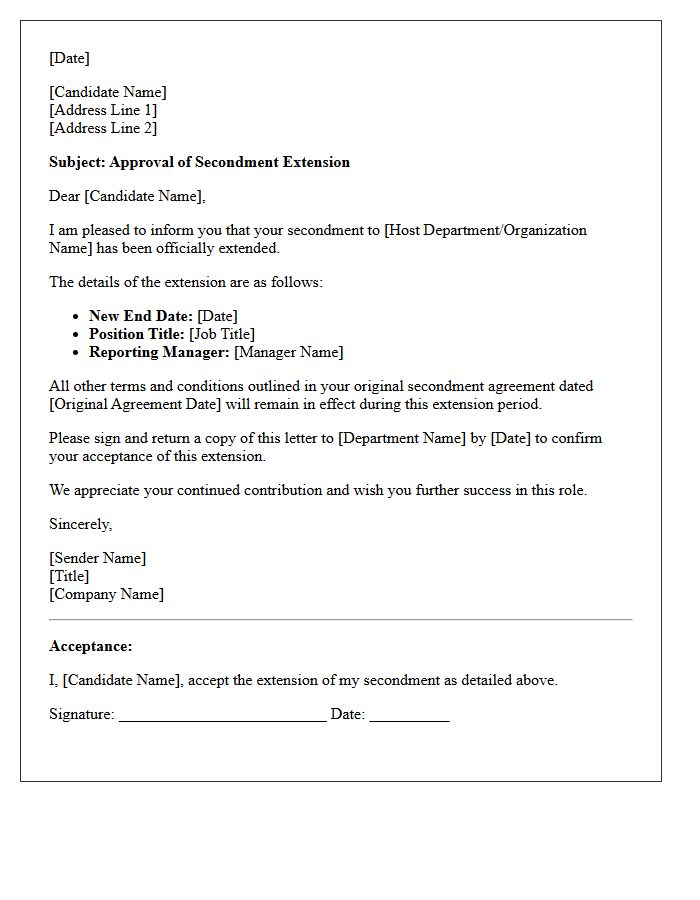
A Candidate Secondment Extension Approval Letter is a formal document confirming the prolongation of an employee's temporary assignment to a different department or organization. It officially outlines the new end date, revised responsibilities, and any updated compensation terms. This letter ensures legal compliance and alignment between the home and host parties. Obtaining written approval is essential to maintain clear service records, protect employment rights, and ensure a seamless transition for the candidate during the extended period of their specialized role.
Extended Executive Search Mandate Letter
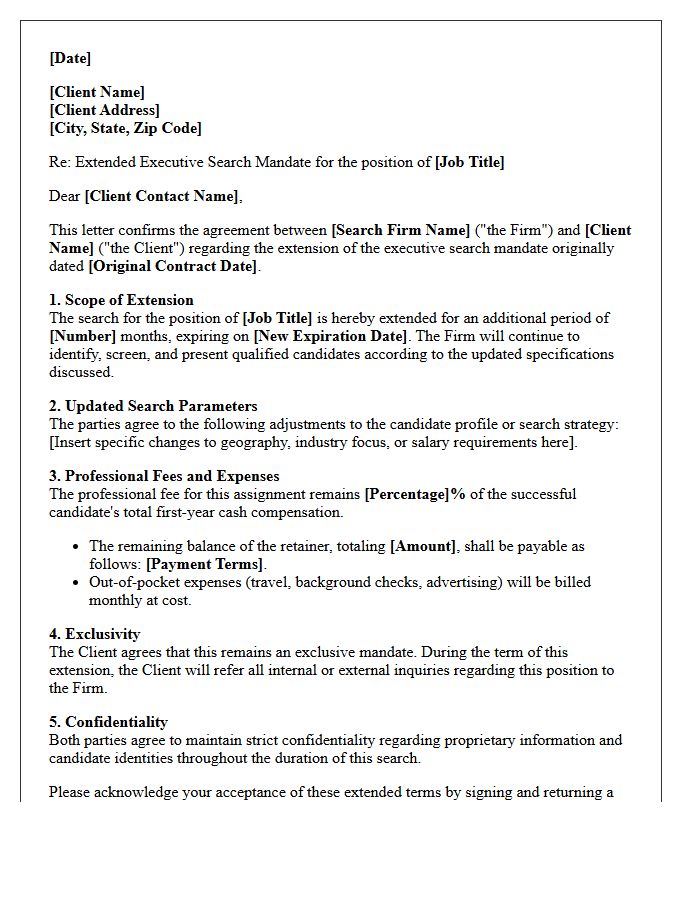
An Extended Executive Search Mandate Letter is a formal agreement that outlines the specific scope, timeline, and fee structure for high-level recruitment. It acts as a binding contract between a firm and a client, detailing the retained search process and performance expectations. Key components include exclusivity clauses, candidate specifications, and replacement guarantees. This document ensures alignment on strategic goals and provides a legal framework to secure top-tier leadership talent while mitigating hiring risks through clearly defined off-limits agreements and professional milestones.
Client-Sanctioned Placement Extension Letter
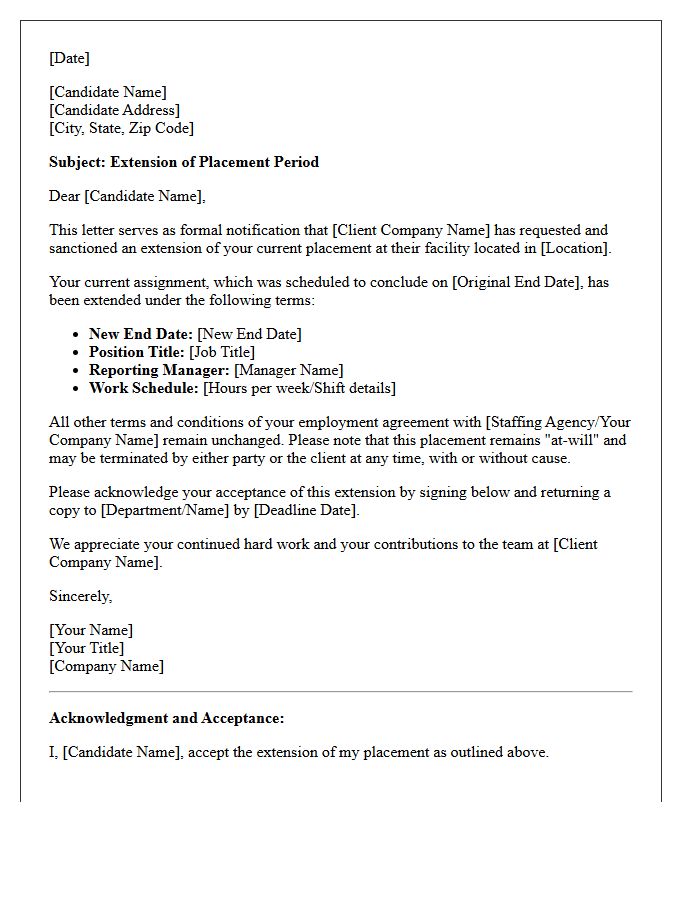
A Client-Sanctioned Placement Extension Letter is a formal document authorizing the prolongation of a professional engagement beyond its initial end date. It serves as legal confirmation that the client agrees to continue the services provided by an employee or contractor. Key details must include the revised termination date, updated financial terms, and specific project scopes. This extension ensures operational continuity and maintains compliance with labor regulations. Obtaining this written approval is essential for protecting the contractual rights of all parties involved and securing consistent revenue streams during extended project timelines.
Approved Volume Hiring Project Extension Letter
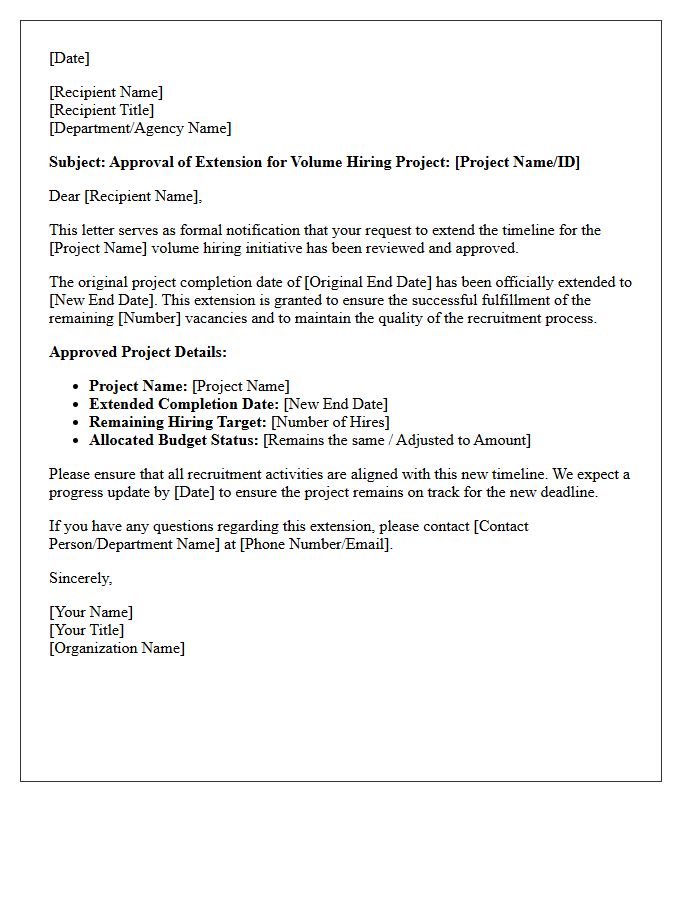
An Approved Volume Hiring Project Extension Letter is a formal document that authorizes the continuation of large-scale recruitment efforts beyond the initial deadline. It confirms that stakeholders have reviewed the project's progress and granted additional time and budget to meet specific staffing goals. This letter ensures compliance with organizational policies and maintains operational alignment between HR and management. By formalizing the extension, the company can sustain its hiring momentum, secure necessary resources, and successfully fill high-volume vacancies without interruption to the business strategy.
Temporary Contractor Assignment Extension Letter
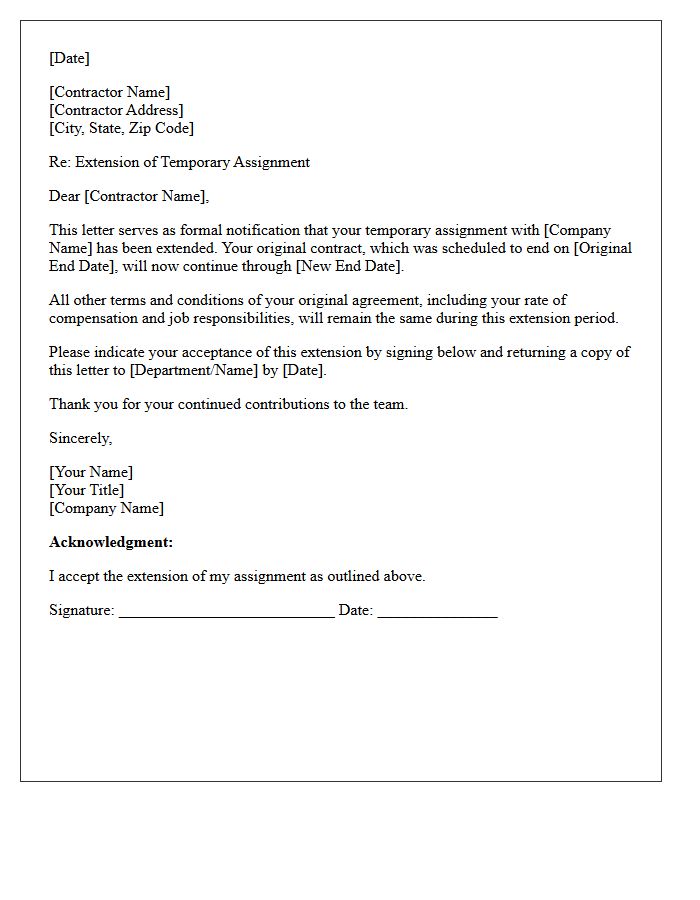
A Temporary Contractor Assignment Extension Letter is a formal document used to prolong a worker's tenure beyond the original end date. It is essential to clearly state the new completion date, revised compensation terms, and any updated project deliverables. Both parties must sign this amendment to ensure legal compliance and professional clarity. Documenting these changes prevents contractual disputes and ensures seamless operational continuity. Always ensure the extension aligns with the original service agreement framework to maintain a valid and binding professional relationship between the company and the contractor.
Client-Backed Staffing Campaign Extension Letter
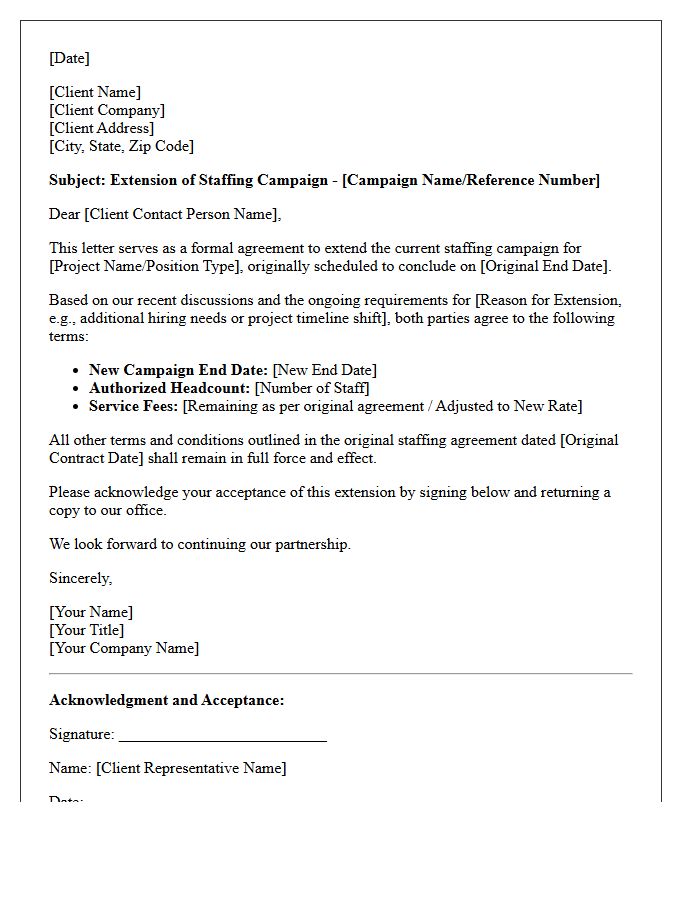
A Client-Backed Staffing Campaign Extension Letter is a formal document used by agencies to prolong a hiring initiative based on specific client approval. It serves as a legal addendum to the original service agreement, ensuring continued budget allocation and resource commitment. This letter outlines the new contract duration, updated project milestones, and any adjustments to staffing volume. Properly documenting this extension is essential for maintaining seamless operational continuity, protecting revenue streams, and ensuring both parties remain aligned on recruitment goals beyond the initial expiration date.
Recruitment Process Outsourcing Extension Letter
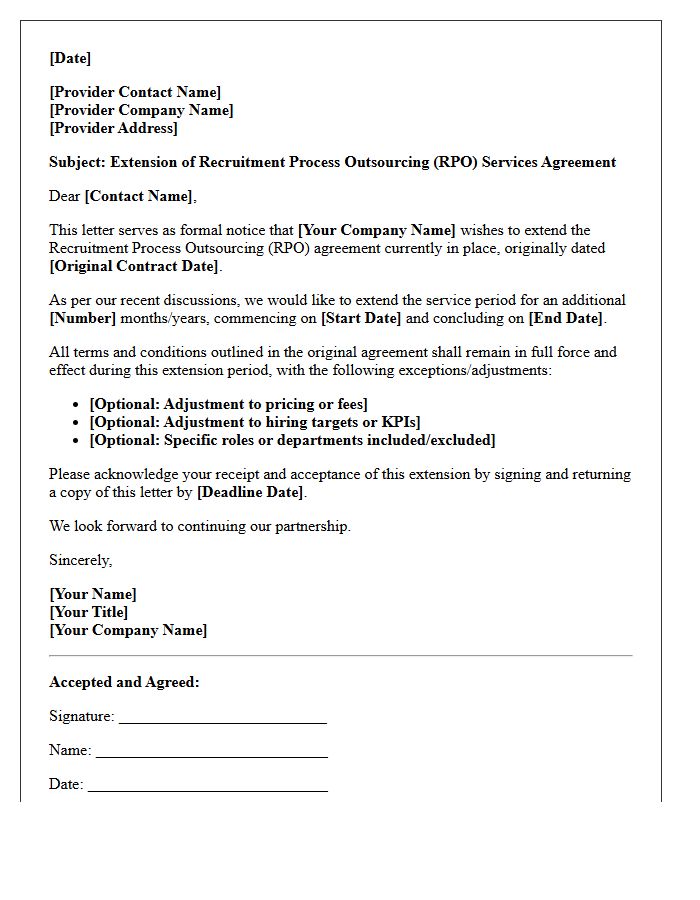
A Recruitment Process Outsourcing (RPO) extension letter is a formal document used to prolong an existing partnership between a company and an external service provider. It outlines the revised duration of the agreement and updates any specific performance metrics or service-level expectations. This letter ensures a seamless transition without service interruptions, maintaining consistent talent acquisition workflows. Key elements include the new expiration date, updated financial terms, and any modifications to the original scope of work to align with current hiring goals and market conditions.
Extended Staffing Service Agreement Letter
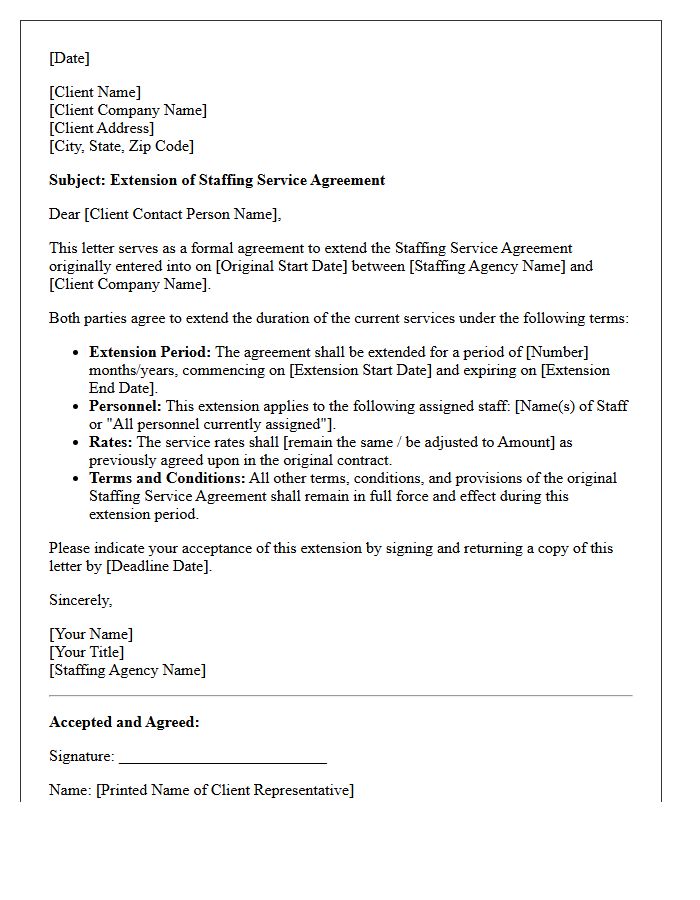
An Extended Staffing Service Agreement Letter is a formal contract used to prolong the placement of temporary personnel beyond the original end date. It outlines critical terms and conditions, including updated bill rates, extension duration, and specific job responsibilities. This document ensures legal compliance and continuity of operations by clearly defining the responsibilities of both the client and the staffing agency. Using a written amendment prevents misunderstandings regarding payroll, insurance coverage, and termination notice periods, providing a secure framework for ongoing professional collaboration between all involved parties.
What is a Client-Approved Project Extension Letter?
A Client-Approved Project Extension Letter is a formal document that officially modifies the original project timeline, confirming that both the service provider and the client have agreed to a new completion date.
What key elements should be included in a project extension letter?
The letter should include the original contract reference, the specific reason for the delay, the newly proposed deadline, any adjustments to the budget or scope, and a formal signature line for client approval.
How do I request a project deadline extension from a client?
To request an extension, notify the client as soon as a delay is identified, explain the circumstances clearly, provide a revised project schedule, and outline the steps being taken to ensure the new milestone is met.
Is a project extension letter legally binding?
Yes, once signed by both parties, a project extension letter typically serves as a formal amendment to the initial contract, legally updating the performance schedule and delivery obligations.
Why is it important to get written client approval for timeline changes?
Securing written approval protects both parties from disputes, ensures clarity regarding revised expectations, and maintains a professional audit trail for project management and billing purposes.

Comments