
Establishing a clear Remote Work Policy is essential for maintaining productivity and legal compliance in distributed teams. This guide explores professional setup requirements, communication expectations, and security protocols to ensure seamless operations outside the traditional office. Effectively document these standards to align your workforce and protect company interests. To simplify your administrative process, below are some ready to use template.
Image cover: Remote Work Infrastructure: Essential Setup Guide and Policy Templates
Letter Samples List
- Remote Work Equipment and Hardware Provision Letter
- Candidate Data Security and Privacy Policy Letter
- Virtual Candidate Interview and Communication Protocol Letter
- Remote Recruiter Working Hours and Availability Letter
- Remote Placement and Performance Metrics Policy Letter
- Client Confidentiality and Non-Disclosure Agreement Letter
- Home Office Setup and Ergonomic Allowance Letter
- Remote Connectivity and Internet Standard Policy Letter
- Remote Applicant Tracking System Access Policy Letter
- Remote Worker Employment Compliance and Jurisdiction Letter
- Remote Work Monthly Expense Reimbursement Policy Letter
- Remote Recruiter Onboarding and Virtual Training Letter
Remote Work Equipment and Hardware Provision Letter
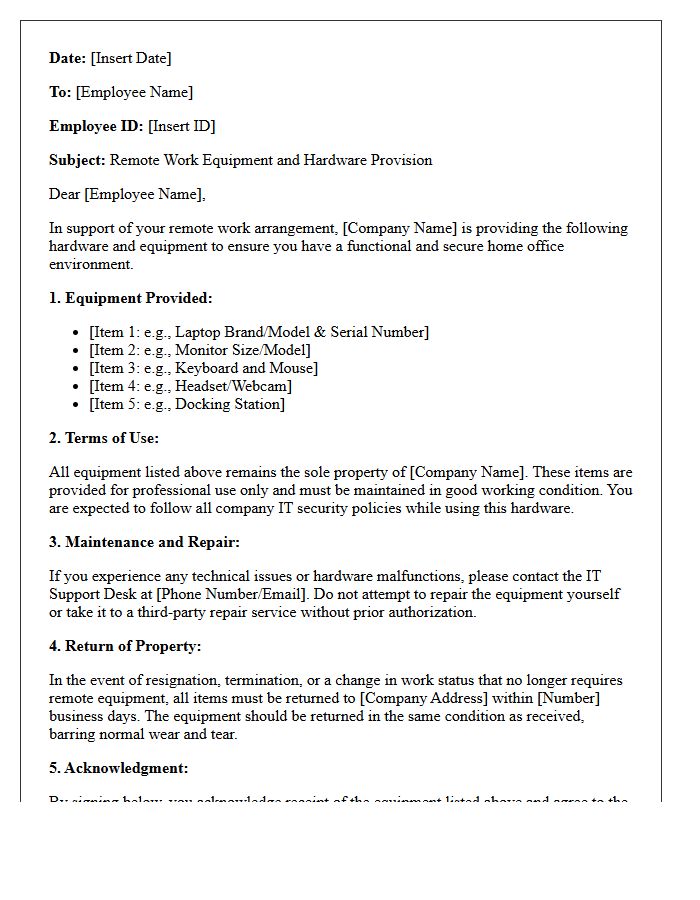
A Remote Work Equipment and Hardware Provision Letter is a formal document detailing the specific assets provided to off-site employees. It serves as a legal inventory acknowledgment, outlining responsibilities for maintenance, security protocols, and the return process upon termination. This agreement ensures both parties understand who owns the hardware and the expected standards for professional use. By signing, employees commit to safeguarding company property and following internal IT policies, which is essential for protecting sensitive data and maintaining operational efficiency in distributed work environments.
Candidate Data Security and Privacy Policy Letter
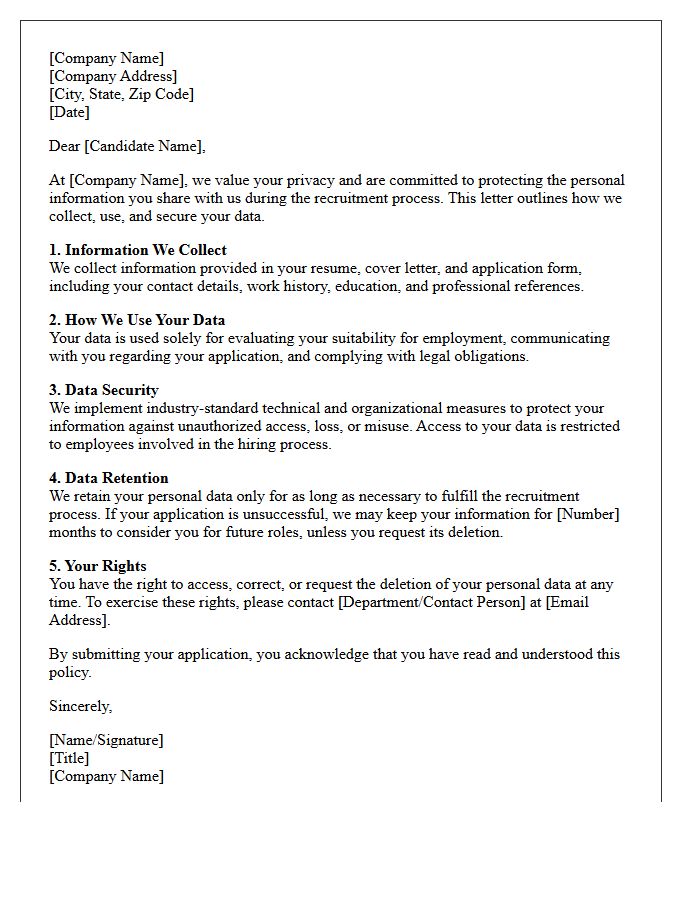
A Candidate Data Security and Privacy Policy Letter is a vital document outlining how an organization protects personal information during recruitment. It ensures transparency by explaining data collection methods, storage duration, and compliance with regulations like GDPR or CCPA. Candidates must understand their rights, including the ability to access, rectify, or delete their records. Establishing clear privacy protocols builds trust and mitigates legal risks. Every applicant should review this policy to ensure their sensitive details remain confidential and are handled with utmost integrity throughout the hiring process.
Virtual Candidate Interview and Communication Protocol Letter
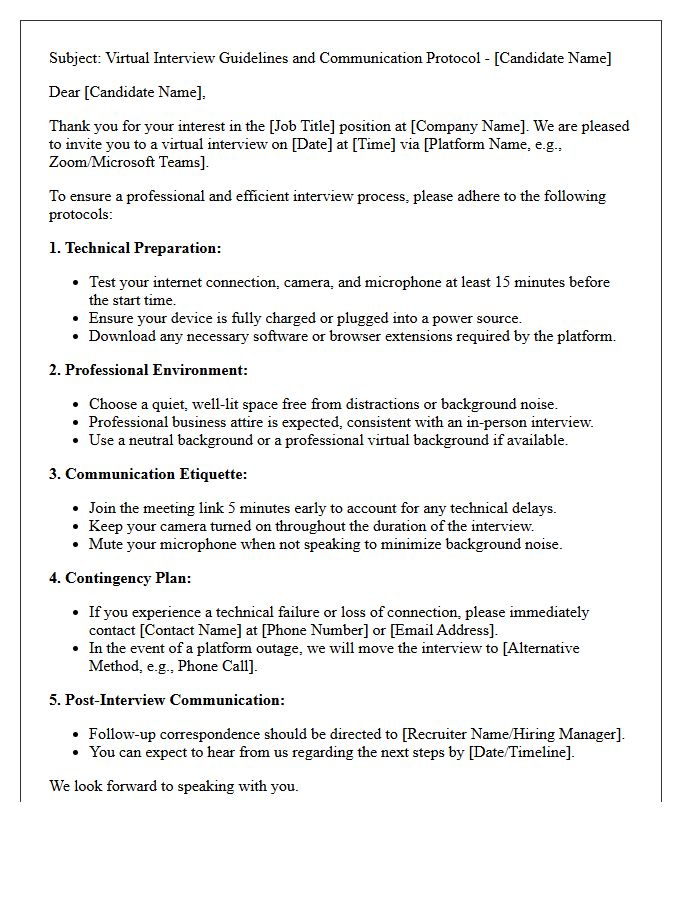
The Virtual Candidate Interview and Communication Protocol Letter is a professional document designed to standardize the remote recruitment process. It outlines essential guidelines for technical requirements, video etiquette, and follow-up procedures to ensure transparency between employers and applicants. By establishing clear expectations regarding digital platforms, time zones, and professional conduct, this protocol minimizes misunderstandings and promotes fairness in the hiring cycle. Understanding these instructions is crucial for candidates to demonstrate their competence and adaptability in a modern, technology-driven workspace, ultimately facilitating a seamless and efficient virtual interaction.
Remote Recruiter Working Hours and Availability Letter
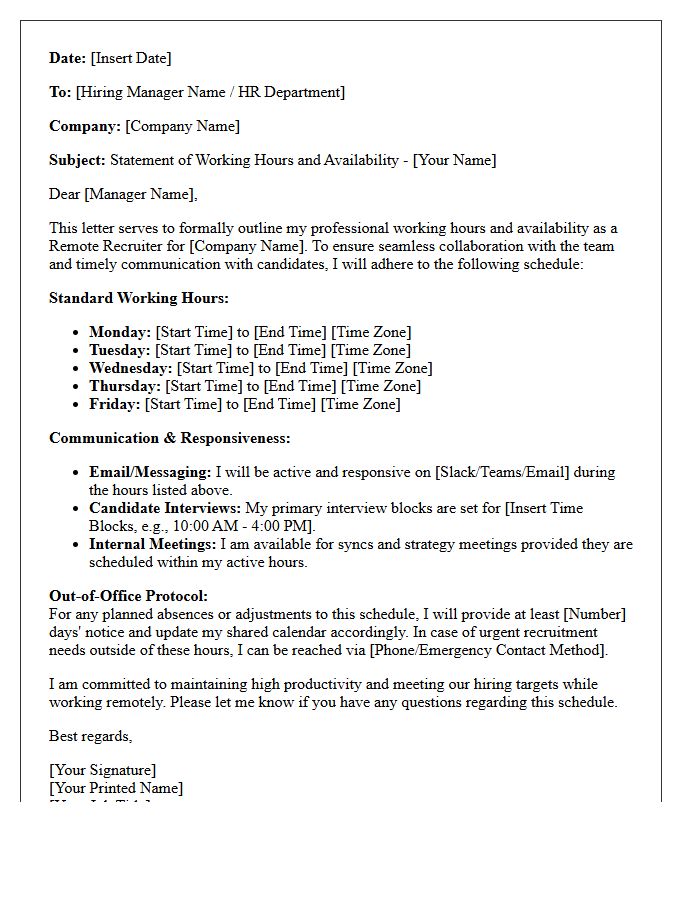
A Remote Recruiter Working Hours and Availability Letter serves as a formal agreement establishing clear boundaries for asynchronous communication and real-time engagement. It outlines specific daily schedules, time zone alignments, and preferred contact methods to ensure seamless talent acquisition workflows. By documenting exact periods of accessibility, recruiters prevent burnout while maintaining professional expectations with hiring managers and candidates. This transparency is vital for managing global recruitment cycles and ensuring that recruitment KPIs are met through consistent, reliable availability in a virtual environment.
Remote Placement and Performance Metrics Policy Letter
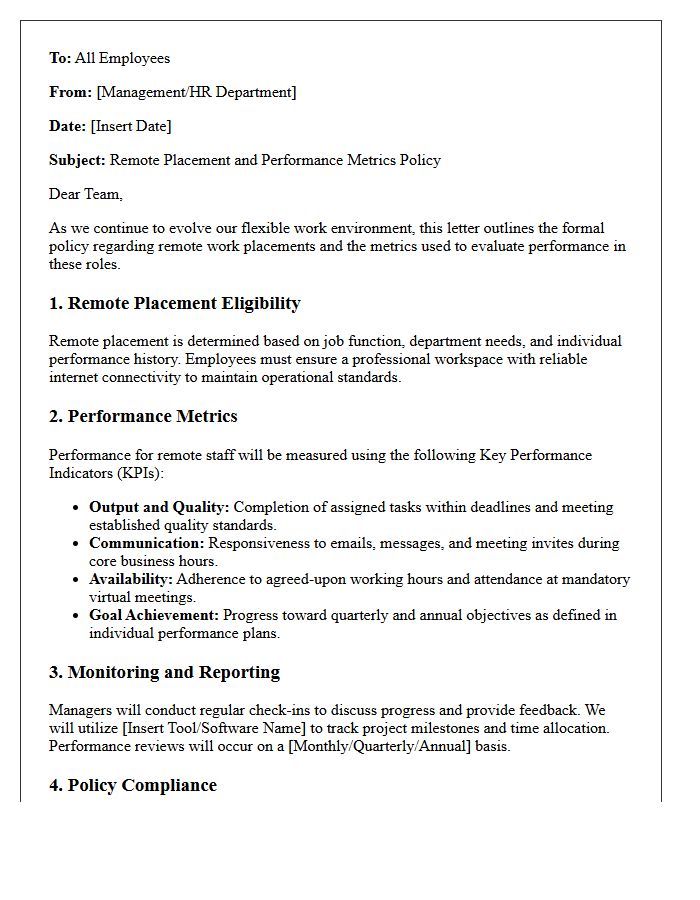
The Remote Placement and Performance Metrics Policy Letter establishes formal guidelines for distributed work environments. It defines eligibility criteria for telecommuting and outlines specific key performance indicators used to measure employee productivity objectively. This policy ensures operational consistency by aligning remote tasks with organizational goals. It serves as a regulatory framework for monitoring output, maintaining accountability, and optimizing workflow efficiency regardless of physical location. Understanding these standards is essential for maintaining compliance and achieving professional benchmarks in a virtual setting.
Client Confidentiality and Non-Disclosure Agreement Letter
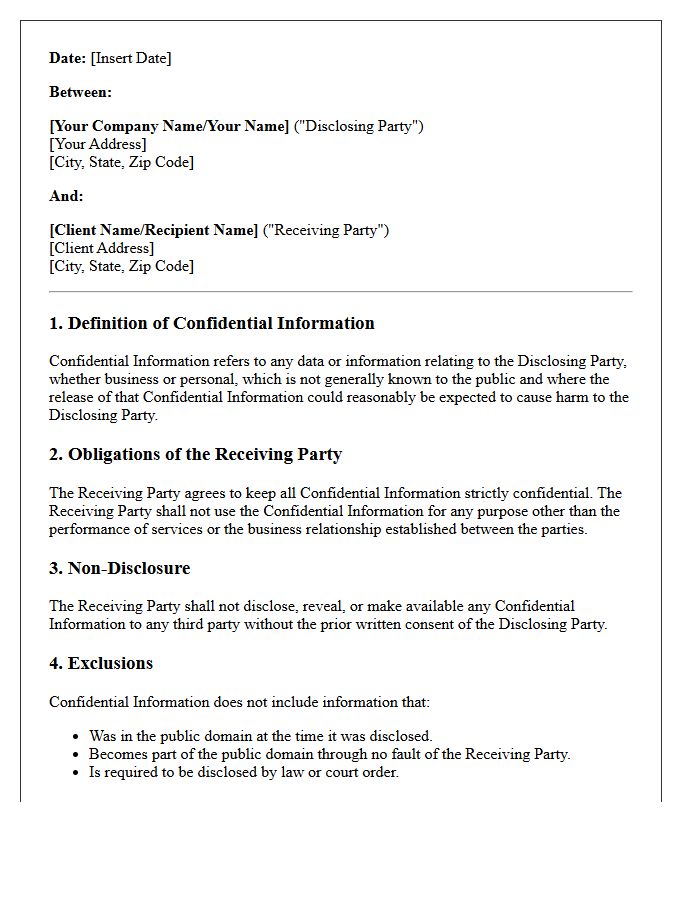
A Client Confidentiality and Non-Disclosure Agreement (NDA) is a legally binding contract designed to protect sensitive data and proprietary information. It ensures that any private materials, trade secrets, or intellectual property shared during a business relationship remain strictly protected from unauthorized disclosure. By establishing clear legal boundaries, this letter builds professional trust and mitigates the risk of competitive disadvantage. Signing an NDA provides a legal framework for seeking damages if a security breach occurs, making it an essential tool for maintaining operational integrity and safeguarding sensitive corporate assets.
Home Office Setup and Ergonomic Allowance Letter
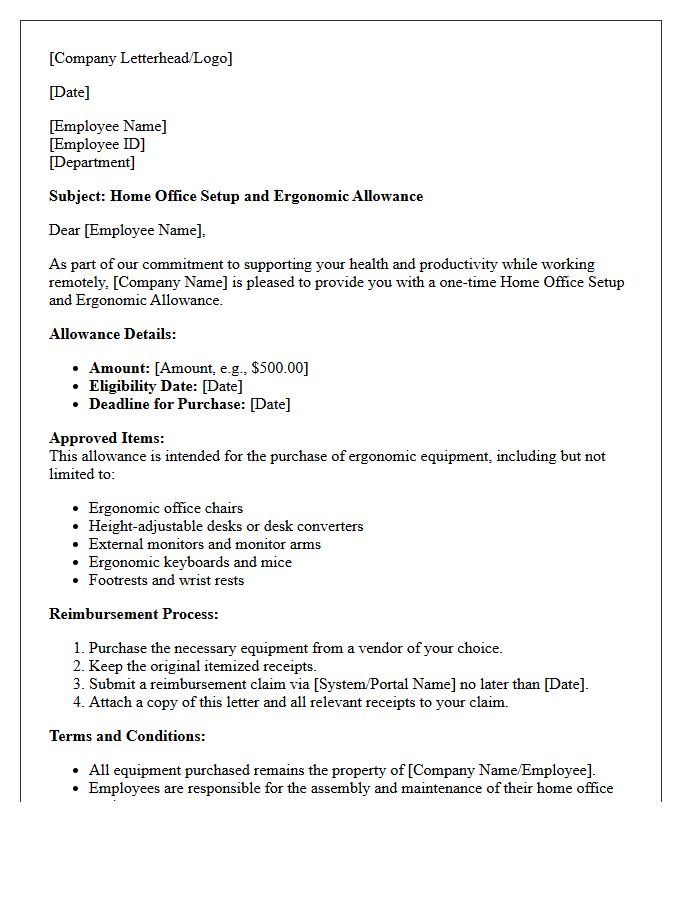
A home office setup requires an ergonomic allowance letter to formalize financial support for equipment. This document typically outlines the reimbursement policy for essential items like adjustable chairs, standing desks, and monitors. To ensure compliance and physical health, employees should submit a formal request highlighting how these tools prevent repetitive strain injuries. Clear communication regarding budget limits and approved vendors is vital for a seamless approval process, ensuring a productive and medically sound remote workspace while maintaining professional standards.
Remote Connectivity and Internet Standard Policy Letter
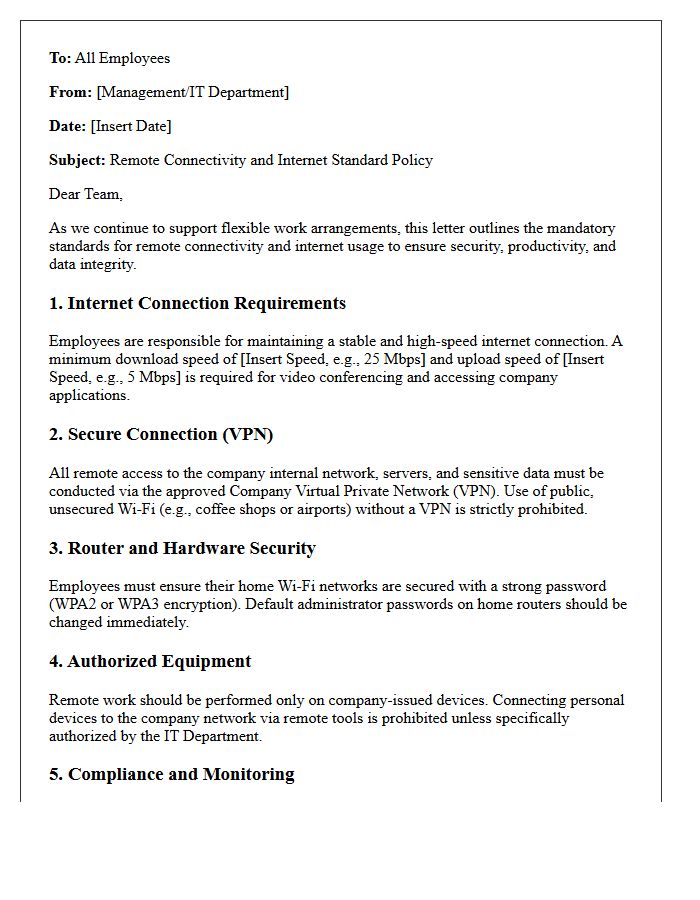
A Remote Connectivity and Internet Standard Policy Letter establishes essential security protocols for accessing internal networks. It defines strict authentication requirements, such as multi-factor validation, to prevent unauthorized entry. This document outlines compliant encryption standards for data transmission, ensuring all remote sessions remain private. By formalizing acceptable use and hardware configurations, the policy minimizes cyber threats and ensures regulatory compliance. Organizations must enforce these guidelines to maintain a robust defense perimeter while enabling flexible, off-site operations for their workforce.
Remote Applicant Tracking System Access Policy Letter
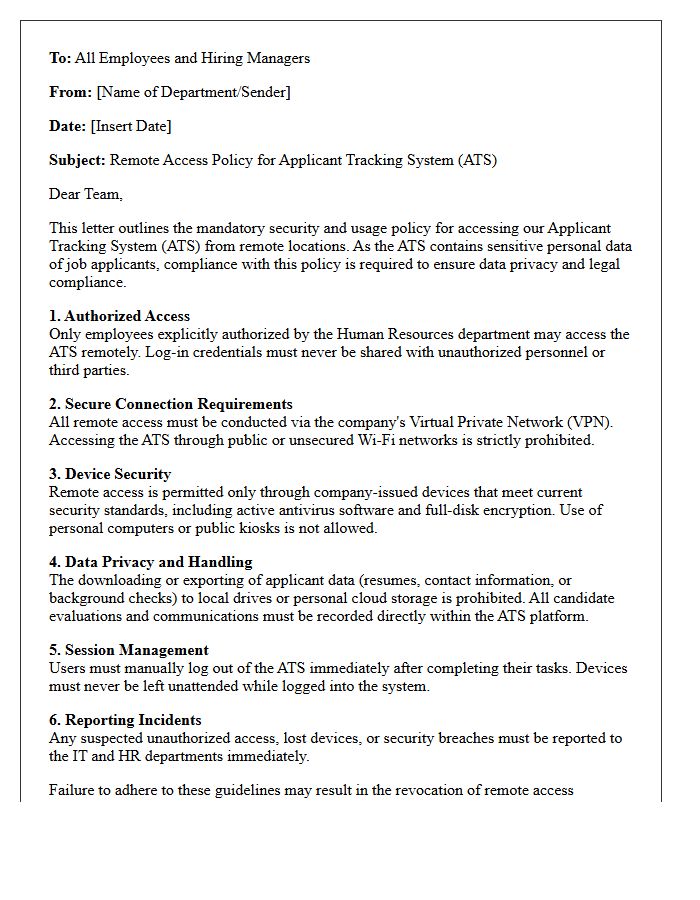
A Remote Applicant Tracking System Access Policy Letter establishes critical guidelines for data security and system integrity. This document outlines authorized remote access protocols, ensuring that recruiters handle sensitive candidate information through encrypted connections and multi-factor authentication. By defining compliance standards, the policy mitigates risks of data breaches and unauthorized disclosure. It serves as a formal agreement, holding employees accountable for maintaining confidentiality while utilizing recruitment software outside the traditional office environment, thereby protecting both the organization's reputation and applicant privacy.
Remote Worker Employment Compliance and Jurisdiction Letter
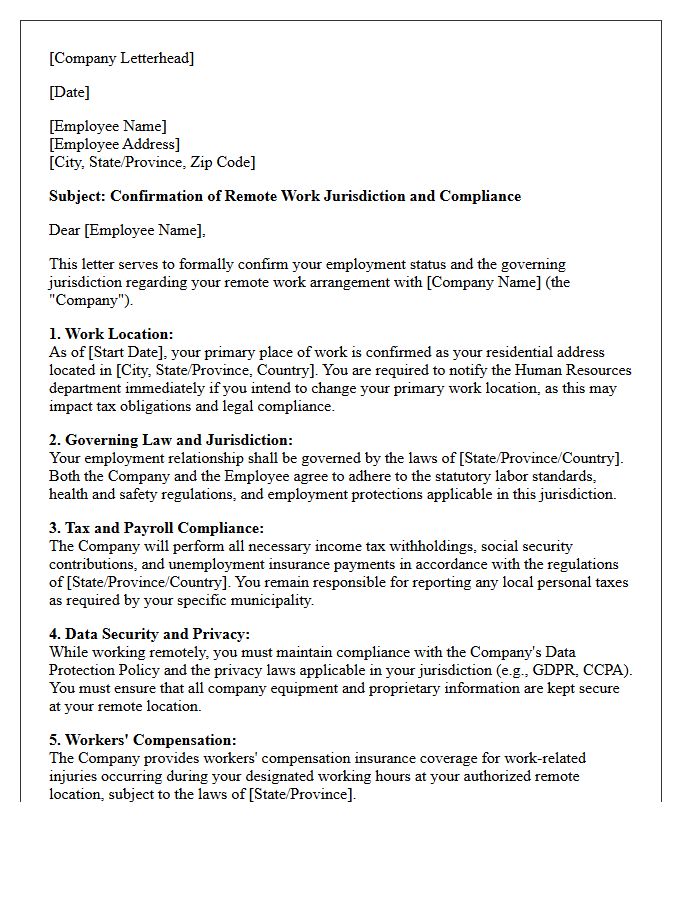
A Remote Worker Employment Compliance and Jurisdiction Letter is a legal document used to clarify which labor laws and tax regulations apply to a distributed employee. It establishes the jurisdiction governing the employment relationship, addressing critical factors like state-specific mandates, payroll taxes, and workers' compensation requirements. This letter ensures that both the employer and remote staff understand their rights and obligations based on the worker's physical location. Properly documenting these terms helps mitigate legal risks and ensures full adherence to regional statutory standards in a remote work environment.
Remote Work Monthly Expense Reimbursement Policy Letter
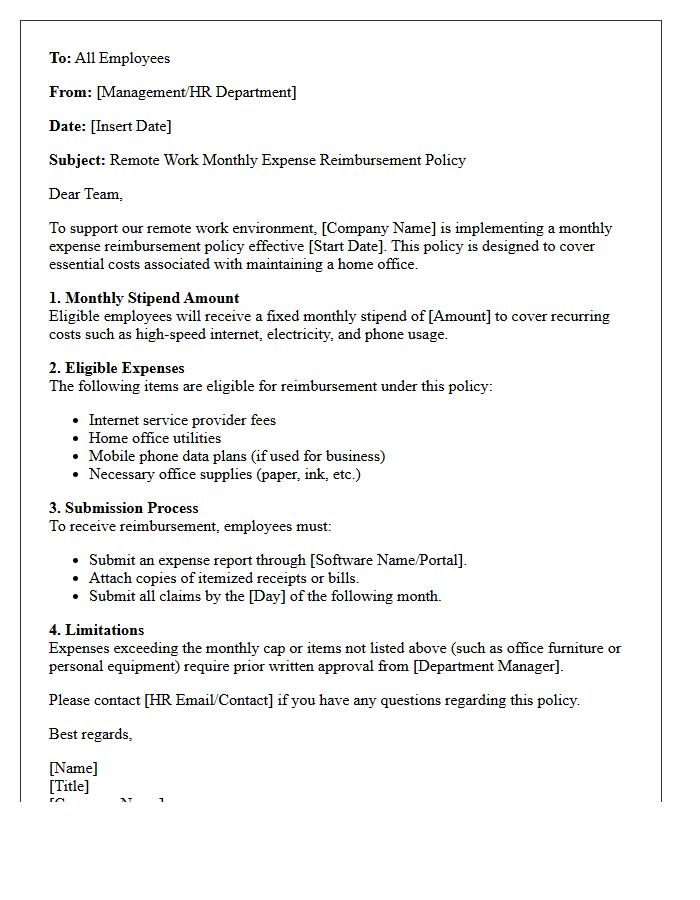
A Remote Work Monthly Expense Reimbursement Policy Letter formalizes the financial support provided to off-site employees. It must clearly outline eligible expenses, such as internet stipends, office supplies, or utility offsets. The document should specify reimbursement limits, mandatory submission deadlines, and the required documentation process to ensure tax compliance. By establishing transparent criteria for recurring costs, employers mitigate liability and maintain operational fairness. Understanding these guidelines helps remote staff manage their home office budgets effectively while adhering to corporate fiscal standards.
Remote Recruiter Onboarding and Virtual Training Letter
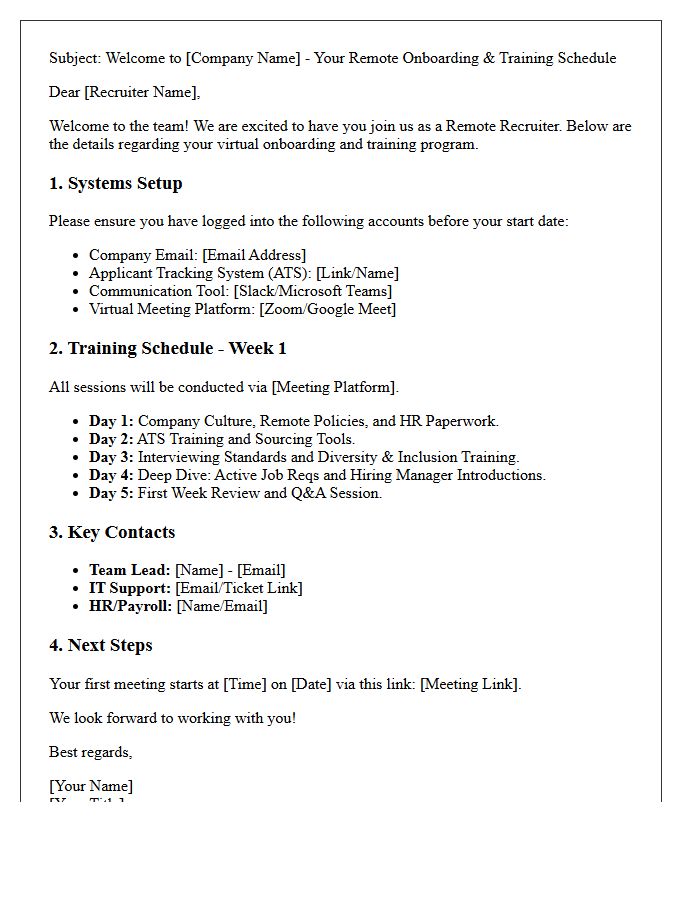
A Remote Recruiter Onboarding letter serves as the essential blueprint for integrating talent acquisition professionals into a distributed workspace. It must clearly outline virtual training milestones, software access, and communication protocols to ensure alignment with company culture. By providing structured expectations and digital resources immediately, organizations empower new hires to master recruitment technologies and candidate sourcing strategies effectively. A well-crafted letter reduces time-to-productivity while fostering a sense of belonging in a remote environment.
What are the minimum hardware and internet requirements for a remote work setup?
Employees are required to have a stable high-speed internet connection (minimum 25 Mbps download/10 Mbps upload) and a dedicated, secure workspace. The company provides a standard hardware package including a laptop, headset, and external monitor to ensure productivity and data security.
How can employees request reimbursement for home office expenses?
According to the Remote Work Policy Letter, employees are eligible for a monthly stipend to cover utility and internet costs. For one-time ergonomic furniture purchases, staff must submit a formal request via the HR portal and attach itemized receipts for approval within 30 days of purchase.
What security protocols must be followed when accessing company data remotely?
All remote staff must use the company-approved VPN and multi-factor authentication (MFA) to access internal servers. Sharing devices with non-employees is strictly prohibited, and software updates must be installed promptly to maintain compliance with our cybersecurity policy.
How is employee performance and attendance monitored in a remote environment?
Performance is measured by output, deadline adherence, and participation in scheduled virtual meetings rather than active hours logged. Employees are expected to be available on Slack or Teams during "core hours" defined in their specific Remote Work Agreement.
Does the Remote Work Policy allow for working from different geographic locations?
While the policy supports flexibility, employees must maintain a primary tax residence in an approved jurisdiction. Any "work from anywhere" arrangements exceeding 14 days must be requested in writing and approved by Department Heads to ensure legal and tax compliance.


Comments