
Establishing a professional environment begins with a clear Uniform and Dress Code Policy Letter. This essential document ensures all employees understand workplace appearance standards, promoting brand consistency and safety across your organization. Effective policies balance professional expectations with legal compliance and cultural inclusivity. To help you implement these guidelines effectively, below are some ready to use template.
Image cover: Professional Staff Uniform and Dress Code Policy Templates
Letter Samples List
- New Uniform and Dress Code Policy Announcement Letter
- Client Specific Temporary Worker Dress Code Letter
- Candidate Interview Attire Guideline Letter
- First Warning Dress Code Violation Letter
- Final Warning Uniform Noncompliance Letter
- Dress Code Policy Acknowledgment Agreement Letter
- Employee Uniform Order and Issuance Letter
- Uniform Return Request Upon Termination Letter
- Casual Friday Dress Code Exception Letter
- Professional Grooming and Appearance Standards Letter
- Uniform Policy Exemption Request Letter
- Damaged Uniform Replacement Request Letter
- Seasonal Summer Dress Code Update Letter
- Uniform Purchase Reimbursement Approval Letter
New Uniform and Dress Code Policy Announcement Letter
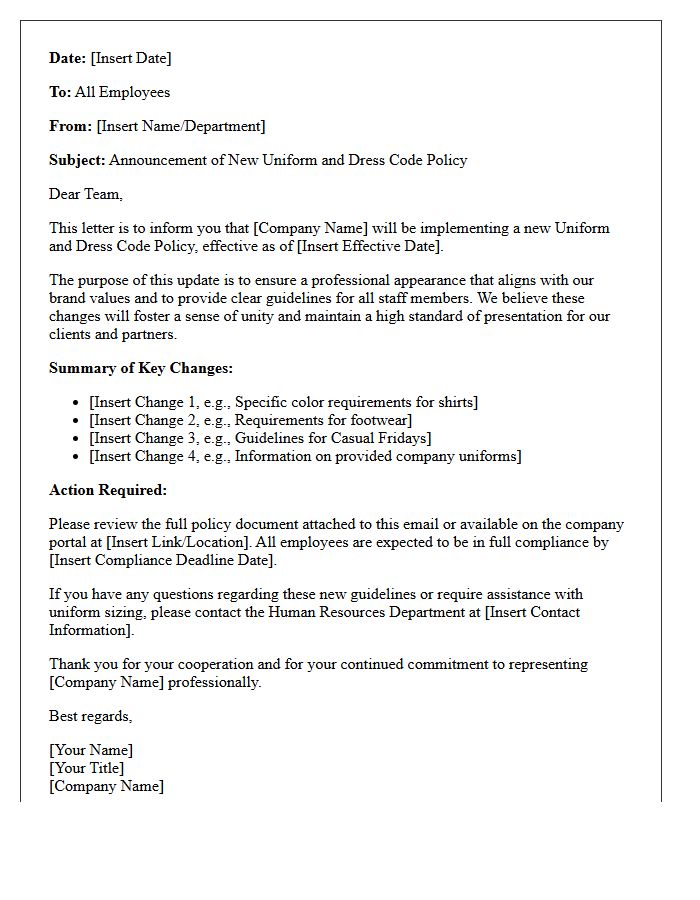
Our organization is implementing a New Uniform and Dress Code Policy to ensure a professional environment. All employees must review the updated guidelines regarding acceptable attire and grooming standards. This change aims to unify our brand identity and enhance workplace safety. Please note the effective date mentioned in your official letter to ensure compliance. Failure to adhere to these mandatory requirements may result in disciplinary action. We appreciate your cooperation in maintaining our corporate image. Contact Human Resources for any clarifications regarding specific apparel specifications.
Client Specific Temporary Worker Dress Code Letter
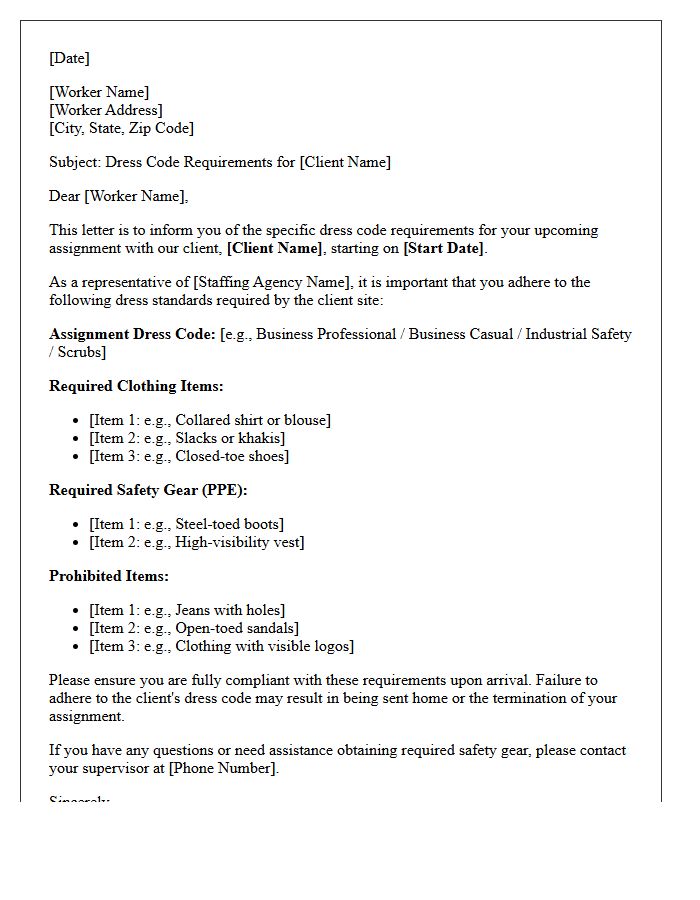
A Client Specific Temporary Worker Dress Code Letter is a formal document outlining mandatory attire standards required by a host company. It ensures contractors maintain a professional appearance that aligns with the client's brand and safety protocols. Clear guidelines prevent confusion, reduce compliance issues, and promote workplace safety. Temporary staff must strictly follow these instructions to meet operational expectations and represent the staffing agency effectively. Understanding specific requirements-such as business casual, uniforms, or protective gear-is essential for a successful placement and seamless integration into the client's work environment.
Candidate Interview Attire Guideline Letter
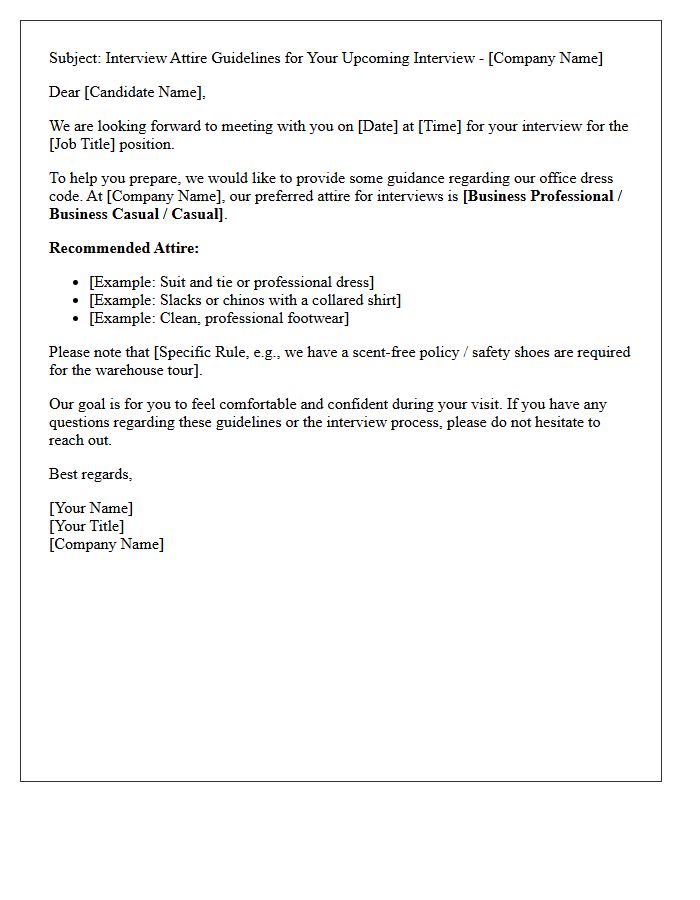
A candidate interview attire guideline letter ensures applicants understand the professional dress code expected by the hiring organization. It clarifies whether the environment requires business formal, business casual, or creative attire, helping candidates feel confident and prepared. Providing these instructions reduces anxiety and promotes consistency during the evaluation process. It is a vital tool for employer branding, reflecting the company's culture while ensuring all individuals are judged on their merits rather than wardrobe misunderstandings. Clear communication regarding appearance fosters a respectful and inclusive recruitment experience for everyone involved.
First Warning Dress Code Violation Letter
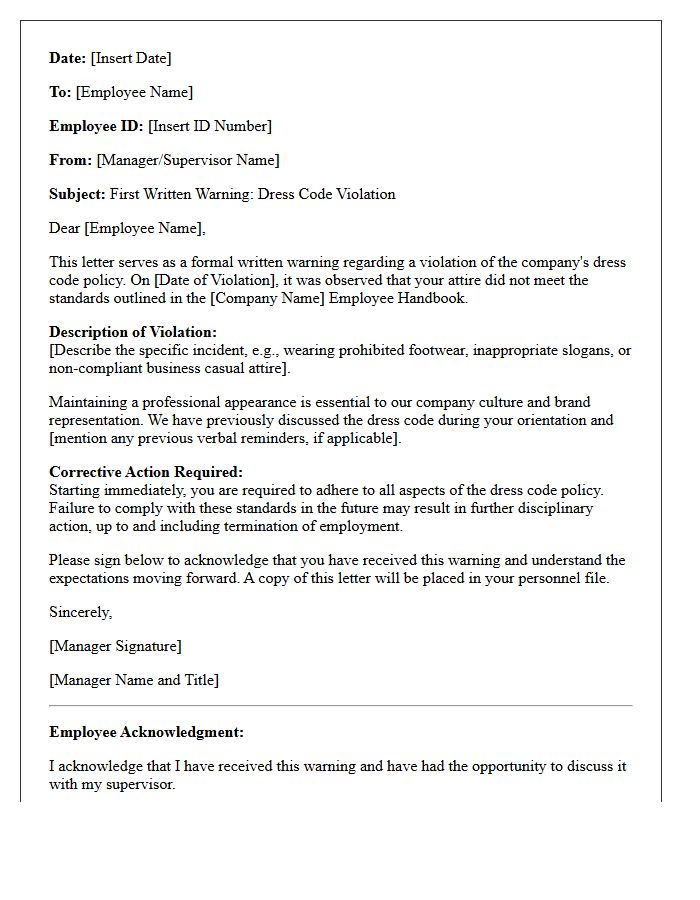
A First Warning Dress Code Violation Letter is a formal notification issued to an employee who fails to adhere to established workplace attire standards. This document serves as an official record of the non-compliance, clearly outlining the specific policy breached and the expected corrective actions. Its primary purpose is to ensure professional consistency while providing the individual with a fair opportunity to rectify their appearance before further disciplinary measures are taken. Maintaining clear communication through this letter helps uphold company culture and ensures all staff members are treated with professional equality.
Final Warning Uniform Noncompliance Letter
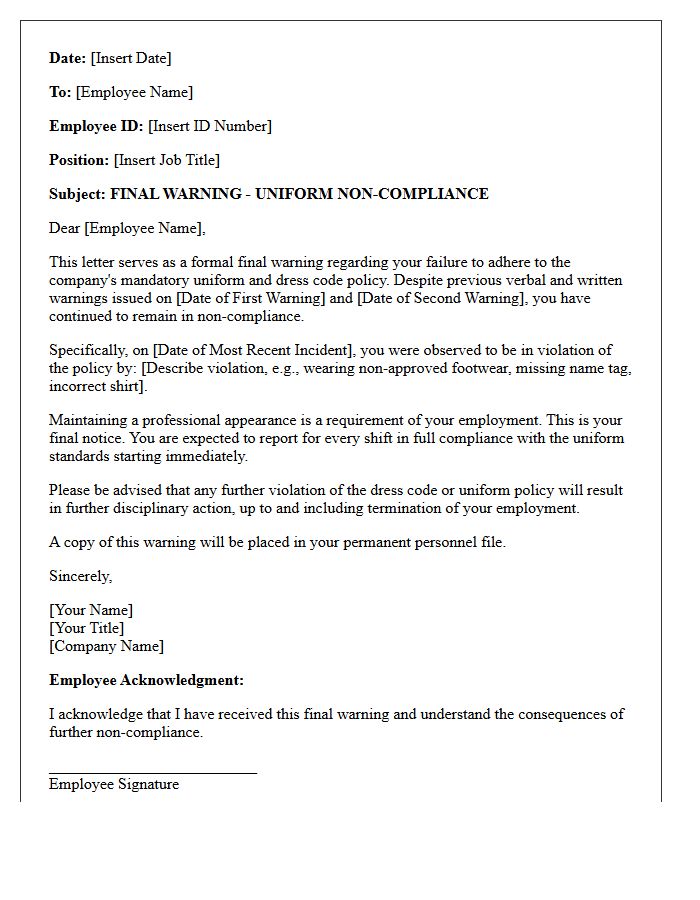
A Final Warning Uniform Noncompliance Letter is a formal disciplinary document issued to employees who consistently fail to adhere to established dress codes. This notice serves as a last chance to correct appearance or safety gear violations before termination occurs. It outlines specific instances of noncompliance, references the employee handbook, and clearly states the consequences of further infractions. Employers use this letter to maintain professional standards and ensure legal protection by documenting a clear history of warnings and failed corrective actions regarding workplace uniform policies.
Dress Code Policy Acknowledgment Agreement Letter
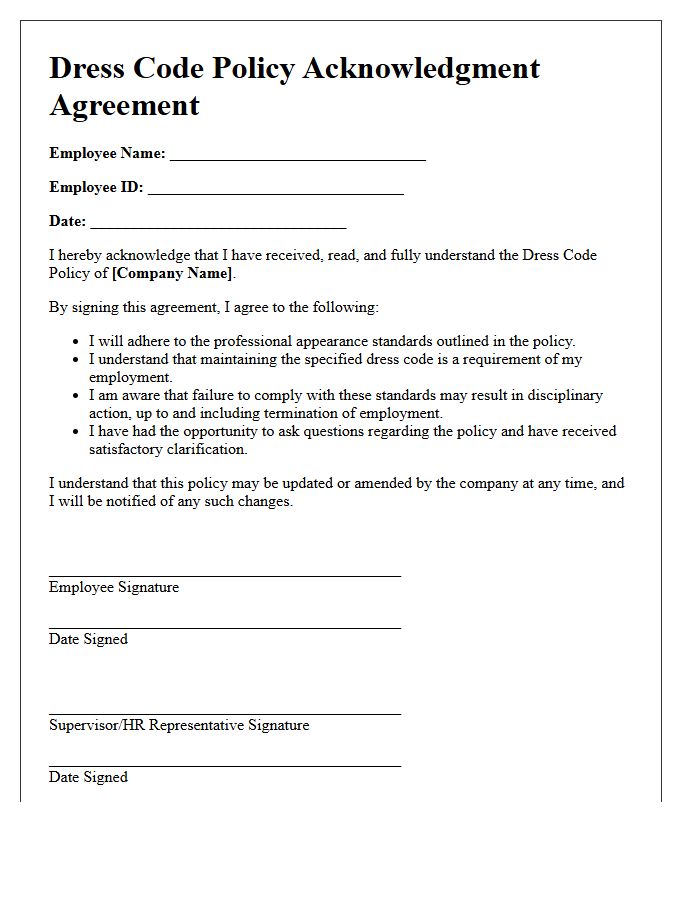
A Dress Code Policy Acknowledgment Agreement Letter is a formal document confirming that an employee has received, read, and understood the organization's professional appearance standards. By signing this agreement, the individual commits to maintaining the required compliance during working hours. This letter serves as critical legal protection for employers, ensuring expectations are clearly communicated and providing a basis for disciplinary action if violations occur. It promotes a consistent brand image and fosters a respectful, safe, and productive work environment for all staff members.
Employee Uniform Order and Issuance Letter
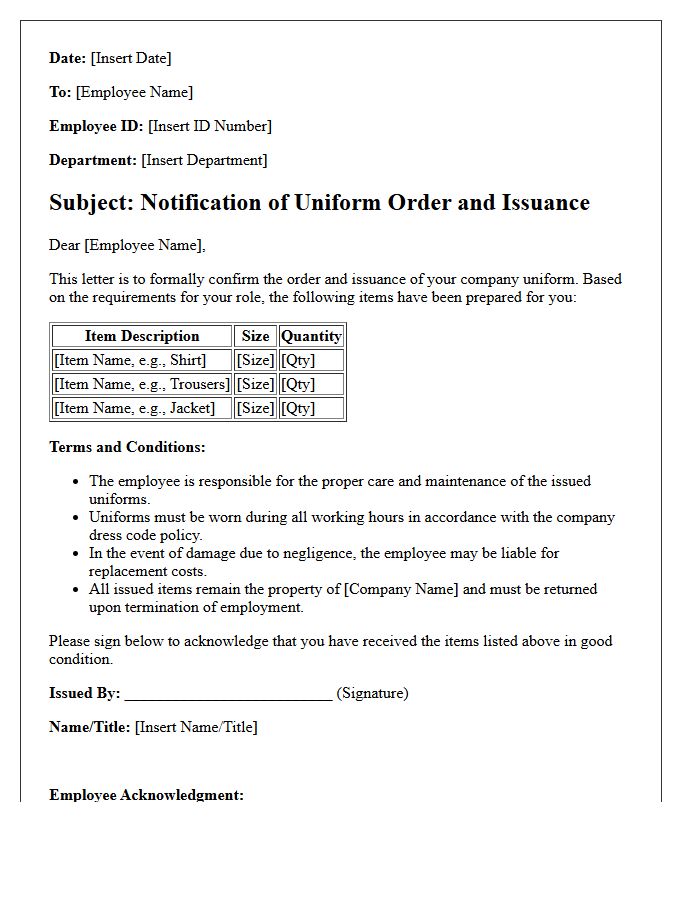
An Employee Uniform Order and Issuance Letter serves as an official record for distributing company apparel. It must clearly outline the specific items provided, including sizes and quantities. This document ensures accountability by detailing maintenance responsibilities, replacement costs, and return policies upon termination. Both the employer and employee should sign the letter to acknowledge receipt and agree to the corporate dress code standards. Proper documentation helps streamline inventory management while ensuring all staff members maintain a professional and consistent brand identity in the workplace.
Uniform Return Request Upon Termination Letter
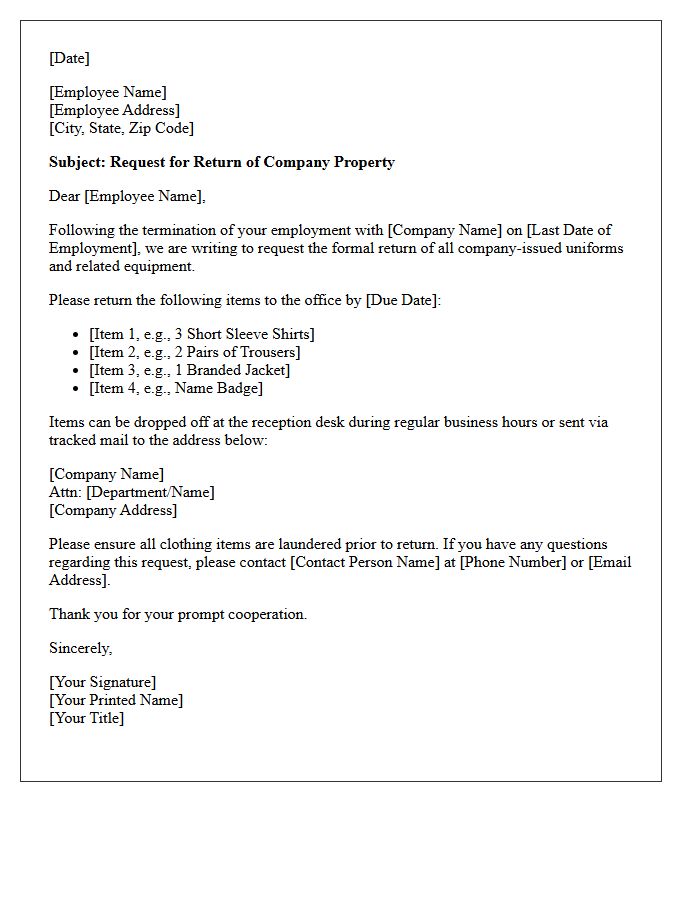
A Uniform Return Request Upon Termination Letter is a formal document issued by employers to ensure the prompt retrieval of company property. It serves as a legal safeguard by listing specific items like laptops, keys, and security badges that must be returned. Clear communication in this letter helps prevent data breaches and financial loss. It often outlines the deadline and methods for return, ensuring a smooth offboarding process while protecting sensitive corporate assets and maintaining compliance with employment termination protocols.
Casual Friday Dress Code Exception Letter
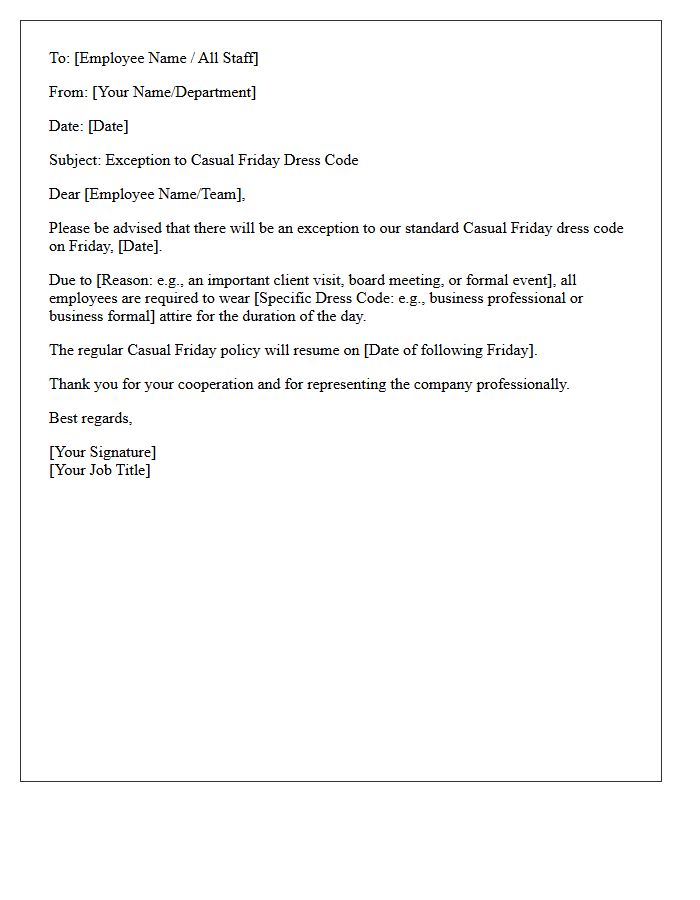
A Casual Friday Dress Code Exception Letter is a formal notification informing employees that the standard relaxed attire policy is suspended for a specific date. This usually occurs due to client meetings, executive visits, or formal corporate events requiring professional business wear. It is essential to provide clear reasoning and specify the required replacement attire to ensure organizational consistency. Always issue this notice in advance so staff can prepare accordingly, maintaining a professional image during critical business interactions despite the usual end-of-week traditions.
Professional Grooming and Appearance Standards Letter
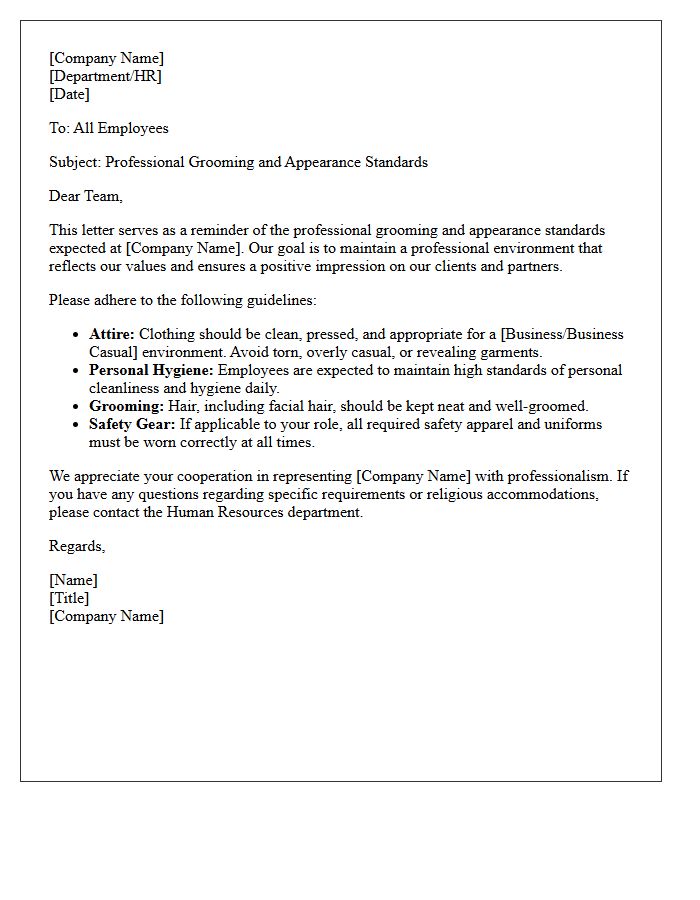
A professional grooming and appearance standards letter establishes clear workplace expectations regarding attire and hygiene. It ensures a cohesive brand image while maintaining safety and professionalism across the organization. This document should detail specific dress codes, grooming requirements, and any prohibited items to avoid ambiguity. By communicating these standards effectively, employers foster a respectful environment and ensure employees represent the company's values consistently. Clear guidelines help prevent compliance issues and support a disciplined corporate culture that enhances public perception and internal morale.
Uniform Policy Exemption Request Letter
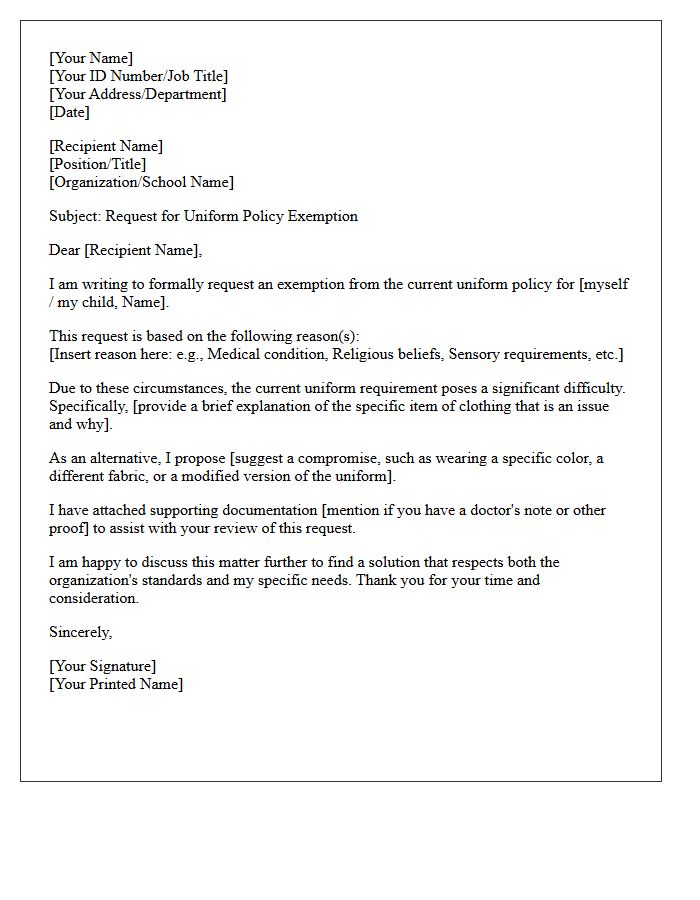
A Uniform Policy Exemption Request Letter is a formal document used to seek relief from strict dress codes based on religious beliefs, medical conditions, or personal identity. To be effective, the letter should clearly state the specific policy being addressed and provide a compelling justification for the accommodation. Attaching supporting documentation, such as a doctor's note or religious certification, strengthens the case. Employers or schools typically review these requests to ensure inclusivity while maintaining organizational standards. Promptly submitting this letter ensures your rights are considered through official administrative channels.
Damaged Uniform Replacement Request Letter
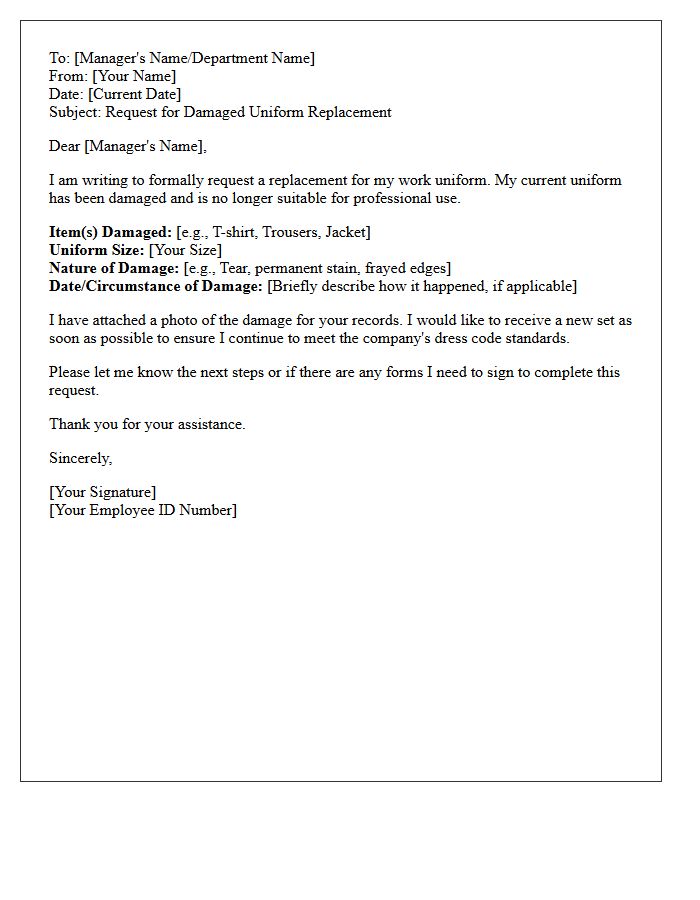
A Damaged Uniform Replacement Request Letter is a formal document used to notify an employer about unusable work attire. To ensure a professional resolution, clearly describe the specific damage and explain how it occurred during official duties. Mentioning the garment size and your employee ID helps expedite the procurement process. Providing evidence, such as a photo or the physical item, substantiates the need for a new issue. A concise, respectful tone ensures the company maintains its professional image while providing you with necessary safety and compliance gear.
Seasonal Summer Dress Code Update Letter
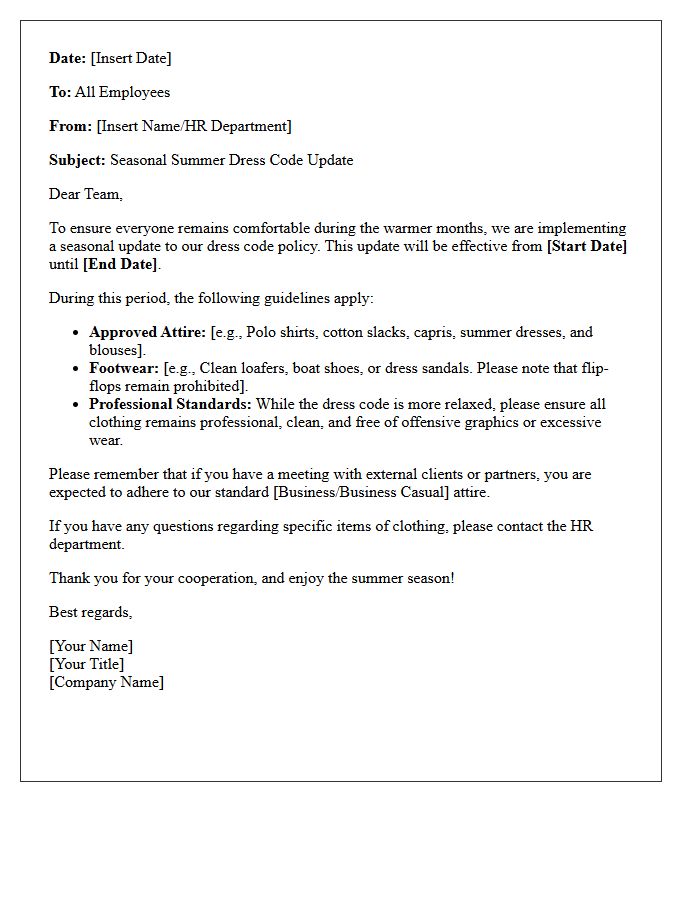
Our upcoming Seasonal Summer Dress Code Update ensures workplace comfort during warmer months. Effective immediately, employees may wear business casual attire, including breathable fabrics like linen or cotton. While we encourage a relaxed style, please maintain a professional appearance by avoiding flip-flops or beachwear. This policy remains in effect until September 1st to balance personal well-being with our corporate image. Please review the updated employee handbook for specific guidelines on acceptable summer garments. We appreciate your cooperation in keeping our office environment both comfortable and professional throughout the season.
Uniform Purchase Reimbursement Approval Letter
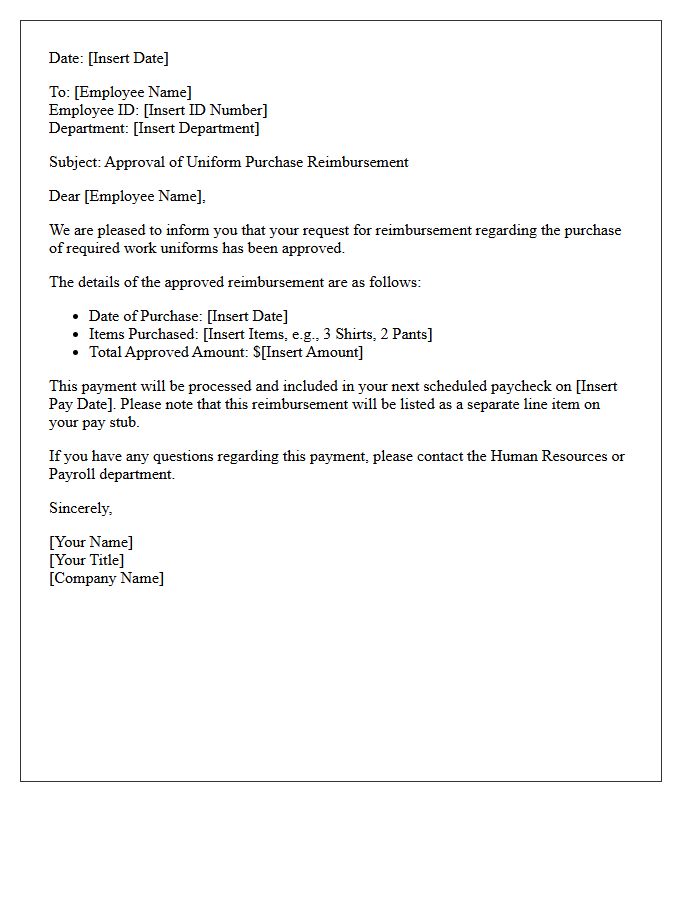
A Uniform Purchase Reimbursement Approval Letter is a formal document confirming that an employer will repay an employee for work-related attire. It serves as written authorization, ensuring the purchase meets company policy and budget requirements. This letter is essential for financial accountability, as it outlines the specific items approved and the maximum refund amount. For employees, it provides a guarantee of payment, while for businesses, it creates a clear audit trail for tax deductions and expense tracking. Always retain this document alongside original receipts to facilitate a smooth reimbursement process.
What is the purpose of the Uniform and Dress Code Policy?
The policy establishes professional standards for appearance to ensure safety, promote a cohesive brand identity, and maintain a respectful environment for all employees and clients.
What are the core requirements for the daily business dress code?
Employees are expected to wear approved company-branded attire or professional business casual clothing that is clean, pressed, and free of visible wear or damage.
Are there specific footwear safety requirements under this policy?
Yes, all employees working in designated operational areas must wear closed-toe, non-slip shoes; specific departments may require steel-toed boots as per OSHA safety standards.
How can employees request an accommodation for the dress code?
Requests for dress code modifications based on religious beliefs, medical conditions, or disabilities should be submitted in writing to the Human Resources department for review.
What are the consequences of non-compliance with the uniform policy?
Failure to adhere to the established dress code may result in being sent home to change on unpaid time and could lead to formal disciplinary action as outlined in the employee handbook.

Comments