
Receiving a Certification Verification Failure Rejection Letter can be discouraging for applicants and challenging for HR departments. This document formally notifies a candidate that their professional credentials could not be authenticated, often leading to immediate disqualification. Understanding the reasons for discrepancies is essential for maintaining hiring integrity and compliance. To assist your communication process, below are some ready to use template.
Image cover: Professional Notification Templates: Resolving Certification Verification Failures
Letter Samples List
- Certification Verification Failure Rejection Letter
- Unverified Candidate Credentials Rejection Letter
- Failed Certification Check Employment Rejection Letter
- Invalid Certification Notice and Rejection Letter
- Applicant Rejection Letter Due to Certification Verification Failure
- Recruitment Agency Certification Discrepancy Rejection Letter
- Unable to Verify Qualifications Candidate Rejection Letter
- Professional Certification Verification Failure Rejection Letter
- Unconfirmed Credential Status Application Rejection Letter
- Failed Background and Certification Check Rejection Letter
- License and Certification Verification Failure Rejection Letter
- Agency Rejection Letter for Unverified Professional Certifications
Certification Verification Failure Rejection Letter
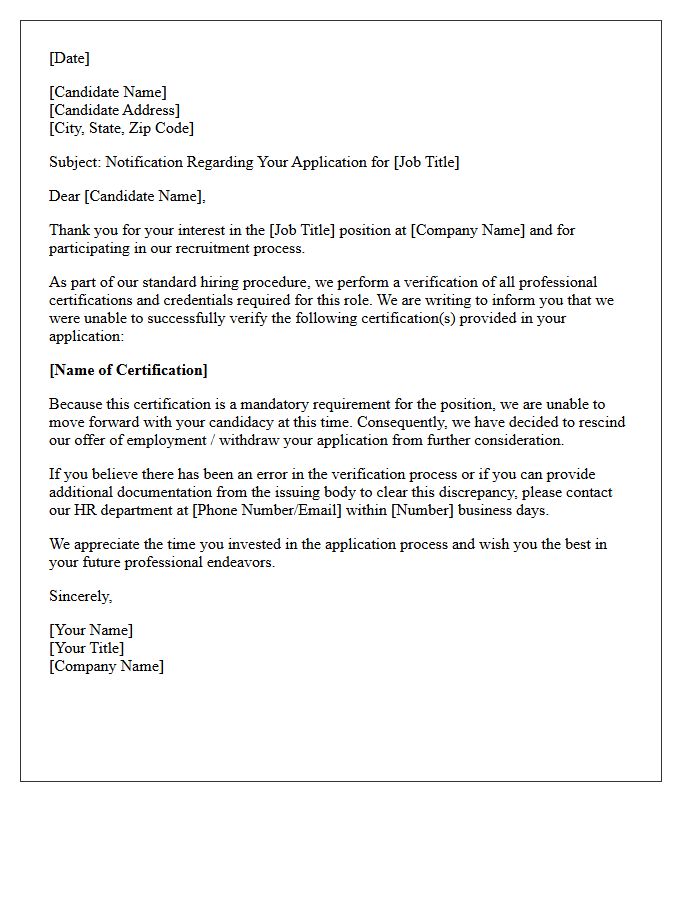
Receiving a Certification Verification Failure Rejection Letter indicates that an issuing body could not validate your professional credentials. This formal notice often results from expired documents, mismatched personal data, or unaccredited sources. To resolve this, carefully review the specific reason for denial mentioned in the correspondence. Promptly provide supplemental evidence or corrected information to the evaluating department to maintain your professional standing and eligibility. Ensuring your certification records are current and accurate is essential to avoid permanent disqualification from employment or licensing opportunities.
Unverified Candidate Credentials Rejection Letter
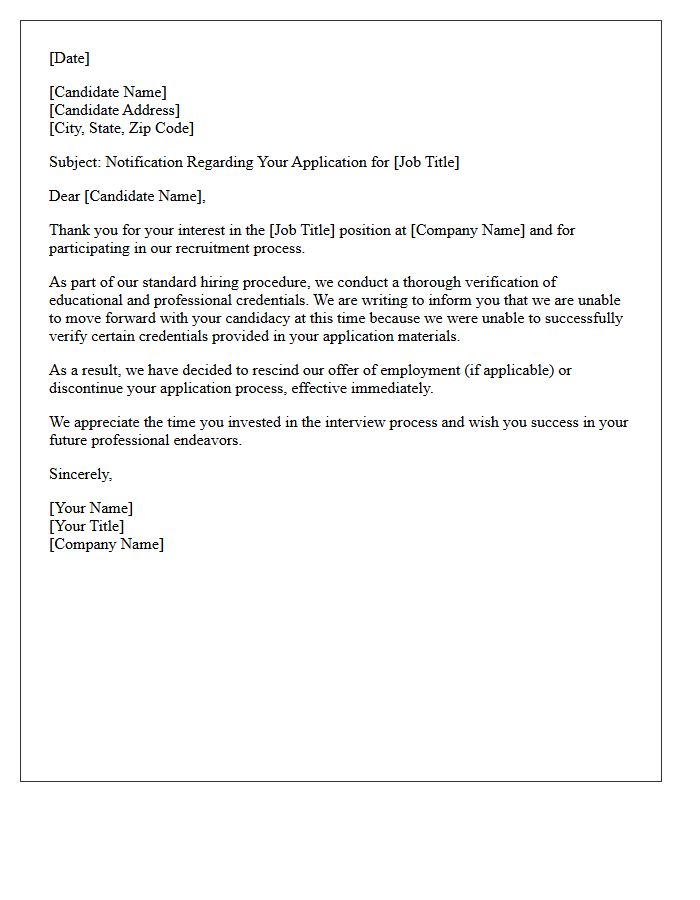
An Unverified Candidate Credentials Rejection Letter is a formal notice issued when an applicant provides false information or fails background checks. Professionalism is vital; clearly state that the offer is rescinded due to the inability to verify specific qualifications or employment history. Avoid accusatory language to mitigate legal risks while maintaining a firm stance on hiring integrity. This document ensures transparency, protects the organization from liability, and upholds corporate standards. Always ensure the verification process complies with local labor laws and data privacy regulations before final delivery.
Failed Certification Check Employment Rejection Letter
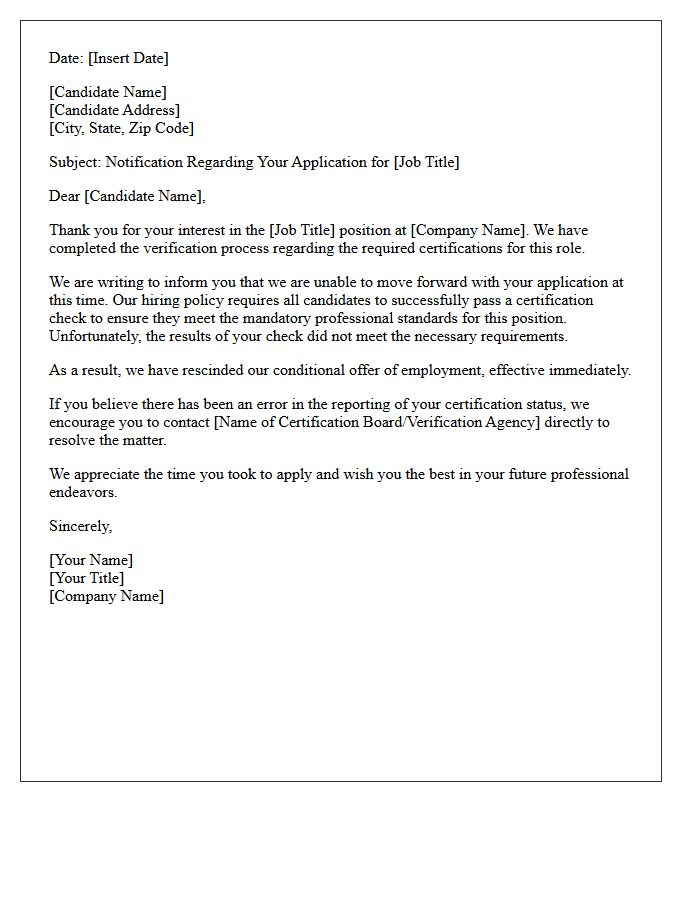
A Failed Certification Check Employment Rejection Letter formally notifies a candidate that their application cannot proceed due to a failure to meet mandatory professional credentials or licensing standards. This document is essential for maintaining transparent hiring practices and legal compliance. It should clearly state that the specific certification requirements for the role were not verified. Providing this written notice ensures regulatory alignment and allows the candidate to rectify their status for future opportunities while protecting the employer from potential liability regarding unqualified hires.
Invalid Certification Notice and Rejection Letter
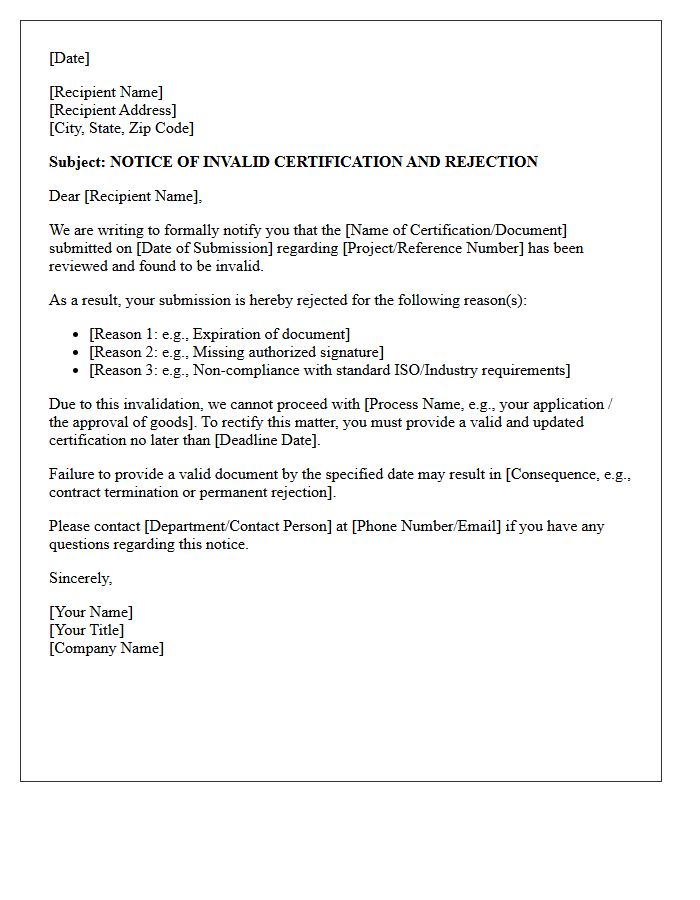
Receiving an Invalid Certification Notice or a rejection letter indicates that submitted documentation failed to meet mandatory legal or technical standards. This often occurs due to expired credentials, missing signatures, or incorrect data. It is crucial to review the specific deficiency codes provided to initiate a timely appeal or resubmission. Promptly addressing these discrepancies prevents permanent denial of benefits or services. Always verify that all information aligns with official requirements before reapplying to ensure successful compliance and avoid further administrative delays in the certification process.
Applicant Rejection Letter Due to Certification Verification Failure
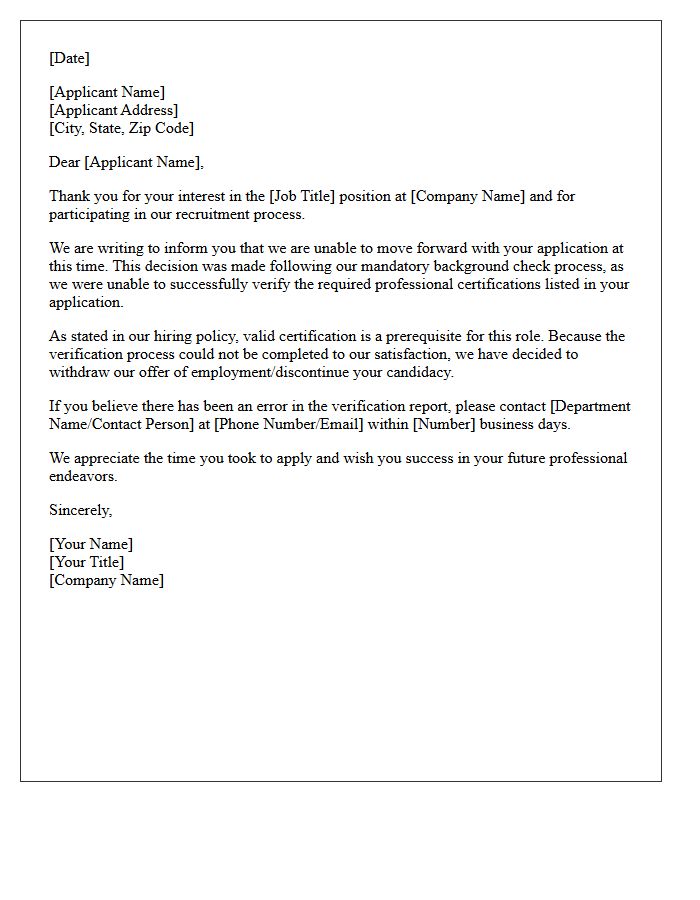
An applicant rejection letter due to certification verification failure is a formal notice stating that a candidate's credentials could not be authenticated. It is essential to ensure compliance with legal standards and internal hiring policies. The letter should clearly state that the decision was based on the inability to verify specific professional licenses or educational documents. Maintaining a professional tone protects the organization's reputation while providing necessary transparency to the applicant. Always ensure data accuracy and offer a point of contact for any potential disputes regarding the verification results.
Recruitment Agency Certification Discrepancy Rejection Letter
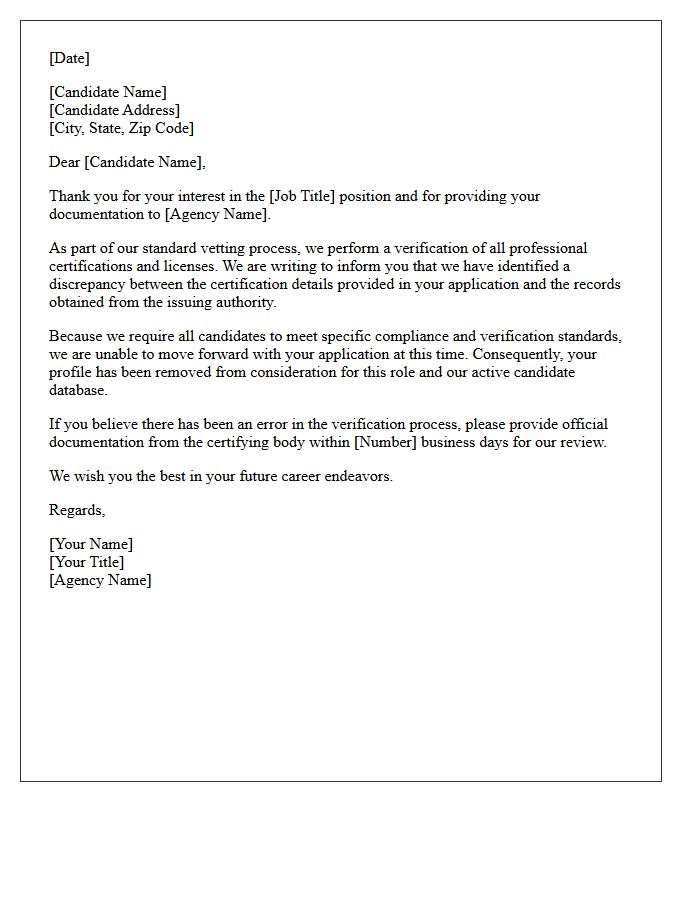
Receiving a Recruitment Agency Certification Discrepancy Rejection Letter indicates a mismatch between your stated qualifications and verified data. This formal notice typically arises when an audit reveals inconsistencies in professional licenses, educational degrees, or mandatory industry certifications. Agencies prioritize regulatory compliance to mitigate liability risks. If rejected, request a detailed report to identify whether the error stems from a clerical mistake or a validation failure. Promptly addressing these discrepancies is essential for maintaining your professional credibility and ensuring eligibility for future placement opportunities within the competitive labor market.
Unable to Verify Qualifications Candidate Rejection Letter
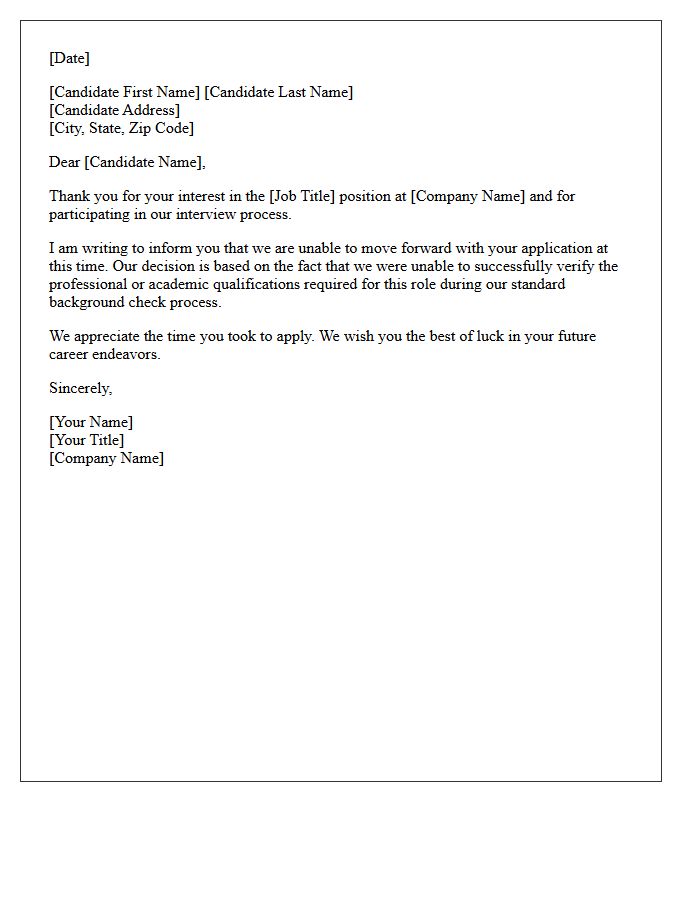
An Unable to Verify Qualifications rejection letter is a formal notice sent when a candidate's professional background or credentials cannot be authenticated. It is crucial to remain objective and professional to mitigate legal risks. Clearly state that the decision is based on an inability to confirm specific employment history or educational degrees required for the role. Providing a brief window for the candidate to submit supplementary documentation is a best practice, ensuring fairness and transparency in your hiring process while maintaining a positive employer brand despite the disqualification.
Professional Certification Verification Failure Rejection Letter
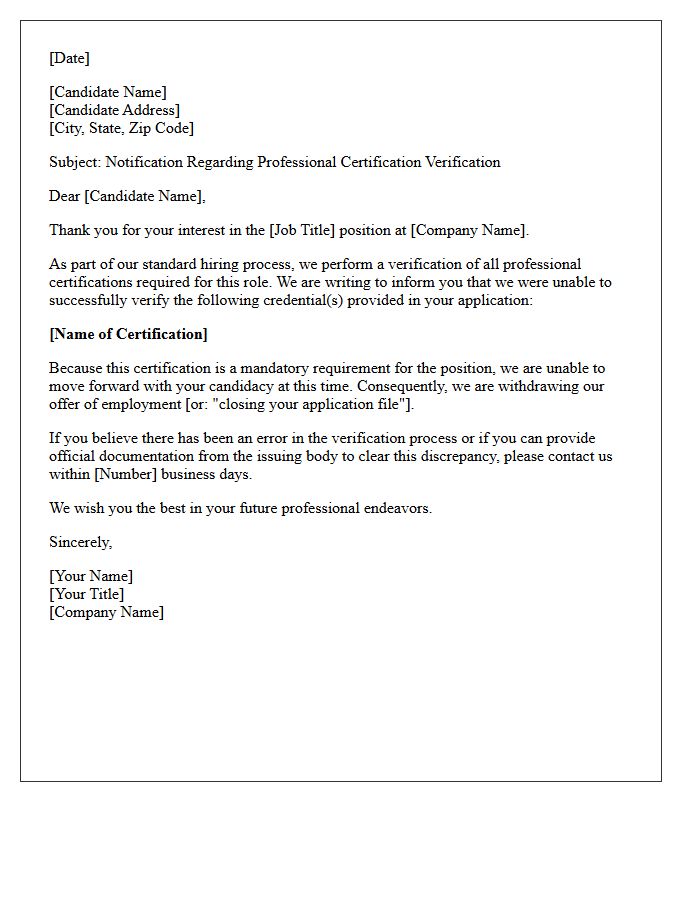
A professional certification verification failure rejection letter is a formal notice sent when a candidate's credentials cannot be validated. This typically occurs due to expired licenses, unaccredited institutions, or discrepancies in official records. Employers use this document to maintain compliance and safety standards. Receiving this letter often results in the immediate withdrawal of a job offer. Candidates should promptly contact the issuing authority to rectify administrative errors or provide alternative proof of professional qualification to resolve the background check dispute.
Unconfirmed Credential Status Application Rejection Letter
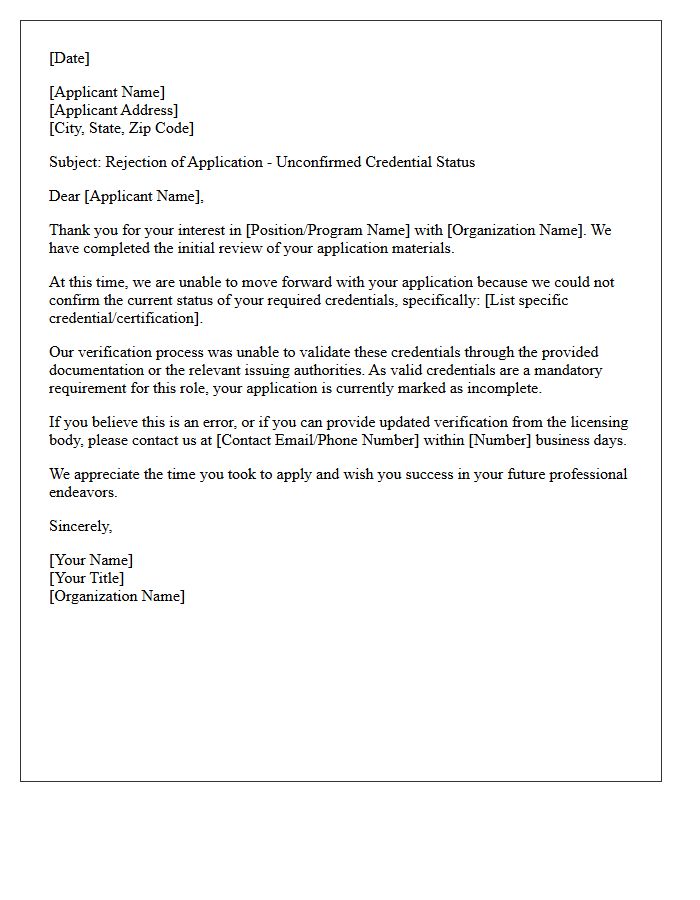
An Unconfirmed Credential Status rejection occurs when a licensing board cannot verify your educational or professional background. This typically happens due to incomplete documentation, mismatched records, or unaccredited institutions. To resolve this, you must contact your primary source to ensure official transcripts or certifications are sent directly to the evaluator. Promptly addressing these verification gaps is essential to reopening your application and meeting regulatory requirements for licensure or employment eligibility.
Failed Background and Certification Check Rejection Letter
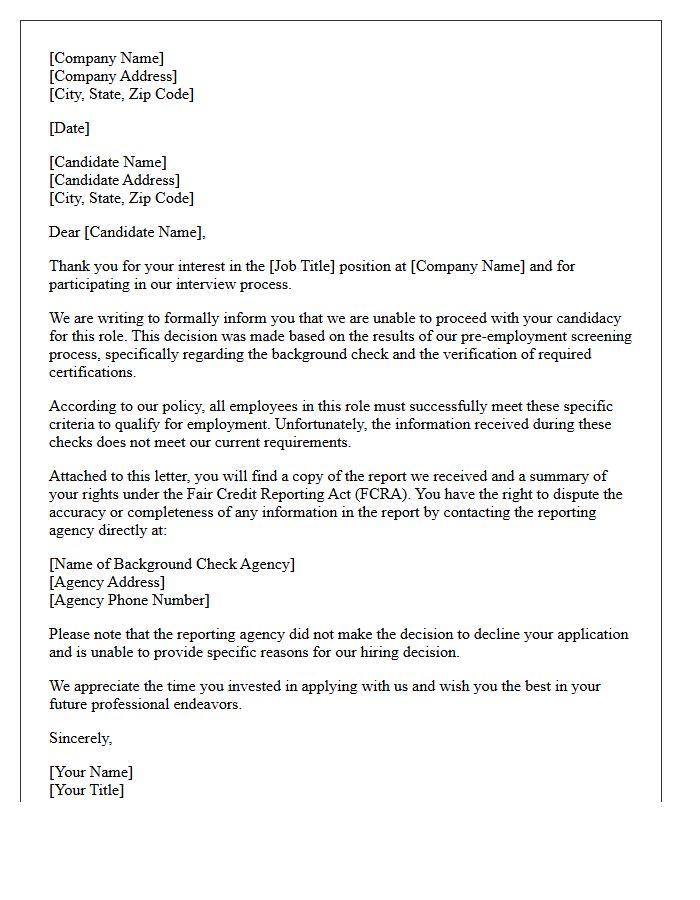
Receiving a Failed Background and Certification Check Rejection Letter indicates that an applicant did not meet the specific safety, legal, or professional standards required for a position. Under the Fair Credit Reporting Act (FCRA), employers must provide a pre-adverse action notice, allowing you to dispute inaccuracies before a final decision. Common reasons for rejection include criminal records, unverifiable credentials, or failed drug screenings. Review the attached report carefully to ensure all personal data is accurate and contact the reporting agency immediately if you identify any erroneous information impacting your employment eligibility.
License and Certification Verification Failure Rejection Letter
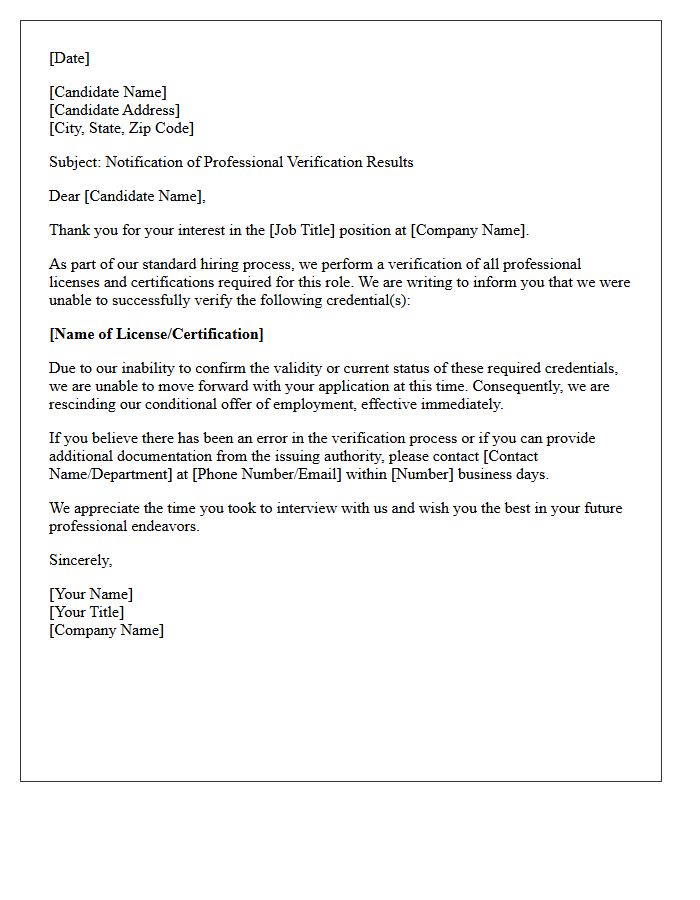
A license and certification verification failure rejection letter informs an applicant that their credentials could not be validated. This document is a critical part of compliance and risk management, ensuring all personnel meet legal requirements for their roles. It must clearly state the reason for the decision, such as expired documents, mismatched data, or unverified issuing bodies. Providing a clear dispute process or a request for additional documentation allows candidates to address errors while maintaining the integrity of professional standards and regulatory safety protocols within the organization.
Agency Rejection Letter for Unverified Professional Certifications
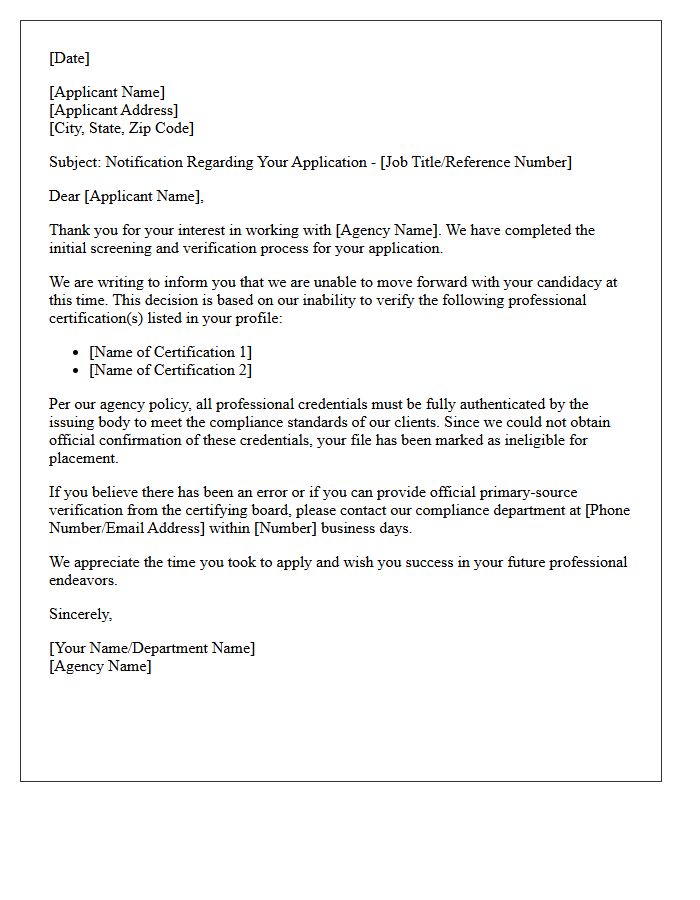
Receiving an agency rejection letter for unverified professional certifications often indicates a credentialing discrepancy. This occurs when an issuing body cannot confirm your qualifications during the background check. To resolve this, you must provide primary source verification or an official transcript directly from the certifying institution. Ensuring your documentation is current and matches your legal name is essential to maintaining your professional integrity. Always address these verification gaps immediately to prevent disqualification from sensitive roles or specialized employment opportunities that require mandatory certified expertise.
Why was my certification verification rejected?
Your certification verification was rejected because the submitted documentation failed to meet the mandatory authenticity requirements, lacked a valid expiration date, or could not be cross-referenced with the issuing body's official database.
What are the common reasons for a certification rejection letter?
The most common reasons include providing expired credentials, submitting low-quality or illegible digital scans, discrepancies between the name on the certificate and the application, or the issuing institution not being recognized as an accredited entity.
Can I appeal a certification verification failure?
Yes, you can appeal a verification failure by providing a primary source verification link, a notarized copy of the original certificate, or an official letter of good standing sent directly from the certifying board to our verification department.
How do I fix a rejection caused by a name mismatch?
To resolve a name mismatch, you must submit legal bridging documentation, such as a marriage certificate, decree absolute, or a legal name change affidavit, to connect the name on your certification to your current identification.
How long do I have to resubmit documents after receiving a rejection notice?
Applicants typically have 10 business days from the date of the rejection letter to provide corrected documentation; failure to resubmit within this timeframe may result in the permanent closure of your application file.

Comments