
Sending a professional Contract Role Non-Selection Rejection Letter is essential for maintaining a positive employer brand and respecting candidate effort. Providing clear, polite feedback ensures a professional conclusion to the procurement process while keeping doors open for future freelance opportunities. To help you draft these communications efficiently, below are some ready to use template.
Image cover: Professional Rejection Letter Templates for Contract Candidates
Letter Samples List
- Standard Contract Role Non-Selection Rejection Letter
- Post-Screening Contract Assignment Rejection Letter
- Client Interview Unsuccessful Contract Role Letter
- Rate Expectation Mismatch Contract Non-Selection Letter
- Project Cancellation Contract Role Rejection Letter
- Future Contract Opportunities Retention Rejection Letter
- Availability Mismatch Contract Position Rejection Letter
- Insufficient Specialized Skills Contract Non-Selection Letter
- Client Selected Alternative Candidate Contract Role Letter
- Failed Assessment Contract Assignment Rejection Letter
- Initial Agency Review Contract Non-Selection Letter
- Lack Of Industry Experience Contract Role Rejection Letter
Standard Contract Role Non-Selection Rejection Letter
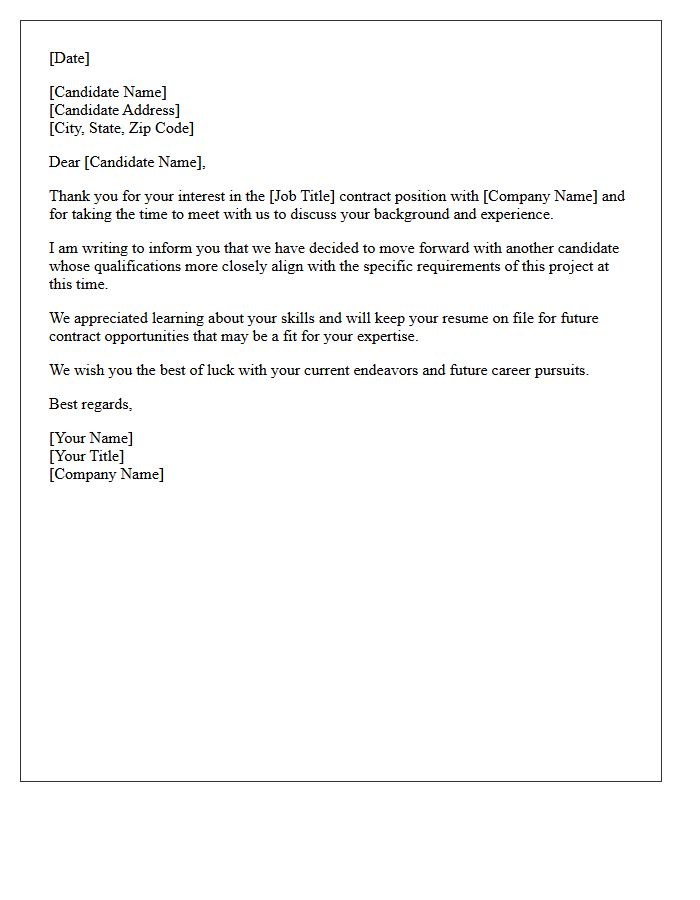
A standard contract role non-selection rejection letter is a formal notice informing a candidate they were not chosen for a specific project. The most important thing to know is that it maintains professionalism and protects the company from legal liability. These letters should be brief, thanking the applicant for their time without providing specific, debatable feedback. Using a clear, neutral tone ensures a positive brand image while formally concluding the recruitment process for the contractual engagement, allowing both parties to move forward efficiently.
Post-Screening Contract Assignment Rejection Letter
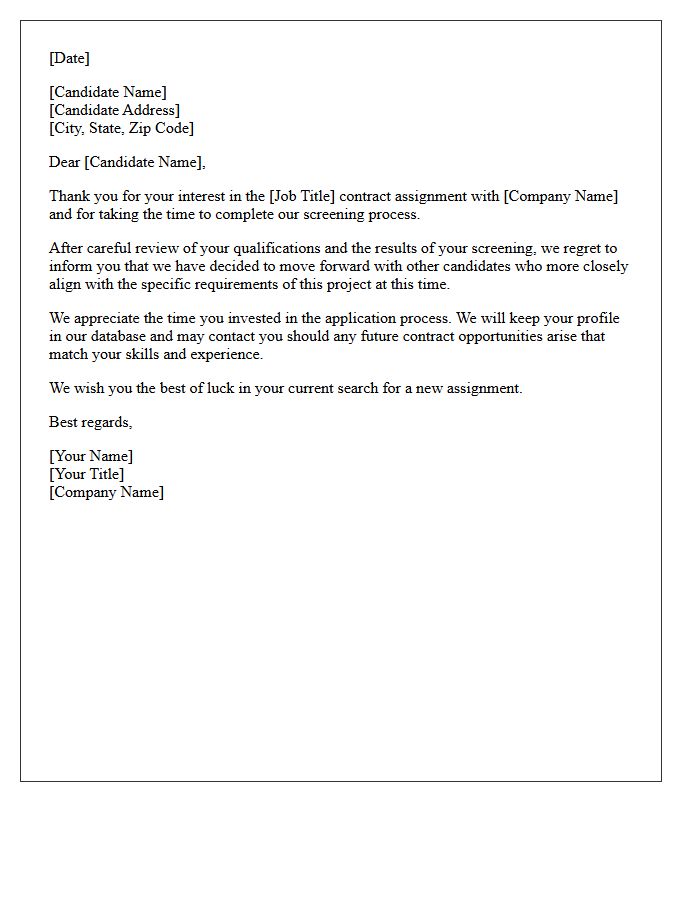
A Post-Screening Contract Assignment Rejection Letter is a formal notification sent to a candidate who reached the evaluation stage but will not be offered the position. It maintains professionalism by confirming the decision while protecting the employer's legal standing. The letter should be concise, thanking the applicant for their time without disclosing specific comparative details between candidates. Providing this feedback ensures a positive candidate experience and protects the organization's reputation during the recruitment lifecycle.
Client Interview Unsuccessful Contract Role Letter
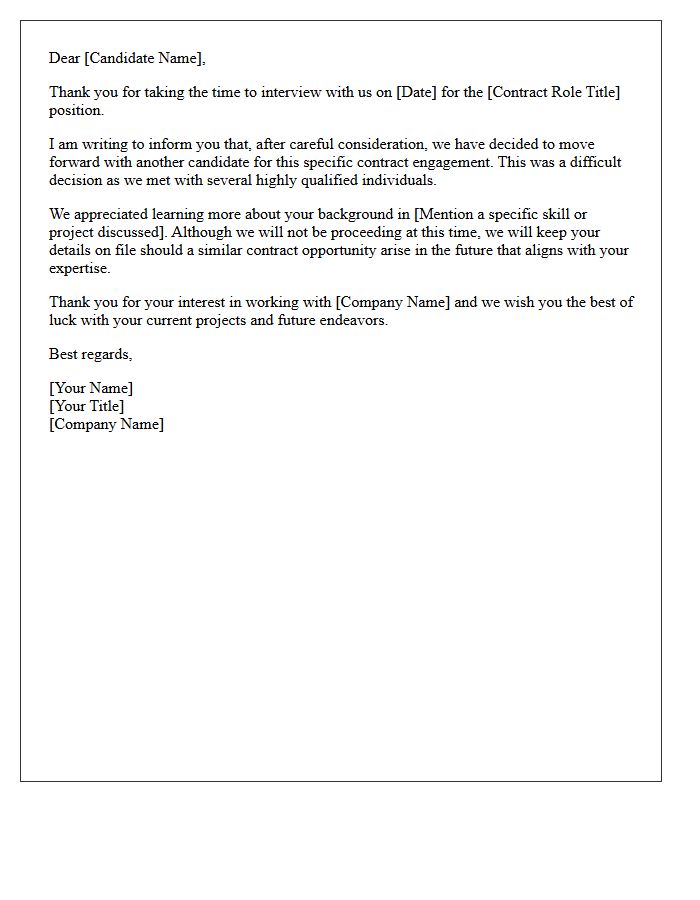
Receiving a rejection letter for a contract role is a standard part of the professional recruitment process. This document officially confirms that the client is not moving forward with your application after the interview stage. It is essential to maintain a positive professional reputation by responding with gratitude for the opportunity. Use this feedback to refine your technical pitch and interview technique. Remember, many successful contractors secure future projects by staying resilient and keeping their network connections active even after an unsuccessful interview outcome.
Rate Expectation Mismatch Contract Non-Selection Letter
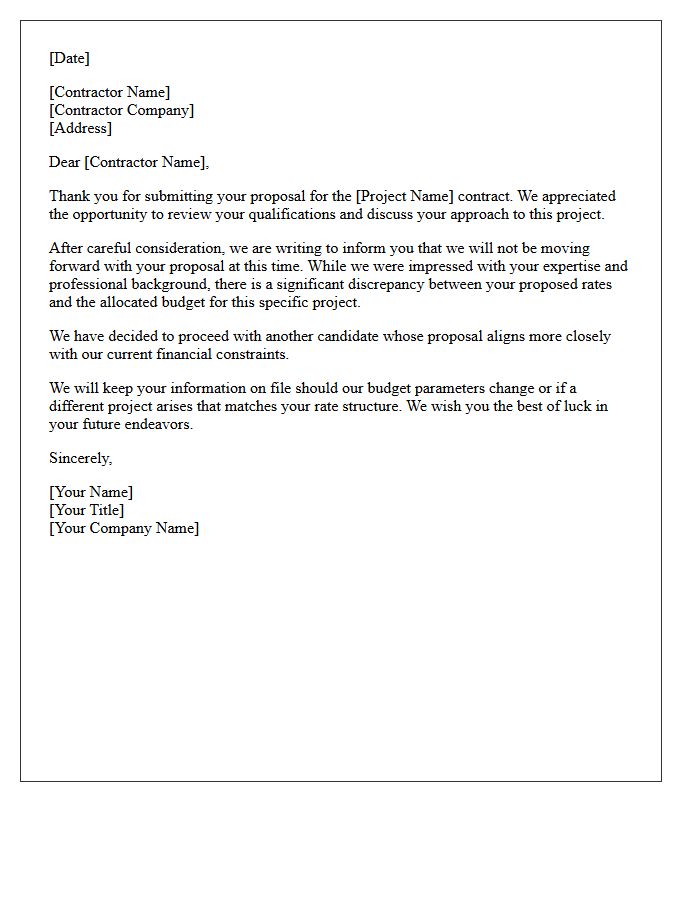
A Rate Expectation Mismatch occurs when a candidate's salary demands exceed the employer's budget, leading to a Contract Non-Selection Letter. This document formally notifies the applicant that they were not chosen due to financial misalignment. It is essential for maintaining professional transparency and protecting the company's reputation. Understanding this feedback allows candidates to align their market value with industry standards. For employers, these letters ensure clear communication, preventing future confusion while closing the recruitment cycle effectively when compensation remains the primary barrier to hiring.
Project Cancellation Contract Role Rejection Letter
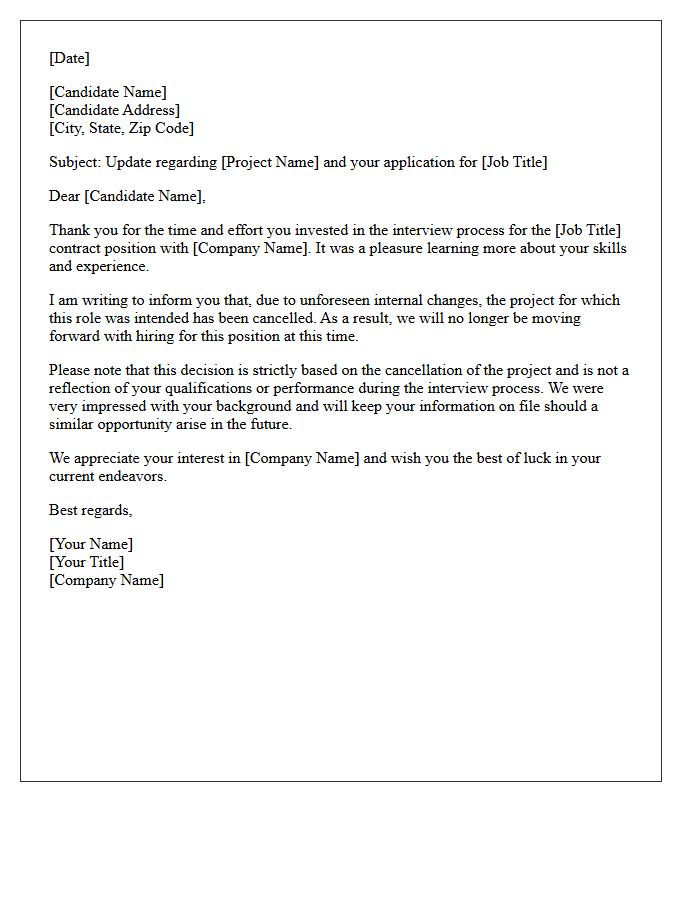
A project cancellation contract role rejection letter formally notifies a candidate that a position is no longer available due to budgetary changes or shifts in organizational priorities. It is crucial to maintain professionalism to preserve the company's reputation. The letter should clearly state the reason for the cancellation without disclosing sensitive internal details. Providing a prompt update demonstrates respect for the applicant's time and keeps the door open for future opportunities. Using a polite and transparent tone ensures a positive candidate experience despite the unfortunate news of the project's termination.
Future Contract Opportunities Retention Rejection Letter
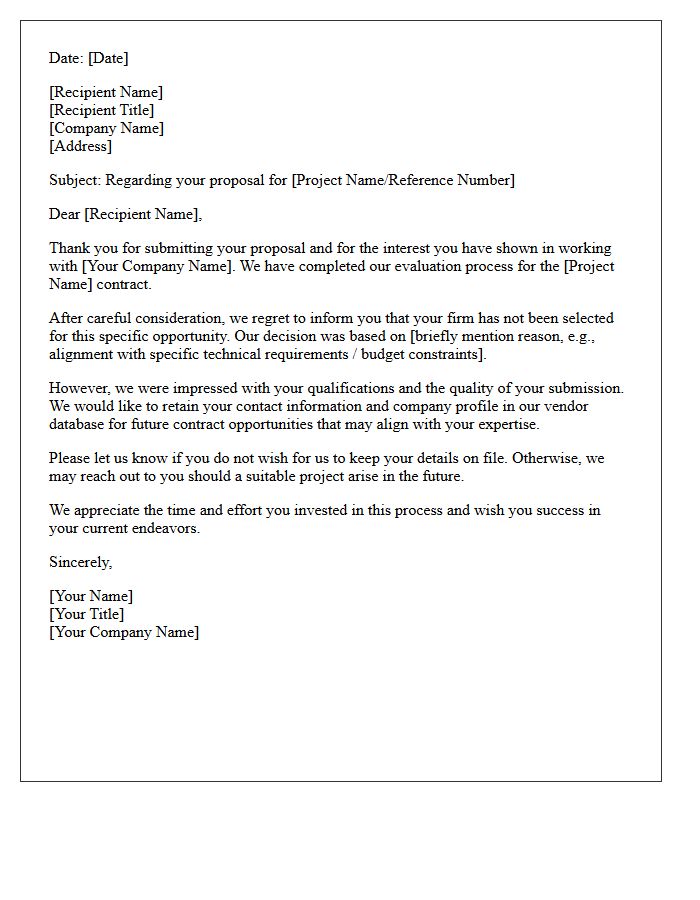
A Future Contract Opportunities Retention Rejection Letter informs unsuccessful candidates that while they weren't selected for a current role, the organization wishes to keep their resume on file. This professional communication maintains talent pipelines for upcoming vacancies. It is crucial to understand that data privacy regulations, such as GDPR, require explicit candidate consent to store personal information legally. Receiving this letter suggests your profile possesses transferable skills valued by the company, though future employment is never guaranteed. Always respond professionally to nurture your professional network for potential future outreach.
Availability Mismatch Contract Position Rejection Letter
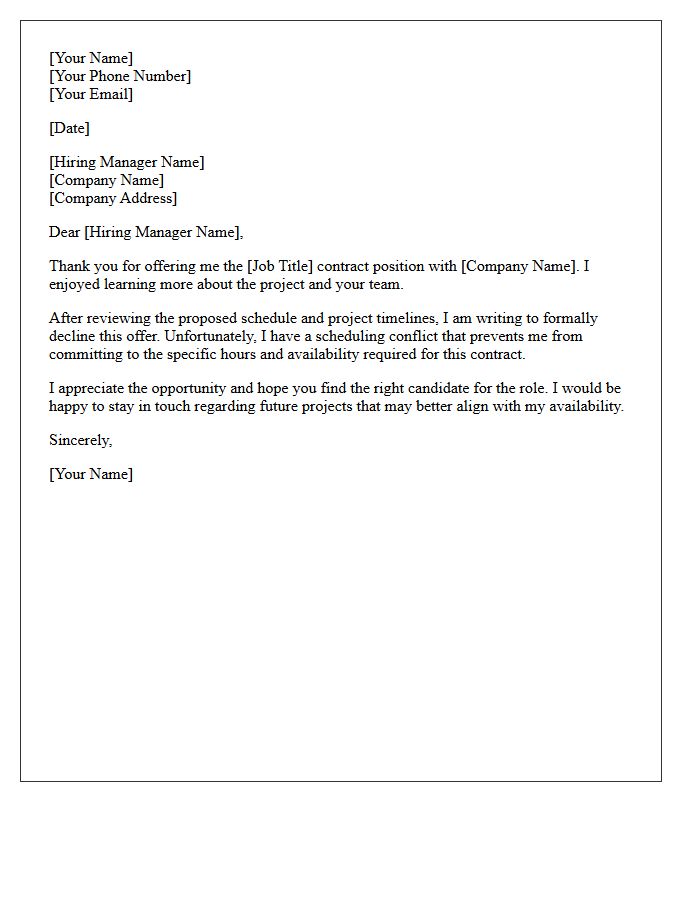
An Availability Mismatch rejection letter informs candidates that their specific schedule or start date does not align with the contract position requirements. Despite having the right skills, the candidate is declined because project timelines demand immediate or specific coverage that they cannot provide. This document professionally closes the application process while maintaining a positive relationship for future opportunities. To avoid this, candidates should clearly communicate their work hours and availability early in the hiring phase to ensure expectations meet the client's operational needs.
Insufficient Specialized Skills Contract Non-Selection Letter
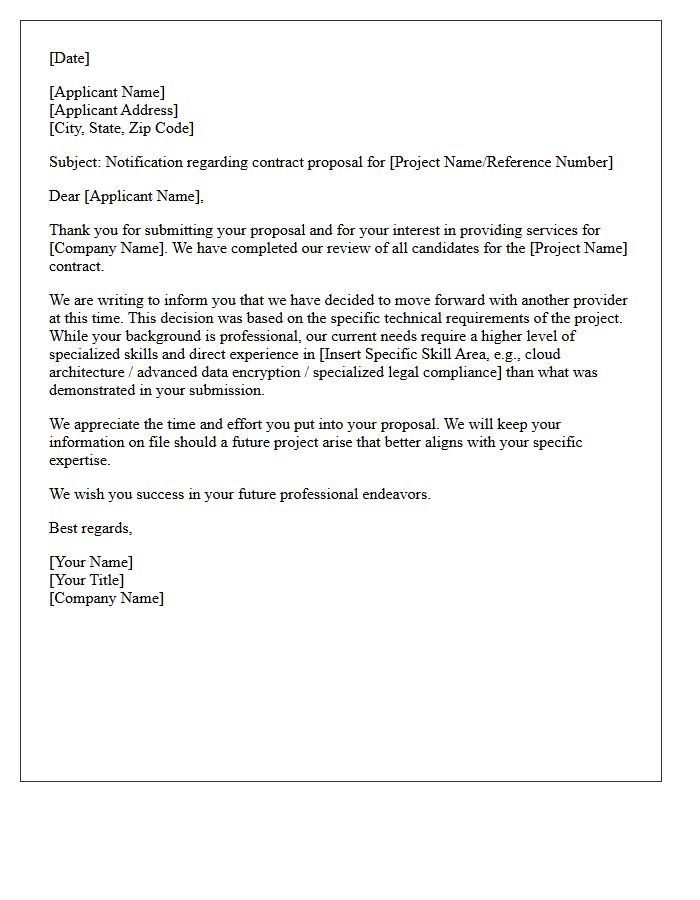
An Insufficient Specialized Skills Contract Non-Selection Letter is a formal notification sent to bidders who failed to meet specific technical requirements. The primary purpose is to inform the applicant that their proposal lacked the specialized expertise or niche qualifications mandated by the statement of work. Providing clear, objective feedback ensures transparency and compliance with procurement regulations. It serves as a legal record, documenting that the selection was based on a lack of technical competency rather than subjective bias, thereby protecting the organization during the vendor evaluation process.
Client Selected Alternative Candidate Contract Role Letter
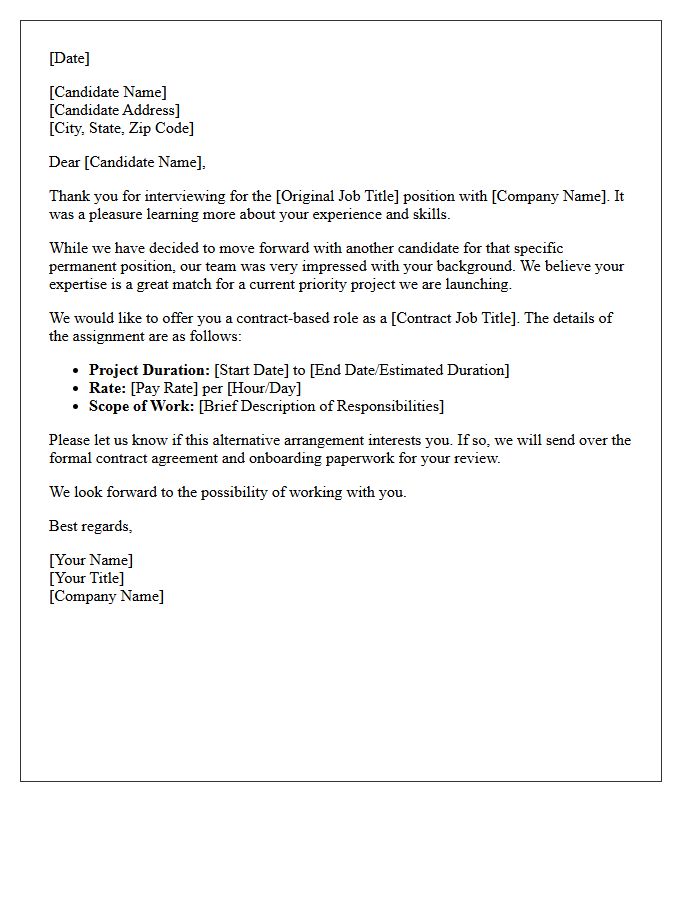
A Client Selected Alternative Candidate Contract Role Letter is a formal document issued when a hiring organization chooses an alternative candidate instead of the initially proposed individual for a specific position. This notification ensures clear communication between the staffing agency, the client, and the professional regarding shift assignments or contract changes. It serves as a vital record for compliance and legal protection, confirming that the selection process was finalized. Understanding this letter helps contractors track their employment status and manage future opportunities effectively within the professional recruitment landscape.
Failed Assessment Contract Assignment Rejection Letter
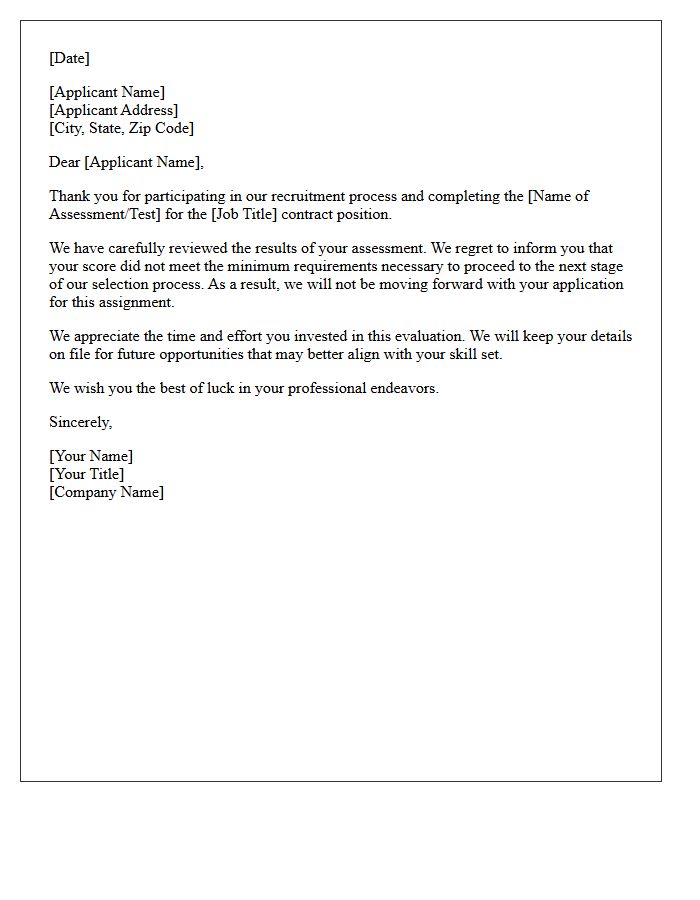
A Failed Assessment Contract Assignment Rejection Letter is a formal notice issued when a submitted deliverable fails to meet predefined quality standards or technical specifications. This document outlines specific compliance gaps and provides the legal basis for declining payment or requesting revisions. It is a critical tool for risk management, ensuring that contractual obligations are strictly enforced. Clear communication regarding the reasons for rejection helps maintain accountability and protects the interests of the hiring party while offering the contractor a structured path toward necessary remediation.
Initial Agency Review Contract Non-Selection Letter
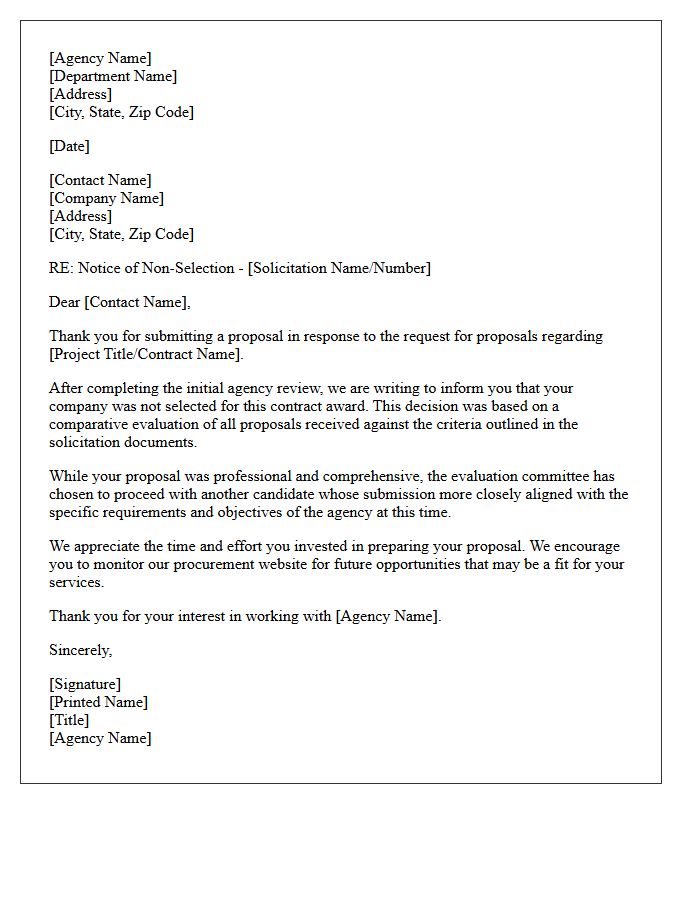
An Initial Agency Review Contract Non-Selection Letter is a formal notification sent to bidders who did not pass the preliminary evaluation phase. It signifies that a proposal failed to meet mandatory compliance criteria or basic technical requirements. Receiving this letter is critical because it triggers the timeframe for requesting a debriefing or filing a formal protest. Understanding the specific reason for rejection helps vendors improve future submissions and ensures the procurement process remains transparent, competitive, and legally compliant according to established government or organizational standards.
Lack Of Industry Experience Contract Role Rejection Letter
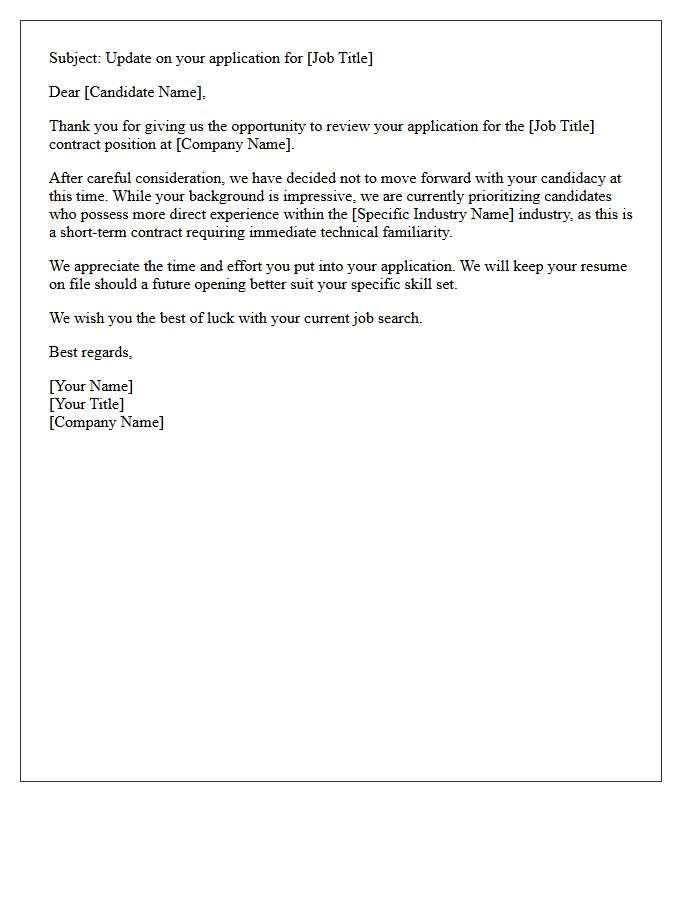
A rejection letter citing a lack of industry experience for a contract role highlights a common barrier in the gig economy. Unlike permanent positions, contract assignments demand immediate productivity and specialized domain knowledge to meet tight deadlines. Employers prioritize candidates who require zero training and can navigate specific sector nuances instantly. If you receive this feedback, focus on obtaining niche certifications or transferable skill mapping to demonstrate your ability to bridge the knowledge gap and deliver value from day one in future applications.
What should be included in a contract role non-selection rejection letter?
A professional rejection letter for a contract position should include a clear statement of non-selection, a brief thank you for the candidate's time, the title of the specific project or role, and a polite closing. It is best practice to keep the tone respectful and concise to maintain a positive employer brand.
When is the best time to send a rejection notice to a contract worker?
You should send the rejection letter as soon as a final decision has been made for the specific contract role. Prompt communication shows respect for the freelancer or contractor's schedule, allowing them to pursue other project opportunities without waiting for an answer.
Should I provide specific feedback in a contract role rejection email?
While detailed feedback is not legally required, providing a brief, constructive reason for non-selection-such as a specific technical skill set or budget alignment-can be helpful. However, most organizations use a standard template to ensure consistency and minimize legal risks.
How does a contract rejection letter differ from a full-time employee rejection?
Contract rejection letters are typically more transactional and focused on the specific project scope or "fit" for a short-term need. Unlike full-time rejections, they often emphasize that the decision is based on the immediate requirements of the current contract rather than a long-term cultural fit.
Can I keep a contractor's details on file after sending a non-selection letter?
Yes, it is common practice to include a sentence in the rejection letter stating that you will keep the contractor's portfolio or resume on file for future projects. This leaves the door open for potential collaborations if a more suitable contract role arises later.


Comments