
Maintaining professional relationships is vital during high-level recruitment. A well-crafted Executive Search Confidential Rejection Letter ensures candidates feel respected while protecting sensitive corporate information and brand reputation. This guide explores how to deliver difficult news with discretion and executive-level professionalism. To help you streamline your communication process, below are some ready to use template.
Image cover: Professional Templates for Confidential Executive Search Rejection Correspondence
Letter Samples List
- Executive Search Confidential Rejection Letter
- Confidential Candidate Rejection Letter for Executive Search
- Executive Recruitment Confidential Decline Letter
- Private Executive Search Rejection Letter
- Senior Leadership Confidential Rejection Letter
- Confidential Executive Placement Rejection Letter
- Executive Headhunting Confidential Rejection Letter
- Confidential Rejection Letter for Executive Candidates
- Confidential Executive Search Application Decline Letter
- Retained Executive Search Confidential Rejection Letter
- Confidential C-Suite Search Rejection Letter
- Executive Agency Confidential Rejection Letter
Executive Search Confidential Rejection Letter
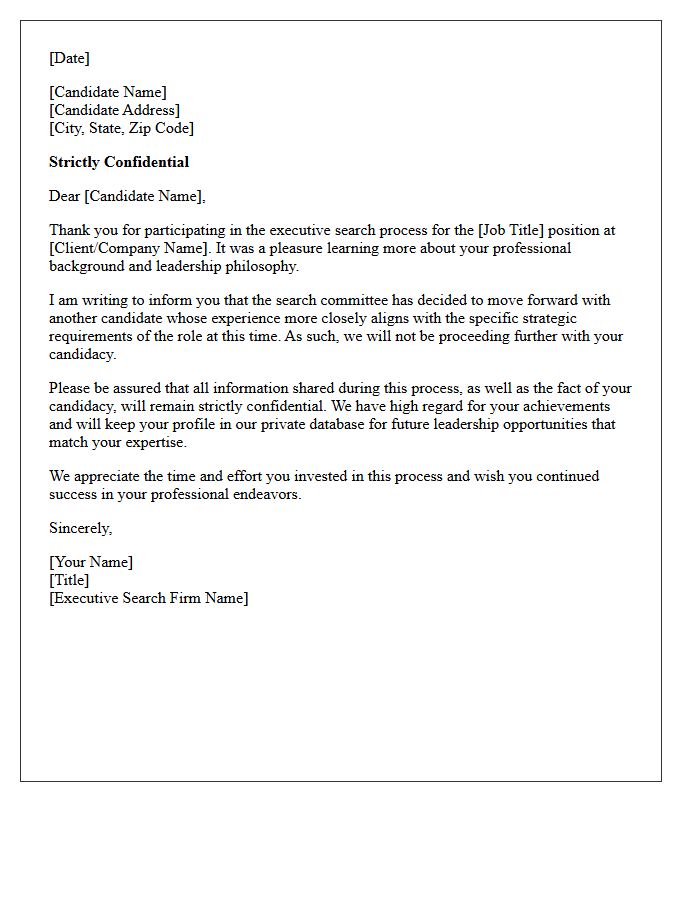
An Executive Search Confidential Rejection Letter must prioritize professionalism and absolute discretion. Since high-level candidates often hold sensitive positions, these communications should be marked private and avoid detailing specific reasons for the decision to mitigate legal risks. The tone must remain respectful, acknowledging the candidate's expertise while clearly stating the conclusion of their candidacy. Timely notification is essential to preserve the employer brand and maintain positive long-term industry relationships, ensuring the search process remains secure and confidential for all parties involved.
Confidential Candidate Rejection Letter for Executive Search
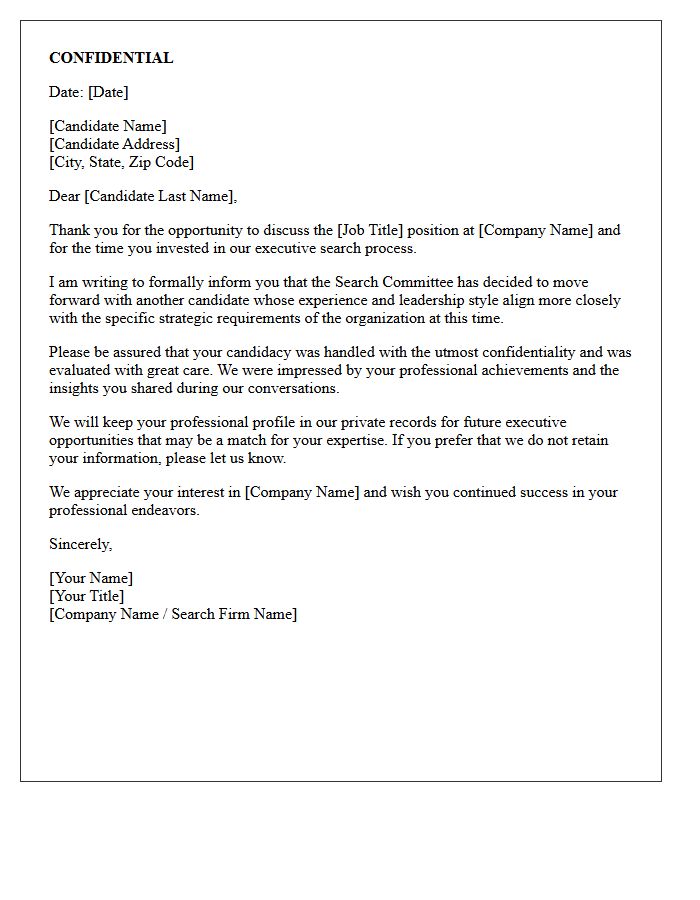
A Confidential Candidate Rejection Letter for executive search must maintain utmost discretion to protect the candidate's professional reputation. High-level recruitment demands a personalized approach that expresses genuine gratitude for their time while clearly stating the decision. Avoid generic templates; instead, provide a diplomatic tone that preserves the relationship for future opportunities. Timely communication is essential to uphold employer branding and executive candidate experience. Always ensure the sensitive nature of the search remains strictly private, reflecting the professional standards of the organization and the retained search firm.
Executive Recruitment Confidential Decline Letter
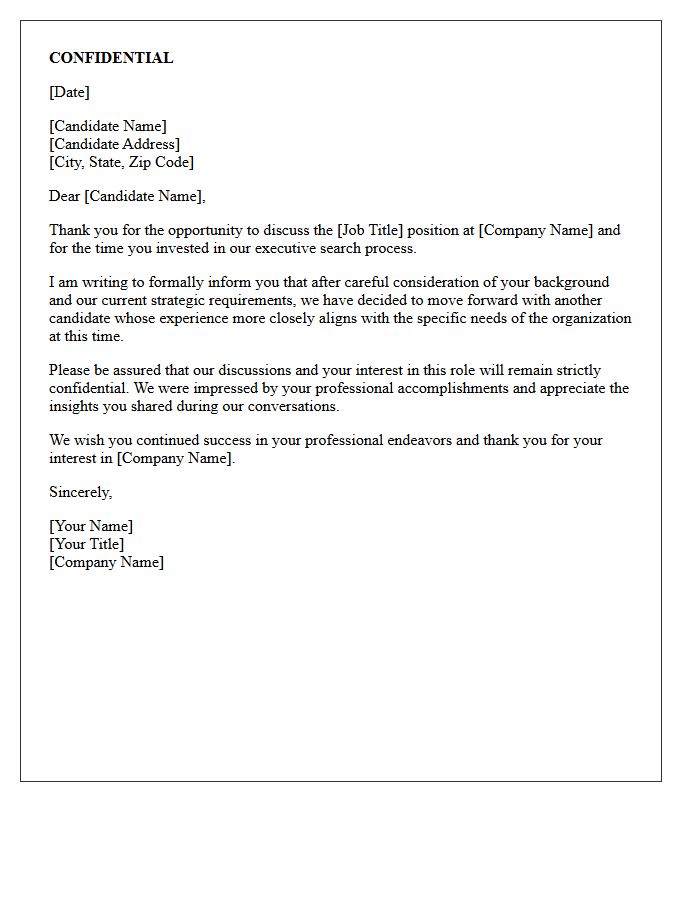
An executive recruitment confidential decline letter is a professional document used to formally notify high-level candidates that they have not been selected. Maintaining confidentiality is the most critical element to protect the individual's professional reputation and the company's internal strategies. These letters should be brief, respectful, and appreciative of the candidate's time. By delivering a clear yet discreet rejection, organizations preserve their employer brand and keep doors open for future opportunities. Ensuring a professional tone throughout the communication minimizes legal risks and fosters positive industry relationships during executive transitions.
Private Executive Search Rejection Letter
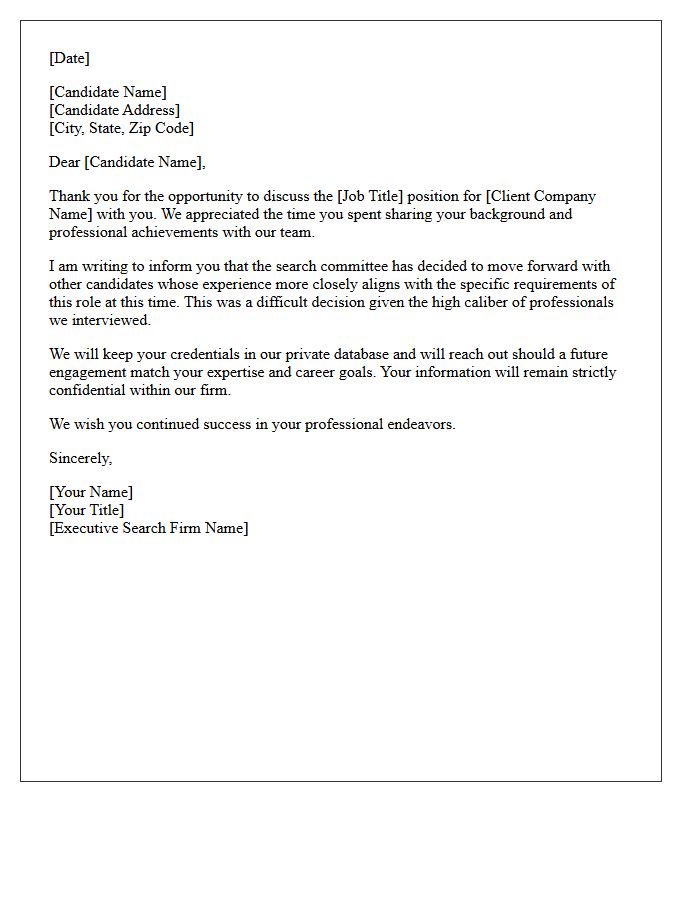
A professional private executive search rejection letter is a vital tool for reputation management. It should be confidential and concise, acknowledging the candidate's time while clearly stating they will not proceed. Providing brief, constructive feedback is often appreciated at this level, though not mandatory. Use a formal tone to maintain brand integrity and ensure the candidate feels respected. Timely communication prevents uncertainty and preserves future networking opportunities. Ultimately, a well-crafted rejection protects the firm's elite status and maintains positive professional relationships within the executive talent pool.
Senior Leadership Confidential Rejection Letter
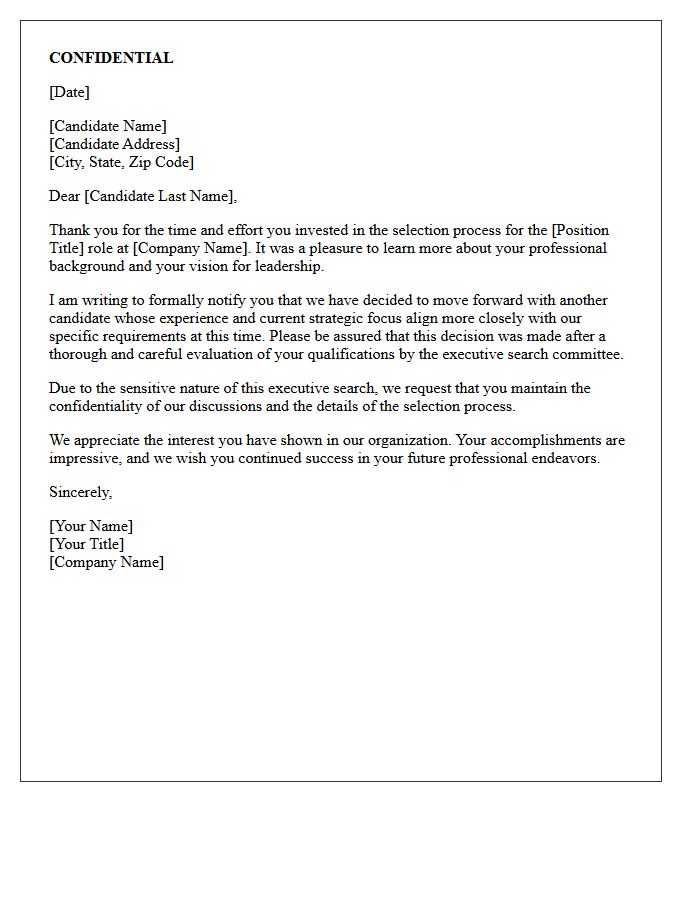
A senior leadership confidential rejection letter must balance professionalism with extreme discretion to protect the candidate's reputation and the firm's strategic interests. These documents should convey a definitive decision while maintaining a respectful tone that preserves the executive relationship. It is essential to avoid specific feedback that could trigger legal liabilities, focusing instead on the alignment of current organizational needs. Ensuring the process remains strictly private prevents market speculation and safeguards the candidate's current standing within their industry during high-stakes leadership transitions.
Confidential Executive Placement Rejection Letter
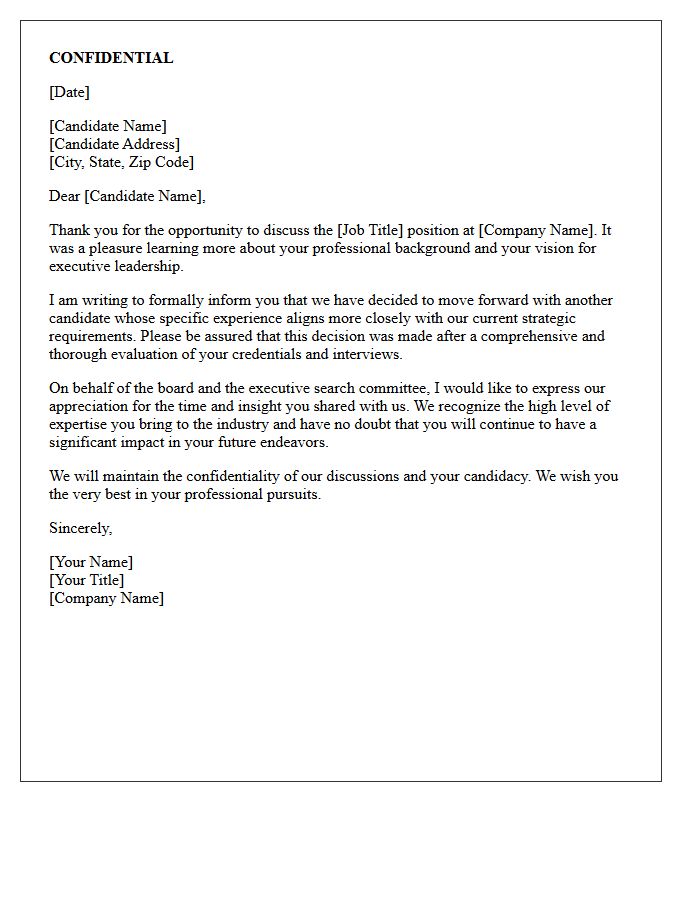
A Confidential Executive Placement Rejection Letter is a critical tool for maintaining professional discretion during high-level recruitment. It must balance a firm "no" with immense respect for the candidate's reputation. Because the executive circle is small, the tone should be diplomatic and appreciative of their time. Avoid detailing specific reasons for the decision to mitigate legal risks and protect sensitive company strategies. Providing a prompt, private notification ensures a positive employer brand and preserves valuable networking relationships for future leadership opportunities or strategic partnerships.
Executive Headhunting Confidential Rejection Letter
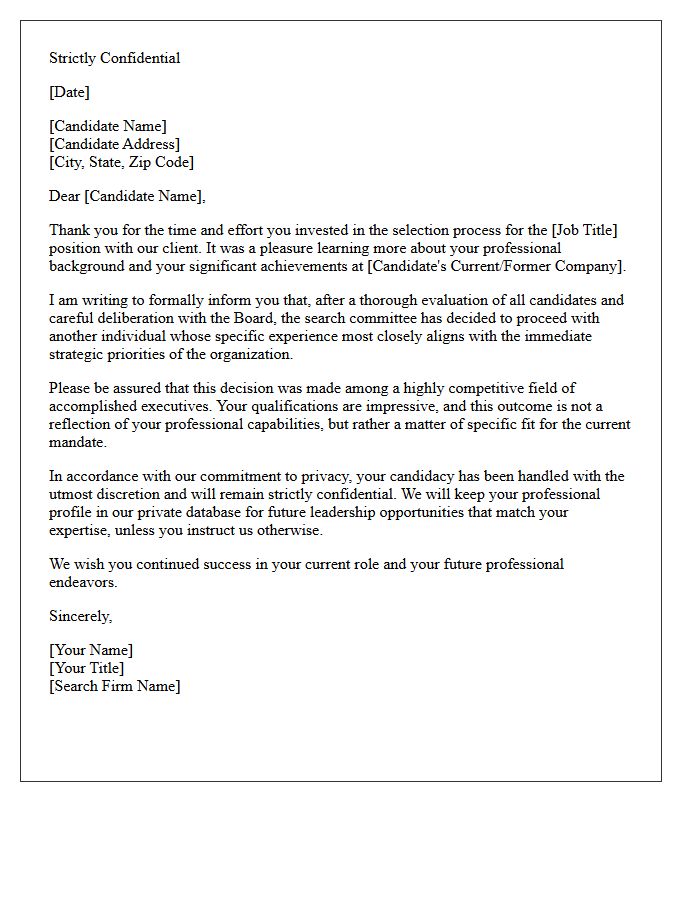
An executive headhunting confidential rejection letter is a sensitive document used to inform high-level candidates they are no longer being considered. Maintaining discretion is the primary goal, as the professional's current role or job search must remain private. These letters provide a respectful closure while ensuring the recruiter preserves a positive, long-term relationship for future opportunities. They typically avoid specific reasons for the decision to mitigate legal risks, focusing instead on the highly competitive nature of the search and the candidate's professional reputation within the industry.
Confidential Rejection Letter for Executive Candidates
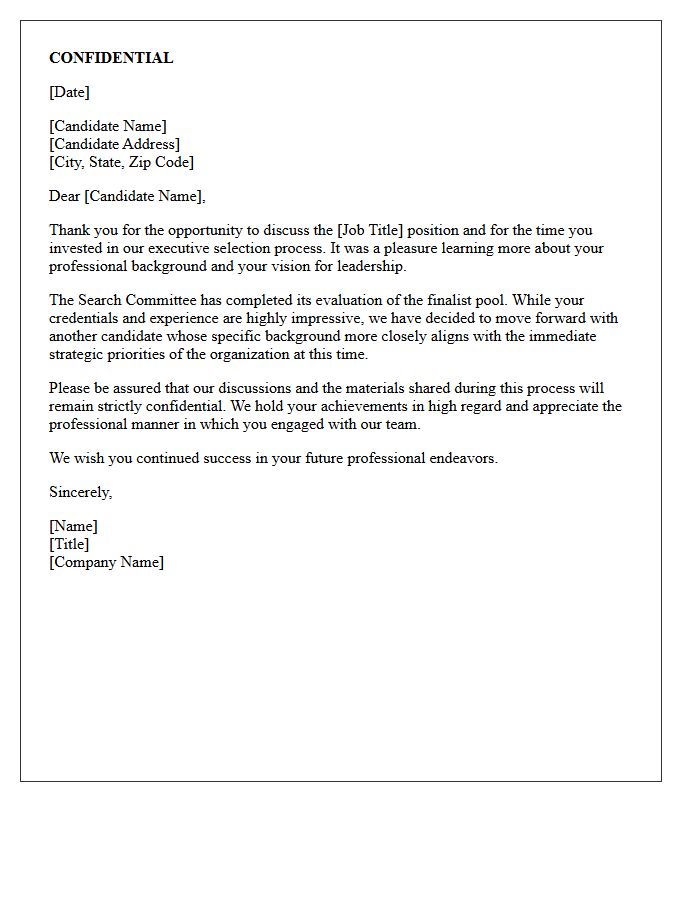
A Confidential Rejection Letter for executive candidates must balance professional courtesy with strict discretion. These high-level communications require a personalized tone to acknowledge the candidate's expertise and the extensive interview process. It is essential to maintain confidentiality to protect the candidate's current professional standing and the firm's reputation. Focus on constructive brevity, avoiding specific comparative details while expressing genuine appreciation. This approach preserves strategic networking opportunities and ensures a positive employer brand within elite talent circles even when a candidate is not selected for the role.
Confidential Executive Search Application Decline Letter
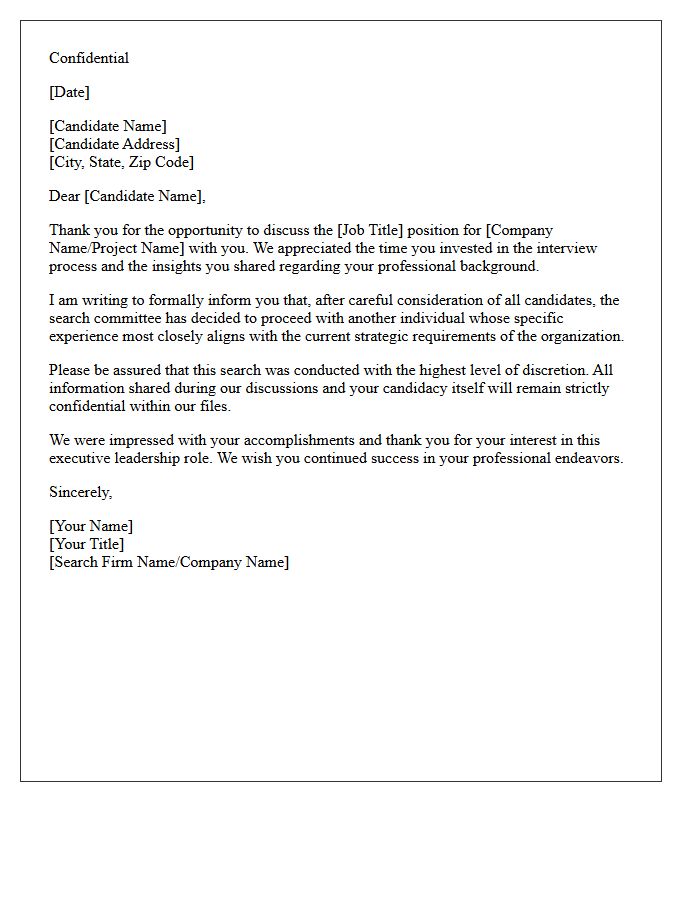
A Confidential Executive Search Application Decline Letter must balance professionalism with strict discretion. It serves to inform high-level candidates they are no longer being considered while protecting the privacy of both the applicant and the hiring organization. To maintain brand reputation, the message should be concise, appreciative, and acknowledge the candidate's expertise without disclosing sensitive search details. Ensuring a respectful tone is essential, as these individuals often occupy influential roles within the industry. Timely, secure communication prevents leaks and upholds the integrity of the executive recruitment process.
Retained Executive Search Confidential Rejection Letter
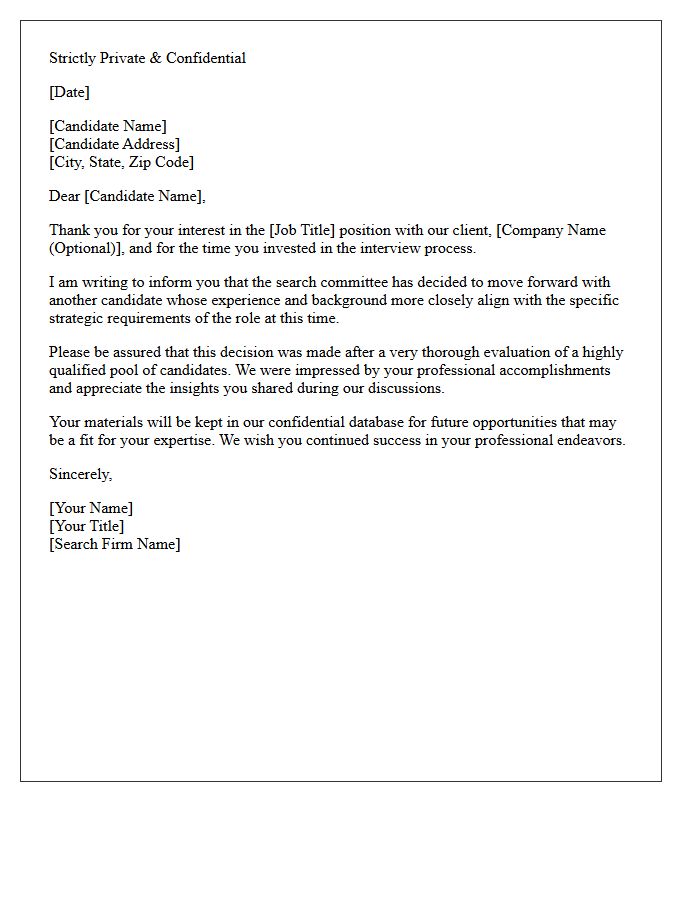
A Retained Executive Search Confidential Rejection Letter serves as a professional closure for high-level candidates. It is essential for maintaining brand reputation and executive relationships. This document must balance strict confidentiality with a respectful tone, ensuring the candidate's privacy regarding their application for a sensitive role. Since these searches often involve passive talent, the communication should be timely and personalized. Providing a clear but discreet notification prevents uncertainty and protects the integrity of the recruitment firm and the client organization throughout the elite hiring cycle.
Confidential C-Suite Search Rejection Letter
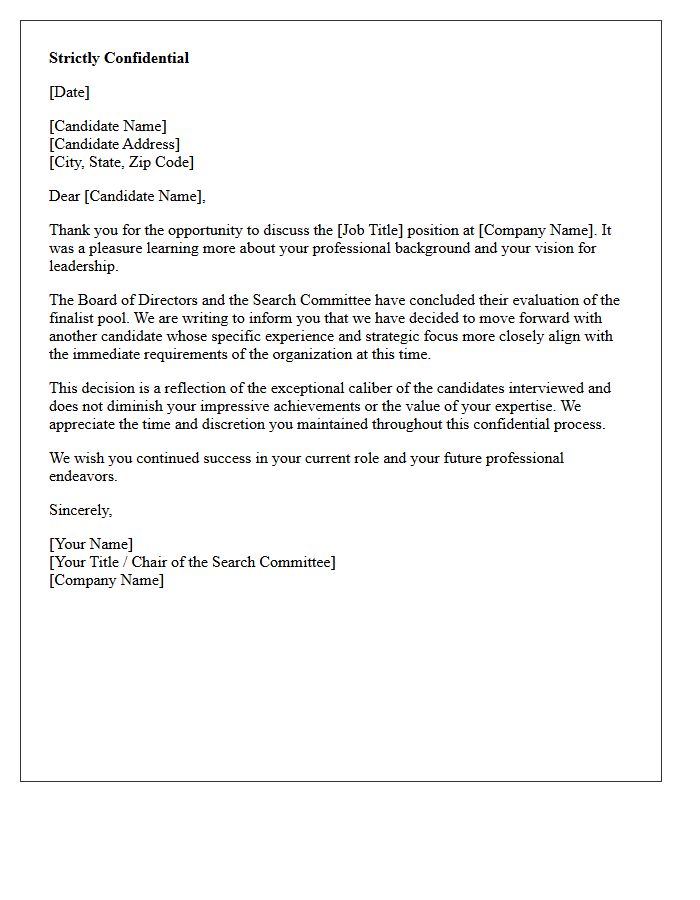
A professional Confidential C-Suite Search Rejection Letter must prioritize discretion and maintain the candidate's dignity. Given the high stakes of executive recruitment, the message should be personalized, appreciative, and brief without disclosing sensitive internal deliberations. It is essential to reinforce non-disclosure expectations while providing a gracious exit. Clear communication protects the employer brand and preserves networking relationships for future strategic opportunities. Ensuring the candidate feels respected is vital, as industry circles at the leadership level are remarkably small and interconnected.
Executive Agency Confidential Rejection Letter
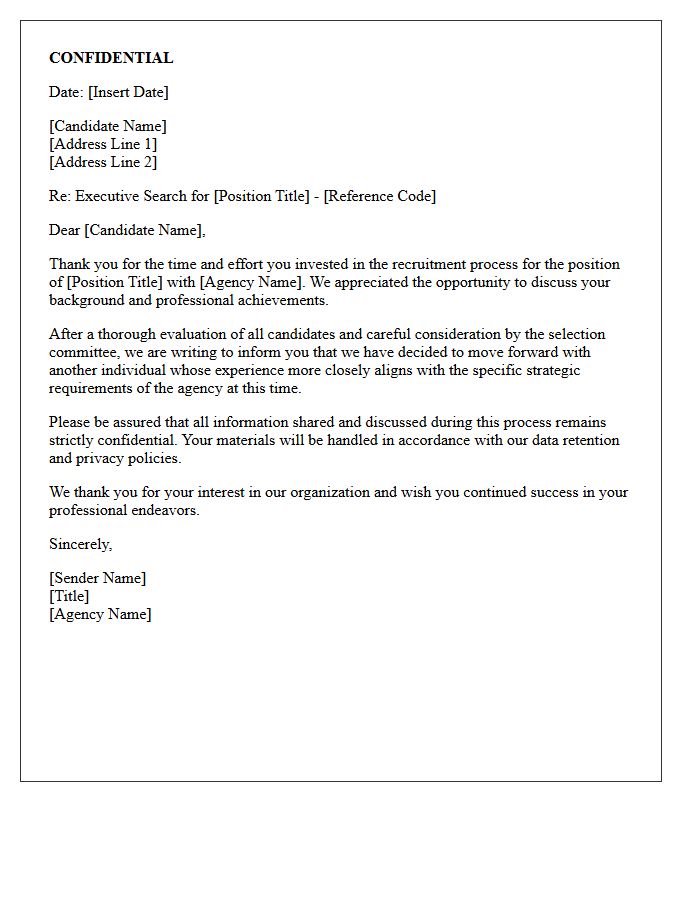
An Executive Agency Confidential Rejection Letter is a formal notification used by high-level recruitment firms to inform candidates they are no longer under consideration. These letters are marked confidential to protect the privacy of both the executive and the sensitive nature of the leadership search. Receiving one indicates the process has concluded for your candidacy. It is essential to maintain professionalism and keep the document private, as it often pertains to strategic organizational shifts and exclusive shortlists within competitive corporate environments.
Why is a confidential rejection letter used in executive search?
A confidential rejection letter is used to maintain the privacy of both the high-level candidate and the hiring organization. Because executive searches often involve individuals currently in high-profile roles, discreet communication prevents market speculation and protects the professional reputation of all parties involved.
What should be included in a professional executive rejection letter?
The letter should include a formal expression of gratitude for the candidate's time, a clear statement that the search committee has decided to move forward with another individual, and a brief acknowledgment of the candidate's impressive qualifications without disclosing specific internal deliberations.
How does a confidential rejection differ from a standard recruitment email?
Unlike standard high-volume recruitment emails, an executive rejection is highly personalized, formal, and strictly private. It focuses on the specific "fit" for the current strategic direction of the board rather than a lack of skills, and it is often delivered by a senior partner or search consultant to maintain a high-touch relationship.
When is the appropriate time to send an executive-level rejection?
A rejection should be sent as soon as a final decision has been made or a contract has been signed by the chosen successor. However, it is vital to wait until the preferred candidate has formally accepted to ensure the search remains viable if secondary negotiations fail.
Can a confidential rejection letter help maintain a future talent pipeline?
Yes. By delivering a respectful and confidential rejection, the organization preserves a positive relationship with the candidate. Since executive talent pools are small, maintaining rapport ensures that the candidate remains open to future strategic opportunities or potential board placements within the firm.


Comments