
Managing client requests for contract changes requires a professional balance between flexibility and legal protection. This guide explores how to draft a formal response to Client-Requested Modifications to Terms of Business, ensuring clarity and mutual agreement during negotiations. Learn how to address specific adjustments while maintaining your firm's standards. To simplify your workflow, below are some ready to use template.
Image cover: Refining Terms of Business: Sample Response Letters for Client Modifications
Letter Samples List
- Letter Accepting Client-Requested Modifications to Terms of Business
- Letter Declining Client-Requested Modifications to Terms of Business
- Letter Proposing Alternative Modifications to Terms of Business
- Letter Addressing Client-Requested Modifications to Placement Fee Structures
- Letter Regarding Client-Requested Modifications to Candidate Replacement Guarantees
- Letter Acknowledging Requested Changes to Invoice and Payment Terms
- Letter Responding to Client Modifications Regarding Recruitment Agency Exclusivity
- Letter Addressing Modifications to Temporary Contractor Terms of Business
- Letter Regarding Liability and Indemnity Modifications to Terms of Business
- Letter Suggesting a Meeting to Discuss Terms of Business Modifications
- Letter Enclosing Revised Terms of Business Following Client Modifications
- Letter Requesting Clarification on Proposed Terms of Business Modifications
Letter Accepting Client-Requested Modifications to Terms of Business
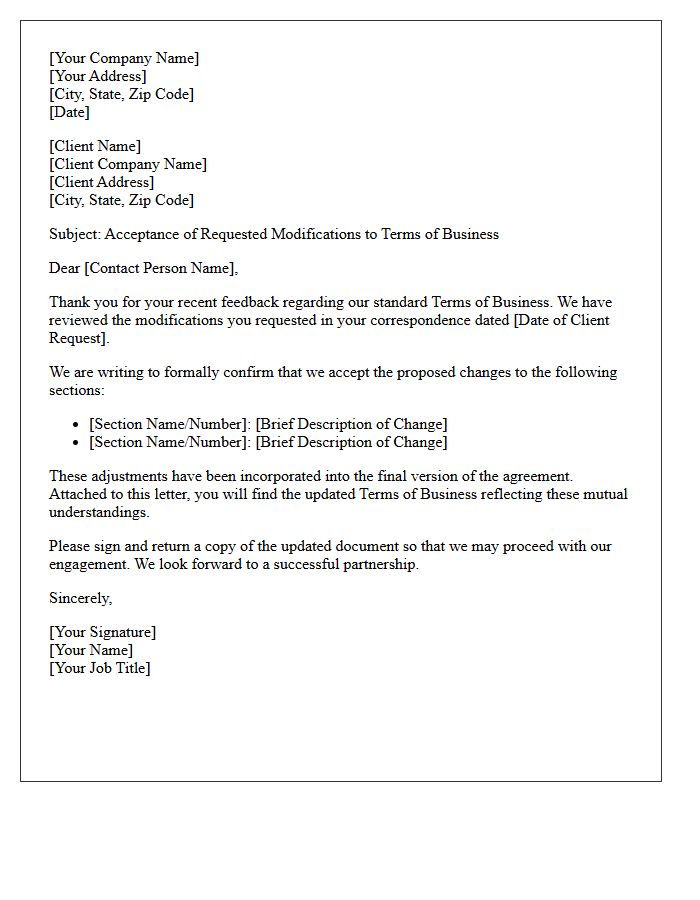
A letter accepting client-requested modifications confirms your formal agreement to updated contractual terms. This document serves as a critical legal record that ensures both parties are aligned on specific changes to the original service agreement. By clearly acknowledging these revisions, you mitigate future disputes and maintain professional transparency. It is essential to explicitly reference the original contract and the effective date of the new terms to ensure the amendment is enforceable and integrated correctly into your ongoing business relationship.
Letter Declining Client-Requested Modifications to Terms of Business
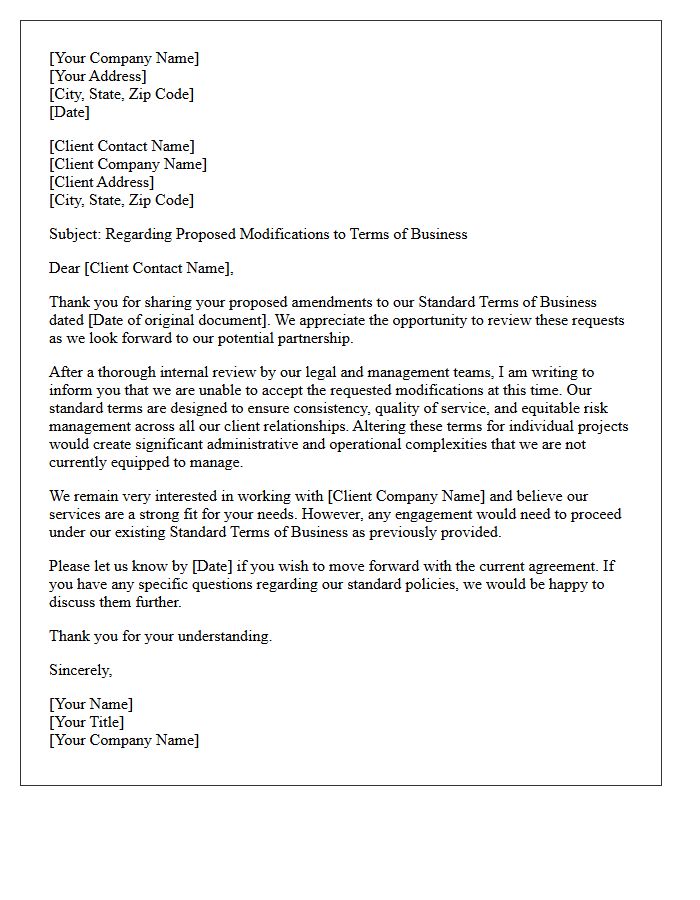
When issuing a Letter Declining Client-Requested Modifications, it is vital to maintain a professional tone while protecting your operational integrity. Clearly explain that your Standard Terms of Business ensure consistency, risk mitigation, and fair pricing across all accounts. Firmly stating that your legal framework is non-negotiable prevents future disputes and maintains administrative efficiency. Use this communication to reinforce the value of your expertise and the necessity of uniform contractual standards for delivering high-quality service without compromising your firm's protection or liability limits.
Letter Proposing Alternative Modifications to Terms of Business
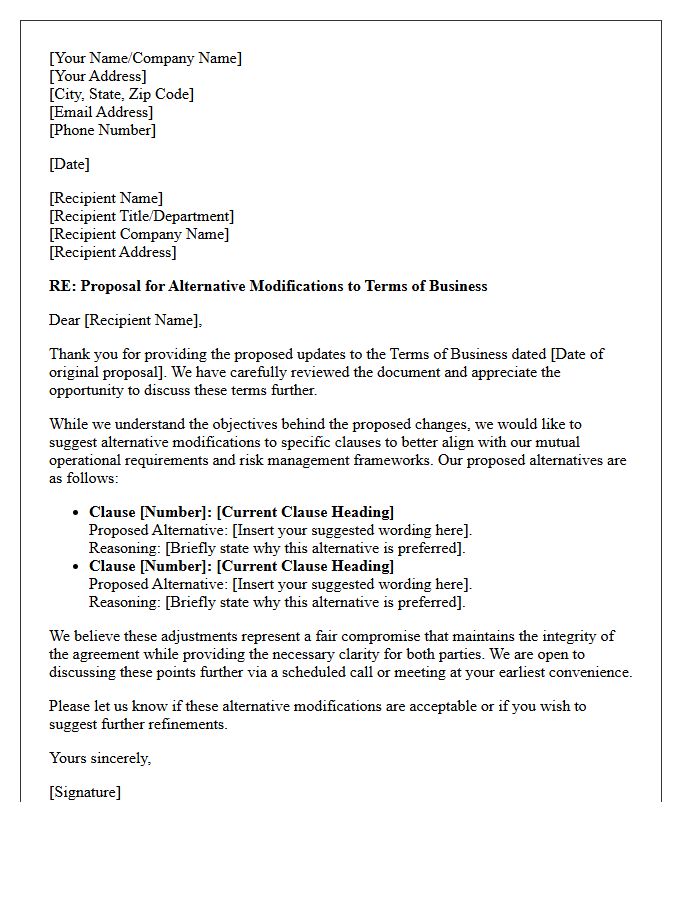
A letter proposing alternative modifications to terms of business is a formal document used to renegotiate contract clauses before final agreement. It typically addresses specific concerns regarding liability, payment cycles, or service scopes. Clearly highlighting proposed amendments ensures transparency and facilitates a smoother counter-offer process. Effective communication helps maintain a professional relationship while protecting your legal interests. Always ensure these revised terms are mutually signed to be legally binding, as this document serves as a critical record for future contractual compliance and dispute resolution.
Letter Addressing Client-Requested Modifications to Placement Fee Structures
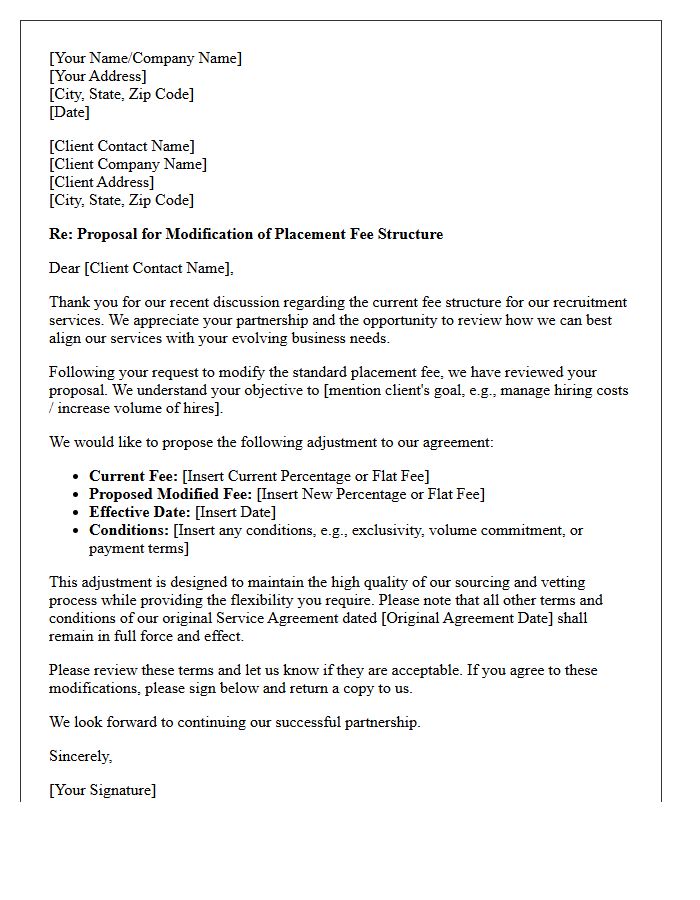
A formal response regarding placement fee modifications must balance competitive pricing flexibility with sustainable business margins. When addressing client-requested changes, clearly outline the impact on service levels and candidate quality. It is essential to define the negotiated percentage or flat-rate terms while ensuring all contractual amendments are documented legally. Open communication helps maintain a strong partnership while protecting the agency's profitability. Always confirm that modified fee structures align with the specific scope of work and recruitment complexity to ensure mutual value for both the client and the firm.
Letter Regarding Client-Requested Modifications to Candidate Replacement Guarantees
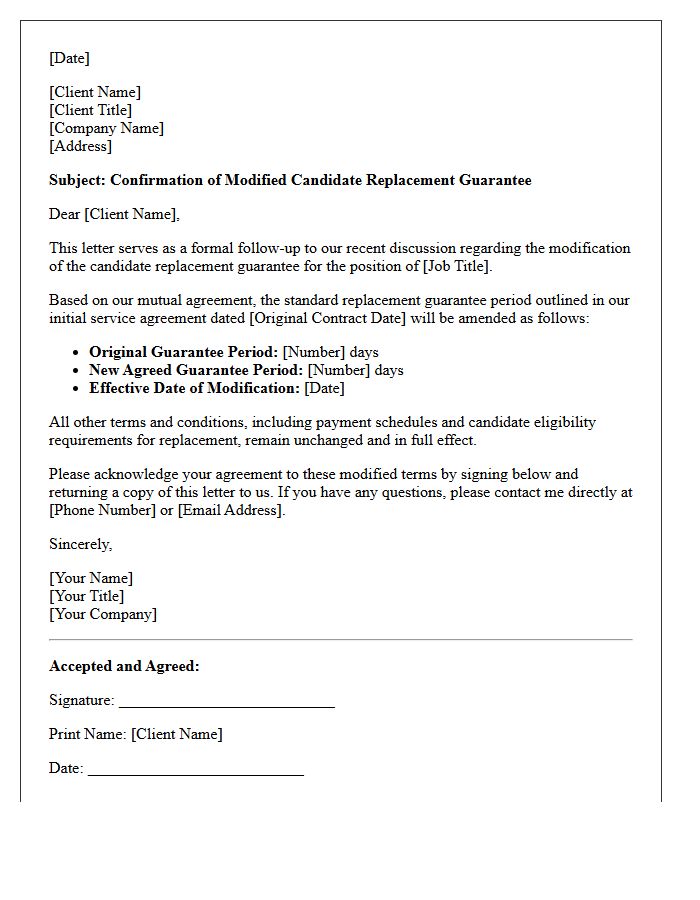
A letter regarding client-requested modifications to candidate replacement guarantees formalizes changes to standard recruitment contracts. It specifically outlines adjusted terms and timelines for replacing a hire if the initial placement fails. Clear documentation is essential to mitigate financial risk and ensure both parties agree on updated liability or credit periods. This formal communication protects the agency's revenue while addressing the client's specific hiring needs, maintaining legal clarity throughout the adjustment process.
Letter Acknowledging Requested Changes to Invoice and Payment Terms
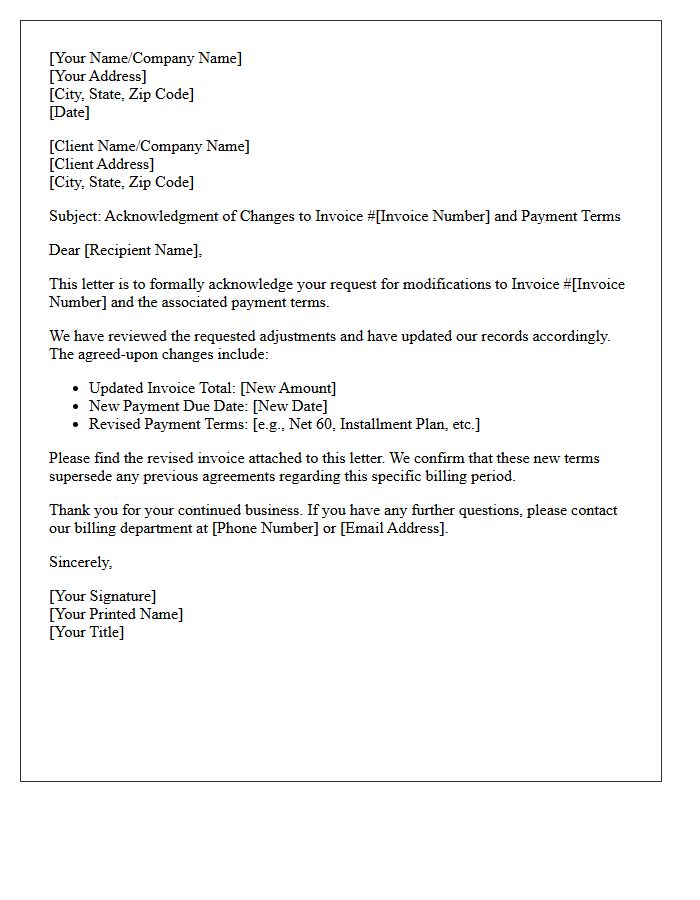
A formal Letter Acknowledging Requested Changes to Invoice and Payment Terms serves as written confirmation that a vendor has accepted modifications to a billing agreement. This document is essential for maintaining financial transparency and ensuring both parties agree on new due dates, discount rates, or installment plans. By formally documenting these adjustments, businesses prevent future payment disputes and strengthen their professional relationship. Always ensure the letter specifies the exact revised terms and the effective date to maintain an accurate audit trail for accounting purposes.
Letter Responding to Client Modifications Regarding Recruitment Agency Exclusivity
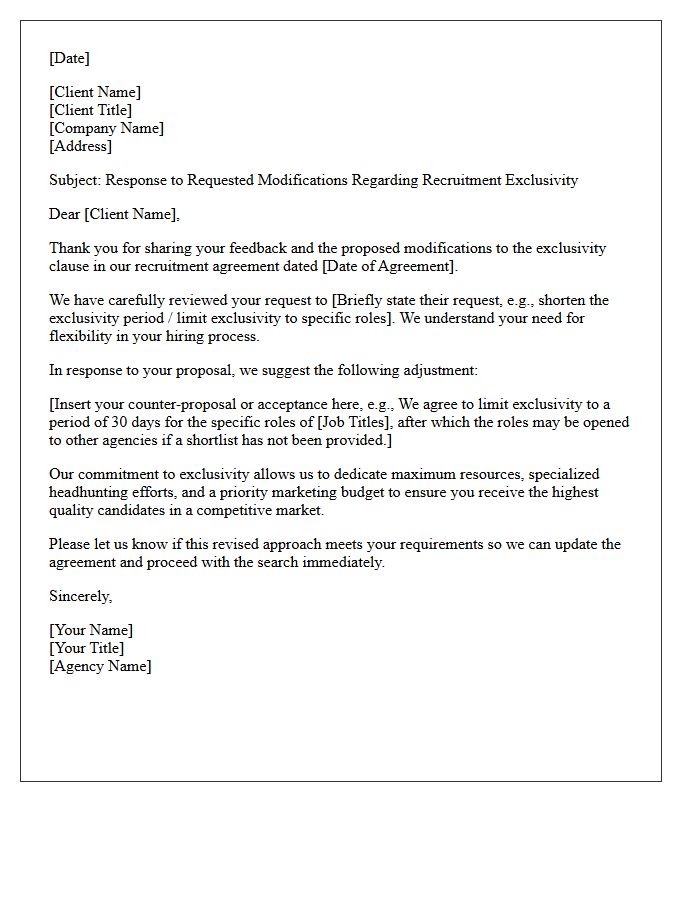
When drafting a response to client modifications, it is essential to clearly address exclusivity clauses. You must justify why sole representation protects your investment in the search process. Clearly state the commercial implications of non-exclusive terms, such as reduced resource allocation or prioritization changes. Reiterate that a dedicated partnership ensures quality candidates and a faster hiring cycle. Professional negotiation maintains the relationship while safeguarding your agency's revenue security and operational standards. Always conclude with a request for a follow-up discussion to finalize the service agreement mutually.
Letter Addressing Modifications to Temporary Contractor Terms of Business
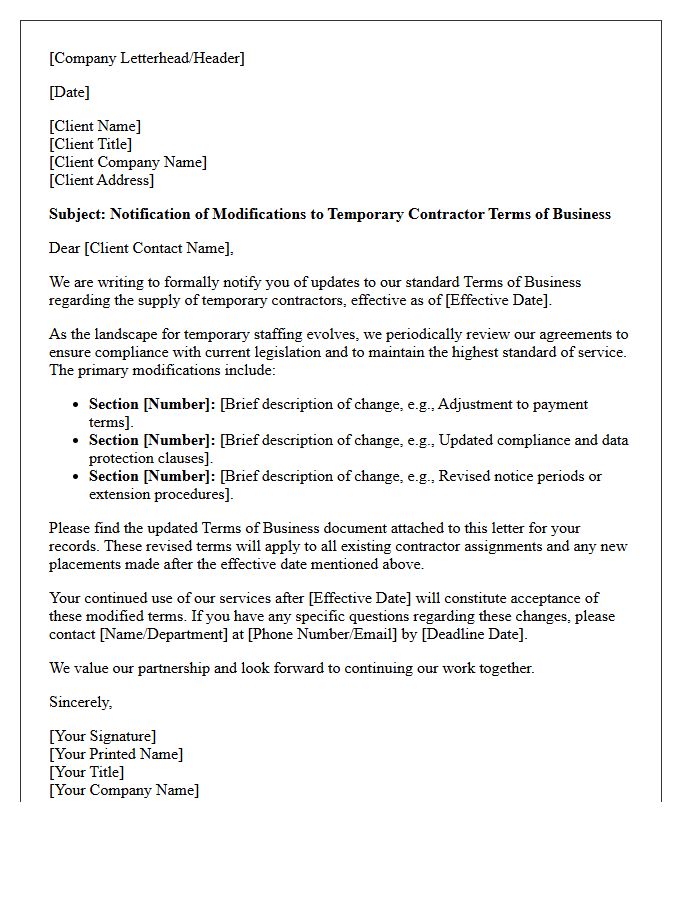
When issuing a Letter Addressing Modifications to Temporary Contractor Terms of Business, it is vital to clearly outline specific updates to payment structures, liability, or compliance obligations. Employers must ensure these contractual amendments are legally compliant and provide adequate notice to all parties involved. This document serves as a formal addendum to existing agreements, maintaining clarity and legal protection during organizational changes. Prompt communication of these modifications helps mitigate disputes and ensures continuous operational alignment with temporary staffing partners and independent contractors.
Letter Regarding Liability and Indemnity Modifications to Terms of Business
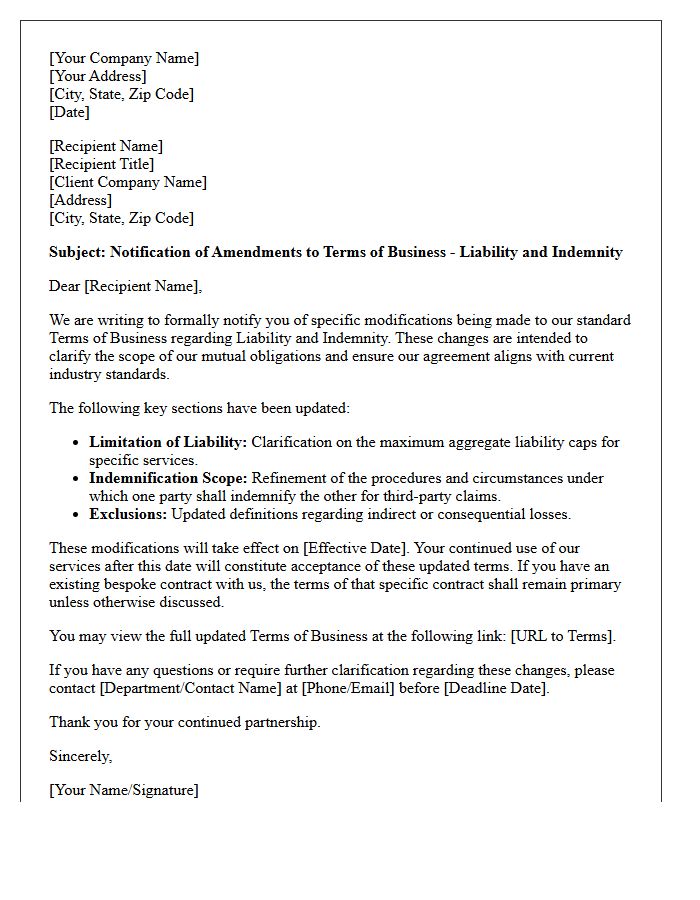
A letter regarding liability and indemnity modifications serves to formally adjust the financial risks shared between parties. It is essential to review limits on damages and hold-harmless clauses to ensure legal protection. These updates typically refine how indemnification obligations function if a breach of contract occurs. By issuing this formal notification, a company aligns its Terms of Business with current regulatory standards and insurance requirements. Carefully analyzing these structural changes ensures both parties understand their legal exposure and potential responsibilities for third-party claims or operational losses within the commercial partnership.
Letter Suggesting a Meeting to Discuss Terms of Business Modifications
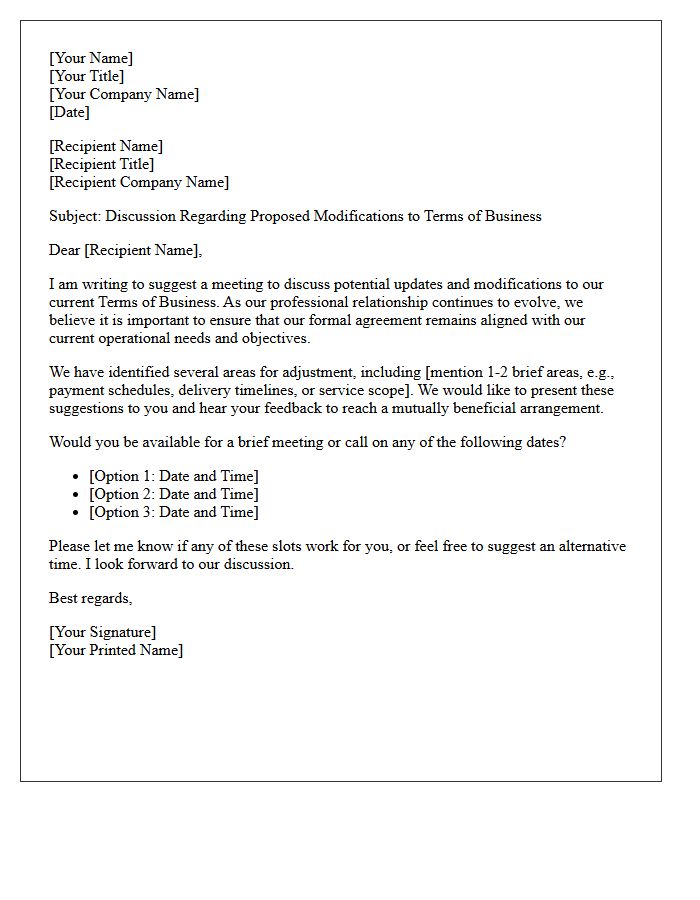
When sending a letter to propose business term modifications, clarity and professionalism are essential. Clearly outline the specific changes requested and provide a logical justification for these adjustments to maintain a positive partnership. This formal document serves as a starting point for negotiations, ensuring both parties align on new expectations. Highlighting how the updates benefit the long-term relationship can facilitate agreement. Always suggest a specific timeframe for the follow-up meeting to keep the process moving forward efficiently while ensuring all legal and operational concerns are addressed.
Letter Enclosing Revised Terms of Business Following Client Modifications
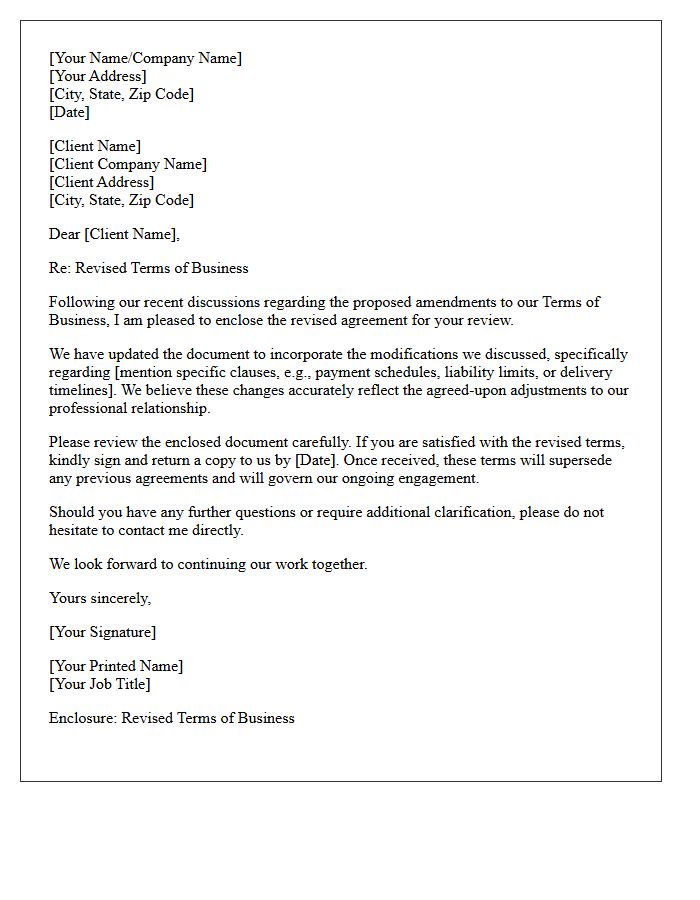
When sending a letter enclosing Revised Terms of Business, it is crucial to clearly outline the specific client modifications that were accepted. This document serves as a formal acknowledgment of the negotiated changes, ensuring legal clarity and mutual agreement. Highlighting these amendments prevents future disputes and confirms that the updated contract reflects the final negotiated consensus. Ensure the letter references the original agreement date and requires a signed acknowledgment to maintain a robust audit trail for compliance and professional transparency in your business relationship.
Letter Requesting Clarification on Proposed Terms of Business Modifications
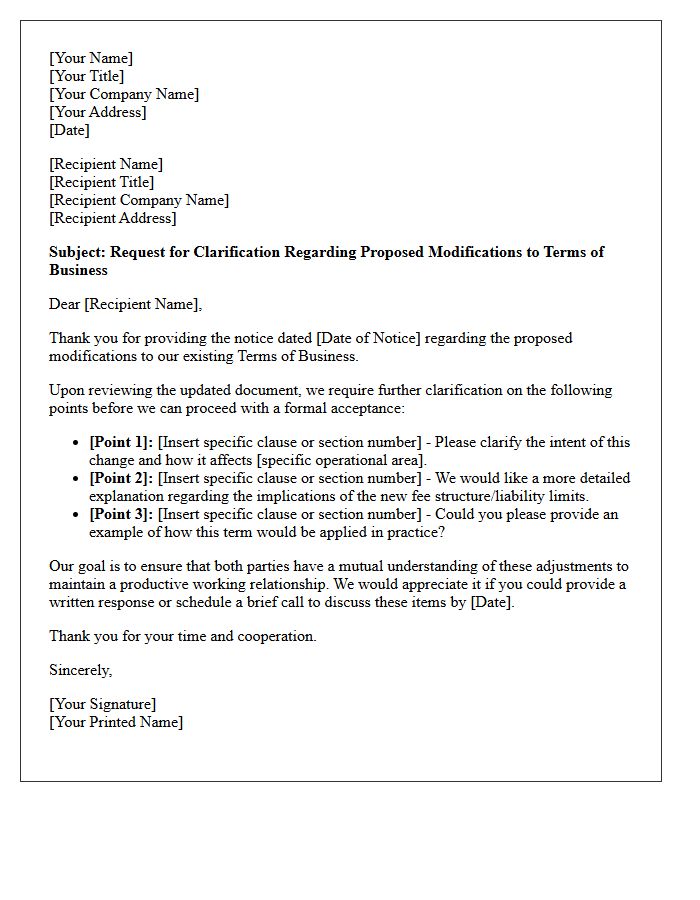
When drafting a letter requesting clarification on proposed terms of business modifications, precision is essential. Clearly identify the specific clauses that require further explanation to avoid future legal ambiguity. Focus on how these adjustments impact current workflows, pricing structures, or service obligations. Requesting a detailed breakdown ensures both parties maintain mutual understanding before formal acceptance. This proactive communication safeguards your interests and promotes transparency in professional partnerships. Always conclude by specifying a response deadline to ensure timely resolution of the contract negotiations.
How should I structure a letter addressing client-requested modifications to terms of business?
The letter should begin by acknowledging the specific clauses the client wishes to amend, followed by your company's position on each point, and concluding with a clear statement on whether the modifications are accepted, countered, or declined.
What key elements must be included in a formal response to contract amendments?
A professional response must include a reference to the original agreement date, a point-by-point breakdown of the requested changes, the legal or operational rationale for your stance, and a proposed deadline for finalizing the revised terms.
Can I decline a client's request to modify standard payment terms?
Yes, you can decline modifications to payment terms by explaining how your current billing cycle ensures operational stability and service quality, though offering a compromise-such as a phased payment schedule-is often recommended to maintain the relationship.
How do I professionally communicate that certain liability clauses are non-negotiable?
When addressing non-negotiable terms, state clearly that the clauses are fixed due to professional indemnity insurance requirements or regulatory compliance standards, ensuring the client understands these limits protect both parties.
What is the best way to finalize agreed-upon changes to a business contract?
Once both parties reach a consensus via correspondence, the changes should be formalized through a signed Addendum or an Amending Agreement that explicitly supersedes the original sections of the Terms of Business.


Comments