
Managing cash flow is essential for professional services. This article explains how to issue a formal Letter Notifying Client of Overdue Fees in accordance with your signed terms of business. Learn how to maintain professional relationships while ensuring prompt payment through clear communication and legal compliance. To help you get started quickly, below are some ready to use templates.
Image cover: Official Notice: Outstanding Fees and Payment Reminder Templates accordance with Terms of Business
Letter Samples List
- First Notice Letter Regarding Overdue Recruitment Fees
- Friendly Reminder Letter for Outstanding Placement Fees
- Second Notice Letter for Overdue Candidate Sourcing Fees
- Urgent Letter Demanding Payment for Recruitment Services
- Final Warning Letter Before Legal Action for Overdue Fees
- Letter Notifying Client of Breach of Terms of Business
- Letter Requesting Immediate Payment for Executive Search Fees
- Letter Regarding Overdue Invoice for Temporary Staffing Services
- Formal Letter of Default on Recruitment Agency Fees
- Letter Outlining Late Payment Penalties per Terms of Business
- Letter to Suspend Recruitment Services Due to Unpaid Fees
- Letter of Final Settlement for Outstanding Placement Invoices
First Notice Letter Regarding Overdue Recruitment Fees
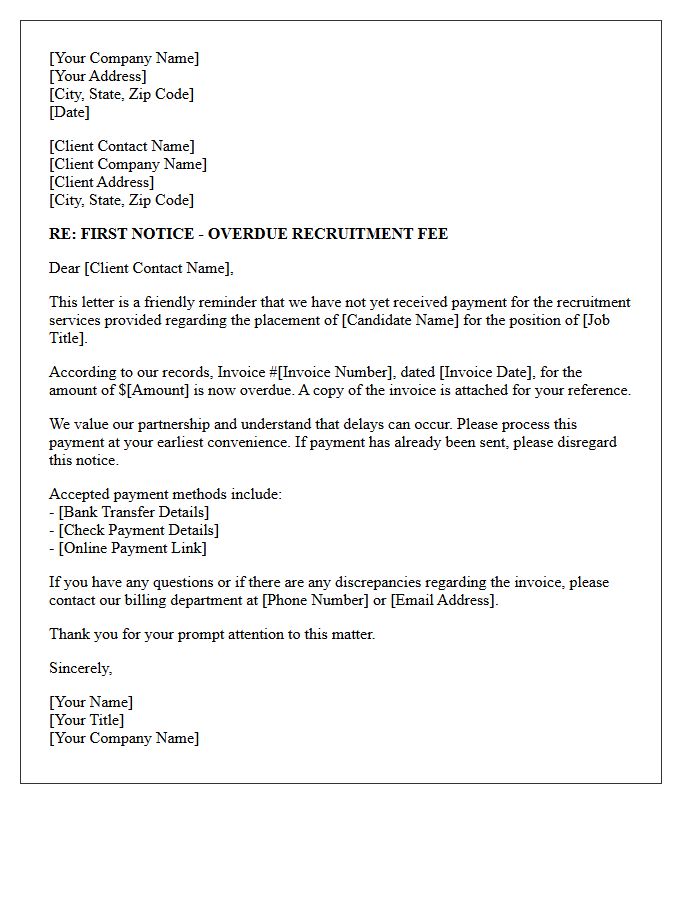
A First Notice Letter Regarding Overdue Recruitment Fees serves as a formal demand for payment from an employer or client. It is the initial step in debt collection, notifying the recipient that a specific placement fee is past its due date. This document clearly outlines the original invoice amount, the name of the hired candidate, and the agreed payment terms. Promptly addressing this notice is essential to maintain professional relationships and avoid potential legal action or late payment penalties associated with the recruitment agreement.
Friendly Reminder Letter for Outstanding Placement Fees
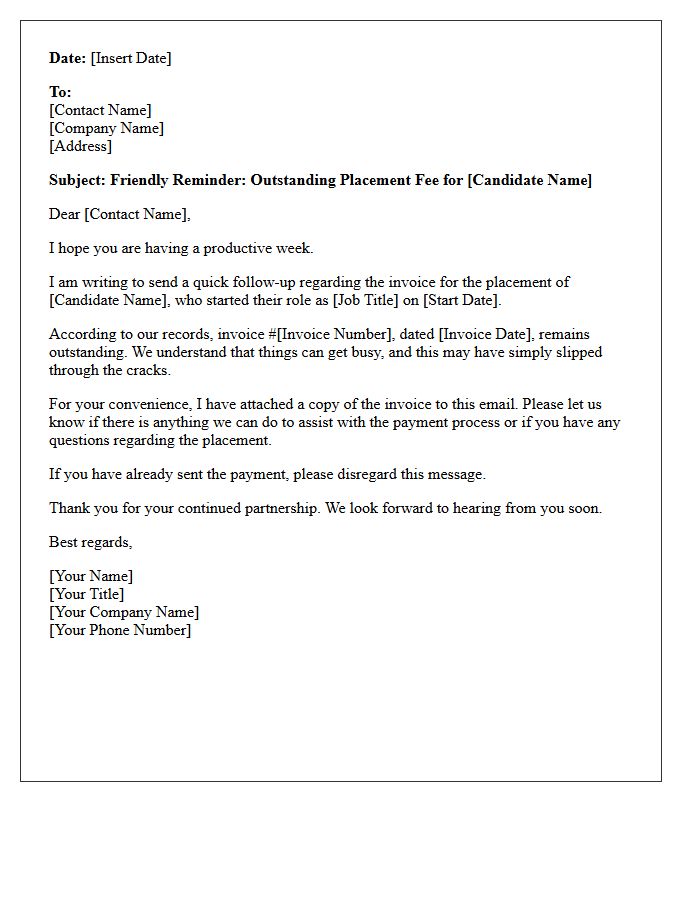
A friendly reminder letter for outstanding placement fees serves as a professional nudge to ensure timely payment collection. It is essential to maintain a polite tone while clearly stating the invoice number, total amount due, and original deadline. Providing flexible payment options and contact details for billing inquiries helps preserve the business relationship. Sending this notice early prevents cash flow disruptions and minimizes the need for formal collection actions. Always include a clear call to action to encourage an immediate response regarding the overdue balance.
Second Notice Letter for Overdue Candidate Sourcing Fees
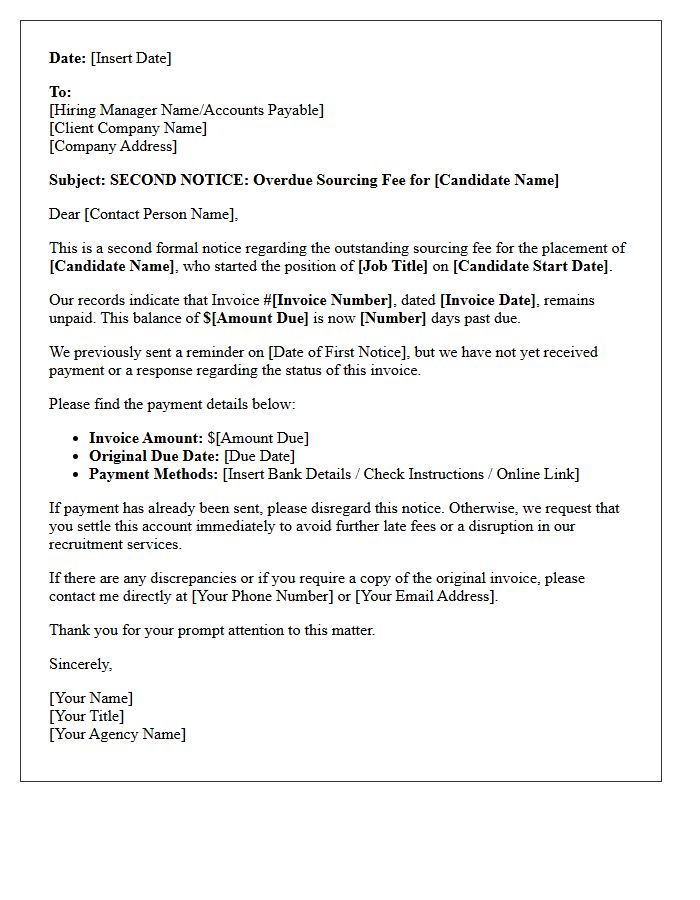
A second notice letter for overdue candidate sourcing fees serves as a formal follow-up regarding unpaid recruitment invoices. This document outlines the original payment terms, the specific amount outstanding, and any applicable late penalties or interest. It functions as a critical step in debt recovery, signaling that the placement agency expects immediate settlement to maintain a professional relationship. Clear communication at this stage helps avoid legal escalation while ensuring financial accountability from the client for the professional sourcing services already rendered during the hiring process.
Urgent Letter Demanding Payment for Recruitment Services
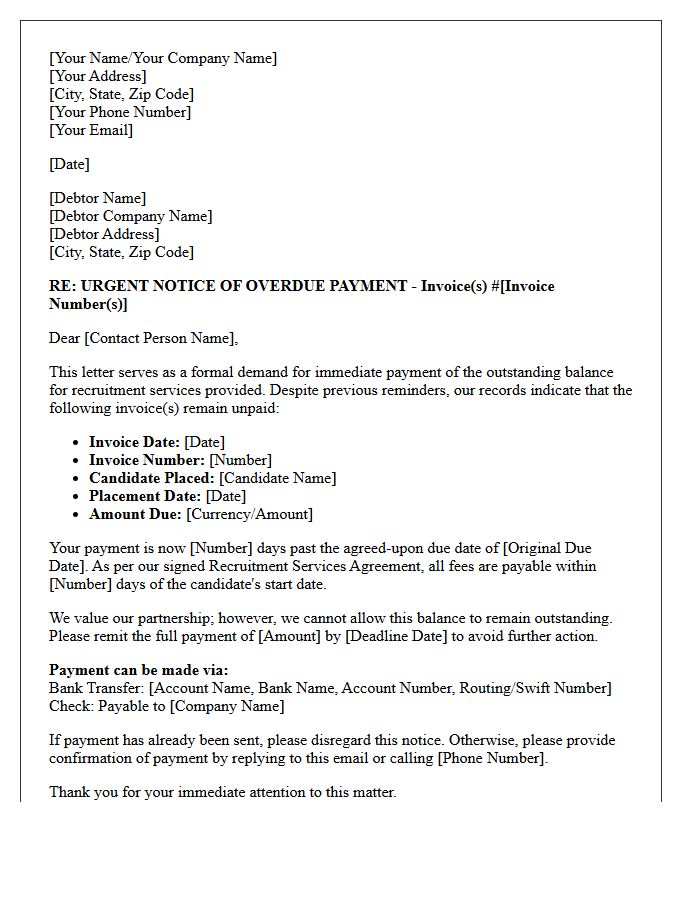
An Urgent Letter Demanding Payment is a formal notice sent to a client who has failed to settle outstanding invoices for recruitment services rendered. This document serves as a final warning before escalating to legal action or debt collection agencies. It must clearly state the total overdue balance, original invoice dates, and a strict payment deadline. Professionally articulating these terms protects your agency's cash flow while providing a final opportunity for the debtor to resolve the breach of contract amicably without further litigation.
Final Warning Letter Before Legal Action for Overdue Fees
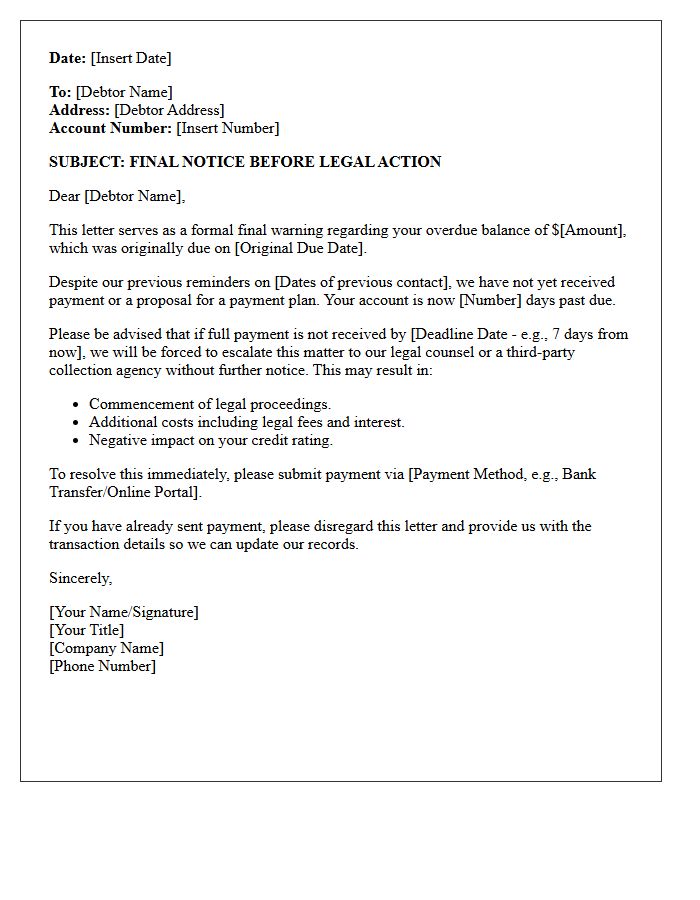
A Final Warning Letter Before Legal Action is a formal notice issued to debtors regarding overdue fees. This critical document serves as a final opportunity to settle outstanding balances before formal litigation commences. It must clearly state the exact amount owed, a firm deadline for payment, and the specific legal consequences of continued non-compliance. Receiving this letter indicates that the creditor is prepared to initiate court proceedings or debt recovery services, which may negatively impact your credit rating and result in additional statutory interest or legal costs.
Letter Notifying Client of Breach of Terms of Business
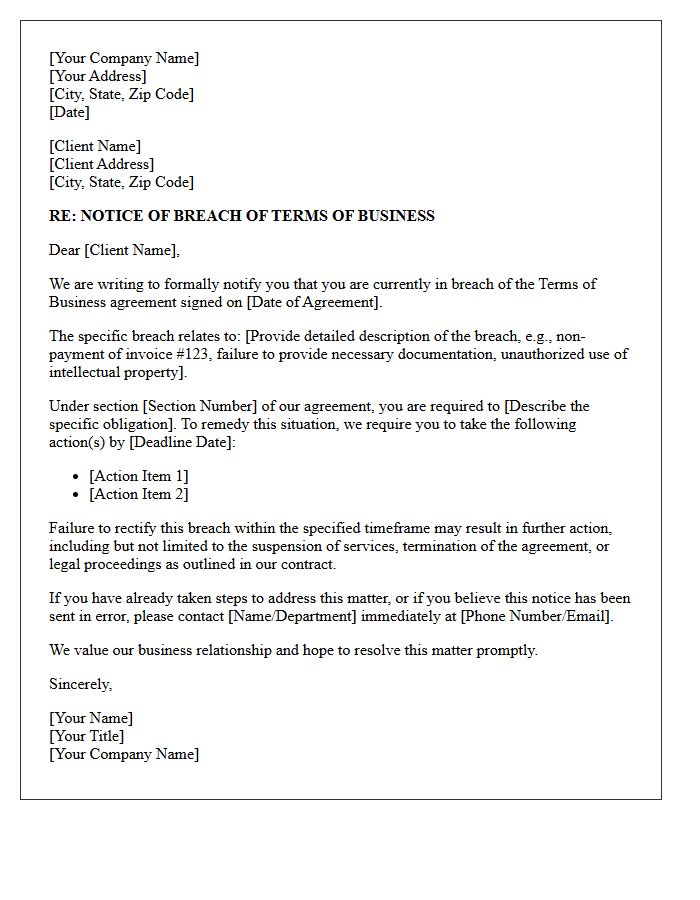
A formal breach notice is a critical legal document informing a client that they have violated specific clauses within your Terms of Business. It clearly identifies the non-compliance, such as unpaid invoices or missed deadlines, and outlines required corrective actions. Providing a remedy period allows the client to rectify the issue before further escalation. This letter serves as essential evidence for potential contract termination or litigation, ensuring your rights remain protected while maintaining professional transparency and legal compliance during a dispute.
Letter Requesting Immediate Payment for Executive Search Fees
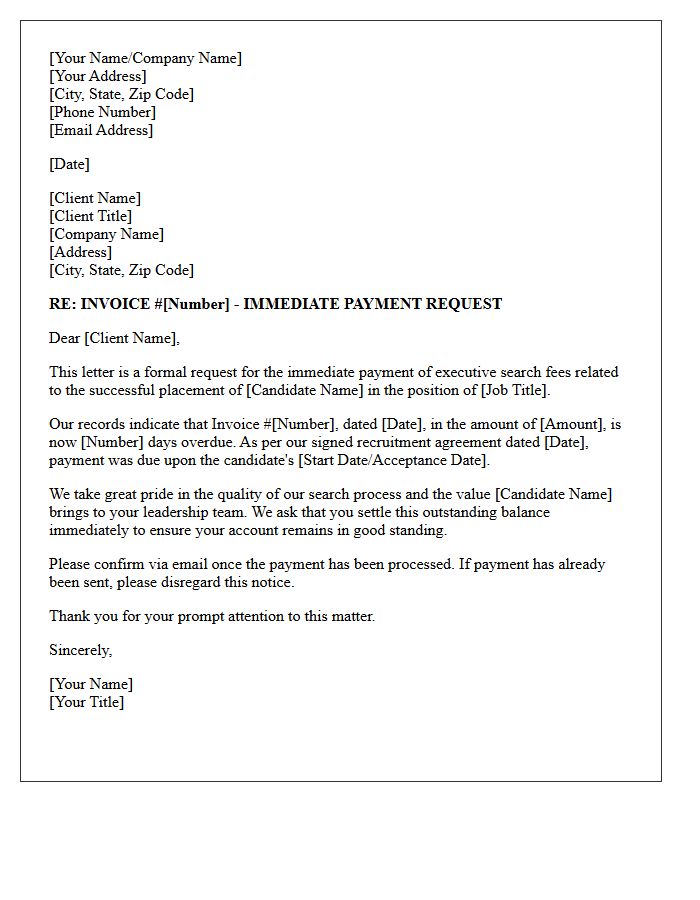
A formal Letter Requesting Immediate Payment for executive search fees is essential when recruitment invoices become overdue. This document should clearly state the outstanding balance, the original invoice date, and the specific placement details. Professionalism is vital to preserve the client relationship while asserting your right to compensation for retained or contingency services. Explicitly mention the payment deadline and potential late interest charges as per your signed terms of business. Providing a clear call to action and convenient payment methods ensures the collection process remains efficient and legally sound.
Letter Regarding Overdue Invoice for Temporary Staffing Services
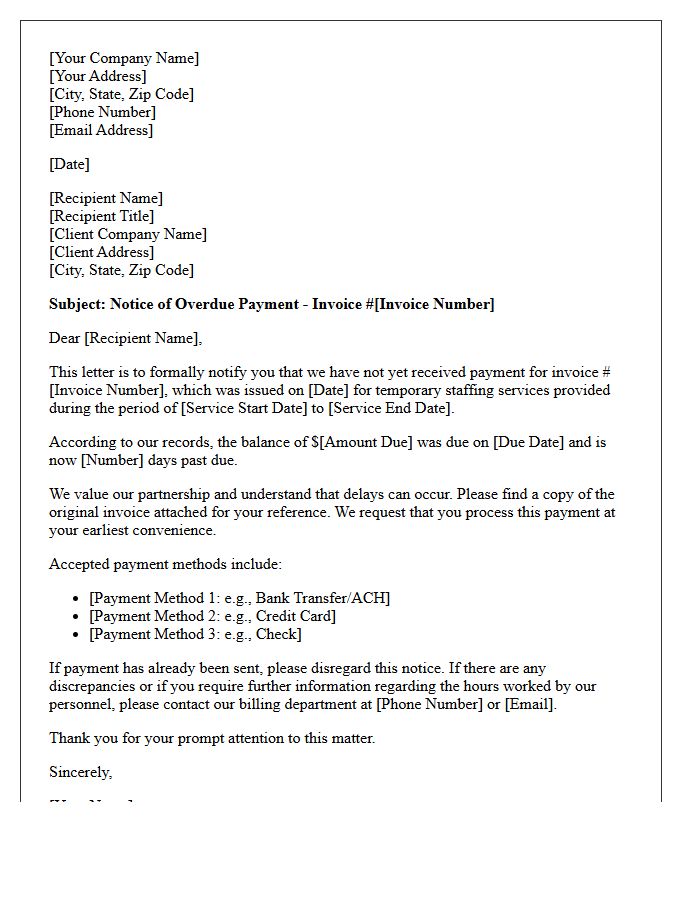
When sending a letter regarding an overdue invoice for temporary staffing services, it is crucial to maintain professional relationships while ensuring prompt payment. Clearly reference the specific invoice number, the total amount outstanding, and the original due date. Emphasize that these funds cover the wages already paid to the temporary personnel provided. Attach a copy of the original bill to resolve any discrepancies quickly. Using a polite yet firm tone helps expedite the collection process without damaging the ongoing partnership between your agency and the client.
Formal Letter of Default on Recruitment Agency Fees
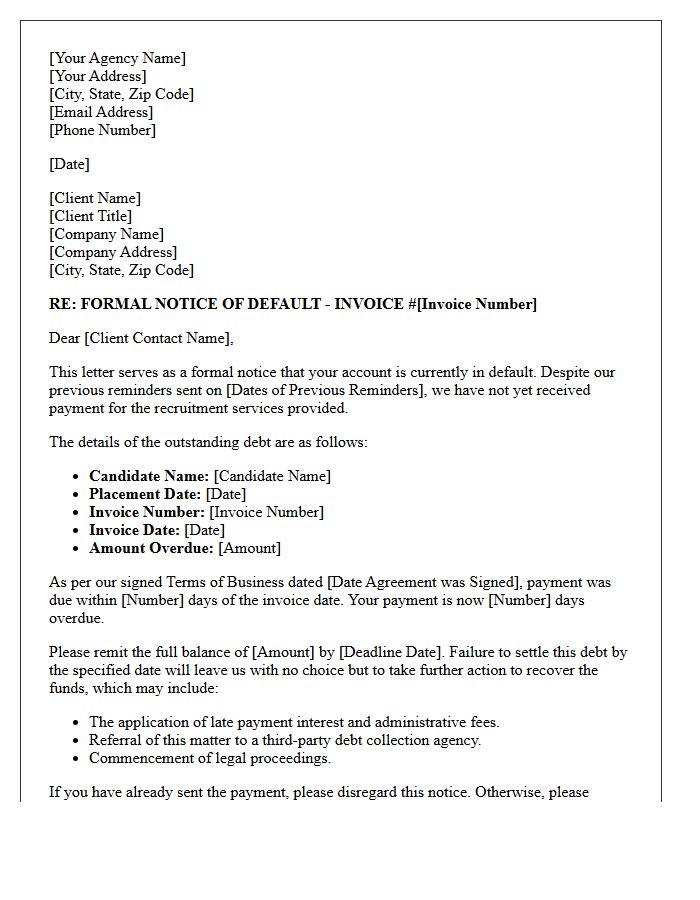
A formal letter of default is a critical legal notice issued when a client fails to pay recruitment agency fees by the agreed deadline. This document serves as a final demand for payment, explicitly outlining the outstanding balance, invoice details, and the breach of contract terms. It establishes a formal paper trail, which is essential if the dispute escalates to debt recovery or litigation. Providing a clear deadline for settlement within this notice often encourages prompt resolution and protects the agency's right to claim additional interest or legal costs.
Letter Outlining Late Payment Penalties per Terms of Business
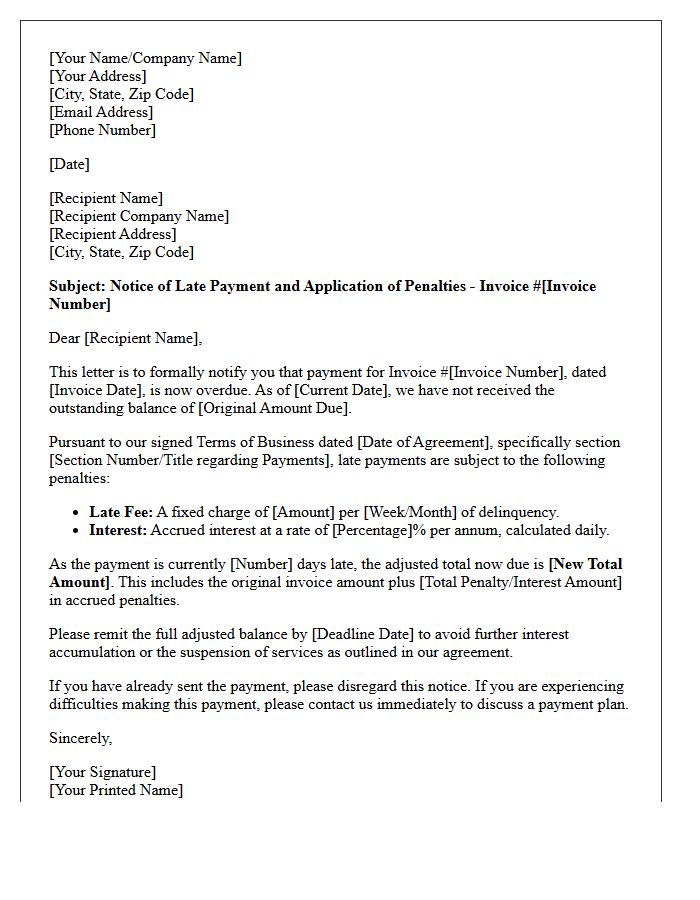
When issuing a Late Payment Notice, you must clearly reference the specific clause in your Terms of Business regarding overdue accounts. Formally state the outstanding balance, the original due date, and the applicable statutory interest or contractual penalties. Professional communication helps maintain relationships while asserting your legal right to compensation. Ensure the letter specifies a final deadline for payment and outlines potential debt recovery actions if the breach of terms persists. Accuracy in these details is essential for legal compliance and successful accounts receivable management.
Letter to Suspend Recruitment Services Due to Unpaid Fees
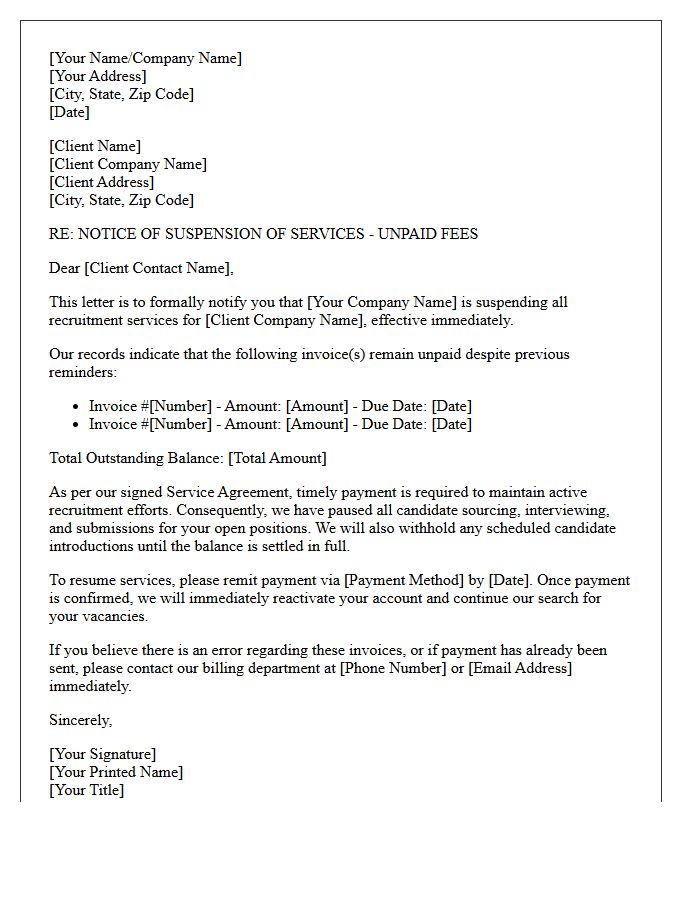
Issuing a formal Letter to Suspend Recruitment Services is a critical step when managing unpaid fees. This document serves as an official notification that all active hiring processes and candidate sourcing will cease immediately until the outstanding debt is settled. Clearly state the overdue amount, reference the specific service agreement, and provide a firm deadline for payment. Protecting your agency's cash flow through formal suspension ensures that resources are not wasted on non-paying clients while maintaining a legal paper trail for potential debt recovery actions.
Letter of Final Settlement for Outstanding Placement Invoices
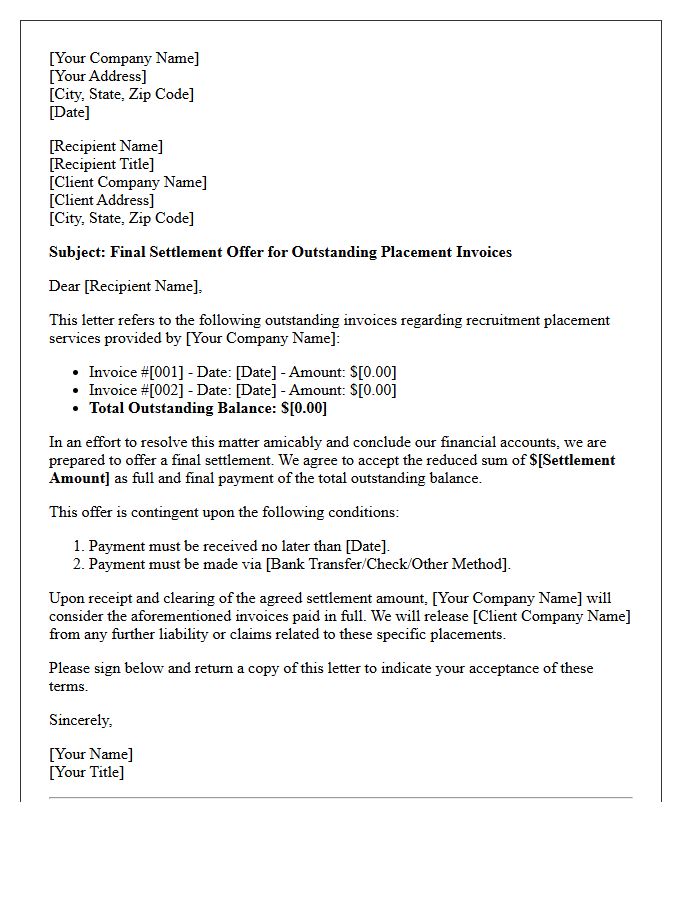
A Letter of Final Settlement for Outstanding Placement Invoices serves as a formal agreement to resolve unpaid recruitment fees. It outlines the negotiated amount accepted to clear all debts, preventing future legal disputes. This document must clearly state that once payment is received, no further claims can be made regarding the specified hires. Ensuring this release of liability is documented protects both the agency and the client, providing a definitive legal closure to the billing cycle and formalizing the end of financial obligations for the placement services rendered.
What should be included in a formal letter notifying a client of overdue fees?
The letter should clearly state the invoice number, the total outstanding balance, the original due date, and a reference to the specific payment terms outlined in your signed Terms of Business.
How soon should I send a notice for an overdue payment?
A formal notification is typically sent within 1 to 7 days after the payment deadline has passed, ensuring the client is aware of the breach of terms while maintaining a professional relationship.
Can I charge interest on overdue fees per my Terms of Business?
Yes, provided your Terms of Business include a late payment clause, you are legally entitled to charge interest and administrative late fees as specified in your contract or under statutory commercial law.
What is the most effective tone for a first overdue fee notification?
The initial letter should be firm yet professional and polite, assuming the non-payment may be an oversight while reminding the client of their contractual obligations to avoid service suspension.
What are the next steps if a client ignores an overdue fee letter?
If the initial notice is ignored, you should follow up with a final demand letter (Letter Before Action), suspend ongoing services as permitted by your terms, and consider legal mediation or a debt recovery agency.

Comments