
Prevent financial leakage and internal fraud by addressing unauthorized spending. This article explores essential controls and professional communication strategies to combat corporate credit card abuse and reimbursement fraud. Learn how a formal management letter reinforces policy compliance, protects company assets, and establishes accountability across all organizational levels. To help you get started, below are some ready to use template options.
Image cover: Effective Communication and Policy Templates for Mitigating Expense and Credit Card Abuse
Letter Samples List
- Management Letter on Expense Reimbursement Irregularities
- Management Letter Concerning Corporate Credit Card Abuse
- Audit Findings Letter on Firm Expense and Credit Card Policies
- Management Letter Regarding Fraudulent Staff Expense Claims
- Internal Control Letter on Corporate Credit Card Expenditures
- Advisory Letter on Partner and Employee Expense Reimbursements
- Management Letter Highlighting Corporate Card Misuse
- Compliance Letter on Expense Account Abuse Within the Firm
- Management Letter Detailing Travel and Entertainment Expense Violations
- Deficiency Letter on Corporate Credit Card Internal Controls
- Management Letter Addressing Expense Reimbursement Fraud
- Executive Letter on Unauthorized Corporate Credit Card Transactions
Management Letter on Expense Reimbursement Irregularities
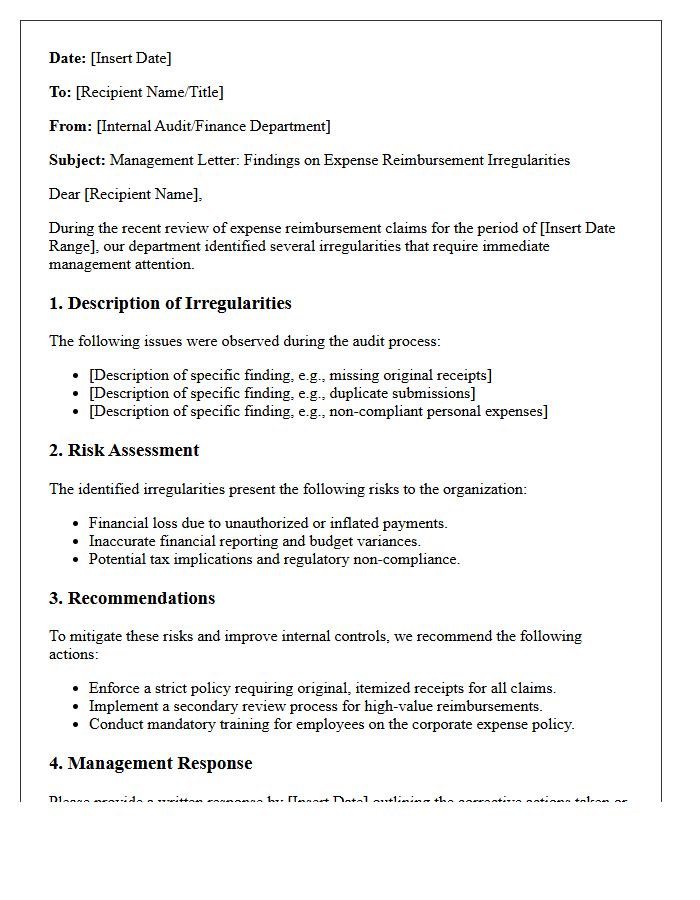
A Management Letter addressing expense reimbursement irregularities is a critical audit output identifying internal control weaknesses. It highlights risks like fraudulent claims, duplicate payments, or lack of supporting documentation. Organizations must implement strict authorization protocols and robust oversight to mitigate financial leakage. Addressing these findings ensures regulatory compliance and protects corporate assets. Timely remediation of these reporting gaps strengthens the overall integrity of financial statements and promotes a culture of accountability among employees and management alike.
Management Letter Concerning Corporate Credit Card Abuse
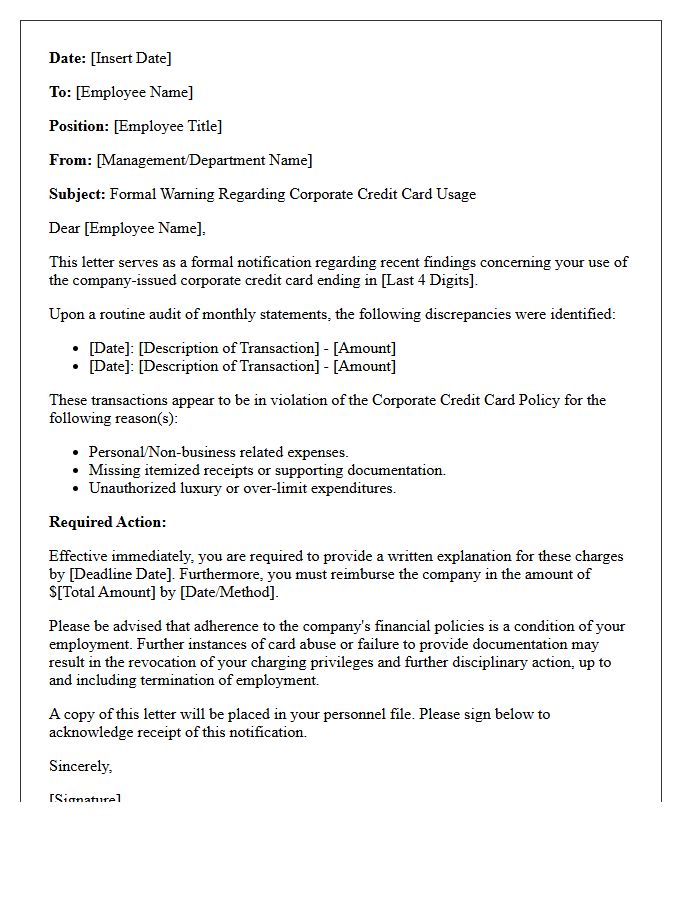
A management letter addressing corporate credit card abuse serves as a formal internal control document. It identifies unauthorized transactions, personal expenses, or lack of documentation that violate company policy. This communication outlines specific financial risks and internal control weaknesses discovered during an audit. The primary objective is to recommend stricter oversight and enforcement mechanisms to prevent fraud and ensure fiscal accountability. Implementing these corrective actions protects organizational assets and ensures that employees adhere to professional expenditure standards.
Audit Findings Letter on Firm Expense and Credit Card Policies
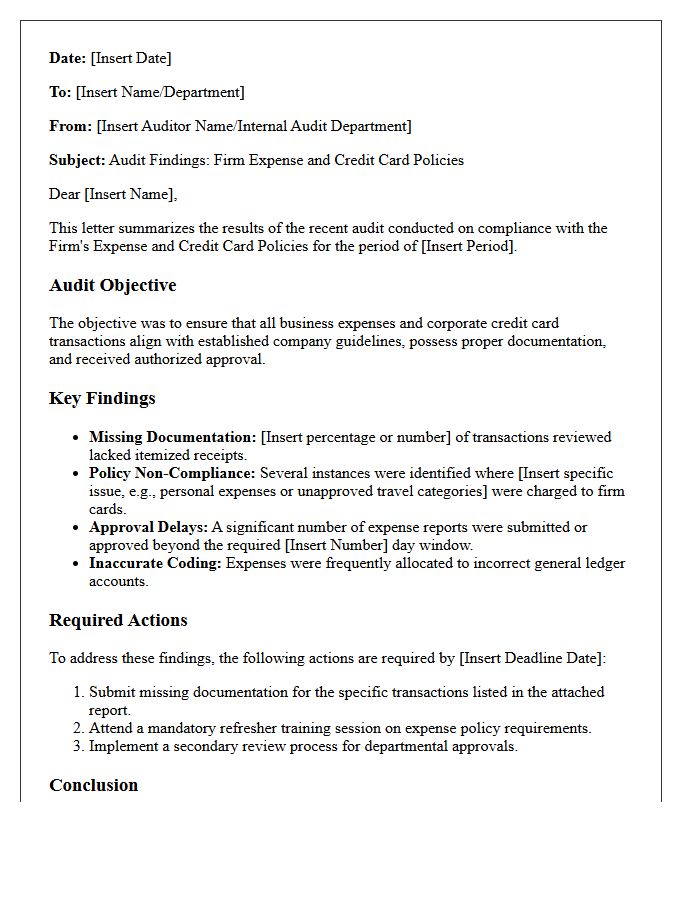
An Audit Findings Letter serves as a formal notification regarding internal control weaknesses discovered during a review of firm expense and credit card policies. This document highlights compliance gaps, unauthorized spending, or missing documentation that could lead to financial inaccuracies or fraud. Organizations must address these deficiencies promptly to strengthen financial oversight and ensure adherence to corporate governance standards. Understanding these results is essential for refining reimbursement procedures and mitigating future operational risks.
Management Letter Regarding Fraudulent Staff Expense Claims
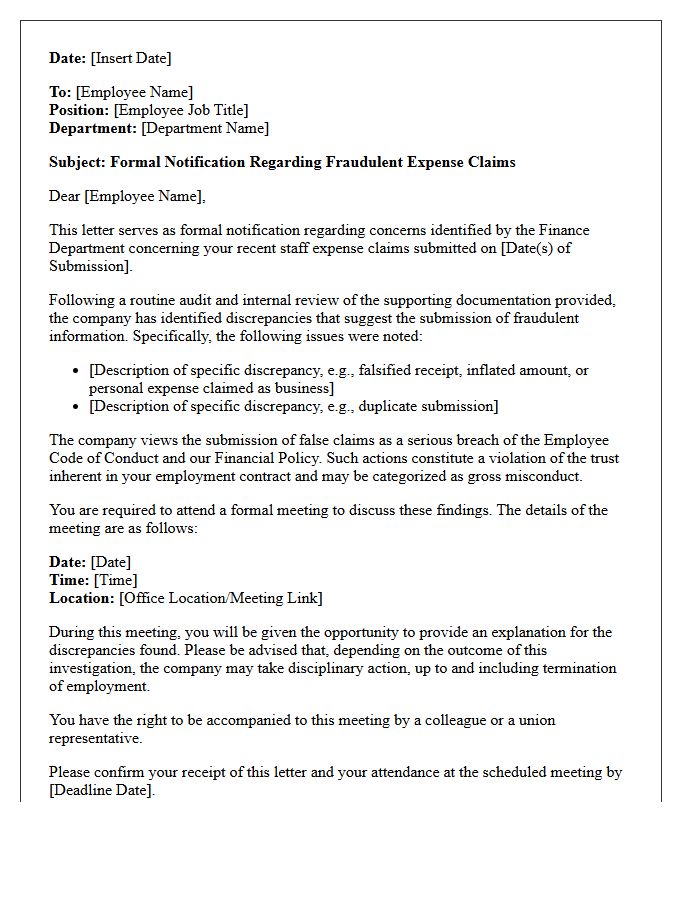
A management letter addressing fraudulent staff expense claims is a critical internal control document. It identifies systemic weaknesses in the reimbursement process, such as insufficient receipt verification or lack of oversight. By formalizing these findings, management must implement corrective actions to mitigate financial loss and legal risks. Strengthening internal controls and establishing clear disciplinary policies ensures accountability. This proactive reporting helps foster an ethical corporate culture and protects the organization's assets from intentional misappropriation and deceptive reporting practices.
Internal Control Letter on Corporate Credit Card Expenditures
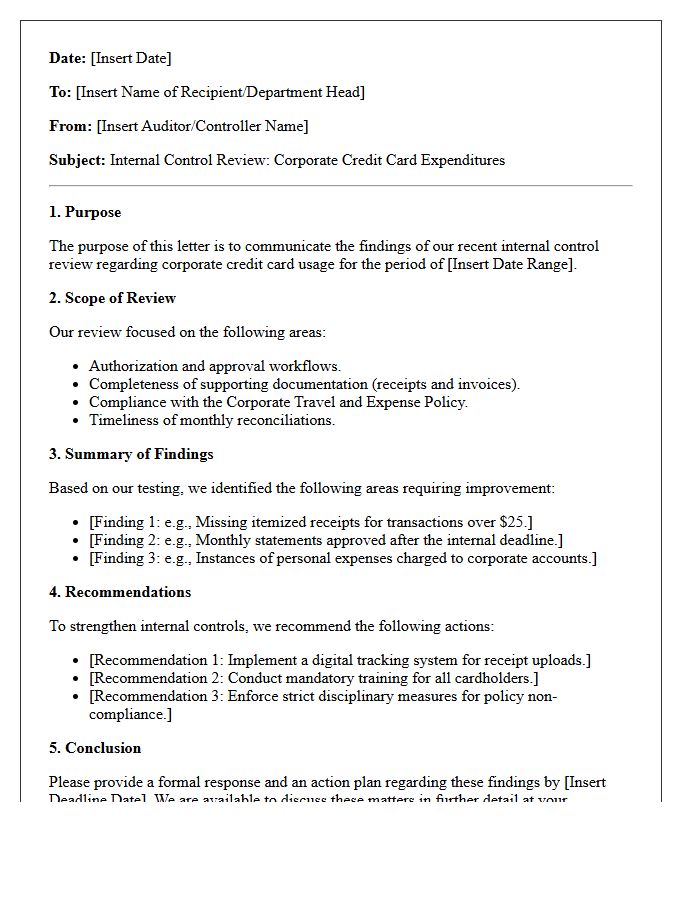
An internal control letter addresses risks in corporate credit card expenditures to prevent fraud and unauthorized spending. It outlines critical compliance gaps, such as missing receipts or lack of independent approvals. The document serves as a roadmap for management to strengthen financial oversight and ensure all transactions align with company policy. By implementing these audit recommendations, organizations protect their cash flow, improve accountability, and mitigate the legal risks associated with employee misuse of corporate funds.
Advisory Letter on Partner and Employee Expense Reimbursements
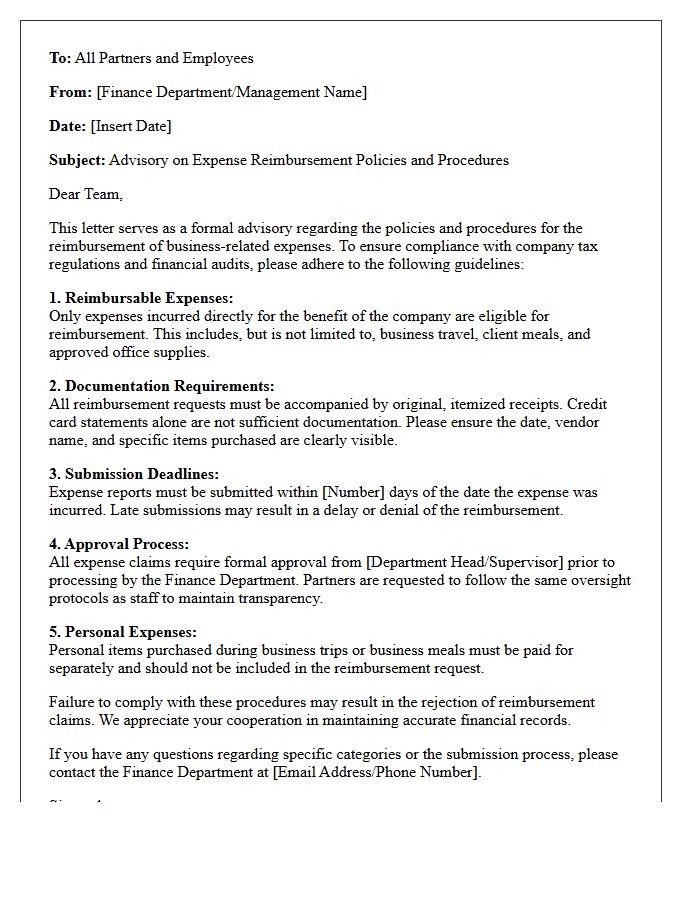
The Advisory Letter on Partner and Employee Expense Reimbursements provides critical guidance for firms to ensure compliance with internal controls and tax regulations. It emphasizes that all business expenses must be strictly documented, necessary, and properly authorized to prevent financial fraud or tax evasion. Establishing a robust reimbursement policy is essential for maintaining corporate transparency and avoiding legal liabilities. Firms must regularly audit these claims to verify their business purpose and align with IRS standards, protecting the organization from potential penalties and ensuring equitable treatment for all members.
Management Letter Highlighting Corporate Card Misuse
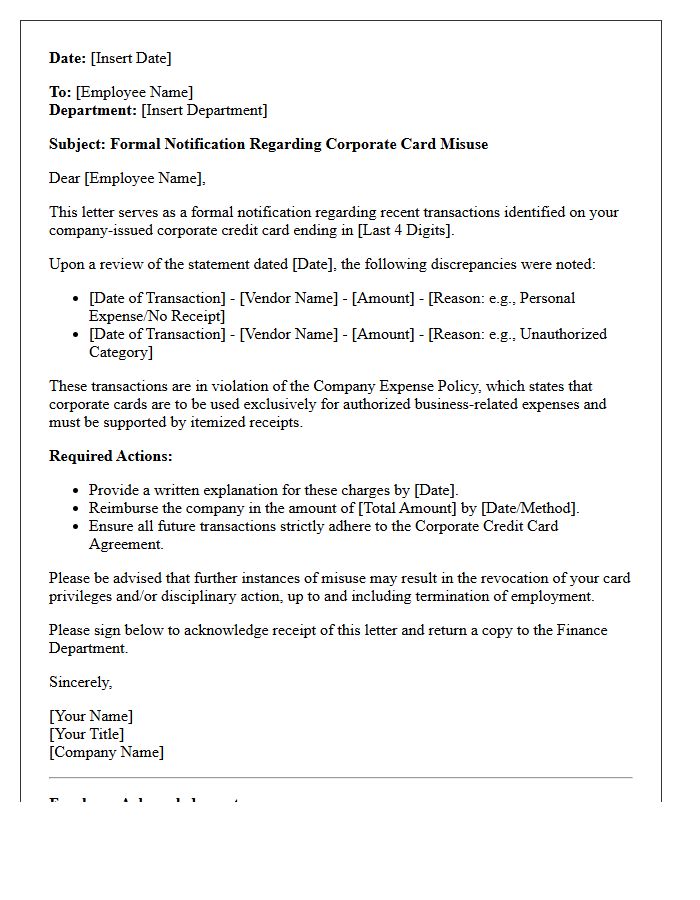
A management letter addressing corporate card misuse serves as a critical formal notification regarding internal control weaknesses. It highlights unauthorized personal spending, lack of supporting documentation, or non-compliance with established expense policies. This document protects the organization by recommending stricter oversight and improved accountability measures. Addressing these findings promptly is essential to mitigate fraud risks, ensure financial transparency, and maintain regulatory compliance. Implementing robust internal controls and monitoring systems helps prevent future financial leakages and strengthens the overall corporate governance framework.
Compliance Letter on Expense Account Abuse Within the Firm
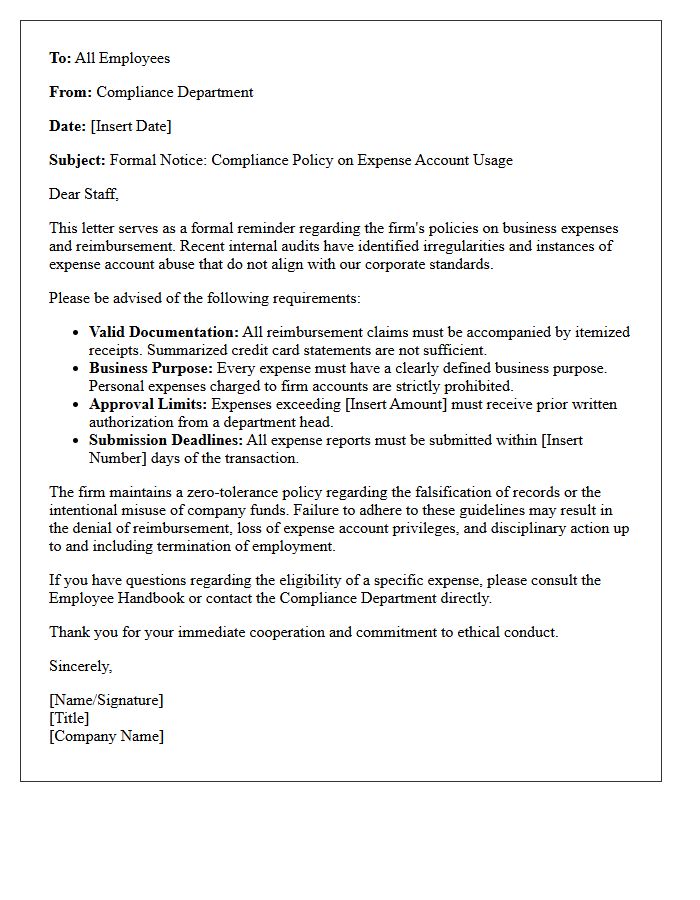
A compliance letter addressing expense account abuse serves as a formal notification regarding financial misconduct and policy violations. It outlines specific discrepancies found during audits, such as personal charges or falsified receipts. Employees must understand that reimbursement integrity is mandatory for maintaining corporate transparency. Failure to adhere to established guidelines can lead to disciplinary action, including termination or legal consequences. Promptly responding to these inquiries and providing accurate documentation is essential for resolving internal control concerns and upholding the firm's ethical standards and fiscal responsibility.
Management Letter Detailing Travel and Entertainment Expense Violations
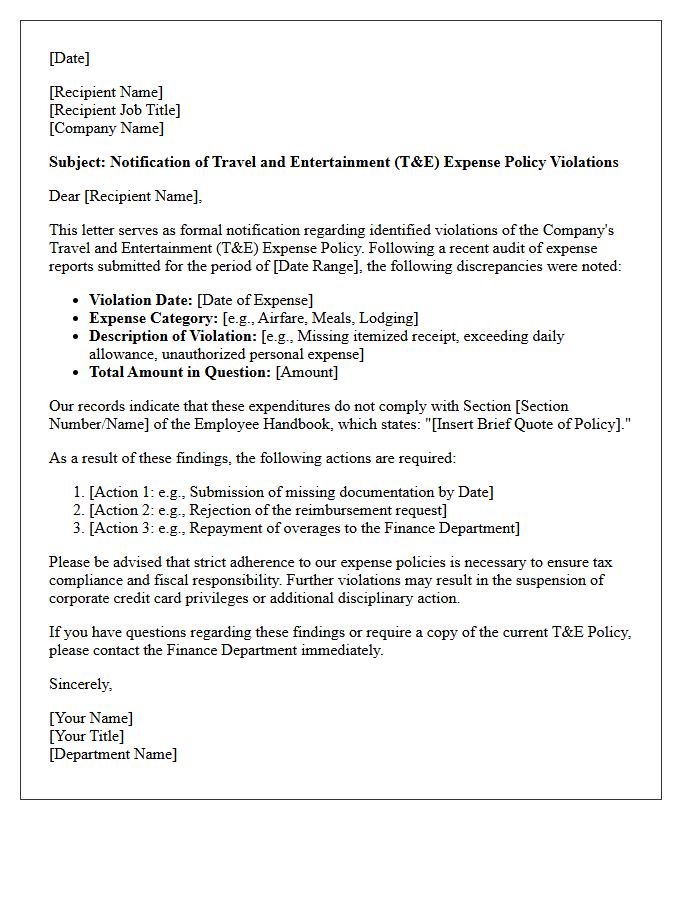
A management letter detailing travel and entertainment violations identifies internal control weaknesses within an organization's spending policies. It highlights specific instances of non-compliance, such as missing receipts, unapproved upgrades, or personal expenses charged to company accounts. Addressing these findings is crucial for mitigating fraud risks and ensuring tax regulatory adherence. Management must implement corrective actions, such as enhanced oversight or updated reimbursement protocols, to strengthen financial integrity and prevent future budgetary leaks caused by improper employee expenditures.
Deficiency Letter on Corporate Credit Card Internal Controls
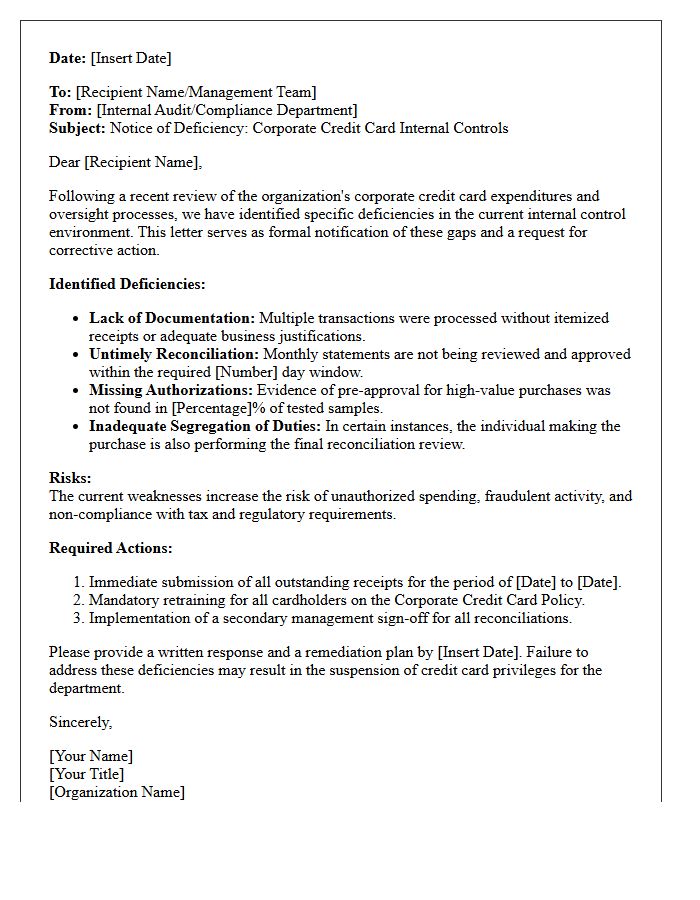
A deficiency letter regarding corporate credit card internal controls serves as a formal notification of material weaknesses identified during a financial audit. This document highlights a lack of oversight, such as missing receipts, unauthorized spending, or inadequate approval workflows. Addressing these gaps is crucial to prevent fraud and ensure regulatory compliance. Organizations must implement corrective actions, like reconciliation protocols and strict usage policies, to strengthen their control environment and maintain fiscal integrity. Resolving these issues promptly protects assets and improves the accuracy of financial reporting.
Management Letter Addressing Expense Reimbursement Fraud
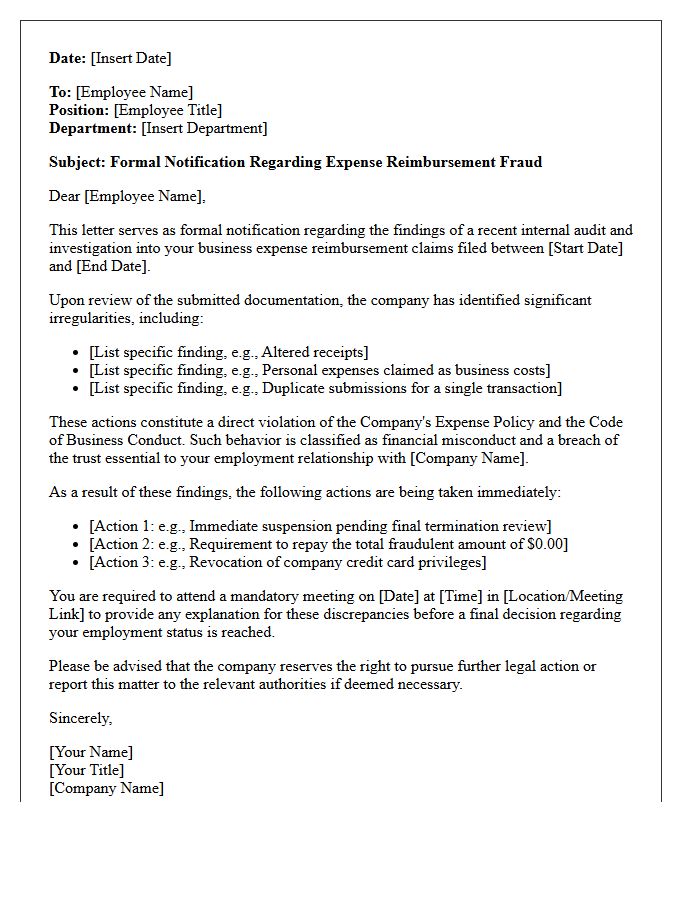
A management letter addressing expense reimbursement fraud highlights critical internal control weaknesses within a company's financial processes. It identifies risks such as falsified receipts, duplicate submissions, and personal expenses claimed as business costs. To mitigate these threats, the letter recommends implementing mandatory documentation, independent approval workflows, and periodic forensic audits. Strengthening these oversight mechanisms ensures financial integrity, reduces corporate liability, and discourages unethical behavior among employees. Effective monitoring of reimbursement claims is essential for safeguarding organizational assets and maintaining accurate reporting standards.
Executive Letter on Unauthorized Corporate Credit Card Transactions
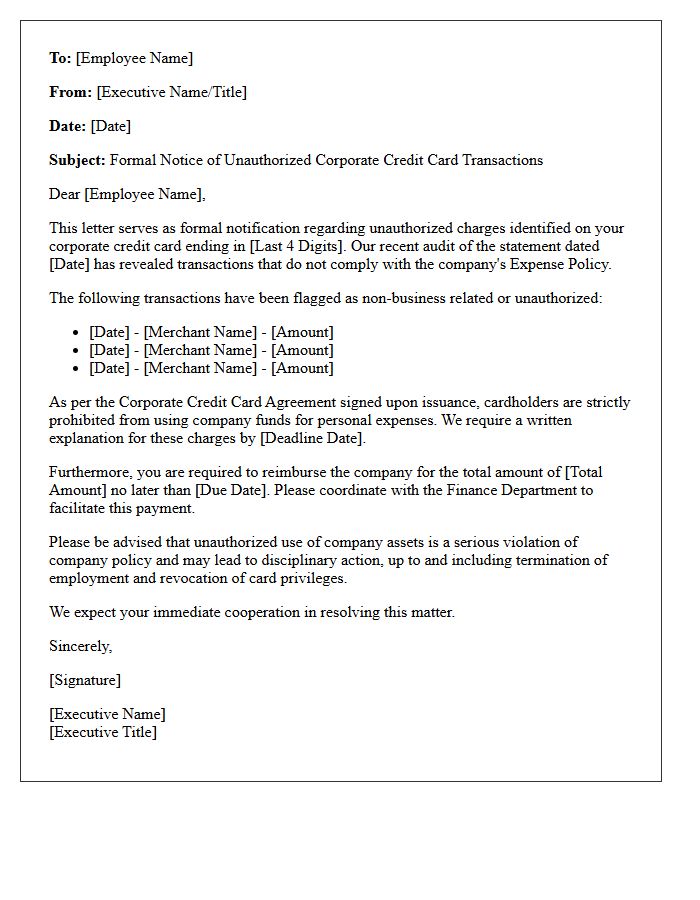
An Executive Letter regarding unauthorized corporate credit card transactions serves as a formal notification to employees or financial institutions. It details fraudulent activity or policy violations detected within company accounts. This document is crucial for initiating internal investigations, disputing illegal charges, and reinforcing financial accountability. Clear communication ensures the immediate suspension of compromised cards while protecting the organization's credit standing and legal interests. Prompt issuance of this letter is essential for effective risk management and mitigating potential financial losses caused by unauthorized spending or identity theft.
What is the primary purpose of a Management Letter regarding expense reimbursement and credit card abuse?
The primary purpose is to notify senior management and the board of internal control weaknesses, specifically identifying gaps in oversight that allow for unauthorized spending, lack of documentation, or the personal use of corporate funds.
What are the common red flags of corporate credit card abuse identified in audits?
Common red flags include frequent missing receipts, rounded-off expense amounts, transactions occurring on weekends or holidays, duplicate submissions for the same expense, and charges from vendors that do not align with business operations.
What internal controls should be implemented to prevent expense reimbursement fraud?
Organizations should implement a multi-level approval process, require original itemized receipts for all transactions over a specific threshold, enforce strict submission deadlines, and conduct periodic forensic audits of employee expense reports.
How can a company differentiate between legitimate business expenses and personal misuse?
Companies should maintain a clear, written Expense Policy that explicitly lists non-reimbursable items. Differentiation is enforced by requiring employees to provide a specific business justification for every charge and verifying that the expense aligns with the individual's job function.
What are the recommended disciplinary actions for violating corporate credit card policies?
Management Letters typically recommend a graduated disciplinary scale, ranging from formal warnings and the temporary suspension of card privileges to termination of employment and legal action for restitution in cases of significant financial fraud.


Comments