
A Management Letter provides critical insights following a third-party service organization control review. It identifies operational gaps, assesses internal risks, and suggests remediation strategies to strengthen the control environment. Effective communication ensures stakeholders understand audit findings and necessary corrective actions. To help you draft professional responses and summaries, below are some ready to use template.
Image cover: Effective Management Responses to Third-Party SOC Audit Findings: Templates and Professional Samples
Letter Samples List
- Management Letter on Payroll Service Organization Control Deficiencies
- Letter of Findings Regarding IT Managed Services Control Review
- Management Letter on SOC Report Exceptions for Cloud Hosting Providers
- Advisory Letter on Third-Party Vendor Control Weaknesses
- Management Letter on Service Organization Control Review and Recommendations
- Letter to Management on Outsourced Accounting Service Controls
- Audit Management Letter on Third-Party Data Center Control Findings
- Letter of Observations Concerning Service Organization Control Gaps
- Management Letter on Subservice Organization Control Review Exceptions
- Assurance Letter on Third-Party Service Provider Remediation Efforts
- Management Letter on Evaluation of SOC 2 Review Findings
- Letter of Recommendations for Vendor Control Environment Improvements
- Management Letter on Outsourced Human Resources Service Organization Controls
Management Letter on Payroll Service Organization Control Deficiencies
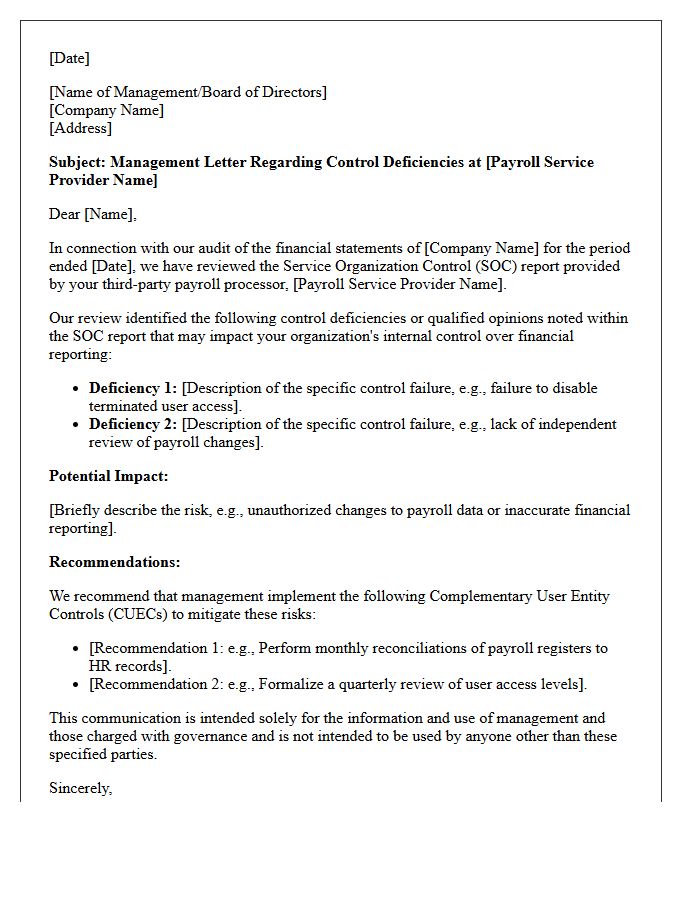
A management letter regarding Payroll Service Organization Control Deficiencies alerts stakeholders to internal control weaknesses identified during an audit. It highlights risks such as unauthorized transactions, data breaches, or non-compliance with tax regulations. Organizations must address these findings to ensure the integrity of financial reporting and the security of sensitive employee data. Promptly remediating these gaps mitigates potential operational liabilities and strengthens the overall governance framework between the entity and its third-party payroll provider.
Letter of Findings Regarding IT Managed Services Control Review
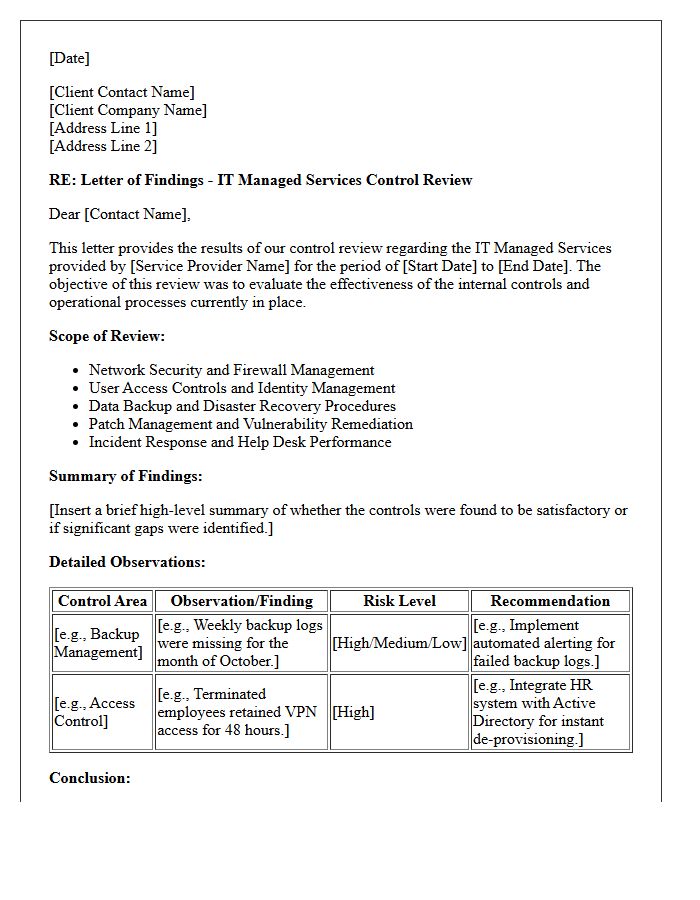
A Letter of Findings summarizes the results of an IT Managed Services Control Review, evaluating how effectively a provider manages security and operational risks. This document identifies specific compliance gaps, control weaknesses, and technical vulnerabilities within the managed infrastructure. It is essential for stakeholders to understand these results to ensure data protection and service reliability. By addressing the outlined recommendations, organizations can mitigate third-party risks and strengthen their overall governance framework, ensuring that outsourced IT services meet industry standards and internal security requirements.
Management Letter on SOC Report Exceptions for Cloud Hosting Providers
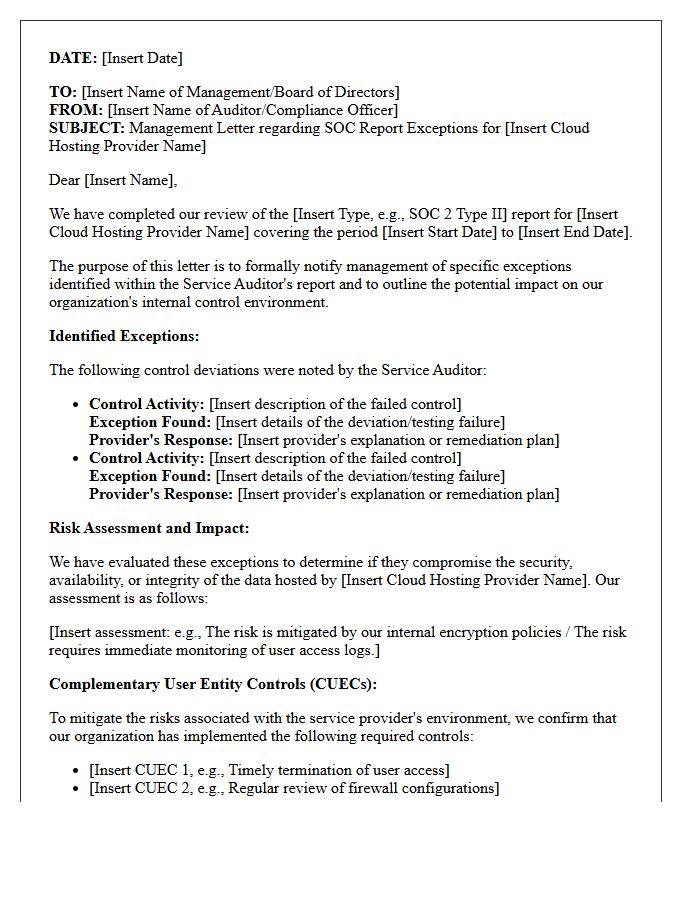
A Management Letter provides essential context when a cloud hosting provider's SOC report contains exceptions. It outlines the specific remediation plans and mitigating controls implemented to address identified vulnerabilities. For organizations relying on third-party infrastructure, this document is critical for risk assessment. It explains why a control failed and how the provider ensures data integrity moving forward. Reviewing this letter alongside the audit report helps stakeholders determine if the provider's operational risks are sufficiently managed or if additional user entity controls are required to maintain security compliance.
Advisory Letter on Third-Party Vendor Control Weaknesses
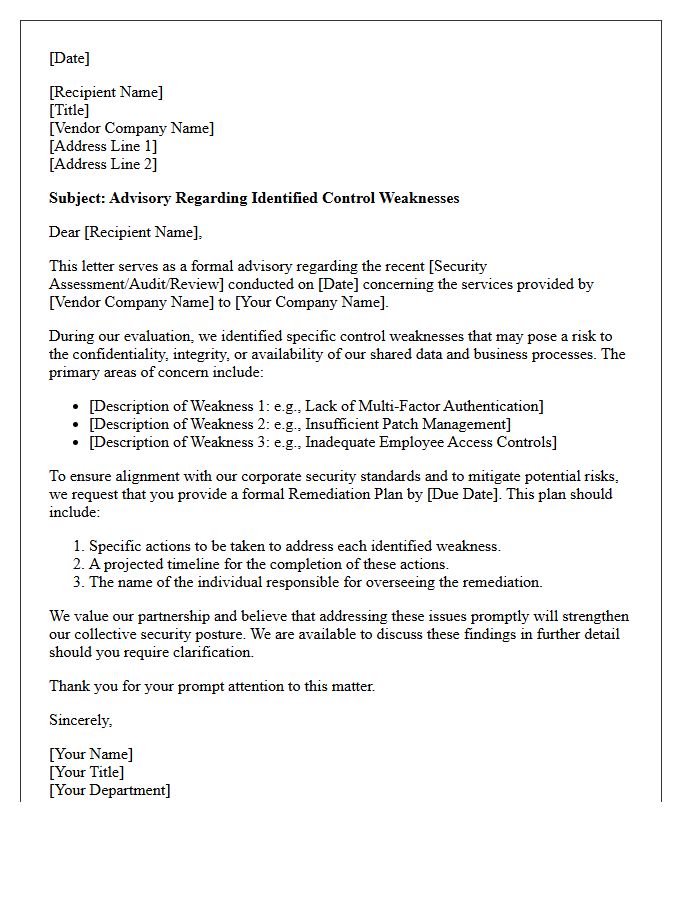
An advisory letter on third-party vendor control weaknesses highlights critical security gaps in external partnerships. It warns organizations about vulnerabilities like inadequate encryption, poor access management, or insufficient compliance monitoring. These documents are essential for proactive risk management, urging businesses to strengthen oversight through rigorous audits and contractual safeguards. Failure to address these identified flaws can lead to data breaches, operational disruptions, and regulatory penalties. Prioritizing vendor accountability ensures that outsourced services do not become the weakest link in your enterprise security infrastructure.
Management Letter on Service Organization Control Review and Recommendations
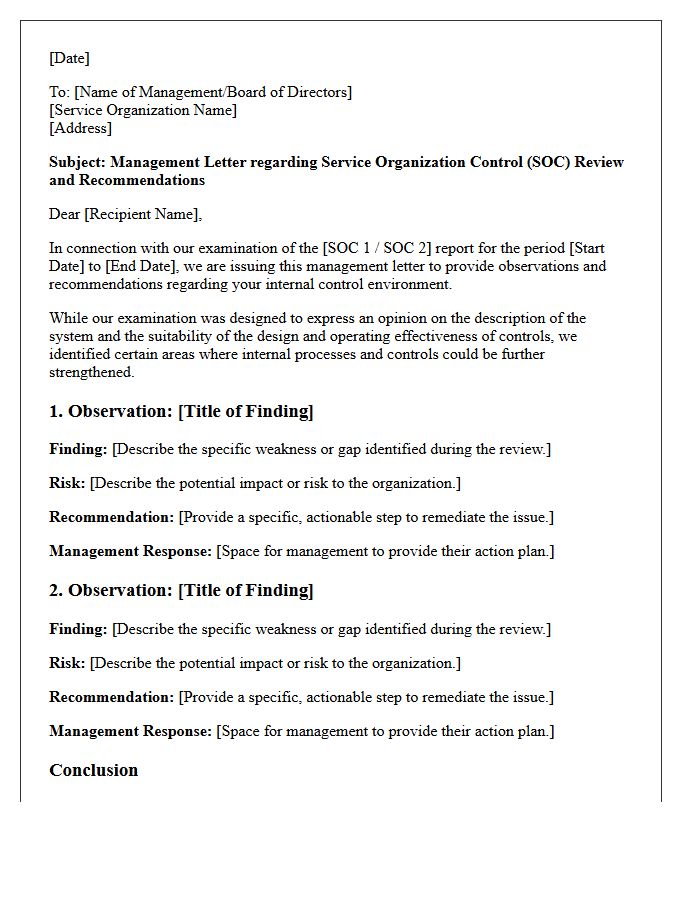
A management letter following a Service Organization Control (SOC) review provides critical insights into an entity's internal control environment. It outlines specific deficiencies, operational risks, and security gaps identified during the audit. Beyond technical compliance, the document offers actionable recommendations to strengthen data integrity and regulatory adherence. For stakeholders, this letter serves as a roadmap for mitigating third-party risks, improving process efficiency, and ensuring the long-term reliability of outsourced services through proactive remediation and continuous monitoring of control objectives.
Letter to Management on Outsourced Accounting Service Controls
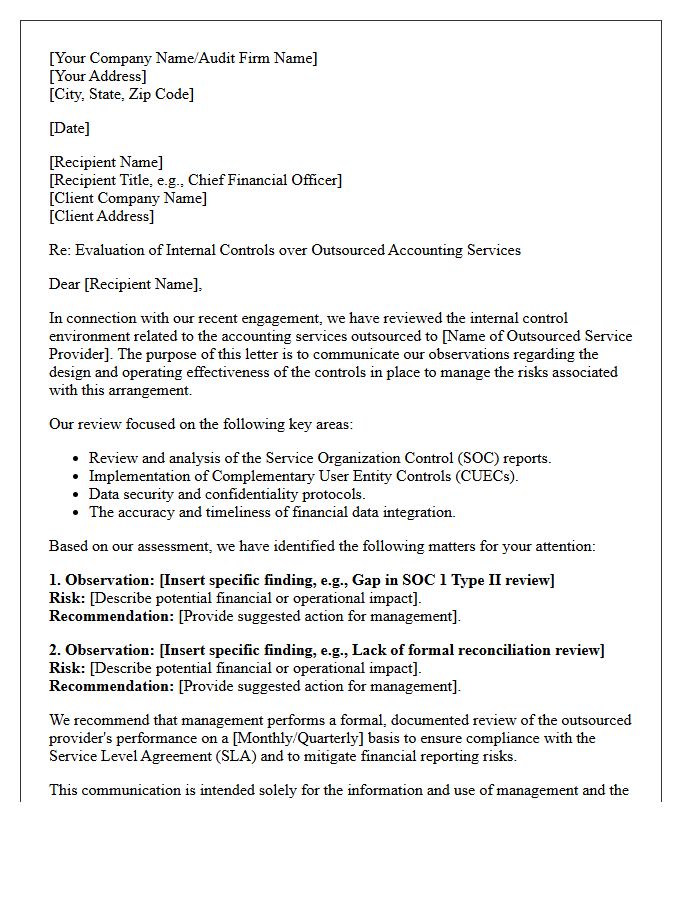
A Type 2 SOC 1 Report is the essential document for evaluating an outsourced accounting provider. This letter to management provides reasonable assurance that the service organization's internal controls are suitably designed and operating effectively over a specific period. It helps clients mitigate financial reporting risks and ensures compliance with Sarbanes-Oxley requirements. Understanding these control objectives allows management to verify data integrity and assess the impact of the service provider's processes on their own internal control environment and financial statement accuracy.
Audit Management Letter on Third-Party Data Center Control Findings
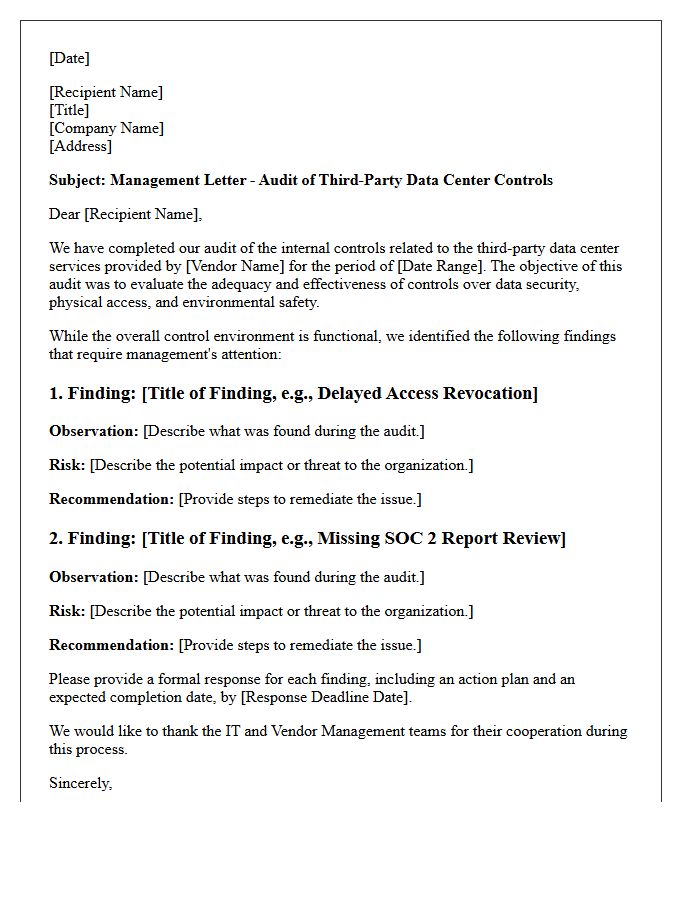
An audit management letter identifies critical vulnerabilities in a third-party data center infrastructure. It outlines security gaps, such as weak physical access controls, power redundancy failures, or inadequate disaster recovery protocols. Organizations must review these findings to assess vendor risk and ensure compliance with regulatory standards like SOC 2 or ISO 27001. Addressing these deficiencies is vital for maintaining data integrity and operational uptime. Failure to remediate reported issues can lead to significant data breaches or service interruptions, impacting your business's overall security posture and legal liability.
Letter of Observations Concerning Service Organization Control Gaps
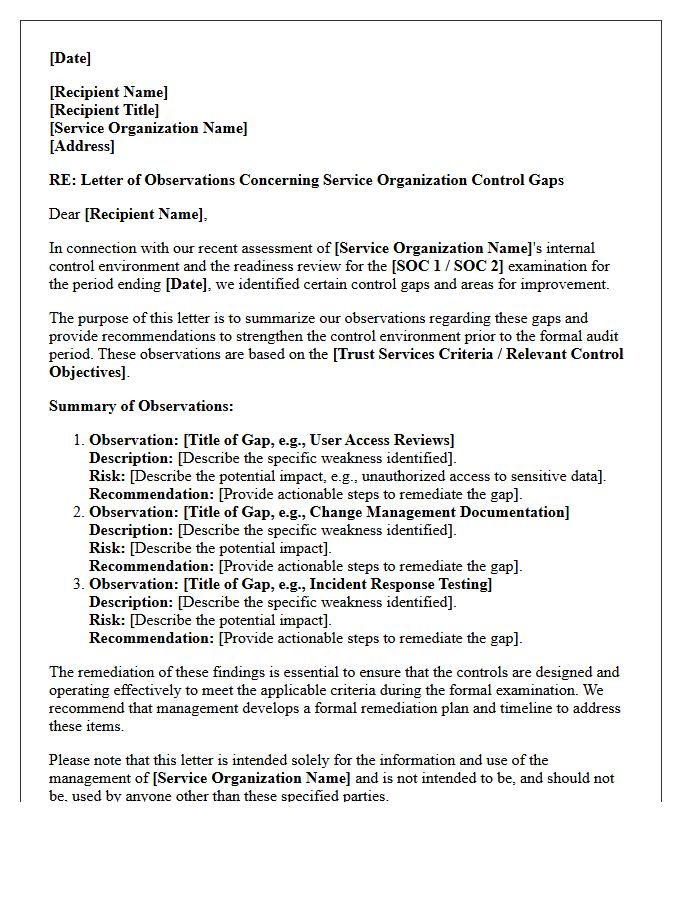
A Letter of Observations identifies internal control deficiencies discovered during a SOC audit. Unlike the formal report, this document highlights service organization control gaps that do not necessarily cause a qualification but require management's attention. It provides actionable insights for process improvement and risk mitigation. Understanding these findings is essential for strengthening your security posture and ensuring long-term operational compliance. Organizations should use these observations to remediate vulnerabilities before they escalate into significant system failures or formal audit exceptions in future reporting periods.
Management Letter on Subservice Organization Control Review Exceptions
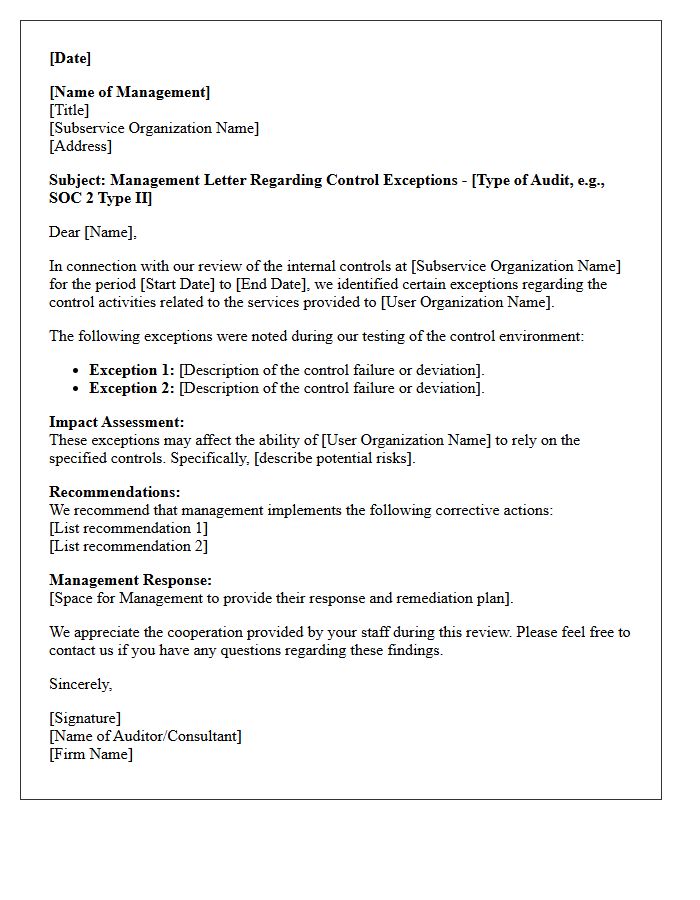
A Management Letter identifies control deficiencies found during a Subservice Organization Control (SOC) review. It highlights exceptions where internal processes failed to meet specific trust criteria or control objectives. Organizations must address these findings to mitigate risks and maintain compliance. This document provides critical insights for stakeholders to evaluate the reliability of a service provider's security and operational environment. Understanding these exceptions is essential for implementing remediation plans and ensuring long-term data integrity within the outsourcing ecosystem.
Assurance Letter on Third-Party Service Provider Remediation Efforts
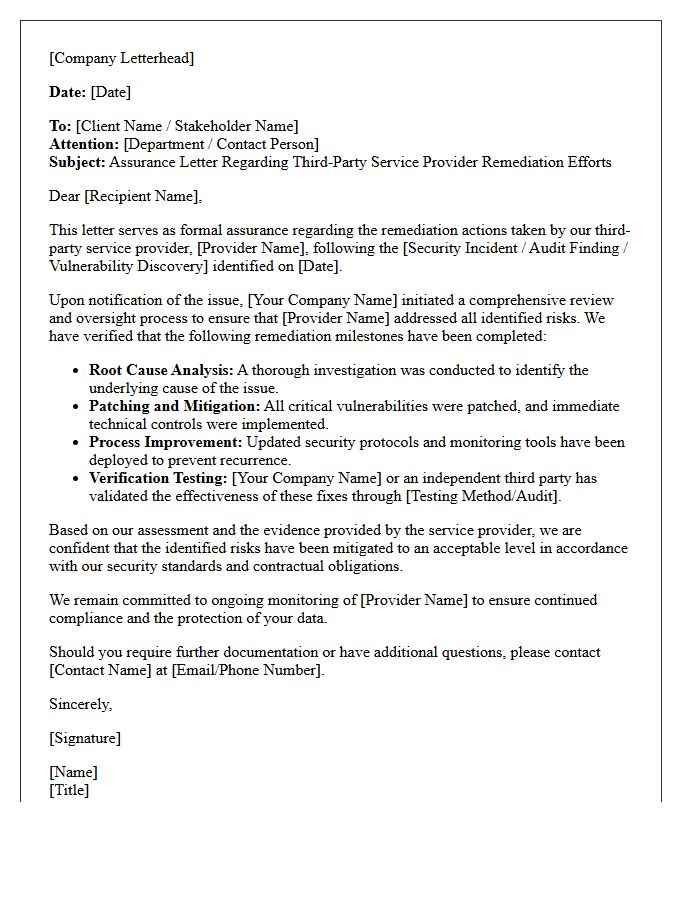
An Assurance Letter serves as formal verification that a Third-Party Service Provider has successfully addressed identified security vulnerabilities or compliance gaps. This document confirms that remediation efforts are complete, reducing systemic risk within the supply chain. It provides stakeholders with documented evidence of corrective actions, ensuring the provider meets established security standards and contractual obligations. Relying on these letters helps organizations maintain regulatory compliance and validate the effectiveness of a partner's internal controls without requiring a full re-audit of their systems.
Management Letter on Evaluation of SOC 2 Review Findings
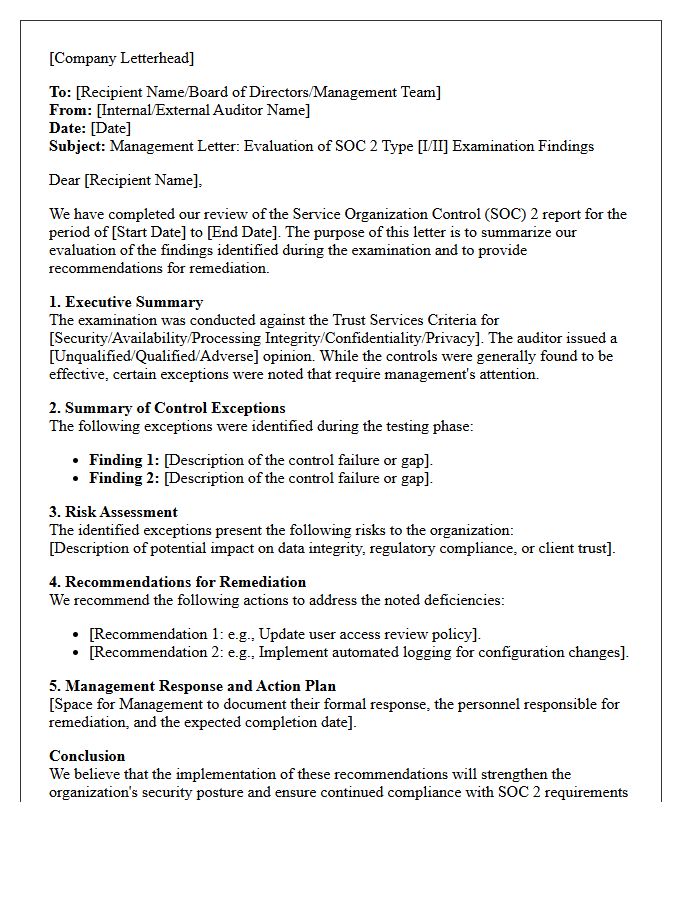
A Management Letter provides critical context regarding SOC 2 examination exceptions identified by the auditor. It serves as an official response where leadership outlines remediation plans and mitigating controls to address specific security gaps. Understanding this document is essential because it demonstrates a proactive commitment to risk management and continuous improvement. While the formal report lists deficiencies, the letter explains the business impact and corrective actions taken to maintain operational integrity and client trust. It is a vital tool for stakeholders evaluating the long-term effectiveness of a company's control environment.
Letter of Recommendations for Vendor Control Environment Improvements
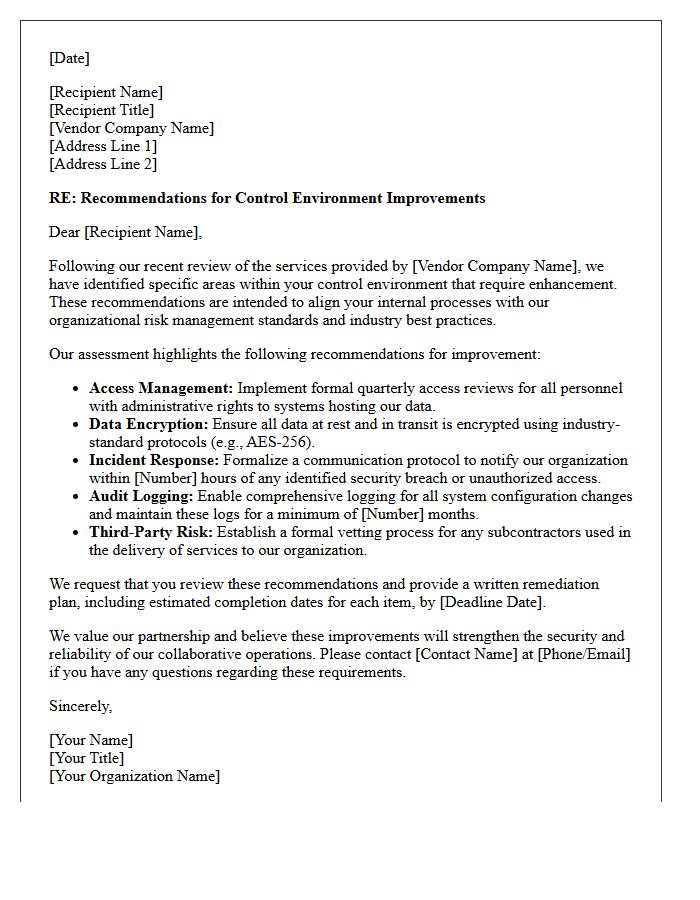
A Letter of Recommendation for vendor control environment improvements serves as a formal attestation of a service provider's commitment to security. It confirms that a vendor has successfully implemented remediation actions to address previously identified audit gaps or risks. This document is essential for maintaining regulatory compliance and building stakeholder trust. By validating enhanced internal controls, it ensures that third-party partnerships align with corporate risk management standards, providing assurance that sensitive data remains protected within an optimized and mature operational framework.
Management Letter on Outsourced Human Resources Service Organization Controls
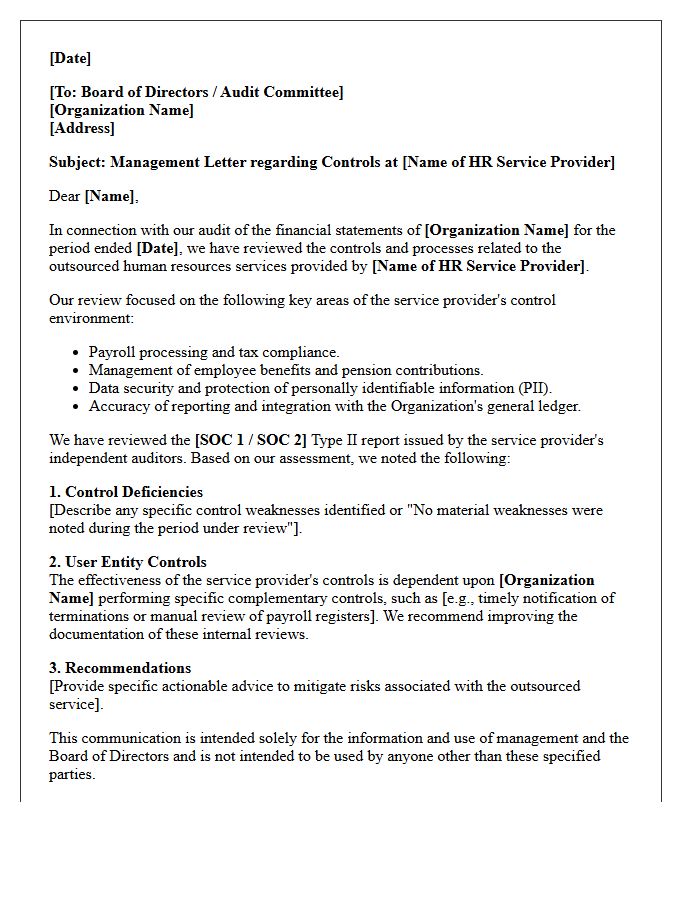
A Management Letter provides essential insights into the internal control environment of an outsourced human resources service provider. It summarizes findings from a SOC 1 or SOC 2 report, highlighting identified deficiencies, operational risks, and recommendations for improvement. Organizations rely on this document to assess how well a vendor manages payroll, data privacy, and compliance. Understanding these control weaknesses is crucial for user entities to implement necessary complementary controls, ensuring overall financial reporting accuracy and regulatory adherence within their HR outsourcing partnerships.
What is a Management Letter on Third-Party Service Organization Control Review findings?
A Management Letter is a formal document issued by auditors that outlines specific deficiencies, control gaps, and operational weaknesses identified during a SOC 1 or SOC 2 examination of a service provider. It provides detailed context for findings that may not reach the threshold of a qualified opinion but still require remediation to ensure data security and compliance.
How should an organization respond to findings in a SOC Management Letter?
Organizations should provide a formal Management Response for each finding, detailing the corrective action plan, the individual responsible for remediation, and a specific timeline for implementation. This response demonstrates to stakeholders and user entities that the service organization is proactively addressing identified risks and strengthening its internal control environment.
What is the difference between a SOC report opinion and a Management Letter finding?
The SOC report opinion is a high-level conclusion on whether controls were fairly presented and effective, while a Management Letter contains granular observations on minor exceptions or process improvements. While a clean (unqualified) opinion is possible even with Management Letter findings, these findings serve as an early warning system for potential future control failures.
Why are Complementary User Entity Controls (CUECs) included in control review findings?
CUECs are included because the effectiveness of a service organization's controls often depends on the user entity implementing specific internal procedures. Findings often highlight gaps where the service provider's controls are functioning correctly, but the client has failed to perform their required oversight duties, such as reviewing access logs or authorizing user terminations.
What are the risks of ignoring findings in a Third-Party Service Organization Control Review?
Ignoring findings can lead to recurring exceptions in future SOC audits, resulting in a qualified opinion or a "disclaimer of opinion," which damages market reputation. Furthermore, unaddressed control weaknesses increase the likelihood of data breaches, financial misstatements, and regulatory non-compliance for both the service provider and its client base.

Comments