
A Fraud and Illegal Acts Representation Letter is a critical formal document where management confirms their responsibility for internal controls and discloses any known irregularities to auditors. This ensures transparency and legal compliance during financial examinations. Understanding these protocols protects organizational integrity and simplifies the audit process. Below are some ready to use template.
Image cover: Management Representation Letter Guide: Fraud and Illegal Acts Reporting Templates
Letter Samples List
- Management Fraud And Illegal Acts Representation Letter
- Executive Anti-Corruption Compliance Representation Letter
- Financial Statement Fraud And Irregularities Representation Letter
- Asset Misappropriation And Defalcation Representation Letter
- Regulatory Noncompliance And Illegal Acts Representation Letter
- Internal Control Fraud Vulnerability Representation Letter
- Whistleblower Allegations And Fraud Inquiry Letter
- Anti-Money Laundering And Illegal Acts Representation Letter
- Related Party Fraudulent Transactions Representation Letter
- Post-Audit Fraud Discovery Representation Letter
- Corporate Bribery And Illegal Acts Representation Letter
- Statutory Fraud Disclosure Representation Letter
Management Fraud And Illegal Acts Representation Letter
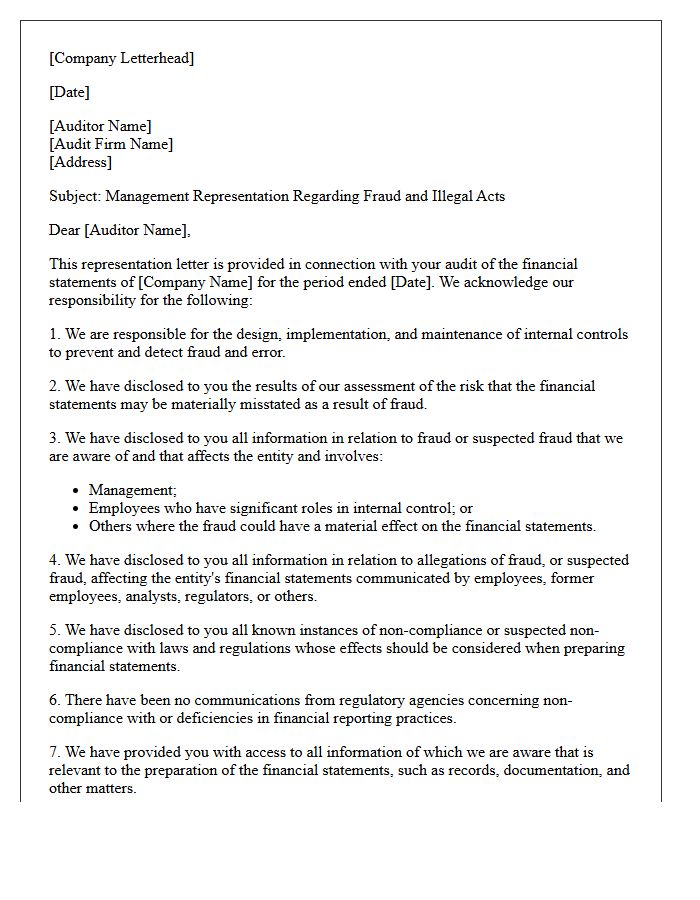
The Management Representation Letter is a mandatory document provided by executives to external auditors during an audit. It serves as written confirmation that management has disclosed all known instances of fraud, suspected illegal acts, and financial irregularities. By signing this letter, leadership acknowledges their primary responsibility for maintaining internal controls and ensuring the accuracy of financial statements. This formal attestation provides essential audit evidence, protecting auditors by confirming that no material information regarding misconduct or non-compliance with laws has been intentionally withheld during the examination process.
Executive Anti-Corruption Compliance Representation Letter
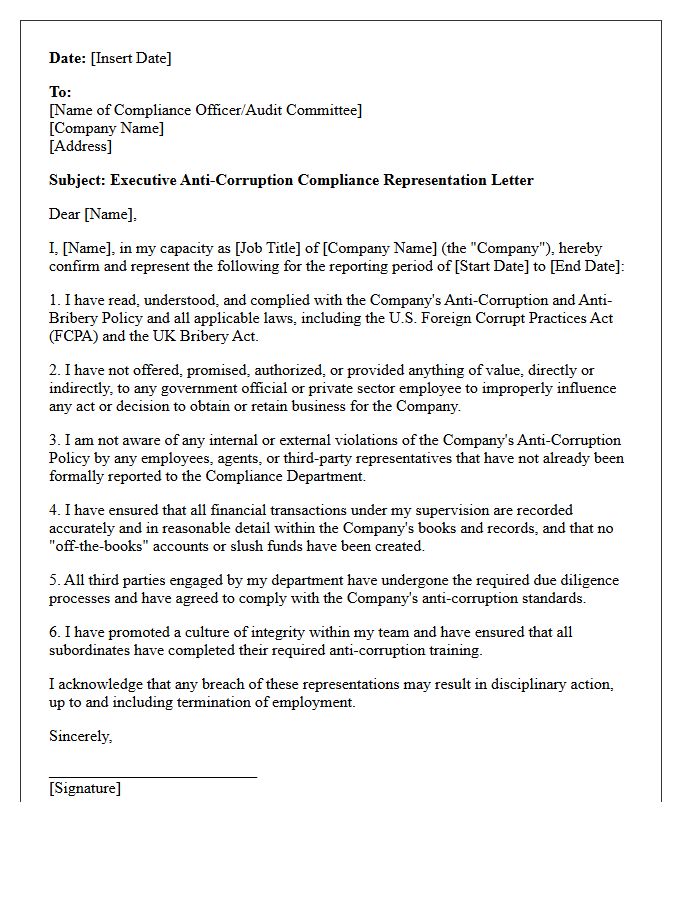
An Executive Anti-Corruption Compliance Representation Letter is a legal affirmation signed by high-level officers to confirm adherence to FCPA and local bribery laws. This document ensures that internal controls are effective and no illicit payments were authorized. It is a critical component of corporate governance, shifting personal accountability to executives during audits or due diligence processes. By signing, leadership verifies the integrity of financial records, mitigating regulatory risks and protecting the organization from severe legal penalties or reputational damage in global operations.
Financial Statement Fraud And Irregularities Representation Letter
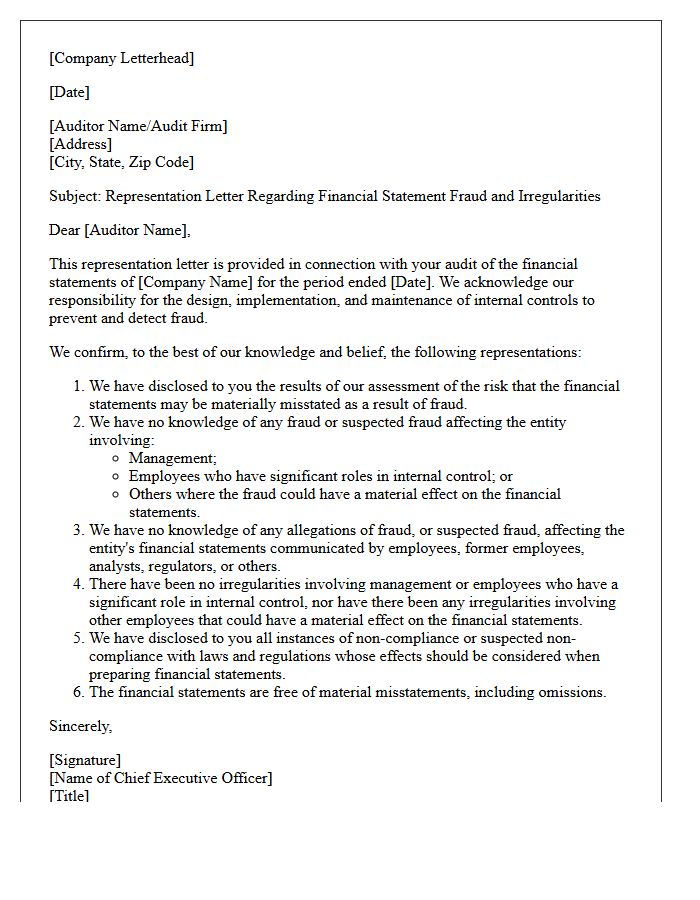
A Financial Statement Fraud and Irregularities Representation Letter is a formal document where management confirms their responsibility for the integrity of financial data. It serves as a legal attestation to auditors that all material facts, potential risks, and known instances of non-compliance have been fully disclosed. This letter protects auditors by documenting management's claims regarding the absence of deceptive accounting practices. It is a critical component of the audit trail, ensuring accountability for any misstatements or intentional omissions that could mislead stakeholders or affect the organization's financial transparency.
Asset Misappropriation And Defalcation Representation Letter
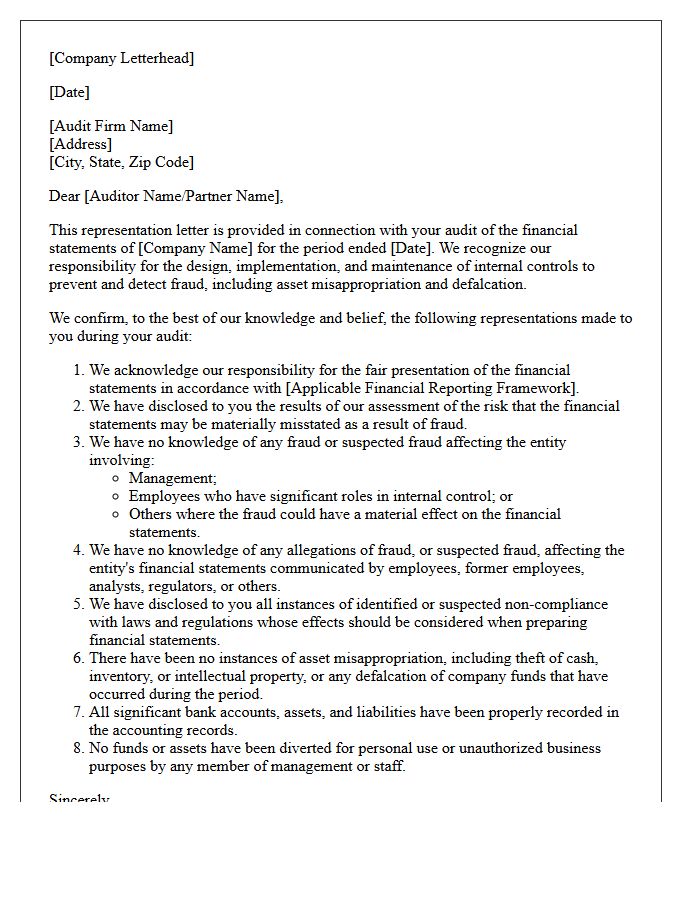
An Asset Misappropriation and Defalcation Representation Letter is a formal document where management confirms their responsibility for preventing and detecting internal fraud. It serves as legal evidence during audits, acknowledging that all known instances of embezzlement or theft have been disclosed. By signing, officials attest to the integrity of internal controls and the accuracy of financial statements. This letter protects auditors by shifting the accountability for undiscovered irregularities back to the organization's leadership, ensuring transparency regarding the unauthorized use of company resources.
Regulatory Noncompliance And Illegal Acts Representation Letter
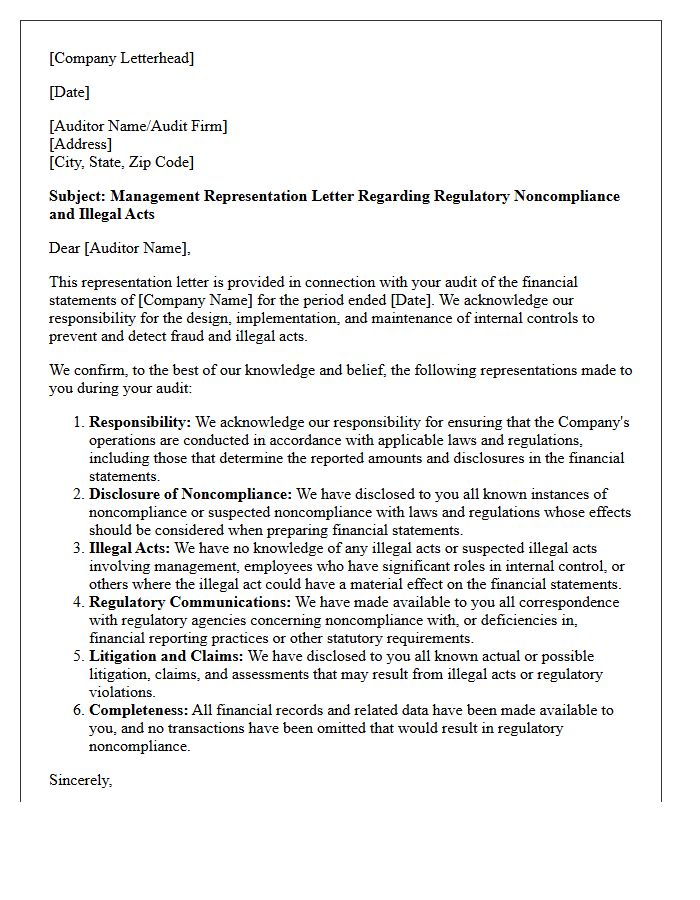
A regulatory noncompliance and illegal acts representation letter is a formal document provided by management to auditors. It confirms that the entity has disclosed all known or suspected instances of noncompliance with laws and regulations. This letter serves as critical audit evidence, shifting the responsibility for reporting legal violations to the client. It ensures transparency regarding potential liabilities, fines, or litigation that could materially affect financial statements. Failure to provide this signed representation can result in a scope limitation, potentially preventing the auditor from issuing an unmodified opinion on the financial reports.
Internal Control Fraud Vulnerability Representation Letter
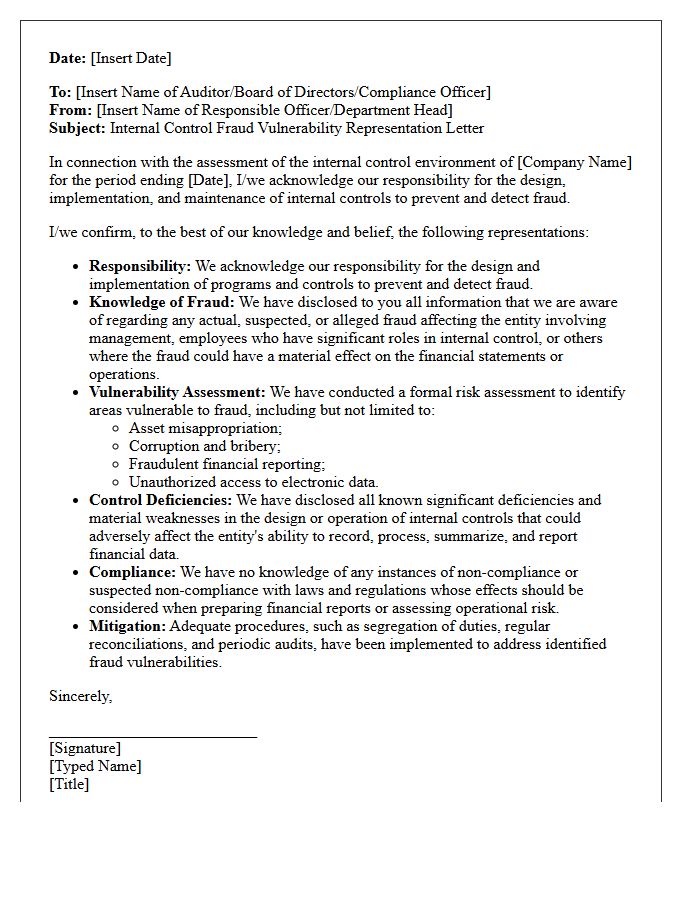
An Internal Control Fraud Vulnerability Representation Letter is a formal document where management acknowledges its responsibility for designing and maintaining effective internal controls. It serves as a written confirmation to auditors that the organization has disclosed all known fraud risks and material weaknesses. This letter ensures accountability, reduces information asymmetry, and provides a legal basis for assessing the entity's risk environment. Understanding these disclosures is critical for maintaining financial integrity and protecting stakeholders from potential asset misappropriation or reporting inaccuracies.
Whistleblower Allegations And Fraud Inquiry Letter
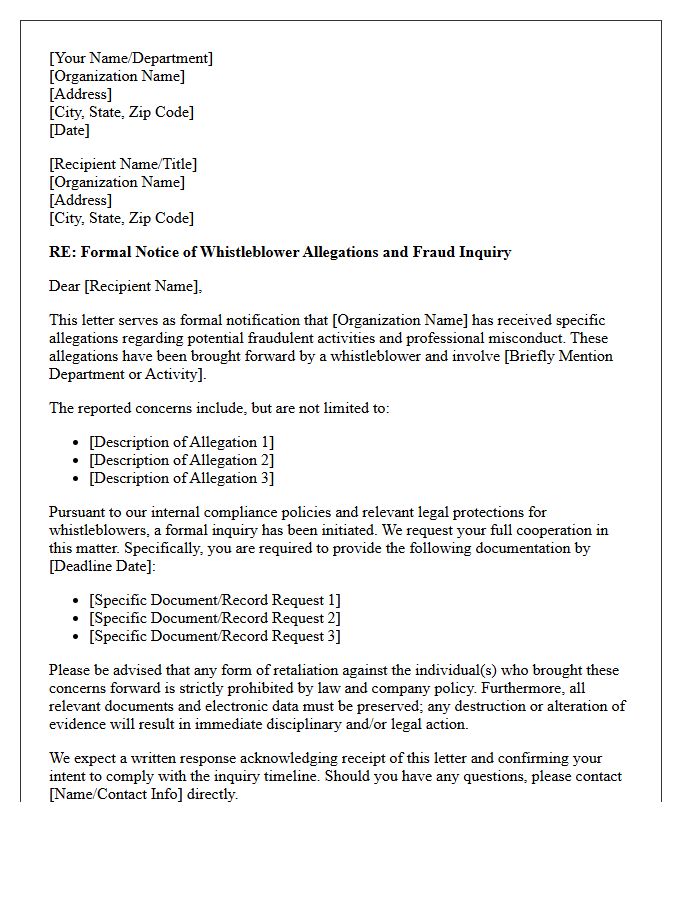
A whistleblower allegations and fraud inquiry letter is a formal notice used to investigate reports of misconduct or financial illegalities within an organization. These documents trigger internal audits to verify claims of corruption, embezzlement, or regulatory breaches. Companies must prioritize confidentiality and legal compliance to prevent retaliation against the reporter. Understanding the specific allegations allows legal teams to assess liability, preserve critical evidence, and ensure corporate accountability. Promptly addressing these inquiries is essential for maintaining institutional integrity and avoiding severe government penalties or reputational damage during regulatory scrutiny.
Anti-Money Laundering And Illegal Acts Representation Letter
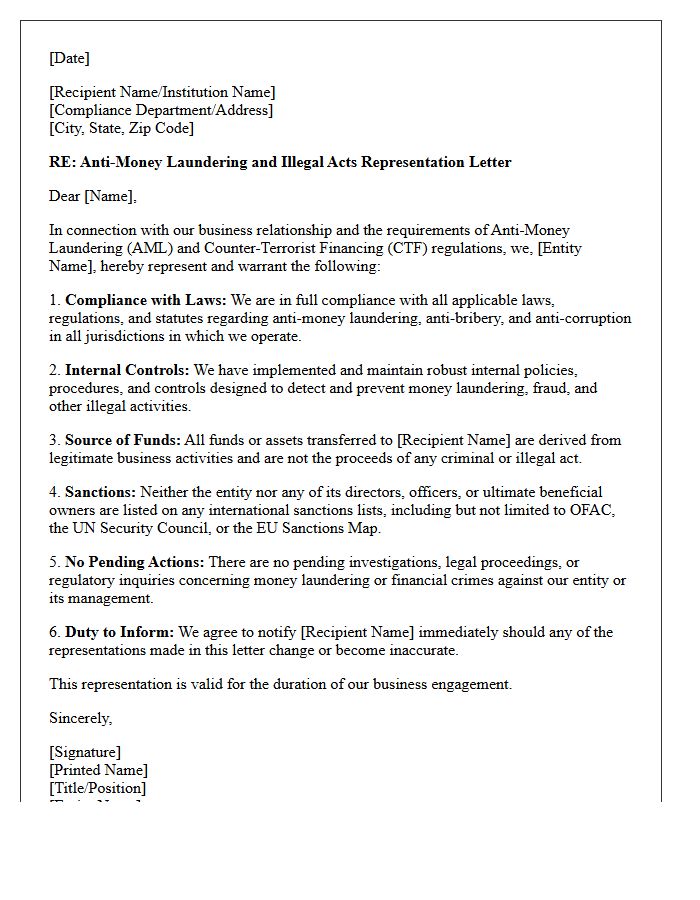
An Anti-Money Laundering and Illegal Acts Representation Letter is a compliance document where management formally confirms that an entity operates within legal frameworks. It serves as written assurance to auditors or financial institutions that no illicit activities, such as money laundering or bribery, have occurred. This letter establishes accountability, protecting stakeholders by verifying that internal controls effectively detect financial crimes. Providing false information in this representation can lead to severe legal liabilities and regulatory penalties for the organization and its leadership.
Related Party Fraudulent Transactions Representation Letter
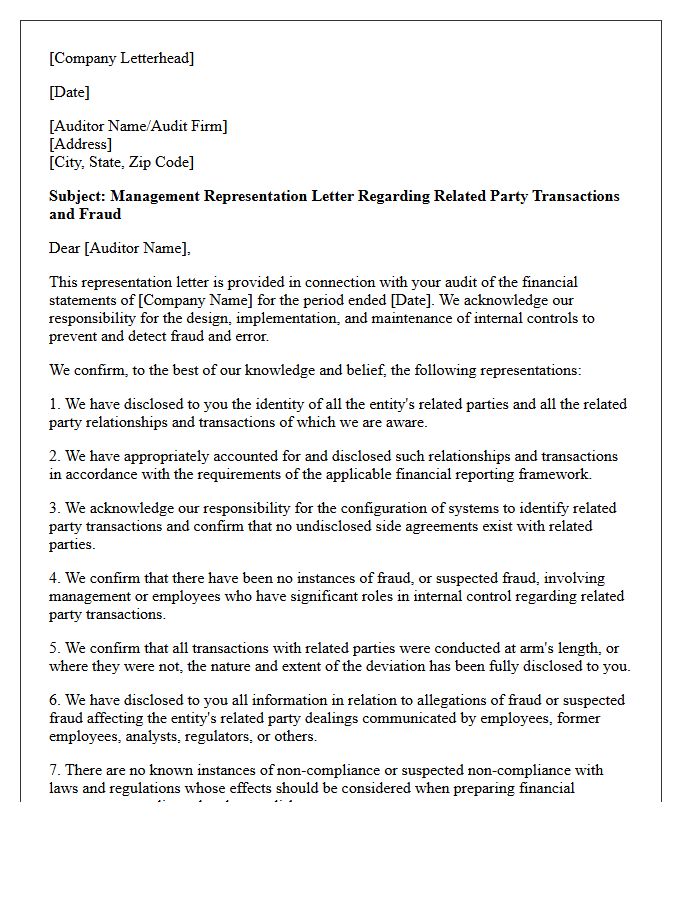
A Related Party Fraudulent Transactions Representation Letter is a formal document provided by management to auditors. It confirms that all related party relationships and transactions have been fully disclosed in accordance with financial reporting frameworks. The letter serves as a critical internal control to prevent undisclosed conflicts of interest and potential asset misappropriation. By signing this, executives acknowledge their responsibility for identifying and recording these high-risk activities, reducing the likelihood of material misstatement due to fraudulent financial reporting or hidden self-dealing within the corporate structure.
Post-Audit Fraud Discovery Representation Letter
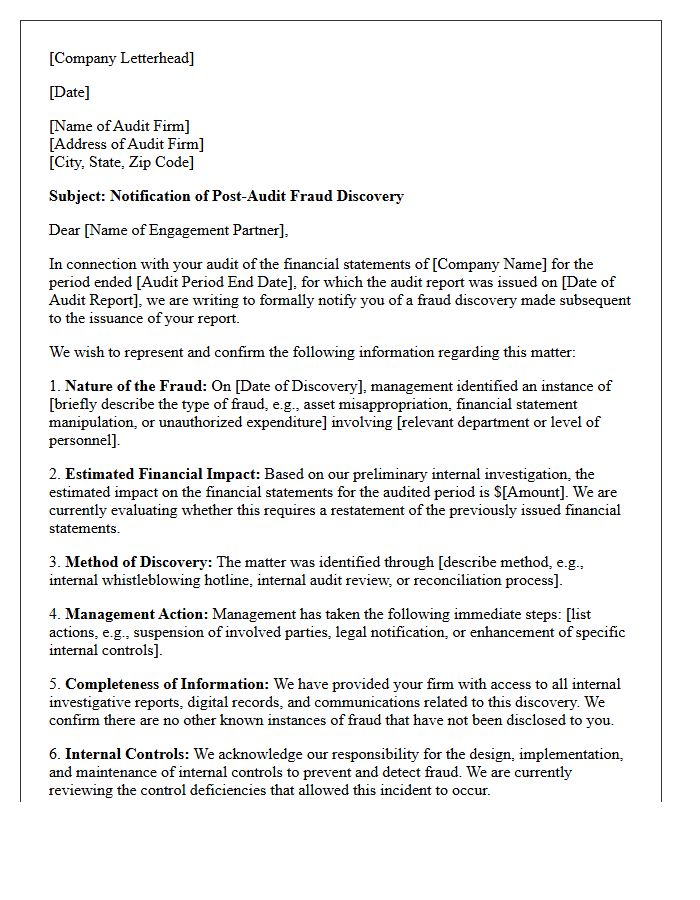
A Post-Audit Fraud Discovery Representation Letter is a legal document issued when material irregularities or deceptive financial acts are identified after an audit is finalized. It serves to protect the auditor by formalizing management's acknowledgment of the specific fraudulent activities uncovered. This letter confirms that all relevant documentation has been disclosed and clarifies liability regarding the misstated financial records. Understanding this letter is essential for maintaining regulatory compliance and establishing clear accountability between the entity and the auditing firm following the discovery of intentional financial manipulation.
Corporate Bribery And Illegal Acts Representation Letter
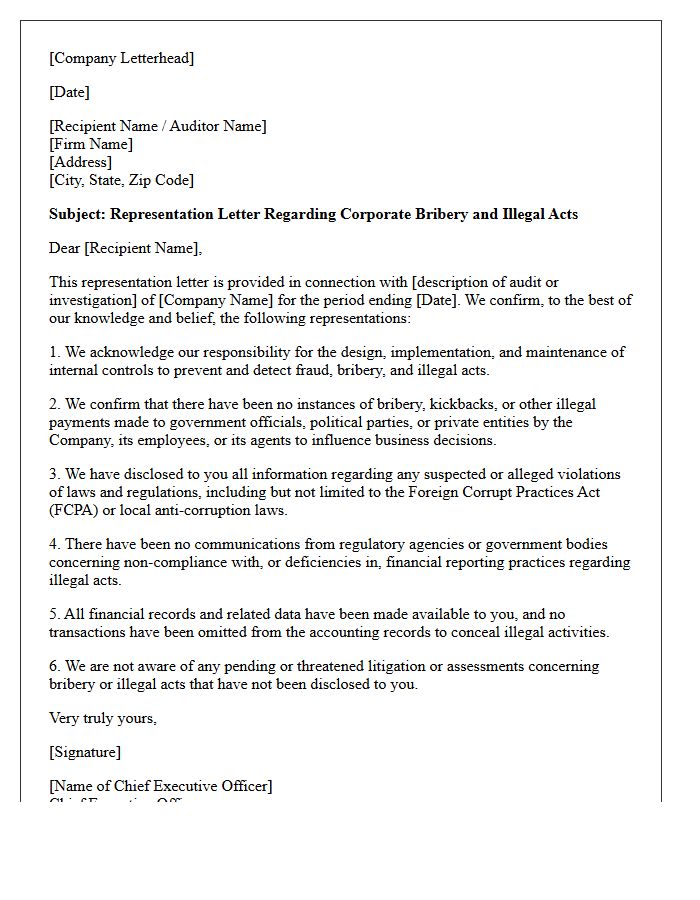
A Corporate Bribery and Illegal Acts Representation Letter is a formal document signed by management to confirm their responsibility for internal controls and ethical compliance. It serves as legal assurance to auditors that the company has disclosed all known or suspected instances of corruption, kickbacks, or regulatory violations. This letter protects auditors by establishing a clear written record of management's honesty regarding financial integrity. Failing to provide accurate information in this statement can lead to severe legal liabilities and regulatory sanctions for the organization and its executives.
Statutory Fraud Disclosure Representation Letter
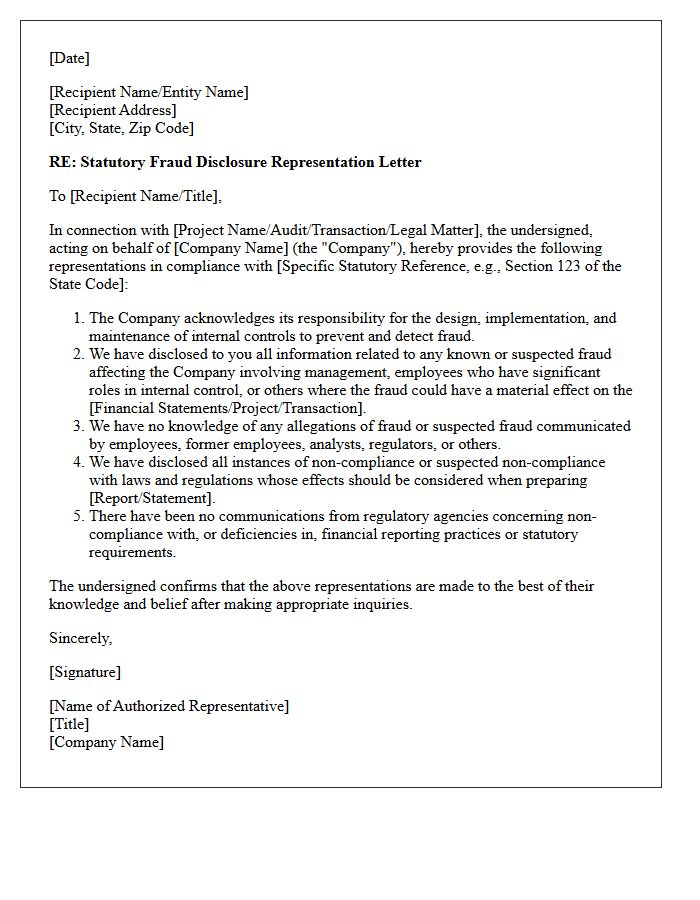
A Statutory Fraud Disclosure Representation Letter is a formal document required during real estate transactions or corporate audits to confirm that all material facts have been disclosed. Its primary purpose is to protect parties from misrepresentation by legally certifying that no known defects or fraudulent activities exist. By signing this letter, the party assumes legal liability for the accuracy of the information provided. It serves as a vital safeguard to ensure transparency, mitigate risk, and establish a clear legal recourse if hidden liabilities or intentional deceptions are later discovered.
What is a Fraud and Illegal Acts Representation Letter?
A Fraud and Illegal Acts Representation Letter is a formal document provided by management to external auditors confirming that the organization has disclosed all known instances, allegations, and risks of fraud or non-compliance with laws and regulations during the audit period.
Who is responsible for signing the fraud representation letter?
Typically, the Chief Executive Officer (CEO) and the Chief Financial Officer (CFO), or those charged with governance, are responsible for signing the letter to acknowledge management's responsibility for the design and implementation of internal controls to prevent and detect fraud.
What specific disclosures are required in an illegal acts representation letter?
Management must disclose all identified or suspected fraud affecting the entity, communications from employees or regulators regarding financial improprieties, and any instances of non-compliance with laws and regulations whose effects should be considered for disclosure in the financial statements.
Why do auditors require a written representation regarding fraud?
Auditors require this letter as essential audit evidence under professional standards (such as ISA 580 or AU-C 580) to confirm oral representations, reduce misunderstandings, and document management's acknowledgement of their legal and ethical obligations.
Does signing a fraud representation letter exempt management from liability?
No, signing the letter does not exempt management from liability; rather, it reinforces their accountability. If material misstatements are later discovered due to undisclosed fraud, the letter serves as evidence that management misrepresented the entity's financial health to the auditors.

Comments