
Maximize your investment returns by implementing a sophisticated tax-loss harvesting strategy to offset capital gains and reduce taxable income. Our advisory letter provides expert insights into portfolio rebalancing and strategic asset location to enhance long-term wealth preservation. Learn how to navigate market volatility while improving your after-tax performance effectively. To help you get started, below are some ready to use template.
Image cover: Strategic Client Communication: Tax-Loss Harvesting Advisory Templates and Samples
Letter Samples List
- Year-End Tax-Loss Harvesting Advisory Letter
- Private Banking Tax-Loss Harvesting Strategy Letter
- Wealth Management Portfolio Optimization and Tax-Loss Harvesting Letter
- High-Net-Worth Client Tax-Loss Harvesting Recommendation Letter
- Fourth-Quarter Capital Gains Offset and Tax-Loss Harvesting Letter
- Market Volatility Tax-Loss Harvesting Opportunity Letter
- Strategic Tax-Loss Harvesting and Reinvestment Advisory Letter
- Institutional Wealth Tax-Loss Harvesting Planning Letter
- Tax-Loss Harvesting and Portfolio Rebalancing Advisory Letter
- Fiduciary Trust Tax-Loss Harvesting Strategy Letter
- Corporate Executive Tax-Loss Harvesting Advisory Letter
- Mid-Year Tax-Loss Harvesting Review Letter
Year-End Tax-Loss Harvesting Advisory Letter
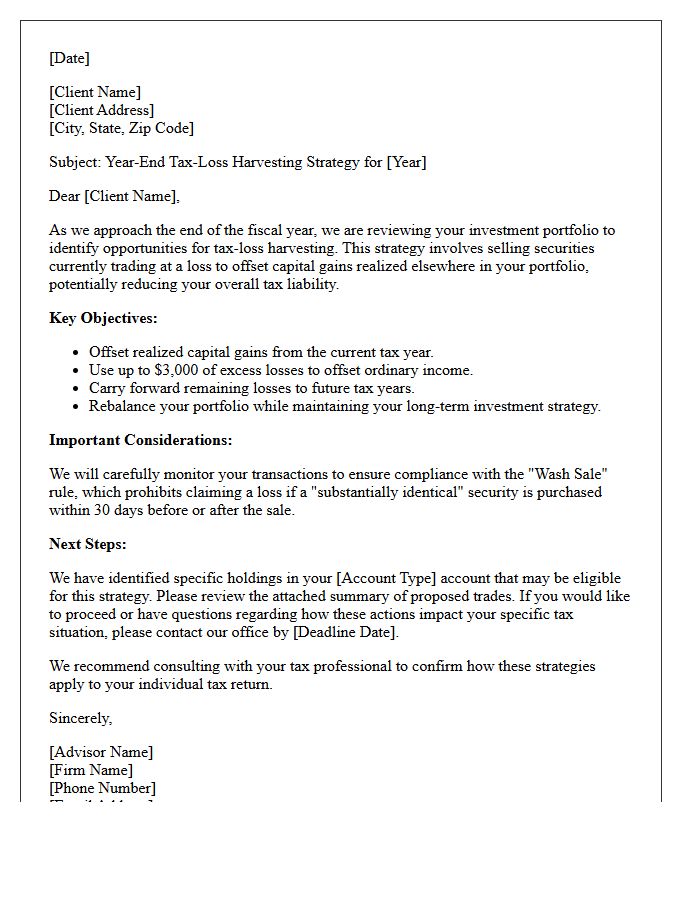
A year-end tax-loss harvesting advisory letter provides strategic guidance on selling depreciated assets to offset realized capital gains. This proactive tax planning tool helps investors minimize their annual liability by neutralizing taxable profits with recorded losses. To ensure compliance, the letter outlines essential IRS wash-sale rules, preventing immediate repurchases of identical securities within thirty days. Implementing these recommendations before the December 31 deadline optimizes your portfolio's after-tax returns and enhances long-term wealth preservation. Consult your financial advisor to review specific trade executions and personalized fiscal benefits.
Private Banking Tax-Loss Harvesting Strategy Letter
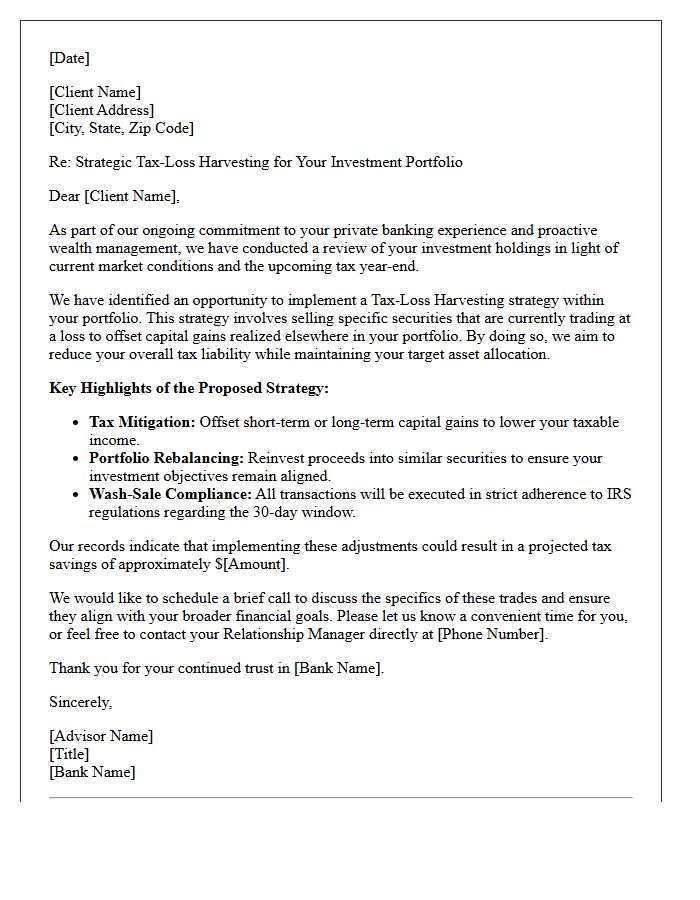
A private banking tax-loss harvesting strategy letter outlines how investors can offset capital gains by selling underperforming assets at a loss. This document highlights the tax efficiency of a portfolio by reinvesting proceeds into similar securities to maintain market exposure. It is a sophisticated wealth management tool designed to reduce overall tax liability while enhancing long-term after-tax returns. Clients receive these updates to understand how strategic losses can preserve capital and improve portfolio performance without violating wash-sale rules mandated by tax authorities.
Wealth Management Portfolio Optimization and Tax-Loss Harvesting Letter
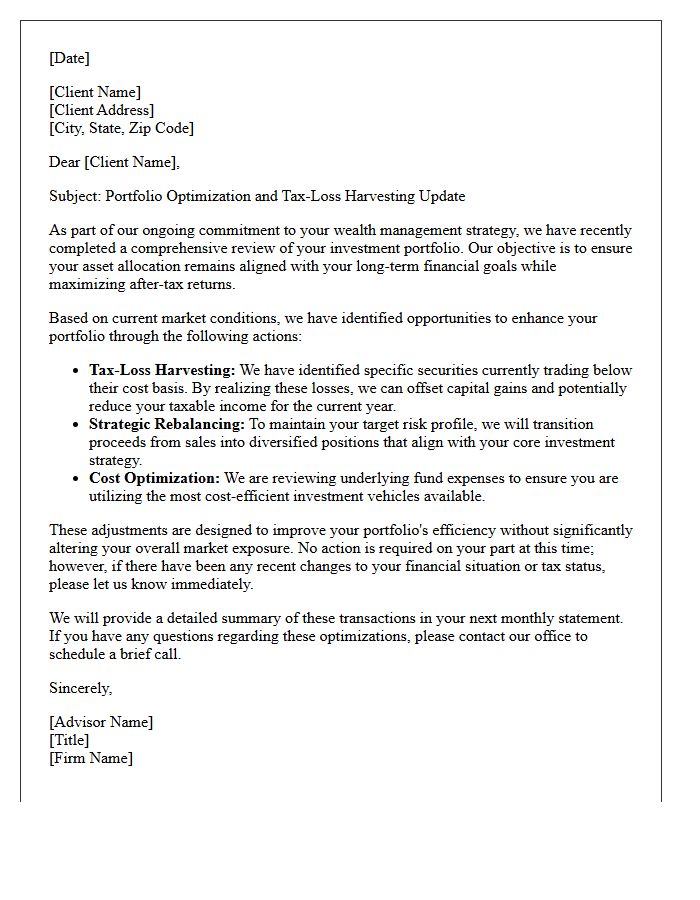
A Wealth Management Portfolio Optimization strategy ensures your assets align with risk tolerance while maximizing returns through strategic diversification. A critical component is Tax-Loss Harvesting, which involves selling underperforming investments to offset capital gains and reduce taxable income. By rebalancing frequently and capturing losses, investors enhance long-term performance without altering their target allocation. Our formal letter outlines how these integrated techniques minimize tax liabilities and improve overall portfolio efficiency, providing a clear roadmap for sustainable financial growth and sophisticated wealth preservation tailored to your specific investment objectives.
High-Net-Worth Client Tax-Loss Harvesting Recommendation Letter
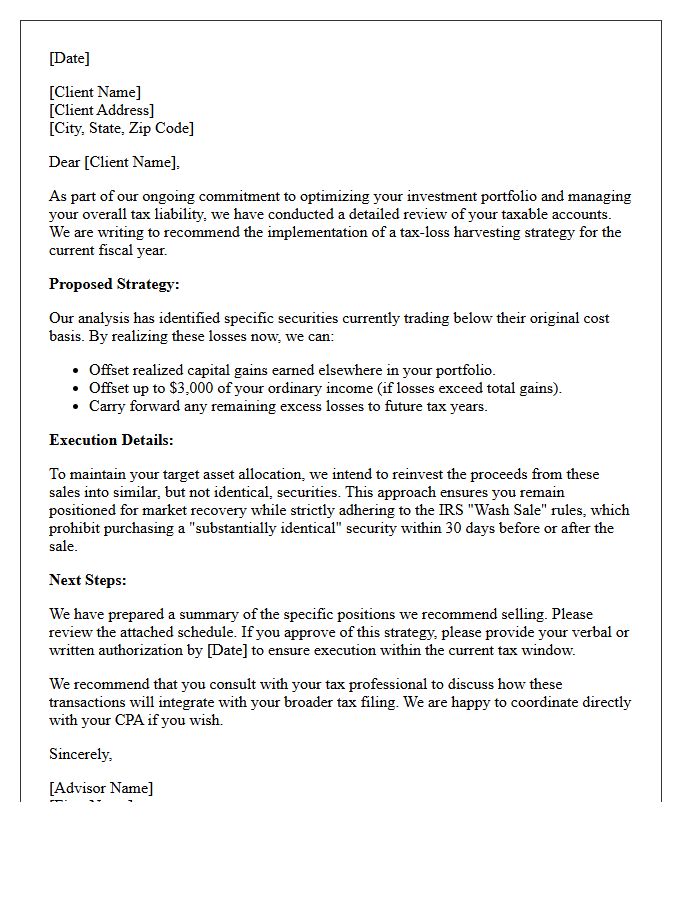
A recommendation letter for high-net-worth clients regarding tax-loss harvesting outlines a strategic approach to offset capital gains with realized losses. This communication emphasizes portfolio rebalancing while maintaining market exposure to maximize after-tax returns. It is crucial to address the Wash-Sale Rule to prevent the disallowance of tax deductions. By systematically selling underperforming assets, advisors help affluent investors reduce taxable income liability and enhance long-term wealth preservation. Clear documentation of these strategies ensures compliance and aligns investment performance with sophisticated tax planning objectives.
Fourth-Quarter Capital Gains Offset and Tax-Loss Harvesting Letter
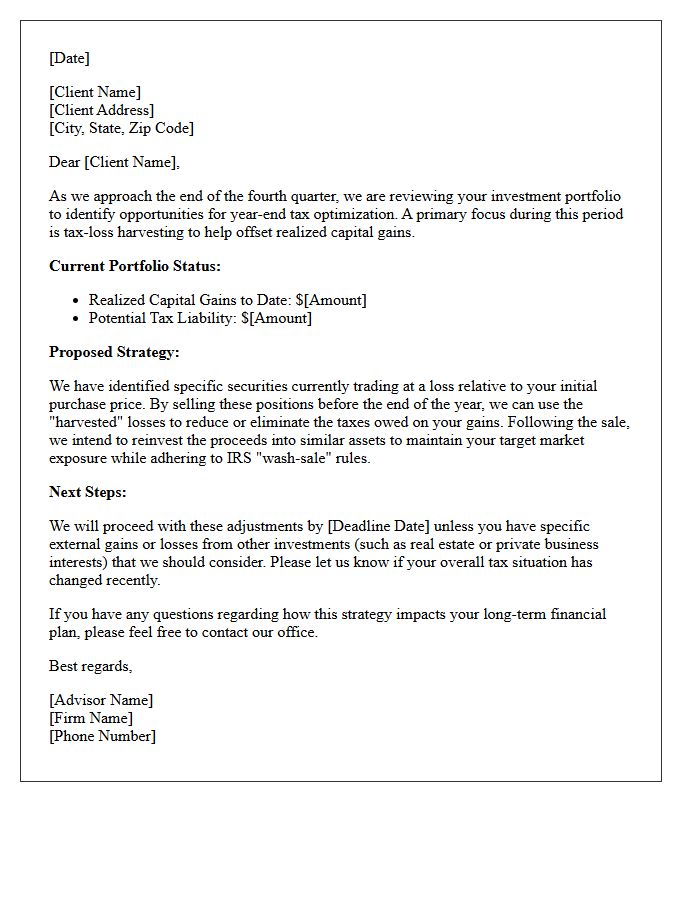
Investors utilize a tax-loss harvesting letter to strategically offset realized capital gains by selling underperforming assets at a loss. During the fourth-quarter, this process helps minimize annual tax liabilities by reducing taxable income. It is essential to finalize these transactions before the year-end deadline while adhering to the wash-sale rule, which prohibits repurchasing identical securities within thirty days. Proper documentation ensures effective capital gains offset, allowing portfolios to be rebalanced efficiently while maximizing after-tax returns for the fiscal year.
Market Volatility Tax-Loss Harvesting Opportunity Letter
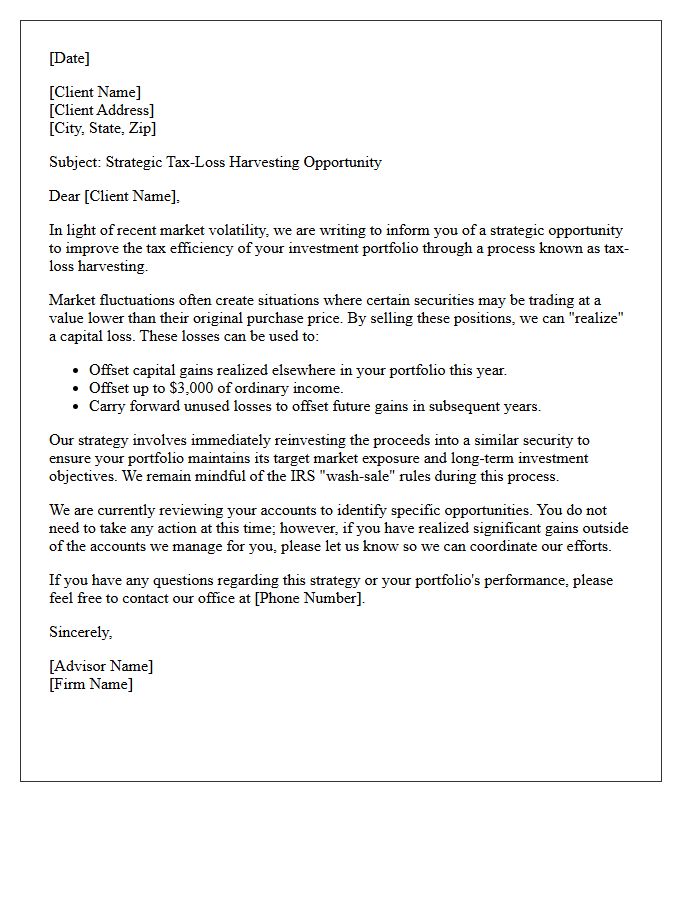
Investors should recognize that a Market Volatility Tax-Loss Harvesting letter outlines a strategic opportunity to offset capital gains. During periods of market instability, selling underperforming assets at a loss allows you to reduce your taxable income. This tax-efficiency strategy enables you to reinvest proceeds into similar securities, maintaining your market position while lowering your overall tax liability. It is a critical portfolio management tool used to turn temporary market downturns into long-term financial advantages. Always consult a professional to ensure compliance with wash-sale regulations and specific investment goals.
Strategic Tax-Loss Harvesting and Reinvestment Advisory Letter
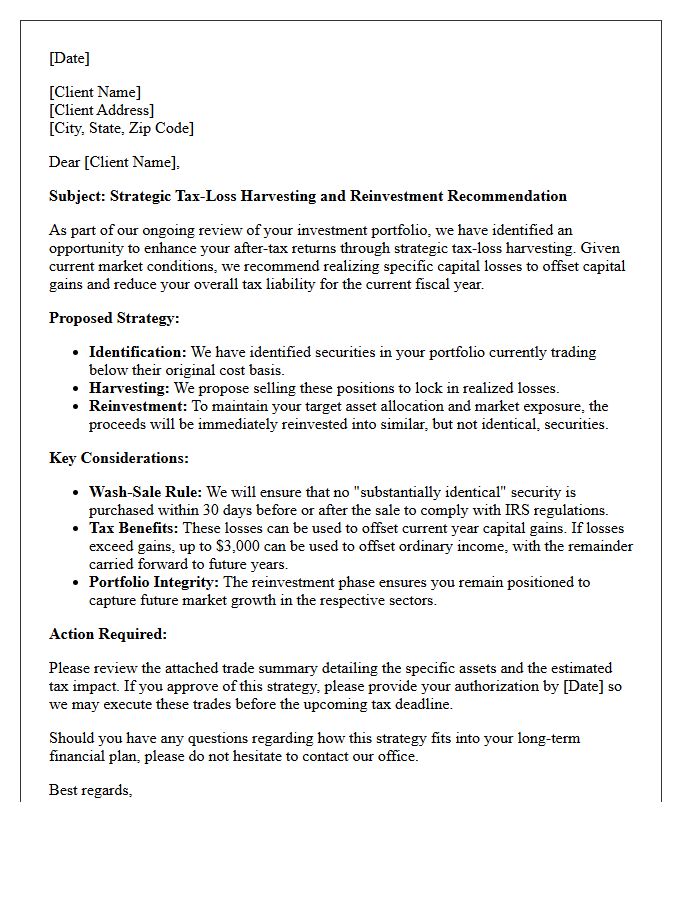
A strategic tax-loss harvesting and reinvestment advisory letter provides essential guidance on selling underperforming assets to offset capital gains. This practice reduces your overall tax liability while ensuring your portfolio remains balanced through immediate reinvestment. By identifying "paper losses" to lower taxable income, investors can enhance long-term after-tax returns. It is crucial to navigate the IRS wash-sale rule, which prohibits repurchasing identical securities within 30 days. Professional advisory letters simplify these complex regulations, helping you maintain market exposure while optimizing your financial efficiency during market volatility.
Institutional Wealth Tax-Loss Harvesting Planning Letter
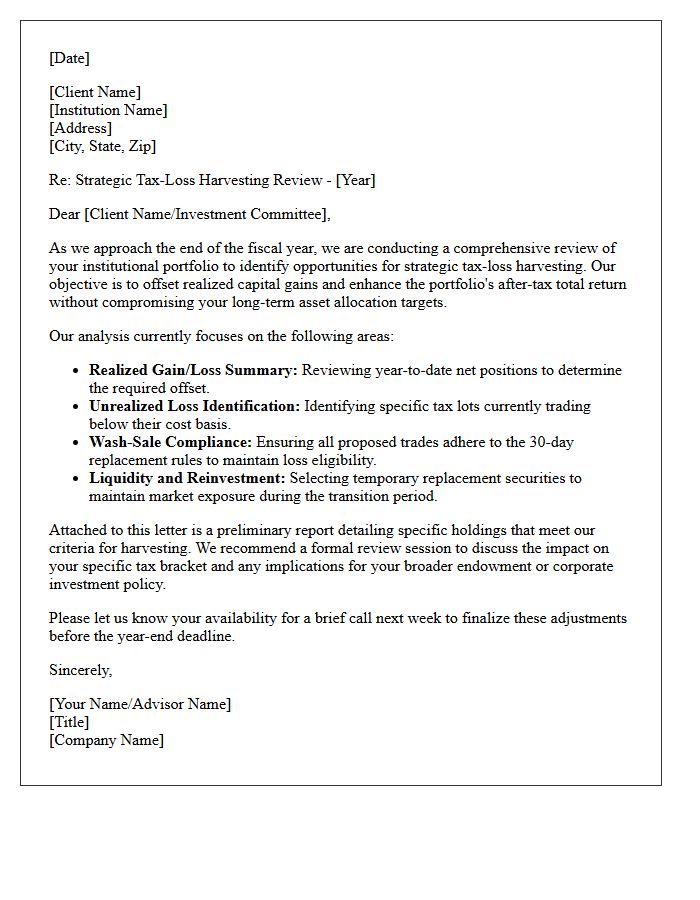
An Institutional Wealth Tax-Loss Harvesting Planning Letter is a strategic document used to offset capital gains by realizing investment losses. This process helps minimize tax liabilities while maintaining market exposure through specific reinvestment rules. The letter outlines the systematic identification of underperforming assets and the coordinated execution of trades before year-end. By integrating tax efficiency into institutional portfolio management, investors can significantly enhance long-term after-tax returns and preserve capital across diverse holdings.
Tax-Loss Harvesting and Portfolio Rebalancing Advisory Letter
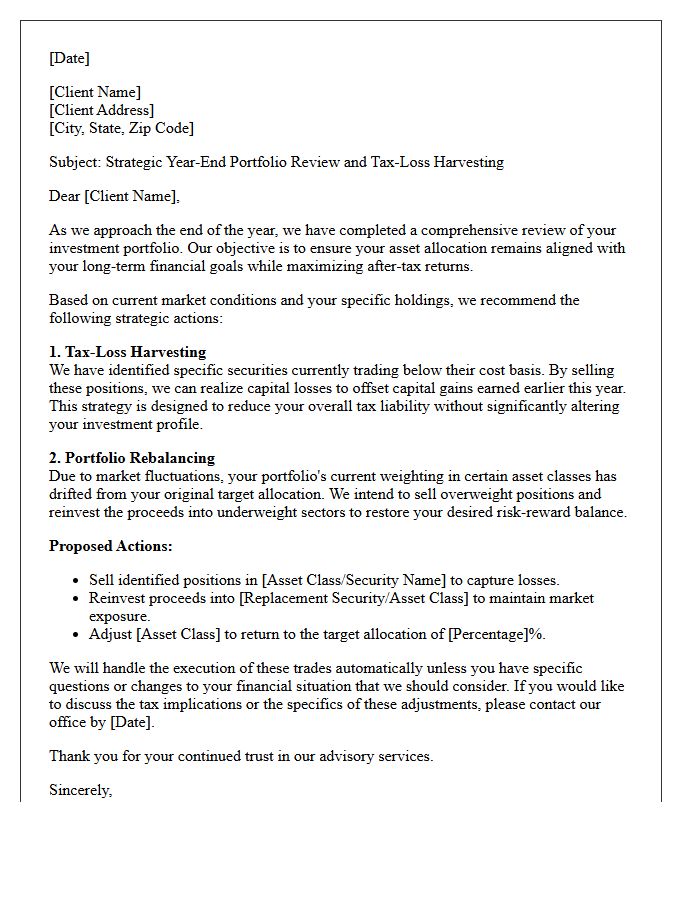
A Tax-Loss Harvesting and Portfolio Rebalancing Advisory Letter provides essential guidance on optimizing investment returns. It focuses on tax-loss harvesting, a strategy used to offset capital gains by selling underperforming assets at a loss. The letter also outlines necessary portfolio rebalancing to maintain your desired risk profile and asset allocation. Following these professional recommendations helps minimize tax liabilities while ensuring your long-term financial objectives remain on track. Regularly reviewing these updates allows investors to strategically enhance their after-tax wealth through disciplined portfolio management and proactive market adjustments.
Fiduciary Trust Tax-Loss Harvesting Strategy Letter
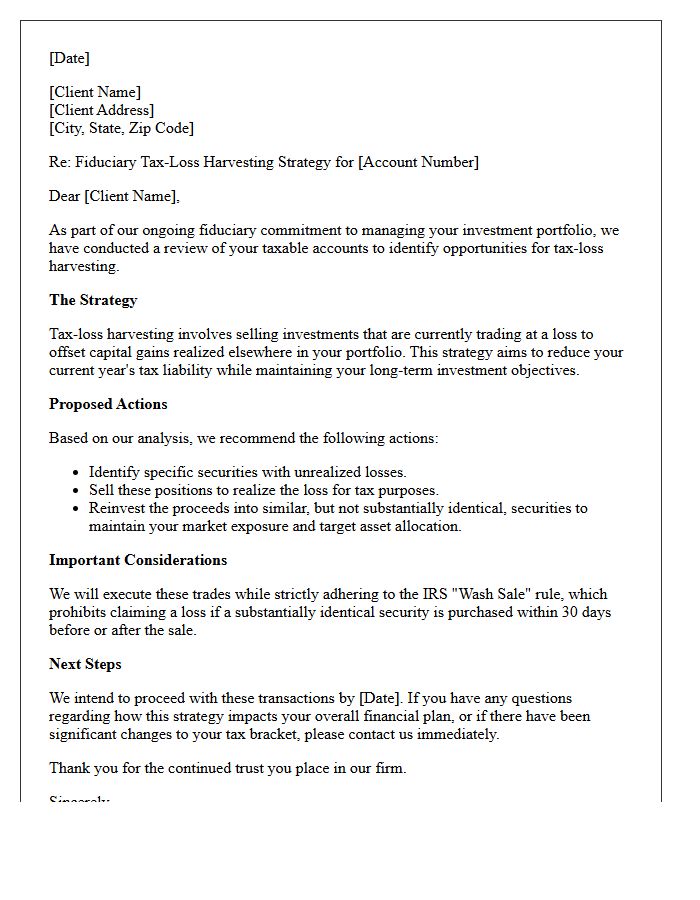
The Fiduciary Trust Tax-Loss Harvesting Strategy Letter explains how investors can offset capital gains by selling underperforming assets at a loss. This proactive approach helps minimize overall tax liability while maintaining target market exposure. By strategically reinvesting proceeds into similar securities, the strategy preserves long-term portfolio growth. It is a critical tool for high-net-worth individuals seeking to enhance after-tax returns through disciplined wealth management and systematic loss realization throughout the fiscal year.
Corporate Executive Tax-Loss Harvesting Advisory Letter
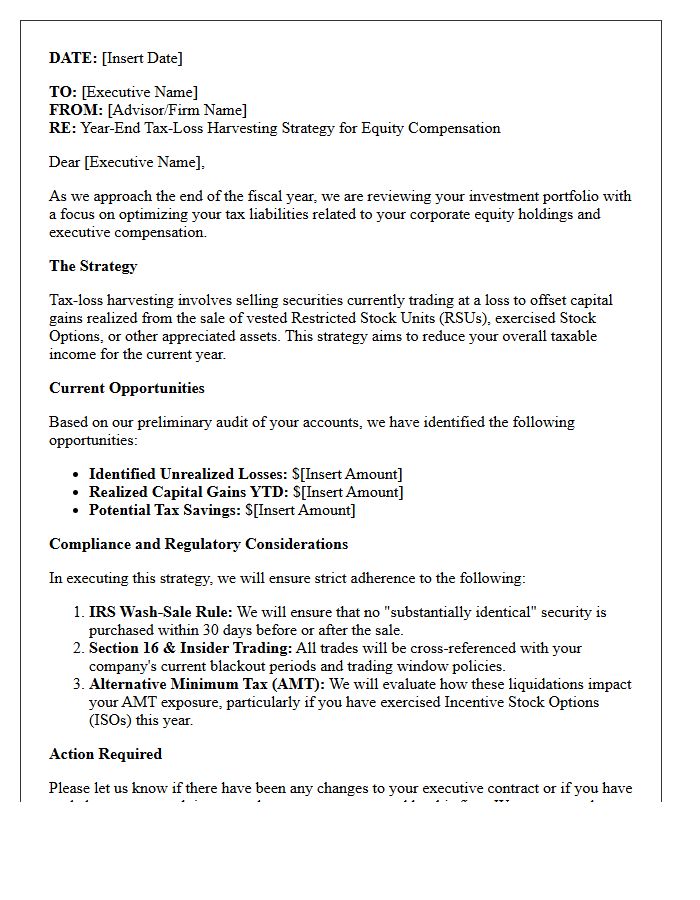
A Corporate Executive Tax-Loss Harvesting Advisory Letter provides strategic guidance for high-net-worth leaders to offset capital gains through selective asset liquidation. This document outlines how to neutralize tax liabilities while navigating complexities like wash-sale rules and insider trading windows. By systematically harvesting losses, executives can reinvest capital to maintain market exposure and enhance after-tax portfolio returns. It serves as a critical tool for sophisticated wealth preservation, ensuring that equity compensation and diverse investments are managed with maximum fiscal efficiency and regulatory compliance within a professional financial framework.
Mid-Year Tax-Loss Harvesting Review Letter
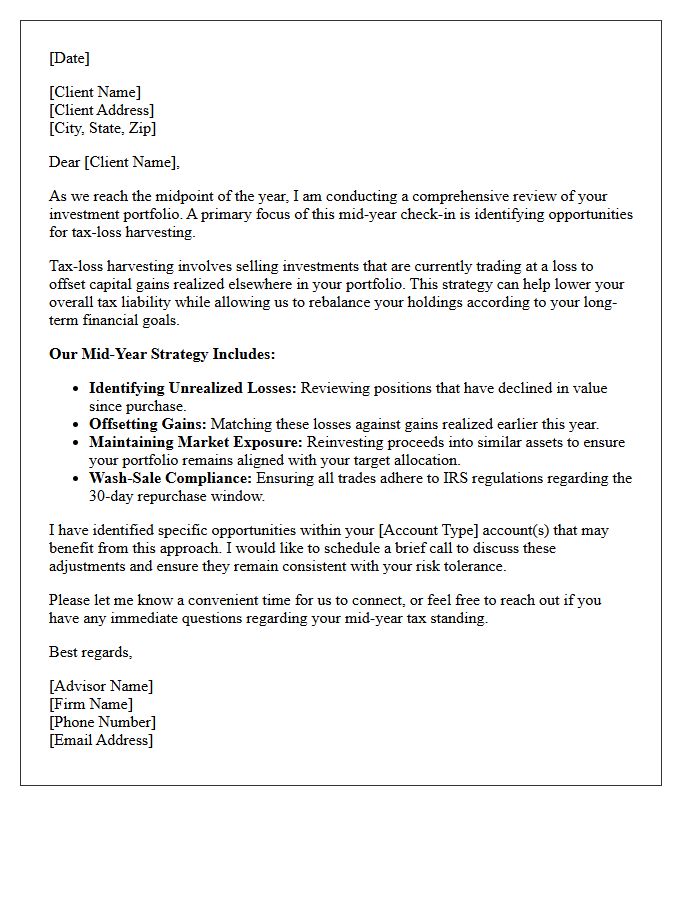
A mid-year tax-loss harvesting review letter helps investors offset capital gains by strategically selling underperforming assets. This proactive portfolio rebalancing allows you to realize losses early, reducing your overall tax liability for the current year. By reviewing holdings mid-year, you avoid the year-end rush and ensure your investment strategy aligns with tax efficiency goals. Understanding these updates is essential for maintaining a diversified portfolio while maximizing after-tax returns. Consult your advisor to discuss specific tax-saving opportunities before the annual deadline approaches.
What is a Tax-Loss Harvesting Strategy Advisory Letter?
A Tax-Loss Harvesting Strategy Advisory Letter is a formal communication from a financial advisor or investment firm outlining specific opportunities to sell securities at a loss to offset capital gains taxes. This letter provides data-driven recommendations on rebalancing your portfolio to improve after-tax returns while maintaining your target asset allocation.
How does tax-loss harvesting improve my overall investment returns?
Tax-loss harvesting improves net returns by reducing your annual tax liability. By realizing strategic losses, you can offset realized capital gains and up to $3,000 of ordinary income. The "tax alpha" created allows more of your capital to remain invested and compound over time rather than being paid out in current taxes.
What are the common "Wash Sale" risks mentioned in an advisory letter?
An advisory letter will warn against the IRS "Wash Sale" rule, which disallows a tax deduction if you purchase a "substantially identical" security within 30 days before or after the sale. Professional advisory letters ensure that replacement securities used to maintain market exposure do not trigger these penalties, preserving the validity of the tax loss.
When is the best time to implement the strategies outlined in the letter?
While many investors wait until year-end, the most effective strategy involves year-round monitoring. An advisory letter may be issued during periods of market volatility to capture significant "dips." Implementing these strategies promptly ensures you lock in the tax benefit before a potential market recovery erases the unrealized loss.
Does tax-loss harvesting eliminate my tax obligation entirely?
No, tax-loss harvesting is primarily a tax-deferral strategy. By selling a security and buying a similar one, you lower your cost basis in the new position. This may result in higher capital gains taxes when you eventually sell the new position in the future. However, most investors benefit from paying those taxes later at a potentially lower future tax rate or through the time value of money.


Comments