
A Trade Finance Risk Exposure Advisory Letter is a formal notification used by financial institutions to alert clients about potential credit, operational, or geopolitical risks in international trade transactions. This document ensures regulatory compliance and enhances transparency between banks and exporters. It helps stakeholders mitigate financial loss and navigate complex global markets effectively. Below are some ready to use template.
Image cover: Strategic Trade Finance Risk Advisory: Exposure Management Templates and Letter Samples
Letter Samples List
- Currency Volatility Risk Exposure Advisory Letter
- Sovereign Downgrade Trade Finance Risk Letter
- Counterparty Default Exposure Advisory Letter
- International Sanctions Trade Risk Advisory Letter
- Commodity Price Fluctuation Exposure Letter
- Supply Chain Disruption Trade Risk Letter
- Credit Limit Breach Exposure Advisory Letter
- Documentary Fraud Risk Exposure Advisory Letter
- Geopolitical Instability Trade Finance Letter
- Cross Border Transaction Exposure Advisory Letter
- Unfunded Credit Facility Risk Advisory Letter
- Market Liquidity Trade Finance Exposure Letter
- Regulatory Change Compliance Risk Advisory Letter
Currency Volatility Risk Exposure Advisory Letter
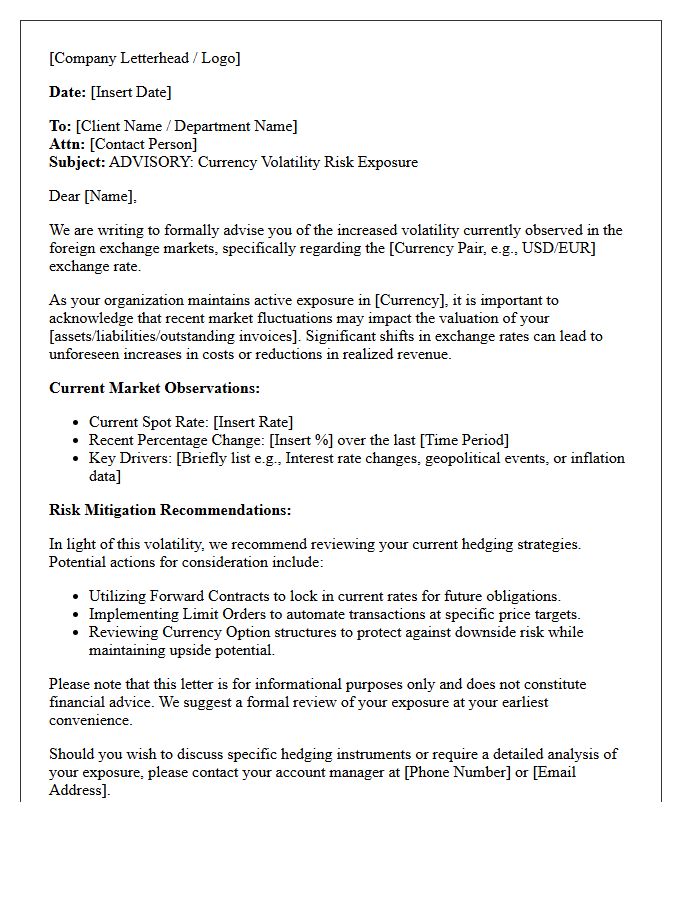
A Currency Volatility Risk Exposure Advisory Letter serves as a critical formal notice regarding potential financial losses due to exchange rate fluctuations. This document identifies specific foreign exchange risks impacting international transactions, investments, or corporate balance sheets. It outlines strategic hedging recommendations and mitigation tactics to protect profit margins against unpredictable market shifts. Organizations use these advisories to ensure stakeholders understand how volatile currency movements may decrease asset values or increase operational costs, facilitating informed decision-making and proactive risk management in global trade environments.
Sovereign Downgrade Trade Finance Risk Letter
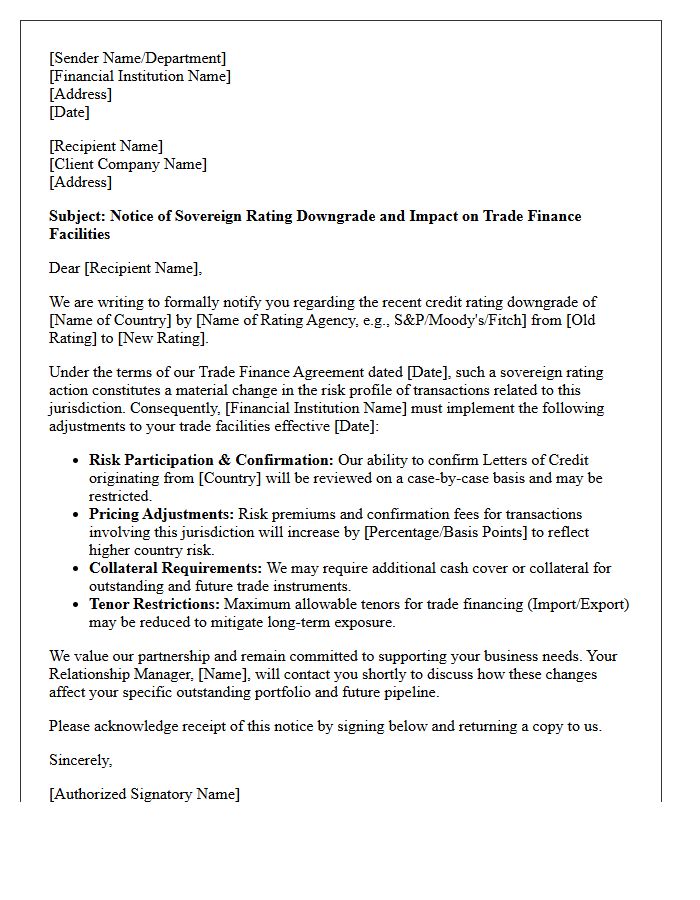
A sovereign downgrade significantly increases risk for international trade transactions. When a country's credit rating falls, banks often face reduced liquidity and higher borrowing costs. This shift triggers stricter requirements for a Letter of Credit, as confirming banks may perceive the issuing bank's country as unstable. Exporters must monitor these fluctuations to avoid payment delays or non-payment. Understanding how sovereign shifts impact trade finance is essential for mitigating financial exposure and ensuring the security of cross-border commercial agreements during economic volatility.
Counterparty Default Exposure Advisory Letter
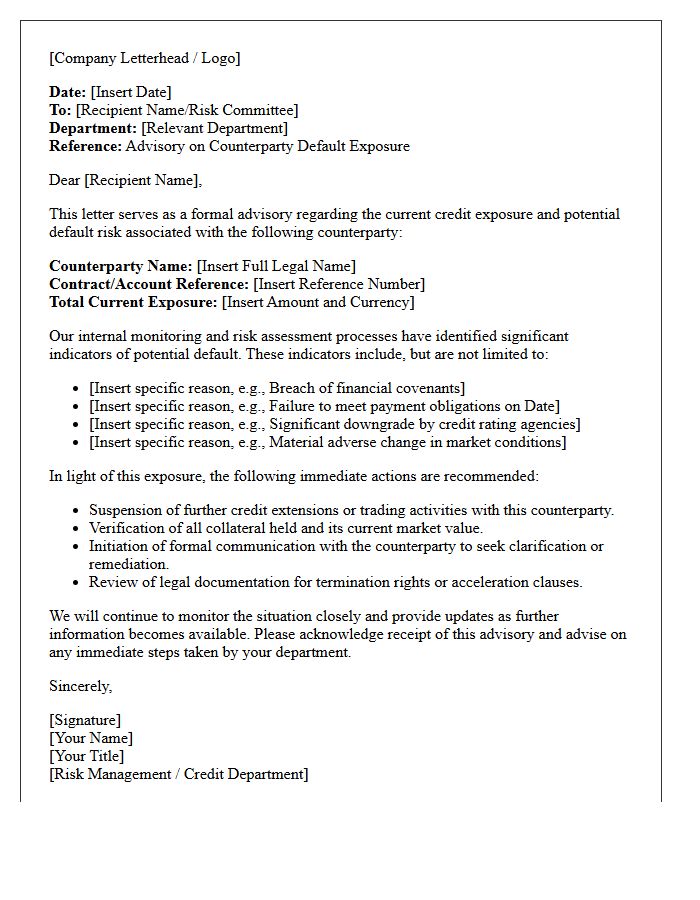
A Counterparty Default Exposure Advisory Letter is a critical risk management communication used by financial institutions. It formally outlines potential financial losses if a trading partner fails to fulfill contractual obligations. These letters identify specific credit risks, exposure limits, and required mitigation strategies. Understanding this advisory is essential for maintaining liquidity and ensuring regulatory compliance during market volatility. It serves as a strategic warning to stakeholders, enabling them to evaluate the creditworthiness of counterparties and implement protective measures to safeguard institutional assets against sudden insolvency or default events.
International Sanctions Trade Risk Advisory Letter
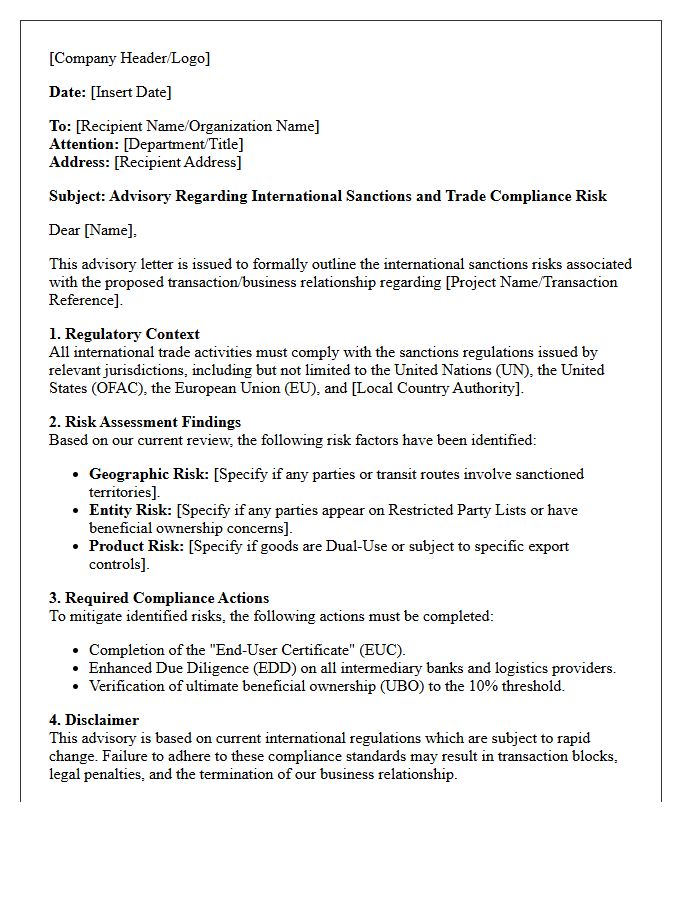
The International Sanctions Trade Risk Advisory Letter serves as a critical warning for businesses navigating global commerce. It highlights the legal consequences and financial penalties associated with violating complex international trade restrictions. Companies must implement rigorous due diligence to identify sanctioned entities and high-risk jurisdictions. Staying compliant requires continuous monitoring of regulatory updates from organizations like OFAC. Failure to adhere to these guidelines can lead to severe reputational damage and the loss of international banking privileges, making proactive risk management essential for any cross-border enterprise.
Commodity Price Fluctuation Exposure Letter
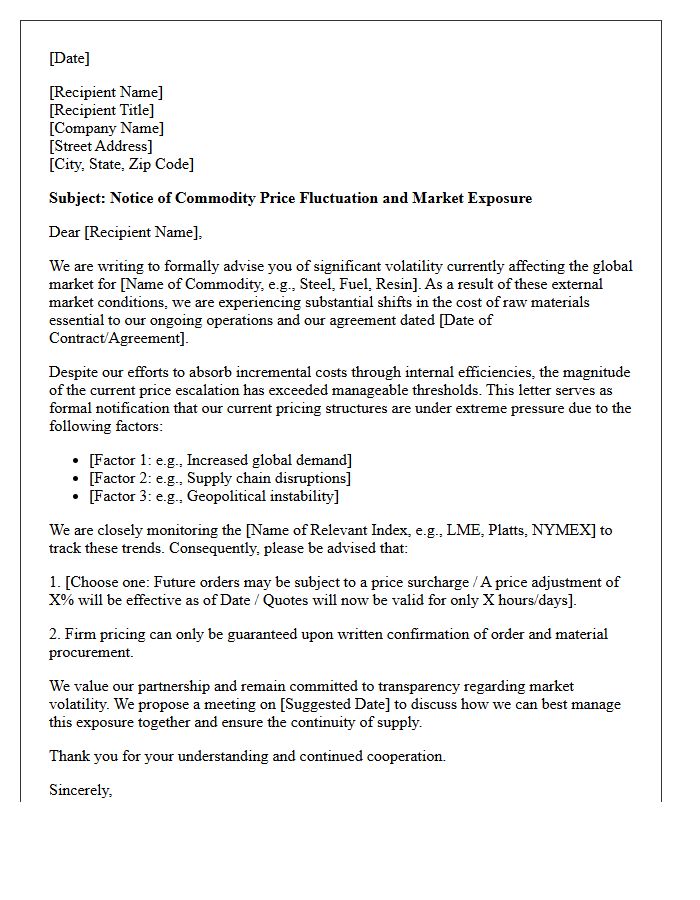
A Commodity Price Fluctuation Exposure Letter is a formal document used to notify stakeholders about potential financial risks arising from volatile market prices. It highlights how shifts in raw material costs impact contractual obligations and profit margins. Companies use this letter to initiate price adjustment discussions or trigger escalator clauses. Understanding this exposure is vital for maintaining supply chain stability and ensuring transparent communication between buyers and sellers during periods of economic instability or unpredictable market swings.
Supply Chain Disruption Trade Risk Letter
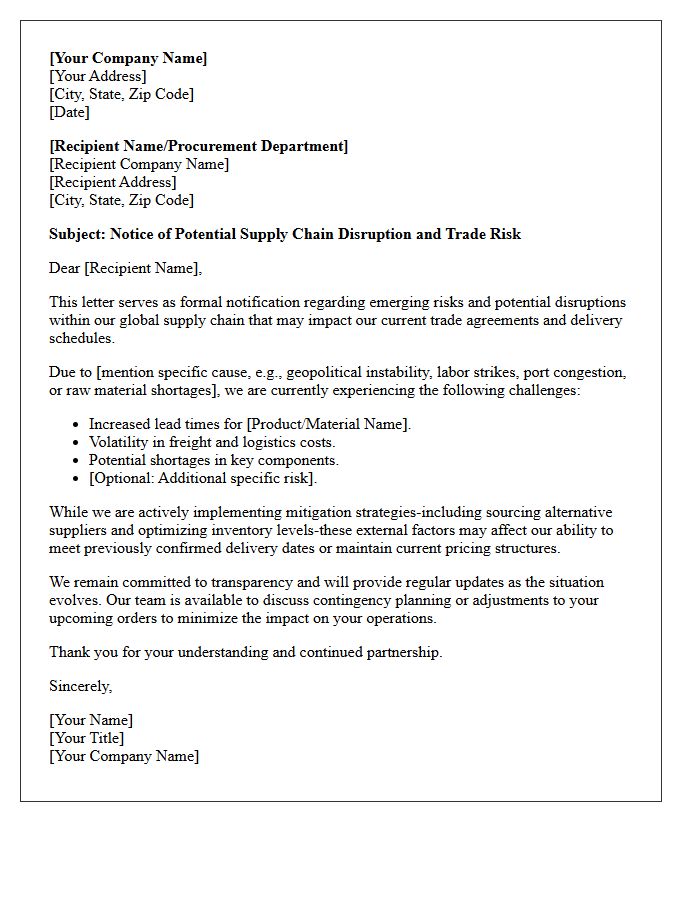
A Supply Chain Disruption Trade Risk Letter is a formal notification used to inform partners about unforeseen events halting operations. It serves as a legal safeguard to invoke force majeure clauses, potentially limiting liability for contractual delays. This document ensures transparency by detailing the cause, expected duration, and mitigation steps taken. Timely issuance is critical to maintaining business continuity and managing financial exposure during global logistical failures or geopolitical shifts. Clear communication through this letter helps preserve commercial relationships while navigating complex trade risks and legal obligations.
Credit Limit Breach Exposure Advisory Letter
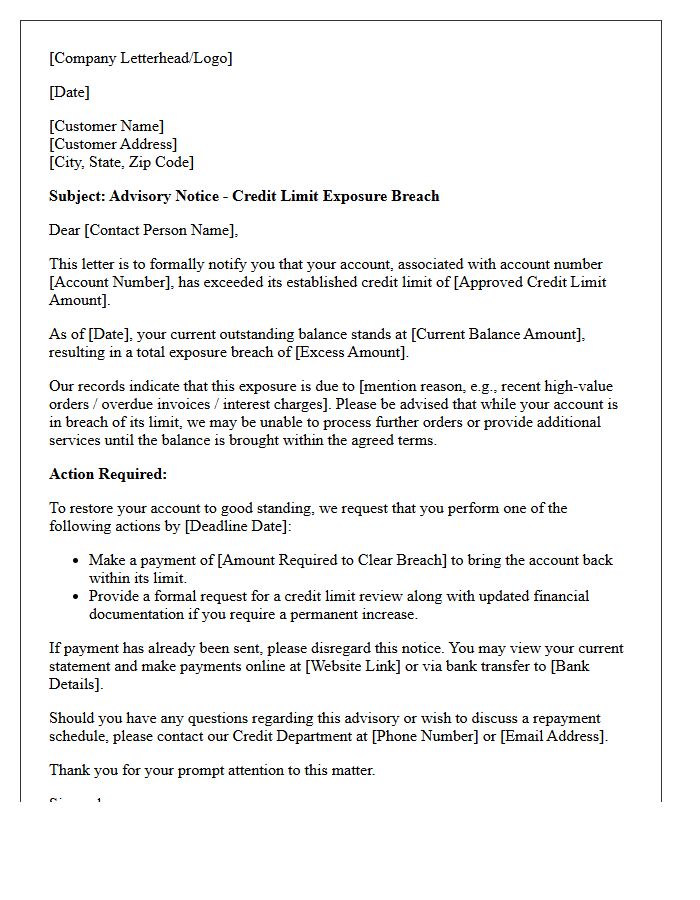
A Credit Limit Breach Exposure Advisory Letter is a formal notification issued when an account balance surpasses its pre-approved borrowing threshold. This document alerts the cardholder to potential financial penalties, including over-limit fees and increased interest rates. It serves as a critical warning to restore the account balance to avoid a negative impact on credit scores. Timely action after receiving this notice is essential to maintain creditworthiness and prevent the suspension of future transactions or further legal collection efforts by the lending institution.
Documentary Fraud Risk Exposure Advisory Letter
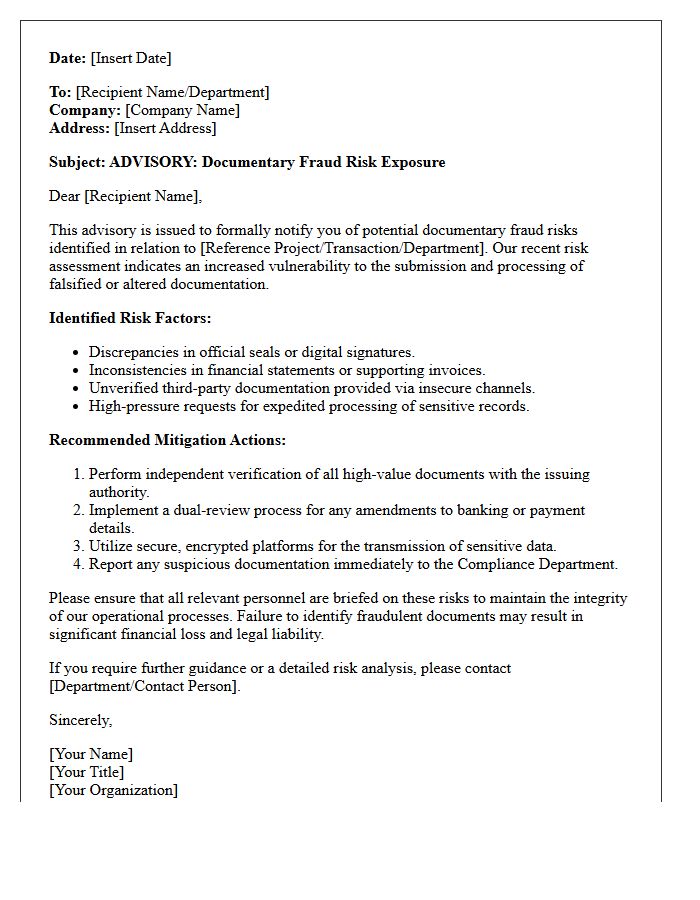
A Documentary Fraud Risk Exposure Advisory Letter is a formal notification issued by financial institutions to warn clients about potential deceptive practices in trade finance. This document highlights vulnerabilities in shipping documents, such as bills of lading or invoices, which may be forged to facilitate money laundering or theft. It serves as a critical risk management tool, advising businesses to verify all counterparties and transaction details. Understanding this advisory helps organizations implement stronger internal controls to mitigate financial loss and maintain regulatory compliance in international trade operations.
Geopolitical Instability Trade Finance Letter
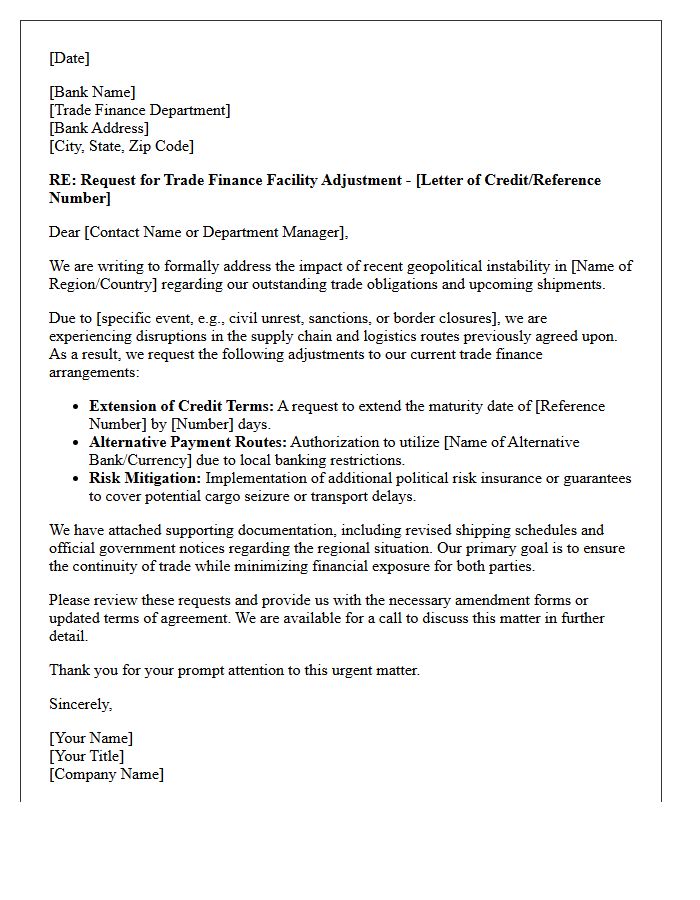
Geopolitical instability creates significant counterparty risk in global commerce, often requiring a Letter of Credit to guarantee payments. These financial instruments mitigate the danger of government collapses, sanctions, or sudden currency devaluations that disrupt standard open-account trade. When borders are volatile, confirmation from a secondary bank adds a critical layer of security for exporters. Understanding the regulatory compliance and localized political climate is essential for maintaining liquidity. Ultimately, these documents transform high-risk cross-border transactions into bank-backed obligations, ensuring trade continuity during international crises.
Cross Border Transaction Exposure Advisory Letter
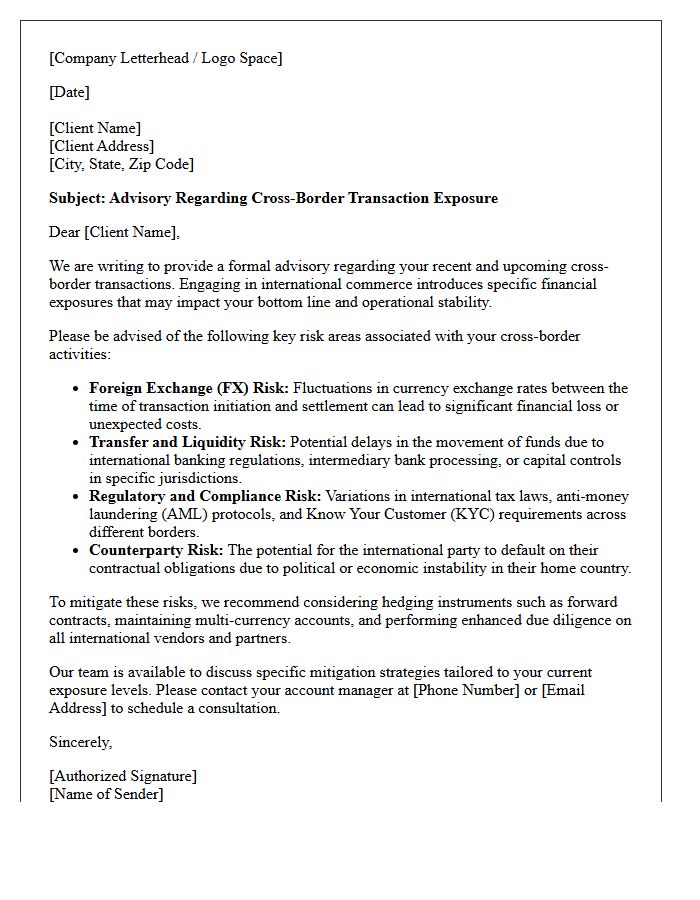
A Cross Border Transaction Exposure Advisory Letter is a critical document used to notify businesses of potential financial risks emerging from international trade. It identifies vulnerabilities related to currency fluctuations, regulatory shifts, and geopolitical instability. By analyzing these variables, the letter provides strategic guidance to mitigate losses through hedging or diversified payment terms. Understanding this advisory is essential for protecting profit margins and ensuring compliant, cost-effective global operations in a volatile market environment.
Unfunded Credit Facility Risk Advisory Letter
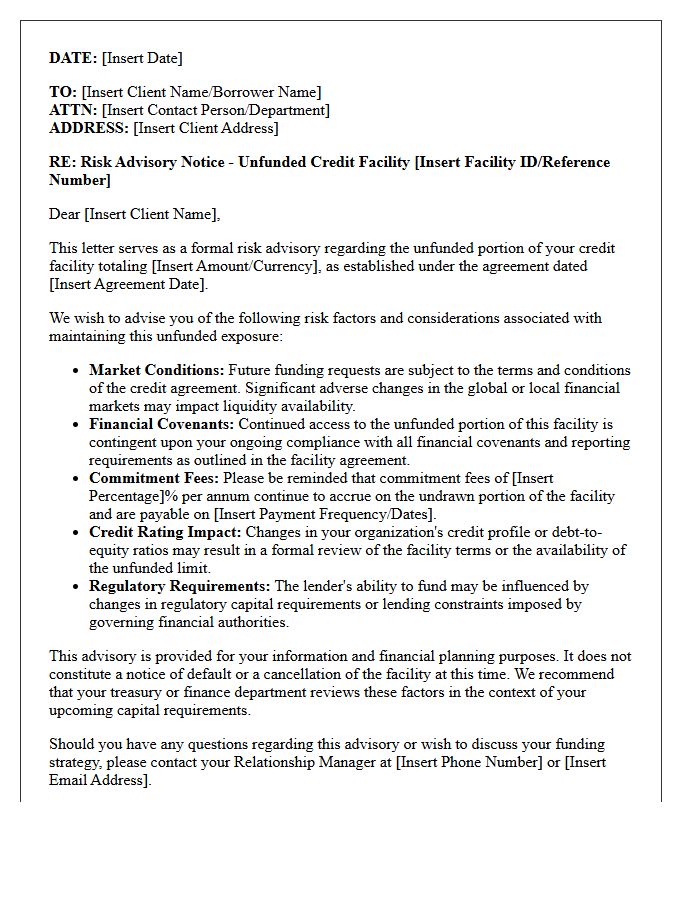
An Unfunded Credit Facility Risk Advisory Letter is a formal notification issued by regulators to warn financial institutions about the systemic dangers of liquidity risk. These documents highlight how undrawn commitments can be rapidly monetized during market stress, straining a bank's capital reserves. It is essential for lenders to maintain robust contingency funding plans and perform rigorous stress testing to ensure they can meet sudden drawdown demands without compromising financial stability or breaching regulatory compliance thresholds.
Market Liquidity Trade Finance Exposure Letter
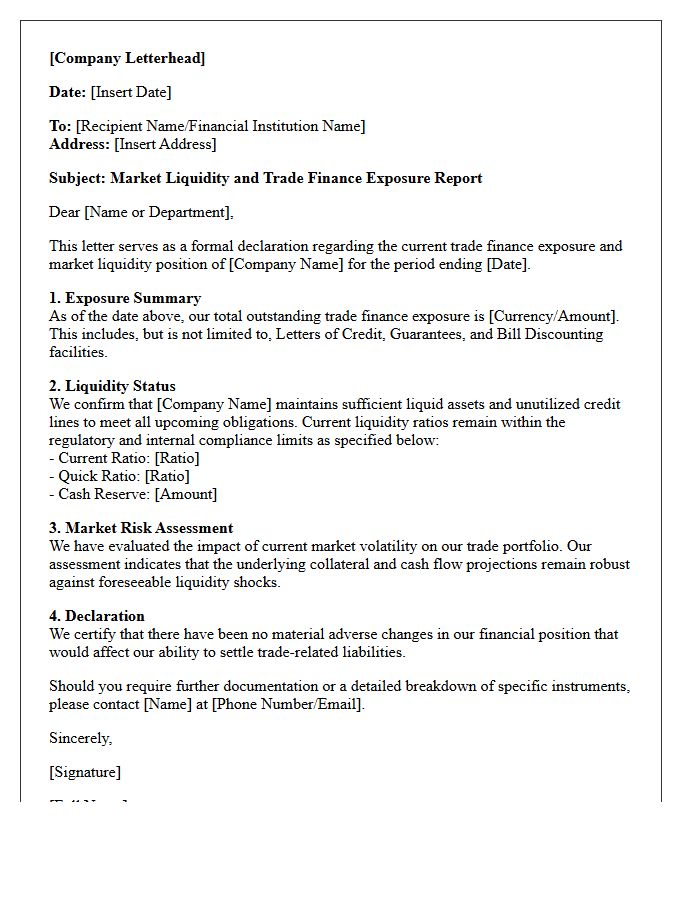
A Market Liquidity Trade Finance Exposure Letter is a critical risk management document used to assess the availability of cash within specific trade sectors. It evaluates how easily assets can be converted into liquid capital without affecting their market price. This letter helps financial institutions mitigate counterparty risk by detailing the firm's ability to meet short-term obligations during volatile periods. Understanding this exposure is essential for maintaining operational stability and ensuring that trade lines remain open when market liquidity fluctuates unexpectedly across international supply chains.
Regulatory Change Compliance Risk Advisory Letter
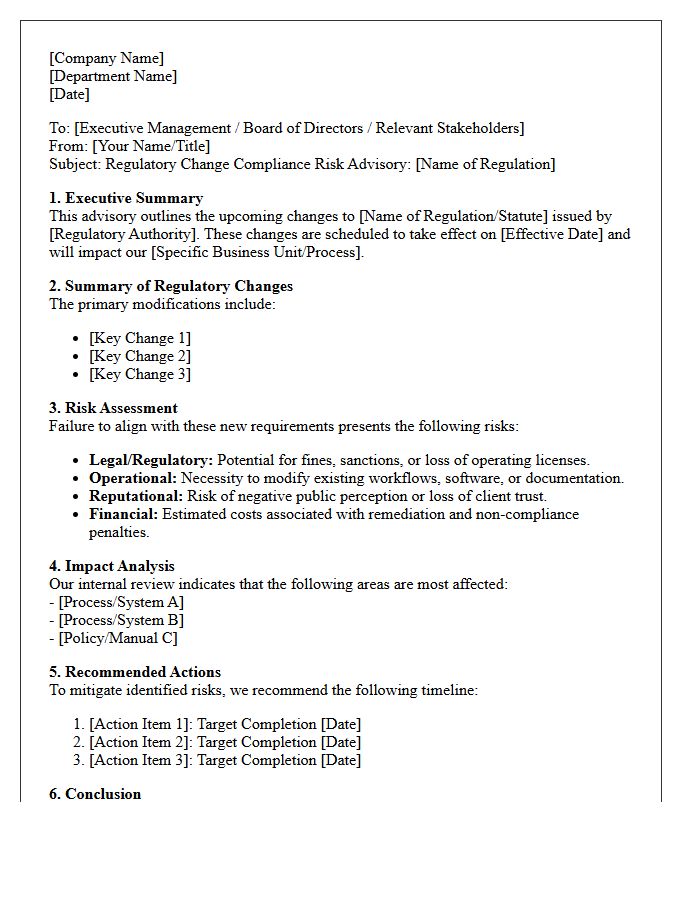
A Regulatory Change Compliance Risk Advisory Letter is a formal communication notifying financial institutions of evolving legal requirements. These documents identify specific compliance gaps and operational risks that could lead to enforcement actions or penalties. Organizations must use these letters to perform impact assessments, update internal controls, and ensure governance frameworks align with new standards. Proactive risk mitigation based on these advisories is essential for maintaining regulatory standing and avoiding costly legal repercussions in a shifting oversight landscape.
What is a Trade Finance Risk Exposure Advisory Letter?
A Trade Finance Risk Exposure Advisory Letter is a formal document issued by financial advisors or risk departments to notify stakeholders of potential credit, liquidity, or operational risks associated with specific international trade transactions or credit facilities.
What are the primary risk factors addressed in this advisory letter?
The letter typically outlines critical risk vectors including counterparty default probability, geopolitical instability in the transacting regions, currency fluctuation exposure, and compliance risks related to international trade regulations and sanctions.
Who should receive a Trade Finance Risk Exposure Advisory?
This advisory is primarily intended for corporate treasurers, Chief Financial Officers (CFOs), and risk management committees to facilitate informed decision-making regarding collateral requirements and credit limit allocations.
How does this letter influence trade credit insurance policies?
The findings within the advisory letter serve as a technical basis for negotiating premiums and coverage terms with trade credit insurers, as it provides a documented assessment of the underlying risk profile of the trade portfolio.
What mitigation strategies are typically recommended in a risk advisory letter?
Common recommendations include the use of confirmed Letters of Credit (LCs), structured export finance tools, political risk insurance, and the implementation of more stringent KYC (Know Your Customer) and AML (Anti-Money Laundering) screening protocols.


Comments