
A Closed Account Audit Confirmation Letter is a formal request sent to financial institutions to verify that specific accounts were officially shuttered during the audit period. This document ensures financial statement accuracy and helps auditors identify potential unrecorded liabilities or fraud. Streamline your verification process with our professional guides; below are some ready to use template options to simplify your workflow.
Image cover: Streamline Your Audit: Closed Account Confirmation Letter Templates and Samples
Letter Samples List
- Standard Closed Account Audit Confirmation Letter
- Commercial Closed Account Audit Confirmation Letter
- Retail Banking Closed Account Audit Confirmation Letter
- Zero Balance Closed Account Audit Confirmation Letter
- Corporate Closed Account Audit Confirmation Letter
- External Auditor Closed Account Confirmation Letter
- Internal Audit Closed Account Status Letter
- Year-End Closed Account Audit Confirmation Letter
- Loan Facility Closed Account Audit Confirmation Letter
- Trust Depository Closed Account Audit Confirmation Letter
- Checking And Savings Closed Account Audit Confirmation Letter
- Investment Portfolio Closed Account Audit Confirmation Letter
Standard Closed Account Audit Confirmation Letter
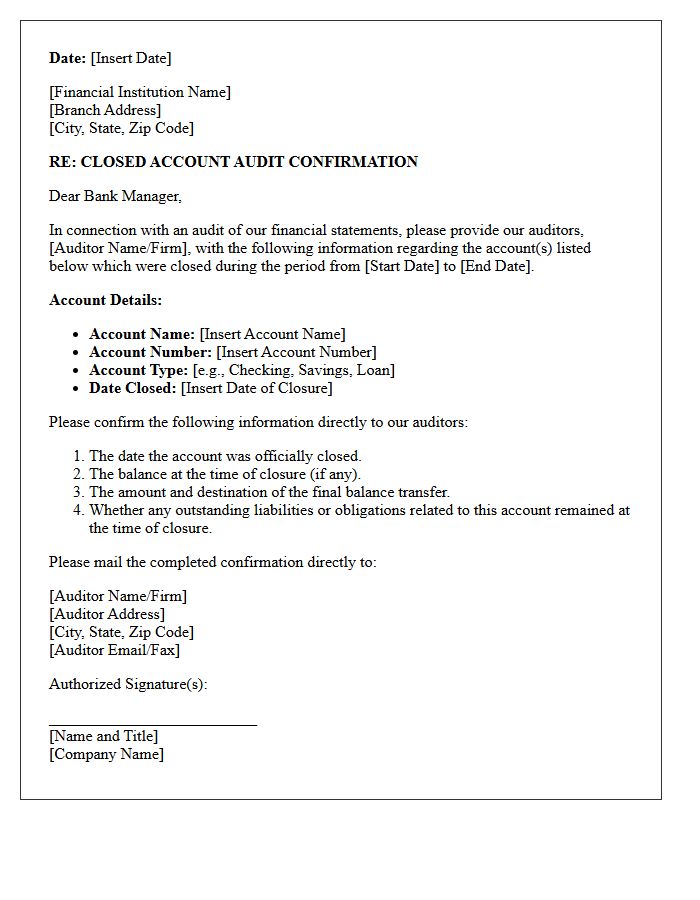
A Standard Closed Account Audit Confirmation Letter is a formal request sent by auditors to financial institutions to verify historical account details. Its primary purpose is to confirm that specific accounts were legally closed during the fiscal period and to ensure no undisclosed liabilities or residual balances remain. This process is critical for validating the completeness of financial statements, preventing fraud, and ensuring that all defunct banking relationships are accurately documented according to auditing standards. It provides independent third-party evidence that balances are zero and no further obligations exist between the parties.
Commercial Closed Account Audit Confirmation Letter
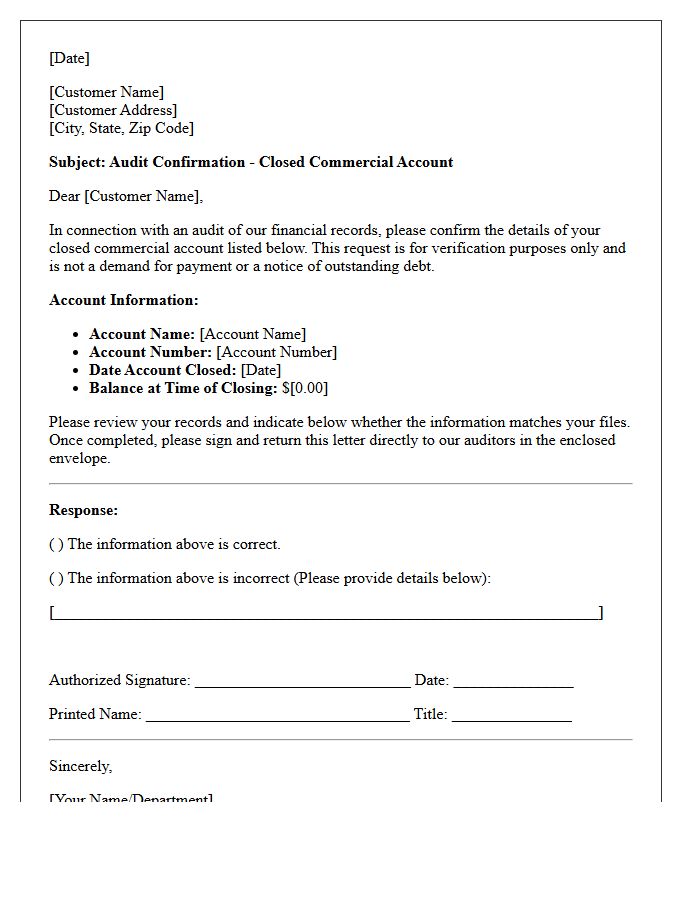
A Commercial Closed Account Audit Confirmation Letter is a formal request sent by auditors to financial institutions to verify the status of terminated accounts. This process ensures the accuracy of financial statements by confirming that no residual balances, liabilities, or undisclosed obligations remain active. It is a critical step in preventing fraud and correcting omissions during the year-end reporting cycle. Companies must ensure all closed accounts are documented to maintain complete audit trails and comply with standard regulatory transparency requirements.
Retail Banking Closed Account Audit Confirmation Letter
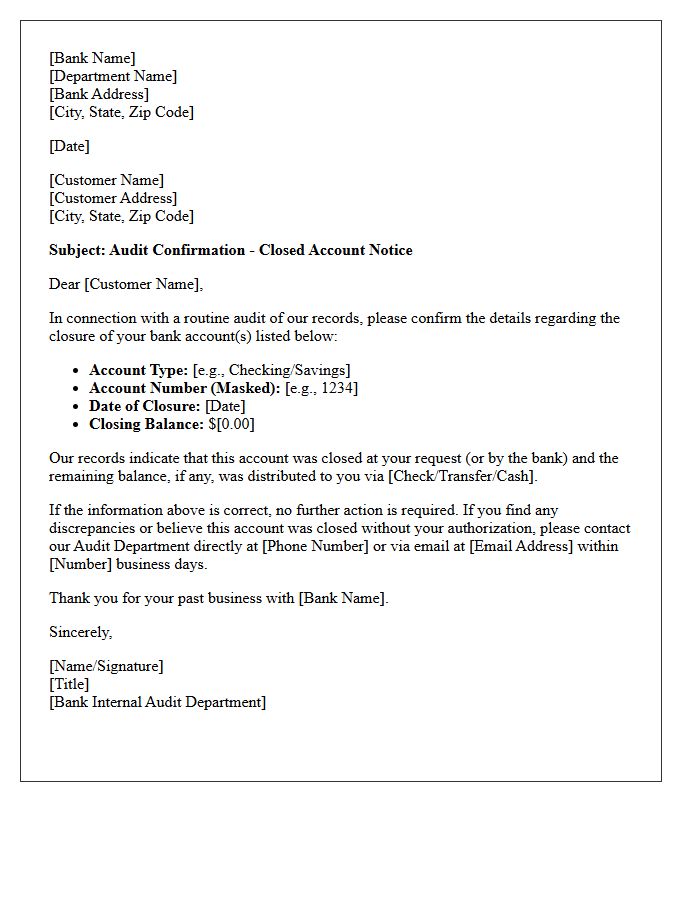
A Retail Banking Closed Account Audit Confirmation Letter is a formal request sent by auditors to verify the status of terminated accounts. Its primary purpose is to ensure that internal records accurately reflect account closures and that no unauthorized transactions or residual balances exist. This process mitigates risks of fraud, such as "phantom accounts," and confirms that the bank-customer relationship has legally ended. Receiving this letter requires the recipient to validate the final balance and closure date, ensuring financial transparency and regulatory compliance during the annual auditing cycle.
Zero Balance Closed Account Audit Confirmation Letter
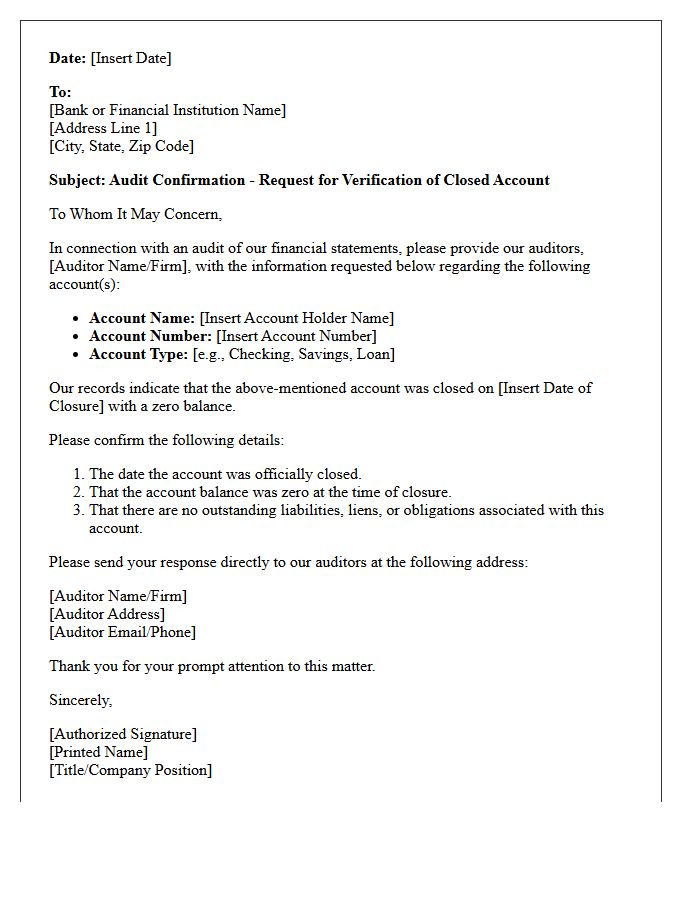
A Zero Balance Closed Account Audit Confirmation Letter is a formal request sent by auditors to financial institutions. Its primary purpose is to verify that a specific account has been permanently closed and maintains no remaining liability or asset value. This process mitigates risk by ensuring all off-balance sheet obligations or dormant accounts are accurately reported. It provides independent evidence to prevent financial misstatement and confirm that no unauthorized transactions occurred after the closure date. This documentation is essential for maintaining regulatory compliance and ensuring the integrity of an organization's financial statements during a year-end review.
Corporate Closed Account Audit Confirmation Letter
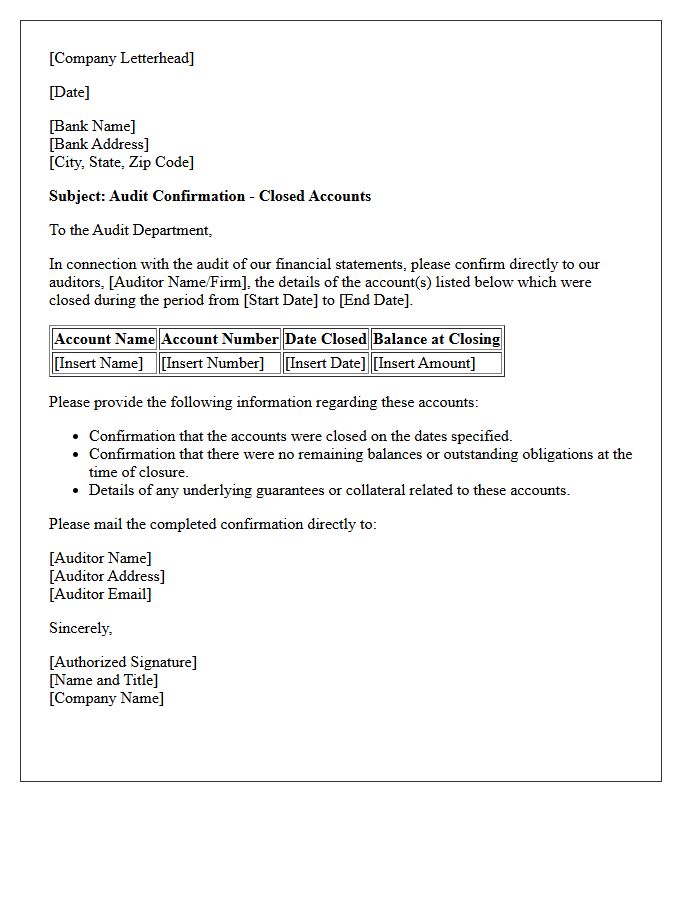
A Corporate Closed Account Audit Confirmation Letter is a formal request sent by auditors to financial institutions to verify that a specific account has been officially shuttered. This process is crucial for ensuring the completeness of financial statements and preventing undisclosed liabilities or fraud. It confirms the closing date and ensures no residual balances or outstanding obligations remain. This independent verification provides audit evidence that the company's records accurately reflect its banking relationships and current liquidity status during the fiscal reporting period.
External Auditor Closed Account Confirmation Letter
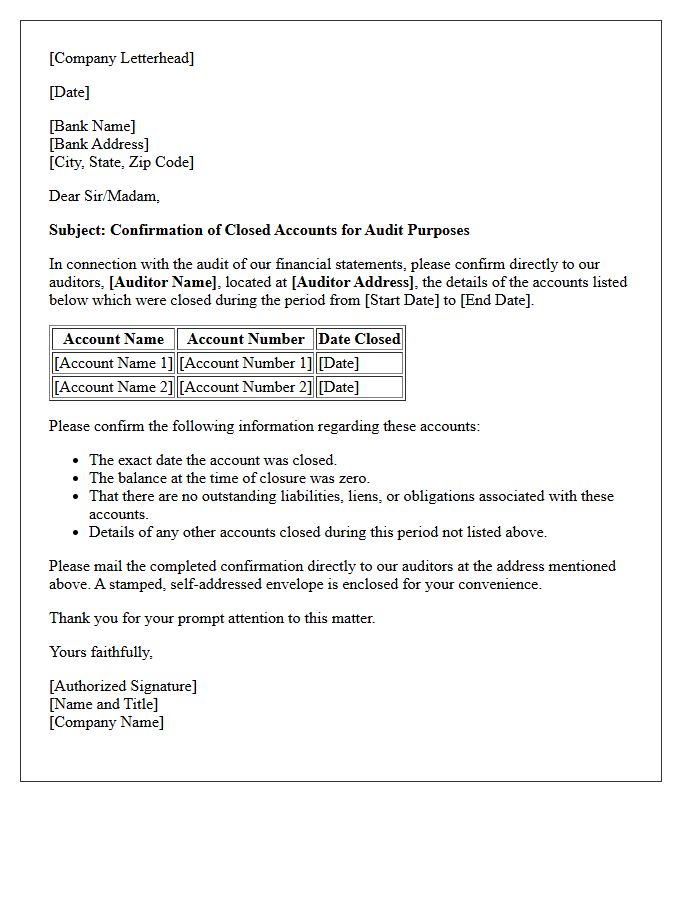
An External Auditor Closed Account Confirmation Letter is a vital verification tool used during financial audits. It serves as independent evidence to confirm that specific bank accounts were officially shuttered during the fiscal period. This process mitigates fraud risks by ensuring no undisclosed liabilities or residual balances remain. By obtaining direct validation from financial institutions, auditors verify the completeness of financial statements. It is essential for maintaining audit transparency and ensuring that the company's recorded cash position accurately reflects its actual banking relationships and operational status at year-end.
Internal Audit Closed Account Status Letter
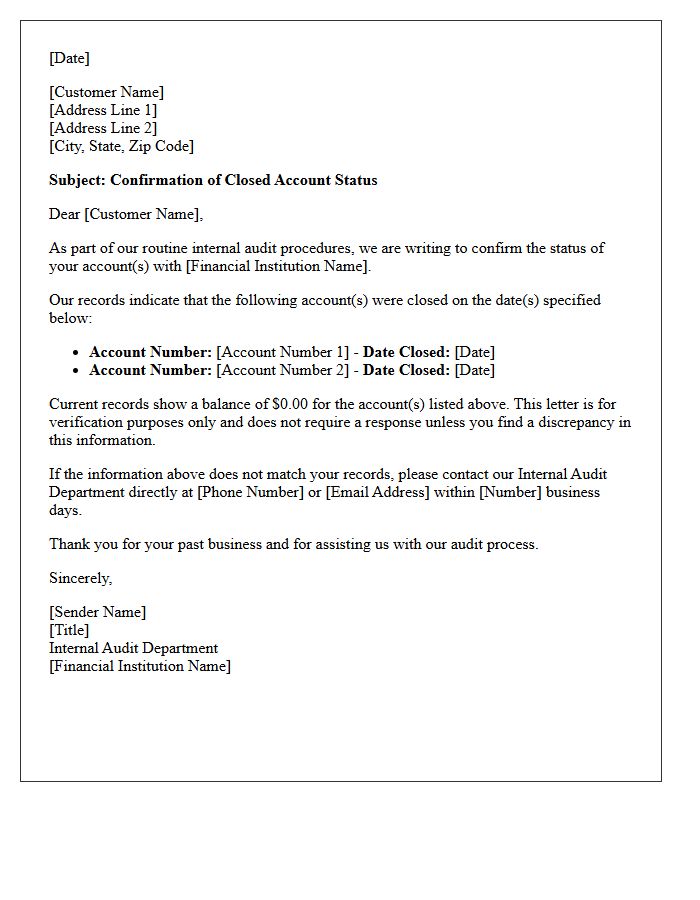
An Internal Audit Closed Account Status Letter serves as official verification that a specific account has been deactivated within a financial institution's records. This document is essential for security reconciliation and preventing identity theft or unauthorized reopening of lines of credit. It confirms that all outstanding balances are settled and provides a final audit trail for compliance purposes. Keeping this letter ensures you have definitive proof of account closure should discrepancies arise during future credit checks or internal regulatory reviews.
Year-End Closed Account Audit Confirmation Letter
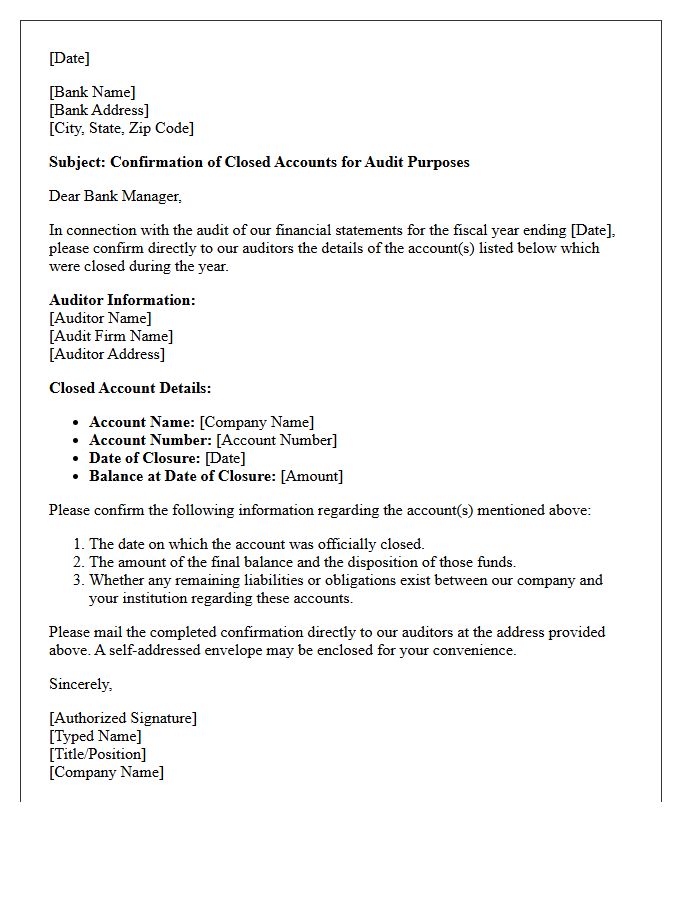
A Year-End Closed Account Audit Confirmation Letter is a formal request sent by auditors to financial institutions. Its primary purpose is to verify that specific accounts were indeed terminated during the fiscal year. This process ensures the completeness of financial statements by confirming zero balances and identifying any undisclosed liabilities or lingering obligations. Auditors use these third-party verifications to mitigate risks of fraud or material misstatement. Timely responses are essential for a smooth audit trail and to validate the accuracy of a company's reported cash position and banking relationships.
Loan Facility Closed Account Audit Confirmation Letter
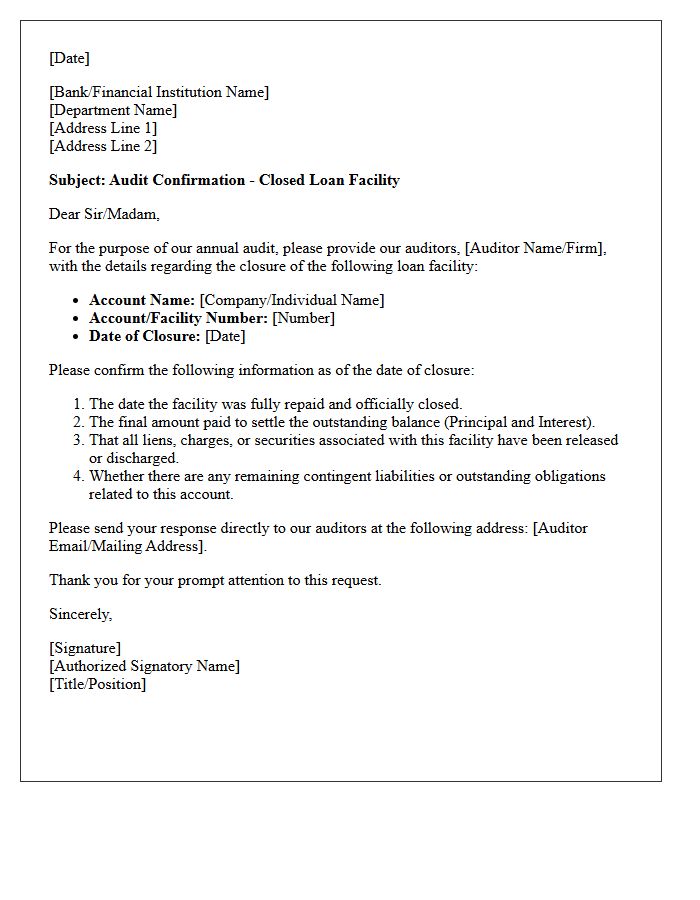
A Loan Facility Closed Account Audit Confirmation Letter is a formal request sent by auditors to financial institutions to verify that a credit line is officially terminated. This document ensures that all outstanding balances are zero, collateral is released, and no contingent liabilities remain. It serves as critical third-party evidence during a financial statement audit to prevent unrecorded debt or reporting errors. Accuracy in this confirmation helps maintain financial transparency and validates the integrity of a company's balance sheet regarding its historical lending relationships.
Trust Depository Closed Account Audit Confirmation Letter
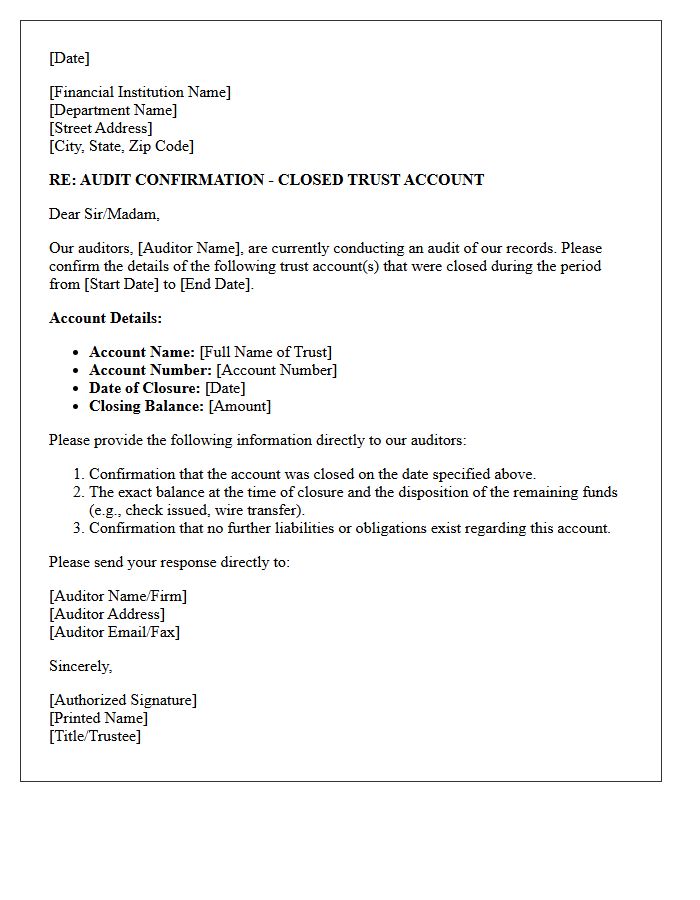
A Trust Depository Closed Account Audit Confirmation Letter is a formal verification document used to ensure financial transparency. It confirms that a specific trust account has been legally terminated and all remaining funds were properly distributed. Auditors utilize this tool to prevent fraud and verify that no undisclosed assets remain. This process provides independent validation of account balances at the time of closure, protecting both the institution and the beneficiaries. Accurate reporting during this phase is essential for regulatory compliance and maintaining an accurate audit trail for legal or tax purposes.
Checking And Savings Closed Account Audit Confirmation Letter
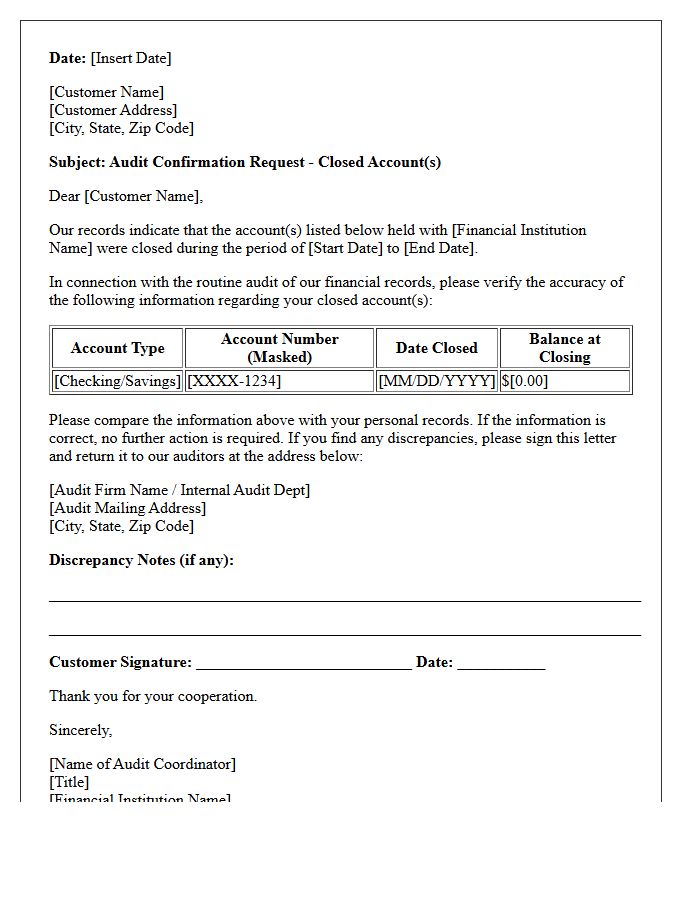
A Closed Account Audit Confirmation Letter is a formal document used by auditors to verify the status and final balance of terminated banking relationships. This process ensures financial transparency and prevents identity theft or accounting errors. When you receive this request, it is essential to confirm that the account balance reached zero and that all banking records align with the institution's data. Timely verification helps maintain accurate financial statements and protects your credit integrity by ensuring that no unauthorized activity occurred after the account was officially closed.
Investment Portfolio Closed Account Audit Confirmation Letter
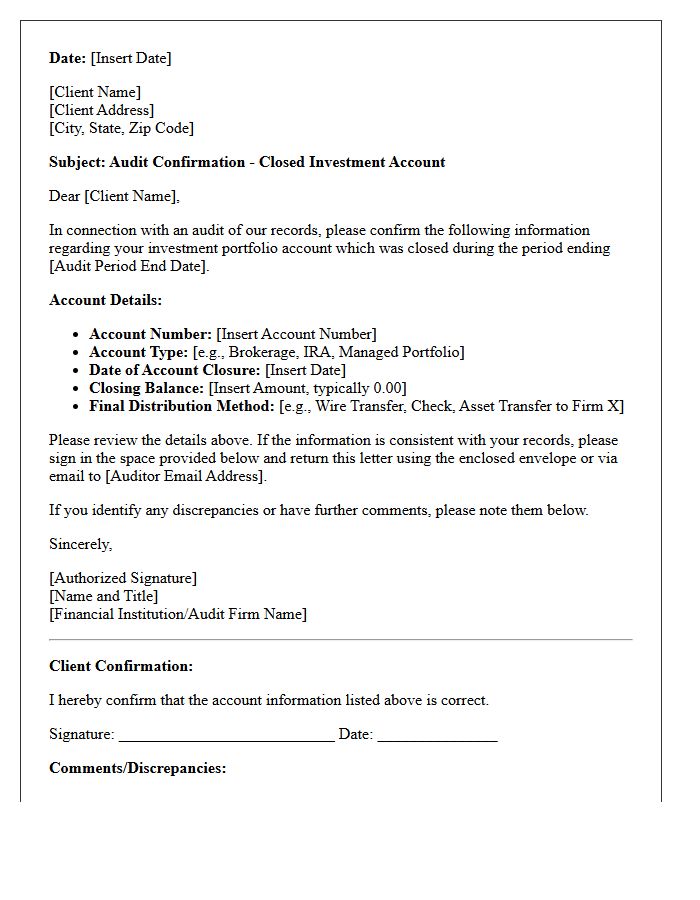
An Investment Portfolio Closed Account Audit Confirmation Letter is a formal request sent by auditors to verify the final status of a terminated investment. Its primary purpose is to ensure that all remaining balances were accurately distributed and that the account is legally closed. This process prevents financial discrepancies and fraud by validating historical transaction records. Receiving this letter is a standard part of regulatory compliance, confirming that both the investor and the financial institution agree on the zero-balance status and the integrity of the closing process.
What is a closed account audit confirmation letter?
A closed account audit confirmation letter is a formal request sent by an auditor to a financial institution to verify that a specific account has been officially closed and carries a zero balance. This process ensures that no undisclosed liabilities or residual transactions exist that could impact the accuracy of financial statements.
Why do auditors verify accounts that have already been closed?
Auditors verify closed accounts to confirm the "completeness" and "cutoff" of financial records. This prevents the concealment of debt, ensures all interest income or bank fees were recorded up to the closure date, and mitigates the risk of unauthorized "off-balance-sheet" activities.
What information is typically required in a closed account confirmation request?
The request typically includes the entity's legal name, the specific account number, the date of closure, and an authorized signature from the account holder. The bank is asked to confirm the final balance was zero and to disclose if any contingent liabilities remain associated with the closed entity.
How does a closed account audit confirmation prevent financial fraud?
It prevents fraud by ensuring that company officials have not "hidden" funds or liabilities in accounts that are claimed to be inactive. By receiving direct verification from the bank, auditors can prove that the account was truly terminated and that no unauthorized transactions occurred after the reported closing date.
Can closed account confirmations be processed electronically?
Yes, most modern audits utilize secure electronic platforms like Confirmation.com or direct digital correspondence with banks to expedite the verification process. Electronic confirmations provide a secure audit trail, reduce the risk of mail interception, and significantly decrease response times from financial institutions.

Comments