
An Authorized Signatory and Mandate Audit Confirmation Letter is a formal document used to verify individuals permitted to transact on behalf of an entity. This essential audit procedure ensures internal controls align with official banking mandates and corporate governance standards. Accurate verification prevents unauthorized financial activity and maintains regulatory compliance. To assist your documentation process, below are some ready to use template.
Image cover: Mastering Authorized Signatory and Mandate Audit Confirmation Letters: Essential Templates and Best Practices
Letter Samples List
- Authorized Signatory Update Letter
- Mandate Audit Confirmation Letter
- Bank Account Signatory Addition Letter
- Authorized Signatory Removal Letter
- Corporate Mandate Authorization Letter
- Signatory Audit Confirmation Letter
- Bank Account Mandate Revocation Letter
- Signatory Specimen Signature Letter
- Board Resolution Authorized Signatory Letter
- Annual Mandate Audit Verification Letter
- Primary Authorized Signatory Declaration Letter
- Banking Mandate Change Request Letter
- Signatory Audit Compliance Letter
- Corporate Account Mandate Renewal Letter
Authorized Signatory Update Letter
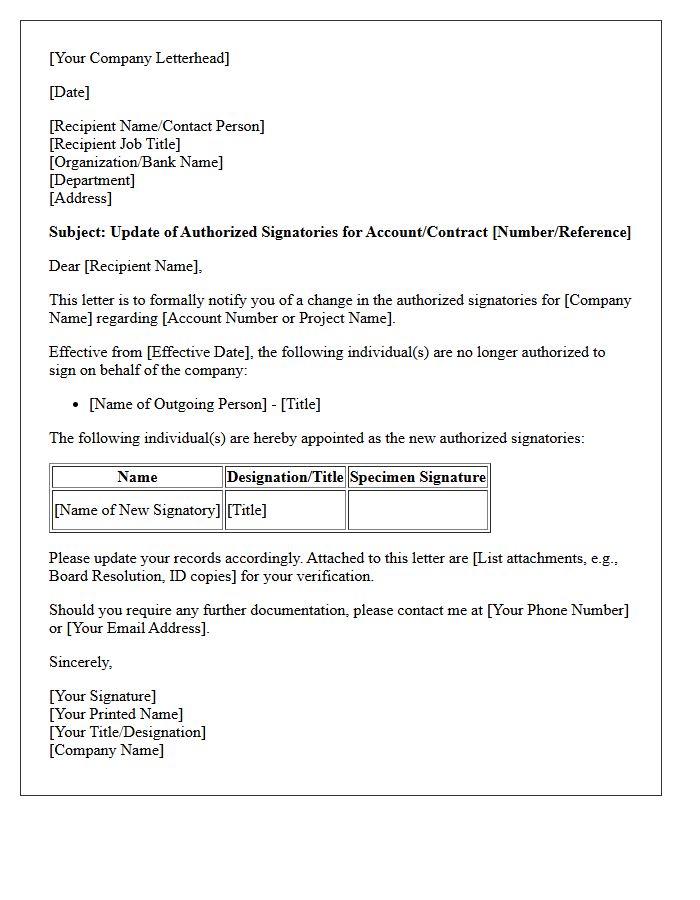
An Authorized Signatory Update Letter is a formal document used to notify institutions, such as banks or government agencies, about changes in legal representation. This letter officially revokes outdated signing powers and introduces new individuals authorized to execute contracts or financial transactions on behalf of an entity. To ensure validity, it must be printed on official letterhead, signed by existing directors, and accompanied by a Board Resolution. Providing accurate identification details for new signatories is crucial to maintaining seamless operations and preventing unauthorized access to corporate accounts.
Mandate Audit Confirmation Letter
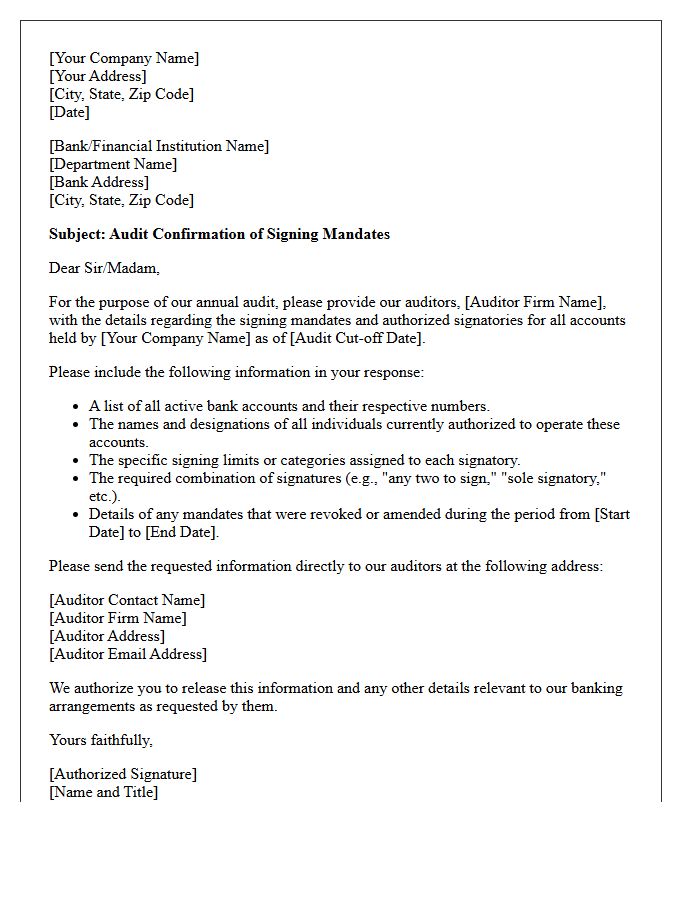
A Mandate Audit Confirmation Letter is a formal request sent by auditors to a client's financial institution. Its primary purpose is to verify the accuracy of account balances, authorized signatories, and credit facilities held at a specific date. This document serves as critical independent evidence to prevent fraud and ensure financial statements are reliable. By confirming contractual obligations and mandate details directly with the bank, auditors validate that management's records align with third-party data, maintaining the integrity of the professional audit process and ensuring regulatory compliance.
Bank Account Signatory Addition Letter
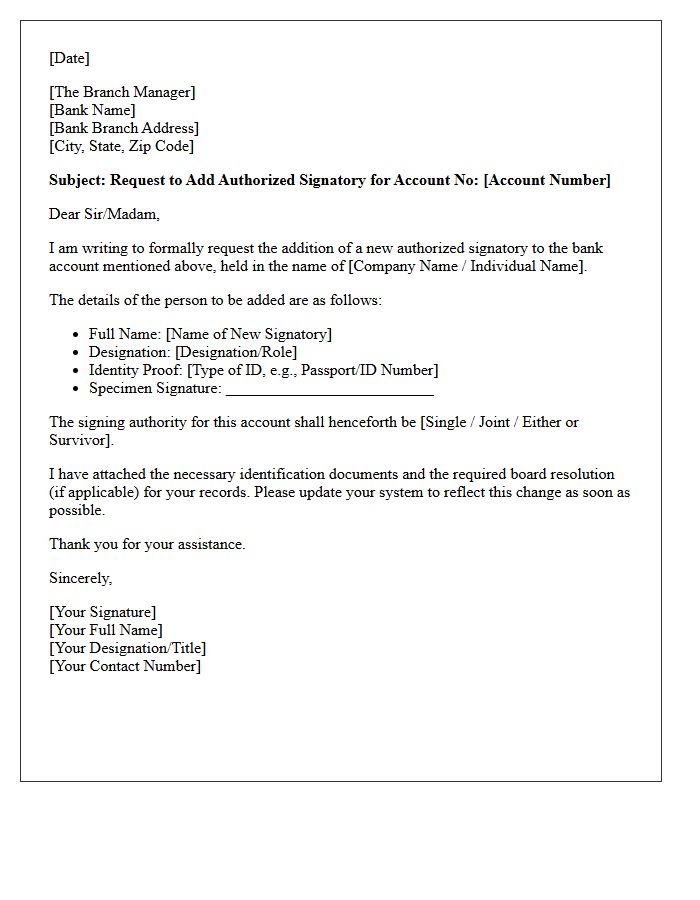
A Bank Account Signatory Addition Letter is a formal request used to authorize a new individual to manage financial transactions on a business or personal account. It must include the account number, the new signatory's full legal name, and their notarized signature for identity verification. To ensure legal compliance, the letter should clearly state the specific access privileges granted and be signed by the existing primary account holders or authorized directors. Providing a copy of a valid government ID is essential to streamline the approval process with the financial institution.
Authorized Signatory Removal Letter
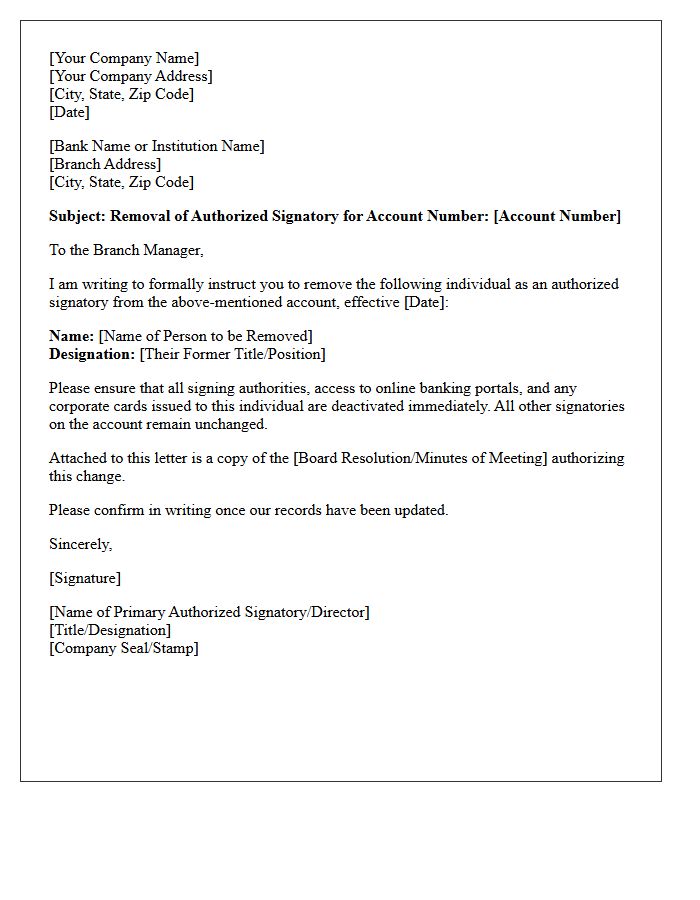
An Authorized Signatory Removal Letter is a formal legal document used to revoke an individual's power to sign documents or manage financial accounts on behalf of an organization. This notice must clearly state the effective date of termination and the specific authorities being withdrawn. It is crucial to send this letter promptly to banks and stakeholders to mitigate security risks and prevent unauthorized transactions. Providing a replacement signatory or a formal board resolution ensures a smooth transition and maintains legal compliance within your corporate governance structure.
Corporate Mandate Authorization Letter
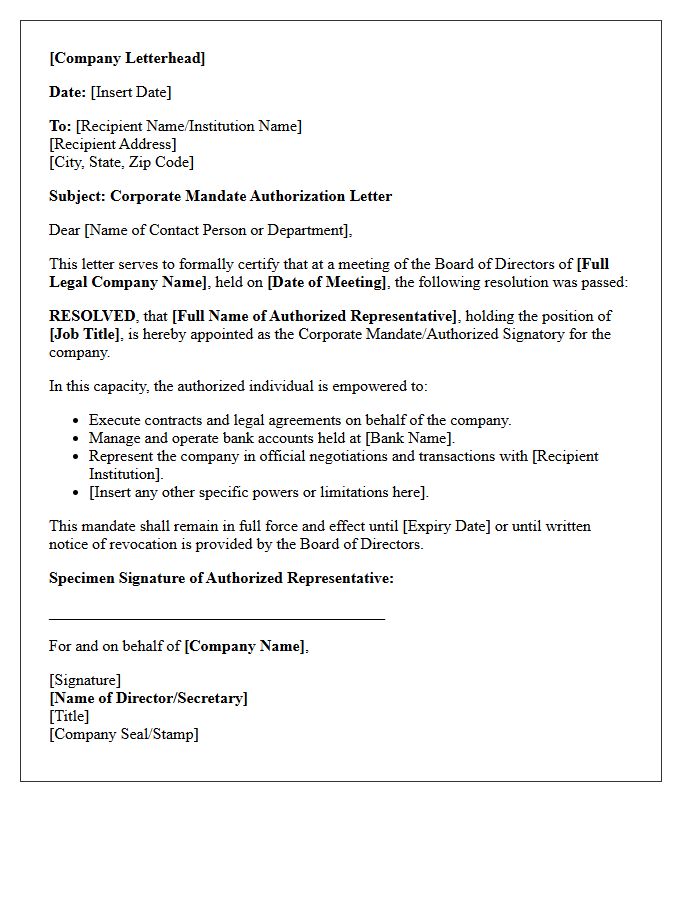
A Corporate Mandate Authorization Letter is a formal legal document that officially delegates authority to a specific individual to act on behalf of a company. It is essential for verifying signing authority during high-level financial transactions, banking operations, or contract negotiations. This letter ensures that the representative has the board's consent to execute binding agreements. To maintain legal validity, the document must be printed on official company letterhead and typically requires the signature of a director or the company secretary to confirm legitimacy and corporate compliance.
Signatory Audit Confirmation Letter
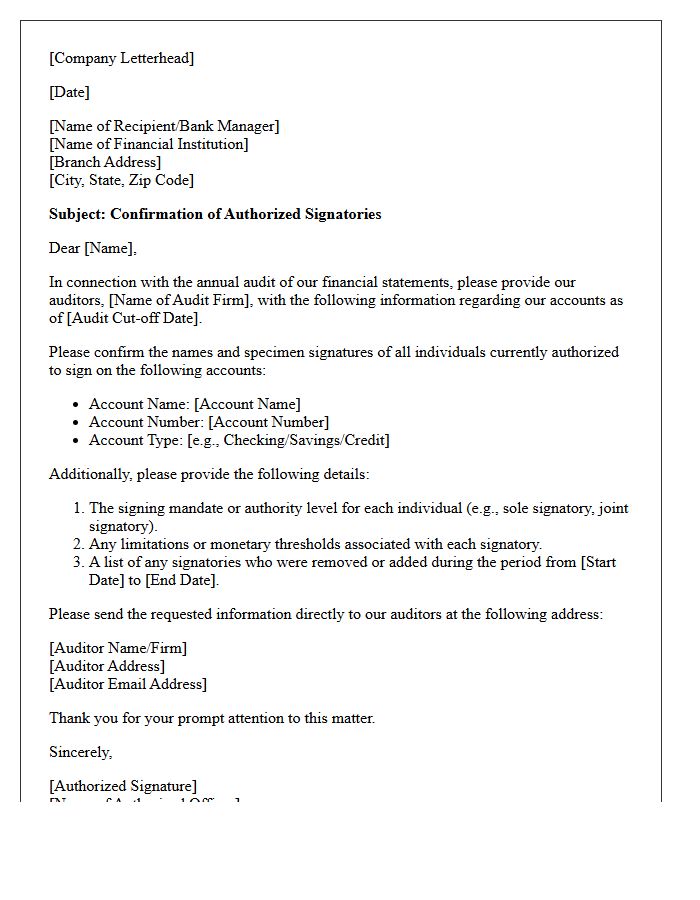
A Signatory Audit Confirmation Letter is a formal request sent by auditors to verify the accuracy of financial records. It requires an authorized signatory to confirm balances, liabilities, or transaction terms directly with a third party. This process is essential for ensuring financial transparency and preventing fraud during an official audit. The independent verification provides objective evidence that the reported data is complete and accurate. It is a critical component of internal controls and regulatory compliance for any organization undergoing a professional financial review.
Bank Account Mandate Revocation Letter
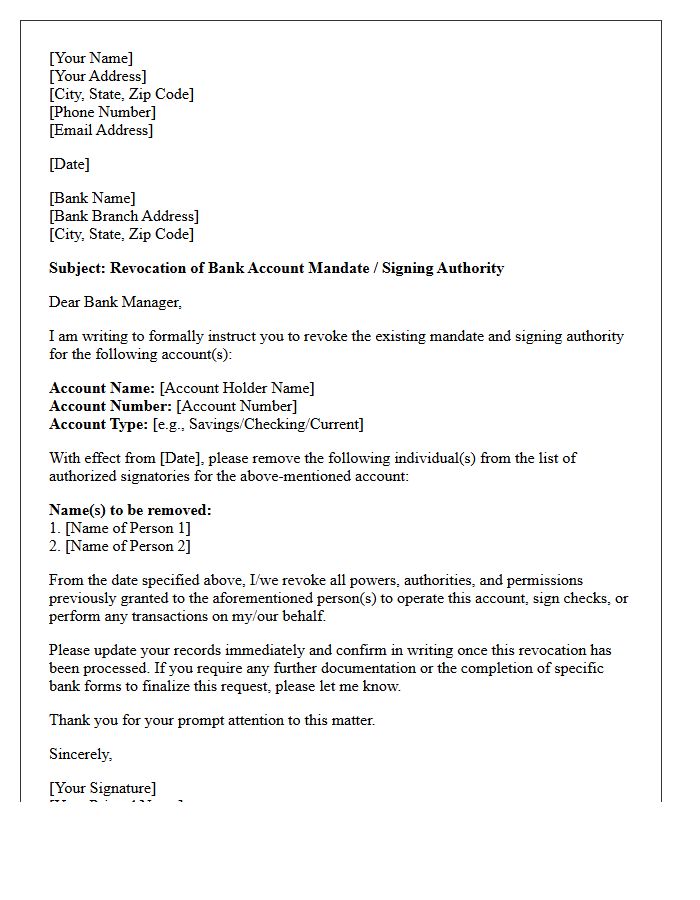
A Bank Account Mandate Revocation Letter is a formal legal document used to cancel existing signing authority or third-party permissions on a financial account. This written notification ensures that previous authorized signatories can no longer execute transactions or access funds. It is essential for maintaining strict security during corporate restructuring or personal relationship changes. To ensure immediate effect, the letter should include the account number, the names of individuals being removed, and a clear effective date for the termination of their access rights.
Signatory Specimen Signature Letter
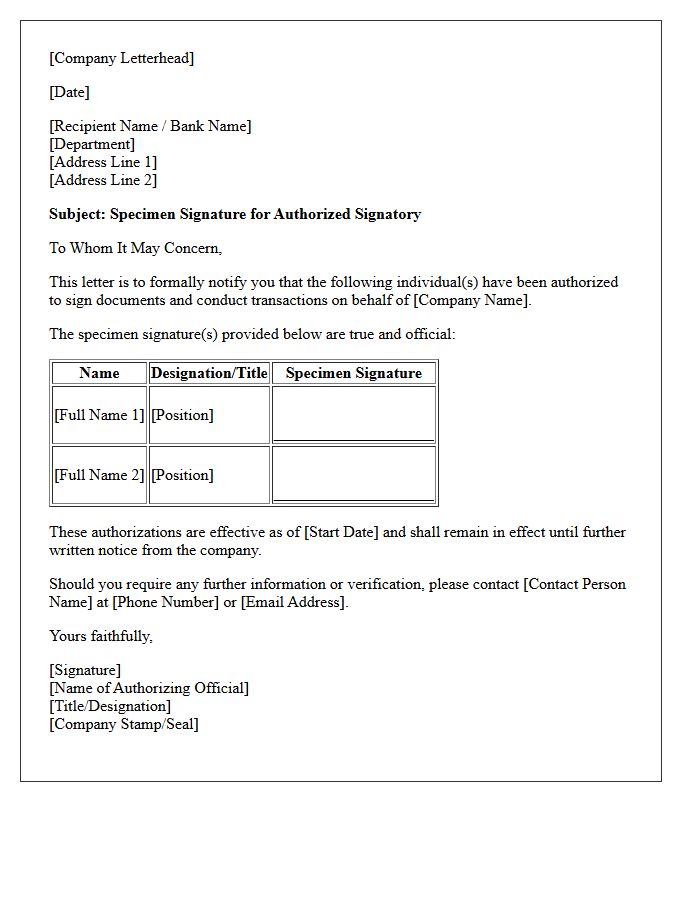
A Signatory Specimen Signature Letter is a formal document used by organizations to verify the legal authority of specific individuals to sign contracts or financial documents. This letter serves as a crucial security measure for banks and partners to prevent fraud by cross-referencing provided specimen signatures against future transactions. It typically includes the appointee's full name, position, and an original ink signature. Ensuring this record is accurate and up-to-date is essential for maintaining corporate compliance and seamless business operations.
Board Resolution Authorized Signatory Letter
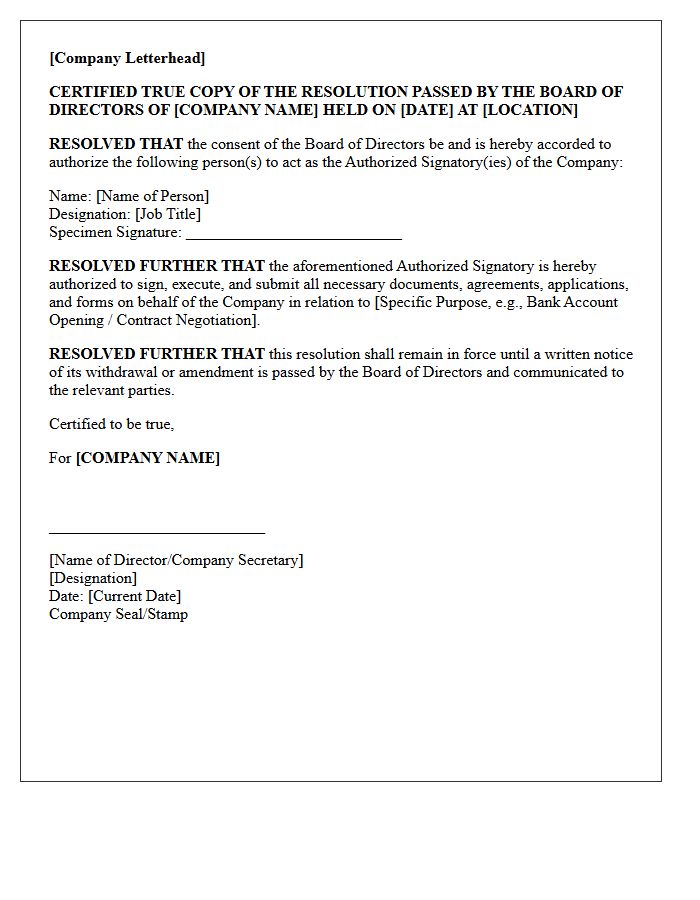
A Board Resolution Authorized Signatory Letter is a formal document issued by a company's board of directors. It serves as legal evidence granting specific individuals the power to sign legal contracts, open bank accounts, or execute financial transactions on behalf of the organization. This document ensures corporate accountability and prevents unauthorized actions. To be valid, it must be officially signed by the board members and often bears the corporate seal, confirming that the designated representative has the lawful authority to bind the company to agreements.
Annual Mandate Audit Verification Letter
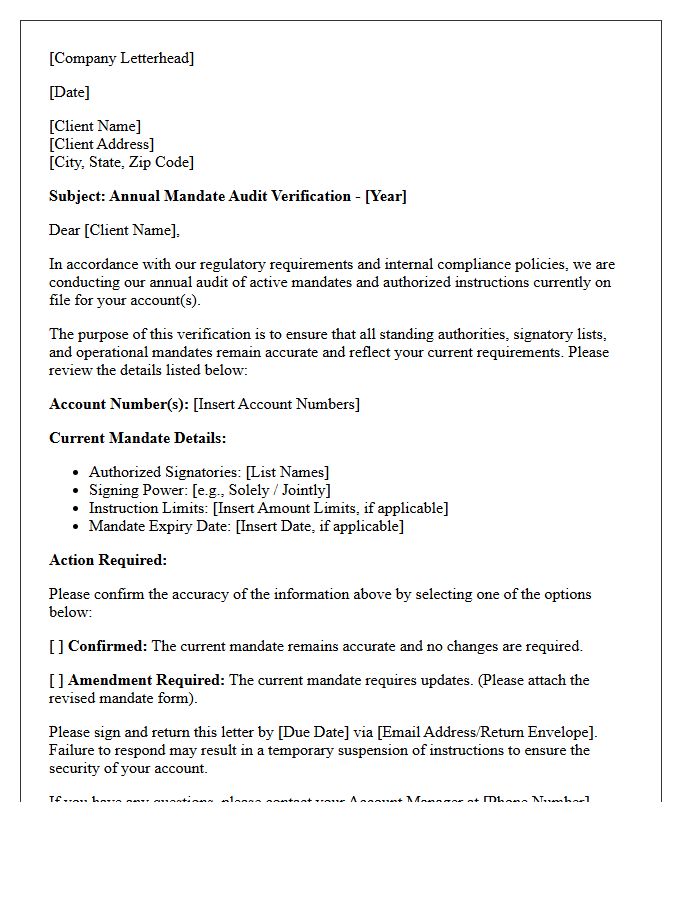
An Annual Mandate Audit Verification Letter is a critical compliance document used to confirm the accuracy of standing instructions and authorized signatories. Financial institutions issue this request to ensure that all account permissions and mandate details remain current and secure. It serves as a vital internal control to prevent unauthorized transactions and mitigate fraud risks. Recipients must review the listed information, verify its validity, and return the signed confirmation promptly. Failing to complete this audit can result in temporary account restrictions or administrative holds until the verification process is successfully finalized.
Primary Authorized Signatory Declaration Letter
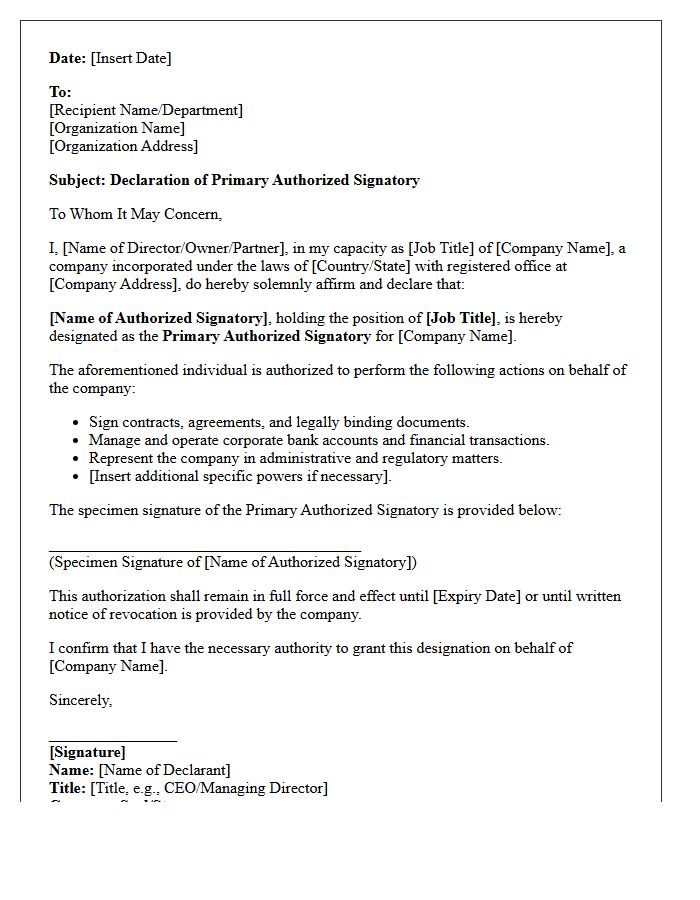
A Primary Authorized Signatory Declaration Letter is a formal document used to nominate a specific individual with the legal authority to sign binding agreements on behalf of a company. This letter is a compliance requirement for banks, government portals, and tax authorities to verify corporate representation. It must be issued on official company letterhead and typically requires the signatures of existing directors or partners to be valid. Ensuring the document clearly outlines the scope of authority prevents legal disputes and streamlines administrative approvals during business registrations or financial transactions.
Banking Mandate Change Request Letter
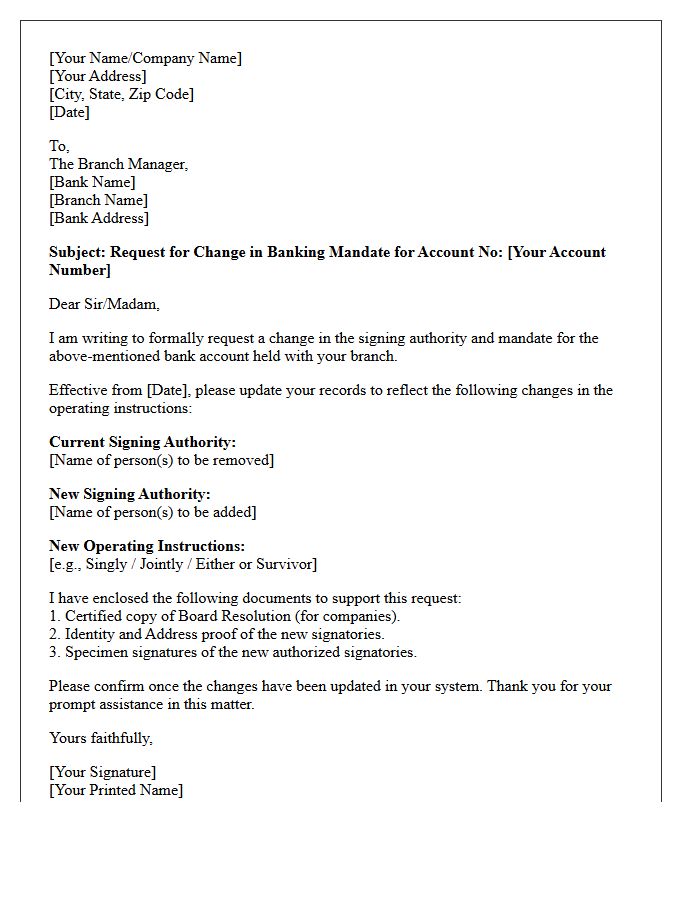
A Banking Mandate Change Request Letter is a formal document used to update authorized signatories or modify account operating instructions. It is crucial for maintaining security and ensuring that only designated individuals can approve financial transactions. When submitting this request, you must include the official account name, number, and specific details of the amendment. Typically, banks require a formal board resolution or authenticated identification to prevent unauthorized access. Promptly updating your mandate protects your organization from fraud and ensures seamless compliance with current banking regulations.
Signatory Audit Compliance Letter
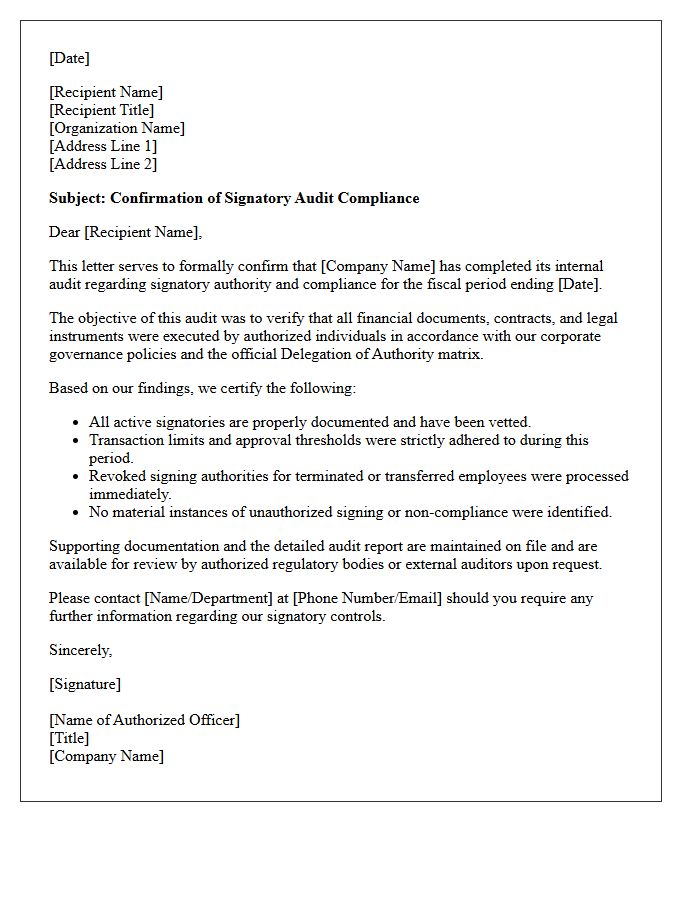
A Signatory Audit Compliance Letter serves as formal verification that an organization adheres to specific contractual obligations or regulatory standards. This document confirms that an authorized official has reviewed internal controls and found them compliant with agreed-upon terms. It is essential for maintaining transparency during financial audits or legal assessments. By providing this written assurance, entities mitigate risk and build trust with stakeholders, ensuring all governance protocols are strictly followed and documented for accountability purposes within the partnership or industry framework.
Corporate Account Mandate Renewal Letter
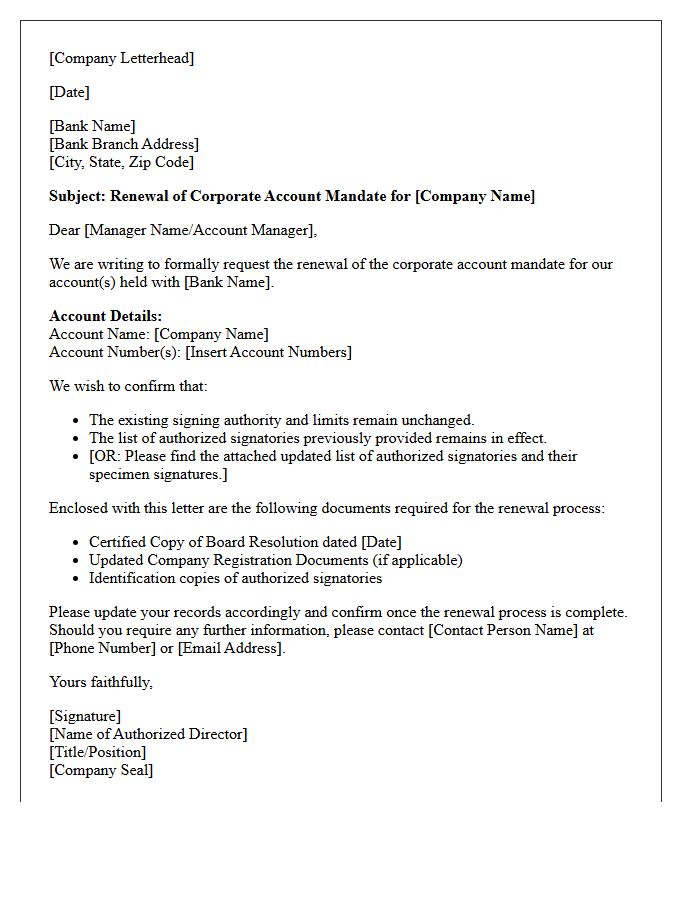
A corporate account mandate renewal letter is a formal document used to reconfirm authorized signatories and their transactional powers. It ensures that bank records align with current board resolutions, preventing unauthorized access to company funds. Businesses must submit this periodically or when leadership changes occur to maintain operational continuity. Providing updated identification and valid board minutes is essential for compliance with regulatory standards and anti-money laundering policies. Timely submission avoids account freezes, ensuring your organization's financial activities remain secure and uninterrupted.
What is an Authorized Signatory and Mandate Audit Confirmation Letter?
This letter is a formal request sent by an auditor to a financial institution to verify the list of individuals authorized to transact on a client's account and to confirm the specific operating mandates currently in place.
Why do auditors require a confirmation of the authorized signatory list?
Auditors require this confirmation to ensure that all financial transactions recorded in the financial statements were approved by personnel with the legal authority to bind the organization, thereby mitigating the risk of unauthorized or fraudulent activity.
What information is typically included in a Mandate Audit Confirmation?
The confirmation typically includes the names of authorized signatories, their signing limits, the required combination of signatures (e.g., "any two to sign"), and any specific restrictions or powers of attorney associated with the bank accounts.
How does an entity provide consent for the bank to release mandate details?
The entity must provide a signed authorization-often through a standardized bank confirmation request form-permitting the financial institution to disclose confidential signatory and mandate information directly to the appointed external auditor.
What is the difference between a standard balance confirmation and a mandate confirmation?
A standard balance confirmation verifies the specific amounts held in accounts or owed on loans, while a mandate confirmation focuses on the governance structure, verifying "who" has the authority to manage those funds and "how" instructions must be executed.

Comments