
An Overdraft Facility Audit Confirmation Letter is a formal request sent to financial institutions to verify the accuracy of short-term credit limits and outstanding balances. This essential document ensures financial transparency and compliance during an annual audit process. It helps auditors reconcile bank records with company ledgers effectively. To assist your documentation, below are some ready to use template.
Image cover: Mastering the Overdraft Facility Audit: Professional Confirmation Templates and Samples
Letter Samples List
- Standard Overdraft Facility Audit Confirmation Letter
- Corporate Overdraft Facility Audit Confirmation Letter
- Retail Overdraft Facility Audit Confirmation Letter
- Secured Overdraft Facility Audit Confirmation Letter
- Unsecured Overdraft Facility Audit Confirmation Letter
- Syndicated Overdraft Facility Audit Confirmation Letter
- Temporary Overdraft Facility Audit Confirmation Letter
- Revolving Overdraft Facility Audit Confirmation Letter
- Zero Balance Overdraft Facility Audit Confirmation Letter
- Non-Performing Overdraft Facility Audit Confirmation Letter
- Foreign Currency Overdraft Facility Audit Confirmation Letter
- Commercial Overdraft Facility Audit Confirmation Letter
- Interbank Overdraft Facility Audit Confirmation Letter
Standard Overdraft Facility Audit Confirmation Letter
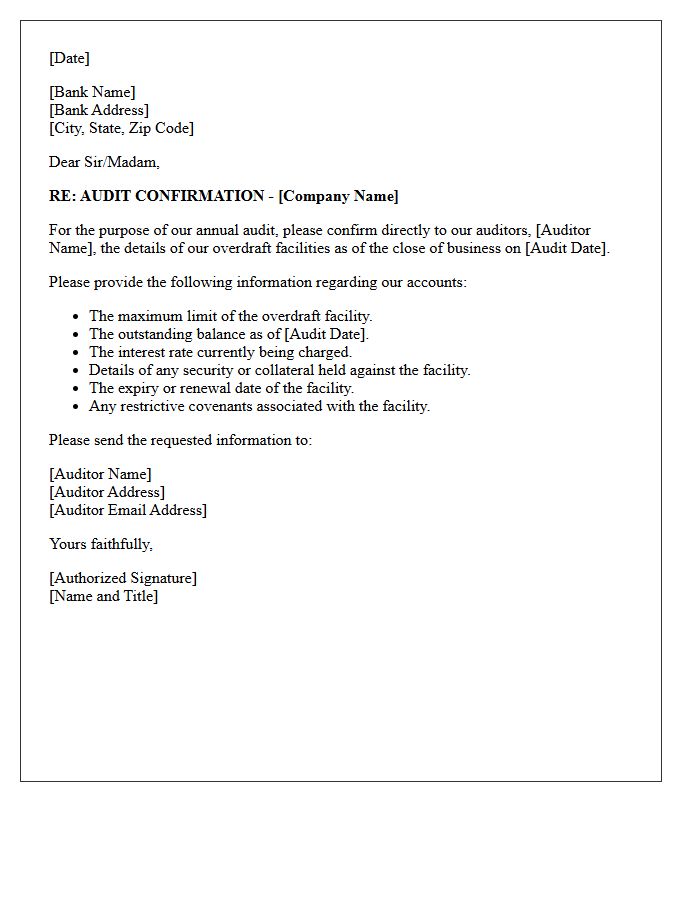
A Standard Overdraft Facility Audit Confirmation Letter is a formal request sent by auditors to a financial institution to verify the accuracy of a company's reported debt. This document confirms the approved credit limit, outstanding balance, and specific terms like interest rates or expiration dates. It serves as critical third-party evidence to prevent financial misstatement and ensure all contingent liabilities or collateral pledges are transparently disclosed. Accurate responses are essential for completing a compliant statutory audit and validating the entity's liquidity position during the reporting period.
Corporate Overdraft Facility Audit Confirmation Letter
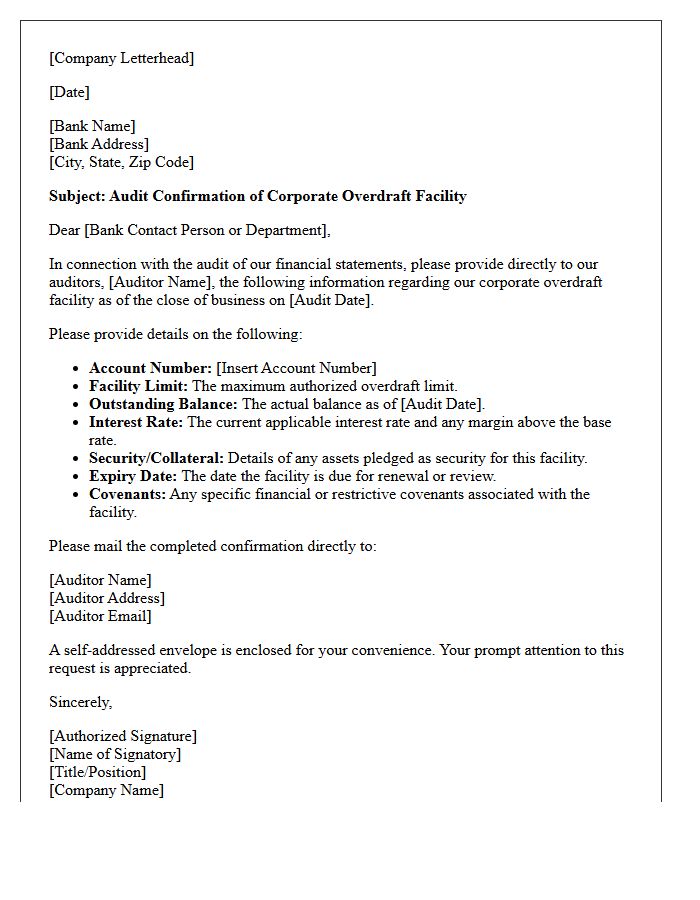
A Corporate Overdraft Facility Audit Confirmation Letter is a formal request sent by auditors to a financial institution to verify the accuracy of a company's debt obligations. This document ensures that the reported credit limits, outstanding balances, interest rates, and collateral details match the bank's records. It serves as critical third-party evidence to prevent financial misstatement, confirming the entity's liquidity position and compliance with lending covenants during the year-end financial reporting process.
Retail Overdraft Facility Audit Confirmation Letter
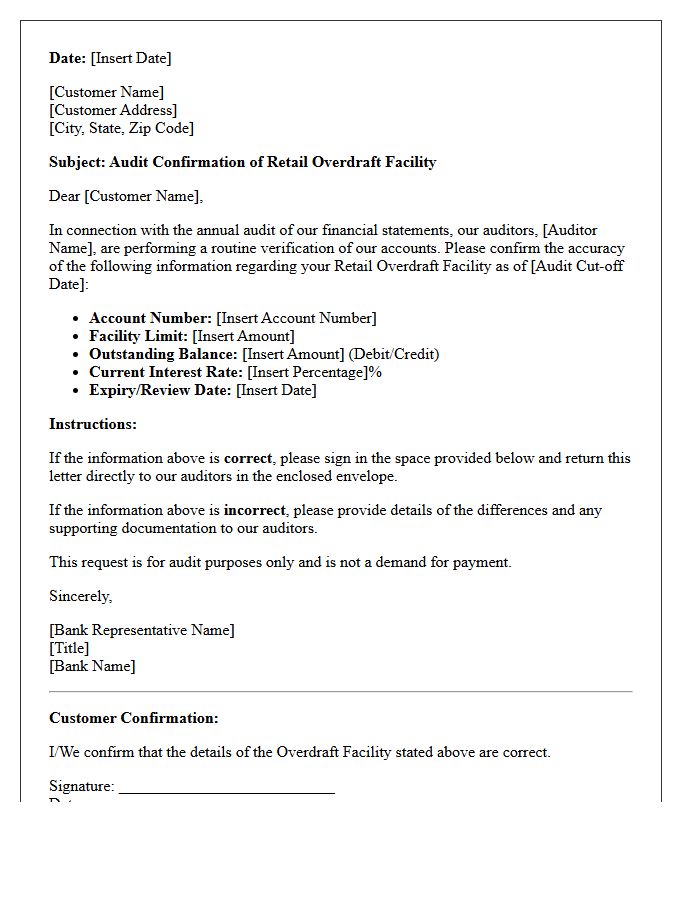
A Retail Overdraft Facility Audit Confirmation Letter is a formal request sent by auditors to verify the outstanding balance and terms of a business or personal credit line. This document ensures the financial records of the bank match the company's internal ledger. It confirms critical details such as interest rates, repayment terms, and collateral requirements. Verifying these figures is essential for maintaining financial transparency, preventing accounting errors, and ensuring compliance with regulatory reporting standards during a year-end audit process.
Secured Overdraft Facility Audit Confirmation Letter
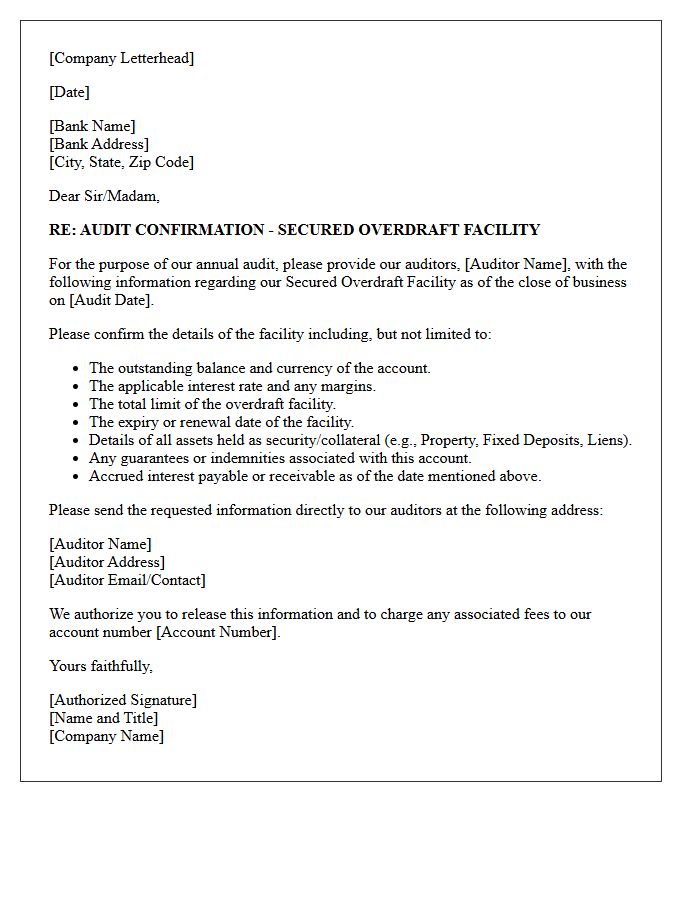
A Secured Overdraft Facility Audit Confirmation Letter is a formal request sent by auditors to a financial institution to verify outstanding balances and security arrangements. It ensures the accuracy of financial statements by confirming the limit, interest rates, and specific collateral pledged against the debt. This process mitigates risk by validating that the entity's liabilities and pledged assets are correctly reported. Accurate verification is essential for compliance and maintaining transparency during a statutory audit, confirming that the facility is legally binding and properly documented.
Unsecured Overdraft Facility Audit Confirmation Letter
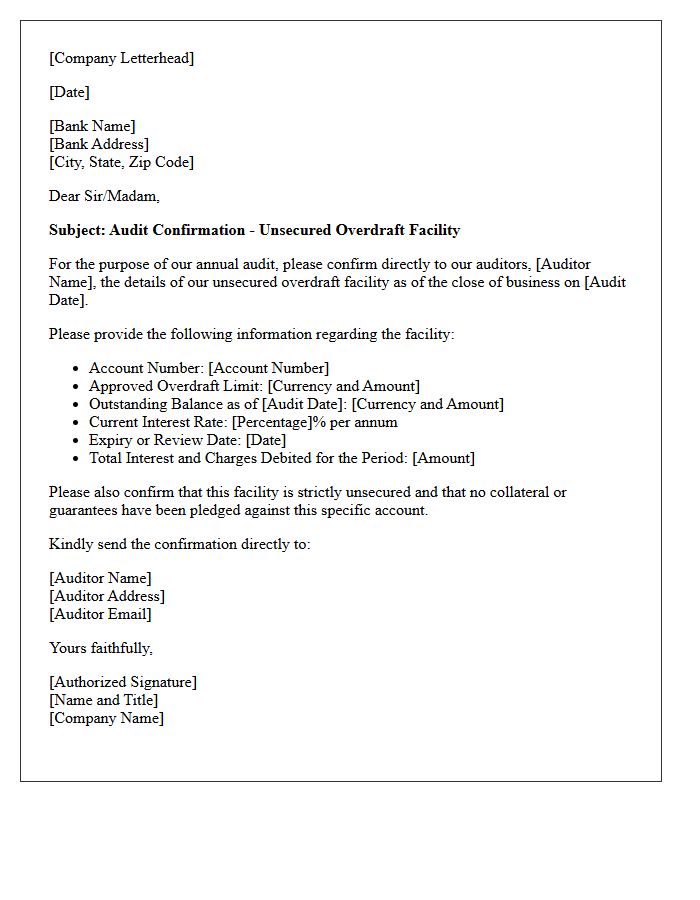
An Unsecured Overdraft Facility Audit Confirmation Letter is a formal document used by auditors to verify the outstanding balance and terms of a credit line with a bank. Unlike secured loans, this facility lacks collateral, making precise independent verification essential for assessing a company's financial liquidity and liability accuracy. The letter confirms key details such as interest rates, repayment terms, and limit availability. Accurate responses ensure that financial statements reflect a true and fair view of the entity's short-term debt obligations during the year-end reporting process.
Syndicated Overdraft Facility Audit Confirmation Letter
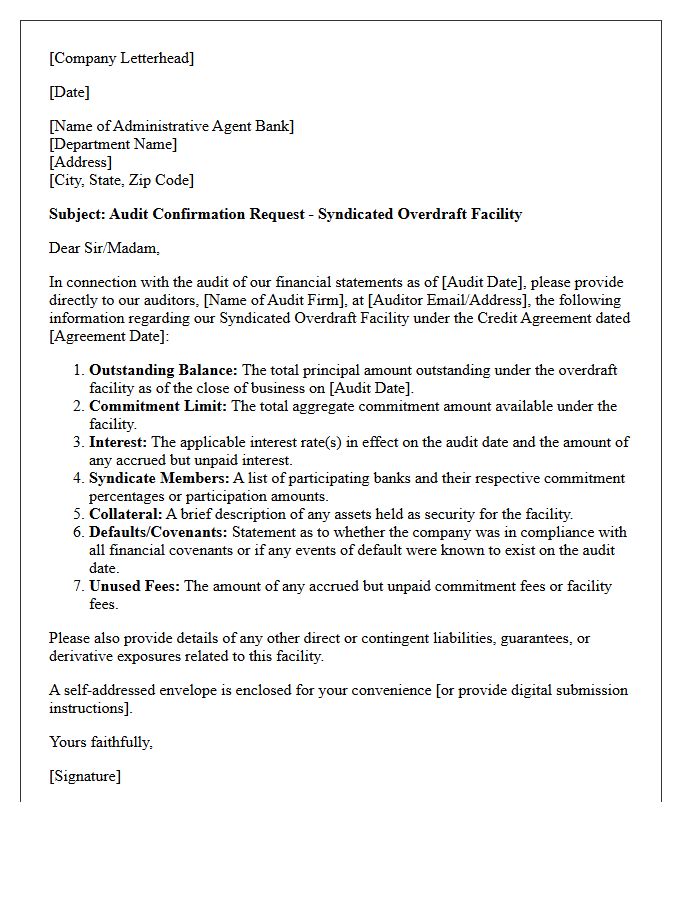
A Syndicated Overdraft Facility Audit Confirmation Letter is a formal request sent by auditors to verify outstanding balances and terms within a multi-lender credit arrangement. This document ensures financial transparency by reconciling the borrower's records with those of the lead agent and participating banks. It confirms critical data including the total commitment, utilized amounts, interest rates, and maturity dates. Accurate completion is essential for regulatory compliance and validating the liquidity position of a corporation, mitigating risks related to debt reporting errors in financial statements.
Temporary Overdraft Facility Audit Confirmation Letter
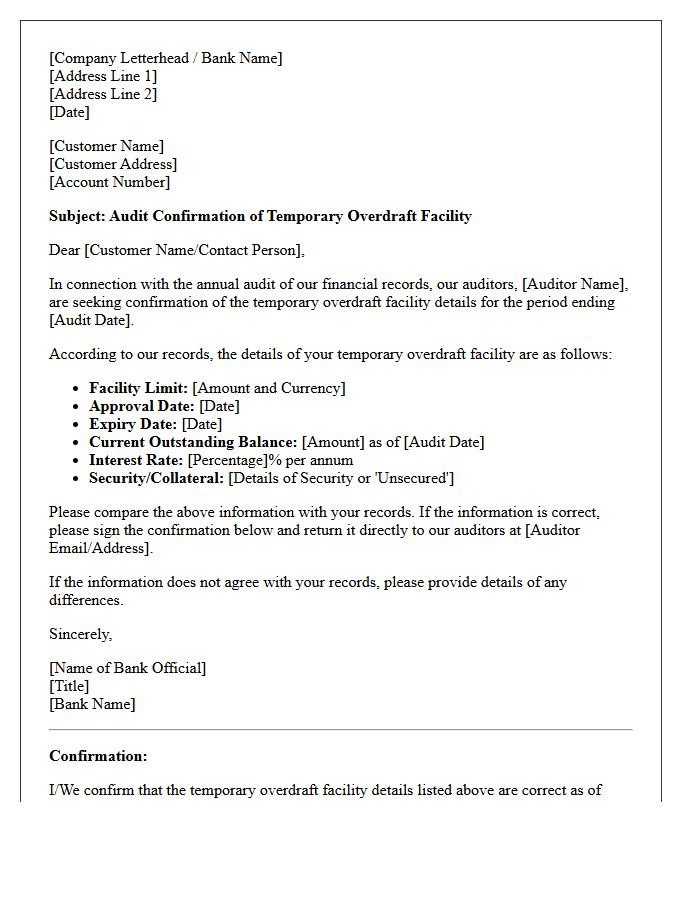
A Temporary Overdraft Facility Audit Confirmation Letter is a formal document used by auditors to verify the accuracy of short-term credit limits directly with a financial institution. This external validation ensures that the reported outstanding balances, interest rates, and expiration dates align with the company's financial statements. It serves as critical audit evidence to detect undisclosed liabilities and confirm the legal authorization of the borrowing. Timely completion of this verification process is essential for maintaining financial transparency and ensuring compliance with regulatory reporting standards during a year-end review.
Revolving Overdraft Facility Audit Confirmation Letter
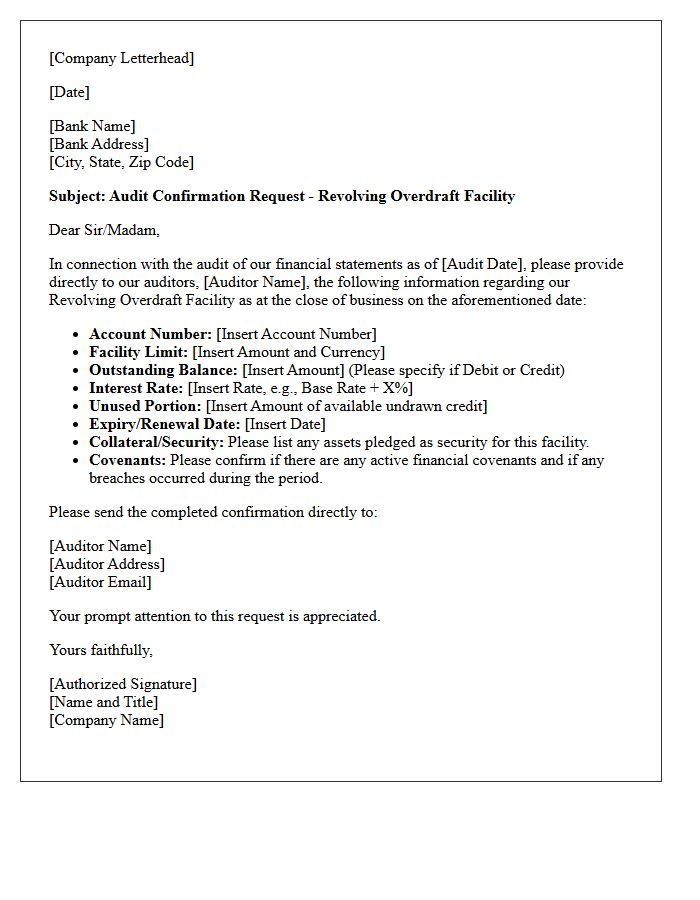
A Revolving Overdraft Facility Audit Confirmation Letter is a formal request sent by auditors to a financial institution. Its primary purpose is to verify the accuracy of outstanding balances, interest rates, and repayment terms associated with a company's credit line. This process ensures the financial statements reflect a true and fair view of the entity's liabilities. Confirming these details directly with the bank helps prevent material misstatements and fraud, providing essential third-party evidence that validates the existence and completeness of the debt during a financial year-end review.
Zero Balance Overdraft Facility Audit Confirmation Letter
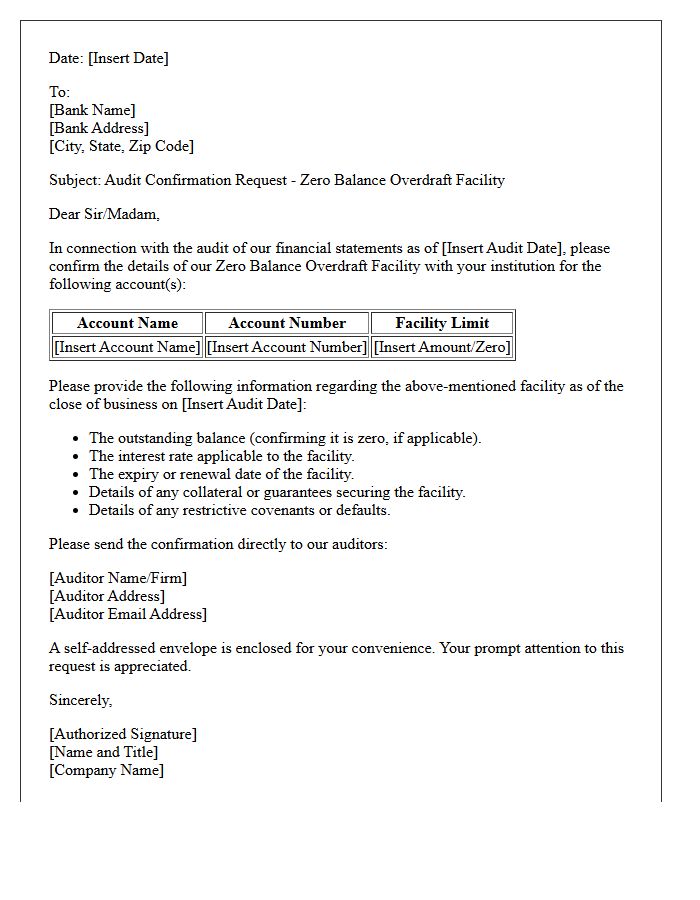
A Zero Balance Overdraft Facility Audit Confirmation Letter is a critical document used during financial examinations to verify the status of a corporate credit line. It requests the bank to independently confirm outstanding balances, interest rates, and available limits as of a specific date. This ensures the accuracy of financial statements and detects potential reporting discrepancies. Auditors rely on this third-party verification to mitigate risks of fraud or accounting errors, providing transparency regarding the company's actual debt obligations and liquidity position within the banking system.
Non-Performing Overdraft Facility Audit Confirmation Letter
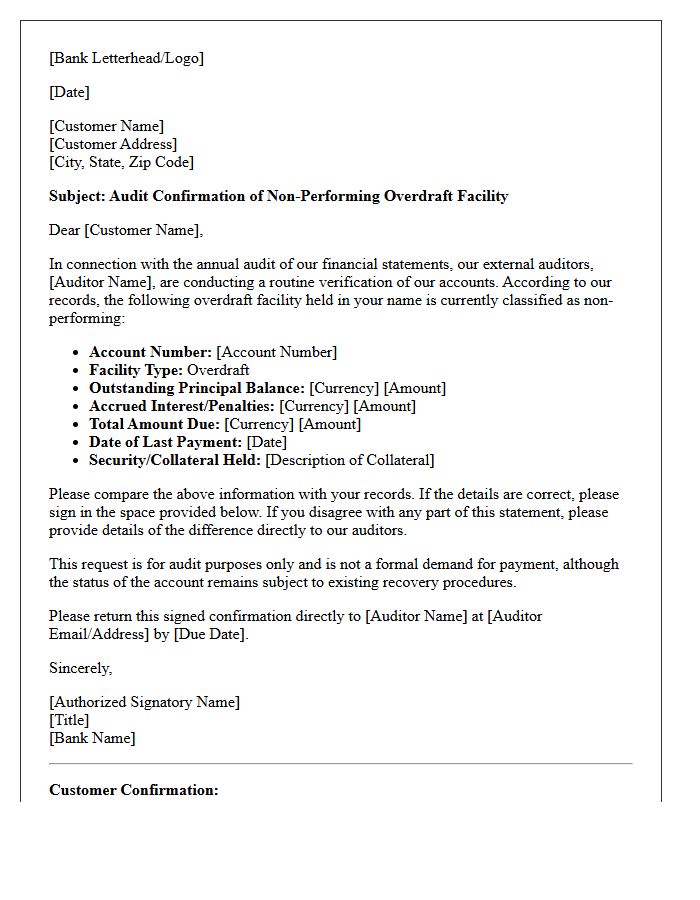
A Non-Performing Overdraft Facility Audit Confirmation Letter is a formal request sent by auditors to verify the outstanding balance and terms of a delinquent credit line. It serves as critical third-party evidence to ensure financial statements accurately reflect the borrower's liabilities and the bank's non-performing assets. Key elements include the interest rate, default status, and any collateral held against the debt. This verification process is essential for risk assessment, regulatory compliance, and confirming the valuation of distressed debt within a corporate or banking audit.
Foreign Currency Overdraft Facility Audit Confirmation Letter
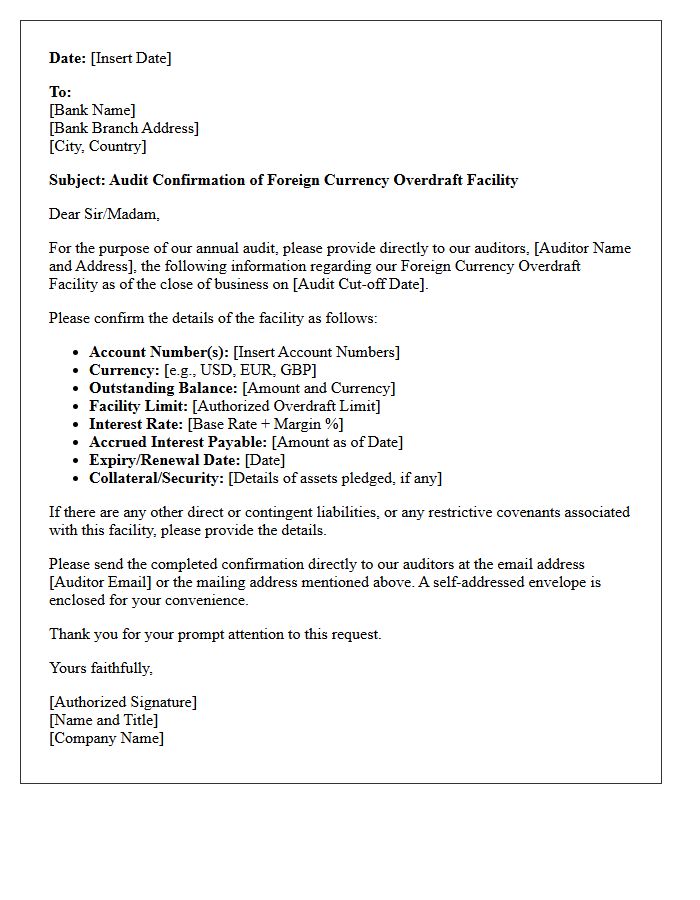
A Foreign Currency Overdraft Facility Audit Confirmation Letter is a critical document used to verify a company's outstanding debt obligations held in non-local denominations. It ensures that the reported balances, interest rates, and collateral terms align with bank records. Auditors utilize this independent verification to mitigate risks of financial misstatement and confirm liquidity levels. Accurate confirmation prevents discrepancies in foreign exchange valuation and ensures compliance with international accounting standards during the annual audit process.
Commercial Overdraft Facility Audit Confirmation Letter
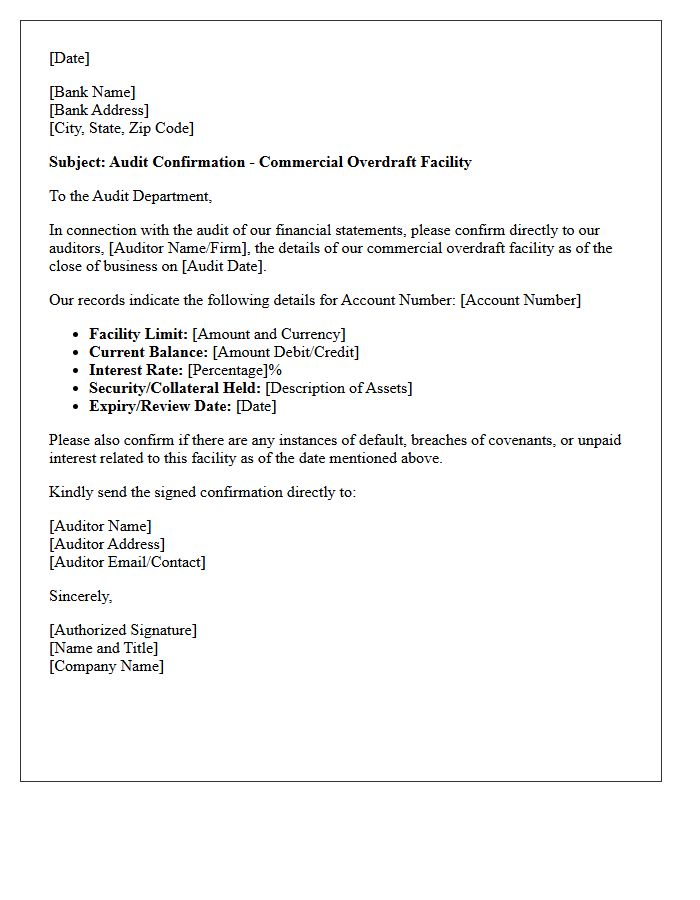
A Commercial Overdraft Facility Audit Confirmation Letter is a formal request sent by auditors to a financial institution to verify a company's outstanding debt. This document ensures the accuracy of financial statements by confirming credit limits, interest rates, and repayment terms. It serves as a vital internal control to prevent reporting errors and detect potential fraud. For businesses, responding promptly to these verifications is essential for completing a successful annual audit and maintaining transparency with stakeholders regarding their total liquidity obligations and available borrowing capacity.
Interbank Overdraft Facility Audit Confirmation Letter
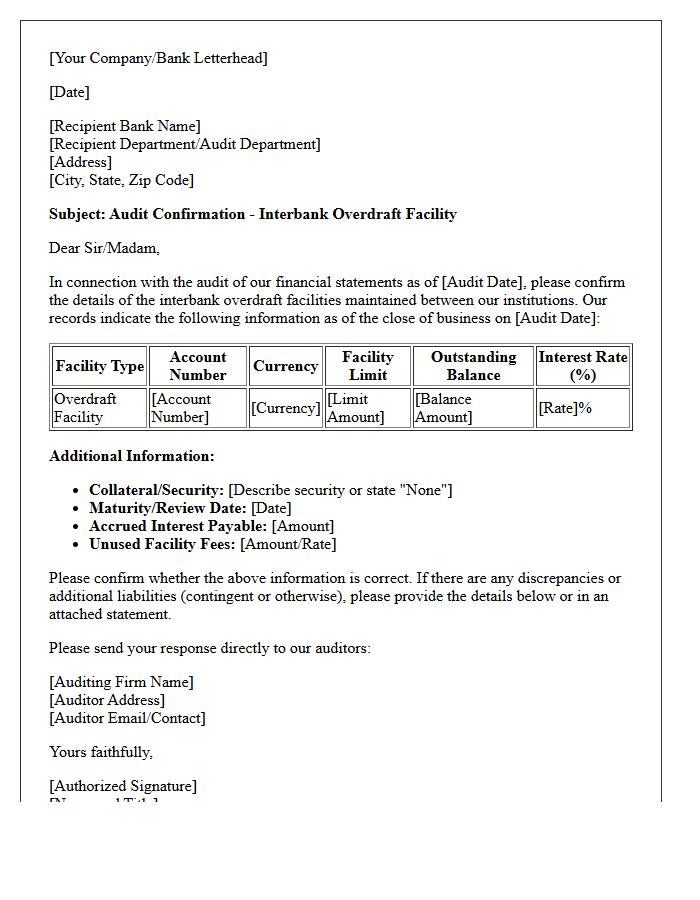
An Interbank Overdraft Facility Audit Confirmation Letter is a formal request sent by auditors to financial institutions to verify the accuracy of reported credit lines. This document confirms critical details, including outstanding balances, interest rates, and collateral terms as of a specific date. It serves as essential audit evidence to ensure the existence and valuation of liabilities. Accurate responses prevent financial discrepancies and guarantee that the bank's financial statements reflect true obligations, maintaining transparency in interbank lending relationships and regulatory compliance during the annual reporting cycle.
What is an Overdraft Facility Audit Confirmation Letter?
An Overdraft Facility Audit Confirmation Letter is a formal document sent by an organization's external auditors to their financial institution to independently verify the outstanding balance, credit limits, interest rates, and pledged collateral associated with an overdraft account at a specific cutoff date.
Why do auditors require a direct confirmation for overdraft facilities?
Auditors require direct confirmation to ensure the existence, accuracy, and completeness of liabilities reported on the financial statements. This process mitigates the risk of material misstatement by obtaining third-party evidence directly from the bank, bypassing potential internal manipulation of records.
What key details are verified in an Overdraft Audit Confirmation?
The letter typically verifies the facility's limit, the actual balance drawn as of the year-end date, the interest rate structure, any restrictive covenants, the expiry date of the facility, and a detailed description of the assets held as security or guarantees.
Who is responsible for initiating the Overdraft Facility Audit Confirmation process?
While the auditor prepares the request, the client (the account holder) must sign and authorize the letter to grant the bank permission to disclose sensitive financial information. The auditor then sends the letter directly to the bank and ensures the response is returned directly to the audit firm.
What is the difference between a positive and negative audit confirmation for overdrafts?
A positive confirmation requires the bank to respond regardless of whether they agree with the stated balance, providing a higher level of assurance. A negative confirmation only requests a response if the bank disagrees with the provided figure; however, positive confirmations are the standard practice for verifying debt and overdraft facilities.

Comments