
Protecting financial infrastructure is critical to maintaining operational security. A Cease and Desist Letter for Illegal Distribution of Internal Bank Routing Mechanisms serves as a formal legal notice to stop the unauthorized sharing of sensitive data, such as private routing protocols or internal clearing codes. This document asserts proprietary rights and warns of potential litigation. Below are some ready to use templates.
Image cover: Legal Protections for Proprietary Bank Routing Protocols: Cease and Desist Templates
Letter Samples List
- Cease and Desist Letter for Unauthorized Distribution of Internal Bank Routing Mechanisms
- Formal Cease and Desist Letter Regarding the Illegal Sharing of Bank Routing Protocols
- Final Warning Letter for Prohibited Distribution of Internal Banking Mechanisms
- Immediate Cease and Desist Letter Concerning Confidential Bank Routing Distribution
- Legal Notice and Cease and Desist Letter for Unauthorized Bank Routing Software Distribution
- Cease and Desist Letter for the Unlawful Dissemination of Internal Routing Codes
- Statutory Cease and Desist Letter for Illegal Transmission of Financial Routing Mechanisms
- Confidentiality Breach Cease and Desist Letter for Bank Routing System Distribution
- Official Cease and Desist Letter Against the Illegal Export of Internal Bank Routing Data
- Pre-Litigation Cease and Desist Letter for Unauthorized Access and Distribution of Routing Mechanisms
- Corporate Cease and Desist Letter for the Unlawful Sharing of Proprietary Bank Routing Mechanisms
- Urgent Cease and Desist Letter Regarding Illegal Brokerage of Internal Bank Routing Systems
Cease and Desist Letter for Unauthorized Distribution of Internal Bank Routing Mechanisms
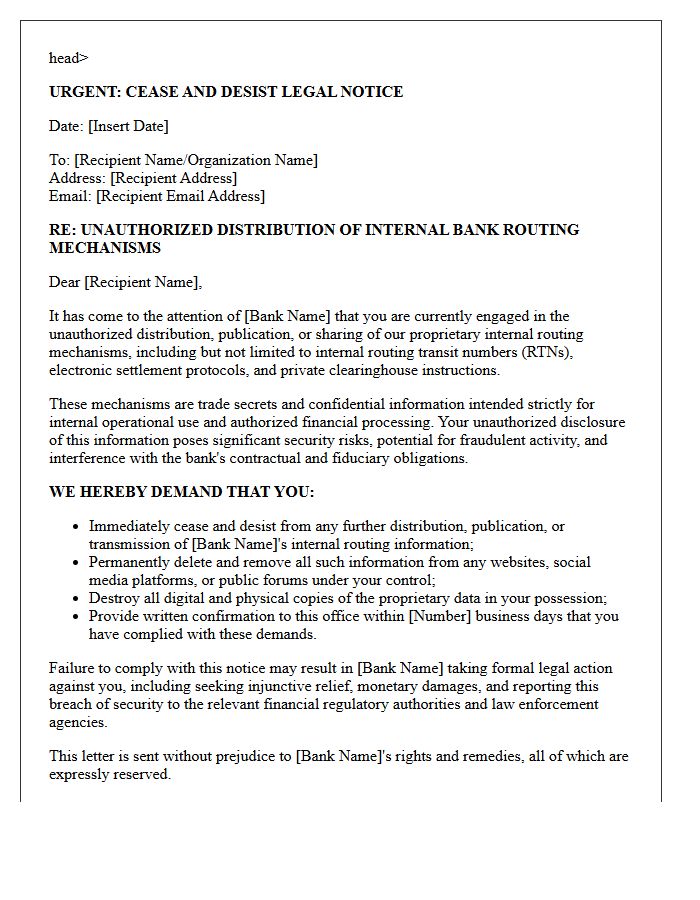
A cease and desist letter for the unauthorized distribution of internal bank routing mechanisms is a formal legal demand to stop leaking sensitive data. Disclosing private routing numbers or internal transfer protocols poses severe security risks and potential financial fraud. This document serves as a final warning before pursuing litigation for trade secret misappropriation or breach of confidentiality. Recipients must immediately halt all sharing and delete existing copies of the proprietary financial information to avoid criminal charges and civil liability under banking protection laws. Prompt compliance is essential to mitigate damages and prevent institutional instability.
Formal Cease and Desist Letter Regarding the Illegal Sharing of Bank Routing Protocols
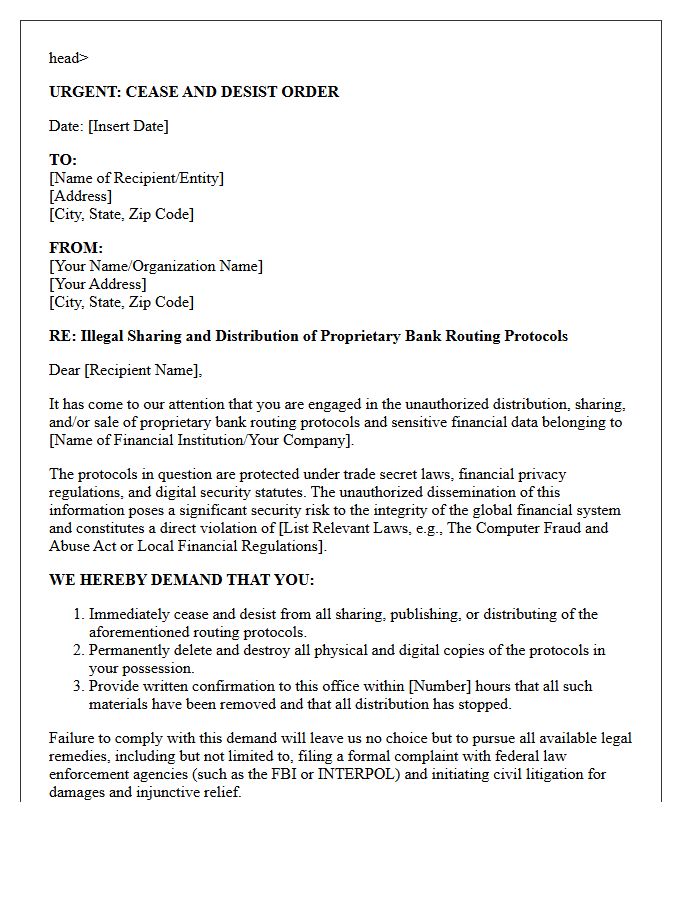
Distributing internal bank routing protocols without authorization is a serious financial crime. Receiving a formal cease and desist letter indicates that you must immediately cease the dissemination of proprietary data, API keys, or security transfer methods. These documents serve as a final legal warning before escalating to litigation or criminal charges under cybersecurity laws. Compliance requires you to delete all infringing materials and confirm the termination of such activities. Ignoring these legal demands can lead to significant monetary penalties, permanent injunctions, and federal investigations into electronic fraud and data theft.
Final Warning Letter for Prohibited Distribution of Internal Banking Mechanisms
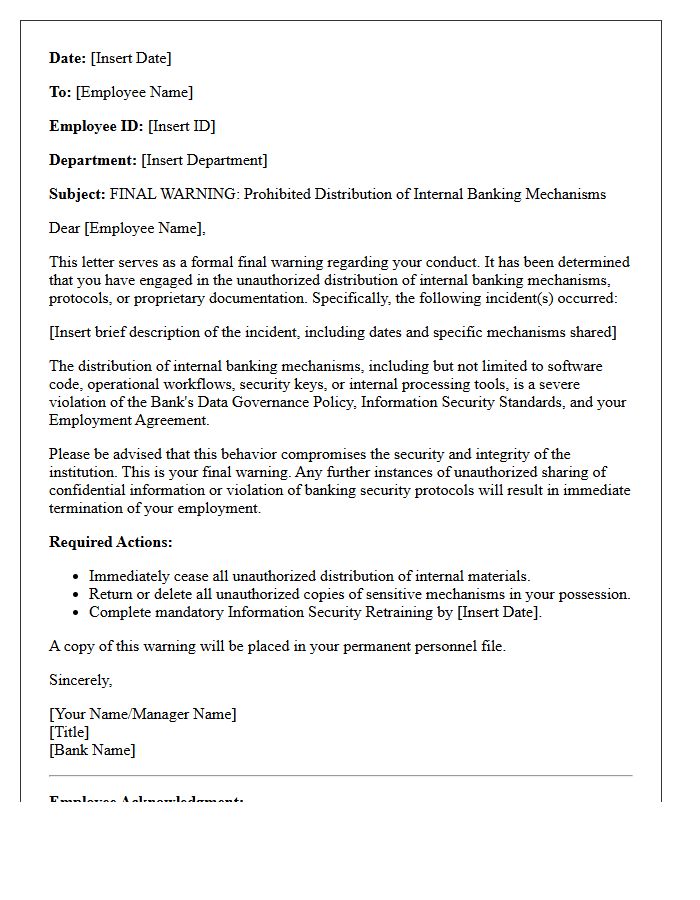
A final warning letter for the prohibited distribution of internal banking mechanisms serves as a critical disciplinary notice. It indicates that an employee shared sensitive proprietary tools, software, or operational frameworks without authorization. Such actions compromise financial security and breach strict confidentiality protocols. Receiving this document signifies the last stage before immediate termination of employment. It is essential to understand that unauthorized disclosure of banking systems can lead to legal action and permanent industry disqualification. Protecting internal data is a mandatory obligation to maintain institutional integrity and prevent systemic risks.
Immediate Cease and Desist Letter Concerning Confidential Bank Routing Distribution
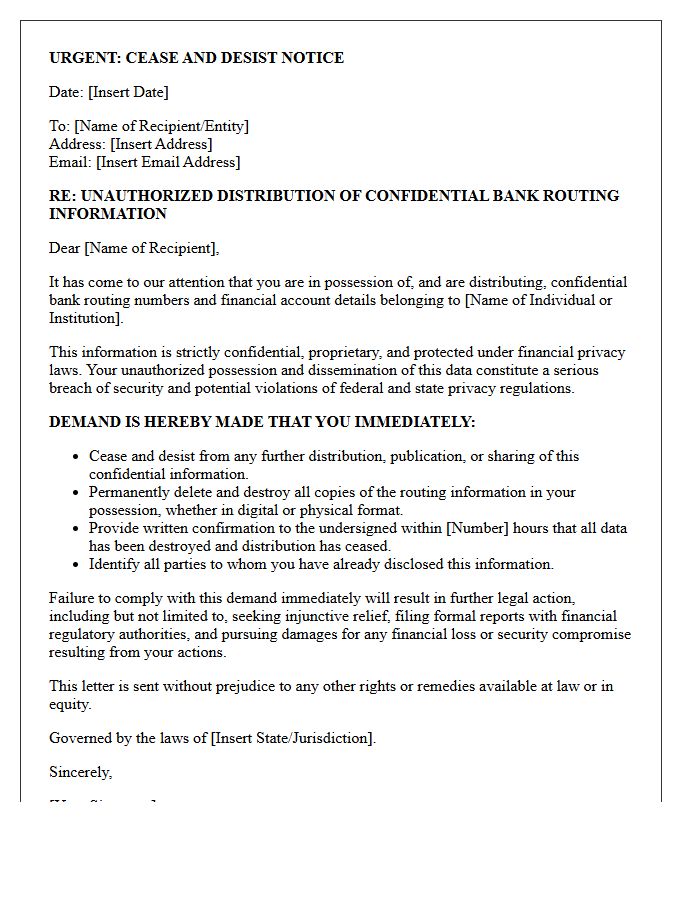
An immediate Cease and Desist Letter is a formal legal demand to stop the unauthorized sharing of sensitive financial data. Protecting a bank routing number is critical to prevent fraudulent transfers and systemic security breaches. This notice serves as a final warning, asserting that confidential bank routing distribution violates privacy laws and trade secret protections. Recipients must halt all dissemination instantly to avoid litigation and statutory damages. Safeguarding these digital assets ensures the integrity of the banking system and mitigates the risk of irreversible financial theft or corporate espionage.
Legal Notice and Cease and Desist Letter for Unauthorized Bank Routing Software Distribution
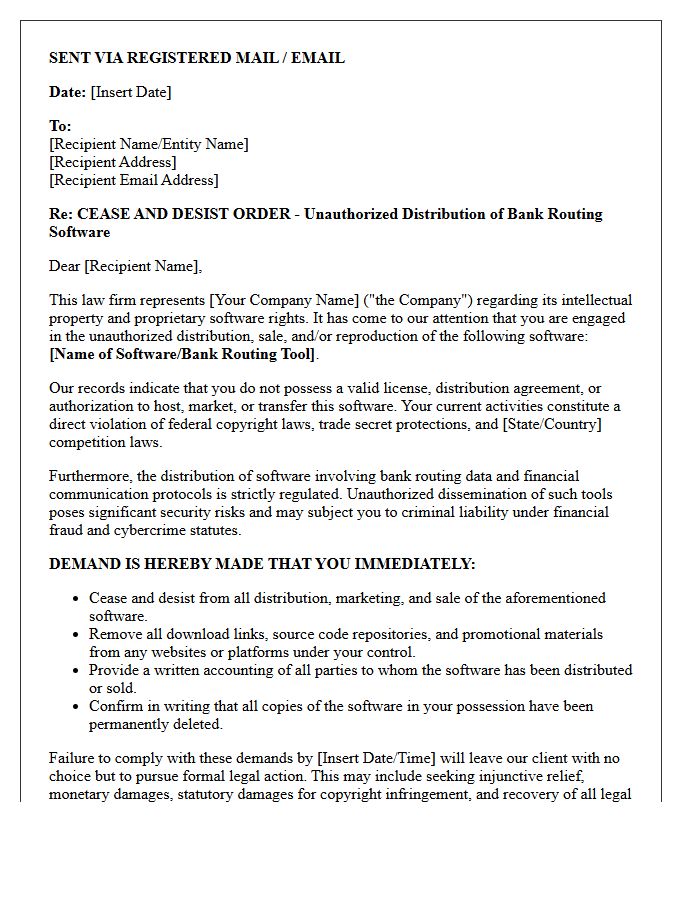
Distributing unauthorized bank routing software is a severe violation of financial regulations and intellectual property laws. If you receive a Cease and Desist Letter, you must immediately stop all distribution to avoid litigation and criminal charges. This legal notice serves as a formal warning that your actions infringe upon proprietary banking protocols and security standards. Failure to comply can lead to substantial statutory damages and permanent injunctions. Protecting financial integrity is paramount; therefore, addressing these legal demands promptly is essential to mitigate further legal liability and potential prosecution.
Cease and Desist Letter for the Unlawful Dissemination of Internal Routing Codes
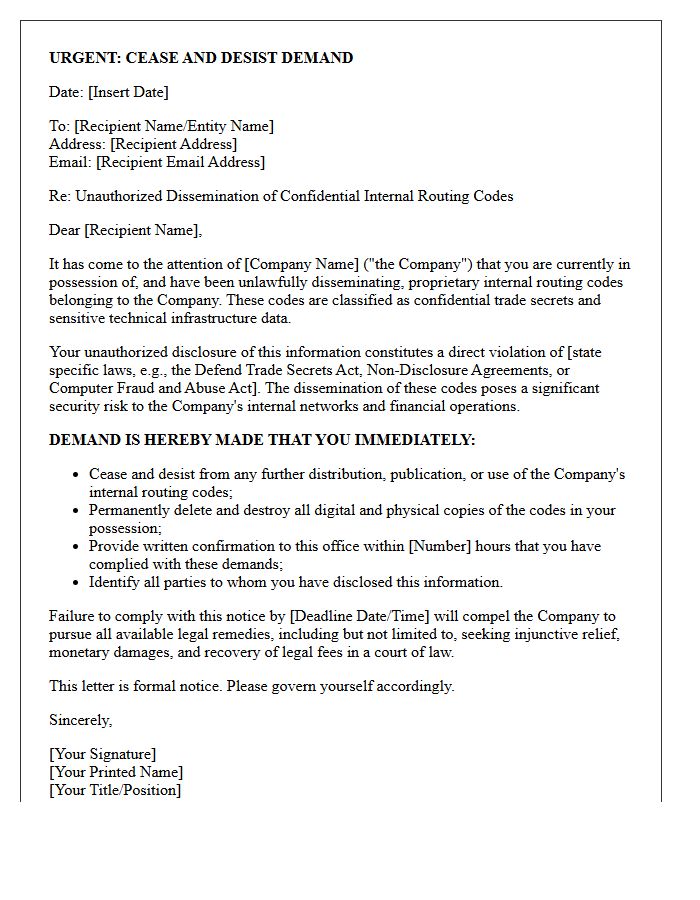
A cease and desist letter for the unlawful dissemination of internal routing codes serves as a formal legal demand to stop the unauthorized sharing of sensitive network data. These codes are proprietary information that can expose infrastructure vulnerabilities if leaked. Issuing this notice establishes a legal record of the infringement, warning the recipient of potential litigation under trade secret or cybersecurity laws. It is a critical tool for protecting corporate assets and preventing further security breaches or unauthorized access to private organizational systems.
Statutory Cease and Desist Letter for Illegal Transmission of Financial Routing Mechanisms
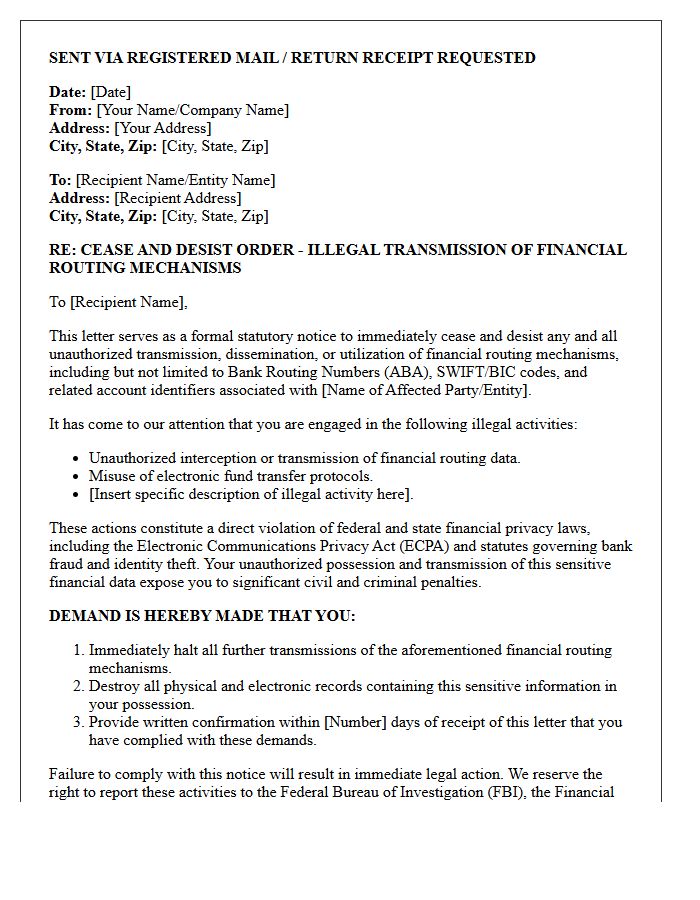
A statutory cease and desist letter for illegal transmission of financial routing mechanisms is a formal legal notice demanding the immediate termination of unauthorized distribution of banking data. It target individuals or entities sharing sensitive information like ABA routing numbers or SWIFT codes used to facilitate illicit transactions. This document serves as a pre-litigation warning, establishing a record of non-compliance and intent to pursue statutory damages. Failing to adhere to the notice can lead to severe criminal charges under wire fraud and financial privacy statutes, making prompt legal compliance essential for the recipient.
Confidentiality Breach Cease and Desist Letter for Bank Routing System Distribution
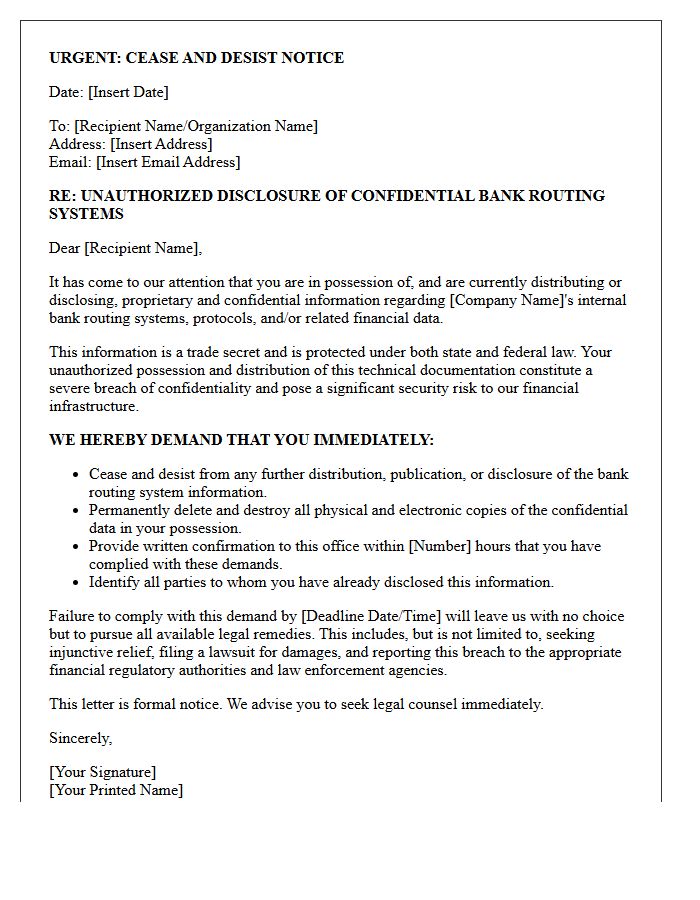
A Confidentiality Breach Cease and Desist Letter for bank routing systems is a formal legal demand to stop the unauthorized distribution of sensitive financial infrastructure. It asserts that sharing internal routing protocols violates non-disclosure agreements and trade secret laws. The notice mandates the immediate removal of proprietary data to prevent systemic security risks. Recipients must confirm compliance to avoid litigation or statutory damages. Protecting these routing systems is critical for maintaining banking integrity and preventing fraudulent transactions resulting from the exposure of secure internal network pathways.
Official Cease and Desist Letter Against the Illegal Export of Internal Bank Routing Data
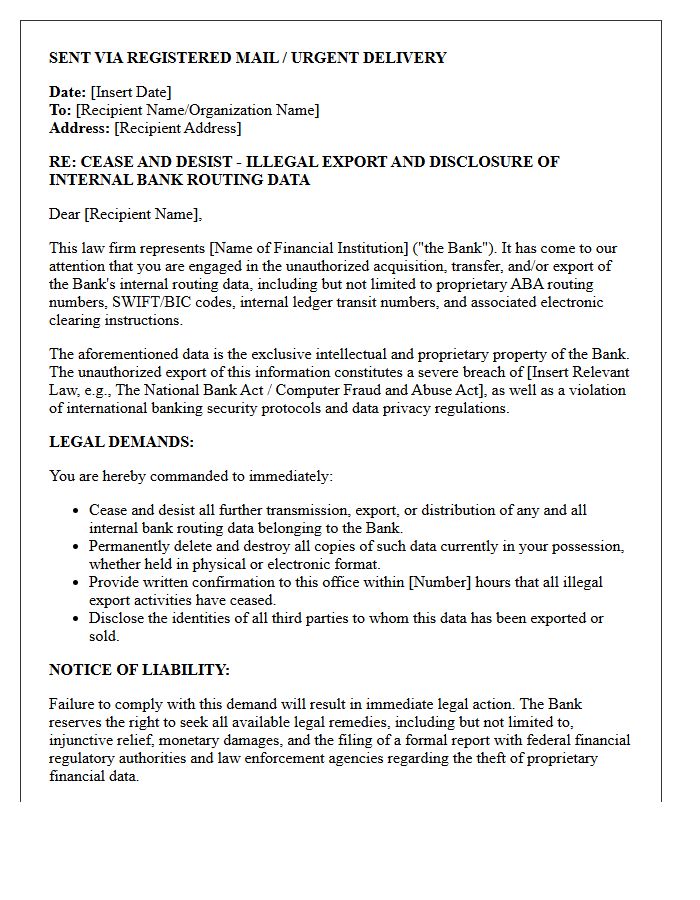
An official cease and desist letter regarding the illegal export of internal bank routing data serves as a critical legal instrument to stop unauthorized data transmission. This formal notice alerts parties that the distribution of sensitive financial infrastructure data violates strict privacy laws and banking regulations. Recipients must immediately halt all extraction and sharing activities to avoid severe litigation, regulatory fines, and criminal charges. Protecting this proprietary information is essential for maintaining the security of the global financial system and preventing fraudulent transactions or systemic institutional breaches.
Pre-Litigation Cease and Desist Letter for Unauthorized Access and Distribution of Routing Mechanisms
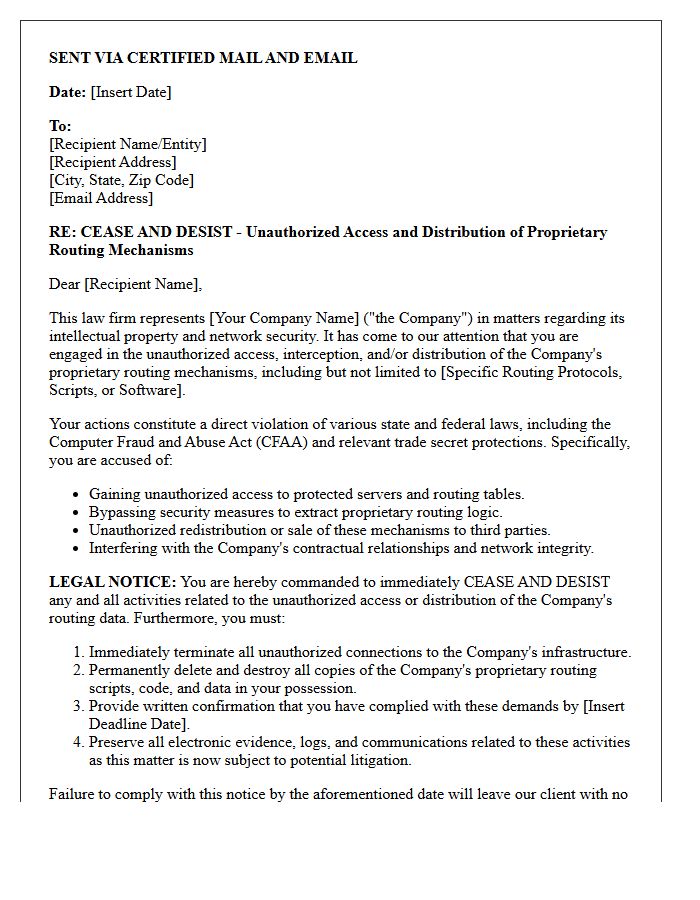
A pre-litigation cease and desist letter is a critical formal notice addressing the unauthorized access and distribution of proprietary routing mechanisms. It serves as a legal warning to cease infringing activities, such as digital trespassing or the illicit sharing of network protocols, before formal lawsuits commence. This document establishes a clear timeline for compliance and preserves the right to seek damages for intellectual property theft or security breaches. Issuing this letter is a vital first step in protecting trade secrets and maintaining the integrity of private technological infrastructure against cyber-related exploitation.
Corporate Cease and Desist Letter for the Unlawful Sharing of Proprietary Bank Routing Mechanisms
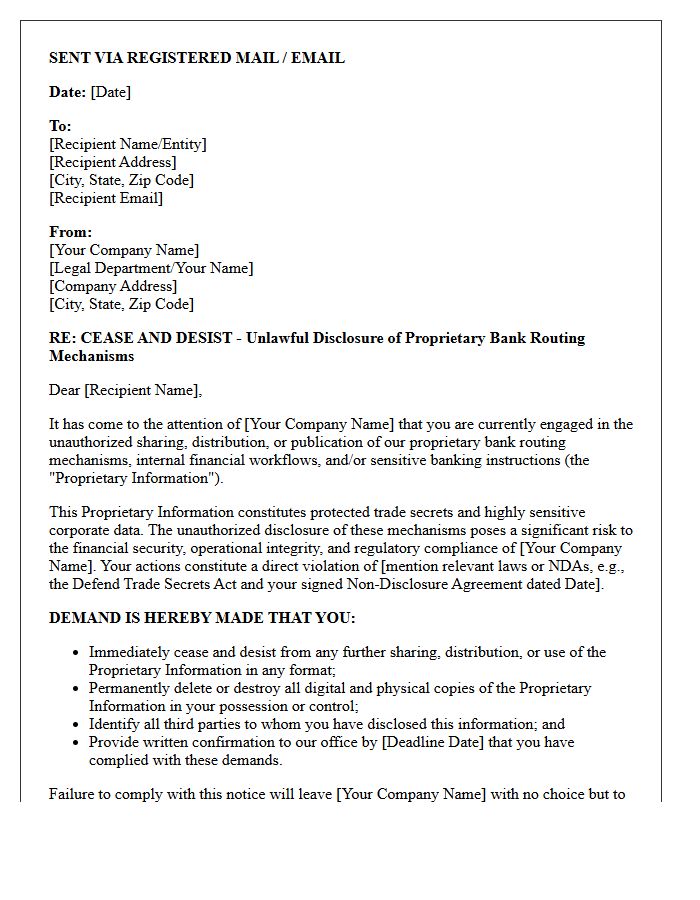
A corporate cease and desist letter serves as a formal legal warning against the unauthorized disclosure of confidential financial protocols. Protecting proprietary bank routing mechanisms is critical for maintaining institutional security and preventing fraudulent transactions. This document demands the immediate cessation of sharing sensitive data, such as internal clearing codes or algorithmic routing logic, which constitutes a breach of trade secrets. Failure to comply often leads to litigation for intellectual property infringement. Ensuring these proprietary assets remain private is essential for safeguarding the integrity of the global banking infrastructure and preventing systemic financial risk.
Urgent Cease and Desist Letter Regarding Illegal Brokerage of Internal Bank Routing Systems
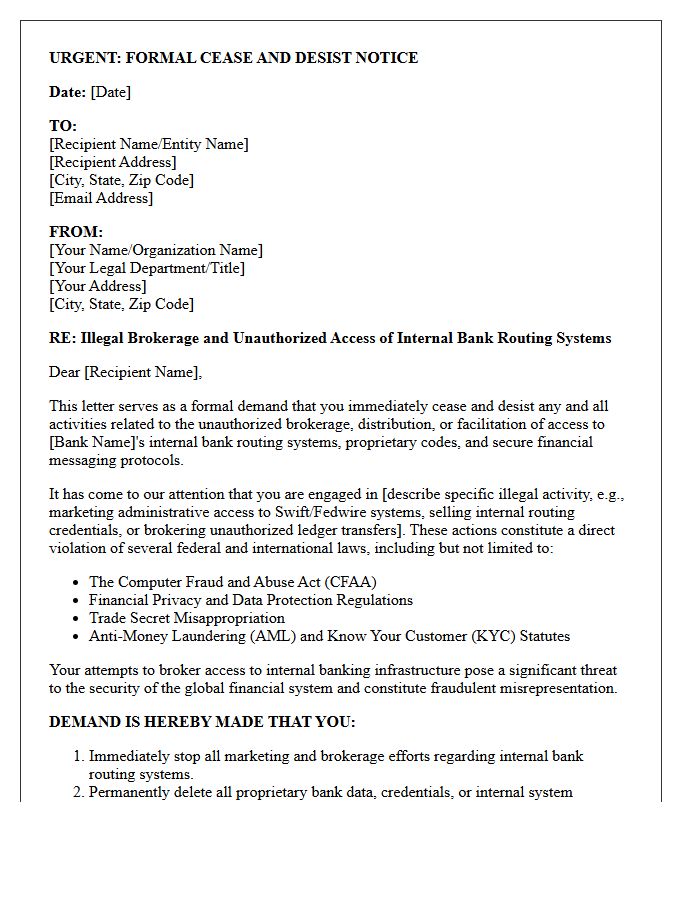
Sending an Urgent Cease and Desist Letter is a critical legal action to halt the illegal brokerage of internal bank routing systems. These protected protocols are proprietary financial infrastructures, and unauthorized solicitation or mediation constitutes severe federal violations. To mitigate liability, entities must immediately terminate all illicit data transmission and brokerage activities. Failure to comply often results in criminal prosecution and significant financial penalties. Protecting the integrity of banking communication networks is essential for maintaining global financial security and preventing systemic fraud through unauthorized access points.
What is a Cease and Desist Letter for the illegal distribution of bank routing mechanisms?
This letter is a formal legal notice demanding that an individual or entity immediately stop the unauthorized sharing, publication, or sale of internal banking protocols, routing codes, or proprietary financial transit data. It serves as a final warning before the financial institution initiates formal litigation or reports the activity to federal regulatory bodies.
Is sharing internal bank routing instructions considered a legal violation?
Yes, distributing internal bank routing mechanisms often constitutes a breach of trade secret laws, financial privacy regulations, and computer fraud statutes. Because these mechanisms are proprietary security measures used to facilitate secure fund transfers, unauthorized distribution can be classified as intellectual property theft or criminal facilitation of financial fraud.
What are the consequences of ignoring a Cease and Desist regarding financial data distribution?
Failure to comply with the demands in the letter can result in civil lawsuits for damages, injunctions to seize digital assets, and criminal referrals to agencies such as the FBI or the Secret Service. Financial institutions may also seek recovery for costs associated with re-securing their internal systems and potential losses incurred due to the data breach.
Does a Cease and Desist letter apply if the routing information was found publicly?
Even if the information was discovered in the public domain, the act of further redistributing internal bank routing mechanisms can still carry legal liability. The letter serves to put the recipient on notice that the data is proprietary; continued distribution after receiving notice establishes "willful intent," which significantly increases legal penalties.
What actions should be taken upon receiving a Cease and Desist for internal banking data?
The recipient must immediately remove all infringing material from digital platforms, cease any further communication of the data, and provide written confirmation of compliance as requested in the letter. It is highly recommended to consult with legal counsel to ensure that all proprietary bank data has been properly purged to avoid further litigation.

Comments