
Protect your intellectual property from misuse with a formal Cease and Desist Letter. Unauthorized distribution of proprietary credit risk models can lead to severe financial loss and competitive disadvantage. This article explains the legal steps to demand the immediate removal of your sensitive data and prevent further copyright infringement. To assist your legal response, below are some ready to use templates.

Image cover: Protect Your Intellectual Property: Proprietary Credit Risk Model Cease and Desist Templates
Letter Samples List
- Cease And Desist Letter For Unauthorized Publication Of Proprietary Credit Risk Models By Former Employees
- Notice And Cease And Desist Letter Regarding Public Disclosure Of Bank Credit Risk Algorithms
- Immediate Cease And Desist Letter For Unapproved Distribution Of Institutional Credit Scoring Models
- Formal Cease And Desist Letter For The Unauthorized Sharing Of Banking Risk Assessment Frameworks
- Pre-Litigation Cease And Desist Letter For Intellectual Property Theft Of Credit Risk Models
- Cease And Desist Letter Against Competitor Use Of Proprietary Bank Credit Risk Data
- Final Warning Cease And Desist Letter For Publishing Confidential Credit Risk Methodologies
- Cease And Desist Letter Demanding Takedown Of Proprietary Banking Risk Models From Academic Journals
- Urgent Cease And Desist Letter For Unauthorized Online Publication Of Credit Scoring Algorithms
- Cease And Desist Letter To Third-Party Vendors Regarding Publication Of Bank Credit Risk Models
- Cease And Desist Letter Addressing The Breach Of Confidentiality Covering Credit Risk Models
- Cease And Desist Letter For Unauthorized Open-Source Release Of Institutional Credit Risk Models
Cease And Desist Letter For Unauthorized Publication Of Proprietary Credit Risk Models By Former Employees
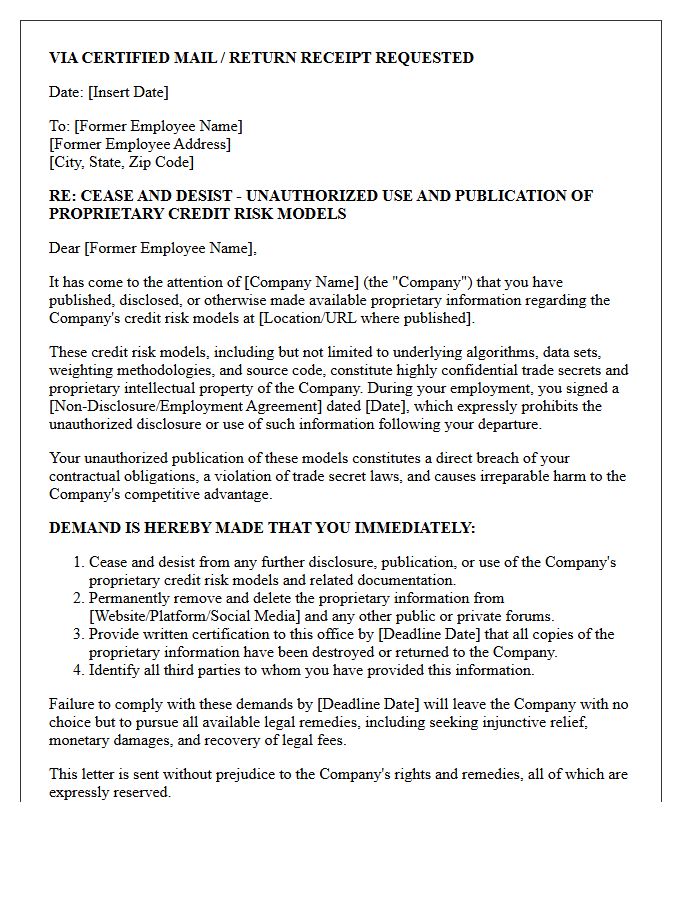
A Cease and Desist Letter is a critical legal tool used to halt the unauthorized publication of trade secrets. When former employees leak proprietary credit risk models, it threatens a firm's competitive advantage and financial security. This formal notice demands an immediate stop to the distribution of intellectual property and warns of potential litigation for breach of contract or misappropriation. Protecting these predictive algorithms is essential for maintaining regulatory compliance and market integrity. Promptly serving this letter establishes a legal paper trail necessary for seeking future damages or injunctive relief.
Notice And Cease And Desist Letter Regarding Public Disclosure Of Bank Credit Risk Algorithms
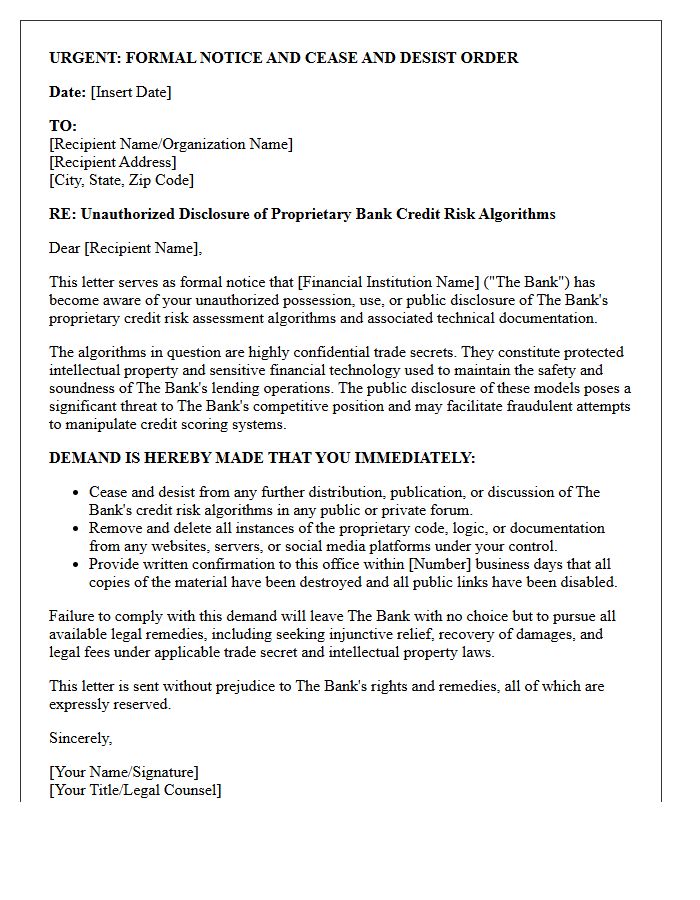
A Cease and Desist Letter regarding the public disclosure of bank credit risk algorithms is a formal legal notice demanding the immediate stop of unauthorized distribution. These proprietary algorithms are protected as trade secrets and intellectual property. Unauthorized sharing compromises financial security and competitive advantages. Recipients must comply to avoid litigation, statutory damages, and injunctions. Such notices emphasize that confidentiality is paramount for maintaining the integrity of banking infrastructure and regulatory compliance. If you receive this letter, seeking legal counsel is essential to address potential breaches of non-disclosure agreements.
Immediate Cease And Desist Letter For Unapproved Distribution Of Institutional Credit Scoring Models
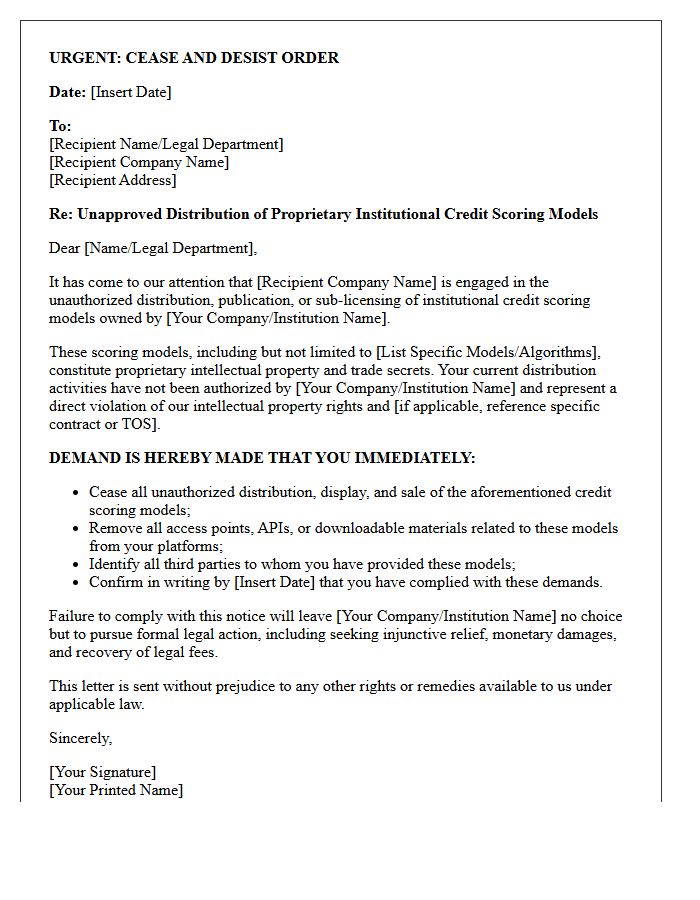
Sending an immediate Cease and Desist Letter is the primary legal remedy for protecting proprietary intellectual property. When third parties engage in the unapproved distribution of institutional credit scoring models, they violate trade secret protections and copyright laws. These formal notices demand an instantaneous halt to unauthorized sharing to prevent market dilution and financial misinformation. Ensuring legal compliance and data integrity is essential, as the exposure of sensitive algorithms can compromise banking security and institutional risk assessments. Use these letters to establish a formal record for potential litigation against infringing entities.
Formal Cease And Desist Letter For The Unauthorized Sharing Of Banking Risk Assessment Frameworks
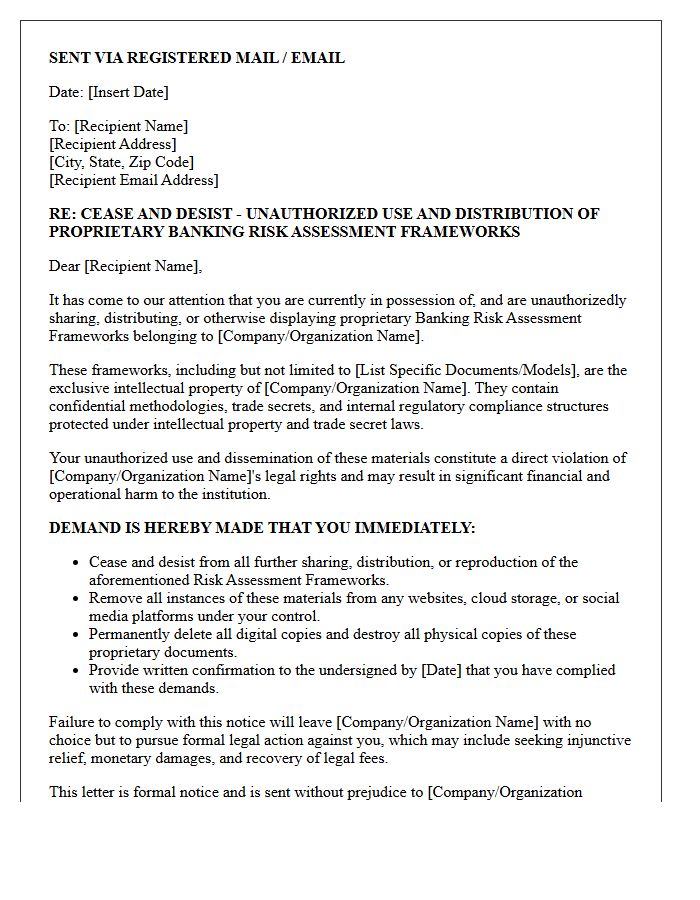
A formal cease and desist letter is a critical legal tool used to stop the unauthorized sharing of proprietary banking risk assessment frameworks. These frameworks constitute sensitive intellectual property and trade secrets essential for financial compliance. Sending this notice establishes a formal record of intellectual property infringement, demanding the immediate removal of protected data. It serves as a necessary prerequisite for potential litigation, warning the recipient of legal consequences if they continue to disclose confidential methodologies or internal security protocols without explicit authorization from the owner.
Pre-Litigation Cease And Desist Letter For Intellectual Property Theft Of Credit Risk Models
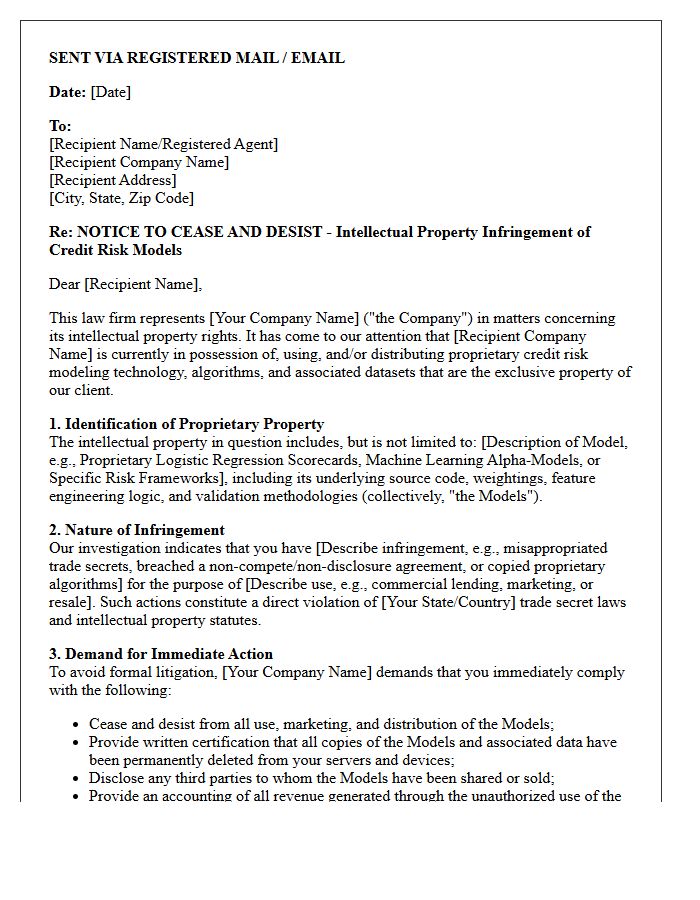
A pre-litigation cease and desist letter is a critical formal notice used to halt the intellectual property theft of proprietary credit risk models. This legal instrument demands that the infringing party immediately stop using trade secrets or copyrighted algorithms to avoid formal litigation. It serves as essential evidence of notice, establishing a timeline for damages if the unauthorized use continues. By asserting ownership over unique mathematical frameworks and datasets, companies can effectively protect their competitive advantage and proprietary methodology from unlawful exploitation before escalating to a costly courtroom battle.
Cease And Desist Letter Against Competitor Use Of Proprietary Bank Credit Risk Data
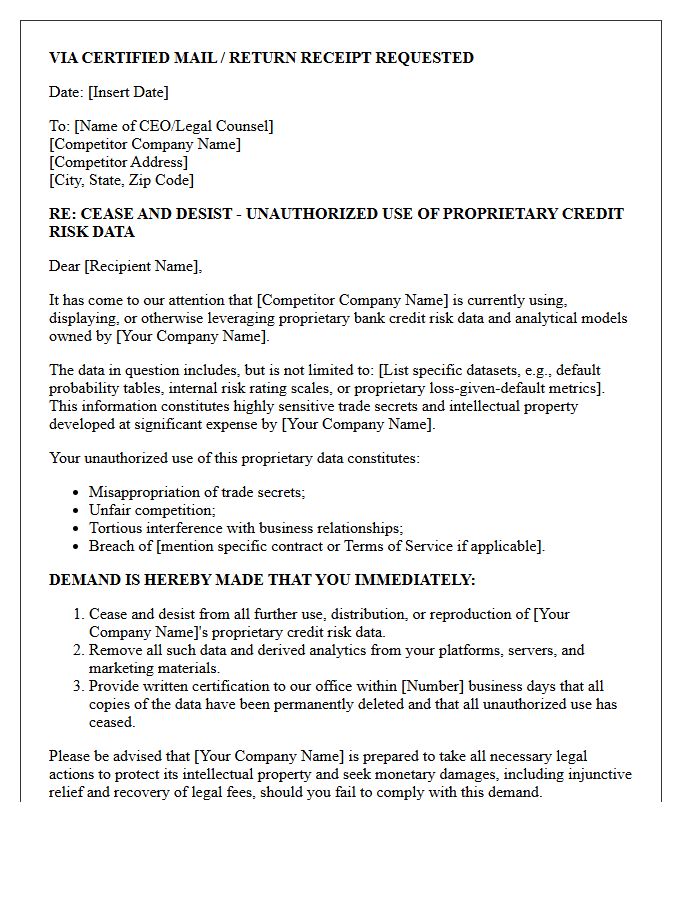
Protecting intellectual property is vital when a rival misappropriates confidential metrics. A Cease and Desist Letter serves as a formal legal notice demanding that a competitor immediately stop using your proprietary bank credit risk data. This document establishes a paper trail for potential litigation, asserting your ownership over unique risk models and trade secrets. It highlights specific violations of intellectual property rights or breach of contract, providing a final opportunity to resolve the infringement out of court before escalating to formal legal action or seeking injunctive relief.
Final Warning Cease And Desist Letter For Publishing Confidential Credit Risk Methodologies
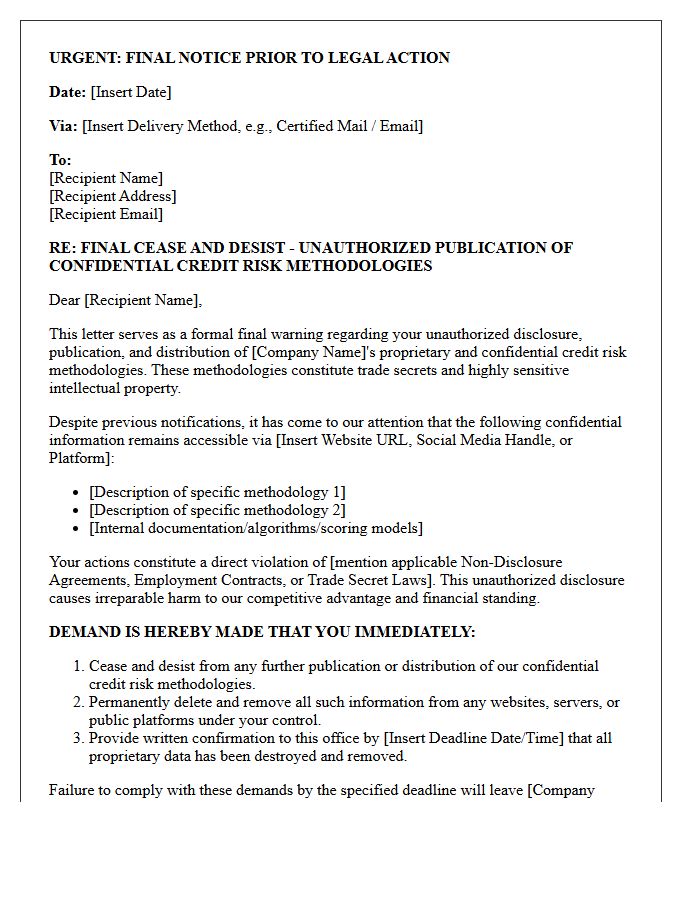
Receiving a Final Warning Cease and Desist Letter indicates an urgent legal demand to stop unauthorized disclosure. This document asserts that publishing proprietary credit risk methodologies constitutes a breach of intellectual property or trade secret protections. Continued dissemination may lead to immediate litigation, injunctions, and financial damages. Recipients must prioritize legal compliance by removing the confidential content and providing written assurance of its destruction. Ignoring this formal notice risks severe consequences for compromising sensitive financial frameworks and competitive trade secrets essential to the institution's operational security.
Cease And Desist Letter Demanding Takedown Of Proprietary Banking Risk Models From Academic Journals
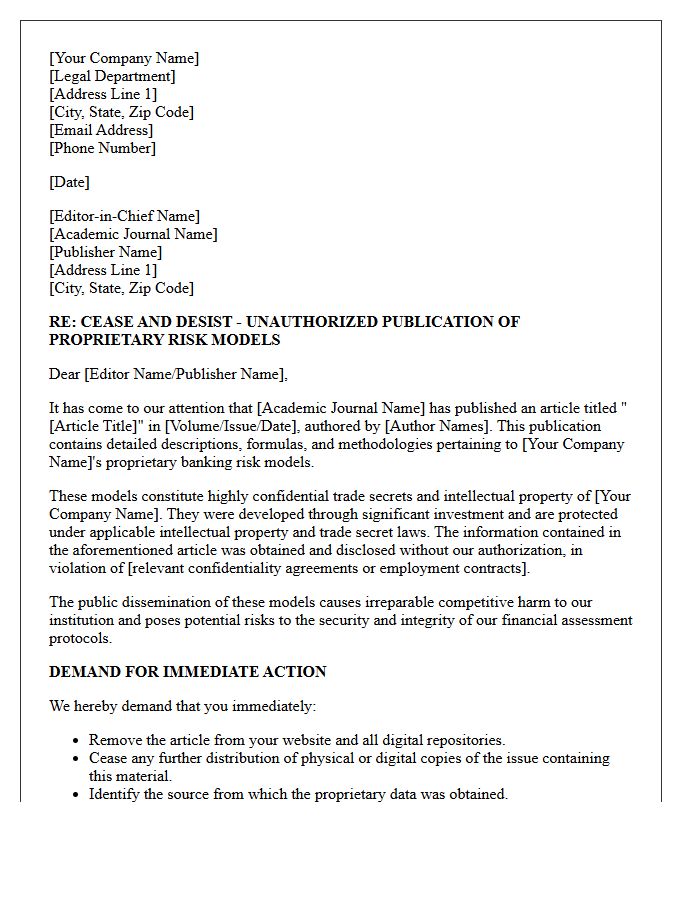
A Cease and Desist Letter serves as a formal legal warning to stop intellectual property infringement. When financial institutions identify their proprietary banking risk models in academic journals, they issue these notices to protect trade secrets and sensitive algorithms. These letters demand the immediate takedown of copyrighted or confidential data to prevent competitive disadvantages and regulatory breaches. For researchers, receiving such a notice necessitates urgent legal review to determine if the publication constitutes fair use or an actionable disclosure of restricted corporate information.
Urgent Cease And Desist Letter For Unauthorized Online Publication Of Credit Scoring Algorithms
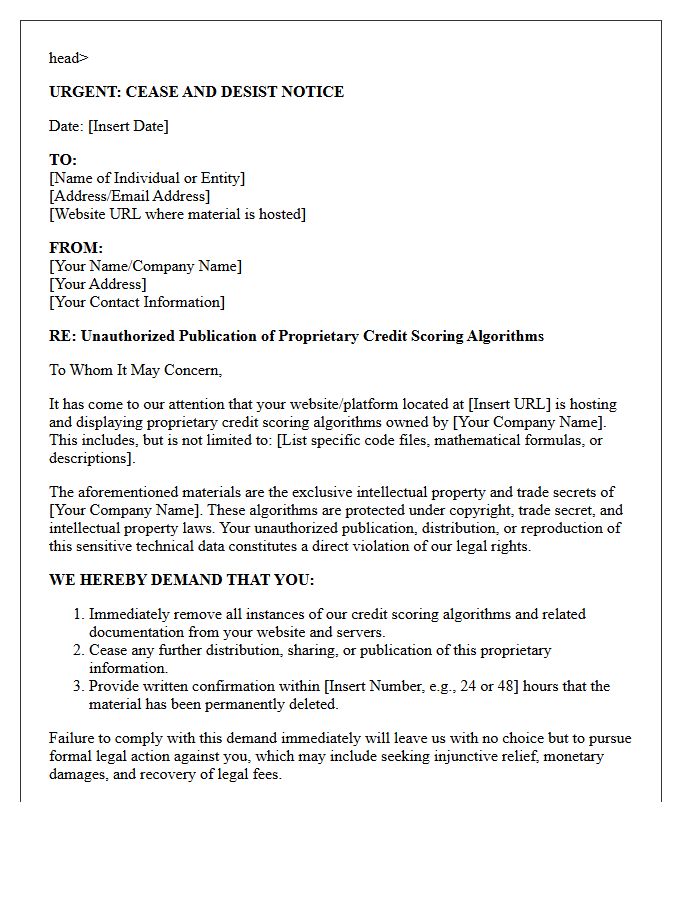
An urgent cease and desist letter for the unauthorized online publication of credit scoring algorithms is a critical legal tool to protect proprietary intellectual property. These algorithms are often classified as confidential trade secrets. If leaked, they can lead to financial exploitation and compromised system security. Issuing this formal notice demands the immediate removal of the sensitive code to prevent further distribution. Acting quickly helps mitigate legal liability and safeguards the commercial value of the scoring models. Failure to comply typically results in aggressive litigation and significant statutory damages for copyright or trade secret infringement.
Cease And Desist Letter To Third-Party Vendors Regarding Publication Of Bank Credit Risk Models
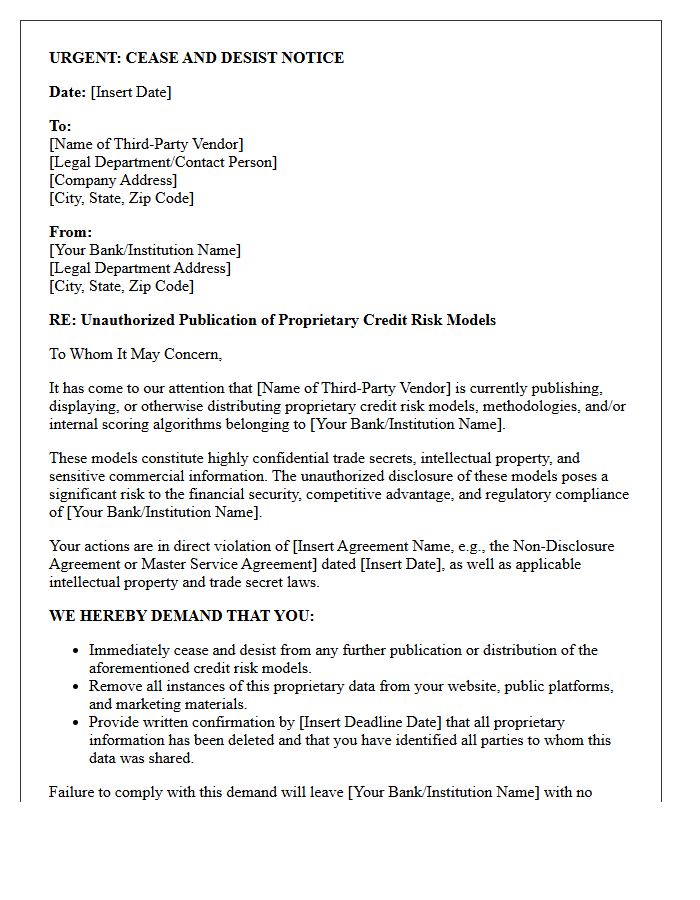
A Cease and Desist Letter is a formal legal notice issued to third-party vendors to stop the unauthorized publication of proprietary bank credit risk models. These models are protected intellectual property and contain highly sensitive trade secrets essential for financial stability. Unauthorized disclosure can lead to severe competitive disadvantage and regulatory non-compliance. Sending this document establishes a legal record, demanding the immediate removal of confidential algorithms and data to prevent further reputational damage and potential litigation regarding breach of contract or copyright infringement.
Cease And Desist Letter Addressing The Breach Of Confidentiality Covering Credit Risk Models
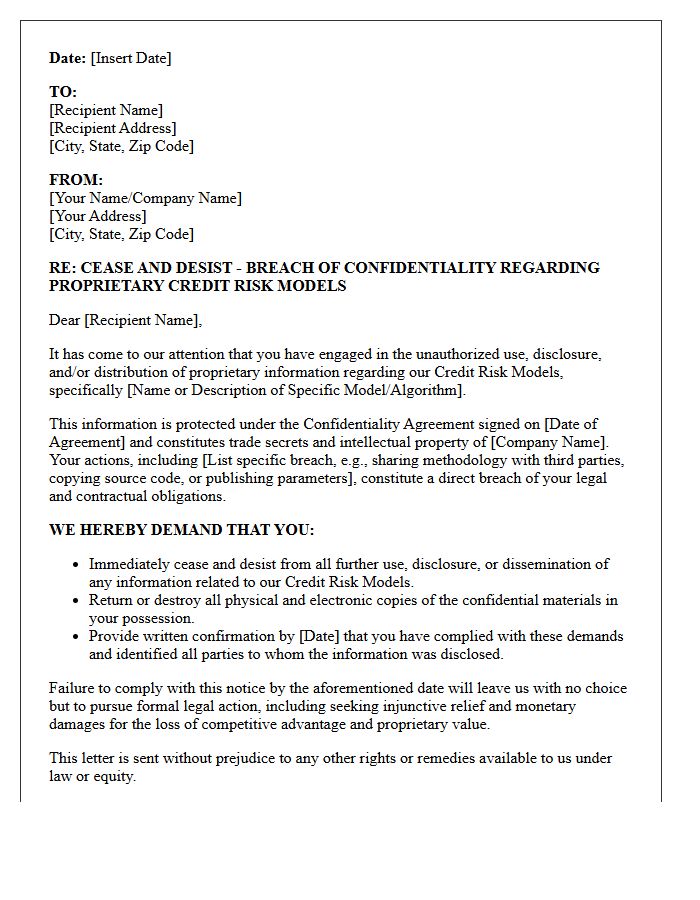
A cease and desist letter for breach of confidentiality serves as a formal legal warning to stop the unauthorized disclosure of proprietary credit risk models. These mathematical frameworks are sensitive trade secrets essential for financial stability and competitive advantage. The notice demands the immediate cessation of data sharing and the return of all protected materials. Failure to comply often leads to litigation, as protecting the intellectual property behind risk assessment algorithms is critical for maintaining regulatory compliance and institutional security within the financial sector.
Cease And Desist Letter For Unauthorized Open-Source Release Of Institutional Credit Risk Models
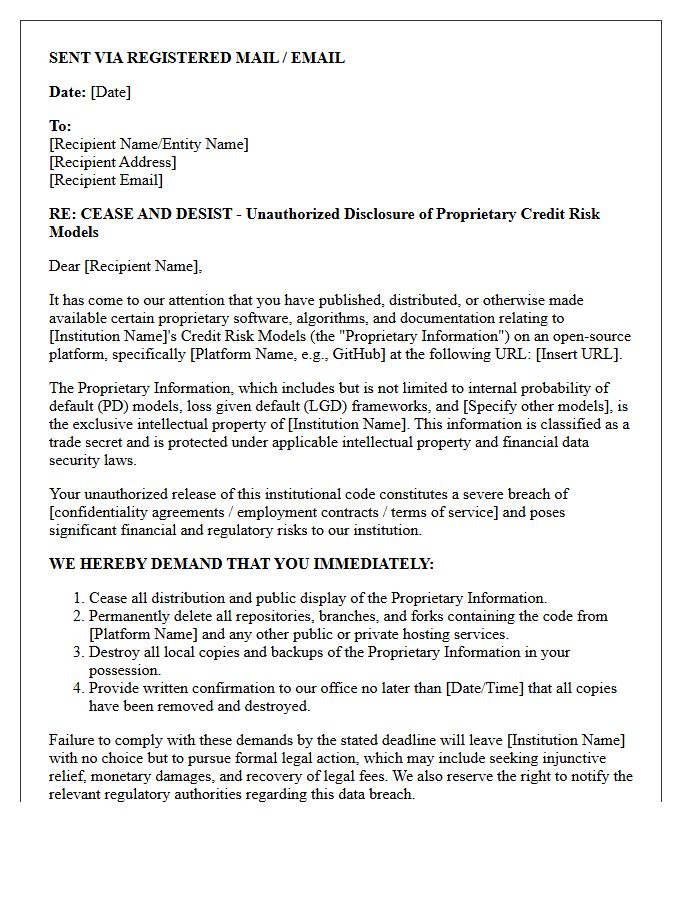
A cease and desist letter is a formal legal notice demanding the immediate removal of proprietary institutional credit risk models released without authorization. These models often contain confidential algorithms, trade secrets, and sensitive financial data protected by intellectual property laws. Unauthorized open-source distribution can lead to severe regulatory non-compliance and compromised competitive advantages. Receiving or sending such a notice requires urgent legal review to address copyright infringement and prevent further data exposure. Proactively protecting internal risk frameworks ensures institutional stability and avoids costly litigation stemming from security breaches or licensing violations.
What is a cease and desist letter for unauthorized publication of proprietary credit risk models?
It is a formal legal notice demanding that an individual or entity immediately stop the unlicensed distribution, display, or sharing of a firm's protected credit scoring algorithms, datasets, or risk assessment methodologies.
What legal protections apply to proprietary credit risk models?
Proprietary credit risk models are typically protected under intellectual property laws, specifically as trade secrets and through copyright protection of the underlying source code and technical documentation.
What actions should I take if my proprietary credit algorithms are leaked online?
You should immediately issue a cease and desist letter to the infringing party, file a DMCA takedown notice if the content is hosted on a service provider, and document all instances of the unauthorized publication for potential litigation.
Can a cease and desist letter help recover damages for trade secret theft?
While the primary goal of the letter is to stop the current infringement, it serves as critical evidence of your intent to protect your IP and can establish a timeline for claiming monetary damages or seeking an injunction in court.
What must be included in a cease and desist for credit model infringement?
The letter must identify the specific proprietary models being infringed, provide evidence of ownership, list the unauthorized platforms where the data is published, and set a strict deadline for the removal of the intellectual property.

Comments