
A Credit Card Delinquency Notification is a formal communication sent to cardholders who have missed their scheduled payments. Timely alerts help prevent further interest charges, protect credit scores, and encourage immediate account resolution. Proper documentation ensures clear communication between lenders and borrowers while maintaining regulatory compliance. To help you manage this process efficiently, below are some ready to use template.
Image cover: Professional Credit Card Delinquency Notification Templates and Communication Samples
Letter Samples List
- Initial Credit Card Payment Reminder Letter
- First Notice of Credit Card Delinquency Letter
- Second Warning Letter for Overdue Credit Card Balance
- Urgent Credit Card Delinquency Notification Letter
- Notice of Credit Card Late Fee Assessment Letter
- Credit Card Penalty Interest Rate Warning Letter
- Notice of Credit Card Account Suspension Letter
- Final Demand Letter for Delinquent Credit Card Payment
- Credit Card Privileges Revocation Notification Letter
- Pre-Charge-Off Credit Card Account Warning Letter
- Credit Card Debt Settlement Offer Letter
- Notice of External Debt Collection Transfer Letter
- Credit Card Account Charge-Off Confirmation Letter
- Intent to Initiate Legal Action Letter
Initial Credit Card Payment Reminder Letter
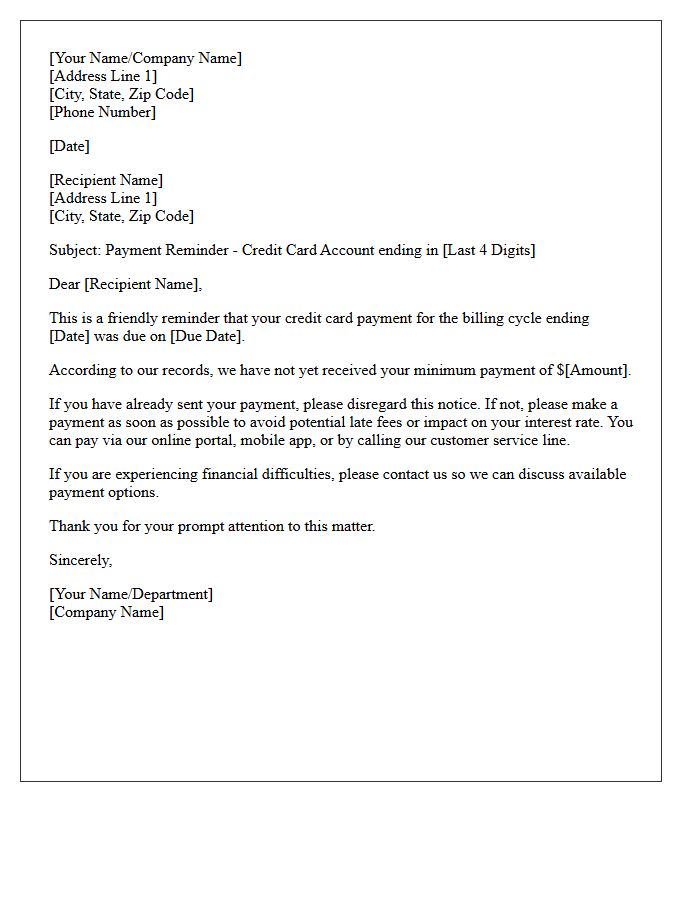
An Initial Credit Card Payment Reminder Letter serves as a professional notification sent to cardholders who have missed their first due date. This document outlines the outstanding balance, the original deadline, and any applicable late fees. It is a critical tool for debt recovery, encouraging immediate action to protect the user's credit score. Clear communication in this letter helps maintain a positive customer relationship while ensuring the financial institution secures timely repayment and minimizes potential long-term delinquency risks.
First Notice of Credit Card Delinquency Letter
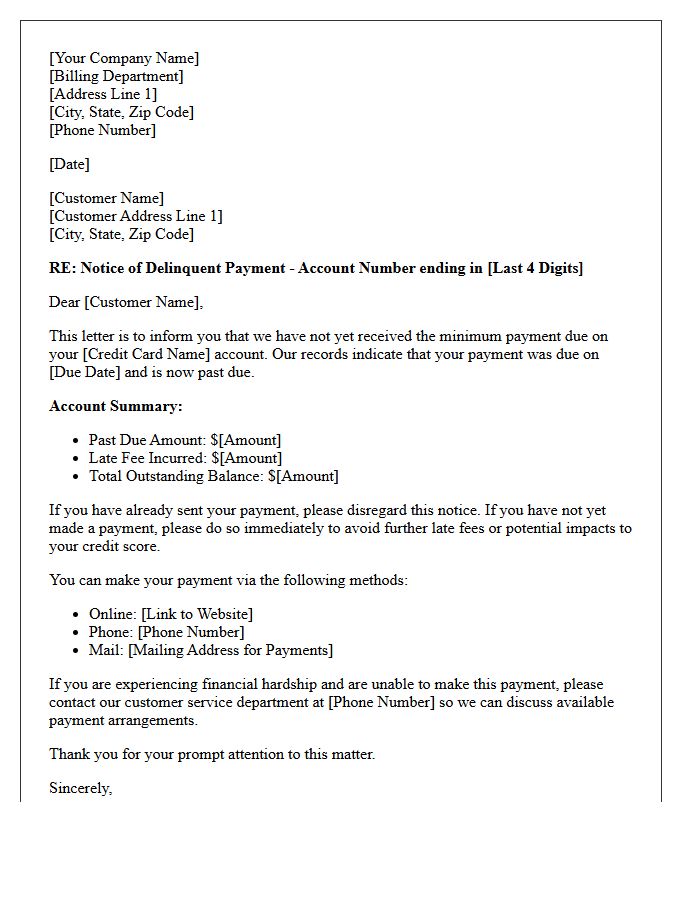
A First Notice of Credit Card Delinquency Letter is a formal alert issued by a lender when a payment is overdue. This document serves as a crucial warning to help you avoid further financial penalties. It outlines the specific amount owed, the late payment fee, and the impact on your credit status. Addressing this notice immediately is vital to prevent negative reporting to credit bureaus and to maintain your credit score integrity. Proactive communication with the issuer can often lead to a resolution before the account enters more serious collection stages.
Second Warning Letter for Overdue Credit Card Balance
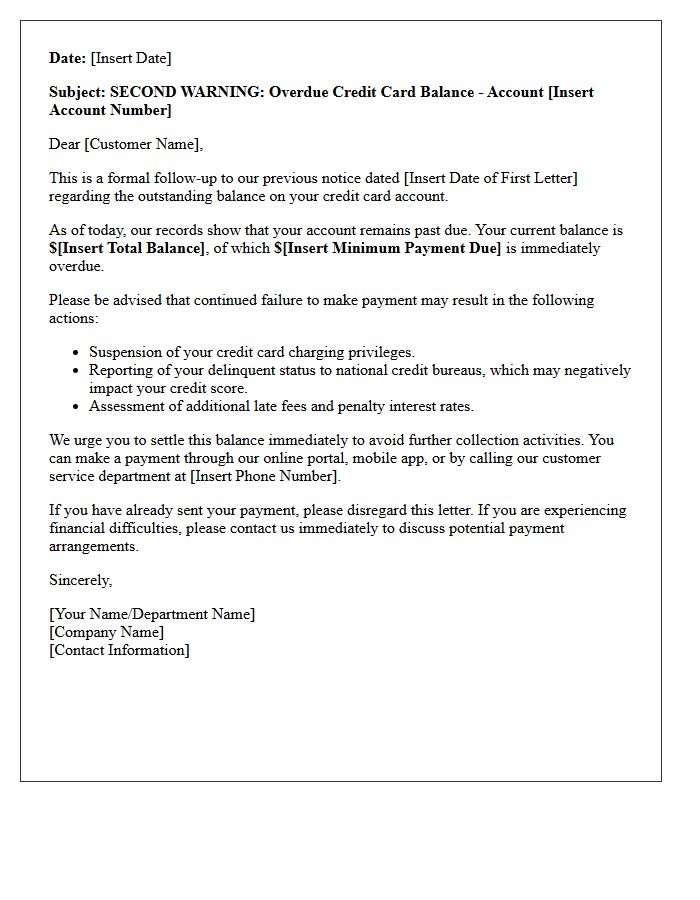
A Second Warning Letter serves as a final formal notice regarding your severely overdue credit card balance. Receiving this document indicates that initial reminders were ignored, and the financial institution is preparing to escalate the matter. It is critical to act immediately to prevent debt collection actions, legal proceedings, or a significant negative impact on your credit score. Contacting the issuer now to negotiate a repayment plan or settlement is the most effective way to avoid further penalties and protect your long-term financial reputation.
Urgent Credit Card Delinquency Notification Letter
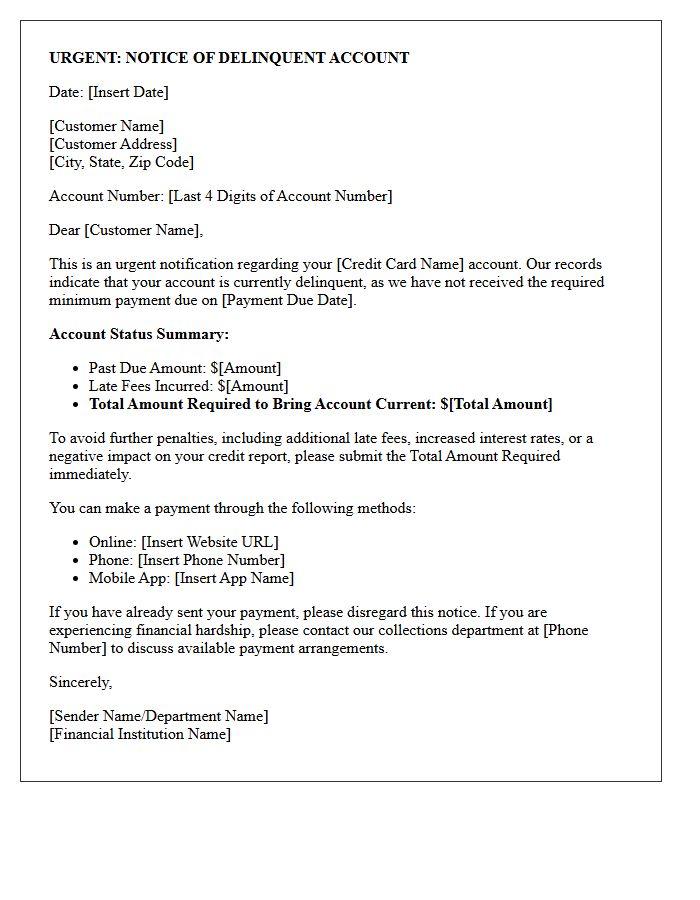
An Urgent Credit Card Delinquency Notification Letter is a formal warning issued when your account becomes significantly past due. This critical document alerts you to immediate risks, including late fees, penalty interest rate hikes, and severe damage to your credit score. Ignoring this notice may lead to account suspension or referral to a collection agency. It is vital to contact your creditor immediately to negotiate a payment plan or hardship program to prevent legal action and protect your financial standing before the delinquency is permanently reported.
Notice of Credit Card Late Fee Assessment Letter
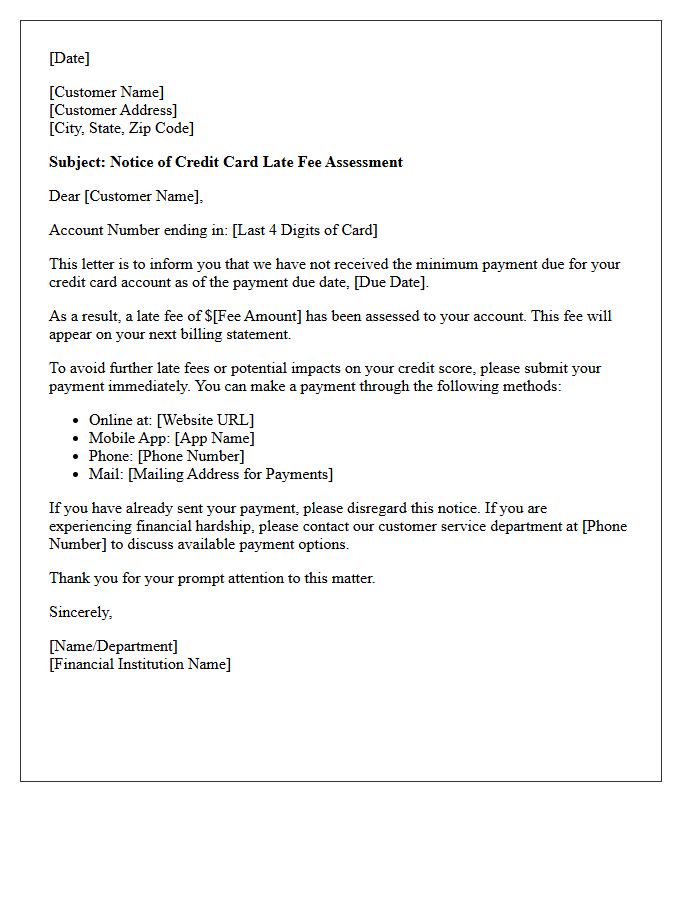
A Notice of Credit Card Late Fee Assessment Letter informs cardholders that a late payment penalty has been applied to their account. This formal notification highlights the specific amount charged and the original due date that was missed. Receiving this letter serves as a critical warning to settle the outstanding balance immediately to avoid further interest charges or negative impacts on your credit score. Timely action is essential to maintain a healthy credit profile and potentially request a one-time fee waiver from your financial institution.
Credit Card Penalty Interest Rate Warning Letter
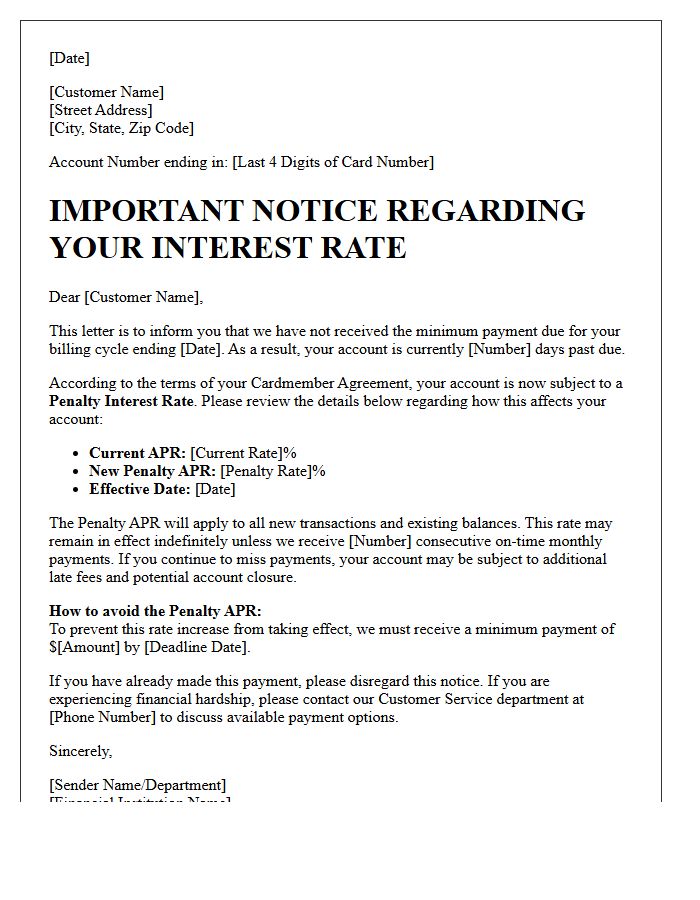
Receiving a Penalty Interest Rate Warning Letter indicates that you have breached your credit card agreement, typically through late payments or exceeding limits. This notice is a critical regulatory requirement that warns you of an upcoming hike in your APR, often reaching 29.99% or higher. To avoid this permanent financial burden, you must immediately address the delinquency and maintain on-time payments. Ignoring this letter can lead to long-term credit damage and significantly higher debt costs. Always review the effective date to take corrective action before the new rate applies.
Notice of Credit Card Account Suspension Letter
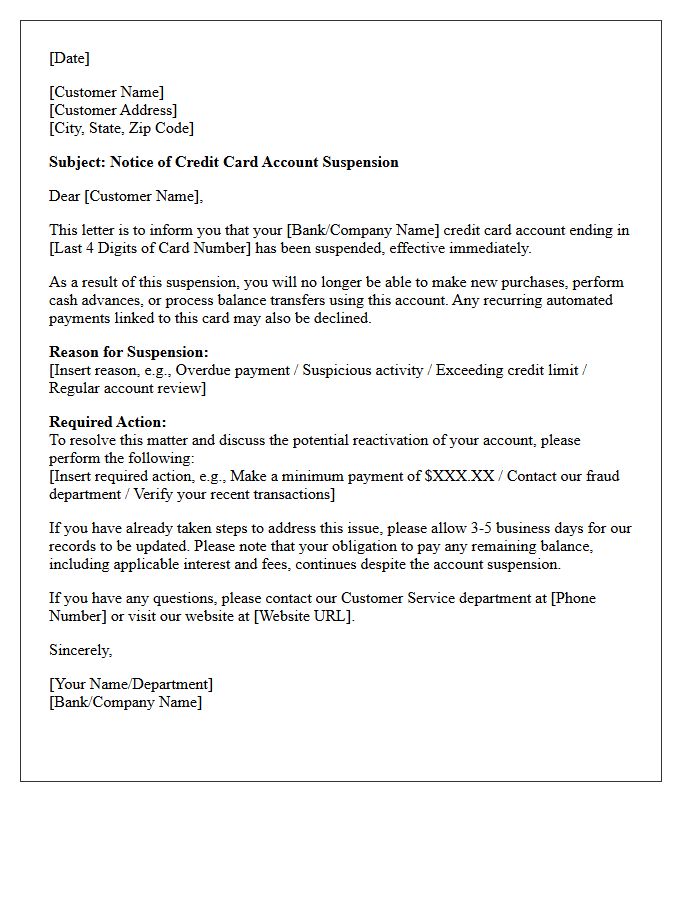
A Notice of Credit Card Account Suspension Letter is a formal notification from an issuer stating that your charging privileges have been temporarily halted. This typically occurs due to missed payments, suspicious activity, or exceeding credit limits. To resolve this, you must immediately review the specified reason for suspension and contact the bank's customer service. Timely action is essential to prevent a permanent account closure and potential long-term damage to your credit score. Always verify the letter's authenticity to avoid phishing scams targeting your financial information.
Final Demand Letter for Delinquent Credit Card Payment
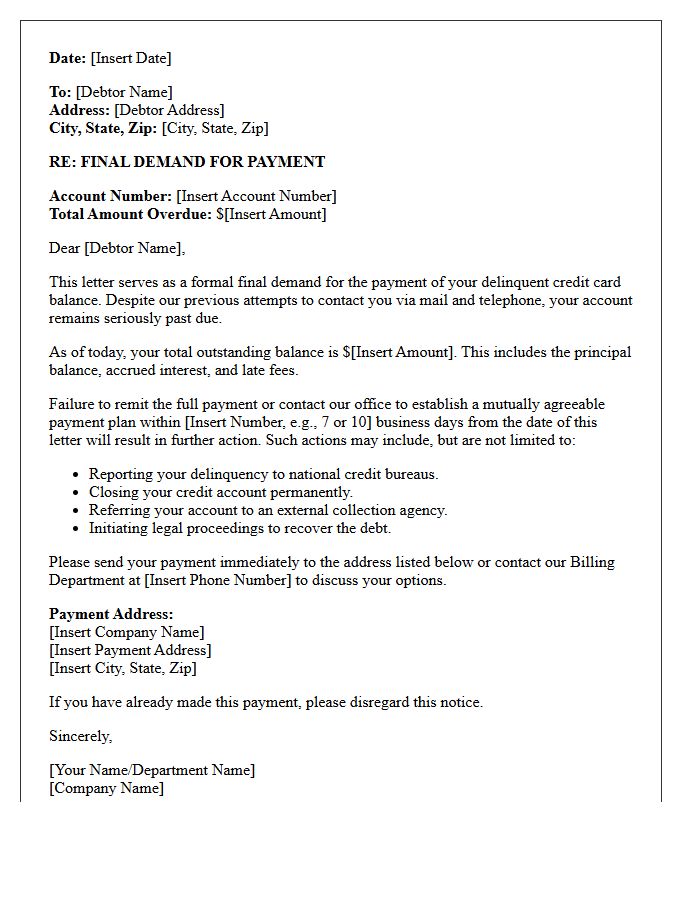
A final demand letter is a formal legal notice issued by a creditor or collection agency before initiating litigation. This document serves as a last opportunity to settle a delinquent credit card balance and avoid a lawsuit. It outlines the total amount owed, including interest and penalties, while specifying a strict deadline for payment. Receiving this letter indicates that the account is at risk of judgment, wage garnishment, or severe credit score damage. It is crucial to respond immediately or seek legal advice to prevent further enforcement actions against your assets.
Credit Card Privileges Revocation Notification Letter
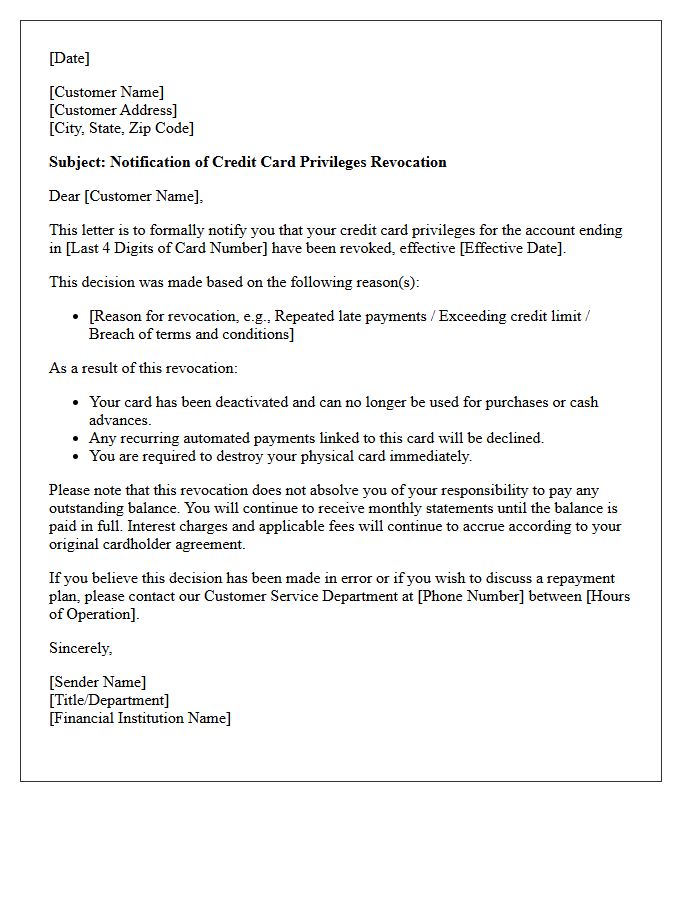
A Credit Card Privileges Revocation Notification Letter is a formal document informing a cardholder that their spending rights have been suspended. This action typically results from prolonged delinquency, exceeding credit limits, or suspicious activity. The letter outlines the specific reasons for the account termination, the effective date, and any remaining balance obligations. It is a critical legal notice that impacts your credit score and financial standing. Upon receipt, users should immediately stop using the card and contact the issuer to discuss potential repayment plans or dispute errors.
Pre-Charge-Off Credit Card Account Warning Letter
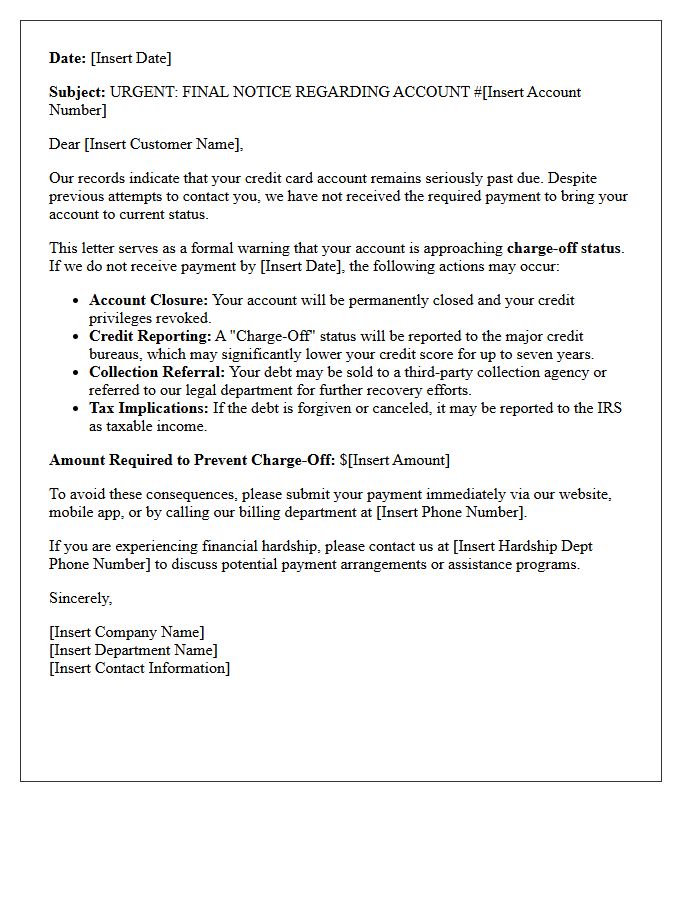
A Pre-Charge-Off Credit Card Account Warning Letter is a critical notice indicating your debt is nearing charge-off status, typically after 180 days of delinquency. This formal warning signifies the final opportunity to settle the balance or arrange a payment plan before the creditor closes the account permanently. Receiving this means your credit score faces severe damage and the debt may be sold to third-party collectors. Acting immediately can prevent long-term financial consequences and legal action. Always verify the debt amount and contact your lender to discuss hardship options before the deadline expires.
Credit Card Debt Settlement Offer Letter
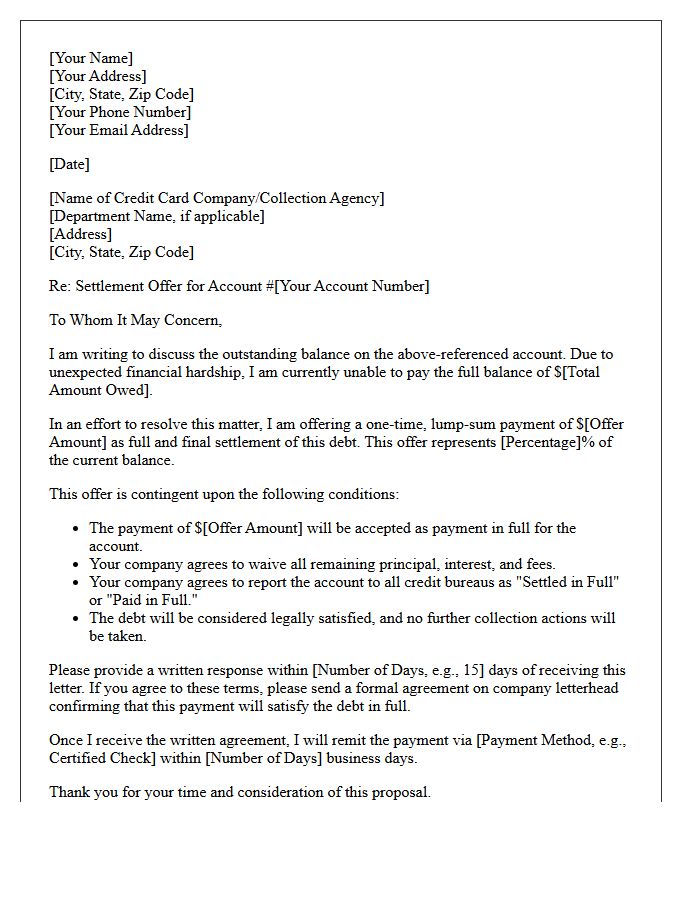
A Credit Card Debt Settlement Offer Letter is a formal proposal sent to creditors to resolve outstanding balances for a lump-sum payment less than the total amount owed. To ensure legal protection, clearly state the settlement amount, account details, and a request for a written agreement confirming the debt is fully satisfied. Always specify that the payment is contingent upon the creditor reporting the account as "settled in full" to credit bureaus. This document serves as vital evidence to prevent future collections and initiates the process of financial recovery.
Notice of External Debt Collection Transfer Letter
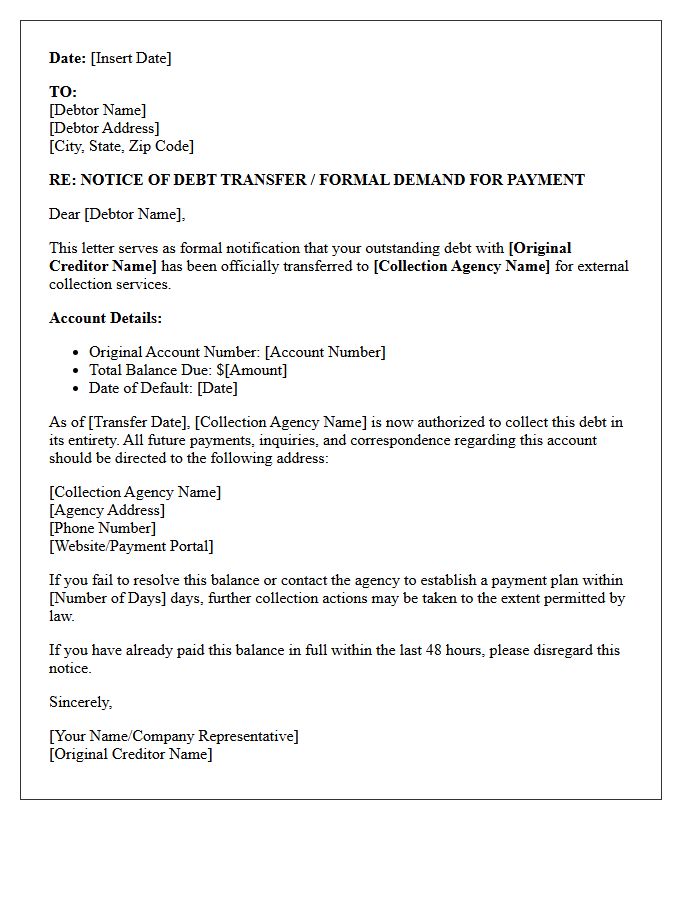
A Notice of External Debt Collection Transfer Letter is a formal notification that your outstanding debt has been sold or reassigned to a third-party agency. This document is critical because it identifies the new legal owner of the account and provides updated contact information for payments. Receiving this letter triggers your rights under the Fair Debt Collection Practices Act, allowing you thirty days to dispute the balance in writing. Always verify the debt's validity to ensure accuracy and prevent potential identity theft or duplicate collection efforts during the transition period.
Credit Card Account Charge-Off Confirmation Letter
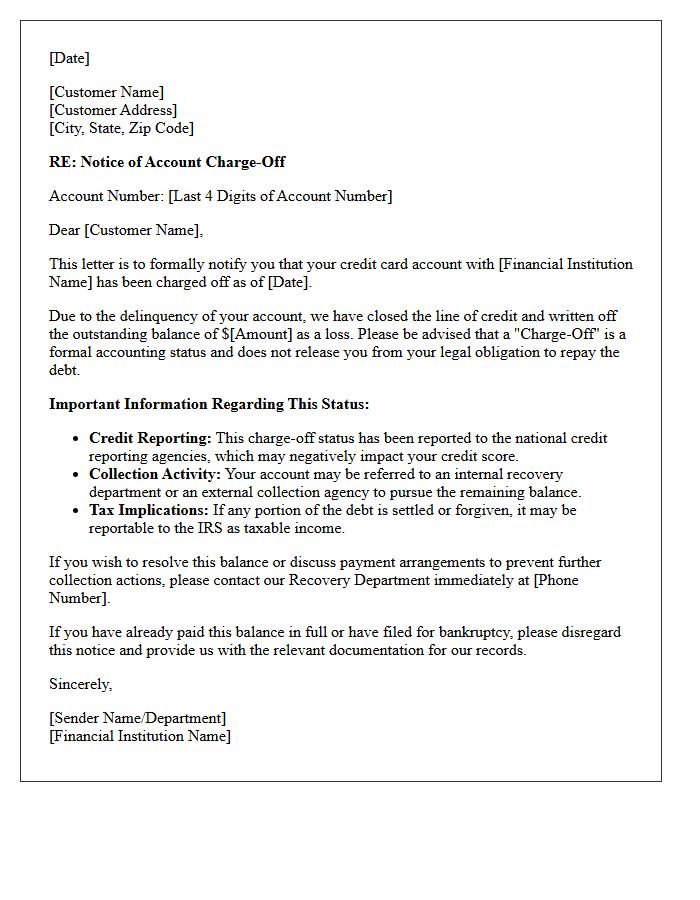
A Credit Card Account Charge-Off Confirmation Letter is a formal notice stating that a creditor has written off your debt as a loss due to extended non-payment. While this stops further internal collection efforts, the outstanding balance remains your legal responsibility. This document is crucial for your records because a charge-off significantly damages your credit score for seven years. It confirms the final amount owed before the debt is potentially sold to a third-party agency, making it essential for verifying accuracy during future debt negotiations or credit repair processes.
Intent to Initiate Legal Action Letter
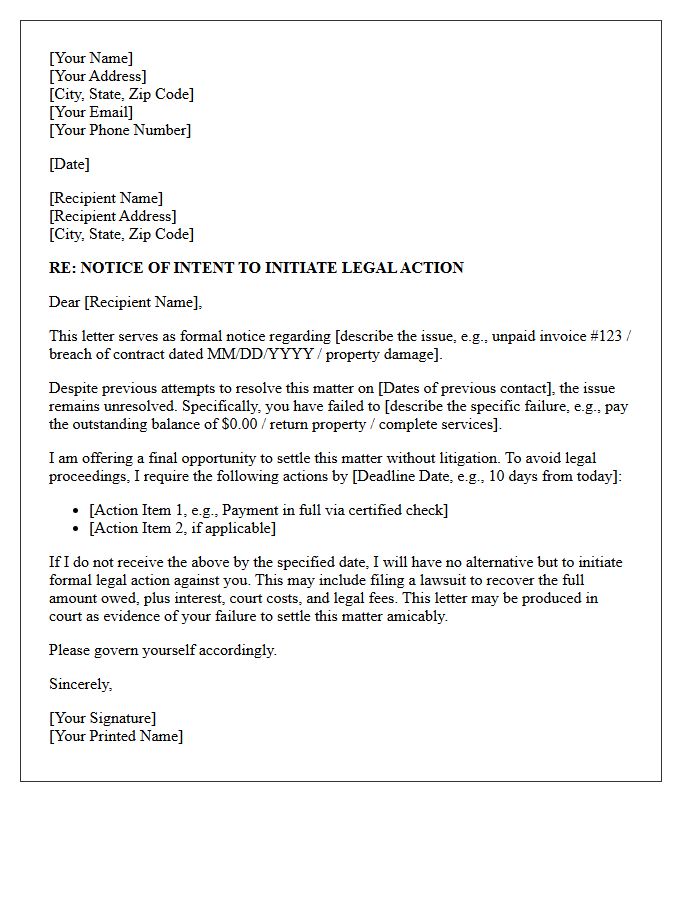
An Intent to Initiate Legal Action Letter serves as a formal notice before a lawsuit begins. This demand letter outlines specific grievances, requested remedies, and a strict deadline for compliance. It acts as a final opportunity for dispute resolution to avoid costly courtroom litigation. Sending this document demonstrates professional legal transparency and is often a mandatory procedural step in many jurisdictions. Clearly stating your claims and the consequences of inaction can encourage a settlement, protecting your rights while establishing a documented paper trail for future judicial proceedings.
What is a credit card delinquency notification?
A credit card delinquency notification is a formal notice sent by a financial institution to a cardholder when a scheduled payment has not been received by the due date. This notice serves as a warning that the account status has shifted from current to delinquent.
When will I receive a notification about a missed credit card payment?
Most issuers send an initial notification via email, SMS, or mail within 1 to 15 days after a missed due date. However, formal reporting to credit bureaus typically does not occur until the payment is 30 days past due.
How does receiving a delinquency notice affect my credit score?
While the notification itself does not lower your score, the underlying late payment can. Once a payment is 30 days late, it is reported to credit bureaus, which can result in a significant drop in your credit score and remain on your report for up to seven years.
What are the immediate consequences of a credit card delinquency?
Upon receiving a delinquency notice, you may face immediate late payment fees, the loss of interest-free grace periods, and a potential increase to a penalty APR. Additionally, your credit limit may be reduced or your ability to make new purchases suspended.
How can I resolve a credit card delinquency notification?
To resolve delinquency, you should immediately pay the past-due amount plus any accrued late fees. If you are unable to pay in full, contact your lender's hardship department to discuss a payment plan or a workout agreement to prevent the account from moving toward charge-off status.

Comments