
A Notice of Intent to Offset is a formal warning issued by government agencies, such as the IRS, stating their plan to withhold your tax refund or payments to cover unpaid debts. Understanding your rights and the dispute process is essential to protecting your finances. To help you respond effectively, below are some ready to use template.
Image cover: Notice of Intent to Offset Funds: Official Templates and Compliance Guide
Letter Samples List
- Notice Of Intent To Offset Funds Letter
- Right Of Setoff Intent Advisory Letter
- Delinquent Loan Fund Offset Warning Letter
- Overdrawn Account Setoff Notification Letter
- Credit Card Debt Offset Intent Letter
- Commercial Default Fund Offset Letter
- Past Due Mortgage Offset Action Letter
- Unpaid Personal Loan Setoff Intent Letter
- Business Deposit Account Offset Letter
- Auto Loan Arrears Fund Offset Letter
- Cross Default Setoff Intent Warning Letter
- Pending Account Offset Notification Letter
Notice Of Intent To Offset Funds Letter
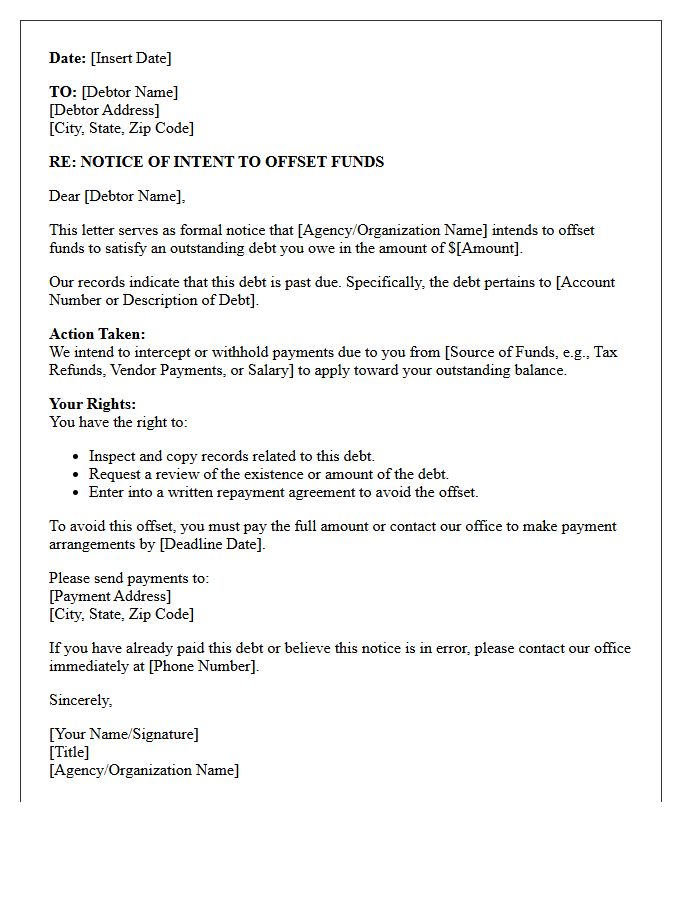
A Notice of Intent to Offset Funds Letter is a formal warning from a government agency stating they plan to seize your federal payments to satisfy an outstanding debt. This legal notice informs you that funds like tax refunds or Social Security benefits will be intercepted via the Treasury Offset Program. To prevent this, you must quickly pay the balance in full or request a formal review. Acting within the specified timeframe is critical to dispute the claim or establish a repayment plan before your financial assets are diverted.
Right Of Setoff Intent Advisory Letter
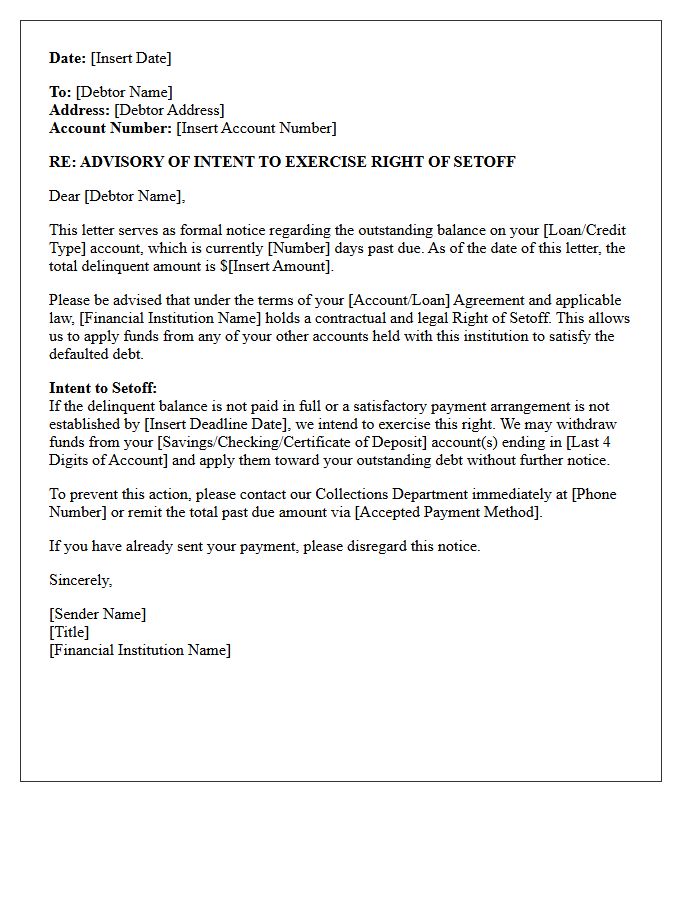
A Right of Setoff Intent Advisory Letter is a formal notice sent by a financial institution to a borrower. It serves as a legal warning that the bank intends to seize funds from the client's deposit accounts to cover an outstanding debt or defaulted loan. Understanding this document is critical because it signals an imminent offset of funds without further consent. To protect liquidity, recipients should immediately review their loan agreements and seek legal counsel or debt restructuring to prevent the loss of available cash reserves.
Delinquent Loan Fund Offset Warning Letter
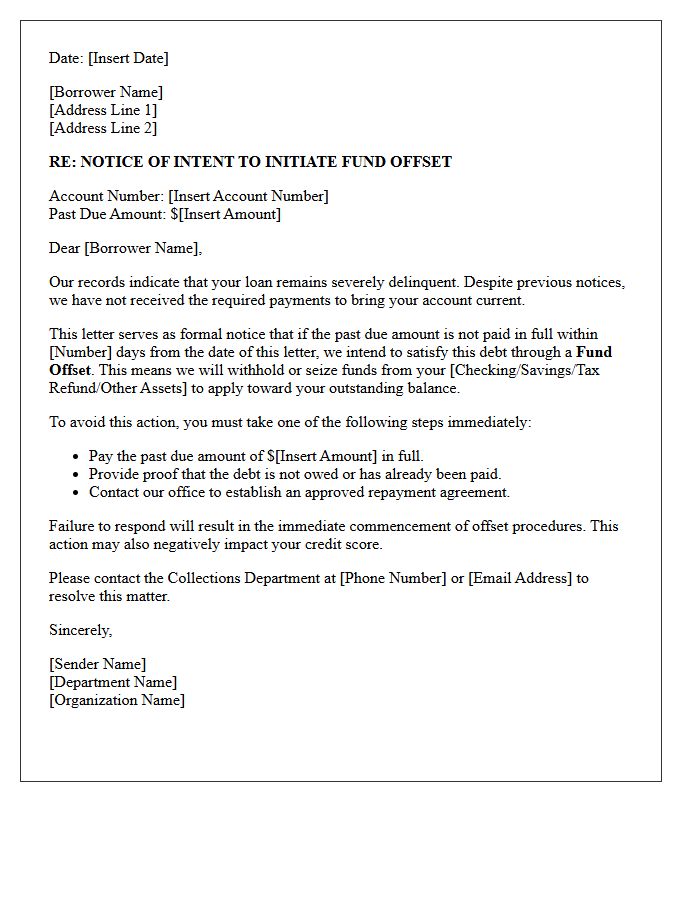
A Delinquent Loan Fund Offset Warning Letter is a formal notification that your federal tax refund or other government payments may be seized to repay an outstanding debt. This action is part of the Treasury Offset Program, occurring when payments on federal loans, such as student debt, are severely overdue. To prevent this collection action, you must immediately contact the listed agency to arrange a repayment plan or dispute the debt's validity. Ignoring this warning can result in the loss of your entire tax return until the balance is satisfied.
Overdrawn Account Setoff Notification Letter
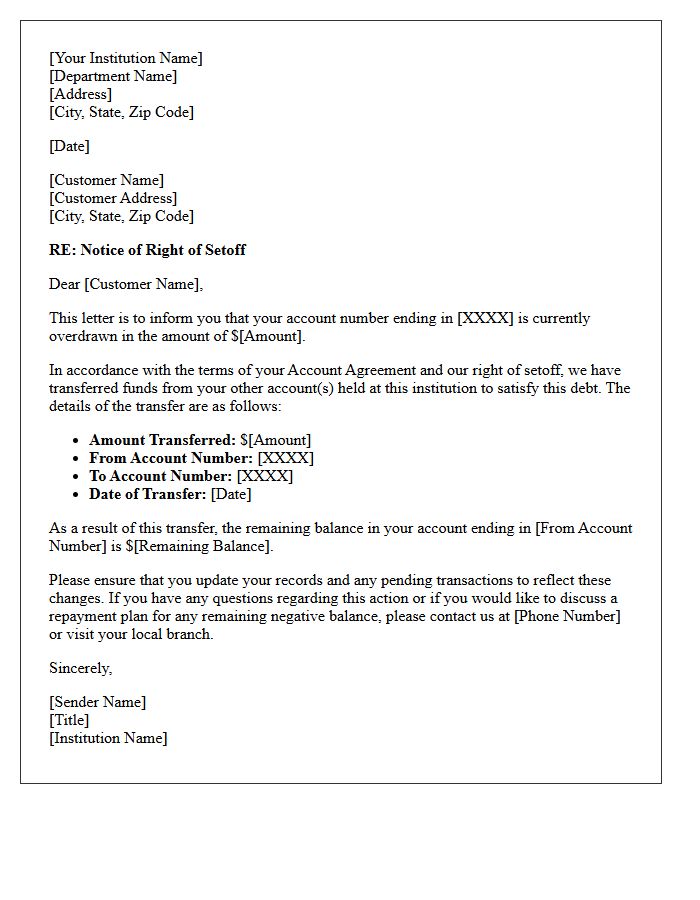
An Overdrawn Account Setoff Notification Letter informs customers that a bank has exercised its Right of Setoff to recover a debt. This legal process allows financial institutions to seize funds from a positive balance account to cover a deficit in a delinquent one. Receiving this notice means the bank has already transferred your money to settle an overdraft or unpaid loan. It is crucial to review the letter immediately to verify the debt accuracy and understand how the seizure impacts your remaining available balance and any outstanding payments.
Credit Card Debt Offset Intent Letter
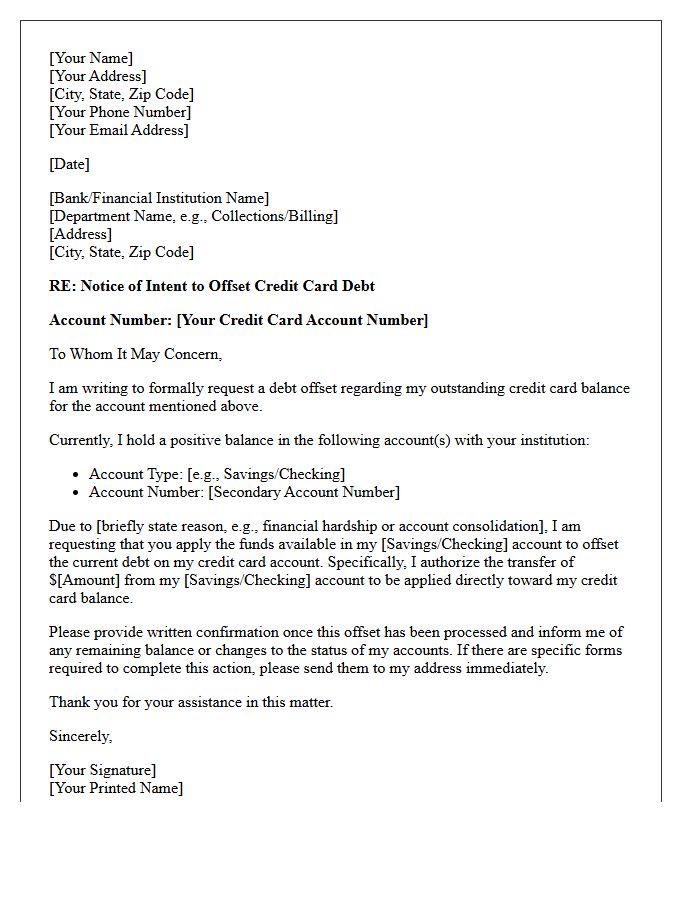
A Credit Card Debt Offset Intent Letter is a formal notification sent to a financial institution to exercise the right of offset. This legal process allows a bank to seize funds from your checking or savings account to pay off delinquent credit card balances held at the same bank. Sending this letter can proactively challenge unauthorized seizures or clarify payment terms. It is a critical document for consumers aiming to protect their liquid assets during financial hardship by asserting specific consumer protection rights and legal exemptions under federal and state banking regulations.
Commercial Default Fund Offset Letter
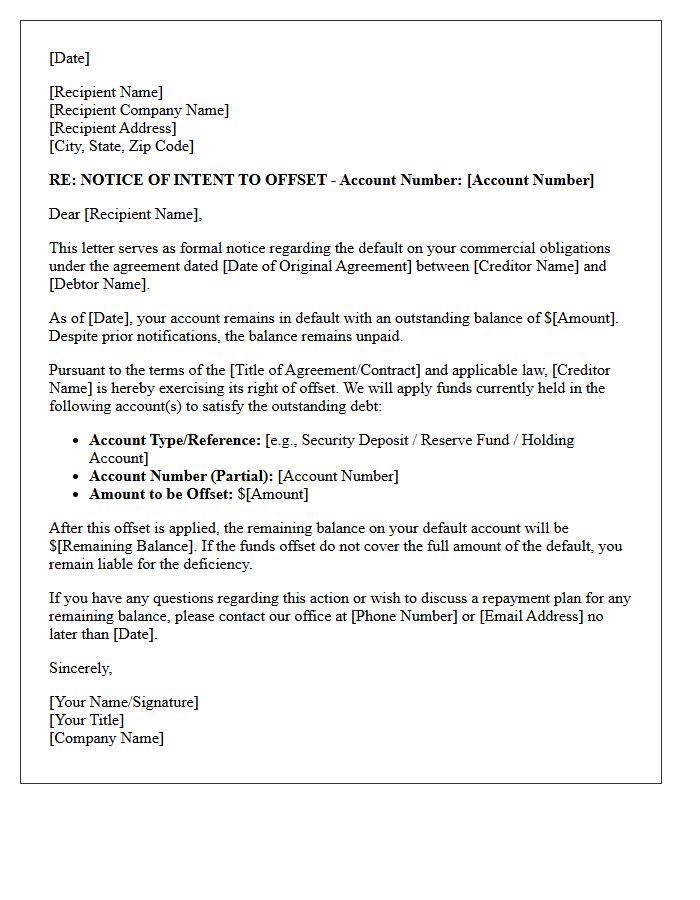
A Commercial Default Fund Offset Letter is a critical legal document used in structured finance and clearing operations. It outlines how collateral or excess funds are applied to cover outstanding obligations if a member defaults. This agreement ensures transparency in the liquidation process, protecting the clearinghouse while defining the recovery hierarchy. By formalizing the offset rights, it minimizes systemic risk and provides a clear mechanism for debt mitigation. Understanding this letter is essential for managing institutional liquidity and ensuring regulatory compliance during financial distress scenarios.
Past Due Mortgage Offset Action Letter
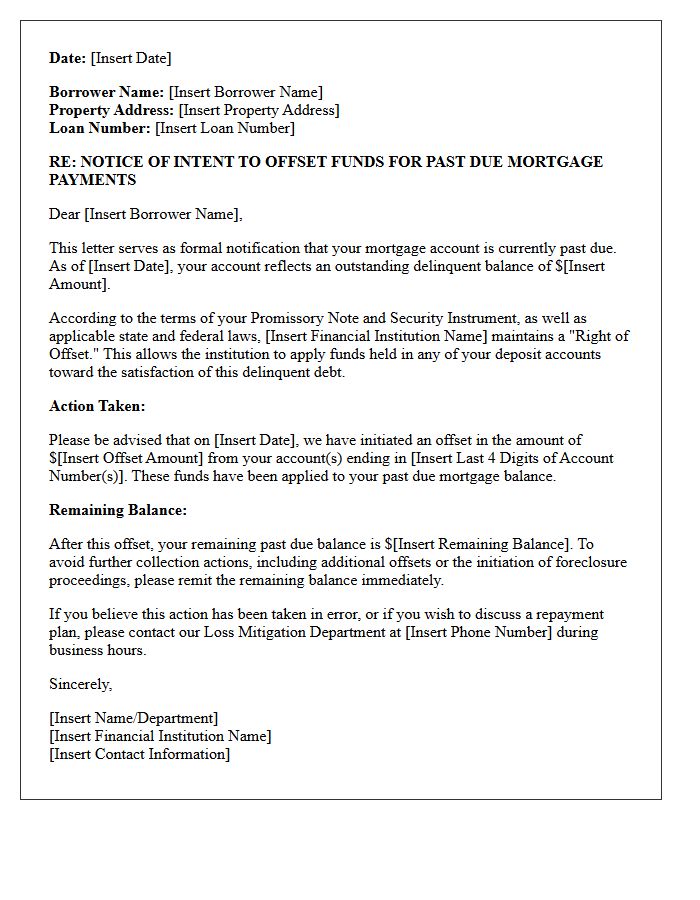
A Past Due Mortgage Offset Action Letter notifies borrowers that a lender intends to seize funds from their personal bank accounts to cover delinquent loan payments. This legal process, known as the "right of offset," typically occurs when both the mortgage and the savings account are held at the same financial institution. Receiving this notice indicates immediate financial risk. It is crucial to review your contract terms and seek legal counsel or loss mitigation options quickly to prevent the loss of liquid assets and stabilize your housing situation.
Unpaid Personal Loan Setoff Intent Letter
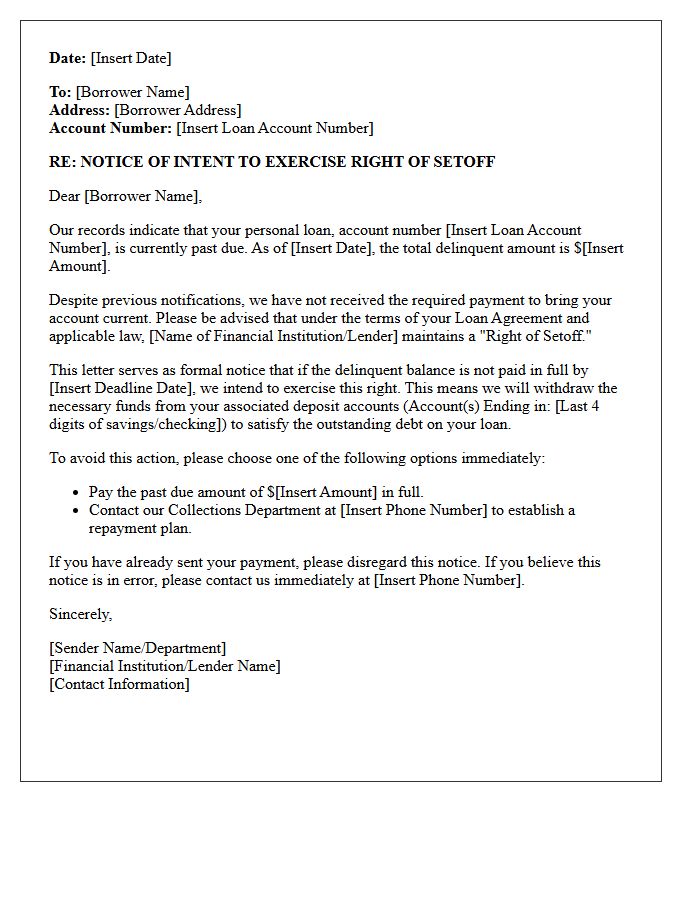
An Unpaid Personal Loan Setoff Intent Letter is a formal notice from a financial institution informing a debtor that the lender plans to seize funds from their connected deposit accounts to cover a defaulted balance. This process, known as the right of setoff, allows banks to bypass traditional legal proceedings to recover losses. Receiving this letter indicates an urgent need to negotiate a repayment plan or seek legal advice before your available cash is legally confiscated to satisfy the outstanding debt obligations.
Business Deposit Account Offset Letter
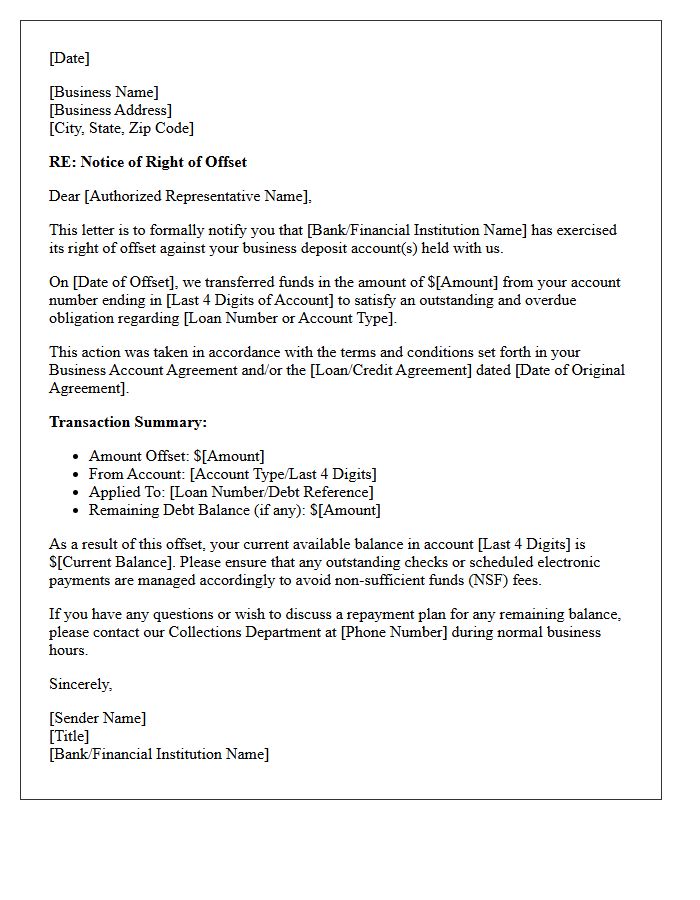
A Business Deposit Account Offset Letter is a legal notification informing a company that a financial institution has exercised its right of offset. This allows the bank to seize funds from a business deposit account to cover a delinquent debt or defaulted loan held with the same entity. It is crucial to understand that banks often do not require prior court intervention to perform this action. Maintaining separate institutions for loans and deposits can mitigate the risk of a sudden liquidity crisis caused by an unexpected account balance seizure.
Auto Loan Arrears Fund Offset Letter
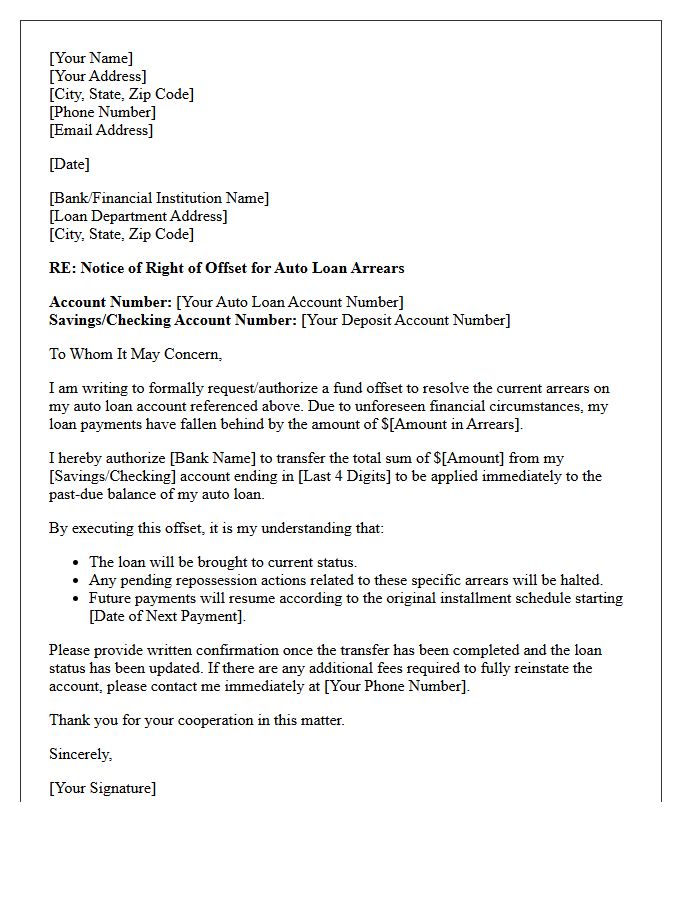
An Auto Loan Arrears Fund Offset Letter notifies a borrower that a financial institution intends to seize funds from their linked savings or checking accounts to cover delinquent car payments. This legal process, known as the Right of Offset, typically occurs without prior court approval when a loan falls into default. It is crucial to review your loan agreement to understand your bank's specific policies. To protect your essential capital, consider moving funds to a different institution and contacting your lender immediately to negotiate a repayment plan or deferment.
Cross Default Setoff Intent Warning Letter
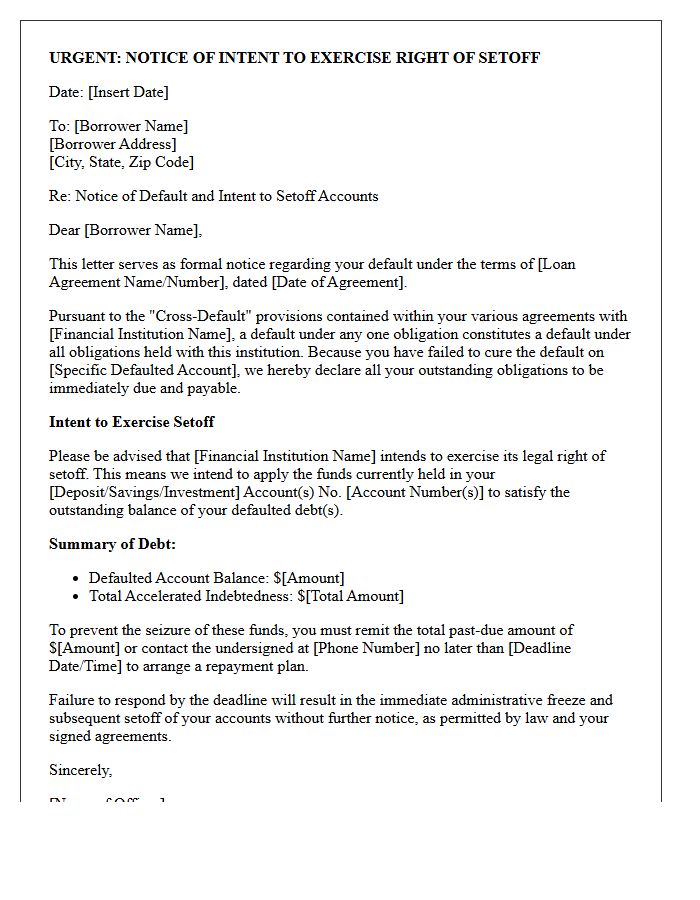
A Cross Default Setoff Intent Warning Letter is a formal notice sent by a financial institution to a borrower. It signals that a default on one obligation triggers a breach across all other linked accounts. The intent of this letter is to inform the debtor that the lender plans to exercise its right to setoff, seizing funds from personal or business deposits to satisfy outstanding debts. Receiving this document is a critical warning to seek legal counsel, as it precedes immediate liquidation of assets to cover the total aggregate liability.
Pending Account Offset Notification Letter
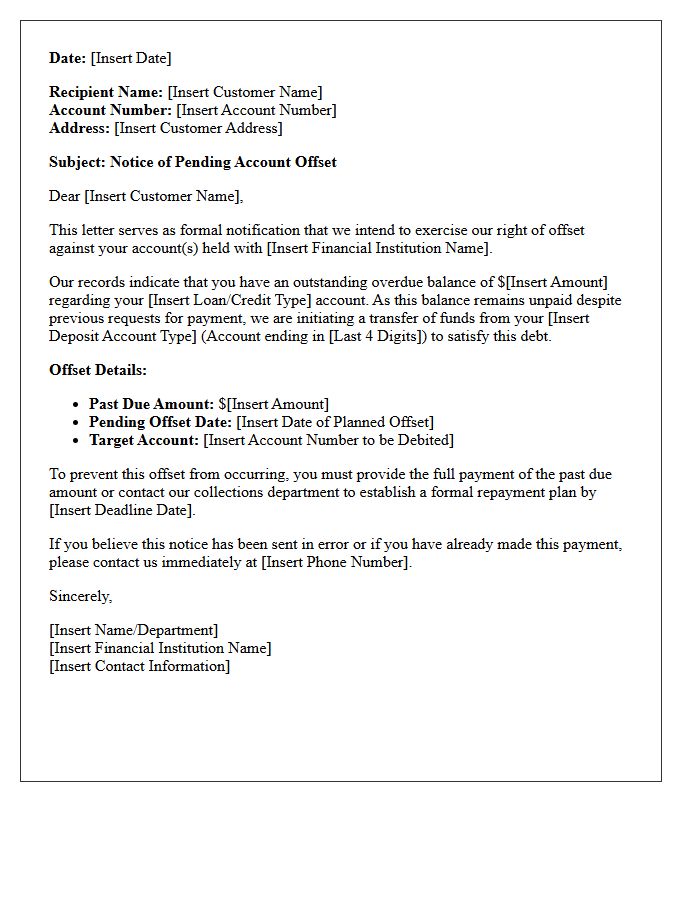
A Pending Account Offset Notification Letter serves as a formal legal notice from the government, typically the Treasury Department, regarding outstanding debts. It informs you that federal payments, such as tax refunds or Social Security benefits, will be withheld to satisfy delinquent obligations like student loans or unpaid taxes. If you receive this, verify the debt immediately through the Treasury Offset Program (TOP) to dispute errors or arrange a payment plan. Acting quickly is essential to prevent the automatic seizure of your expected funds and to resolve your financial status.
What is a Notice of Intent to Offset Funds?
A Notice of Intent to Offset Funds is a formal notification sent by a government agency informing a debtor that their federal or state payments, such as tax refunds or social security benefits, will be intercepted to satisfy an outstanding debt.
How long do I have to respond to a Notice of Intent to Offset?
Typically, you have 60 days from the date of the notice to pay the debt in full or provide evidence that the debt is not past due, is legally unenforceable, or has already been paid.
Can I stop a Notice of Intent to Offset by entering a payment plan?
Yes, most agencies will suspend the offset process if you establish a formal installment agreement and make your first payment before the 60-day deadline specified in the notice.
What types of payments can be seized through an offset?
Authorized agencies can offset federal income tax refunds, Social Security benefits (excluding SSI), federal employee retirement payments, and certain vendor payments or travel reimbursements.
How can I dispute a Notice of Intent to Offset?
To dispute the notice, you must submit a written request for review to the agency listed on the letter, providing documentation that proves the debt is invalid, the amount is incorrect, or that you have filed for bankruptcy.


Comments