
A Notice of Intent to Escalate to Legal Action is a formal warning issued to resolve outstanding disputes or unpaid debts before filing a lawsuit. It serves as a final opportunity for settlement, demonstrating your seriousness to the opposing party while creating a vital paper trail for court proceedings. To simplify your process, below are some ready to use templates.
Image cover: Formal Notice of Intent to Final Legal Action: Templates and Best Practices
Letter Samples List
- Final Demand Letter Prior to Legal Action for Defaulted Commercial Loan
- Notice of Intent Letter Regarding Foreclosure Escalation for Delinquent Mortgage
- Pre-Litigation Warning Letter for Outstanding Unsecured Debt Recovery
- Letter of Intent to Pursue Legal Remedies for Breach of Credit Facility Agreement
- Final Notice Letter Escalating to Corporate Counsel for Overdrawn Business Account
- Legal Action Escalation Letter Concerning Fraudulent Transaction Liability
- Notice Letter of Impending Lawsuit for Non-Payment of Promissory Note
- Intent to Escalate Letter Regarding Violation of Guarantor Obligations
- Final Collections Letter Warning of Legal Action for Credit Card Arrears
- Official Letter of Intent to Initiate Asset Seizure Proceedings
- Legal Escalation Notice Letter for Default on Equipment Financing Contract
- Letter of Impending Litigation for Breach of Fiduciary Duty in Wealth Management
- Pre-Suit Notification Letter for Unresolved Corporate Banking Dispute
- Final Demand Letter Indicating Legal Escalation for Auto Loan Default
Final Demand Letter Prior to Legal Action for Defaulted Commercial Loan
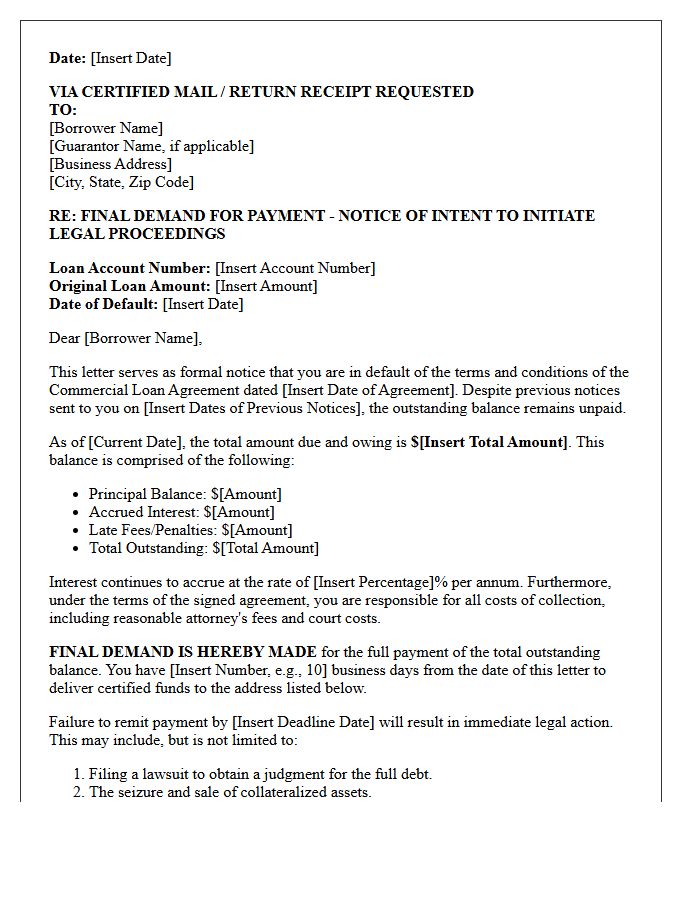
A final demand letter is a critical formal notice sent to a borrower after a commercial loan default. It serves as a pre-litigation warning, explicitly stating that the full balance is due immediately to avoid court proceedings. This document outlines the total debt, interest, and late fees, providing a strict deadline for payment. Issuing this letter is essential for establishing a legal paper trail, demonstrating that the lender made a good-faith effort to resolve the delinquency before pursuing asset seizure or a lawsuit to recover the outstanding capital.
Notice of Intent Letter Regarding Foreclosure Escalation for Delinquent Mortgage
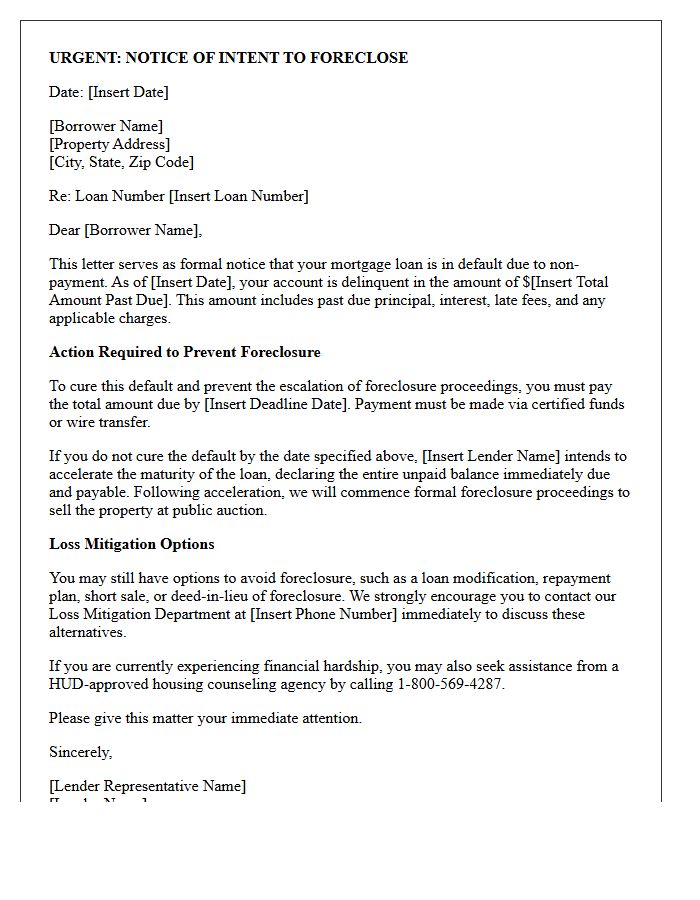
A Notice of Intent is a critical legal warning sent by lenders before starting foreclosure proceedings on a delinquent mortgage. This formal document notifies the borrower that they have breached their contract due to missed payments. It outlines the specific amount due, including late fees, and provides a strict deadline to cure the default. Ignoring this letter allows the bank to accelerate the loan, demanding full repayment and leading to property loss. Homeowners should immediately explore mitigation options like loan modification or repayment plans to stop the escalation process.
Pre-Litigation Warning Letter for Outstanding Unsecured Debt Recovery
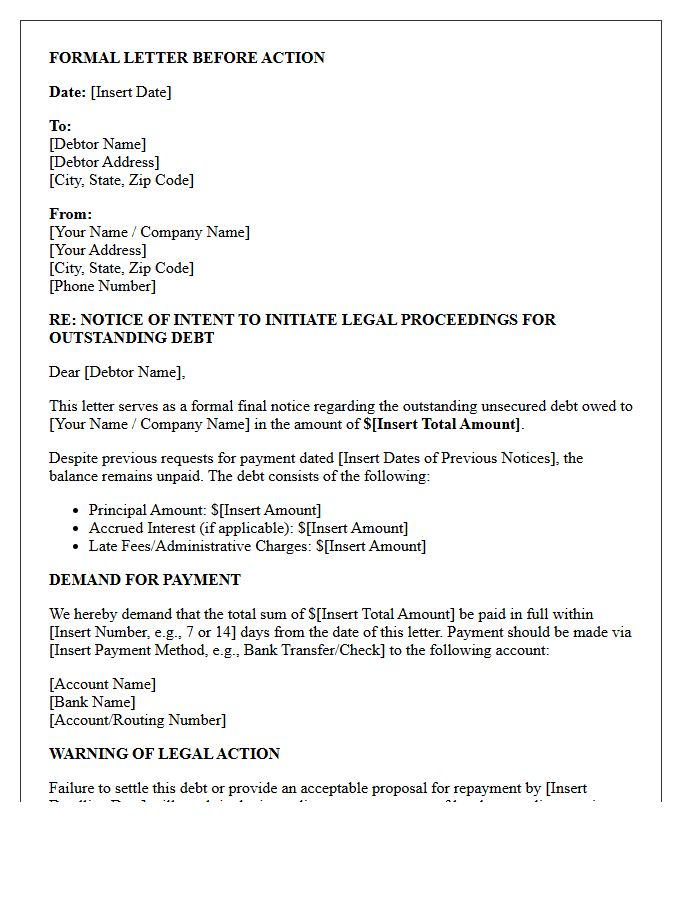
A Pre-Litigation Warning Letter serves as a formal final notice before initiating legal action for unsecured debt recovery. It clearly outlines the outstanding balance, interest charges, and a strict deadline for payment. This document is crucial for regulatory compliance, proving the creditor's attempt to resolve the matter amicably. For debtors, it is the last opportunity to negotiate a settlement or repayment plan to avoid costly court proceedings, potential asset seizure, and severe damage to their credit score. Receiving this letter indicates that litigation is the imminent next step.
Letter of Intent to Pursue Legal Remedies for Breach of Credit Facility Agreement
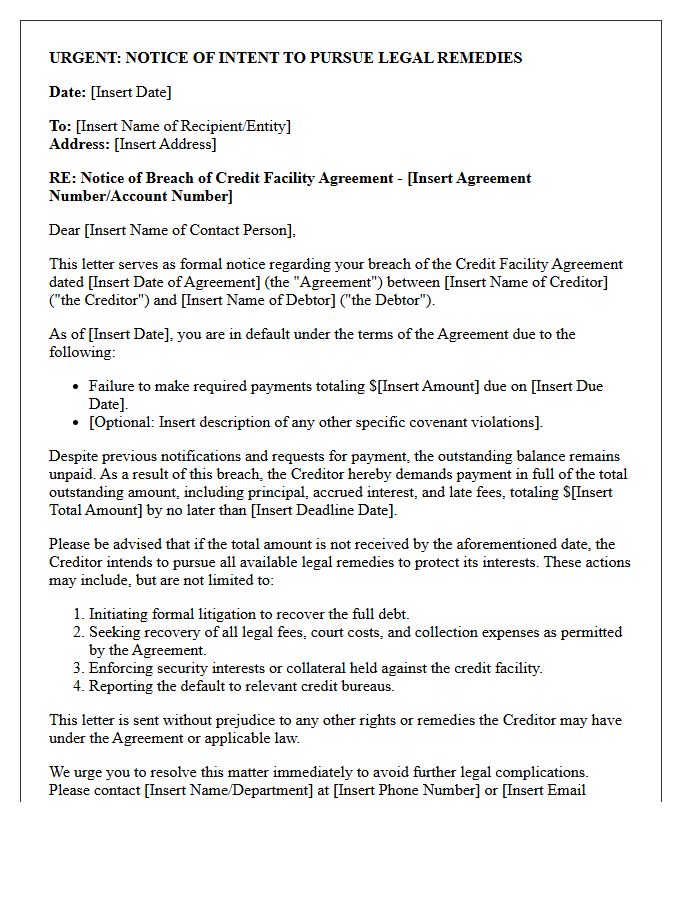
A Letter of Intent to Pursue Legal Remedies is a formal notice sent to a borrower who has violated a Credit Facility Agreement. It serves as a final warning, notifying the counterparty that legal action is imminent unless the breach is rectified immediately. This document typically outlines the specific default terms, demands full repayment or compliance, and preserves the lender's right to pursue litigation, asset seizure, or acceleration of debt. Issuing this letter is a critical procedural step to establish a legal record of non-compliance before initiating formal courtroom proceedings or arbitration.
Final Notice Letter Escalating to Corporate Counsel for Overdrawn Business Account
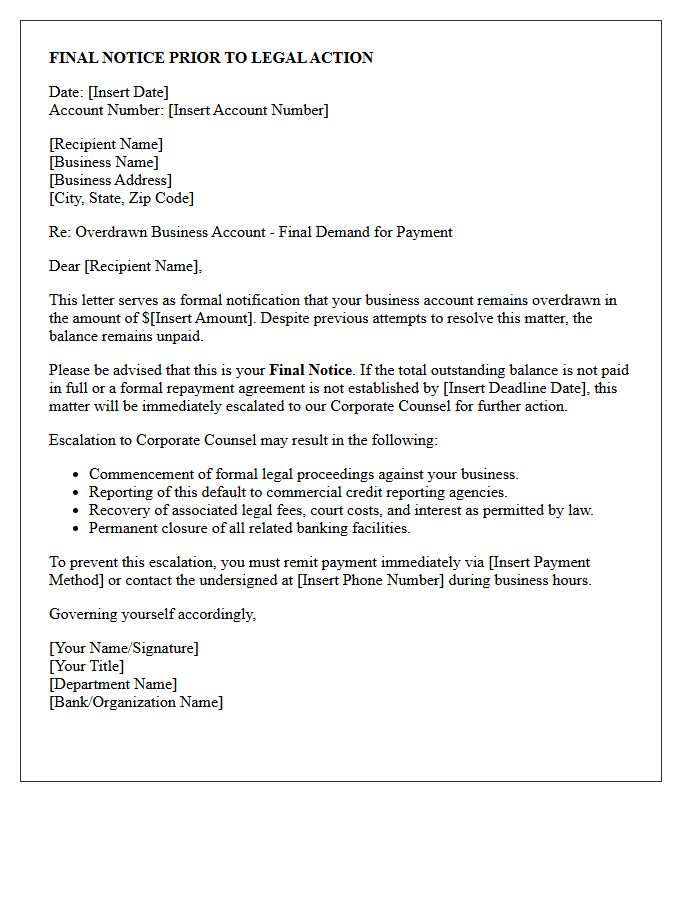
A final notice letter for an overdrawn business account signifies the last demand for payment before legal action. If the debt remains unpaid, the bank will escalate the matter to corporate counsel to initiate a formal lawsuit. This step often results in the immediate freezing of assets, damage to your professional credit score, and personal liability for business owners. To prevent litigation and additional attorney fees, you must provide immediate restitution or negotiate a settlement before the specified deadline to avoid high-court proceedings.
Legal Action Escalation Letter Concerning Fraudulent Transaction Liability
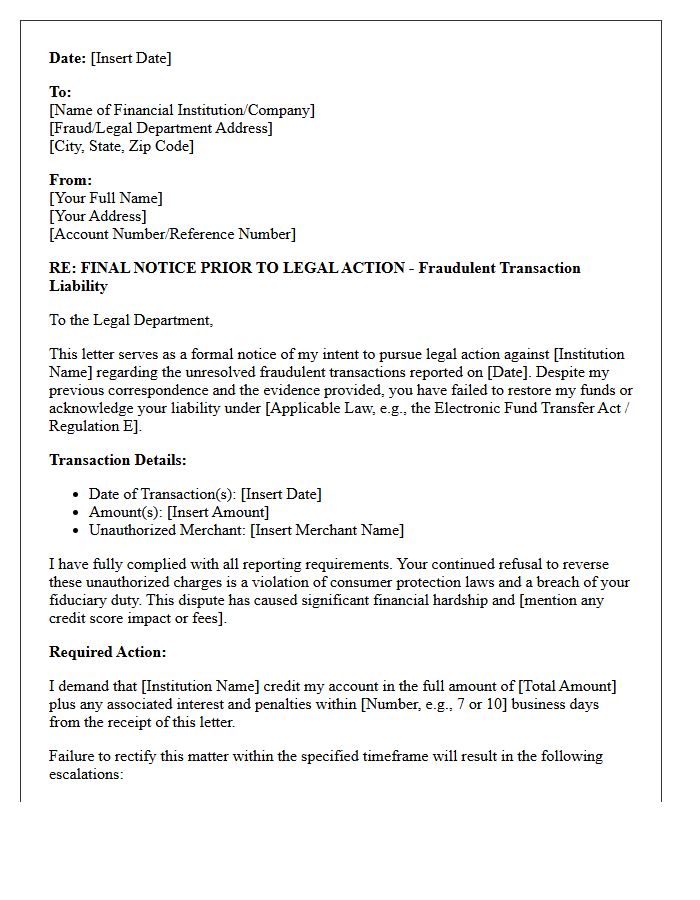
A Legal Action Escalation Letter is a formal notification demanding reimbursement for fraudulent transaction liability. This document serves as a final warning before initiating litigation against a financial institution or individual. It must clearly outline the disputed charges, provide evidence of the unauthorized activity, and cite relevant consumer protection laws like Regulation E. Sending this letter establishes a legal paper trail, demonstrating that you have attempted to resolve the dispute out of court, which is essential for protecting your financial rights during formal legal proceedings.
Notice Letter of Impending Lawsuit for Non-Payment of Promissory Note
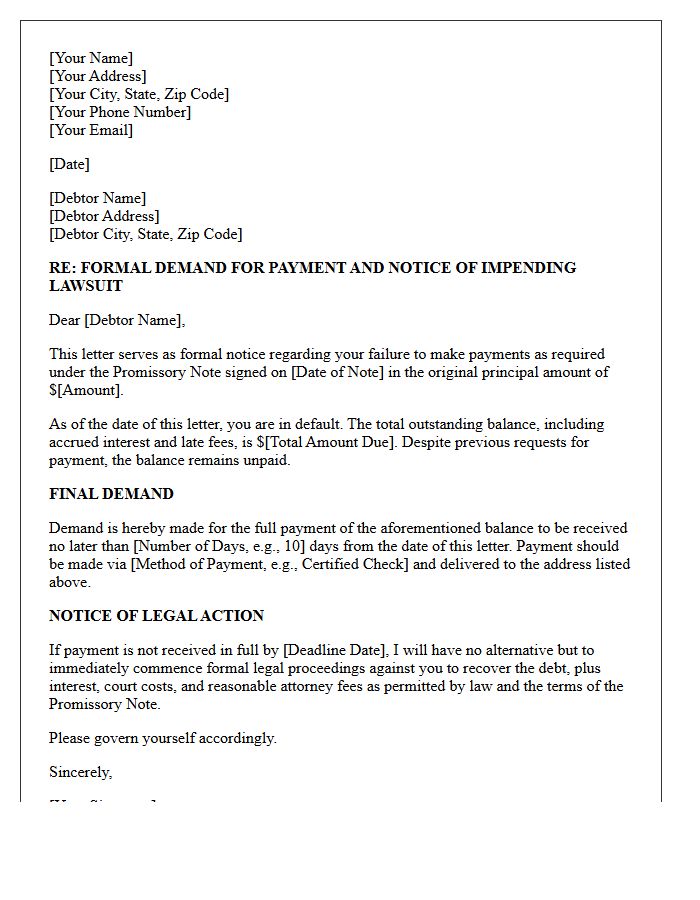
A Notice Letter of Impending Lawsuit is a formal legal warning issued when a borrower defaults on a promissory note. This document serves as a final demand for payment before a creditor initiates litigation. It outlines the total debt owed, including interest and penalties, and sets a strict deadline for resolution. Receiving this notice indicates that legal action is imminent, which could lead to court judgments or wage garnishments. Addressing this letter immediately through payment or settlement negotiations is critical to avoid costly attorney fees and long-term damage to your credit profile.
Intent to Escalate Letter Regarding Violation of Guarantor Obligations
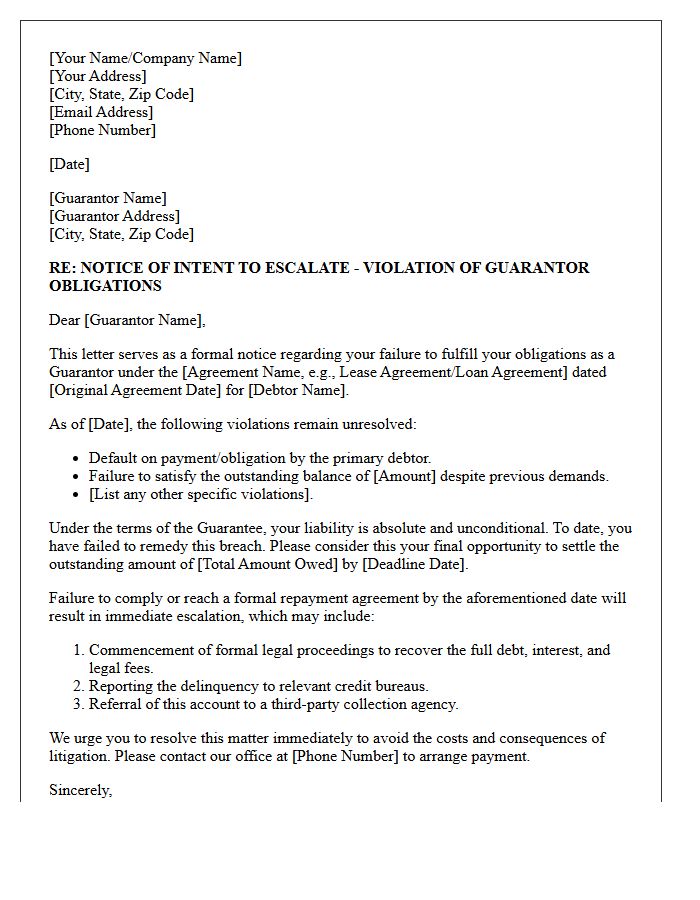
An Intent to Escalate Letter serves as a formal notice when a party fails to meet their guarantor obligations. This document warns the recipient that continued non-compliance regarding financial liabilities or contractual duties will result in legal action or third-party debt recovery. It clearly outlines the specific violation, the outstanding amount owed, and a final deadline for resolution. Issuing this letter is a critical procedural step to demonstrate a good-faith effort to settle the dispute before initiating litigation or reporting the delinquency to credit bureaus.
Final Collections Letter Warning of Legal Action for Credit Card Arrears
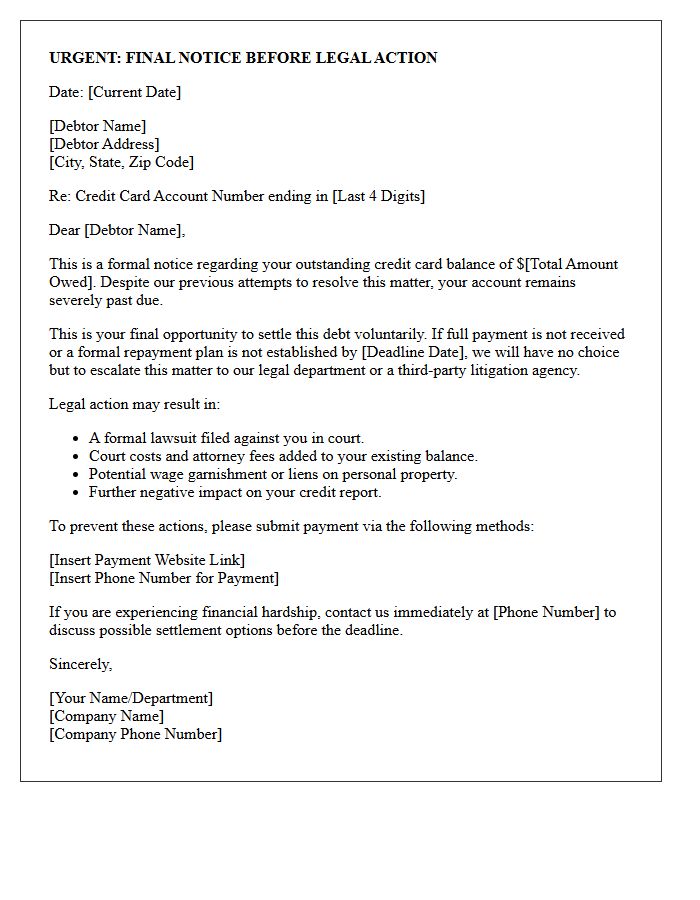
Receiving a Final Collections Letter is a critical warning that your credit card account is facing imminent legal action. This document signifies the end of internal collection efforts and the potential transition to a lawsuit or a third-party attorney. To prevent a judgment, wage garnishment, or severe credit score damage, you must act immediately. Contact the creditor to negotiate a settlement or structured repayment plan. Ignoring this notice often leads to court summons and additional legal fees, making it the final opportunity to resolve arrears through communication rather than litigation.
Official Letter of Intent to Initiate Asset Seizure Proceedings
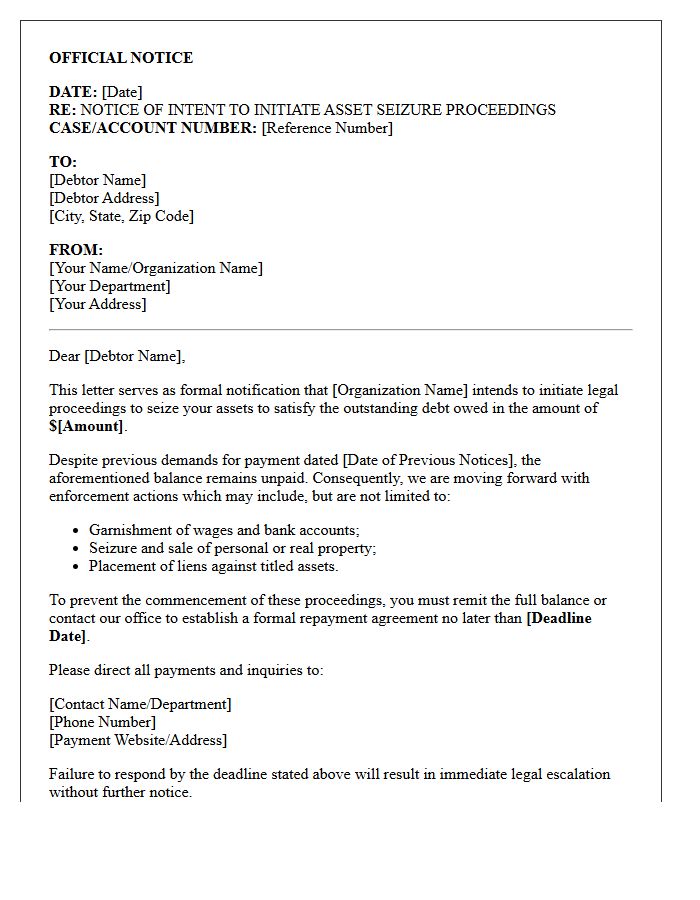
An Official Letter of Intent to Initiate Asset Seizure Proceedings is a critical legal notice indicating that a government agency or creditor plans to confiscate property to satisfy unpaid debts or legal violations. This document serves as a final warning before legal action commences, outlining the specific assets targeted and the underlying legal basis. Recipients must act immediately to contest the claim or negotiate a settlement. Failing to respond within the specified timeframe often results in the permanent loss of ownership through formal forfeiture processes or judicial foreclosure.
Legal Escalation Notice Letter for Default on Equipment Financing Contract
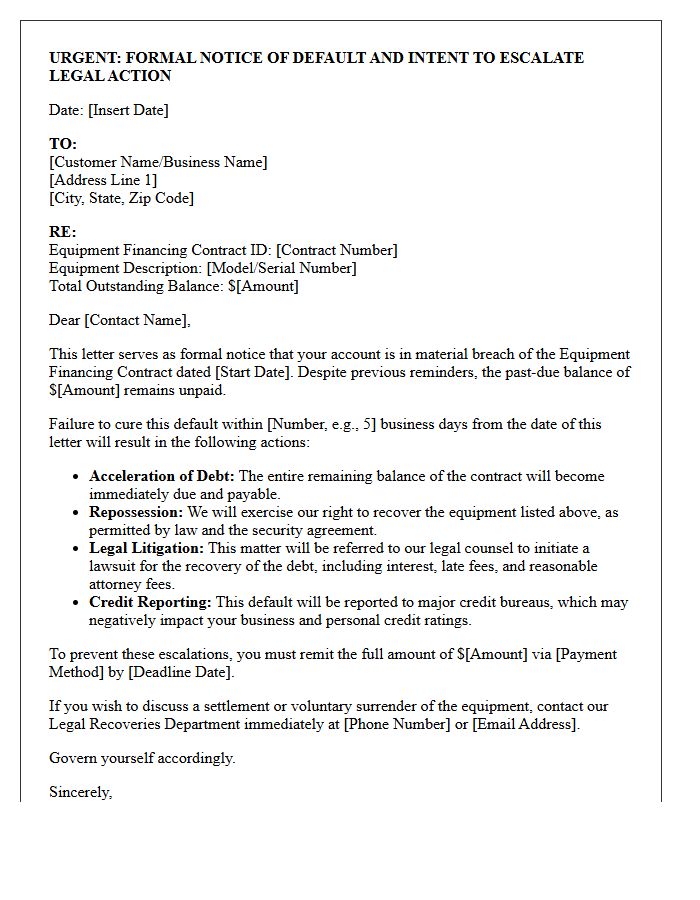
A Legal Escalation Notice Letter is a formal warning issued when a borrower fails to remedy a default on an equipment financing contract. This critical document signifies that the lender is moving beyond standard collection efforts toward litigation or asset repossession. It outlines the total outstanding balance, including late fees and legal costs, while providing a final deadline to cure the delinquency. Receiving this notice indicates that failure to pay may result in a judgment, damaging credit scores and the potential seizure of the financed machinery to satisfy the debt.
Letter of Impending Litigation for Breach of Fiduciary Duty in Wealth Management
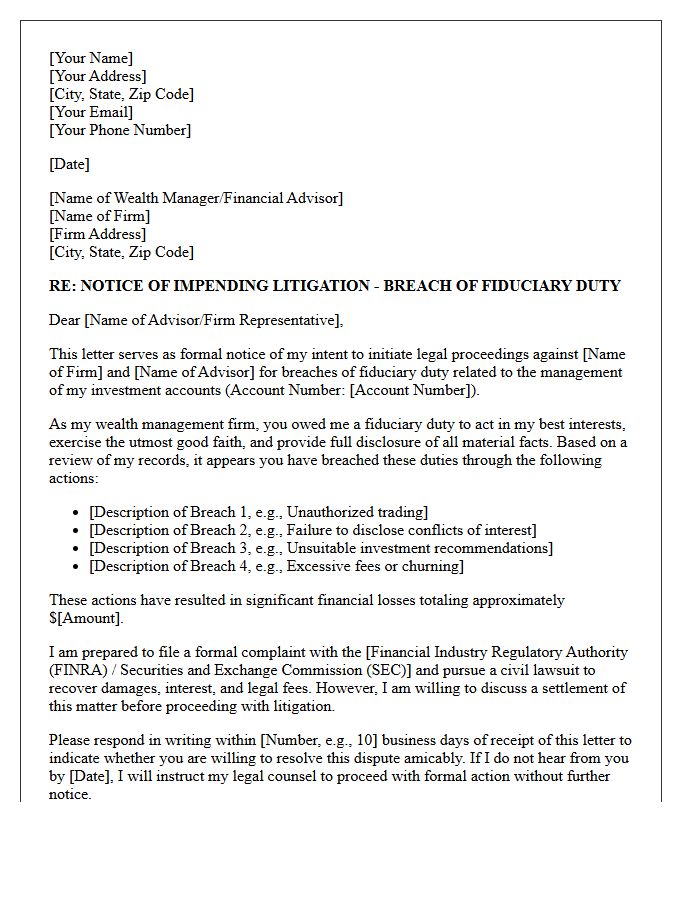
A Letter of Impending Litigation for Breach of Fiduciary Duty serves as a formal legal notice in wealth management. It asserts that an advisor failed to act in the client's best interest, potentially involving self-dealing, mismanagement, or conflicts of interest. This document outlines specific violations, demands immediate remediation, and signals an intent to file a lawsuit if demands are unmet. It is a critical step in holding professionals accountable for financial losses resulting from broken trust and legal obligations within a fiduciary relationship.
Pre-Suit Notification Letter for Unresolved Corporate Banking Dispute
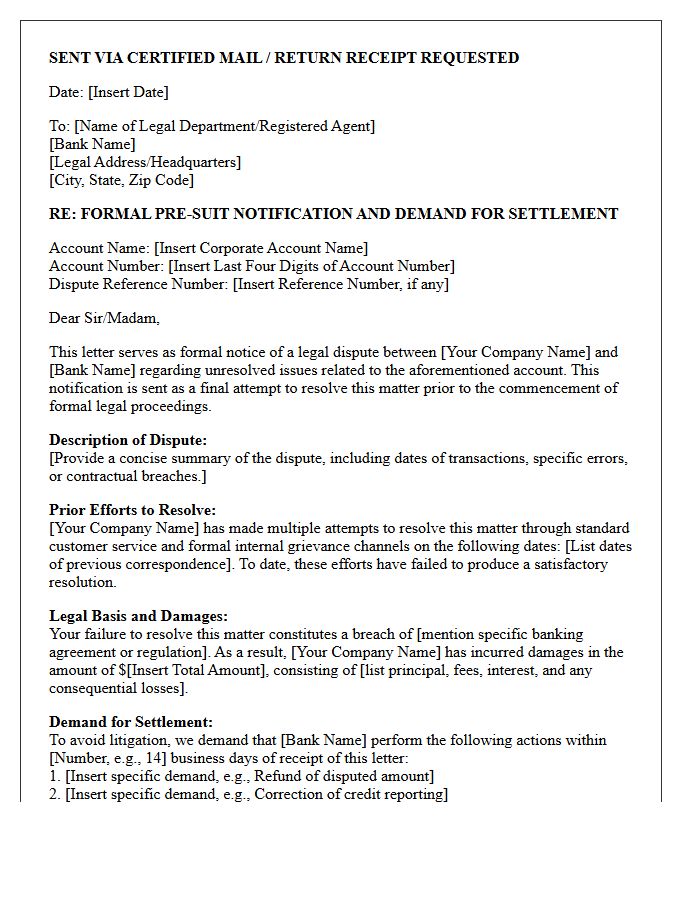
A Pre-Suit Notification Letter serves as a formal legal notice before initiating litigation for an unresolved corporate banking dispute. This essential document outlines specific claims, such as contractual breaches or unauthorized transactions, providing the financial institution a final opportunity for settlement. Sending this letter is often a mandatory procedural step required by business account agreements or local statutes. It establishes a clear timeline for a response, preserves legal rights, and demonstrates a good-faith effort to resolve conflicts outside of court, potentially saving significant time and corporate resources.
Final Demand Letter Indicating Legal Escalation for Auto Loan Default
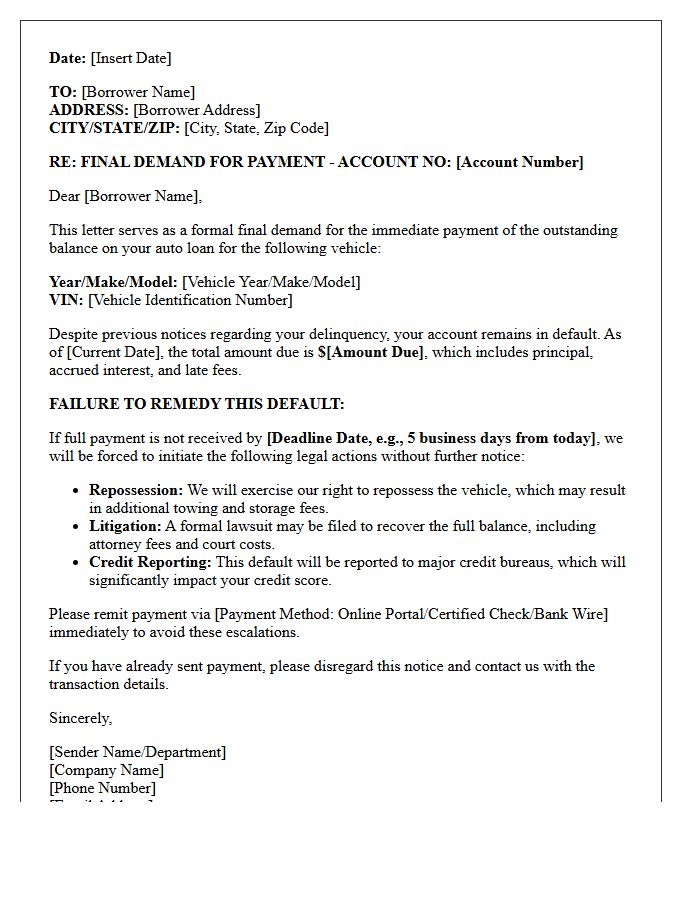
A final demand letter is the last formal notice issued before a lender pursues litigation or vehicle repossession due to an auto loan default. This document serves as a critical warning that the account is being transferred to legal counsel for court action. It specifies the total outstanding balance, including late fees and accrued interest, providing a final deadline to settle the debt. Failure to respond typically results in a judgment, wage garnishment, or asset seizure. Receiving this letter indicates that legal escalation is imminent unless immediate payment or settlement arrangements are made.
What is a Notice of Intent to Escalate to Legal Action?
A Notice of Intent to Escalate to Legal Action is a formal letter sent by a claimant or their attorney informing the recipient that a lawsuit will be filed if a specific demand, such as debt payment or contractual performance, is not met by a set deadline.
Is a notice of intent to sue a legal requirement?
In many jurisdictions and for specific types of cases-such as medical malpractice, debt collection, or breach of contract-providing a formal notice of intent is a statutory requirement before a lawsuit can be officially filed in court.
What should be included in a notice of intent to escalate?
The notice should include a clear description of the dispute, the specific amount or action requested, a firm deadline for compliance, and a statement confirming that legal proceedings will commence immediately if the requirements are not satisfied.
How long do I have to respond to a notice of intent to sue?
The response timeframe is typically defined within the letter itself, often ranging from 10 to 30 days. Failure to respond within this period usually results in the claimant proceeding with a formal summons and complaint.
Can receiving a notice of intent to escalate lead to a settlement?
Yes, many legal disputes are settled after a notice of intent is issued. It serves as a final opportunity for parties to engage in alternative dispute resolution or negotiations to avoid the high costs and time commitment of litigation.


Comments