
An Enhanced Due Diligence Inquiry Letter is a critical tool for financial institutions to mitigate high-risk exposures. It formalizes the process of requesting detailed information regarding a client's source of wealth, business activities, and ultimate beneficial ownership. Proper documentation ensures regulatory compliance and robust risk management. To assist your compliance workflow, below are some ready to use template.
Image cover: Mastering the Enhanced Due Diligence Inquiry: Sample Templates and Best Practices
Letter Samples List
- Source of Funds Verification Inquiry Letter
- Ultimate Beneficial Ownership Clarification Letter
- Politically Exposed Person Declaration Letter
- High-Risk Jurisdiction Transaction Inquiry Letter
- Source of Wealth Documentation Request Letter
- Respondent Bank Compliance Questionnaire Letter
- Complex Corporate Structure Explanation Letter
- Unusual Account Activity Inquiry Letter
- Cross-Border Wire Transfer Justification Letter
- Third-Party Payment Explanation Letter
- Adverse Media Clarification Letter
- Cash Intensive Business Operations Letter
Source of Funds Verification Inquiry Letter
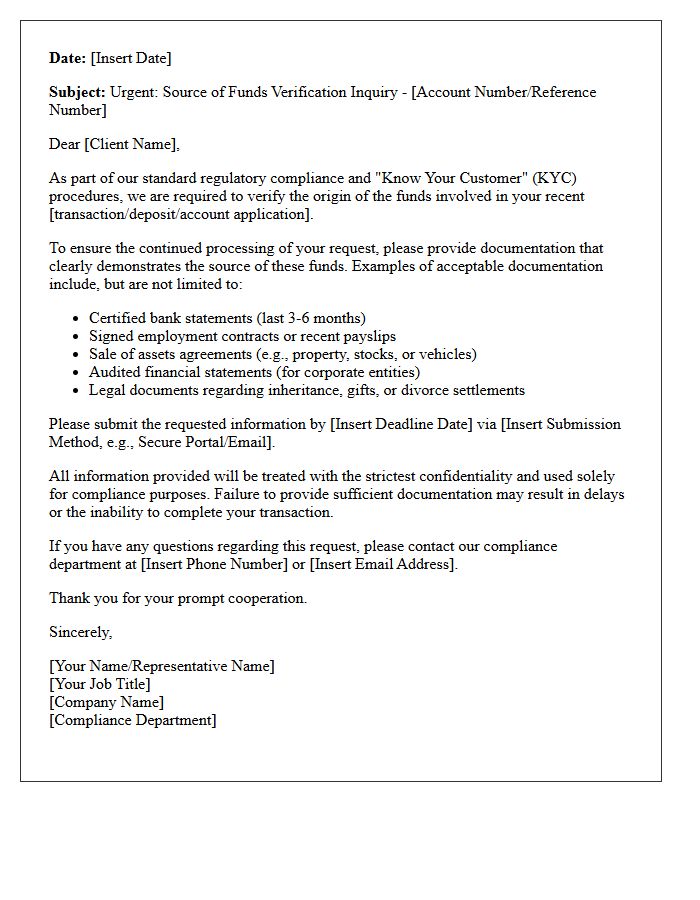
A Source of Funds Verification Inquiry Letter is a formal request issued by financial institutions to confirm the legal origin of your capital. It is a critical component of Anti-Money Laundering (AML) compliance used during high-value transactions like real estate purchases. You must provide documented evidence, such as bank statements, pay slips, or inheritance records, to prove your wealth was acquired through legitimate activities. Promptly responding with accurate information ensures regulatory transparency and prevents unnecessary delays or potential freezing of your financial accounts.
Ultimate Beneficial Ownership Clarification Letter
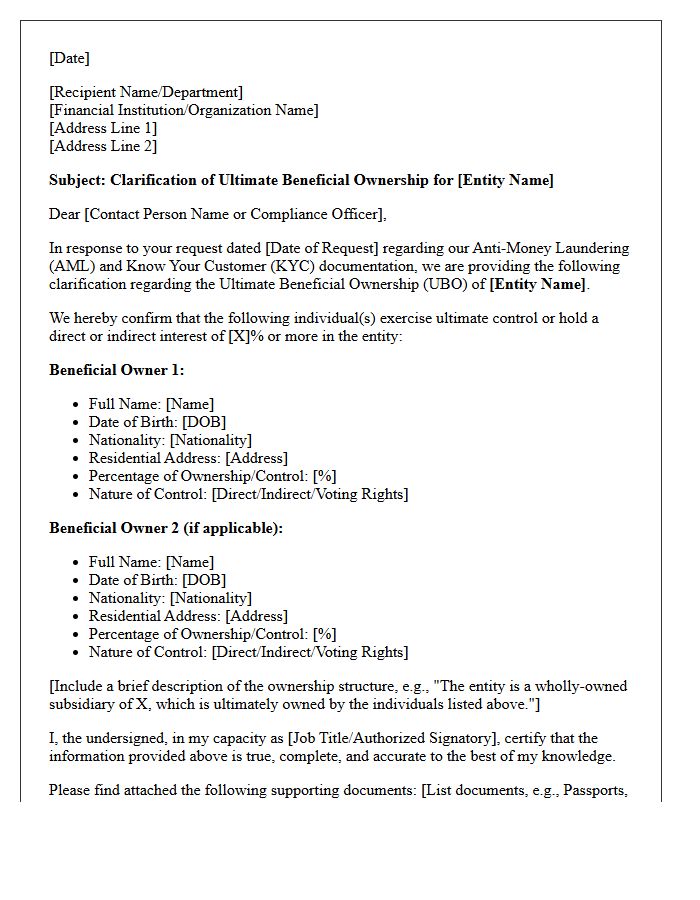
An Ultimate Beneficial Ownership Clarification Letter is a formal document used to verify the identity of individuals who exercise significant control over a legal entity. Financial institutions require this letter to fulfill Anti-Money Laundering (AML) and Know Your Customer (KYC) compliance standards. It ensures transparency by disclosing anyone holding a 25% or greater stake, preventing financial crimes like tax evasion or fraud. Providing accurate ownership details is essential for maintaining regulatory transparency and securing corporate banking relationships or investment approvals globally.
Politically Exposed Person Declaration Letter
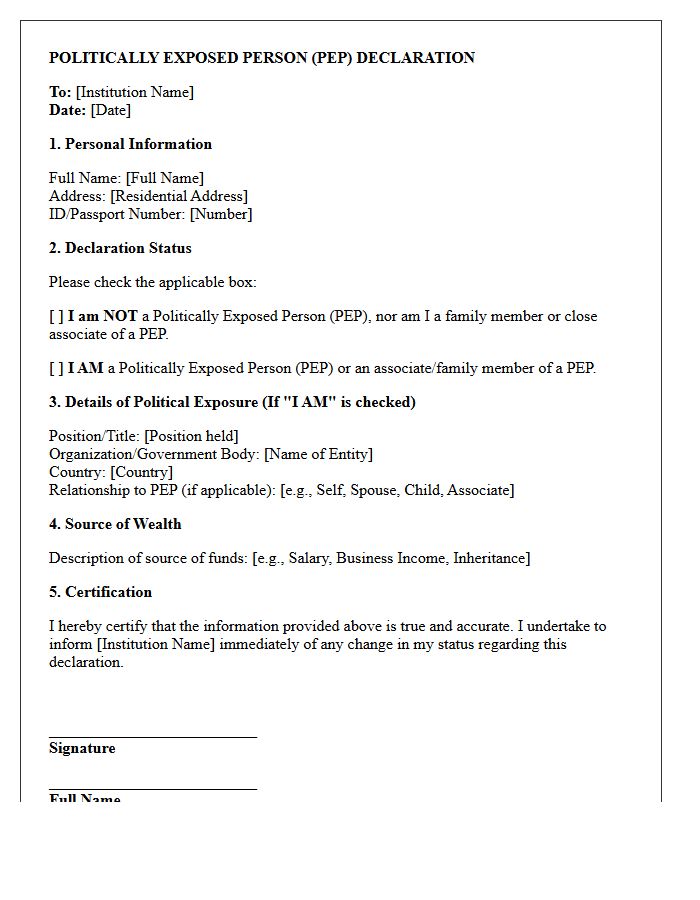
A Politically Exposed Person (PEP) Declaration Letter is a mandatory compliance document used by financial institutions to assess money laundering risks. It requires individuals to disclose if they, or close family members, hold prominent public positions that could be vulnerable to corruption. Accurately completing this letter is essential for regulatory transparency and ensures organizations meet strict Anti-Money Laundering (AML) standards. Failing to declare PEP status can lead to account restrictions or legal scrutiny, as institutions must perform enhanced due diligence on high-profile clients to prevent financial crimes.
High-Risk Jurisdiction Transaction Inquiry Letter
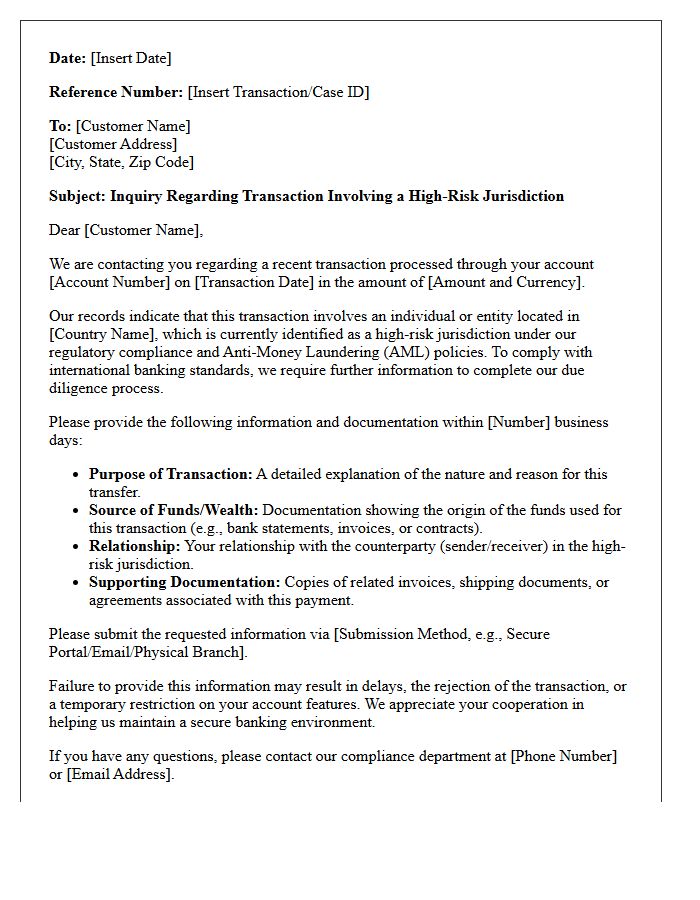
A High-Risk Jurisdiction Transaction Inquiry Letter is a formal request from financial institutions to verify the legitimacy of transfers involving sanctioned or high-risk regions. Banks issue these to comply with Anti-Money Laundering (AML) regulations. If you receive one, you must provide clear documentation, such as invoices or contracts, to prove the source of funds and business purpose. Failure to respond promptly or accurately can lead to account restrictions or permanent closure. Professional transparency is essential to satisfy regulatory scrutiny and maintain banking relationships when operating in complex international markets.
Source of Wealth Documentation Request Letter
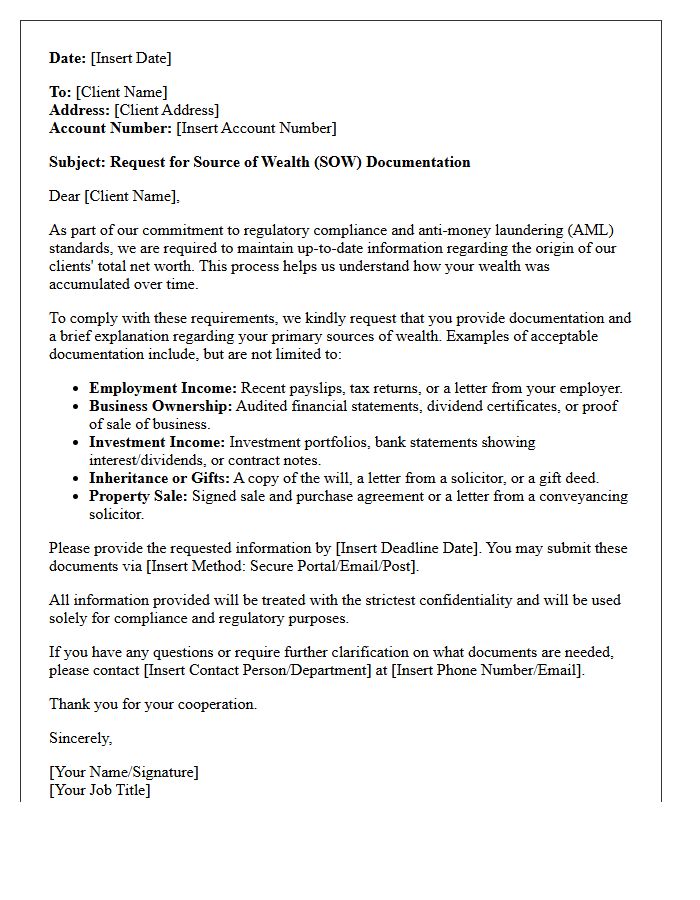
A Source of Wealth Documentation Request Letter is a formal inquiry from financial institutions to verify the origin of your total net worth. To comply with Anti-Money Laundering (AML) regulations, you must provide evidence such as inheritance records, investment statements, or business sale contracts. This process ensures funds were obtained through legitimate activities rather than illicit means. Promptly submitting clear, verifiable supporting documents is essential to maintain your banking relationship and prevent account restrictions during high-value transactions or routine compliance reviews.
Respondent Bank Compliance Questionnaire Letter
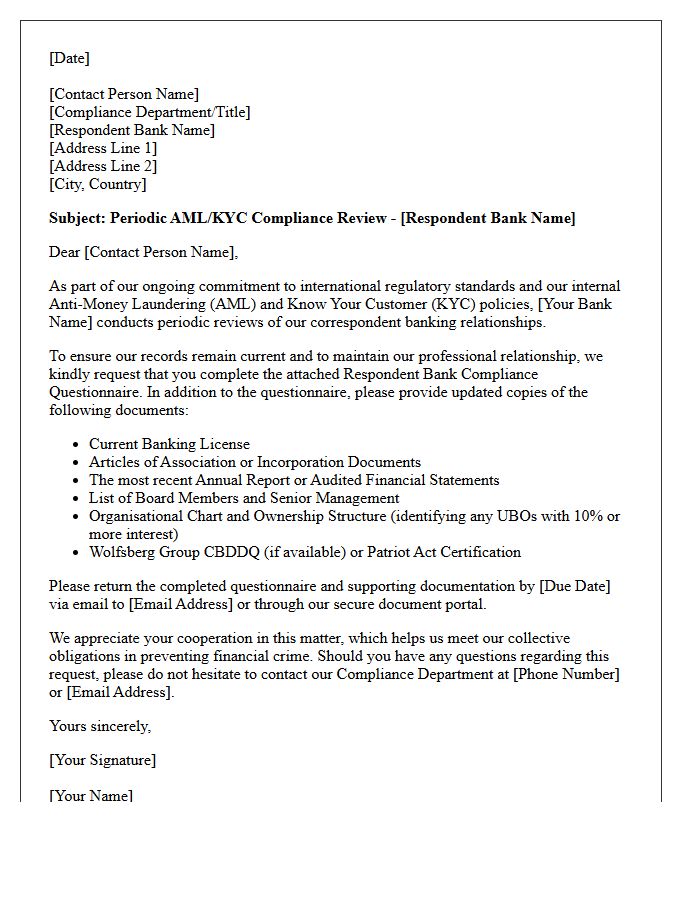
The Respondent Bank Compliance Questionnaire Letter is a critical document used in due diligence to evaluate a financial institution's anti-money laundering (AML) and counter-terrorist financing (CTF) protocols. It ensures that respondent banks adhere to global regulatory standards like KYC and the Wolfsberg principles. Providing accurate data in this letter is essential for establishing and maintaining correspondent banking relationships, as it helps mitigate risks associated with cross-border transactions and financial crime. Failing to submit comprehensive responses can lead to the termination of banking services and increased regulatory scrutiny.
Complex Corporate Structure Explanation Letter
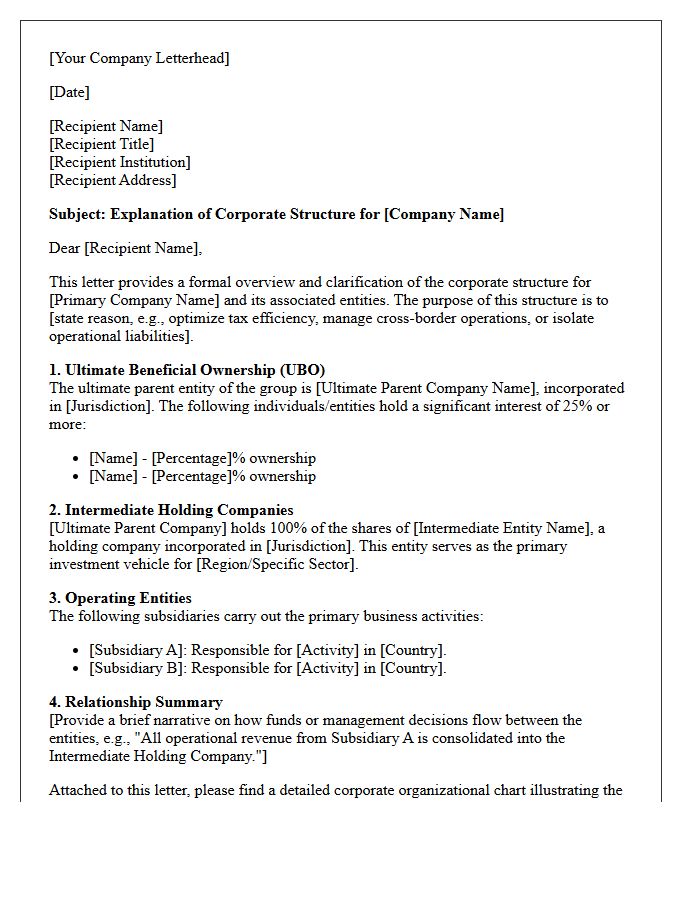
A Complex Corporate Structure Explanation Letter is a formal document designed to clarify intricate ownership hierarchies for regulators, banks, or investors. It typically features a narrative description and a visual organizational chart to identify parent companies, subsidiaries, and affiliates. The primary objective is to ensure transparency regarding the Ultimate Beneficial Owner (UBO) and to streamline compliance processes like KYC. By detailing shareholding percentages and jurisdictions, the letter mitigates risks related to legal opacity and facilitates smoother due diligence during high-level financial transactions or audits.
Unusual Account Activity Inquiry Letter
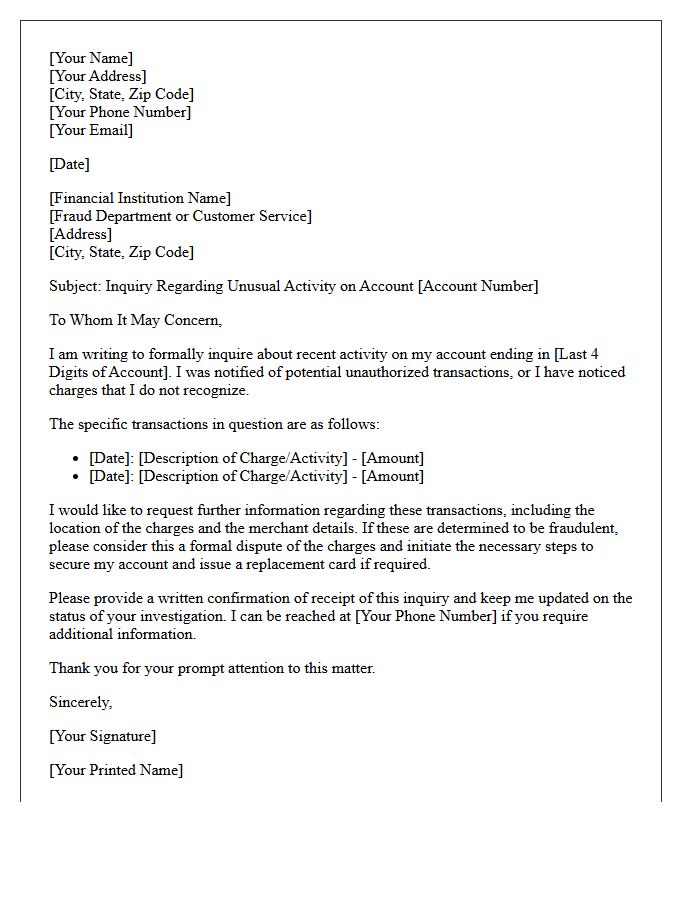
An Unusual Account Activity Inquiry Letter is a formal request sent to a financial institution to clarify unauthorized transactions or suspicious changes. It serves as a vital tool for identity theft protection and fraud mitigation. When drafting this document, include specific details like transaction dates, amounts, and account identifiers to expedite the investigation. Timely submission is crucial to maintain legal consumer protections and limit personal liability for financial losses. Always request a written confirmation of the inquiry's resolution to ensure your financial security is fully restored.
Cross-Border Wire Transfer Justification Letter
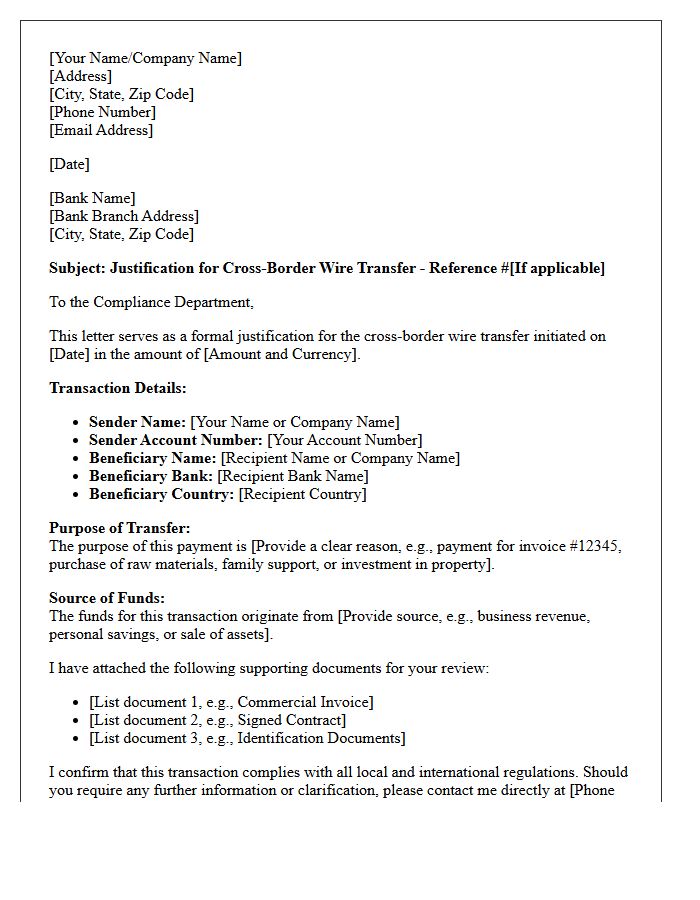
A Cross-Border Wire Transfer Justification Letter is a formal document explaining the purpose of international fund movements to regulatory bodies. Banks require this to ensure compliance with Anti-Money Laundering (AML) and Know Your Customer (KYC) regulations. The letter must clearly state the relationship between parties, the specific reason for the transaction, and include supporting evidence like invoices or contracts. Providing a precise justification helps prevent transaction delays, account freezes, or rejections by intermediary banks monitoring for suspicious financial activity across different jurisdictions.
Third-Party Payment Explanation Letter
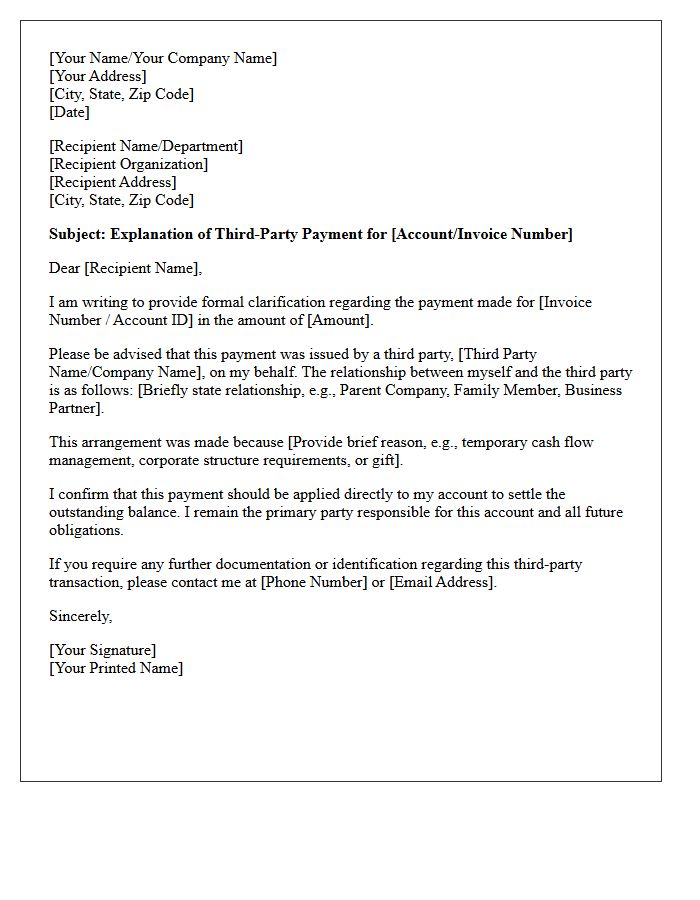
A Third-Party Payment Explanation Letter is a vital document used during mortgage applications to clarify why someone other than the borrower is providing funds. This letter must explicitly state the relationship between parties and confirm that the money is a non-repayable gift rather than a loan. Lenders require this transparency to verify the source of funds and ensure the applicant meets debt-to-income requirements. Including bank statements and signed affidavits helps satisfy underwriting guidelines and prevents processing delays during the home buying journey.
Adverse Media Clarification Letter
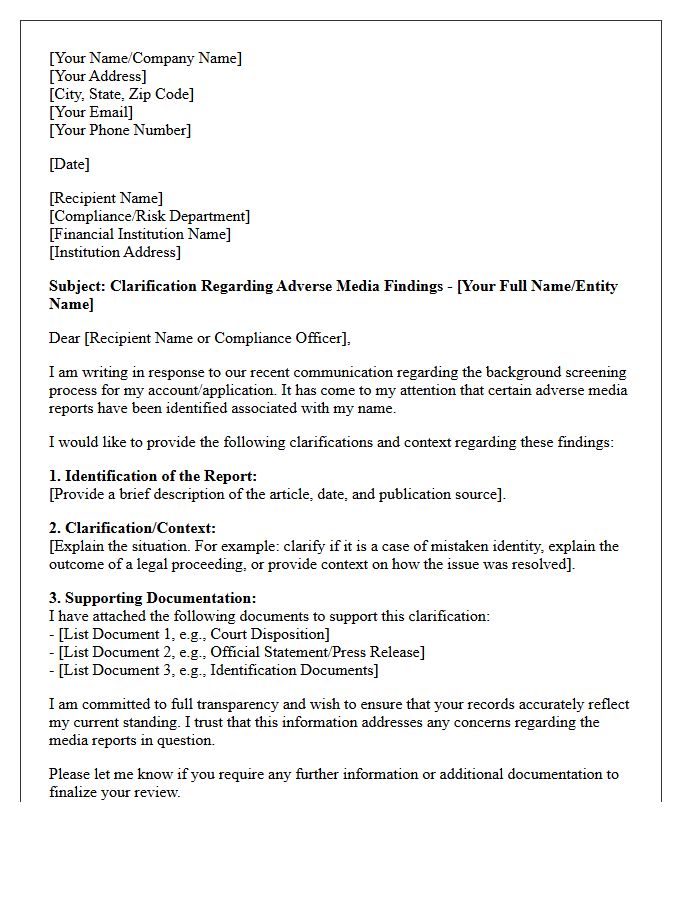
An Adverse Media Clarification Letter is a formal document used during AML compliance to resolve negative information found during background checks. When a screening identifies reputational risks or criminal allegations, the subject provides this written explanation to clarify inaccuracies or demonstrate mitigation. It serves as crucial due diligence evidence, allowing financial institutions to assess whether a client's actual risk profile aligns with their internal policies. Properly addressing these findings helps prevent unnecessary onboarding rejections and ensures transparent regulatory reporting for high-risk entities.
Cash Intensive Business Operations Letter
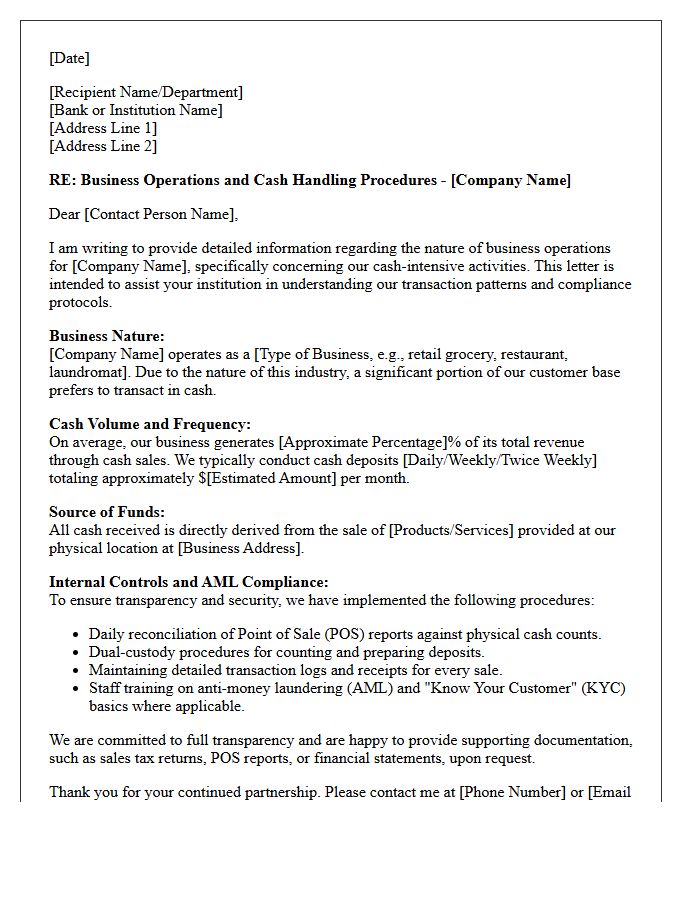
A Cash Intensive Business Operations Letter is a formal inquiry issued by banks to assess potential money laundering risks. Financial institutions send these letters to businesses handling high volumes of physical currency to ensure compliance with Anti-Money Laundering (AML) regulations. Recipients must provide detailed documentation regarding their revenue sources, cash handling procedures, and customer base. Failure to respond accurately or promptly can lead to account restrictions or permanent closure. It is essential to maintain transparent financial records to demonstrate that all cash transactions are legitimate and align with reported business activities.
What is an Enhanced Due Diligence (EDD) inquiry letter?
An Enhanced Due Diligence (EDD) inquiry letter is a formal request sent by financial institutions to high-risk customers to gather detailed information regarding their financial activities, source of wealth, and specific transactions to mitigate potential money laundering or fraud risks.
Why did I receive an Enhanced Due Diligence inquiry letter?
You received this letter because your account activity, geographic location, or professional profile has triggered a standard regulatory review process designed to ensure that your financial transactions align with your documented income and stated business purpose.
What information is typically requested in an EDD inquiry?
Commonly requested information includes proof of source of wealth (SOW), source of funds (SOF) for specific transactions, detailed explanations of business relationships, and supporting documentation such as tax returns, bank statements, or audited financial reports.
How long do I have to respond to an EDD inquiry letter?
Response deadlines vary by institution but typically range from 7 to 14 business days; failure to provide a timely and comprehensive response may result in account restrictions, suspension, or termination of the banking relationship.
Is the information provided in an EDD response kept confidential?
Yes, all information provided in response to an Enhanced Due Diligence inquiry is protected by data privacy laws and internal bank security protocols, and it is used solely for the purpose of regulatory compliance and risk management.


Comments