
A Know Your Customer Information Request Letter is a formal document used by financial institutions to verify client identities and assess risk profiles. Ensuring compliance with global AML regulations requires accurate data collection from account holders. Properly structured requests help streamline the verification process and maintain regulatory standing. To simplify your communication, below are some ready to use template.
Image cover: Official KYC Information Request Letter Templates and Professional Samples
Letter Samples List
- Individual Identity Verification Request Letter
- Proof Of Address Update Request Letter
- Corporate Entity Information Request Letter
- Source Of Funds Declaration Request Letter
- Beneficial Ownership Disclosure Request Letter
- Periodic Know Your Customer Refresh Request Letter
- Incomplete Account Documentation Notice Letter
- Tax Residency Status Request Letter
- Enhanced Due Diligence Information Request Letter
- Politically Exposed Person Declaration Request Letter
- Nature Of Business Clarification Request Letter
- Expired Identification Document Renewal Request Letter
- Ultimate Beneficial Owner Structure Request Letter
Individual Identity Verification Request Letter
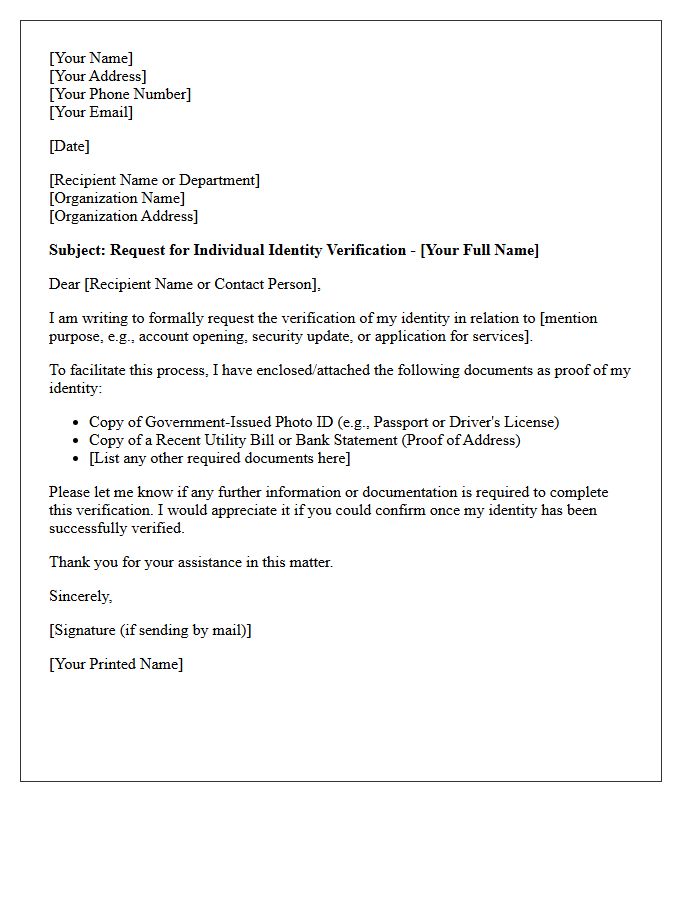
An Individual Identity Verification Request Letter is a formal document used to confirm a person's legal persona. It is essential for security compliance and fraud prevention during financial transactions or employment onboarding. This letter typically requests official documentation, such as a government-issued ID or utility bill, to validate personal credentials. Ensuring accuracy in this request helps maintain data privacy and fulfills legal "Know Your Customer" (KYC) requirements. It serves as a critical audit trail, protecting both the requester and the individual by establishing a transparent verification process.
Proof Of Address Update Request Letter
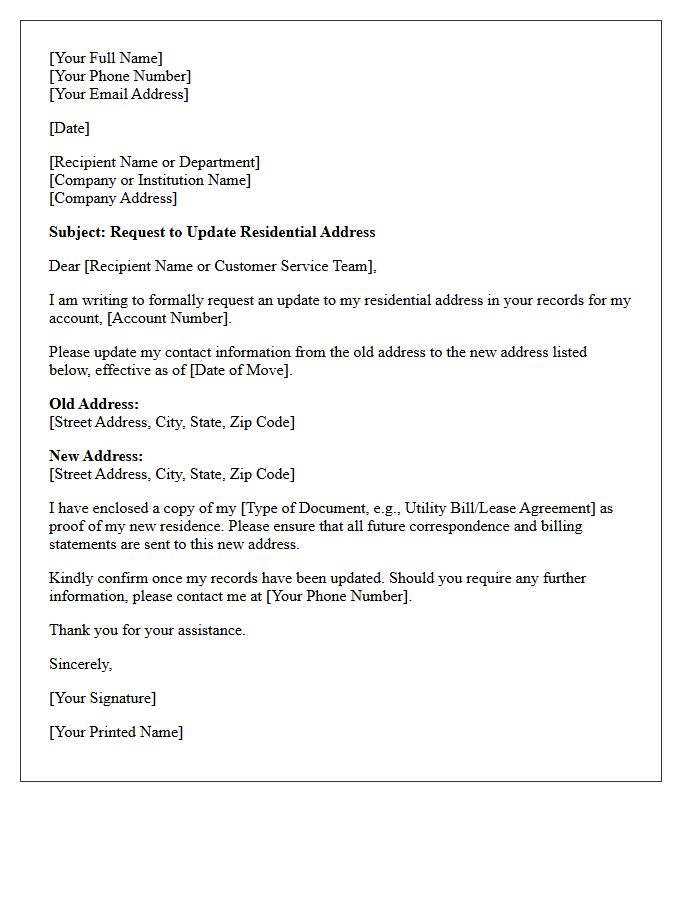
A Proof of Address Update Request Letter is a formal document used to notify institutions, such as banks or government agencies, of a change in residency. To ensure legal compliance and uninterrupted service, you must include your full name, new residential address, and the effective date of the move. Attaching supporting documentation, such as a utility bill or lease agreement, is essential for verification. Providing clear contact information ensures the records update process is handled accurately, maintaining the integrity of your personal profile and billing information across all official platforms.
Corporate Entity Information Request Letter
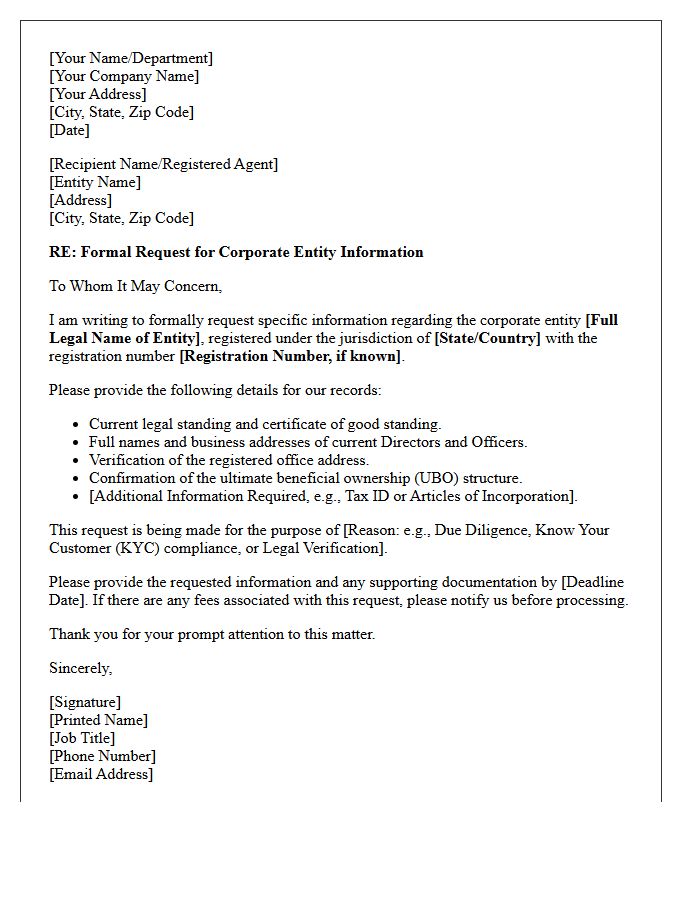
A Corporate Entity Information Request Letter is a formal legal document used to verify a company's registration status, ownership structure, and operational details. It is essential for due diligence, ensuring transparency before entering contracts or initiating litigation. The request typically seeks information such as the entity's legal name, registered agent, and official business address. Accurate data collection helps mitigate compliance risks and validates the legitimacy of a business partner. Drafting this letter professionally ensures you obtain verified data from official records or authorized corporate representatives effectively.
Source Of Funds Declaration Request Letter
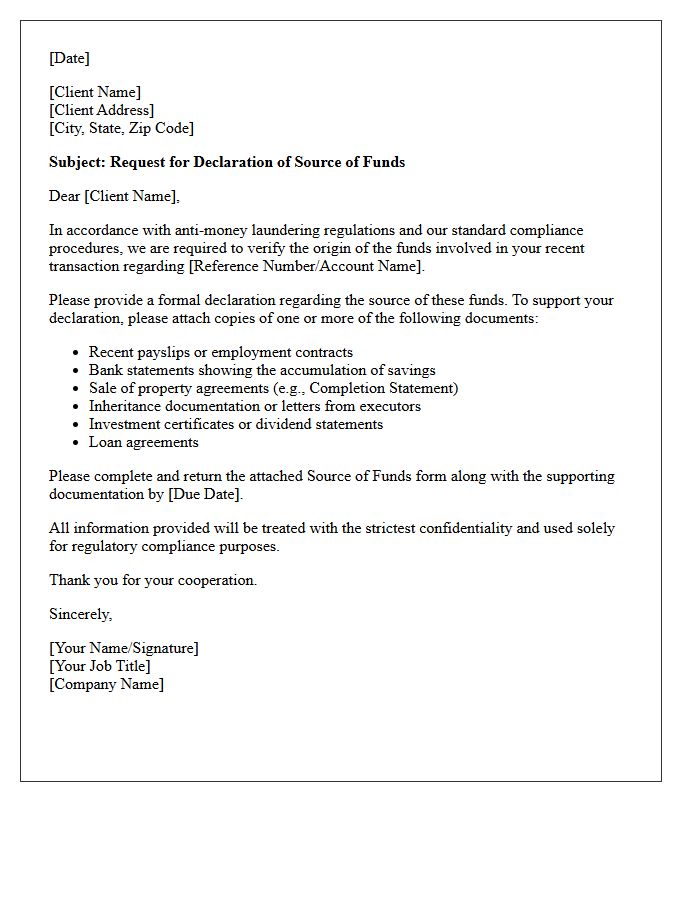
A Source of Funds Declaration Request Letter is a formal document used by financial institutions to verify the legitimacy of a client's capital. To comply with Anti-Money Laundering (AML) regulations, banks must confirm that money originates from legal activities like savings, inheritance, or property sales. Recipients must provide accurate supporting evidence, such as bank statements or pay slips, to prove the wealth's origin. Failing to respond or providing insufficient documentation may result in account restrictions, transaction delays, or reported suspicious activity to regulatory authorities.
Beneficial Ownership Disclosure Request Letter
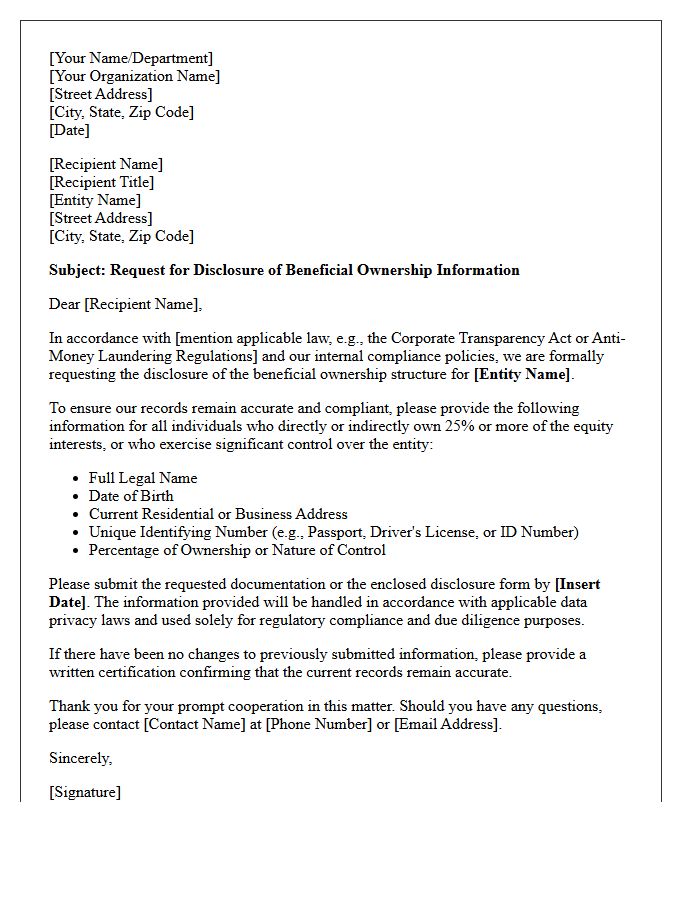
A Beneficial Ownership Disclosure Request Letter is a formal document used to identify individuals who exercise ultimate control over a legal entity. Financial institutions and regulatory bodies issue these requests to comply with Anti-Money Laundering (AML) and "Know Your Customer" (KYC) regulations. Recipients must accurately disclose personal details of owners holding significant equity, typically 25% or more. Failure to provide this information promptly can lead to legal penalties, frozen accounts, or severe regulatory non-compliance. Ensuring transparency through this disclosure helps prevent financial crimes like tax evasion and illicit money laundering activities.
Periodic Know Your Customer Refresh Request Letter
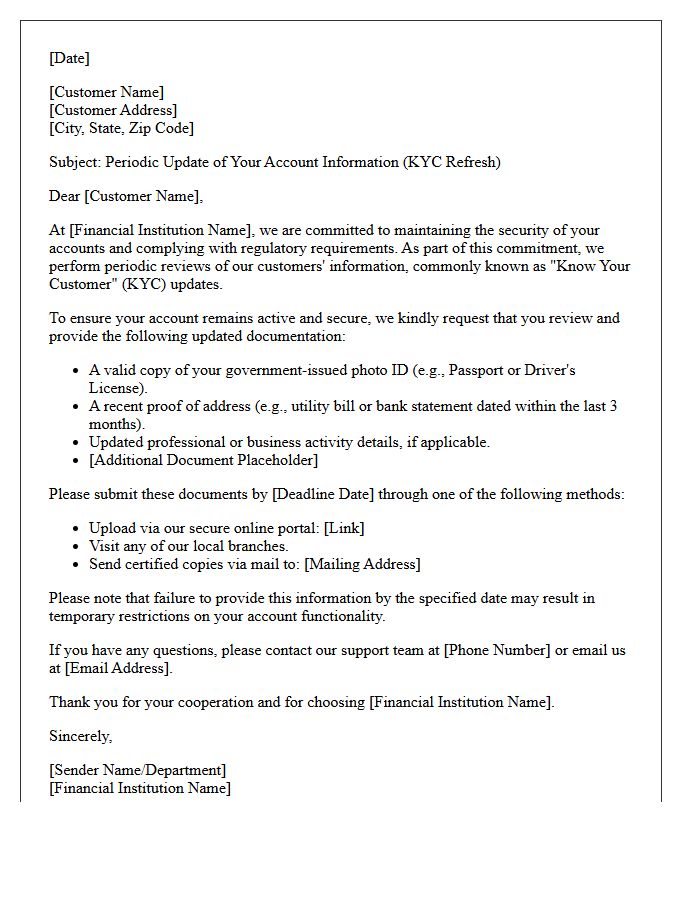
A Periodic Know Your Customer (KYC) Refresh Request Letter is a formal notification from a financial institution requiring clients to update their personal or business information. This process ensures compliance with Anti-Money Laundering (AML) regulations and maintains accurate records. You must provide valid identification, proof of address, or ownership details by the specified deadline to avoid potential account restrictions. Responding promptly to these requests is essential for verifying your identity, assessing risk profiles, and ensuring the ongoing security and legality of your banking relationship within the global financial system.
Incomplete Account Documentation Notice Letter
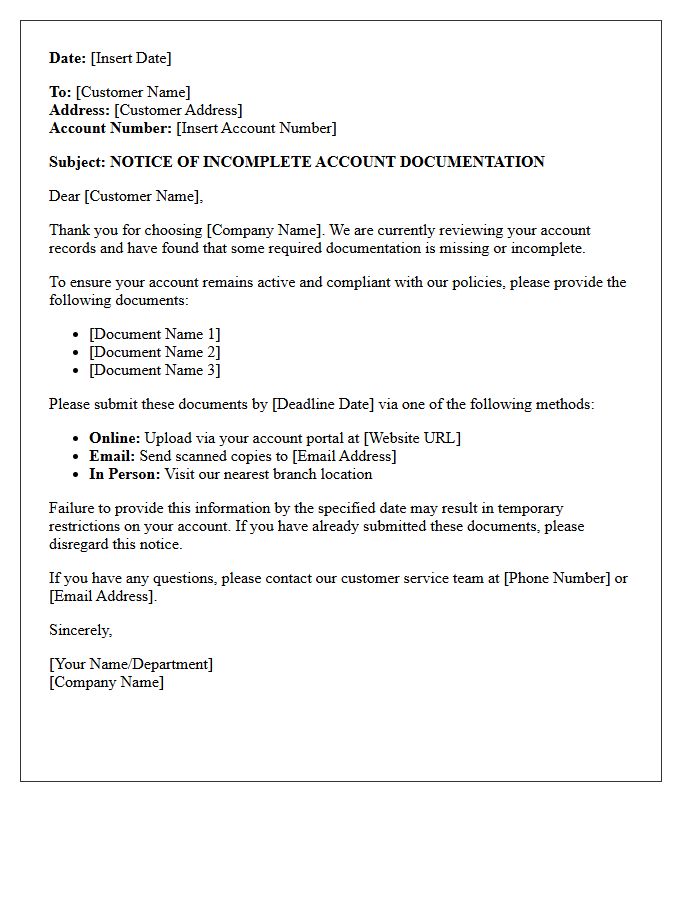
An Incomplete Account Documentation Notice Letter is a formal request from a financial institution or service provider to a client. It identifies missing information or expired credentials required for compliance, such as KYC (Know Your Customer) or AML regulations. Failing to submit the requested files, such as identification or proof of address, by the specified deadline can lead to account restrictions or total suspension. It is essential to provide accurate documents promptly to maintain legal status and ensure uninterrupted access to your financial services and personal funds.
Tax Residency Status Request Letter
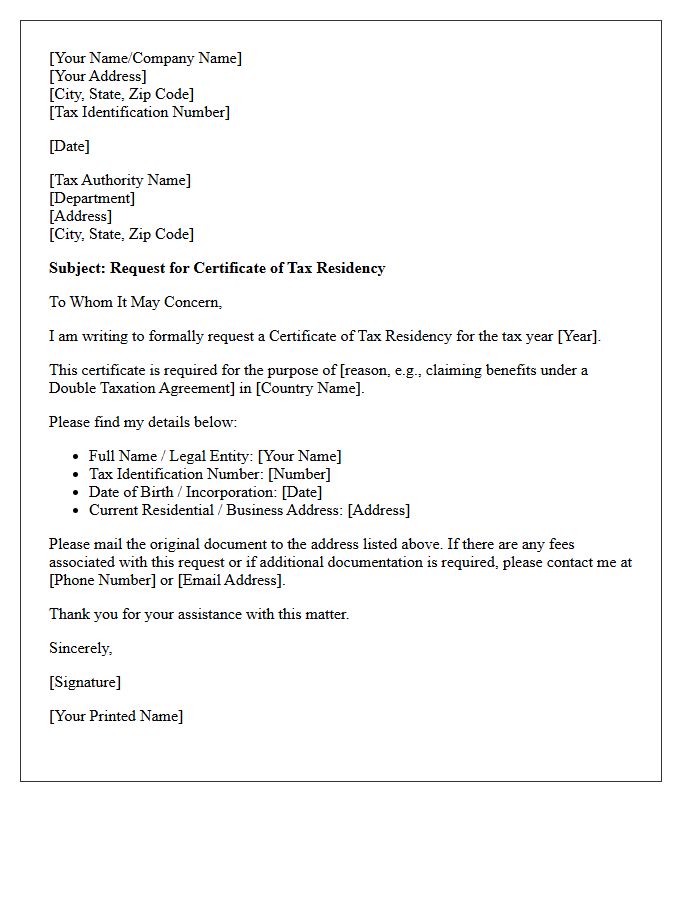
A Tax Residency Status Request Letter is a formal application submitted to tax authorities to obtain a Certificate of Residence. This document is essential for individuals or businesses seeking to prevent double taxation under international treaties. It officially confirms your status as a resident taxpayer in a specific country, allowing you to claim reduced withholding rates or exemptions on foreign income. When drafting, ensure you include your unique tax identification number, the specific tax treaty year, and the destination country to guarantee valid cross-border compliance.
Enhanced Due Diligence Information Request Letter
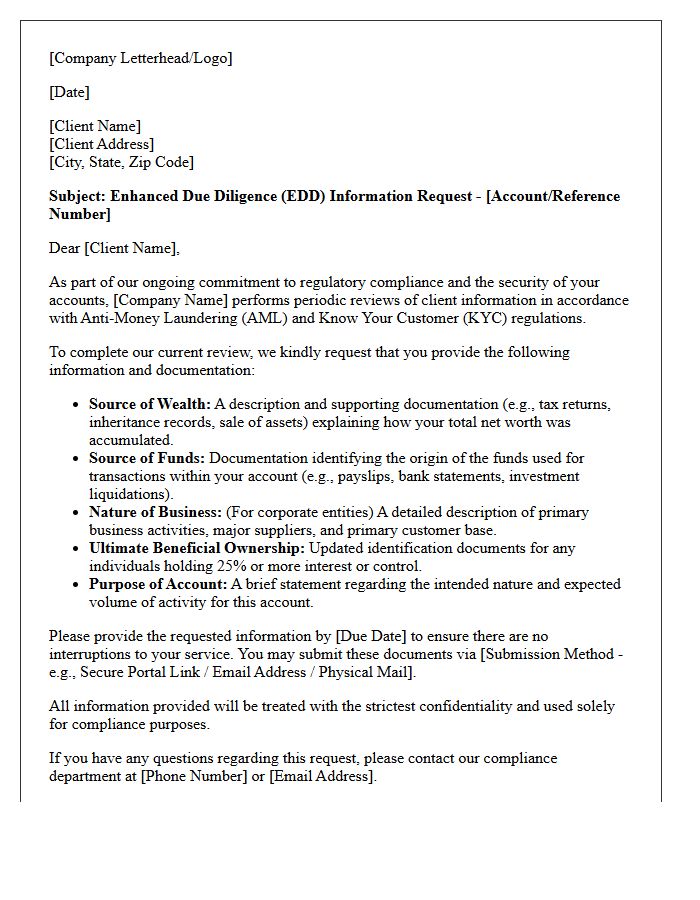
An Enhanced Due Diligence (EDD) Information Request Letter is a formal inquiry sent by financial institutions to high-risk clients. Its purpose is to mitigate financial crime risks like money laundering or terrorism financing. The letter typically requests detailed documentation regarding the Source of Wealth (SoW) and Source of Funds (SoF). Providing timely, accurate, and transparent evidence is essential to maintain your banking relationship and ensure regulatory compliance. Failure to respond adequately may result in account restrictions or closure under Anti-Money Laundering (AML) protocols.
Politically Exposed Person Declaration Request Letter
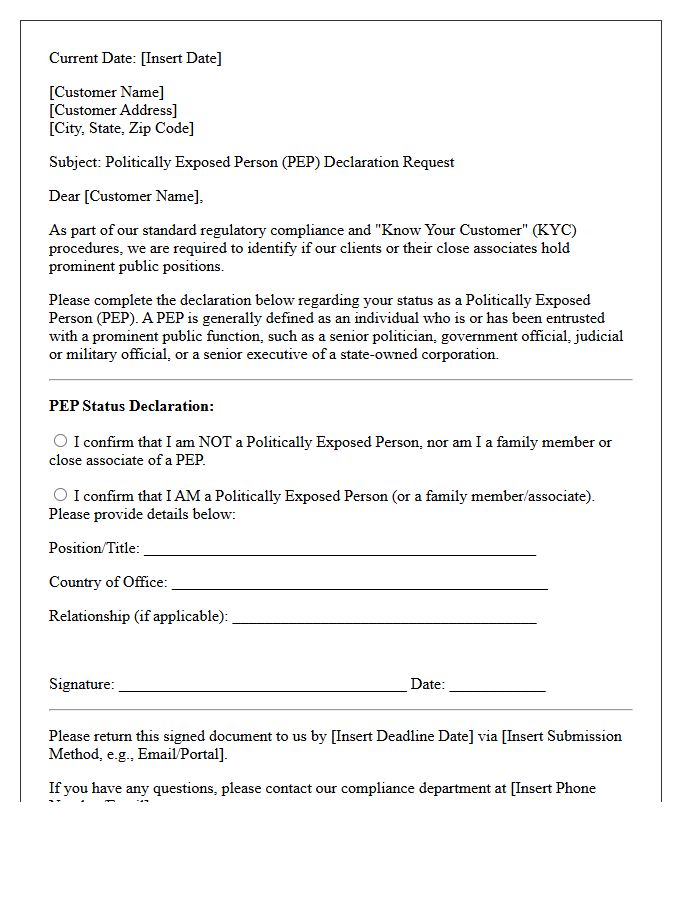
A Politically Exposed Person (PEP) declaration request letter is a compliance document used by financial institutions to identify individuals in prominent public positions. This process is essential for Anti-Money Laundering (AML) and Know Your Customer (KYC) regulations. If you receive this request, you must accurately disclose any high-level political roles held by yourself or close family members. Failure to provide a transparent PEP declaration can lead to account restrictions, as banks must assess potential risks related to bribery or corruption associated with politically connected accounts.
Nature Of Business Clarification Request Letter
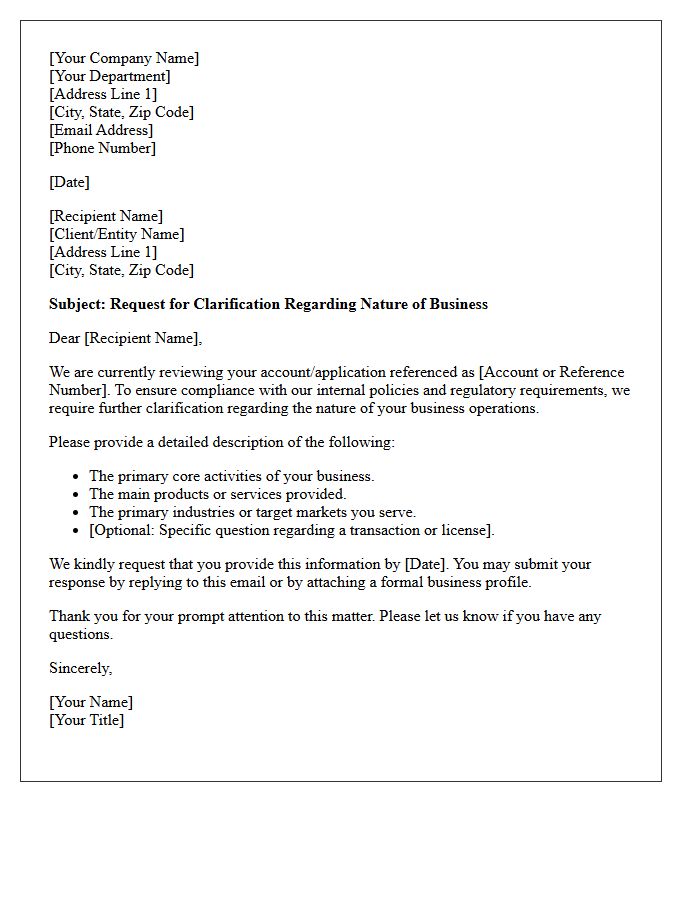
A Nature of Business Clarification Request Letter is a formal inquiry from a bank or authority seeking to verify your company's specific activities. It ensures compliance with Anti-Money Laundering (AML) regulations and risk assessments. When responding, provide a detailed description of your services, products, and target markets to avoid account restrictions. Clearly explaining your revenue streams helps institutions confirm that your financial transactions align with your declared business model, ensuring operational transparency and maintaining your corporate banking standing.
Expired Identification Document Renewal Request Letter
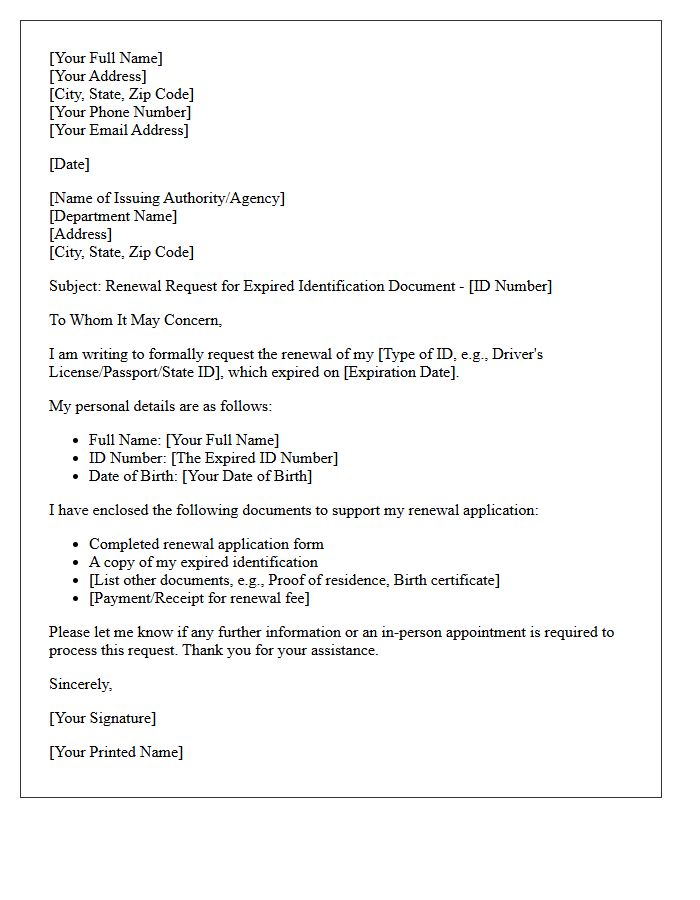
An Expired Identification Document Renewal Request Letter is a formal notification sent to authorities to expedite the reissuance of valid credentials. It must clearly state the holder's full name, expired document number, and the specific reason for the request, such as legal compliance or employment needs. Providing supporting documentation or proof of urgency ensures a smoother verification process. Using a professional tone and including current contact details helps officials process the renewal application efficiently, preventing potential identity gaps or administrative delays in personal or professional activities.
Ultimate Beneficial Owner Structure Request Letter
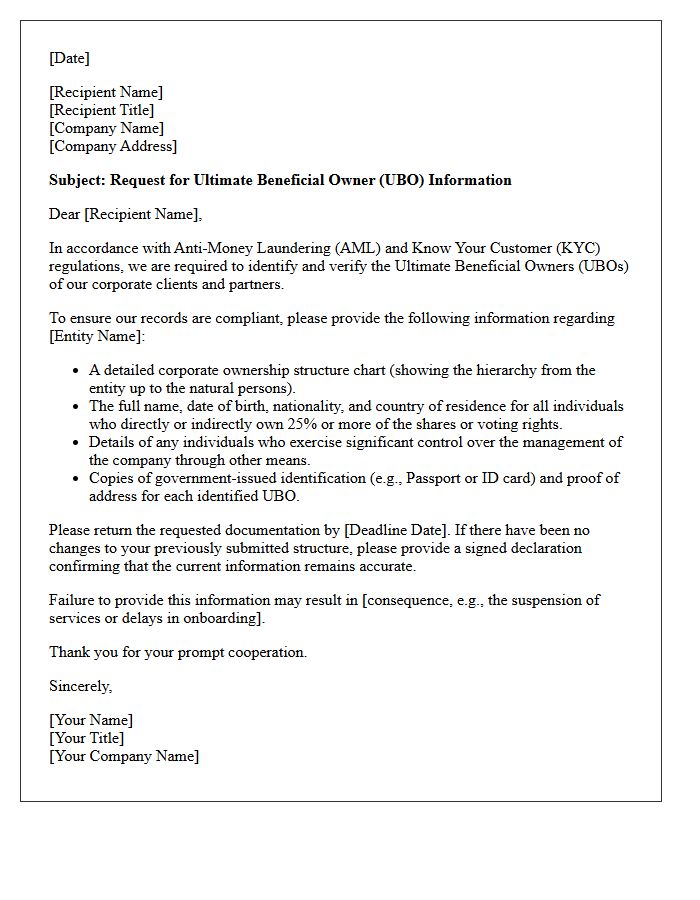
An Ultimate Beneficial Owner (UBO) Structure Request Letter is a formal document used by financial institutions to identify individuals who exercise ultimate control over a legal entity. This request ensures compliance with Anti-Money Laundering (AML) and Know Your Customer (KYC) regulations. Recipients must provide detailed ownership percentages and organizational charts to reveal the natural persons holding 25% or more interest. Accurately disclosing the ownership structure is essential for verifying transparency, preventing financial crimes, and maintaining legal corporate standing during due diligence processes.
What is a Know Your Customer (KYC) information request letter?
A KYC information request letter is a formal notice sent by financial institutions to clients to collect or update identity verification details, ensuring compliance with anti-money laundering (AML) and counter-terrorist financing (CTF) regulations.
Why did I receive a KYC update request from my bank?
Banks send these requests periodically to ensure your account information is current, to verify the source of funds, and to fulfill legal obligations required by financial regulators to prevent identity theft and fraud.
What documents are typically required for a KYC information request?
Commonly requested documents include a valid government-issued photo ID (passport or driver's license), proof of address (utility bill or bank statement), and occasionally documentation regarding your professional activity or source of wealth.
What happens if I do not respond to a KYC information request letter?
Failure to provide the requested information within the specified timeframe may result in temporary account restrictions, such as limitations on withdrawals and transfers, or the eventual closure of the account to maintain regulatory compliance.
How can I securely submit my documents for a KYC verification request?
Most institutions allow you to submit documents through their encrypted online banking portal, via a secure mobile app upload, or by presenting original documents in person at a local branch to ensure data privacy.

Comments