
An OFAC Sanctions Match Notification Letter is a formal notice issued when a financial transaction or individual profile matches a restricted party list. Understanding these alerts is vital for regulatory compliance and risk mitigation. This guide explores how to handle hits, verify identities, and respond to potential violations effectively. To assist your compliance efforts, below are some ready to use template.
Image cover: Official OFAC Sanctions Match Notification Letter Templates and Communication Guide
Letter Samples List
- Blocked Transaction Office of Foreign Assets Control Sanctions Match Notification Letter
- Rejected Funds Transfer Sanctions Match Report Letter
- Customer Account Freezing Sanctions Match Notification Letter
- Internal Compliance Sanctions Match Escalation Letter
- False Positive Sanctions Match Resolution Clearance Letter
- Correspondent Bank Sanctions Match Inquiry Letter
- Wire Transfer Hold Sanctions Match Notification Letter
- Customer Information Request for Sanctions Match Investigation Letter
- Annual Blocked Property Sanctions Match Report Letter
- Trade Finance Sanctions Match Interdiction Letter
- Funds Unblocking Sanctions Match Authorization Letter
- Voluntary Self-Disclosure Sanctions Match Review Letter
Blocked Transaction Office of Foreign Assets Control Sanctions Match Notification Letter
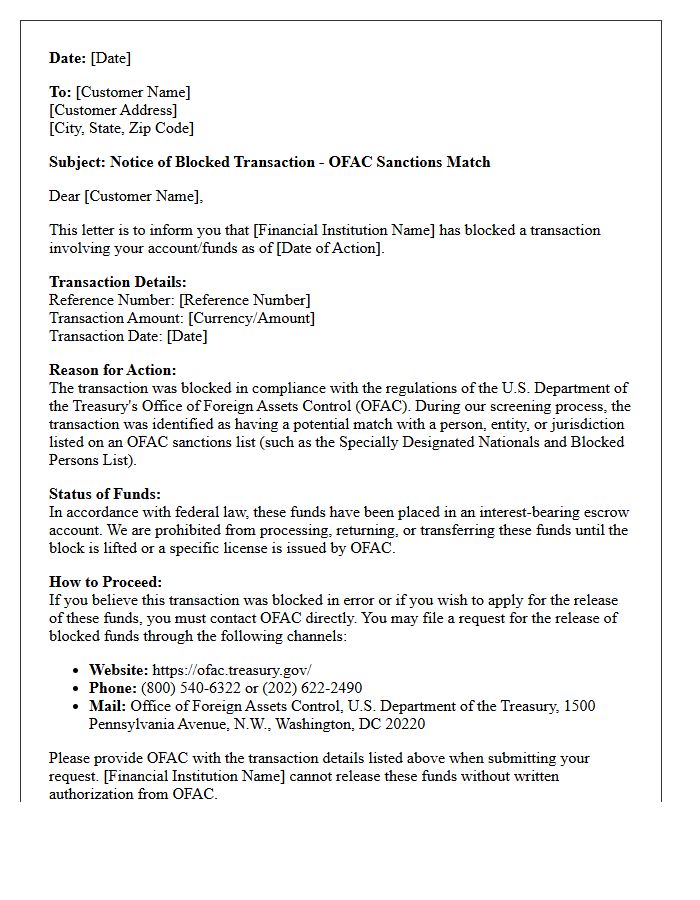
Receiving an Office of Foreign Assets Control (OFAC) Sanctions Match Notification Letter means your financial transaction has been frozen due to a potential match with a specially designated nationals list. This legal action prevents funds from reaching entities suspected of terrorism, narcotics trafficking, or prohibited foreign activities. To resolve a blocked transaction, you must provide verified identification to the financial institution or apply for a specific release license through the U.S. Treasury Department website. Failure to act may result in permanent loss of access to the funds or additional regulatory scrutiny.
Rejected Funds Transfer Sanctions Match Report Letter
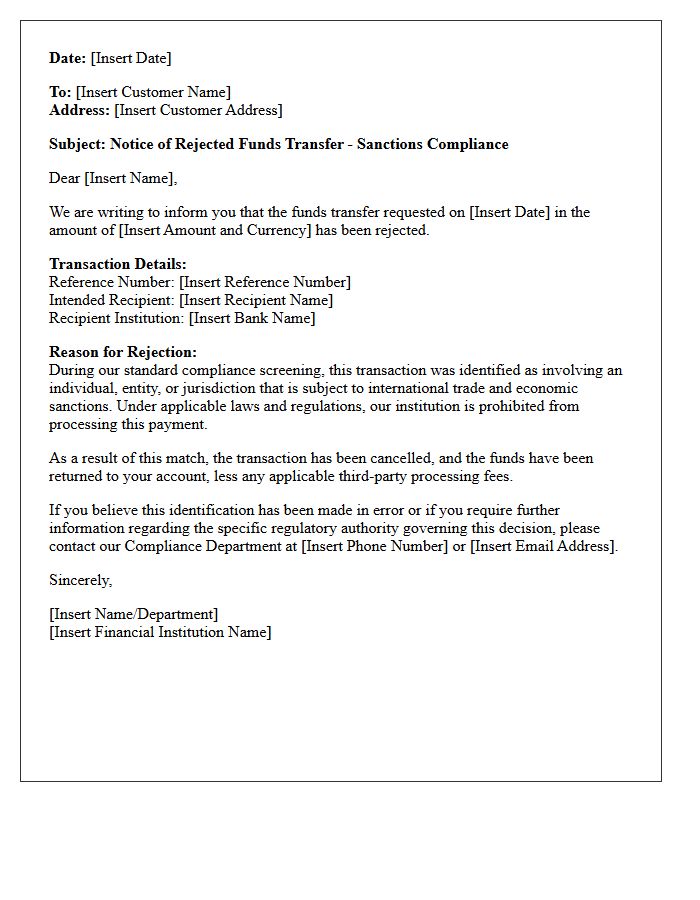
A Rejected Funds Transfer Sanctions Match Report Letter notifies a customer that their transaction was blocked due to potential sanctions violations. Financial institutions issue this document when a party involved matches a government watch list, such as those managed by OFAC. This letter is crucial for legal compliance, explaining that funds are frozen or returned to prevent illegal activity. Recipients must often provide additional due diligence documentation to clear their identity or prove the transaction is lawful under international trade regulations.
Customer Account Freezing Sanctions Match Notification Letter
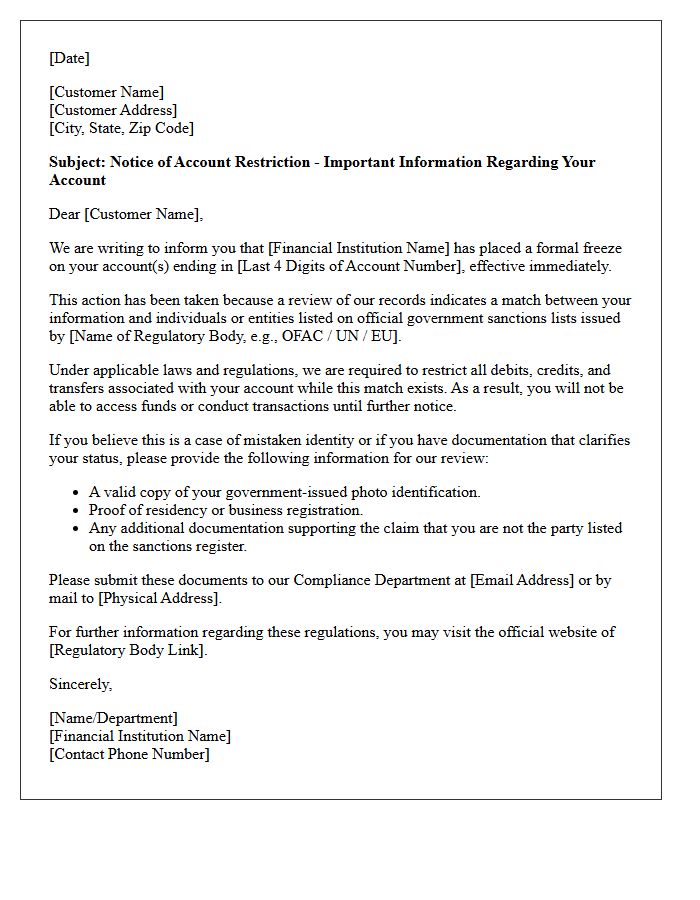
Receiving a Customer Account Freezing Sanctions Match Notification Letter indicates that a financial institution has restricted access to your assets due to a suspected match with government sanctions lists. This legal action is mandatory under international compliance regulations to prevent financial crimes. The letter serves as official notice that your funds are inaccessible until the potential match is verified or cleared. To resolve this, you must provide specific identification documentation to prove you are not the targeted individual. Failure to respond promptly may result in prolonged asset seizure or permanent account closure.
Internal Compliance Sanctions Match Escalation Letter
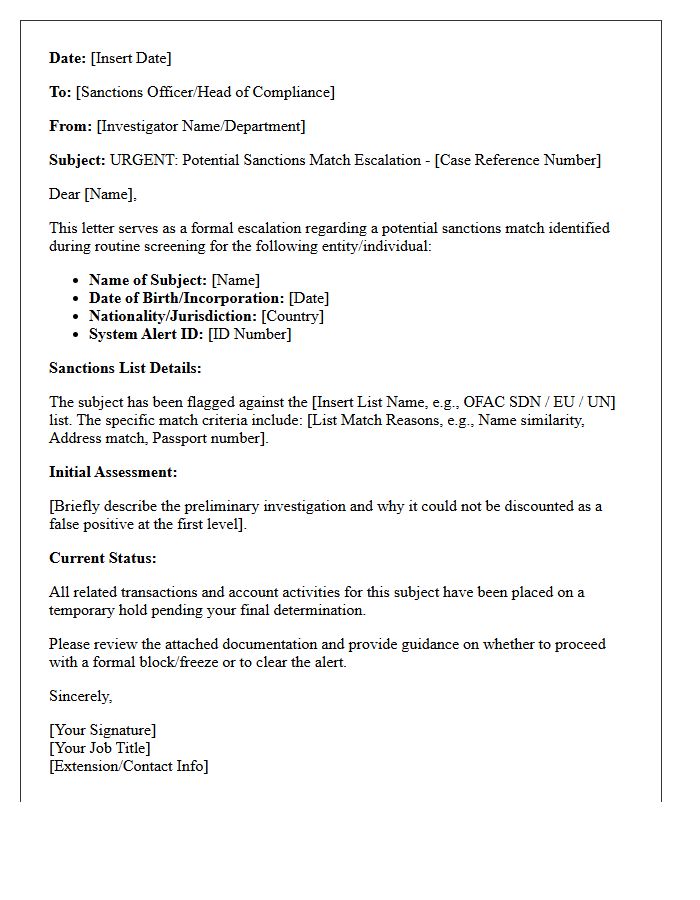
An Internal Compliance Sanctions Match Escalation Letter is a critical formal notification used when a potential sanctions hit is identified during screening. This document alerts senior management or legal departments to high-risk matches involving restricted individuals or entities. It ensures regulatory accountability by documenting the investigation process and justification for freezing assets or blocking transactions. Proper escalation is essential to mitigate financial crime risks, avoid severe legal penalties, and maintain institutional integrity through precise compliance oversight and timely decision-making protocols.
False Positive Sanctions Match Resolution Clearance Letter
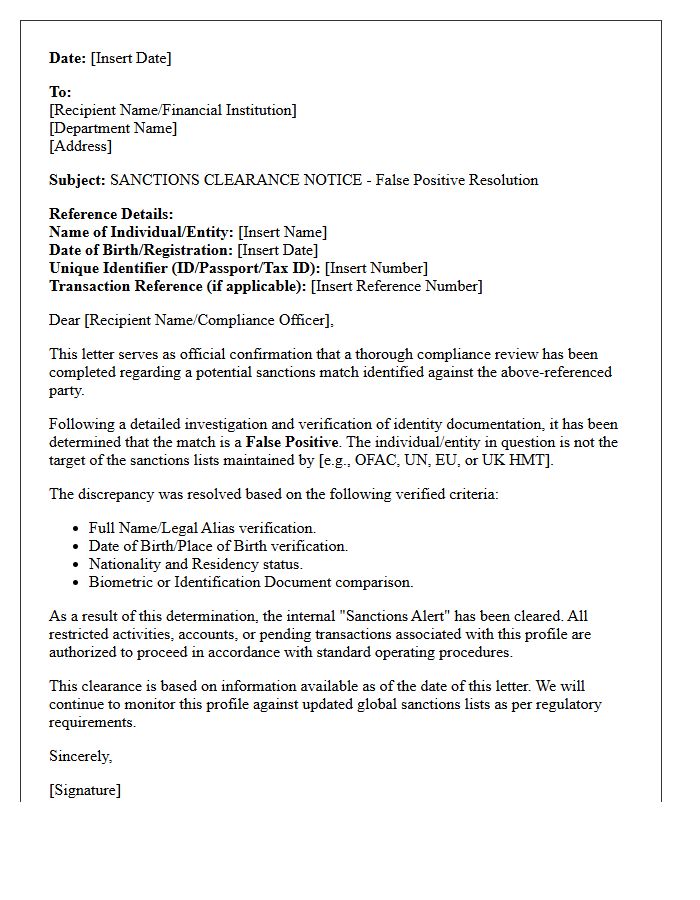
A False Positive Sanctions Match Resolution Clearance Letter is a critical legal document used to exonerate individuals or entities incorrectly flagged by financial screening systems. When a name similarity triggers a sanctions alert, this official clearance verifies that you are not the actual target on a restricted list. It facilitates unblocking transactions and ensures continued access to banking services. Keeping an updated copy is essential for due diligence and preventing future delays during compliance checks or international wire transfers.
Correspondent Bank Sanctions Match Inquiry Letter
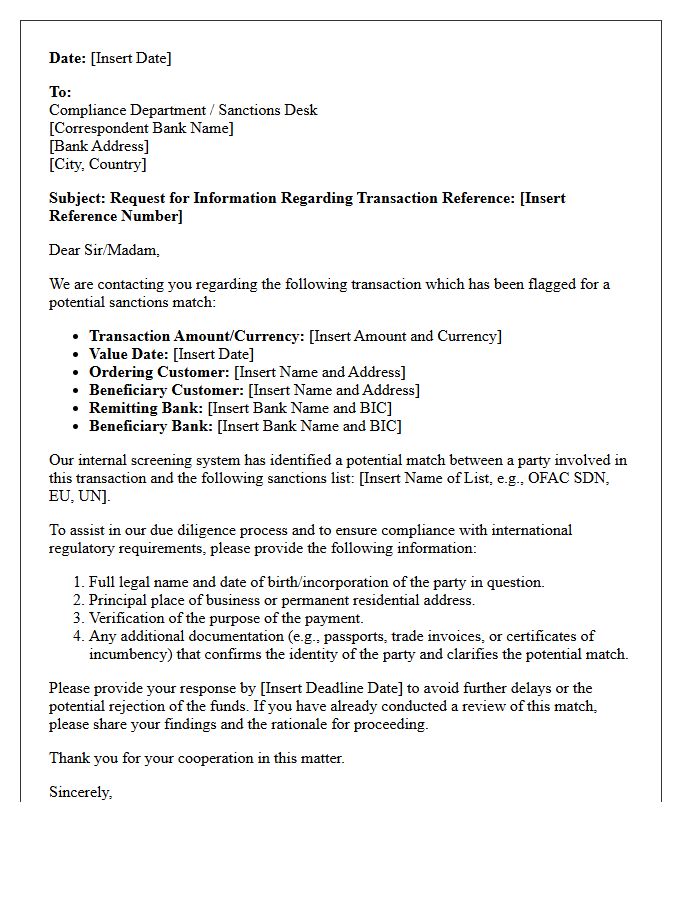
A Correspondent Bank Sanctions Match Inquiry Letter is a formal request sent when a transaction is flagged by automated screening systems. It requires the remitting institution to clarify if a party involved matches a restricted entity on global sanctions lists. Responding promptly with detailed documentation is essential to resolve potential OFAC violations or regulatory hits. Failure to provide accurate information often leads to rejected payments or frozen funds, making clear communication vital for maintaining global liquidity and ensuring compliance with international financial laws.
Wire Transfer Hold Sanctions Match Notification Letter
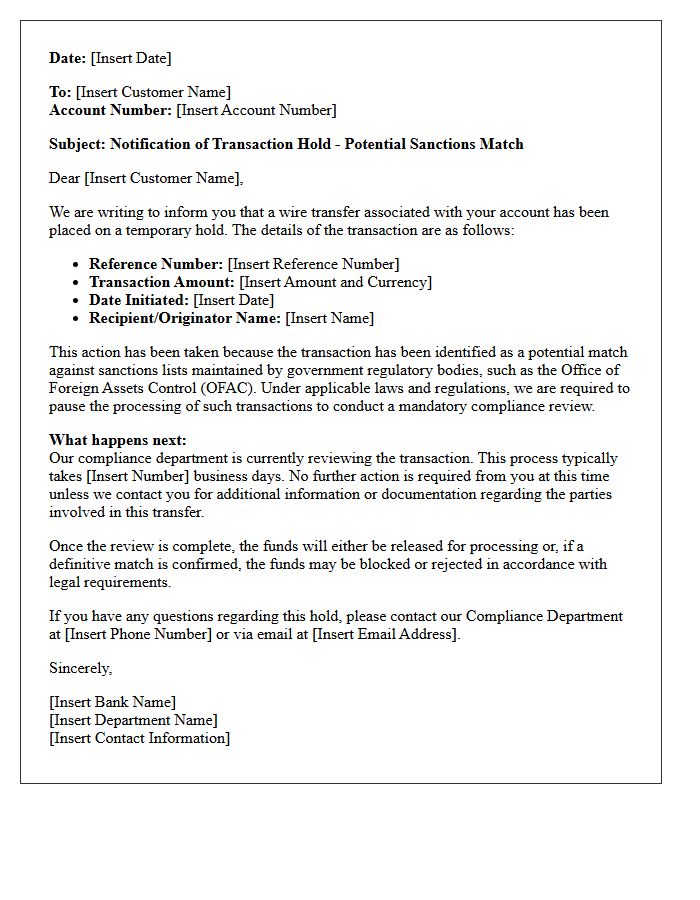
A Wire Transfer Hold Sanctions Match Notification Letter informs customers that a transaction is temporarily paused due to potential regulatory compliance issues. Financial institutions must screen all transfers against global sanctions lists, such as those from OFAC, to prevent illegal activity. Receiving this letter means a name or entity associated with the payment resembles a restricted party. To resolve the hold, you must provide additional documentation or verification to clear the alert. Failure to respond promptly can result in the funds being rejected or permanently frozen by the bank.
Customer Information Request for Sanctions Match Investigation Letter
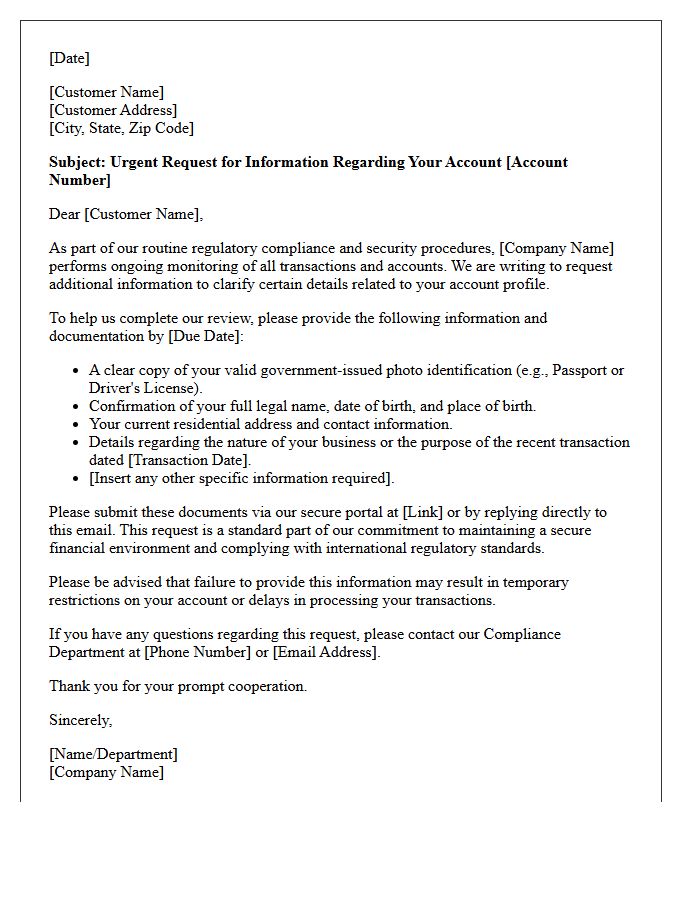
A Customer Information Request for Sanctions Match Investigation Letter is a formal inquiry issued by financial institutions to verify identity details when a transaction triggers a potential match on global watchlist databases. To ensure regulatory compliance and prevent financial crimes, customers must provide accurate documentation to resolve these screening alerts. Failure to respond promptly can lead to transaction delays or account restrictions. Providing clear information helps the bank distinguish legitimate individuals from sanctioned entities, ensuring the security and integrity of the global financial system.
Annual Blocked Property Sanctions Match Report Letter
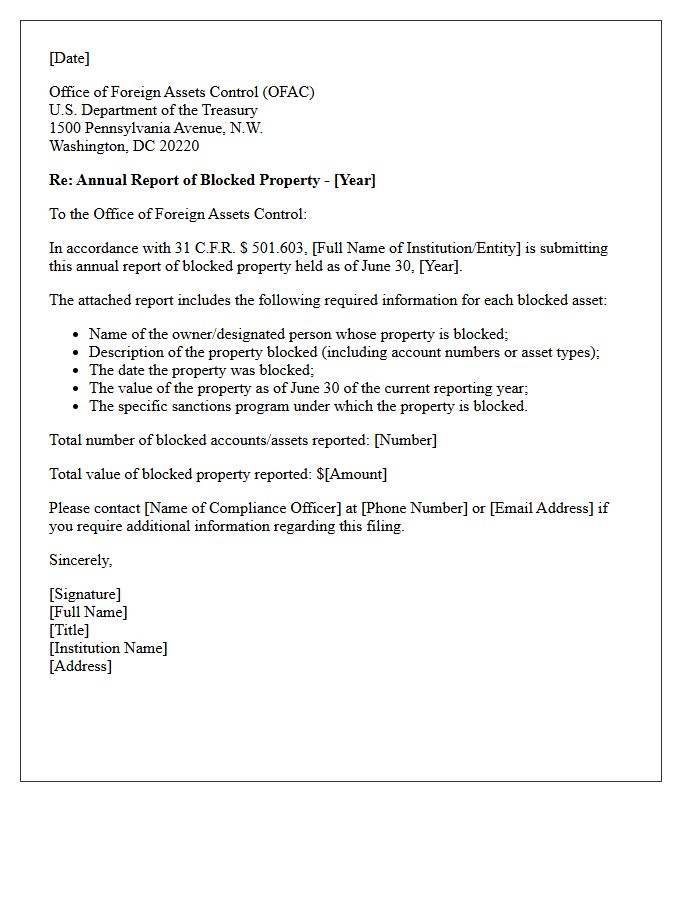
Financial institutions must file the Annual Report of Blocked Property with OFAC by June 30 each year. This compliance requirement mandates detailing all assets frozen under relevant sanctions programs held as of June 30. Failure to submit accurate reports can lead to significant civil penalties. Organizations must use the ORRS electronic system to disclose blocked accounts, ensuring all descriptive data matches current regulatory records. This annual filing provides the Treasury Department with essential oversight of restricted global assets and maintains institutional regulatory compliance.
Trade Finance Sanctions Match Interdiction Letter
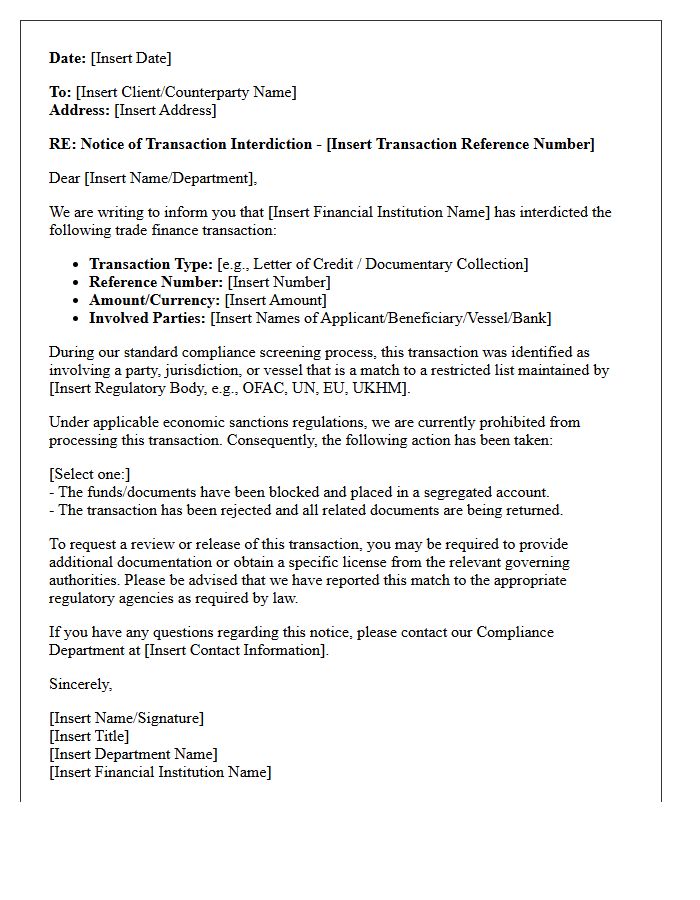
A Trade Finance Sanctions Match Interdiction Letter is a formal notification issued by a financial institution when a transaction is halted due to potential sanctions violations. This document informs parties that a match was identified against international watchlists, such as OFAC. It serves as a legal record of the interdiction, explaining why funds are frozen or rejected. Understanding this letter is crucial for compliance and resolving false positives, as it outlines the regulatory obligations that prevent the bank from processing the trade until the risk is mitigated or cleared.
Funds Unblocking Sanctions Match Authorization Letter
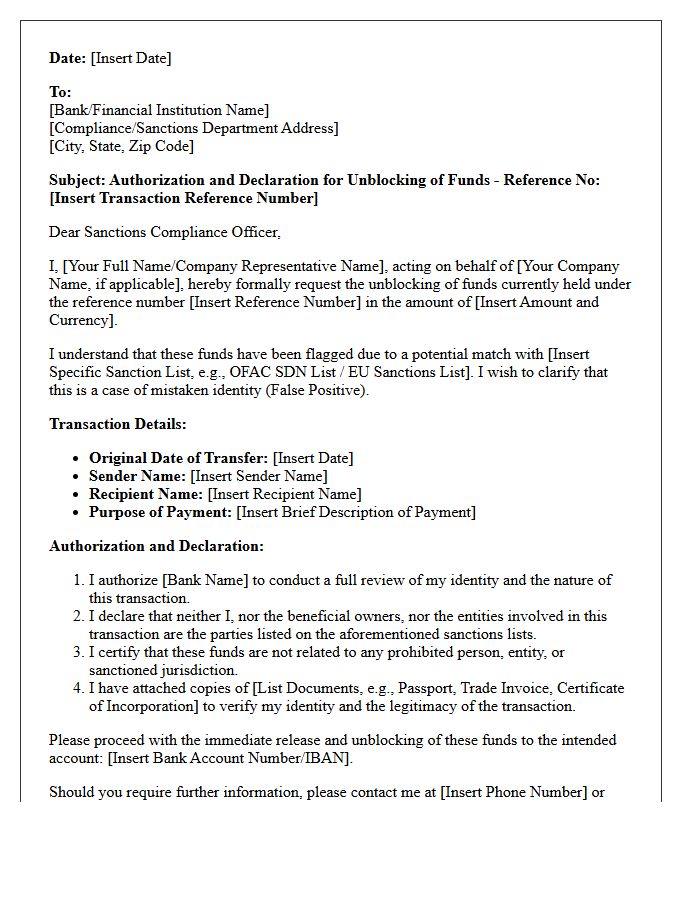
A Funds Unblocking Sanctions Match Authorization Letter is a formal document required to release assets frozen due to OFAC sanctions or international compliance hits. It serves as an official request to financial institutions or regulatory bodies, providing essential evidence that a transaction is legitimate or exempt. This letter must include precise details about the beneficiary, the source of funds, and legal justification for the release. Obtaining this authorization is the primary legal pathway to resolve administrative holds and regain access to capital restricted by global economic sanctions protocols.
Voluntary Self-Disclosure Sanctions Match Review Letter
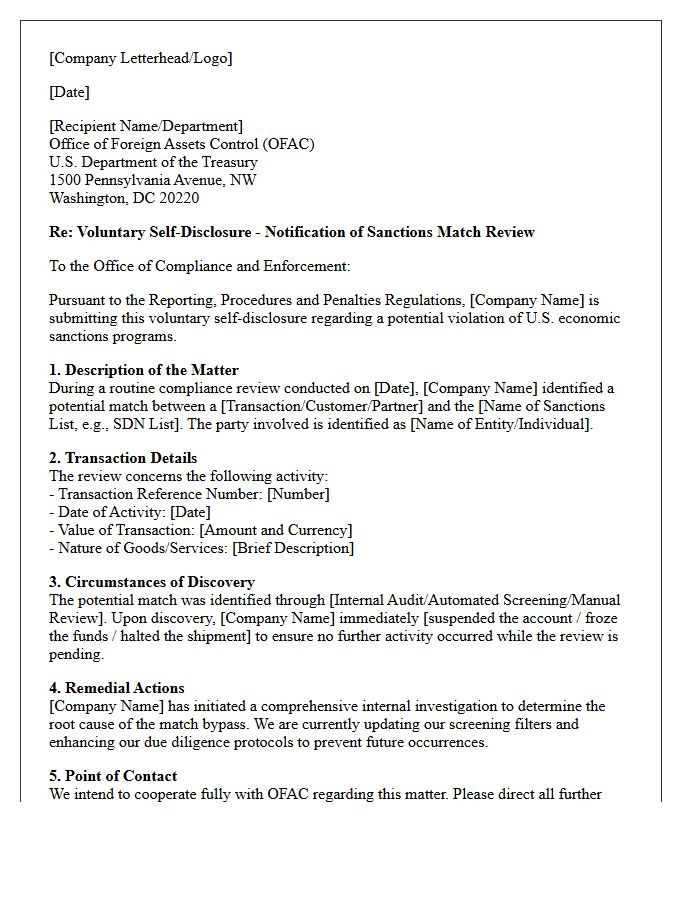
A Voluntary Self-Disclosure Sanctions Match Review Letter is a critical formal notice issued by the Office of Foreign Assets Control (OFAC). It signifies that a person or entity has proactively reported a potential violation of economic sanctions. Receiving this letter indicates that the agency is conducting a compliance review to determine the severity of the incident. Providing transparent documentation and demonstrating robust internal controls during this process is essential, as it can significantly mitigate penalties or lead to a non-punitive cautionary letter instead of aggressive enforcement actions.
What is an OFAC Sanctions Match Notification Letter?
An OFAC Sanctions Match Notification Letter is an official communication sent by a financial institution or entity informing an individual or business that their name or transaction has been identified as a potential match against the U.S. Department of the Treasury's Office of Foreign Assets Control (OFAC) sanctions list.
Why did I receive an OFAC Sanctions Match Notification?
You received this notification because your personal or business information triggered a match on an OFAC Specially Designated Nationals (SDN) or Blocked Persons list during a routine compliance screening. This typically results in a transaction being blocked or an account being frozen until the match is verified or cleared.
What should I do if my transaction is blocked due to an OFAC match?
If your transaction is blocked, you should first contact the financial institution that sent the letter to request the specific "Reference Number" and "Reason for Block." If the match is a case of mistaken identity, you may need to provide additional identification documentation or file a petition for release of funds through the OFAC Compliance Division.
Can I dispute a false positive OFAC Sanctions match?
Yes, you can dispute a false positive match by submitting a formal request for administrative reconsideration to the OFAC. You must provide evidence, such as a valid passport or government-issued ID, to prove that you are not the person or entity listed on the sanctions list.
How long does it take to resolve an OFAC Sanctions Match issue?
The timeline for resolving an OFAC match varies depending on the complexity of the case. While simple identity verifications may take a few business days, formal petitions for the release of blocked funds or removal from a list can take several weeks or even months to be processed by the U.S. Treasury Department.

Comments