
A Suspicious Activity Regulatory Filing Cover Letter is a formal document sent to financial authorities to introduce and contextualize suspicious activity reports. It ensures compliance by highlighting key concerns and justifying the submission to regulators. Professional documentation is essential for effective risk management and anti-money laundering protocols. To help you draft yours quickly, below are some ready to use templates.
Image cover: Winning Cover Letter Templates for Suspicious Activity Regulatory Filings
Letter Samples List
- Suspicious Activity Report Submission Cover Letter
- Anti-Money Laundering Investigation Filing Letter
- Fraudulent Transaction Regulatory Notification Letter
- Terrorist Financing Suspicious Activity Filing Letter
- Structuring and Cash Smurfing Incident Cover Letter
- Unusual Wire Transfer Activity Reporting Letter
- Account Takeover and Identity Theft Filing Letter
- High-Risk Customer Transaction Escalation Letter
- Cybercrime and Electronic Fraud Submission Letter
- Sanctions Evasion Suspicious Activity Cover Letter
- Insider Abuse and Employee Fraud Notification Letter
- Continuing Activity Report Submission Cover Letter
- Trade-Based Money Laundering Regulatory Letter
Suspicious Activity Report Submission Cover Letter
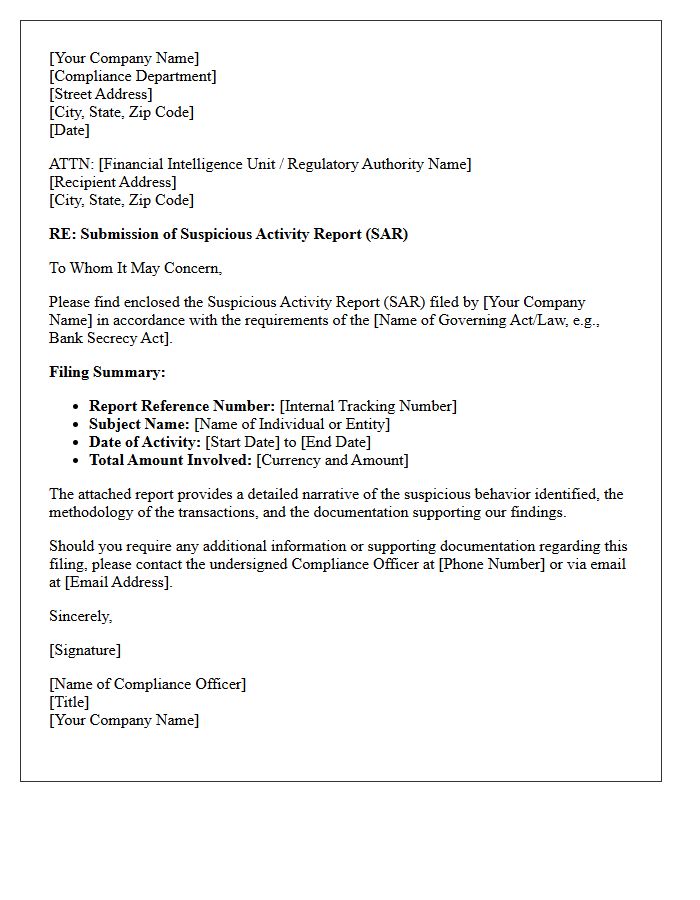
A Suspicious Activity Report (SAR) submission cover letter is a formal notification used by financial institutions to alert authorities about potential illicit transactions. It provides a concise summary of the reported behavior, linking complex data to specific red flags like money laundering or fraud. Including a cover letter ensures that investigators quickly grasp the narrative context and urgency of the filing. Maintaining regulatory compliance through accurate documentation is essential for mitigating institutional risk and assisting law enforcement in tracking criminal financial networks effectively.
Anti-Money Laundering Investigation Filing Letter
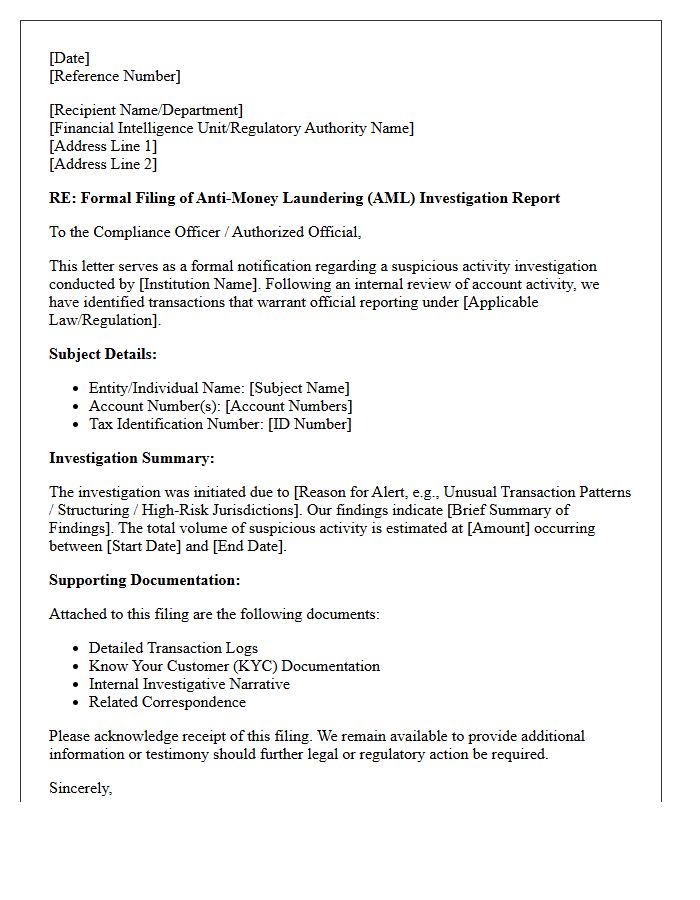
An Anti-Money Laundering (AML) investigation filing letter is a formal document submitted to regulatory bodies like FinCEN or financial intelligence units. This letter outlines suspicious activities detected through internal compliance monitoring. It provides critical evidence, detailing specific transactions and entities involved in potential financial crimes. Financial institutions must ensure accuracy and confidentiality to fulfill their legal reporting obligations. Timely filing protects the organization from severe penalties while assisting law enforcement in tracking illicit funds and preventing financial fraud globally.
Fraudulent Transaction Regulatory Notification Letter
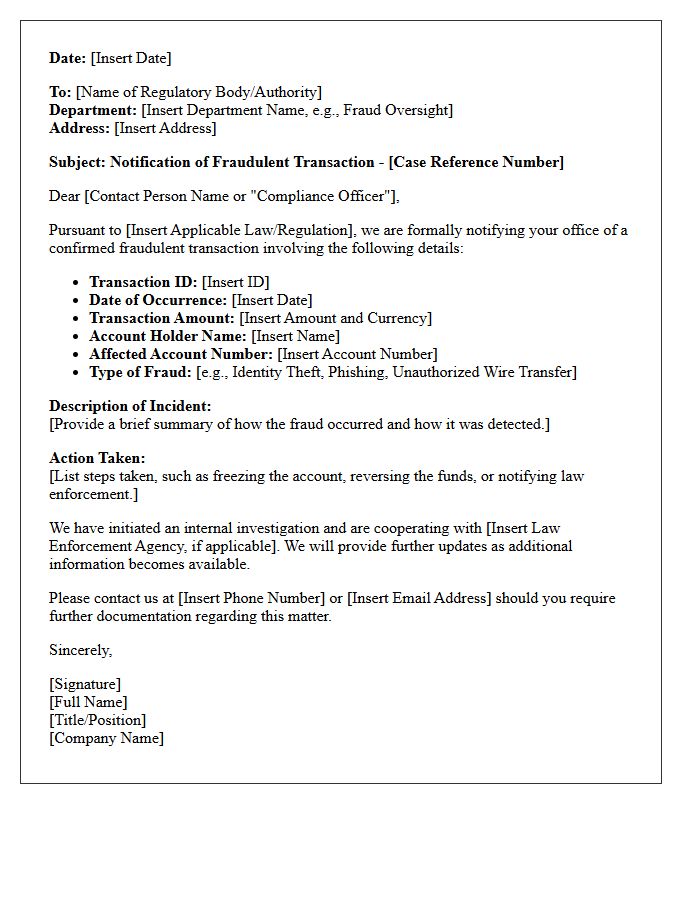
A Fraudulent Transaction Regulatory Notification Letter is a formal legal document issued by financial institutions to inform authorities and consumers about unauthorized account activity. This notice serves as a critical compliance tool mandated by consumer protection laws like Regulation E. It outlines specific details regarding the suspicious event, recovery steps, and dispute rights. Receiving this letter requires immediate action to secure personal identity and prevent further financial loss. Always verify the sender's authenticity to avoid phishing scams while ensuring your regulatory protections remain active during the investigation process.
Terrorist Financing Suspicious Activity Filing Letter
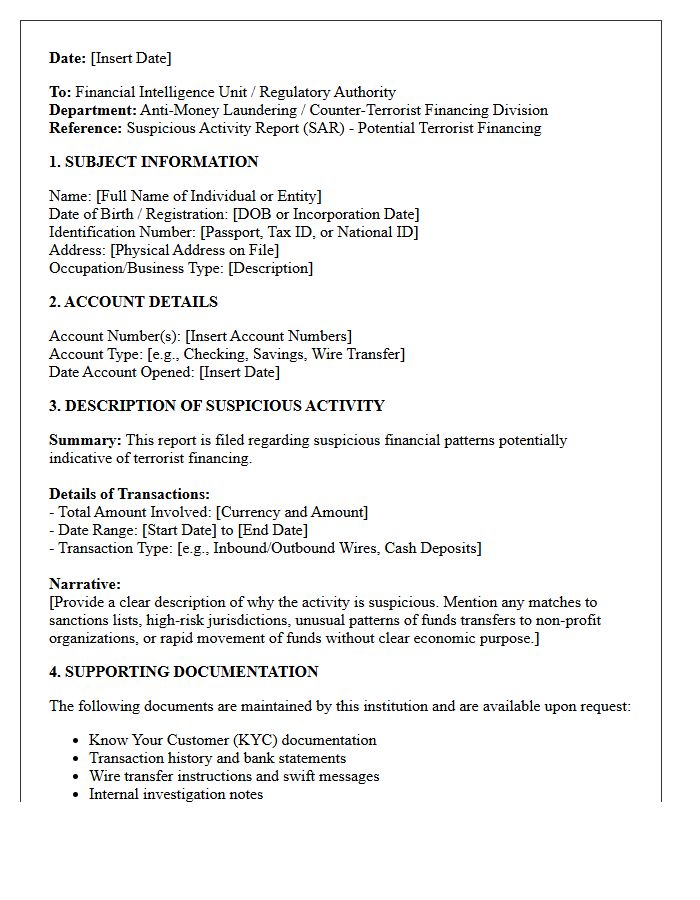
A Terrorist Financing Suspicious Activity Filing Letter is a critical regulatory notification used by financial institutions to report transactions potentially linked to terrorism. This document alerts authorities to patterns of illicit funding or suspicious movements of capital intended to support extremist acts. Filing these reports is a legal obligation under Anti-Money Laundering (AML) laws to prevent the exploitation of global financial systems. Timely submission ensures that law enforcement can track terrorist networks and disrupt financial flows, maintaining national security and ensuring compliance with international counter-terrorism financing standards.
Structuring and Cash Smurfing Incident Cover Letter
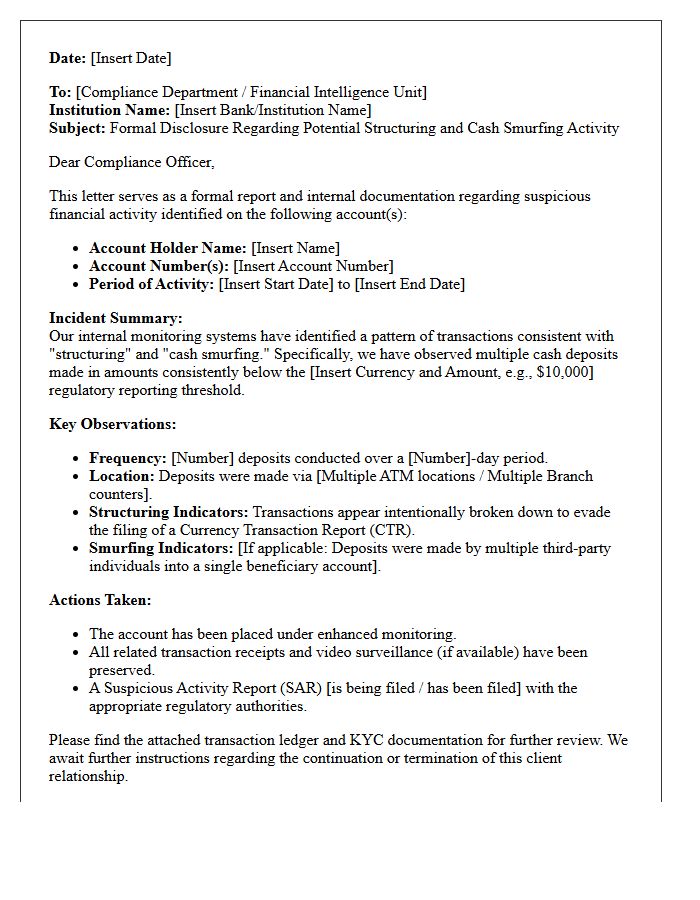
When drafting a Structuring and Cash Smurfing Incident Cover Letter, you must directly address regulatory concerns regarding anti-money laundering (AML) compliance. Clearly explain the legitimate source of funds and provide a factual timeline to refute allegations of intentionally breaking down large deposits to evade Bank Secrecy Act reporting thresholds. Emphasize your commitment to financial transparency and include supporting documentation, such as invoices or bank statements, to validate transaction patterns. A professional, proactive response is essential to mitigate legal risks and demonstrate full cooperation with financial institutions or authorities during an investigation.
Unusual Wire Transfer Activity Reporting Letter
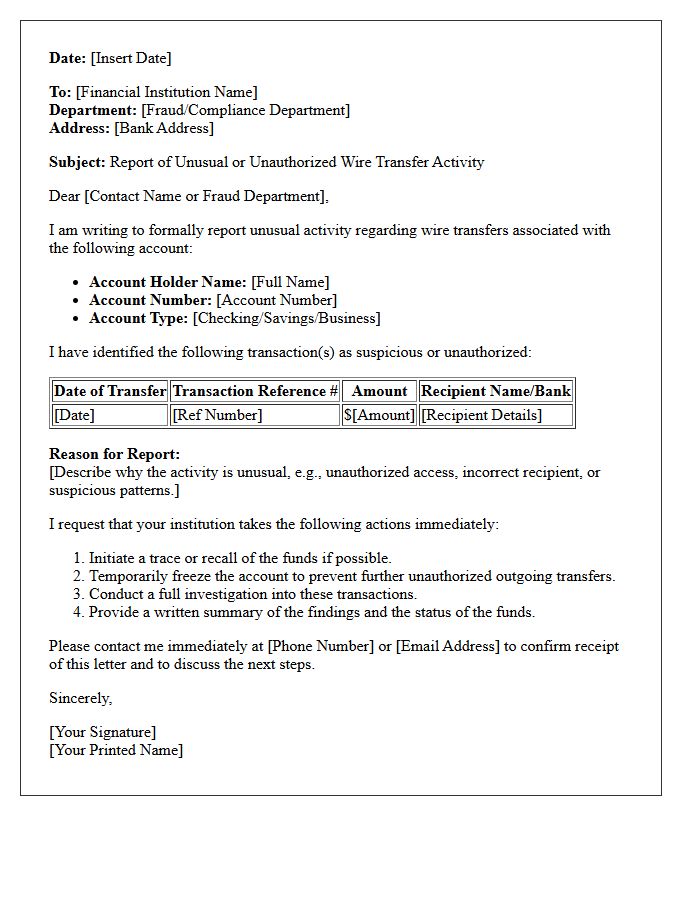
An Unusual Wire Transfer Activity Reporting Letter is a formal notification issued by financial institutions when a transaction triggers anti-money laundering (AML) red flags. This document alerts compliance departments or authorities about potential fraud, structuring, or suspicious origins of funds. It serves as a critical risk management tool to ensure regulatory compliance and prevent financial crimes. Understanding this letter is essential for maintaining legal transparency and protecting accounts from unauthorized access or international banking sanctions. Promptly addressing these reports helps verify legitimate business intent and resolves security concerns efficiently.
Account Takeover and Identity Theft Filing Letter
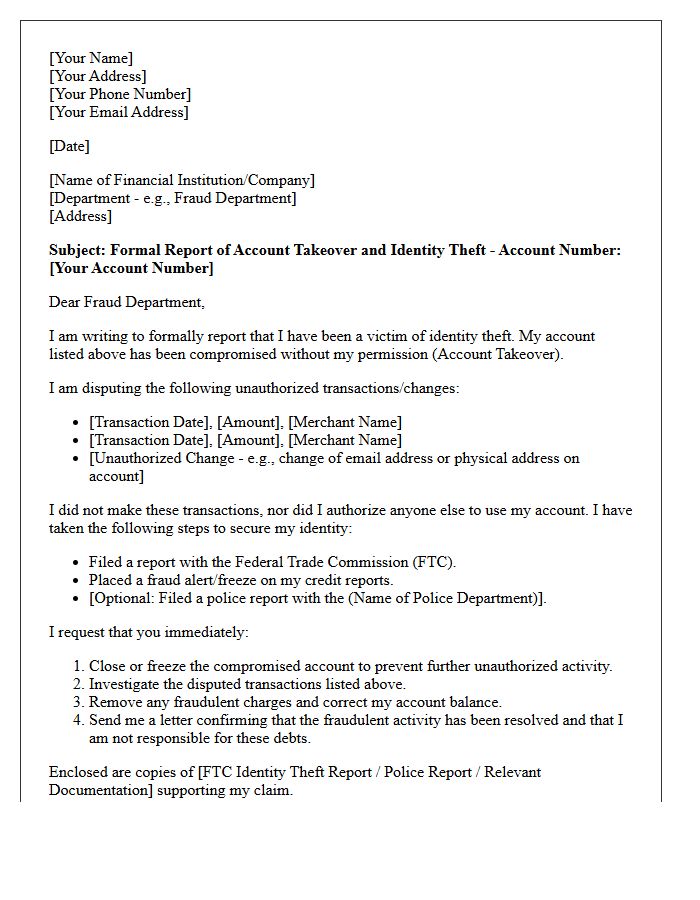
An Account Takeover and Identity Theft Filing Letter is a formal document used to notify creditors and financial institutions of unauthorized access. This critical notice asserts your legal rights under the Fair Credit Reporting Act to dispute fraudulent transactions. By sending this sworn affidavit, you establish a paper trail that helps freeze compromised accounts and remove fraudulent charges from your record. Promptly filing this letter is essential for recovering your financial identity and protecting your credit score from long-term damage caused by criminal activity.
High-Risk Customer Transaction Escalation Letter
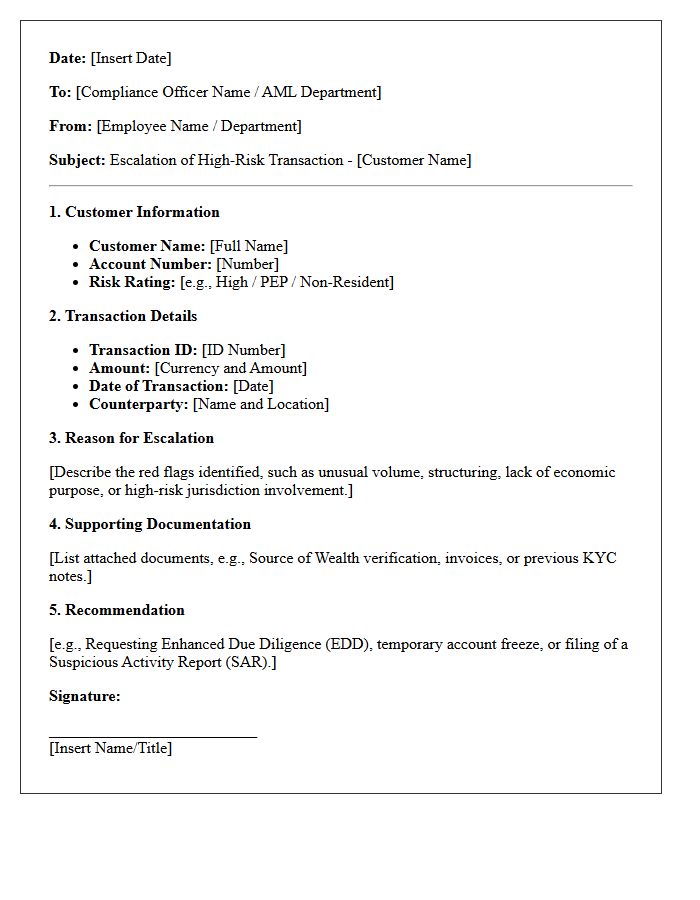
A high-risk customer transaction escalation letter is a formal notice used to address compliance concerns related to suspicious financial activity. Financial institutions issue these to request enhanced due diligence (EDD) documentation, such as proof of funds or legal identification. Failing to respond promptly can result in account restrictions or closure to mitigate money laundering risks. It serves as a final communication to ensure regulatory alignment and transparency before further legal or administrative actions are taken. Clear documentation and timely cooperation are essential for resolving flagged alerts and maintaining institutional security.
Cybercrime and Electronic Fraud Submission Letter
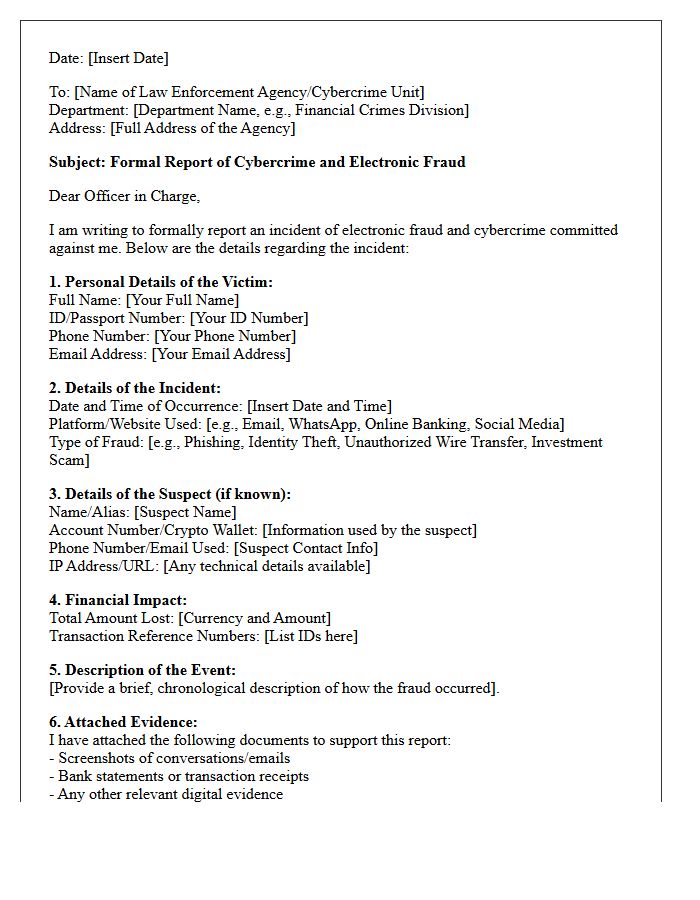
A Cybercrime and Electronic Fraud Submission Letter is a formal document used to report digital illicit activities to law enforcement or financial institutions. It must provide a comprehensive timeline of the incident, including transaction IDs, IP addresses, and communication logs. Clearly documenting the financial loss and methods used by perpetrators is essential for legal recovery and investigations. Ensuring the report is accurate and submitted promptly increases the chances of freezing fraudulent transfers and identifying cybercriminals in a secure manner.
Sanctions Evasion Suspicious Activity Cover Letter
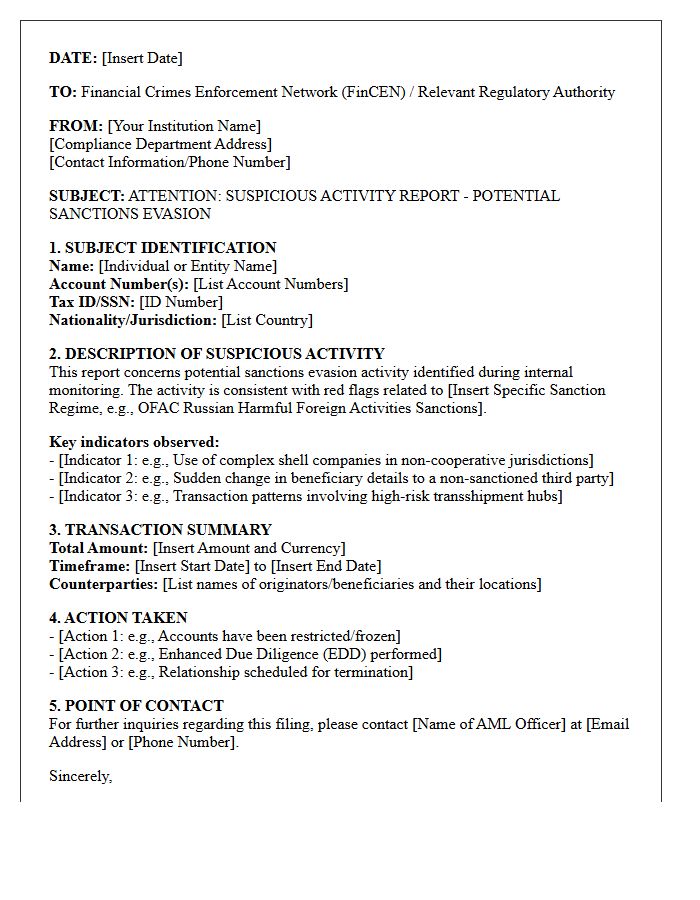
A Sanctions Evasion Suspicious Activity Cover Letter is a critical compliance document used by financial institutions to alert authorities about potential illicit transactions. Its primary purpose is to provide contextual clarity and streamline the review process for law enforcement. Effective letters must highlight specific red flags, such as the use of shell companies, complex ownership structures, or diverted trade routes intended to bypass international restrictions. By summarizing suspicious patterns clearly, the cover letter ensures that investigators can quickly identify and mitigate risks associated with global sanctions violations and financial crime.
Insider Abuse and Employee Fraud Notification Letter
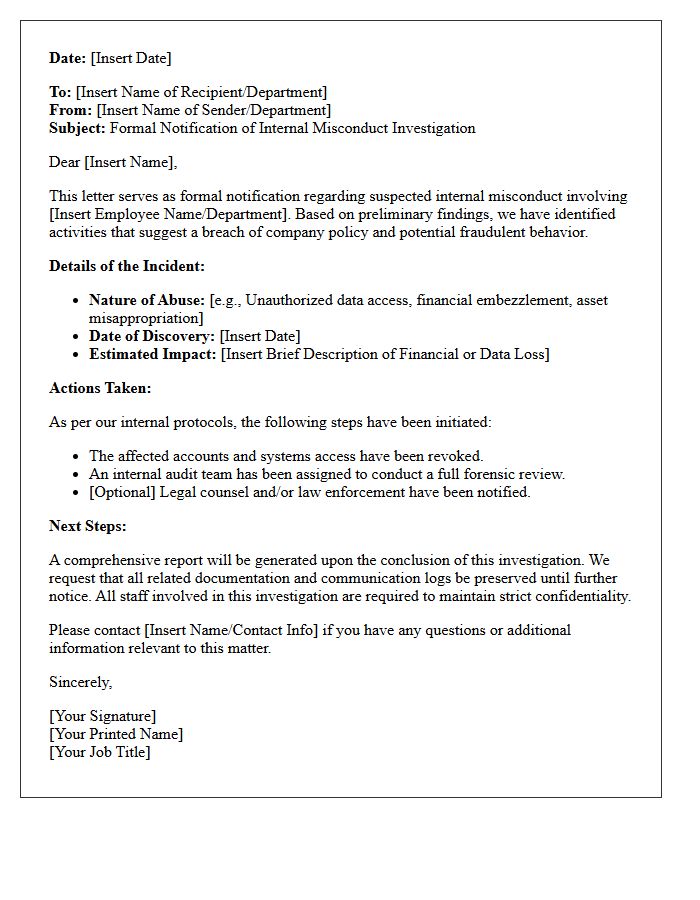
An Insider Abuse and Employee Fraud Notification Letter is a formal document used to inform affected parties about internal security breaches. It must clearly outline the unauthorized activities conducted by staff, such as embezzlement or data theft. To maintain legal compliance, the letter should specify the remedial actions taken and provide guidance on identity protection. Timely communication is essential to mitigate reputational damage and ensure transparency. Organizations must follow strict regulatory protocols when drafting these notifications to uphold fiduciary responsibility and restore trust with stakeholders after a betrayal of professional integrity.
Continuing Activity Report Submission Cover Letter
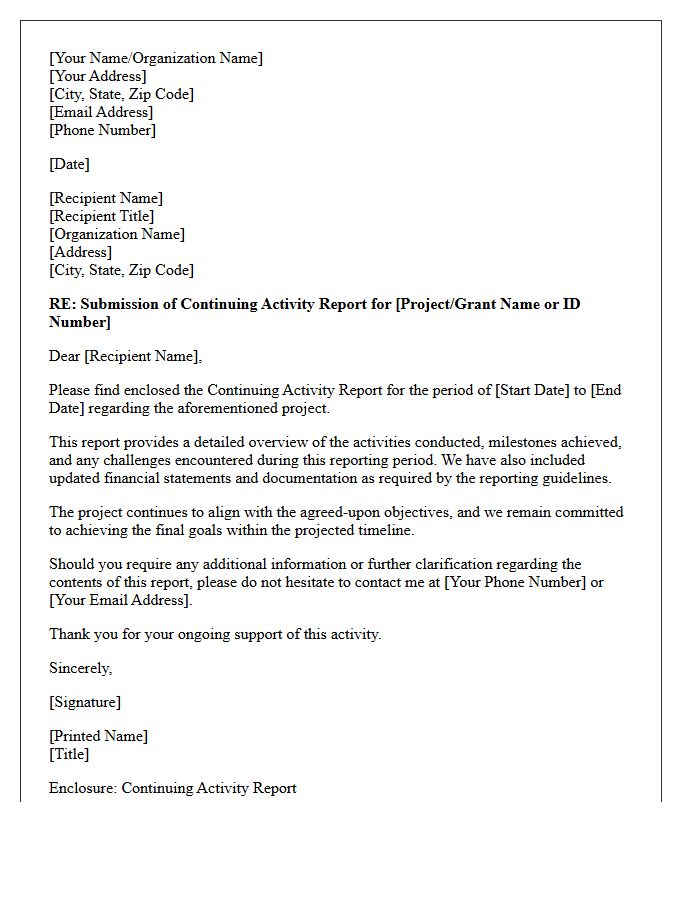
A Continuing Activity Report Submission Cover Letter is a formal document used to introduce periodic updates on ongoing projects or research. Its primary purpose is to provide a clear overview of the current status, progress achieved, and any challenges encountered since the last reporting period. It must include the official project title, reference numbers, and the reporting timeframe. A well-structured letter ensures that administrative reviewers can quickly identify the submission's context, facilitating compliance and maintaining transparent communication between the project leads and the governing authority or funding organization.
Trade-Based Money Laundering Regulatory Letter
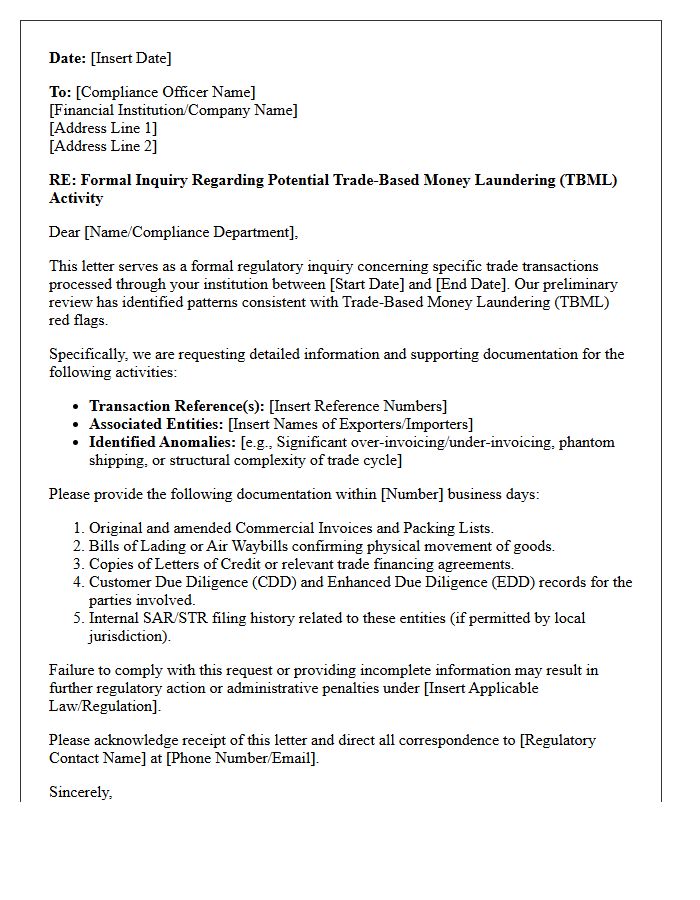
A Trade-Based Money Laundering (TBML) Regulatory Letter serves as a formal compliance mandate issued by financial authorities. It warns institutions about the misuse of commercial trade to disguise criminal proceeds through techniques like over-invoicing or phantom shipments. Banks must implement rigorous risk assessment frameworks and enhanced due diligence to detect suspicious transaction patterns. Failure to align with these regulatory expectations can result in severe legal penalties and reputational damage, making proactive monitoring of global supply chain finances essential for maintaining institutional integrity and legal standing.
What is a Suspicious Activity Regulatory Filing Cover Letter?
A Suspicious Activity Regulatory Filing Cover Letter is a formal document submitted by financial institutions to regulatory bodies (such as FinCEN) to accompany a Suspicious Activity Report (SAR). It provides administrative context, identifies the reporting entity, and highlights critical information regarding the potential financial crime being disclosed.
When should a cover letter be included with a SAR filing?
A cover letter should be included when a filing requires additional context not captured in the standard SAR form, such as when responding to a specific Law Enforcement request, filing a voluntary disclosure, or notifying regulators of significant systemic vulnerabilities within a financial institution.
What key elements must be included in a regulatory filing cover letter?
The letter should include the reporting institution's name and ID (such as an RSSD or EIN), a concise summary of the suspicious activity, the timeframe of the transactions, relevant case reference numbers, and contact information for the institution's BSA/AML Compliance Officer.
Does a cover letter replace the SAR narrative section?
No, a cover letter does not replace the SAR narrative. The SAR narrative remains the primary legal document for detailing the "Who, What, Where, When, Why, and How" of the activity, while the cover letter serves as a high-level administrative summary for regulatory intake and routing.
How does a well-drafted cover letter assist law enforcement?
A well-drafted cover letter assists law enforcement by highlighting the urgency of the filing, identifying high-risk triggers (such as terrorist financing or immediate threats of loss), and providing a direct point of contact for investigators to obtain supporting documentation through the proper legal channels.

Comments