
Receiving a Notice of Returned Check Due to Non-Sufficient Funds indicates that a payment failed because the account lacked necessary capital. This formal communication informs the issuer of the bounced check, outlines potential bank penalties, and requests immediate reimbursement to settle the outstanding debt. To simplify your recovery process, below are some ready to use template options.
Image cover: Professional NSF Notice Templates: Managing Returned Checks and Failed Payments
Letter Samples List
- Initial Notice of Returned Check Letter
- Non-Sufficient Funds Alert Letter
- Dishonored Check Notification Letter
- Unpaid Item Return Bank Letter
- Overdrawn Account Warning Letter
- Bounced Check Fee Assessment Letter
- Returned Deposited Item Advisory Letter
- Insufficient Funds Demand Letter
- Failed Check Transaction Notice Letter
- Checking Account Deficiency Update Letter
- Outstanding Balance Request Letter
- Final Returned Check Warning Letter
Initial Notice of Returned Check Letter
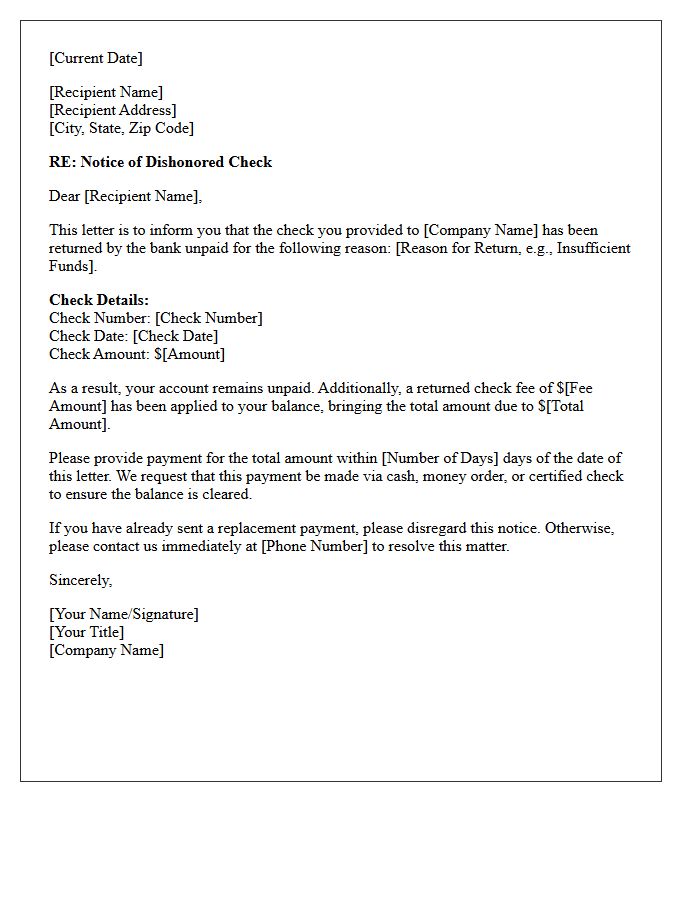
An Initial Notice of Returned Check Letter is a formal request for payment sent after a check fails to clear due to insufficient funds. It is crucial to include the check number, the total amount owed, and any applicable bank fees. This document serves as legal evidence that the debtor was notified of the failed transaction. Providing a specific deadline for restitution helps expedite recovery and protects your rights should further legal action or a collection agency be required to resolve the outstanding debt.
Non-Sufficient Funds Alert Letter
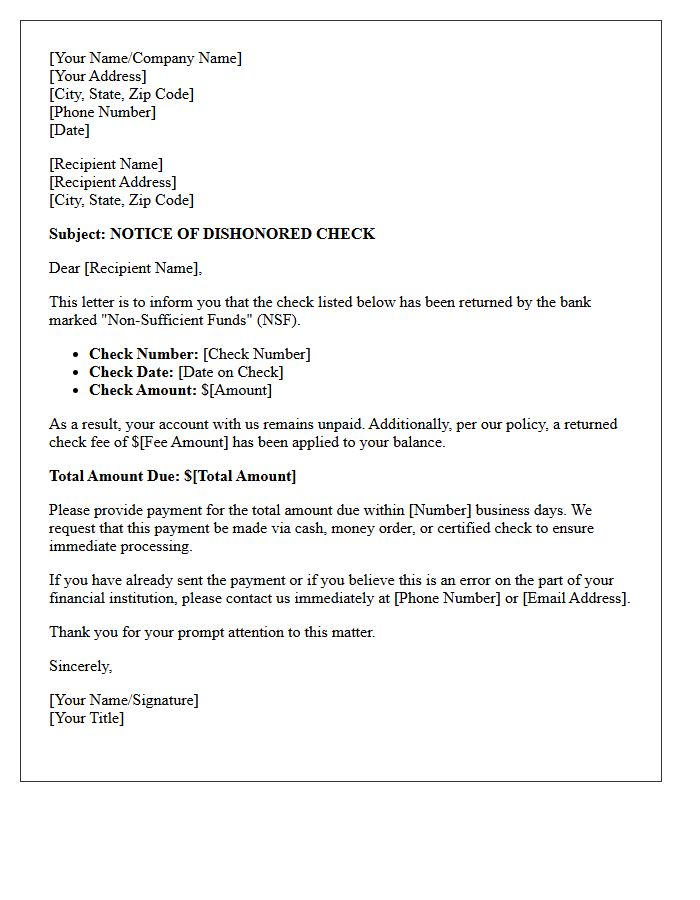
A Non-Sufficient Funds (NSF) Alert Letter is an official notification sent when a payment fails due to inadequate account balances. This document informs the recipient that their transaction was declined, often resulting in returned item fees from the bank. It is crucial to address this notice immediately by depositing funds or providing an alternative payment method to avoid penalties, service interruptions, or negative impacts on your credit score. Timely communication with the merchant or financial institution can sometimes help waive additional administrative charges or late fees.
Dishonored Check Notification Letter
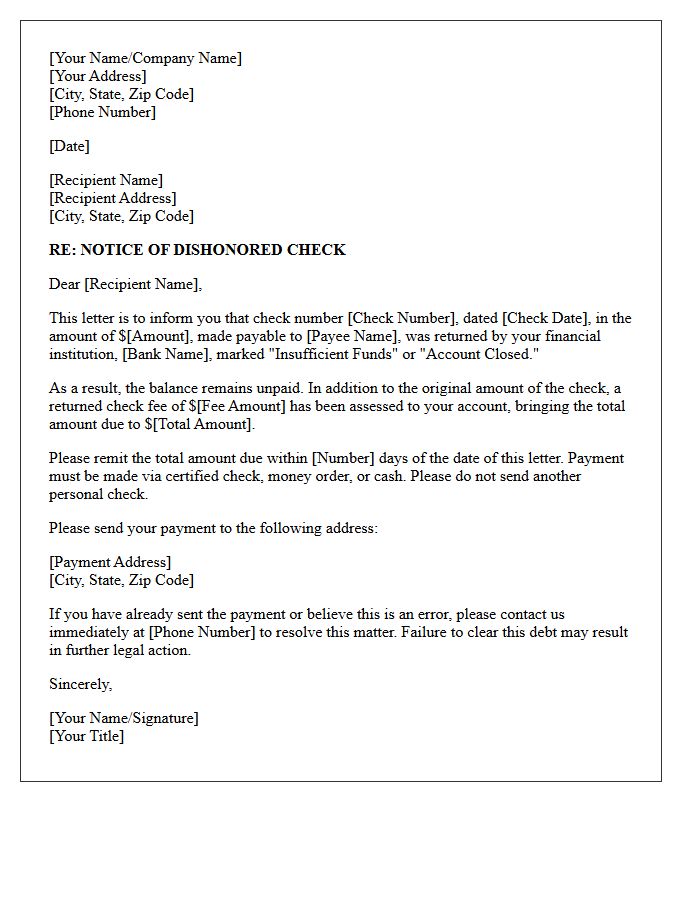
A Dishonored Check Notification Letter is a formal legal demand sent to a payer when a bank refuses payment due to insufficient funds or a closed account. This document serves as official notice, granting the issuer a specific grace period to settle the debt plus any applicable returned check fees. Sending this letter is a critical step for creditors to establish legal evidence before pursuing further civil litigation or criminal charges. It ensures clear communication and provides a final opportunity for the debtor to rectify the payment failure amicably.
Unpaid Item Return Bank Letter
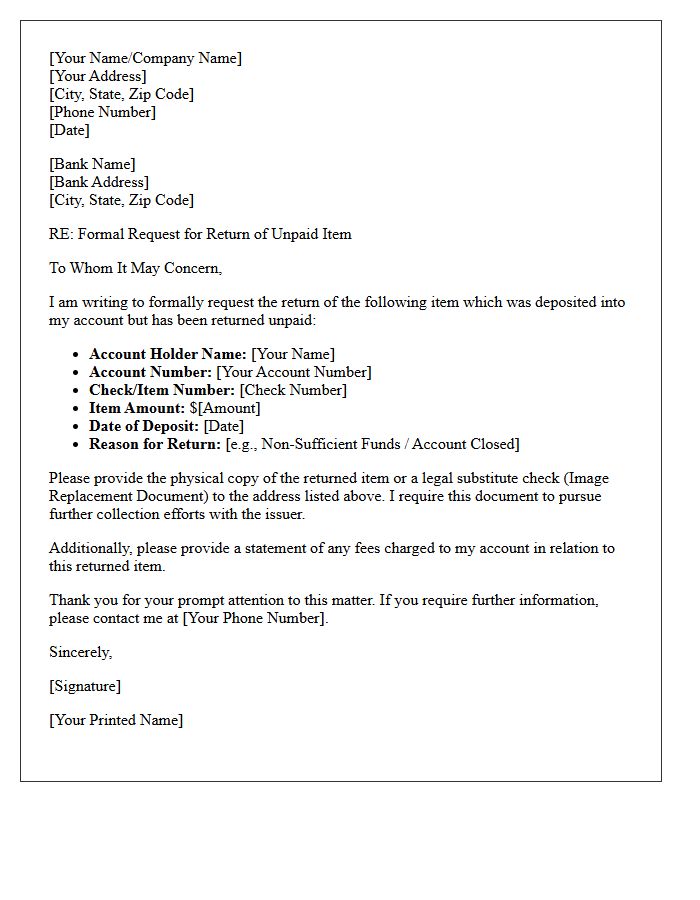
An Unpaid Item Return Bank Letter is a formal notification issued when a negotiable instrument, such as a check, fails to clear. This occurs due to insufficient funds, account closure, or technical errors. For businesses, receiving this letter is critical for financial reconciliation and legal documentation of debt. It serves as evidence to initiate recovery processes or re-present the payment. Understanding the specific reason code provided by the bank is essential to resolve the underlying payment failure and maintain accurate accounting records while avoiding potential late fees or penalties.
Overdrawn Account Warning Letter
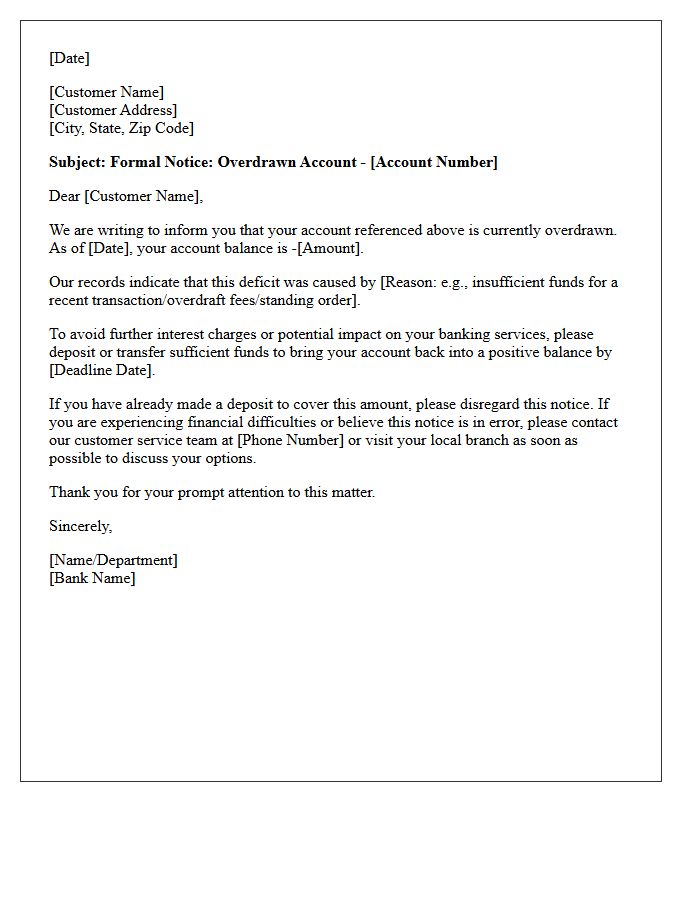
An Overdrawn Account Warning Letter is a formal notification from a financial institution indicating that your balance has fallen below zero. This notice often includes overdraft fees, a repayment deadline, and potential penalties for non-payment. It is crucial to address this immediately to avoid negative credit reporting or account closure. To resolve the issue, you must deposit sufficient funds to cover the deficit and any associated charges. Understanding these warnings helps maintain financial stability and ensures your banking relationship remains in good standing while preventing future transaction rejections.
Bounced Check Fee Assessment Letter
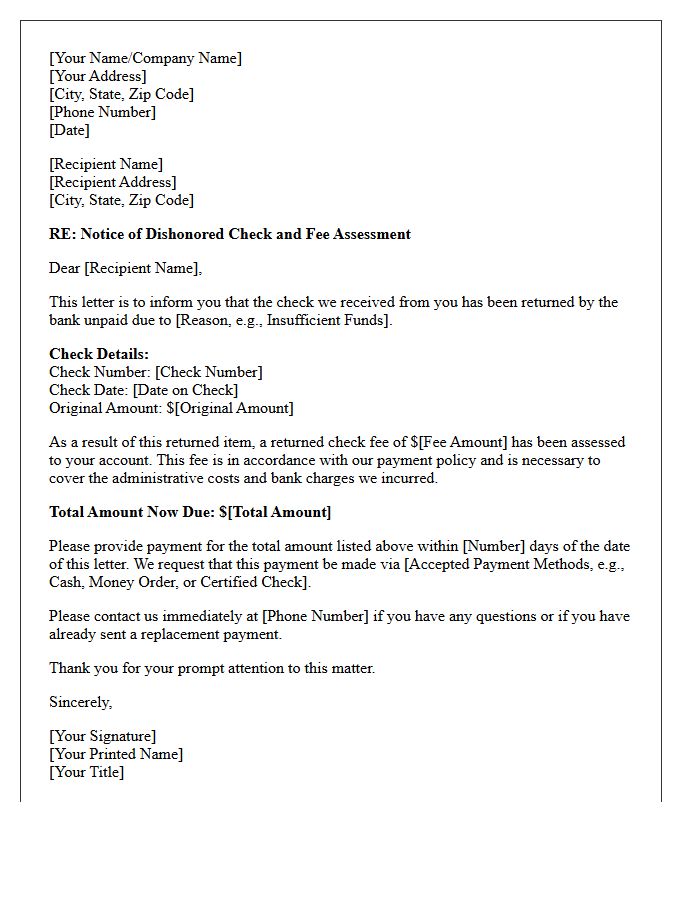
A Bounced Check Fee Assessment Letter is a formal notification issued when a payment is returned due to insufficient funds. This document serves as a legal record of the failed transaction and details the additional penalties incurred. It typically outlines the original amount owed, the specific returned check fee, and a strict deadline for replacement payment. Recipients must settle the balance promptly using guaranteed funds, such as a cashier's check or money order, to avoid further legal action, credit score damage, or potential service termination.
Returned Deposited Item Advisory Letter
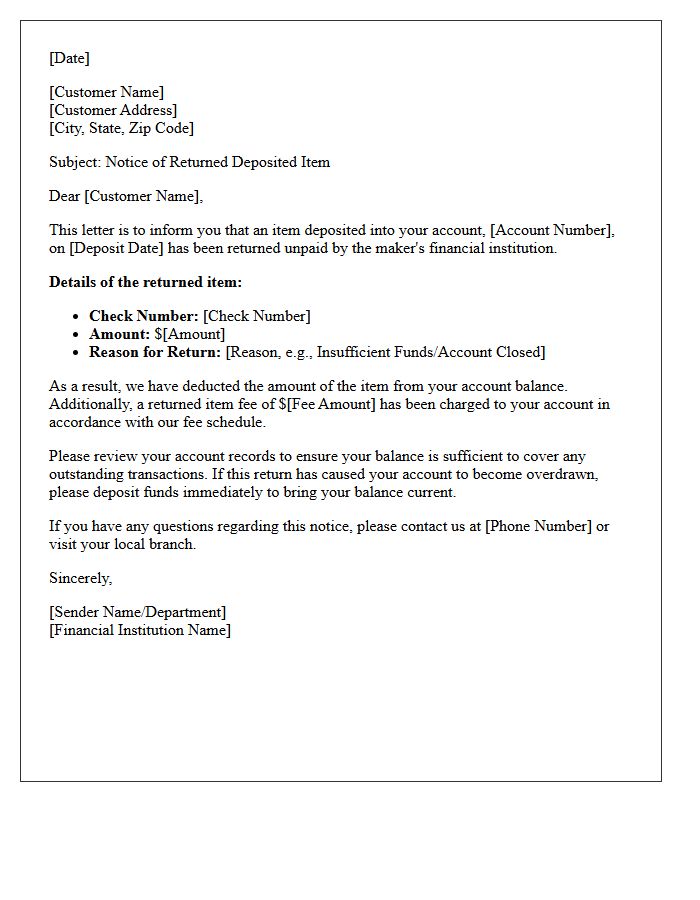
A Returned Deposited Item Advisory Letter notifies a payee that a previously deposited check failed to clear. This occurs when the issuer has insufficient funds, a closed account, or a stop-payment order. Upon receiving this notice, the bank typically reverses the credit and may apply a non-sufficient funds (NSF) fee to your account. It is essential to contact the check issuer immediately to resolve the balance and update your accounting records to reflect the returned payment and any associated bank charges.
Insufficient Funds Demand Letter
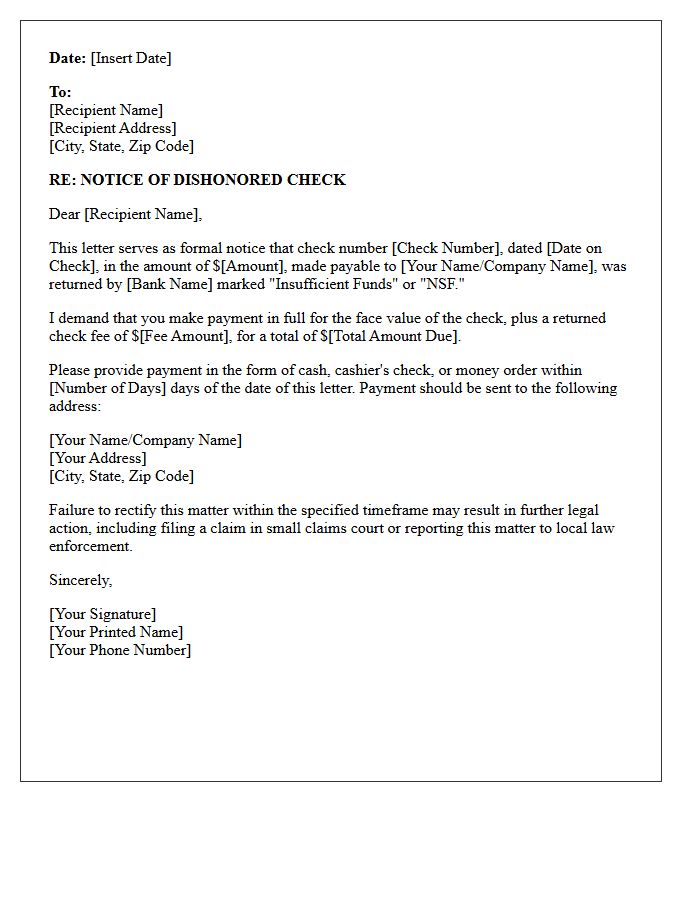
An Insufficient Funds Demand Letter is a formal legal notice sent to a person who issued a bad check. It serves as an official request for the repayment of the original amount plus applicable administrative fees. Sending this letter is often a mandatory legal step before pursuing further civil action or criminal charges. To protect your rights, ensure it includes the check details, a specific deadline for payment, and is sent via certified mail to provide proof of delivery in court proceedings.
Failed Check Transaction Notice Letter
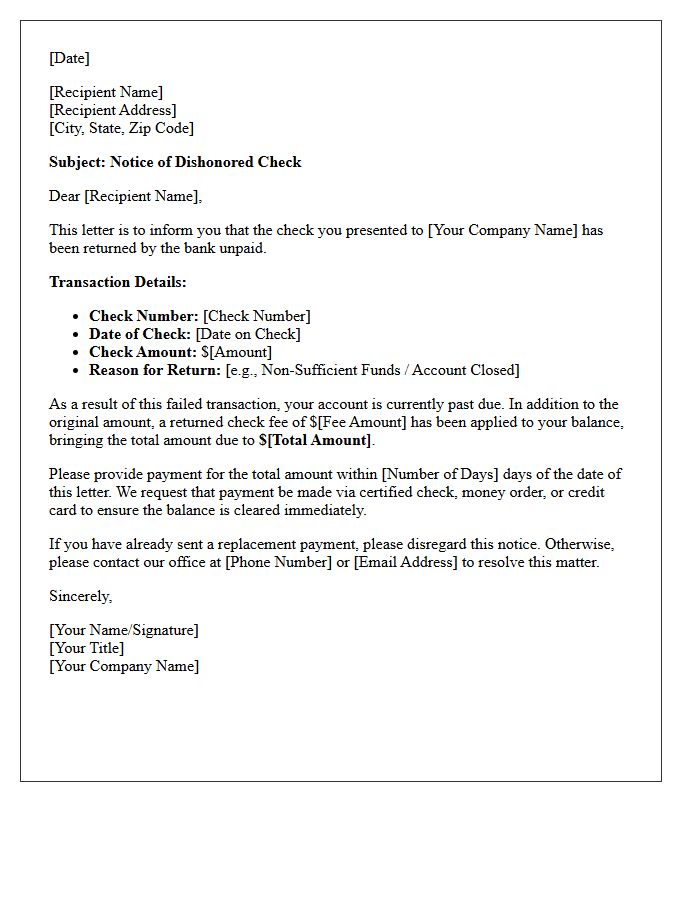
A Failed Check Transaction Notice Letter is a formal notification sent when a payment cannot be processed due to insufficient funds, closed accounts, or technical errors. This legal document informs the recipient of the payment failure and requests immediate rectification. It typically includes the check number, amount, and any applicable returned check fees. Timely resolution is critical to avoid potential legal action, negative credit reporting, or loss of services. Promptly addressing this notice helps maintain financial credibility and prevents further penalties or late charges from the service provider or merchant.
Checking Account Deficiency Update Letter
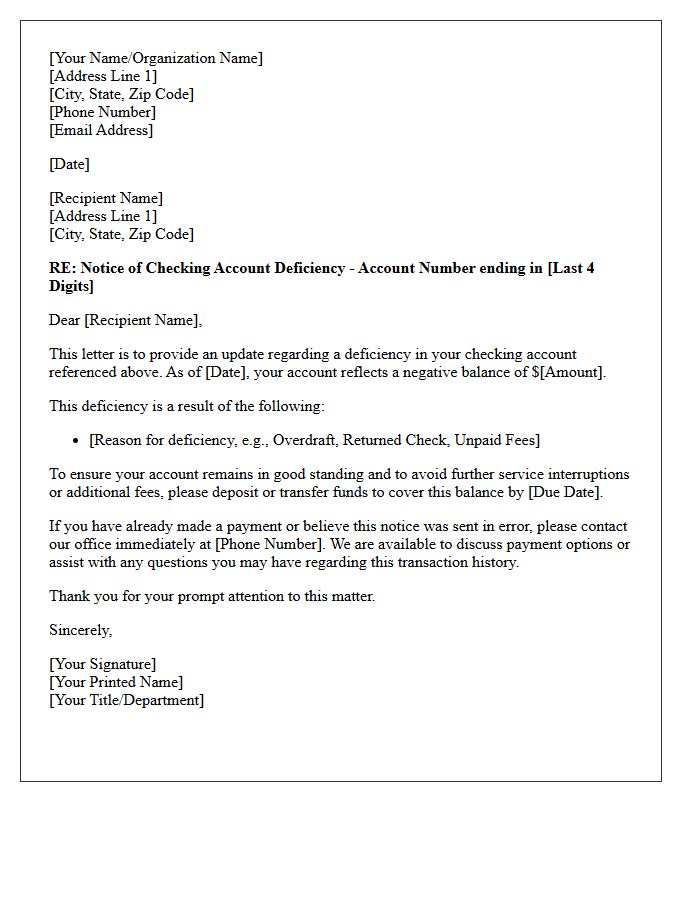
A Checking Account Deficiency Update Letter is a critical notification sent by financial institutions when a balance falls below the required minimum or enters a negative state. This document details the specific shortfall amount and outlines necessary actions to avoid overdraft fees or account closure. Reviewing this update promptly ensures you can rectify discrepancies, restore your standing, and maintain a positive credit reputation. Always verify the letter's authenticity through your bank's official portal to prevent potential phishing attempts while managing your financial liquidity effectively.
Outstanding Balance Request Letter
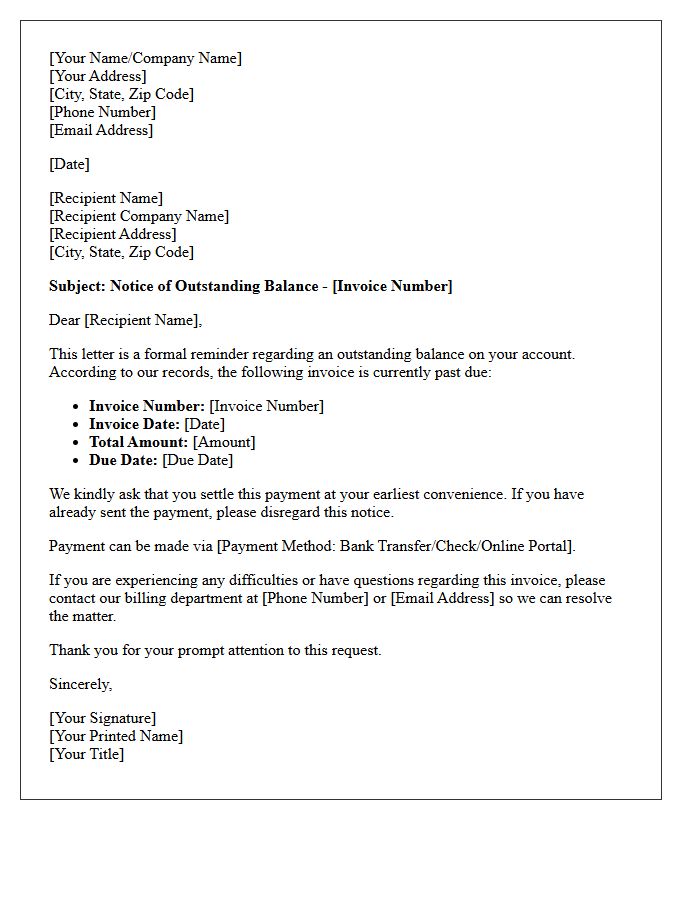
An Outstanding Balance Request Letter is a formal document used to verify the exact amount owed on an account. It serves as a legal record to reconcile financial discrepancies and ensure billing accuracy. When drafting this request, it is essential to include your account number, payment history, and a specific deadline for a response. This professional communication helps prevent late fees and facilitates clear debt management between creditors and debtors. Always request a detailed breakdown of principal, interest, and any penalties to maintain transparent financial records and support future dispute resolution.
Final Returned Check Warning Letter
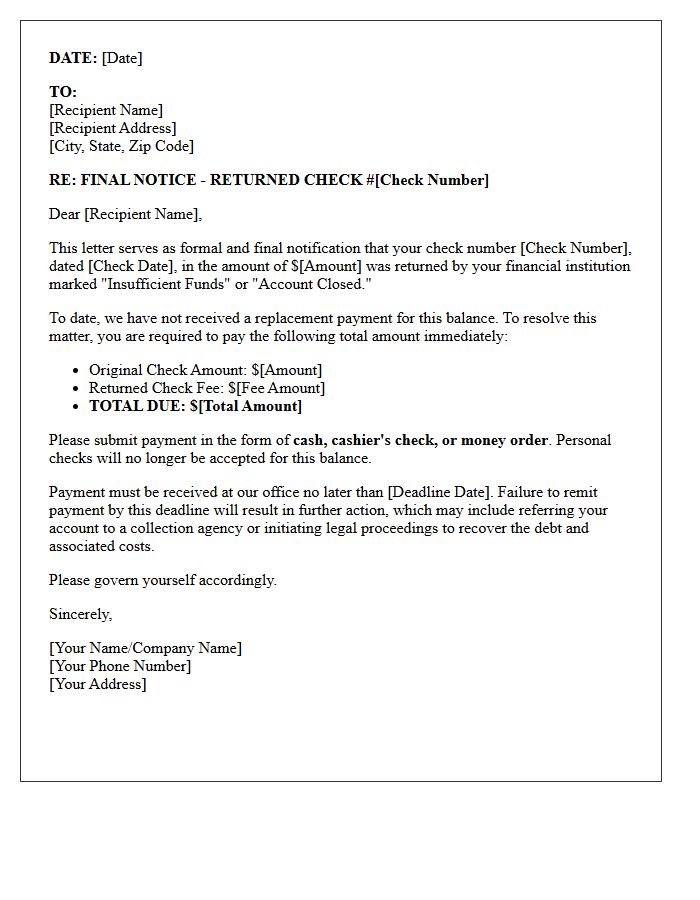
A Final Returned Check Warning Letter serves as a formal notice demanding immediate payment for a dishonored payment. It informs the recipient that their check was returned due to non-sufficient funds and outlines a strict deadline for resolution. Failure to provide guaranteed funds, such as a cashier's check or money order, may result in additional legal action or referral to a collection agency. This letter acts as a final opportunity to settle the debt and avoid potential criminal prosecution or civil penalties under state law.
What is a Notice of Returned Check for Non-Sufficient Funds?
A Notice of Returned Check for Non-Sufficient Funds (NSF) is a formal letter sent by a payee to a drawer when a bank refuses to honor a payment because the account lacks the necessary balance to cover the transaction.
What should I do after receiving an NSF notice?
Upon receiving an NSF notice, you should immediately contact the payee to arrange an alternative form of payment, such as a credit card or certified funds, and contact your bank to verify your balance and address any applicable overdraft fees.
Are there legal penalties for a returned check due to insufficient funds?
Yes, depending on your jurisdiction, writing a check with non-sufficient funds can lead to civil penalties, including late fees and administrative charges, or criminal charges if intent to defraud is proven.
How much is the typical NSF fee for a returned check?
The fee for a returned check varies by bank and merchant policy, but typically ranges from $20 to $35. Most states also set a statutory limit on the maximum fee a merchant can charge for a returned check.
How can I prevent a Notice of Returned Check in the future?
To prevent NSF notices, regularly monitor your account balance, maintain a financial cushion, utilize mobile banking alerts for low balances, or enroll in overdraft protection through your financial institution.


Comments