
Receiving a notification regarding a blocked international transaction can be disruptive for global business operations. This occurs when security filters flag cross-border payments due to fraud risks or compliance issues. Understanding these alerts helps you resolve payment failures quickly and maintain seamless international trade. To help you communicate effectively with clients or banks, below are some ready to use templates.
Image cover: Securing Your Global Payments: Sample International Transaction Block Notifications
Letter Samples List
- Letter of Notification for Blocked International Wire Transfer Due to Sanctions Compliance
- Fraud Prevention Blocked International Transaction Notification Letter
- Letter Regarding Blocked International Transaction for Incomplete KYC Documentation
- Anti-Money Laundering Compliance Blocked International Transaction Letter
- Regulatory Restriction Blocked International Remittance Notification Letter
- Letter of Blocked International Transaction Pending Account Verification
- Suspicious Activity Blocked International Transaction Alert Letter
- Letter Concerning Blocked International Transfer Due to Missing Beneficiary Details
- Exceeded Transfer Limits Blocked International Transaction Letter
- Cross-Border Payment Blocked Transaction Notification Letter
- High-Risk Jurisdiction Blocked International Transaction Letter
- Letter of Temporarily Blocked International Payment for Security Review
Letter of Notification for Blocked International Wire Transfer Due to Sanctions Compliance
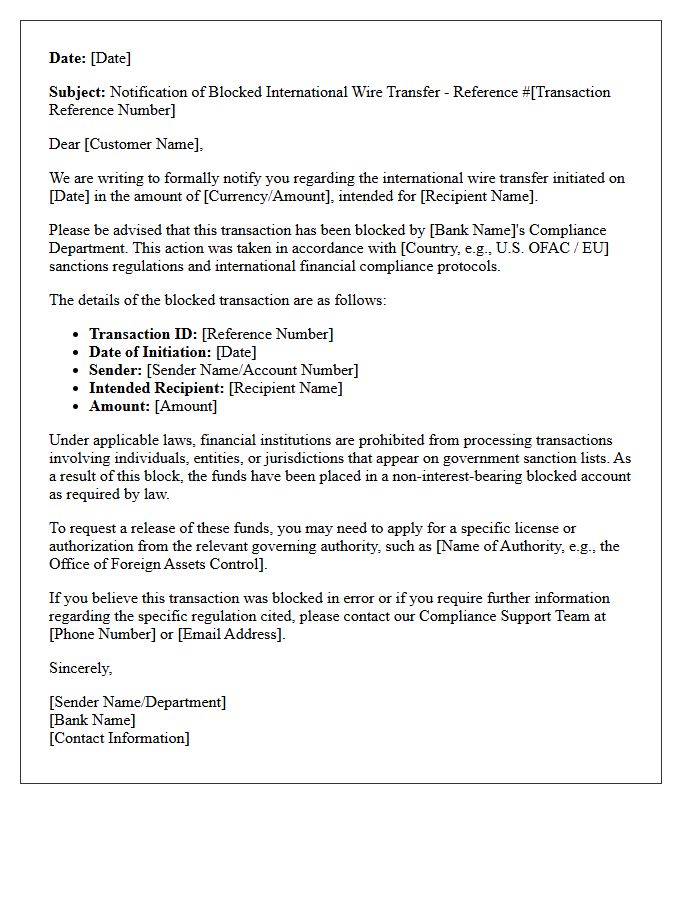
A Letter of Notification is a formal document issued by a bank when an international wire transfer is frozen. This action occurs because the transaction triggered a sanctions compliance alert involving restricted countries, entities, or individuals. The letter explains that the funds are held to adhere to OFAC or international legal regulations. Recipients must often provide additional documentation to prove the legality of the transfer. Understanding these regulatory requirements is essential for resolving payment delays and ensuring regulatory adherence in global financial transactions.
Fraud Prevention Blocked International Transaction Notification Letter
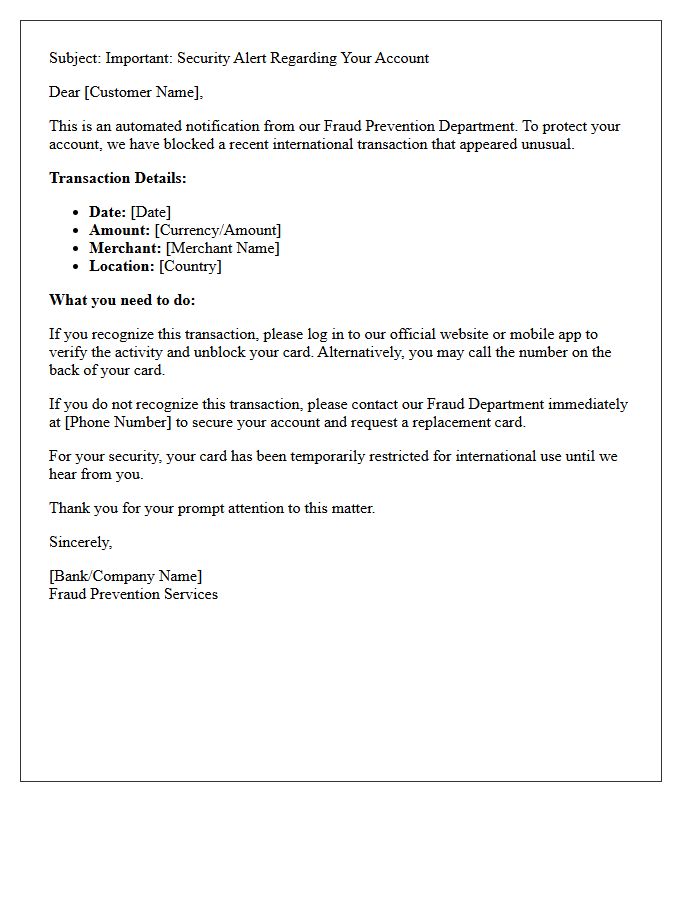
Receiving a Fraud Prevention Blocked International Transaction Notification Letter indicates your financial institution detected suspicious activity outside your home country. This security measure prevents unauthorized charges and protects your account integrity. If the transaction was legitimate, you must contact your bank immediately to verify your identity and authorize the payment. Always ensure the letter is authentic by checking your official banking app or calling the number on your physical card, as scammers often use phishing tactics to mimic these alerts and steal sensitive credentials.
Letter Regarding Blocked International Transaction for Incomplete KYC Documentation
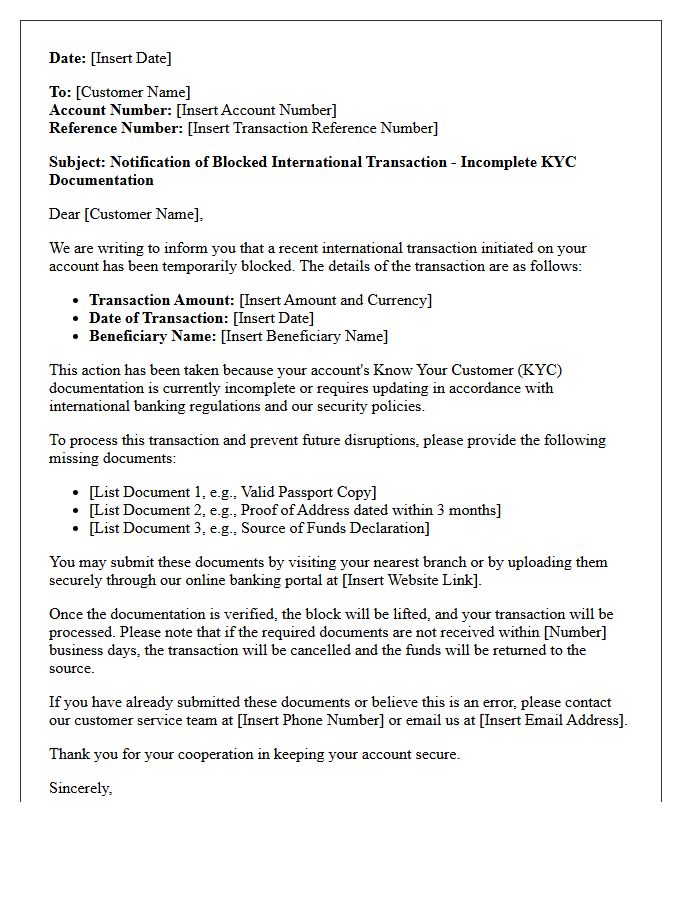
If you receive a letter regarding a blocked international transaction, it indicates your bank has paused a transfer due to incomplete KYC documentation. Financial institutions must verify your identity and the source of funds to comply with anti-money laundering regulations. To resolve this, you must promptly provide updated identification or tax residency forms as requested. Failure to submit these documents within the specified deadline may lead to permanent transaction rejection or account restrictions. Always verify the request through your bank's official portal to ensure it is not a phishing attempt.
Anti-Money Laundering Compliance Blocked International Transaction Letter
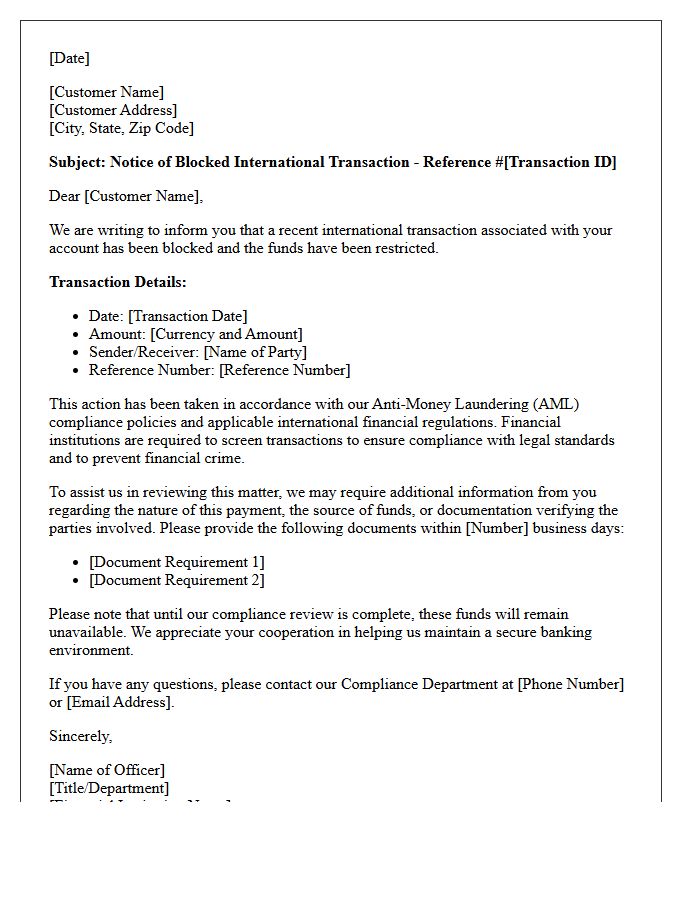
Receiving an Anti-Money Laundering (AML) compliance letter indicates that a financial institution has flagged your international transaction for manual review. This security measure ensures cross-border transfers align with legal regulations aimed at preventing financial crimes. To resolve the hold, you must promptly provide requested documentation, such as proof of funds or identity verification. Failure to respond can lead to permanent transaction rejection or account restrictions. Understanding these transparency requirements is essential for maintaining global banking access and ensuring your international payments remain fully compliant with regulatory standards.
Regulatory Restriction Blocked International Remittance Notification Letter
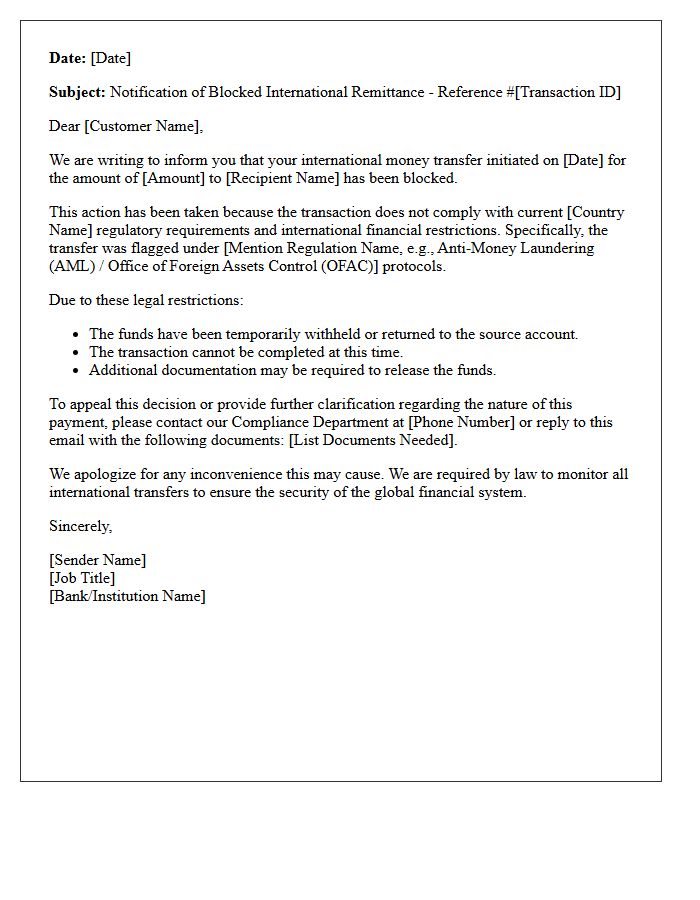
A Regulatory Restriction Blocked International Remittance Notification Letter informs you that a cross-border transfer was halted due to compliance mandates. This occurs when a transaction triggers anti-money laundering (AML) filters or violates international sanctions. To resolve the hold, you must provide requested documentation to verify the source of funds or the recipient's identity. Failure to respond promptly may result in the permanent reversal of funds or further investigation by financial authorities. Always ensure the legitimacy of your documentation to satisfy regulatory requirements and secure your capital.
Letter of Blocked International Transaction Pending Account Verification
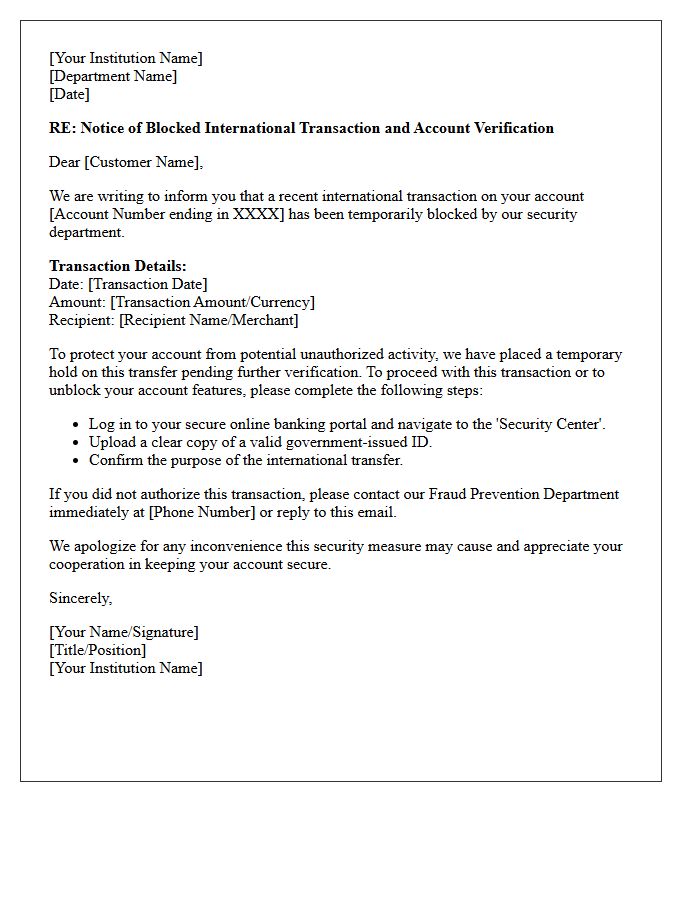
A Letter of Blocked International Transaction Pending Account Verification is a formal notice indicating that a security hold has been placed on your funds. This typically occurs when a financial institution detects suspicious activity or requires updated Know Your Customer (KYC) documentation. To release the payment, you must provide valid identification or proof of source of funds to satisfy regulatory compliance standards. Addressing this promptly is essential to prevent permanent account restrictions or the return of capital to the originating bank during anti-money laundering screenings.
Suspicious Activity Blocked International Transaction Alert Letter
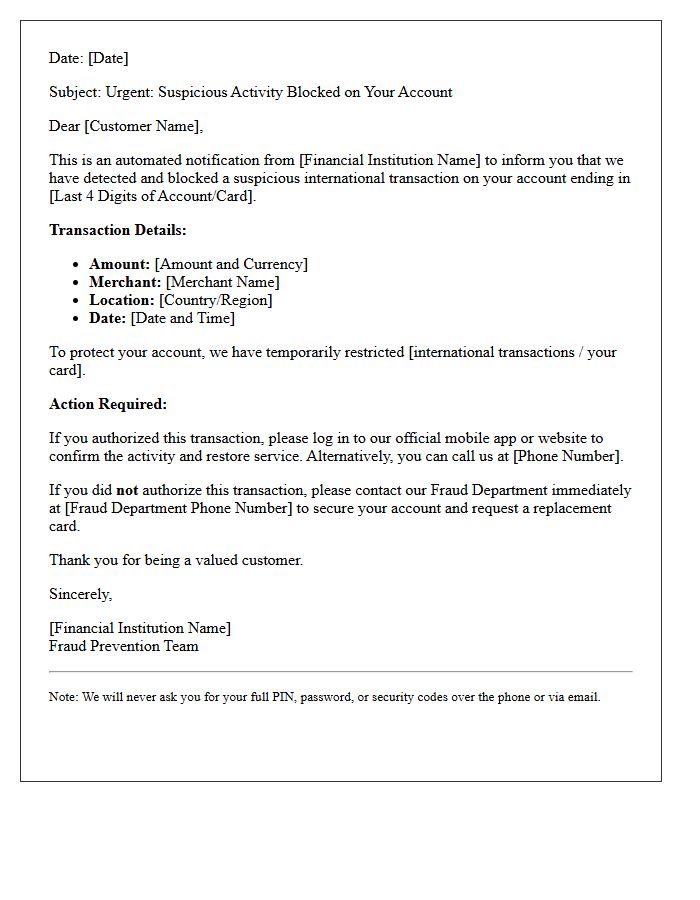
A Suspicious Activity Blocked International Transaction Alert Letter is a security notification from your bank indicating they have halted a foreign payment to prevent unauthorized access to your funds. If you receive this, verify the transaction details immediately through official channels like your bank's verified app or website. Never click links or provide personal data in response to the letter, as scammers often use phishing tactics to mimic these alerts. Confirming or denying the activity protects your financial security and prevents potential identity theft or account compromise.
Letter Concerning Blocked International Transfer Due to Missing Beneficiary Details
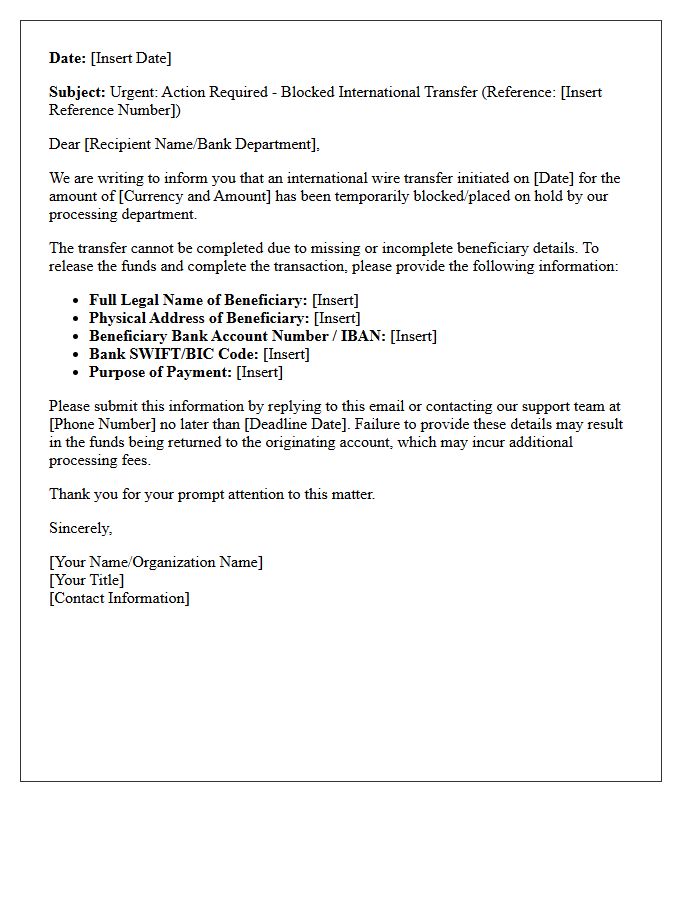
If you receive a notification regarding a blocked international transfer, it usually indicates that the transaction is held due to missing beneficiary details. Financial institutions require a complete physical address, full legal name, and specific bank codes like SWIFT or IBAN to satisfy global anti-money laundering (AML) compliance standards. To resolve this, you must promptly provide the requested information to your bank. Failure to supply accurate recipient data can lead to extended payment delays or the permanent reversal of funds to the originating account.
Exceeded Transfer Limits Blocked International Transaction Letter
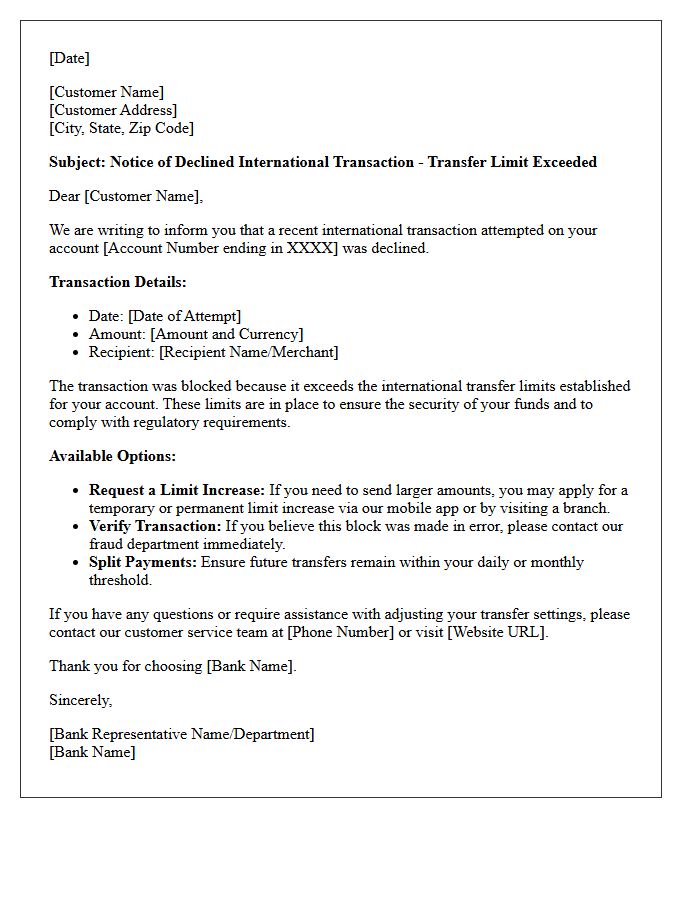
An Exceeded Transfer Limits Blocked International Transaction Letter notifies account holders that a cross-border payment was declined. Financial institutions issue this notice when a user surpasses regulatory thresholds or internal bank caps designed to prevent fraud and maintain liquidity. To resolve the issue, you must verify the transaction details and potentially provide source of funds documentation to raise your transfer ceiling. Always review your bank's specific international wire policies to ensure compliance with global anti-money laundering standards and avoid future service interruptions or account freezes.
Cross-Border Payment Blocked Transaction Notification Letter
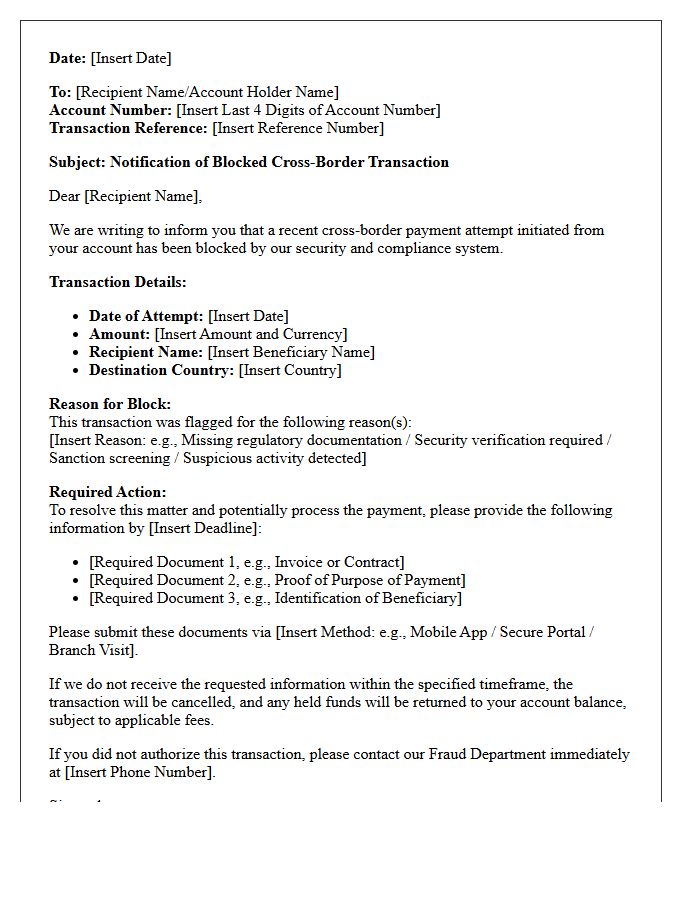
A Cross-Border Payment Blocked Transaction Notification Letter informs you that an international transfer has been halted due to regulatory compliance or security concerns. Banks issue these alerts when transactions trigger AML (Anti-Money Laundering) or sanctions screening protocols. Upon receipt, you must immediately provide supporting documentation, such as invoices or proof of source of funds, to verify the payment's legitimacy. Promptly addressing these requests is essential to unfreeze funds, prevent permanent account restrictions, and ensure compliance with international financial laws and OFAC regulations.
High-Risk Jurisdiction Blocked International Transaction Letter
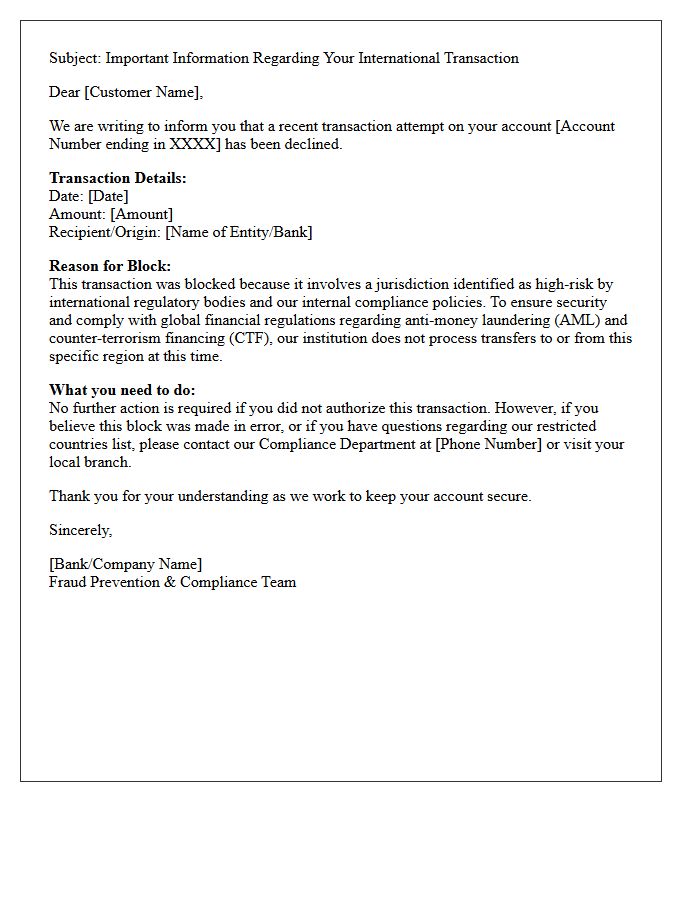
A High-Risk Jurisdiction Blocked International Transaction Letter is a formal notification from a financial institution stating that a payment was declined due to security protocols. Banks restrict transfers involving countries flagged for financial crimes, terrorism financing, or international sanctions. To resolve this, you must provide supporting documentation, such as invoices or proof of identity, to verify the legitimacy of the funds. Understanding these regulatory compliance measures is essential for businesses to navigate global trade restrictions and avoid permanent account limitations or legal scrutiny during cross-border audits.
Letter of Temporarily Blocked International Payment for Security Review
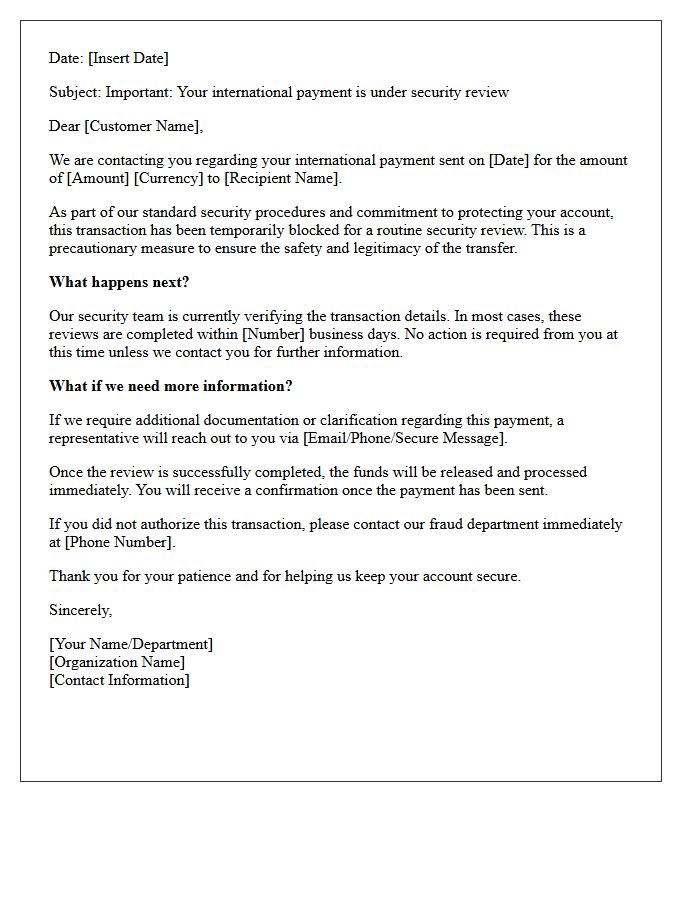
A security review notice indicates your international transfer is on hold for verification. Banks use automated systems to detect suspicious patterns or potential fraud. To resolve this, you must promptly provide requested documentation, such as proof of funds or identity verification, to confirm the transaction is legitimate. Ignoring this temporary block can lead to permanent cancellation or account restrictions. Always contact your bank through official channels to ensure the request is authentic and protect your sensitive financial data from phishing attempts.
Why was my international transaction declined or blocked?
International transactions are often blocked by our security system if they appear inconsistent with your typical spending patterns or occur in high-risk regions. This automated measure is designed to protect your account from potential cross-border fraudulent activity.
How do I unblock my card for international use?
You can instantly manage international transaction settings through our mobile app or online banking portal under "Card Controls." Alternatively, you can contact our fraud prevention department directly to verify the pending transaction and authorize future overseas charges.
Do I need to submit a travel notice before using my card abroad?
While our advanced monitoring systems reduce the need for travel notices, submitting your itinerary through the app helps prevent unnecessary blocks. Providing your destination and travel dates ensures our security filters recognize legitimate international purchases as authorized.
What should I do if I receive a notification about a blocked foreign transaction I didn't make?
If you receive a notification for an international charge you do not recognize, please use the "Report Fraud" feature in your app or call the number on the back of your card immediately. We will secure your account, block further unauthorized access, and issue a replacement card.
Are there specific countries where my card is automatically blocked?
To comply with international financial regulations and high-risk security protocols, transactions may be automatically restricted in certain sanctioned or high-fraud regions. Please check our current list of restricted locations in the "International Travel" section of our website before departing.

Comments