
Confirming a user's identity is essential for security and regulatory compliance. This guide outlines how to professionally request sensitive information while maintaining trust and legal standards. Learn the best practices for identity verification documents to ensure a smooth onboarding process for your clients. To help you get started quickly, below are some ready to use template.
Image cover: Professional Identity Verification Request Templates: Samples and Best Practices
Letter Samples List
- Initial Request for Identity Verification Documents Letter
- Letter Requesting Additional Identity Verification Documents
- Final Notice Letter for Identity Verification Submission
- Customer Onboarding Identity Verification Request Letter
- Account Recovery Identity Verification Document Letter
- Letter Requesting Identity Verification for Loan Application
- Corporate Account Identity Verification Request Letter
- Joint Account Identity Verification Document Letter
- Beneficiary Identity Verification Request Letter
- Periodic Account Review Identity Verification Letter
- Fraud Prevention Identity Verification Document Letter
- Wealth Management Client Identity Verification Letter
Initial Request for Identity Verification Documents Letter
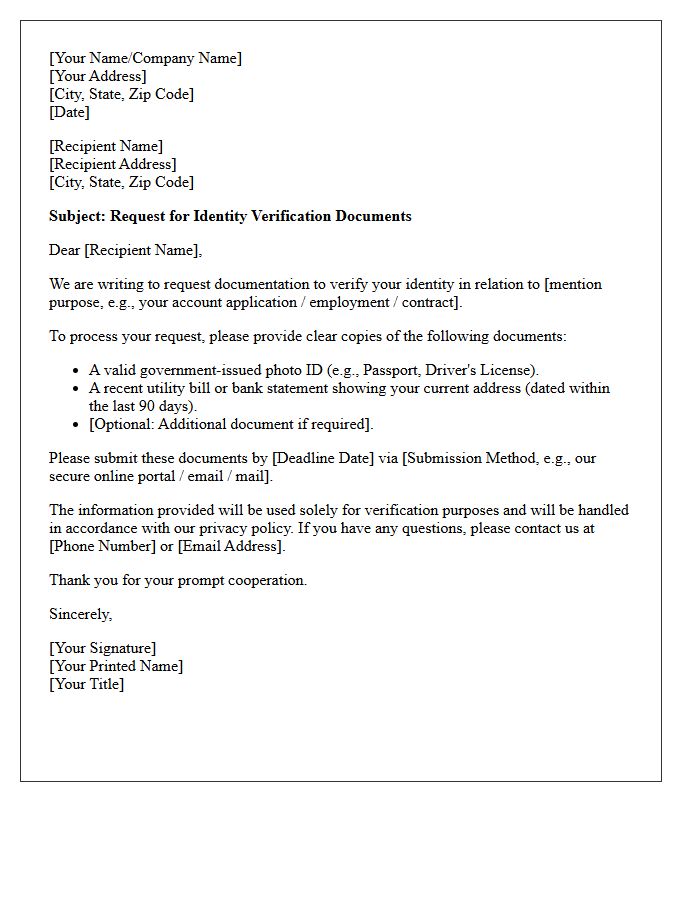
An Initial Request for Identity Verification Documents Letter is a formal notice sent by organizations to confirm a user's legal persona. To ensure compliance and prevent fraud, you must provide valid government-issued identification, such as a passport or driver's license. Always verify the legitimacy of the sender before sharing sensitive data. Responding promptly to this KYC (Know Your Customer) requirement is essential to activate accounts, secure financial transactions, and maintain regulatory standards without service interruptions. Always use encrypted channels when submitting your personal documentation for maximum security.
Letter Requesting Additional Identity Verification Documents
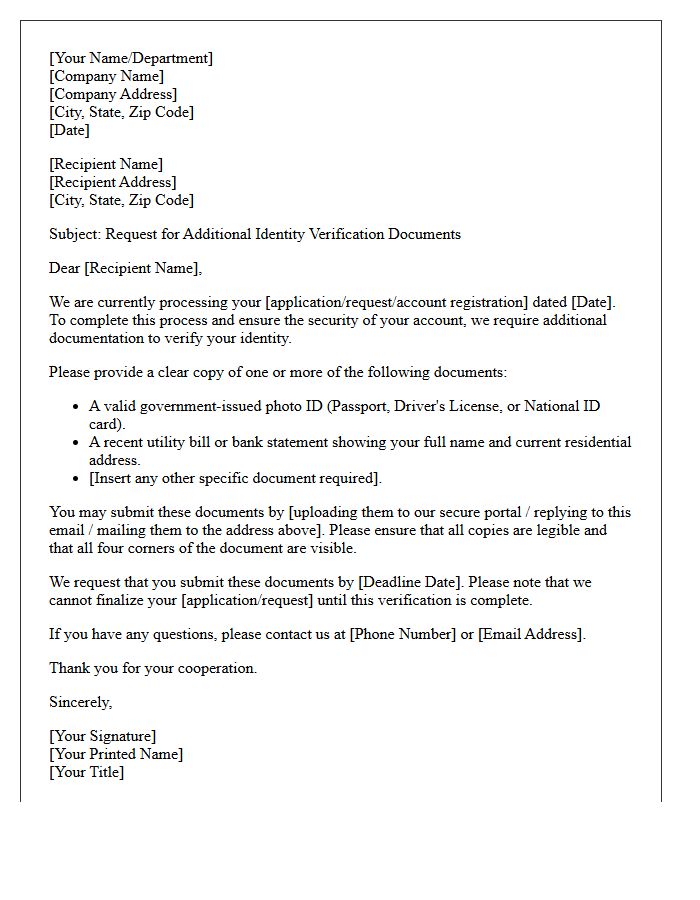
A letter requesting additional identity verification documents is a formal notice sent by institutions to confirm your legal identity. This process ensures compliance with Know Your Customer (KYC) regulations and prevents financial fraud. You may be asked to provide a government-issued photo ID, proof of address, or social security details. It is crucial to submit these validated documents through secure channels before the specified deadline to avoid account suspension or application denial. Always verify the sender's authenticity to protect yourself against potential phishing attempts while completing this essential security verification step.
Final Notice Letter for Identity Verification Submission
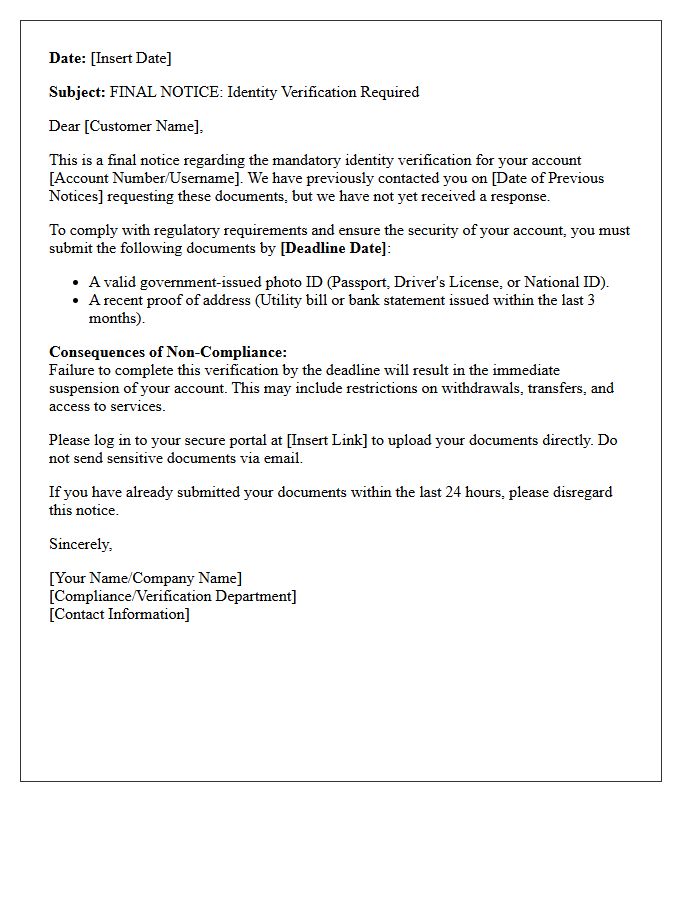
A Final Notice Letter for Identity Verification Submission is a critical compliance alert issued when previous requests for documentation have been ignored. This formal notice serves as your last opportunity to confirm your legal identity before account features are permanently restricted or suspended. To avoid service disruption, you must provide valid government-issued identification through the secure portal immediately. Failure to respond by the stated deadline typically results in account termination or legal non-compliance penalties. Prompt action is essential to maintain your access and ensure regulatory security protocols are met.
Customer Onboarding Identity Verification Request Letter
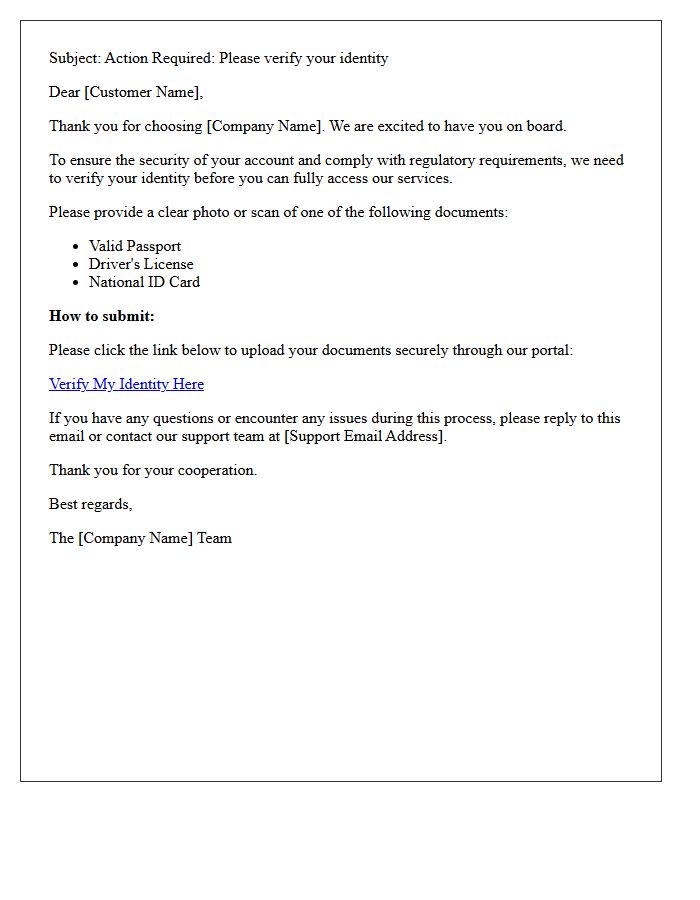
A Customer Onboarding Identity Verification Request Letter is a formal document used to collect essential Know Your Customer (KYC) data. Its primary goal is to ensure regulatory compliance while preventing financial fraud and identity theft. The letter must clearly outline the required official documents, such as government IDs or proof of address, to establish trust. Providing a secure submission method and a clear deadline is vital for a seamless user experience. Effective communication at this stage strengthens client security and streamlines the integration process for new professional relationships.
Account Recovery Identity Verification Document Letter
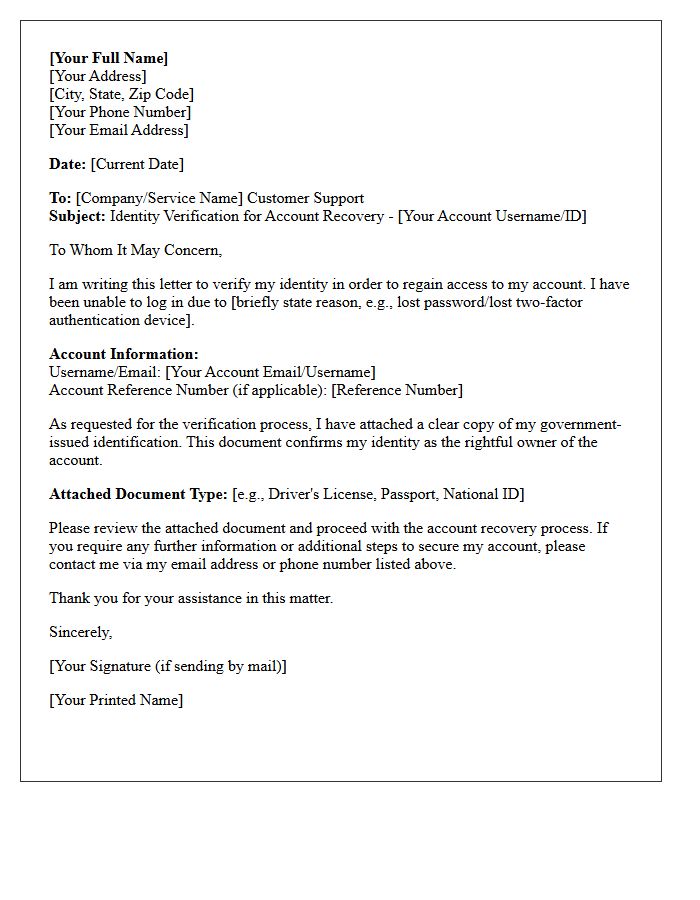
An Account Recovery Identity Verification Document Letter is a formal request used to regain access to a locked digital profile. It serves as legal proof of ownership when standard security measures fail. This document typically requires a government-issued ID and a notarized statement to confirm the user's true identity. Ensuring all personal information matches the original account records is critical for a successful manual review. Always submit these sensitive files through encrypted channels to maintain data privacy and prevent unauthorized access during the restoration process.
Letter Requesting Identity Verification for Loan Application
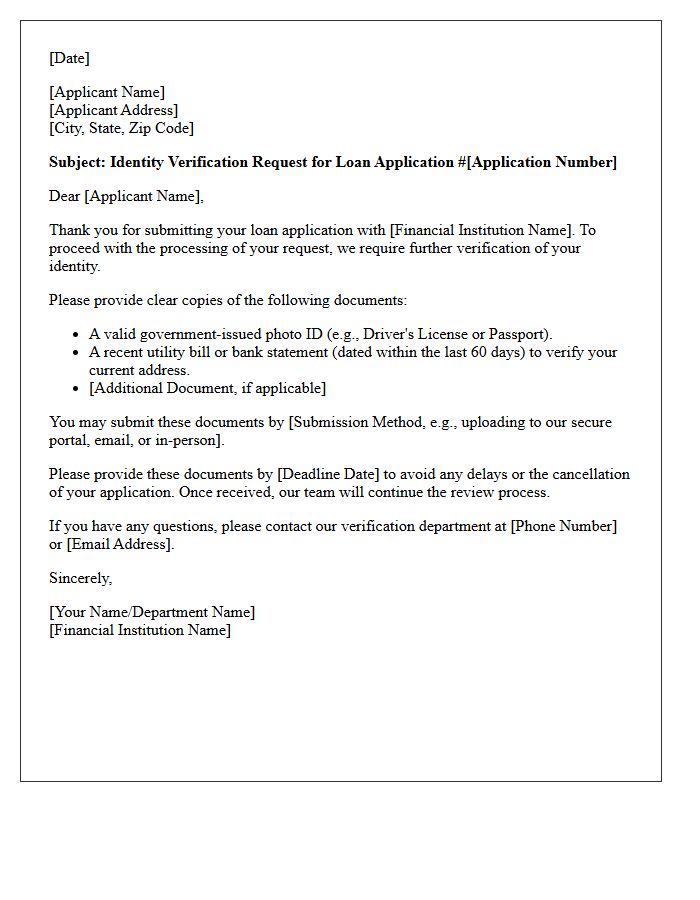
A letter requesting identity verification is a critical security measure used to prevent identity theft during the lending process. To ensure your loan approval proceeds quickly, you must provide valid government-issued identification, such as a passport or driver's license, alongside proof of address. Lenders use these documents to comply with Know Your Customer (KYC) regulations and confirm that the applicant is legitimate. Always submit clear, high-resolution copies through secure portals to protect your sensitive personal data from unauthorized access while verifying your financial profile.
Corporate Account Identity Verification Request Letter
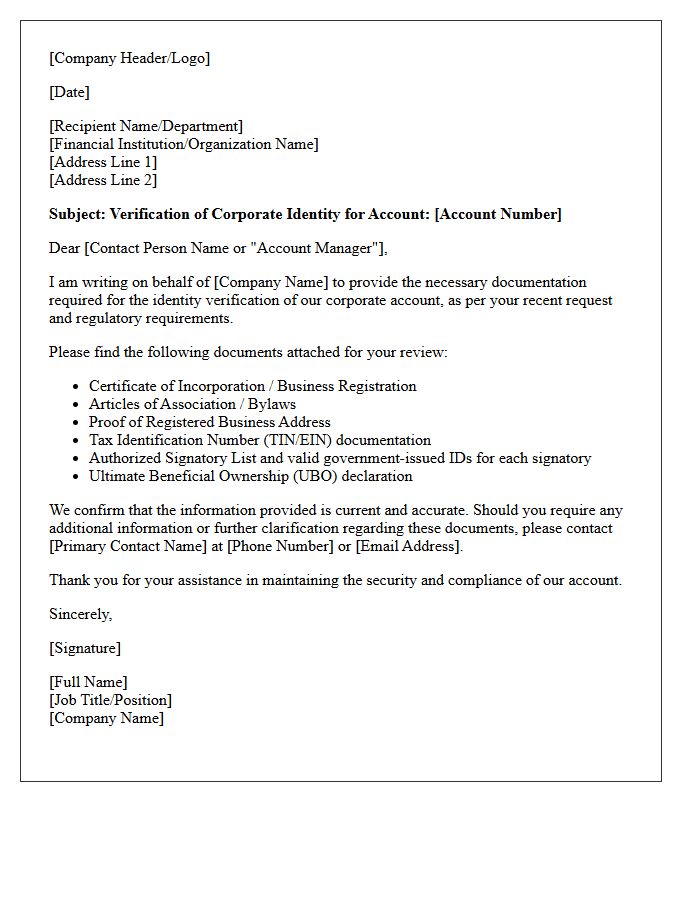
A Corporate Account Identity Verification Request Letter is a formal document used by financial institutions to confirm a business entity's legal status. To comply with Know Your Customer (KYC) and Anti-Money Laundering regulations, banks require specific documentation like articles of incorporation, proof of address, and beneficial ownership details. Providing accurate information ensures account security and prevents fraud. Failure to respond promptly to this verification request can lead to temporary account suspension or legal restrictions on corporate financial transactions. Always verify the sender's authenticity to protect sensitive company data.
Joint Account Identity Verification Document Letter
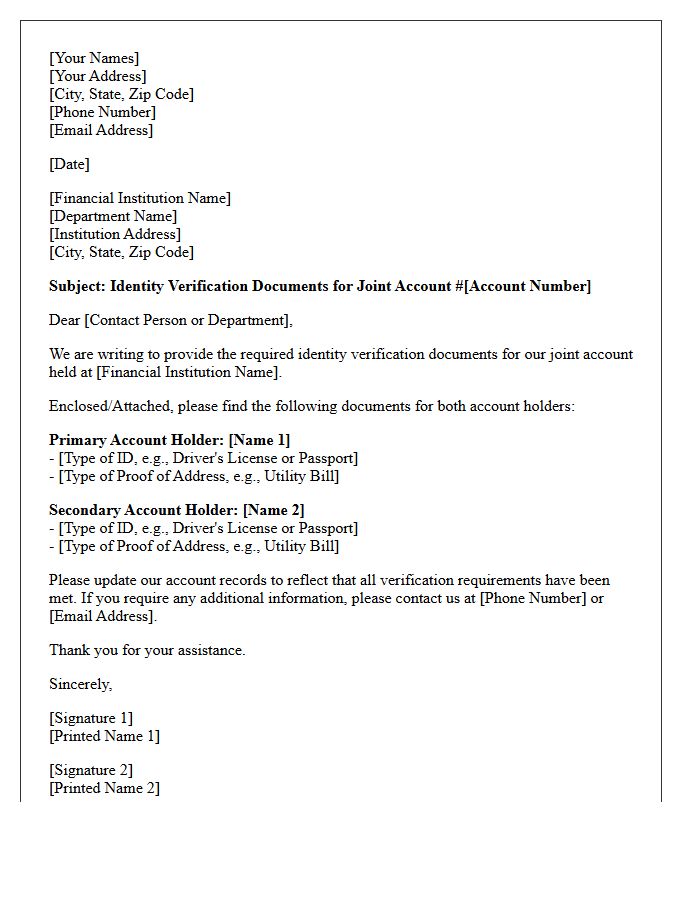
A Joint Account Identity Verification Document Letter is a formal requirement used by financial institutions to confirm the legal identities of all parties sharing an account. This letter ensures compliance with Anti-Money Laundering (AML) and Know Your Customer (KYC) regulations. It typically requires valid government-issued photo identification and proof of address for each applicant. Submitting accurate documentation is essential to prevent account freezes and ensure secure access to shared funds. Both account holders must provide verified information to establish a transparent and legally compliant banking relationship.
Beneficiary Identity Verification Request Letter
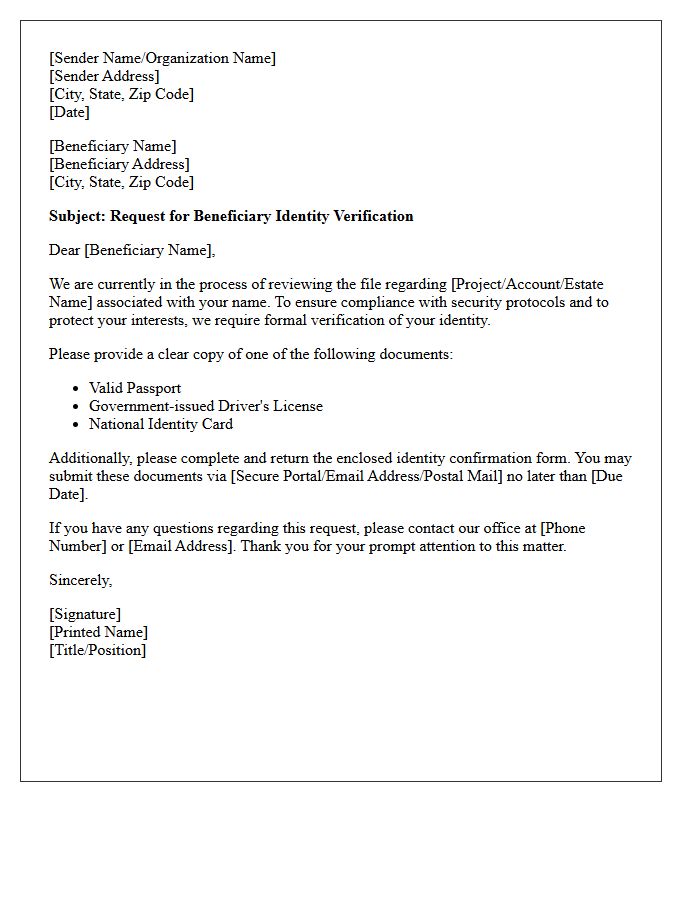
A Beneficiary Identity Verification Request Letter is a formal document sent by financial institutions or insurance companies to confirm a recipient's legal eligibility. This process ensures that assets are distributed to the correct person while preventing identity theft and fraud. To comply, you must provide valid government-issued identification and requested documentation within the specified timeframe. Verifying your identity promptly is essential to avoid processing delays or the potential forfeiture of your inheritance or policy benefits. Always ensure the request is legitimate before sharing sensitive personal information.
Periodic Account Review Identity Verification Letter
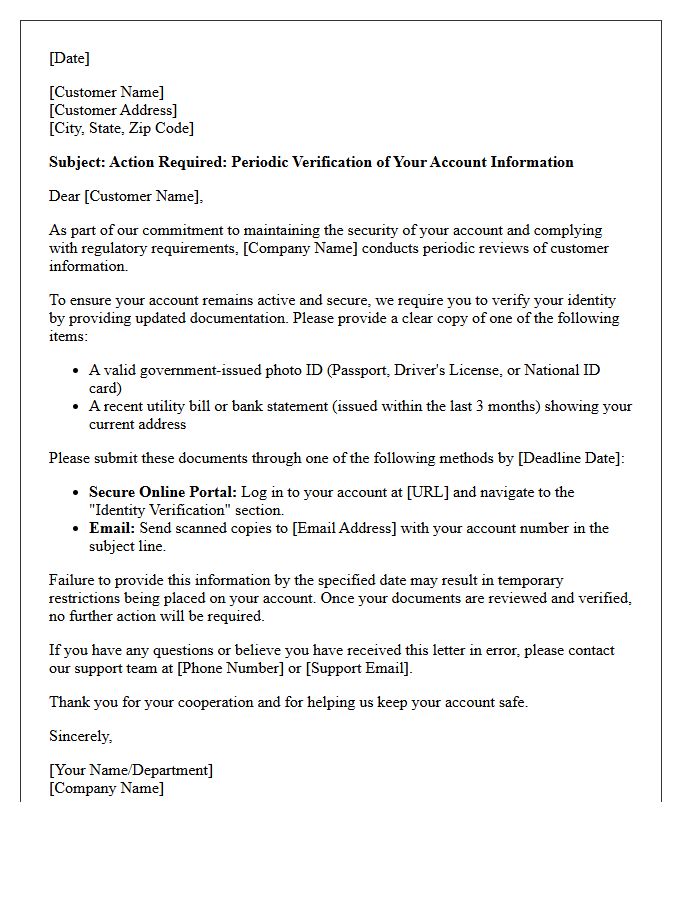
Receiving a Periodic Account Review Identity Verification Letter is a standard security measure used by financial institutions to prevent fraud. This process requires you to confirm your personal details and provide valid identification documents to maintain active account status. Failure to respond within the specified timeframe may result in temporary account restrictions or closure. Always ensure you submit requested information through secure official channels to protect your sensitive data from phishing attempts. Regularly updating your profile ensures your financial security and compliance with federal banking regulations.
Fraud Prevention Identity Verification Document Letter
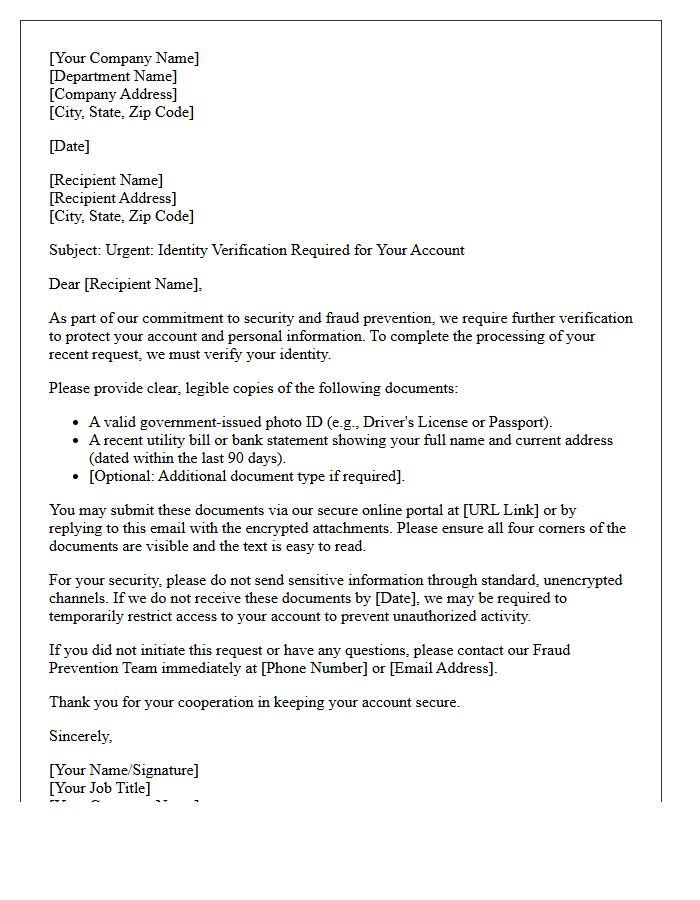
To ensure robust security, a Fraud Prevention Identity Verification Document Letter acts as a formal request to confirm a person's legal status. Organizations issue these letters to mitigate risks associated with identity theft and financial crimes. Recipients must typically provide government-issued IDs or proof of address to validate their credentials. This authentication process is a critical layer in safeguarding sensitive data and maintaining regulatory compliance. Always verify the sender's legitimacy before sharing personal details to avoid falling victim to phishing attempts or sophisticated social engineering scams.
Wealth Management Client Identity Verification Letter
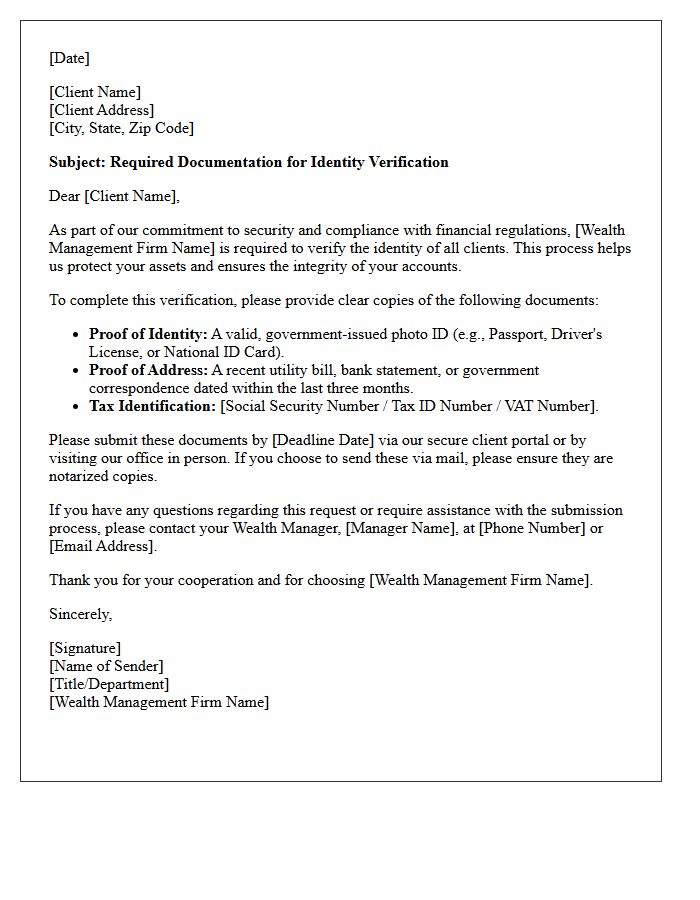
A Wealth Management Client Identity Verification Letter is a formal document used to confirm a customer's legal persona during onboarding. This process is essential for compliance with Anti-Money Laundering (AML) and Know Your Customer (KYC) regulations. Financial institutions use this letter to validate sensitive data, including residency, tax identification, and source of funds. Providing accurate documentation ensures the security of high-value assets and prevents financial crimes. Investors must ensure all details match official government records to avoid delays in account activation or wealth management service restrictions.
Why do I need to provide identity verification documents?
Identity verification is a mandatory security measure required to comply with Anti-Money Laundering (AML) and Know Your Customer (KYC) regulations. This process helps prevent identity theft, fraud, and ensures the safety of your account and financial transactions.
What types of government-issued IDs are accepted for verification?
We typically accept valid, unexpired government-issued photo identification. This includes a Passport, Driver's License, National Identity Card, or Residence Permit. Please ensure the document is clear, in color, and shows all four corners.
How do I securely upload my identity verification documents?
You can securely upload your documents through our encrypted verification portal located in your account settings. For security reasons, we recommend avoiding sending sensitive identification documents via email or unsecured messaging platforms.
How long does the identity verification process take to complete?
Once submitted, our compliance team usually reviews identity documents within 24 to 48 business hours. You will receive an automated email notification once your status has been updated or if additional information is required.
What should I do if my identity verification request was rejected?
If your documents were rejected, please check your email for specific feedback. Common reasons include blurry images, expired documents, or the name on the ID not matching your account details. You can re-upload high-resolution, clear copies to resolve the issue.

Comments