
When an estate lacks sufficient funds to cover outstanding obligations, creditors must issue a Demand Letter for Estate Settlement to formalize their claim. This process ensures legal priority during asset distribution and protects creditor rights against the deceased debtor's remaining assets. Understanding proper documentation is essential for recovering owed balances effectively. Below are some ready to use template options to assist your filing.
Image cover: Professional Templates for Recovering Outstanding Debts from a Deceased Debtor's Estate
Letter Samples List
- Initial Notice of Deceased Debtor Deficit Letter
- Estate Settlement Demand Letter to Executor
- Notice of Creditor Claim Against Estate Letter
- Final Deficit Demand Letter for Deceased Debtor
- Probate Information Request Letter for Debt Settlement
- Next of Kin Outstanding Balance Notification Letter
- Estate Administrator Deficit Resolution Demand Letter
- Notice of Default and Estate Settlement Letter
- Creditor Claim Letter Against Deceased Customer Estate
- Pre-Litigation Estate Representative Demand Letter
- Intent to Foreclose on Deceased Debtor Collateral Letter
- Deceased Debtor Deficit Settlement Offer Letter
- Estate Asset Inventory Demand Letter
- Overdrawn Account Notice Letter to Estate
- Final Account Resolution and Estate Liability Letter
Initial Notice of Deceased Debtor Deficit Letter
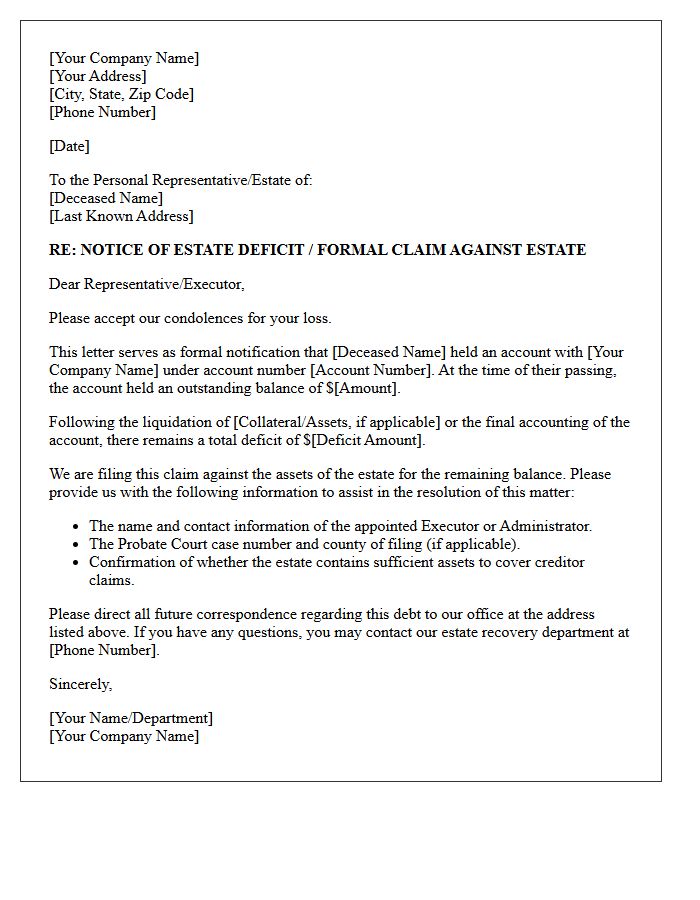
An Initial Notice of Deceased Debtor Deficit Letter is a formal notification sent to an estate representative or next of kin regarding an outstanding balance owed by a deceased individual. This document confirms that the estate's assets were insufficient to cover specific liabilities, such as benefit overpayments or tax debts. It is crucial to review this notice immediately to determine if the estate is legally responsible for the deficit or if the debt should be formally discharged according to probate regulations and insolvency guidelines.
Estate Settlement Demand Letter to Executor
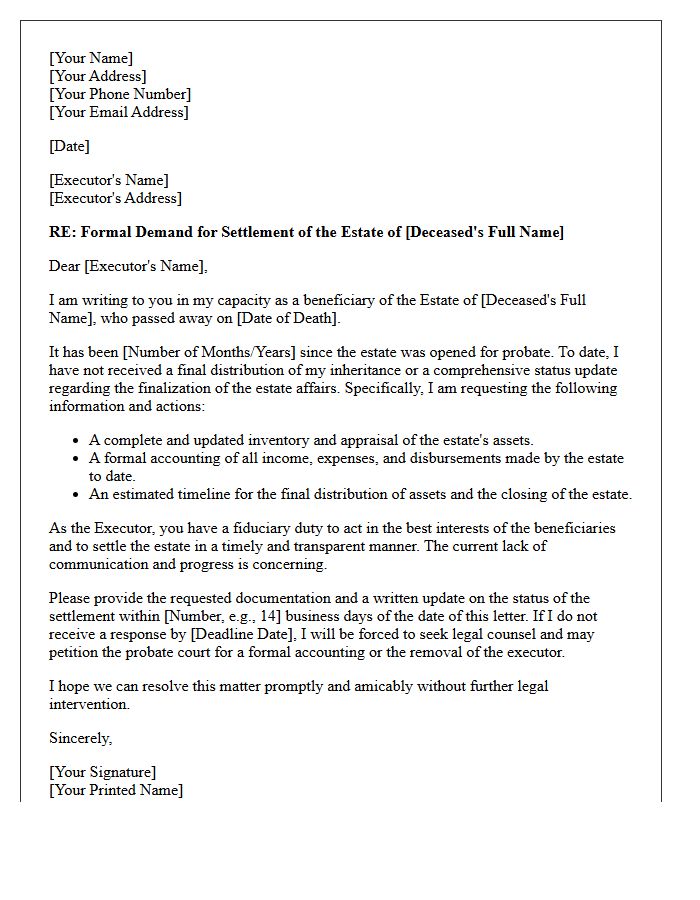
An Estate Settlement Demand Letter is a formal legal notice sent to an executor to expedite the distribution of assets. It serves as a critical prerequisite for potential litigation, officially documenting that a beneficiary has requested an accounting or their rightful inheritance. This document outlines specific deadlines and warns of legal action if fiduciary duties are neglected. By establishing a clear paper trail, beneficiaries can hold the executor accountable for unreasonable delays or mismanagement, ensuring the probate process moves toward a final resolution and legal closure.
Notice of Creditor Claim Against Estate Letter
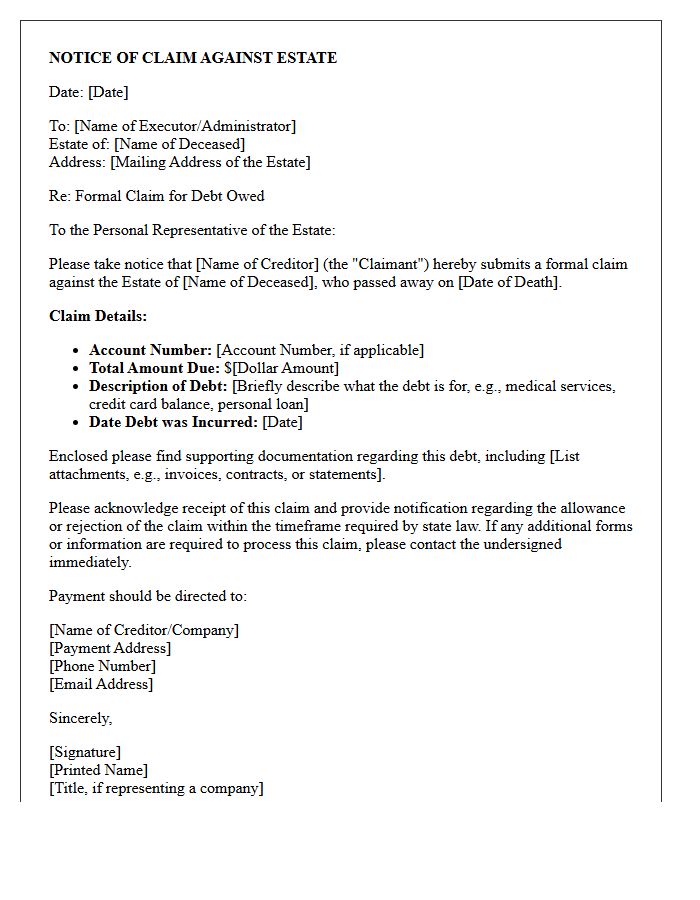
A Notice of Creditor Claim Against Estate is a formal legal document notifying an executor that a debt remains unpaid by the deceased. It is critical to file this within the statutory deadline, or the right to recover funds may be permanently barred. The letter must detail the exact amount owed and provide supporting evidence of the obligation. Once received, the personal representative must verify the claim's validity before distributing assets to heirs, ensuring that all probate liabilities are settled according to state law requirements to avoid personal executor liability.
Final Deficit Demand Letter for Deceased Debtor
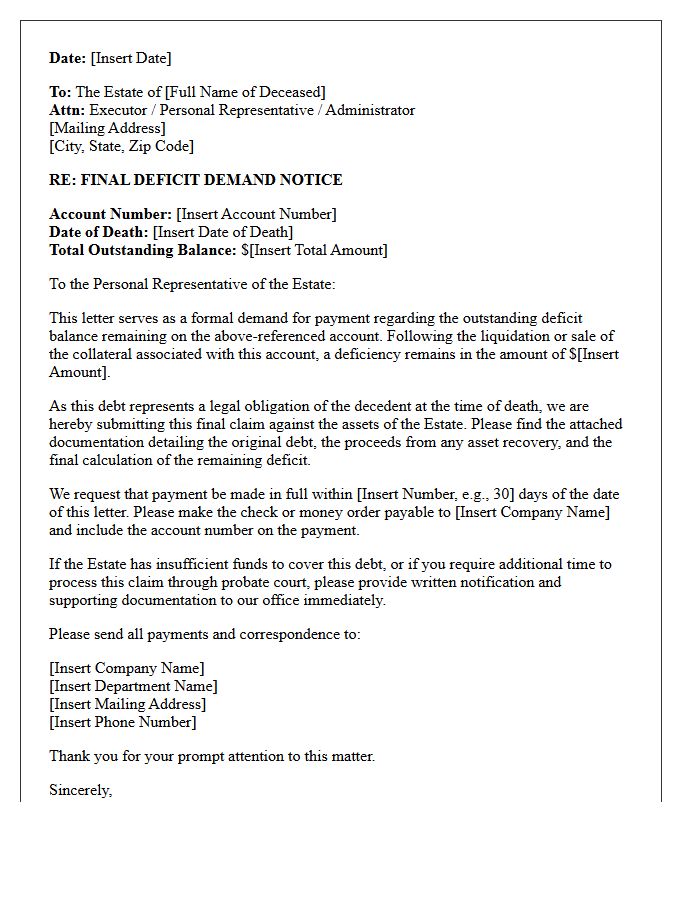
A Final Deficit Demand Letter is a formal legal notice sent to an estate representative after a repossessed asset is sold for less than the remaining loan balance. This document outlines the deficiency balance owed by the deceased debtor's estate. It serves as a final claim before potential litigation or referral to collections. Recipients must verify the debt's accuracy and the legal standing of the estate to determine if assets are available to cover the shortfall, as heirs are typically not personally liable for a deceased person's debt.
Probate Information Request Letter for Debt Settlement
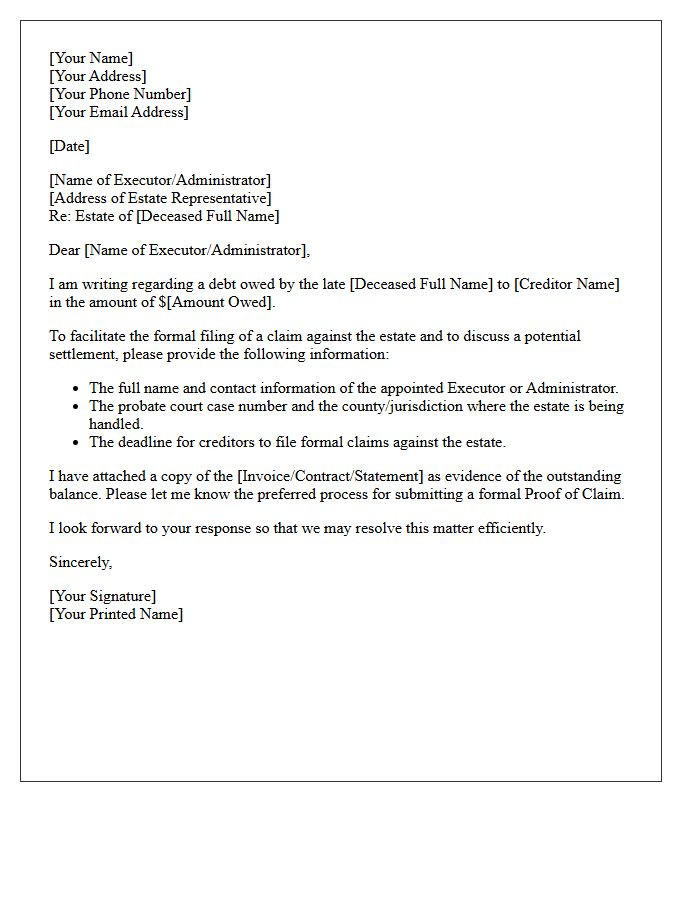
A Probate Information Request Letter is a formal legal inquiry sent to determine if a deceased person's estate has sufficient assets for debt settlement. It requests details regarding the executor's identity, the status of the probate case, and the priority of claims. Sending this document allows creditors or heirs to verify the legal standing of the estate before pursuing collections. This step ensures transparency, prevents unauthorized communication with grieving families, and confirms whether the estate is solvent or insolvent under local probate laws.
Next of Kin Outstanding Balance Notification Letter
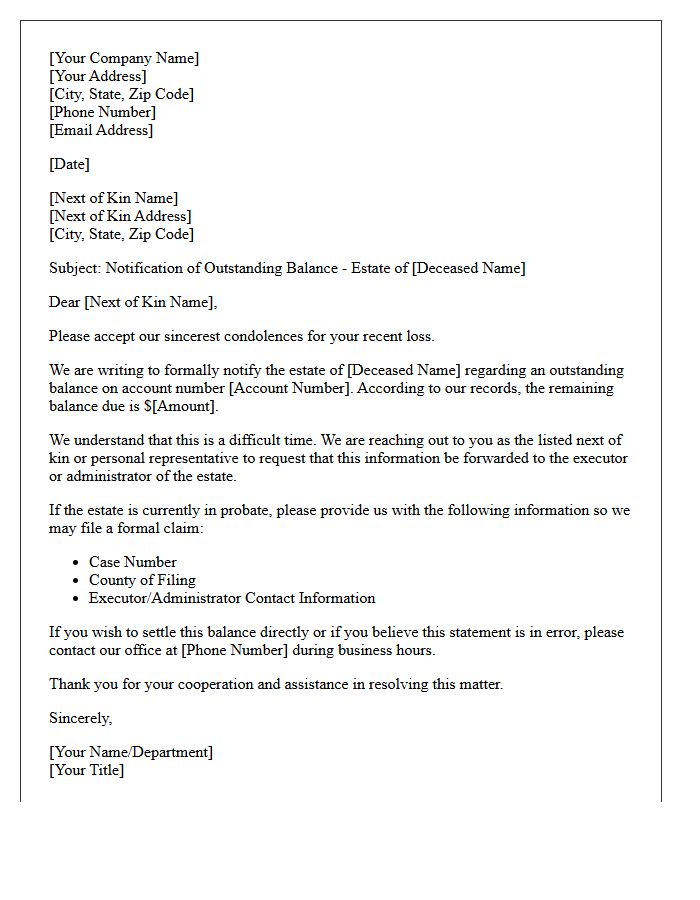
A Next of Kin Outstanding Balance Notification Letter is a formal document sent to a deceased person's family or estate representative regarding unpaid debts. It is important to understand that the estate is typically responsible for settling these obligations, not the surviving relatives personally. This letter serves as a legal notice to facilitate the probate process and claim recovery. Recipients should carefully review the account details and consult with legal counsel before making payments to ensure the debt is legitimate and properly prioritized according to inheritance laws.
Estate Administrator Deficit Resolution Demand Letter
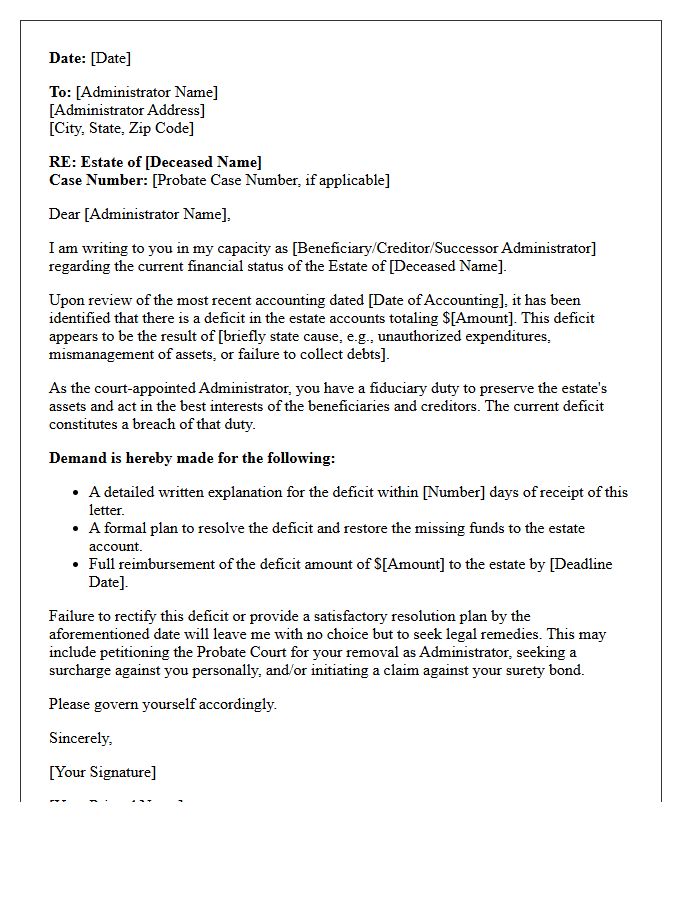
An Estate Administrator Deficit Resolution Demand Letter is a formal legal notice issued to an executor or administrator who has mismanaged estate assets. It serves as a fiduciary breach notification, highlighting a shortfall in funds caused by negligence or unauthorized spending. This document demands the immediate restoration of capital to ensure beneficiaries receive their rightful inheritance. Addressing this deficit promptly is crucial for estate accountability and provides a necessary evidentiary trail for potential litigation or the removal of the administrator through probate court proceedings.
Notice of Default and Estate Settlement Letter
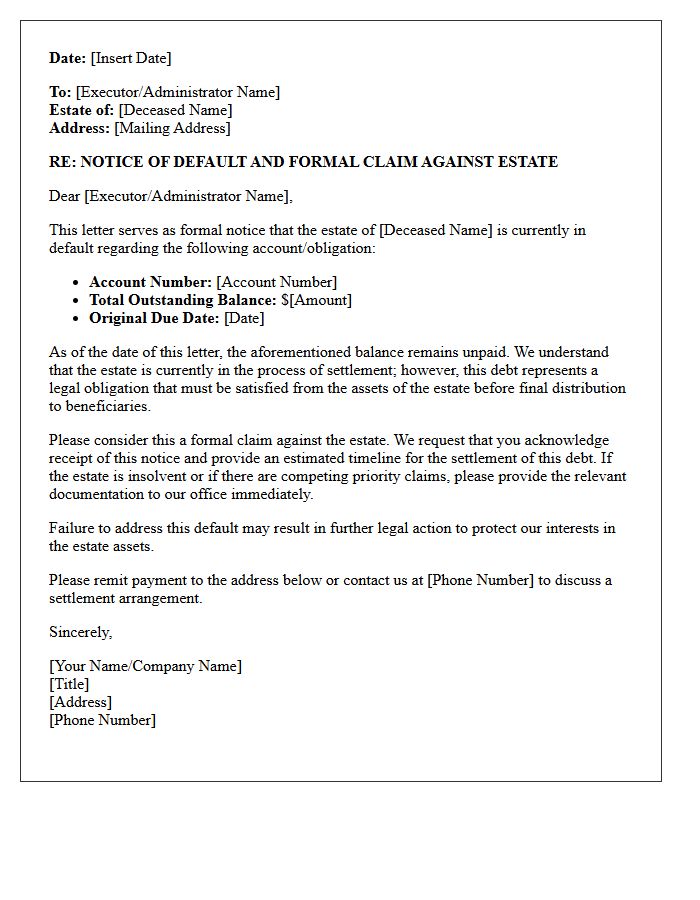
A Notice of Default is a formal legal warning issued when a property owner fails to meet mortgage obligations, initiating the foreclosure process. In contrast, an Estate Settlement Letter serves as official documentation detailing the distribution of assets and resolution of debts after an individual's passing. Understanding these documents is vital for protecting property rights and ensuring the legal transfer of inheritance. Prompt action and legal guidance are essential to address financial delinquency or to navigate the complexities of probate law effectively during debt recovery or asset liquidation.
Creditor Claim Letter Against Deceased Customer Estate
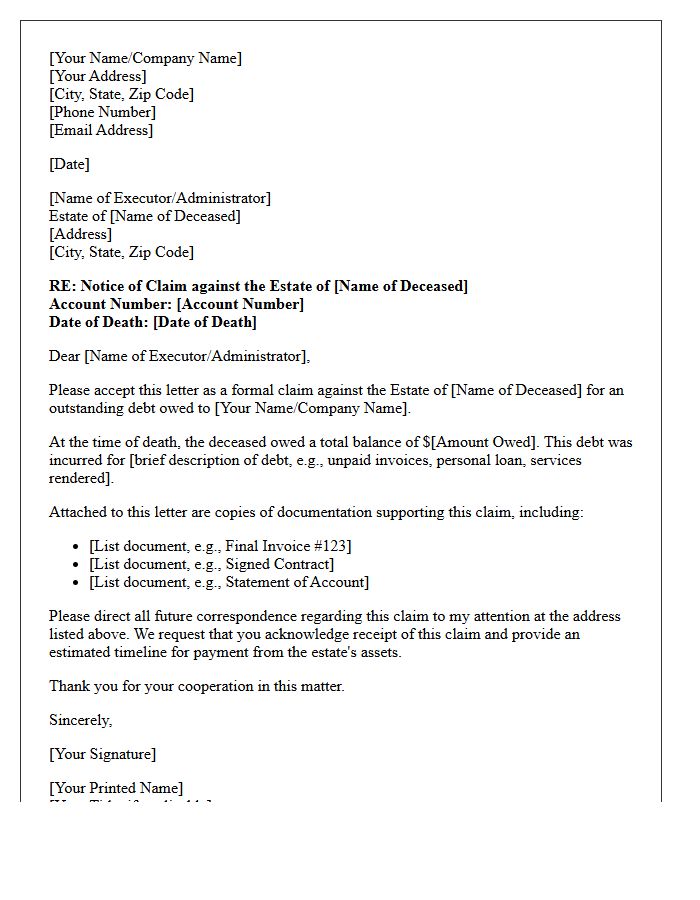
A creditor claim letter is a formal legal notification sent to the executor or administrator of a deceased person's estate to recover outstanding debts. It is crucial to file this claim within the statutory period defined by local probate laws, as missing the deadline often results in the loss of your right to collect. Ensure the letter includes the total balance, account details, and supporting documentation. Properly addressing the estate representative ensures your debt is prioritized during the probate process before remaining assets are distributed to heirs.
Pre-Litigation Estate Representative Demand Letter
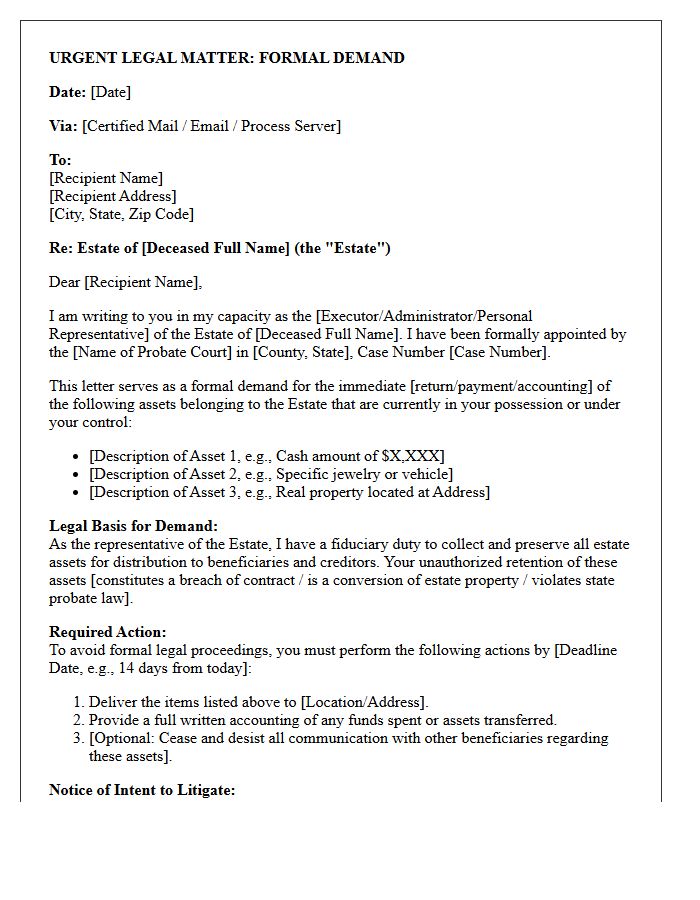
A Pre-Litigation Estate Representative Demand Letter is a formal legal notice sent to an executor or administrator. It serves as a final attempt to resolve disputes regarding fiduciary duties, asset distribution, or accounting transparency before filing a lawsuit. This document outlines specific grievances, asserts legal claims, and sets a deadline for compliance. By clearly articulating expectations, it provides a crucial opportunity for settlement negotiations, potentially avoiding costly court battles. Using this letter establishes a clear paper trail of the claimant's efforts to seek a resolution in good faith during probate proceedings.
Intent to Foreclose on Deceased Debtor Collateral Letter
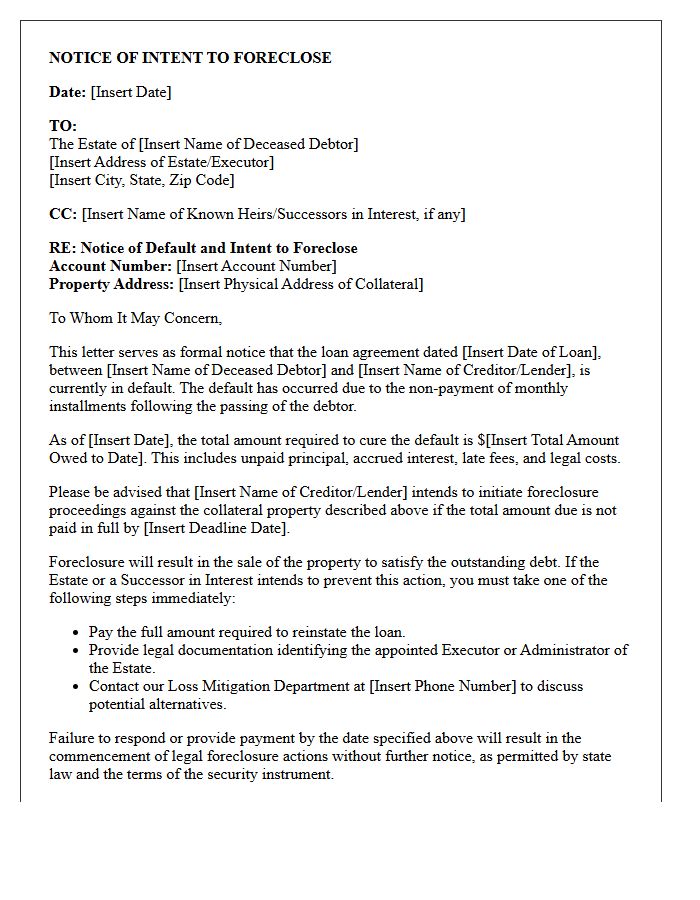
An Intent to Foreclose on Deceased Debtor Collateral letter is a formal legal notice issued by a lender when a homeowner dies with an outstanding mortgage. This document notifies heirs and the estate that the lender plans to seize the property due to non-payment. It serves as a pre-foreclosure warning, outlining the total debt owed and providing a final opportunity to cure the default. Heirs should seek legal counsel immediately to explore options like assuming the loan, selling the home, or negotiating a deed in lieu to protect their inheritance rights.
Deceased Debtor Deficit Settlement Offer Letter
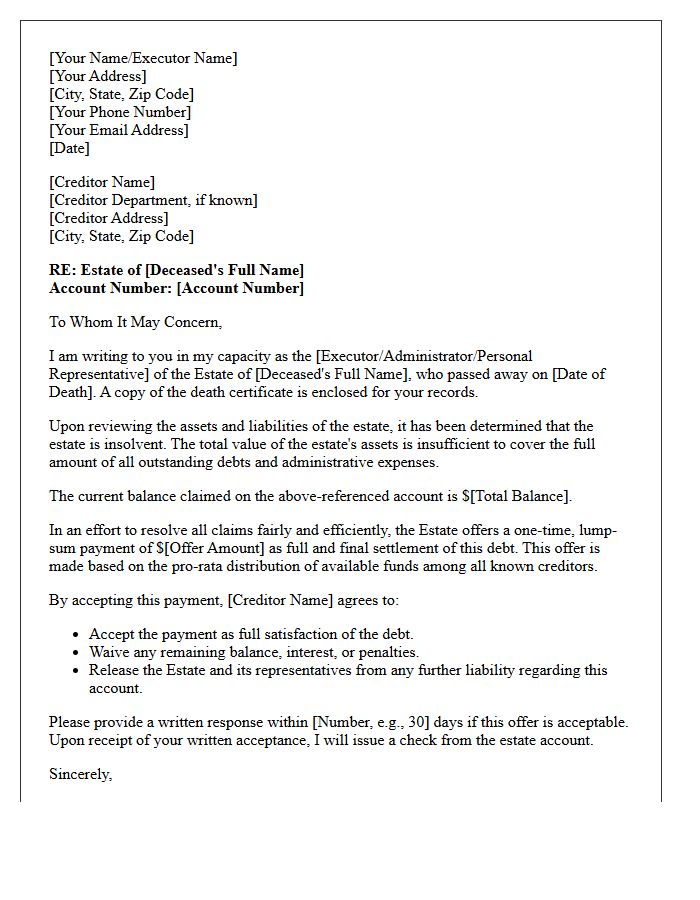
A Deceased Debtor Deficit Settlement Offer Letter is a formal proposal sent to creditors to resolve outstanding liabilities when an estate has insufficient funds. It informs lenders that the decedent's assets cannot cover the full debt, proposing a pro-rata distribution or a reduced lump-sum payment as a final settlement. Providing a clear financial inventory and proof of insolvency is essential to convince creditors to waive the remaining balance. Properly executing this deficit settlement prevents legal complications for executors and ensures the formal closure of the deceased individual's financial obligations.
Estate Asset Inventory Demand Letter
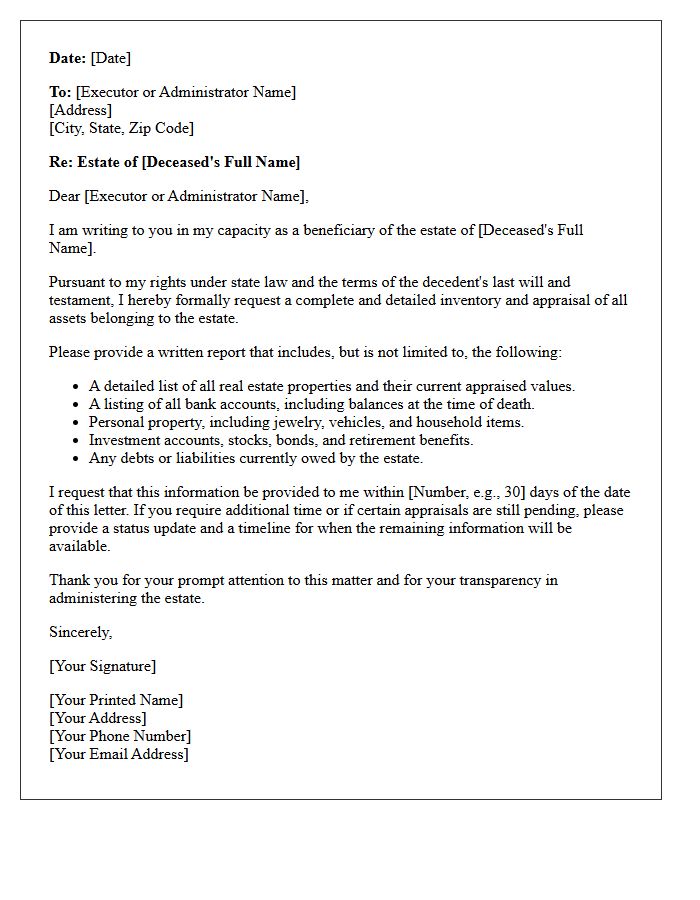
An Estate Asset Inventory Demand Letter is a formal legal request sent by a beneficiary or heir to an executor. It requires a detailed accounting of all property, debts, and valuations within a deceased person's estate. This document ensures transparency and prevents the mismanagement of assets. If a fiduciary fails to provide this inventory within the statutory timeframe, the letter serves as essential evidence for potential probate litigation. Using this formal demand protects your inheritance rights and compels the executor to fulfill their legal duty to disclose the estate's total financial standing.
Overdrawn Account Notice Letter to Estate
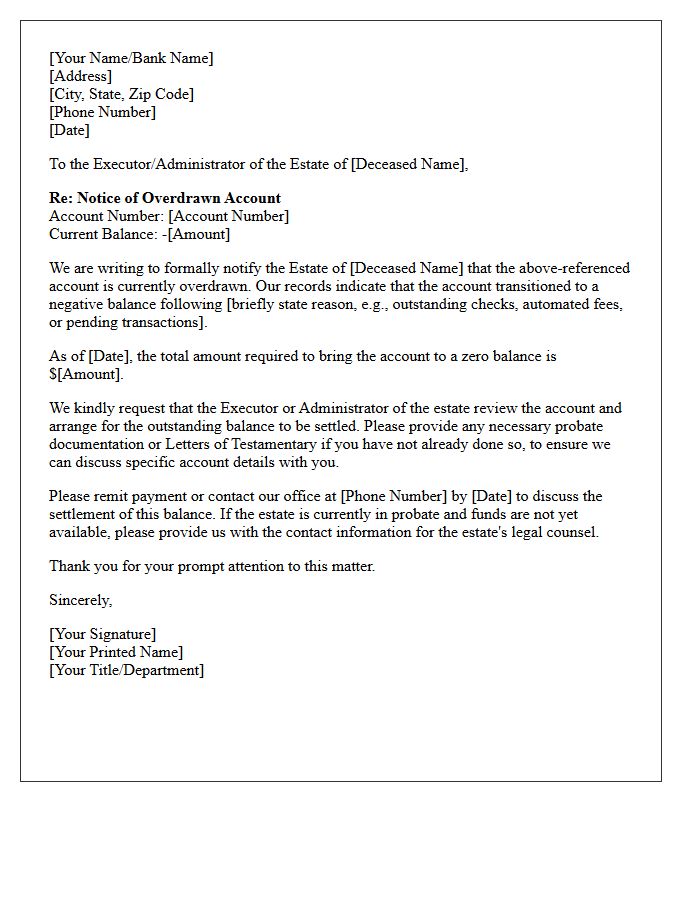
An Overdrawn Account Notice Letter to Estate is a formal notification sent by a bank when a deceased person's account has a negative balance. It informs the Executor or Administrator that the estate must settle outstanding debts, including overdraft fees and interest. It is crucial to verify the charges against final statements before issuing payment. Since debts are paid from estate assets, personal representatives should avoid using their own funds. Promptly addressing this notice prevents legal complications and ensures the probate process moves forward correctly while protecting the legal interests of all beneficiaries.
Final Account Resolution and Estate Liability Letter
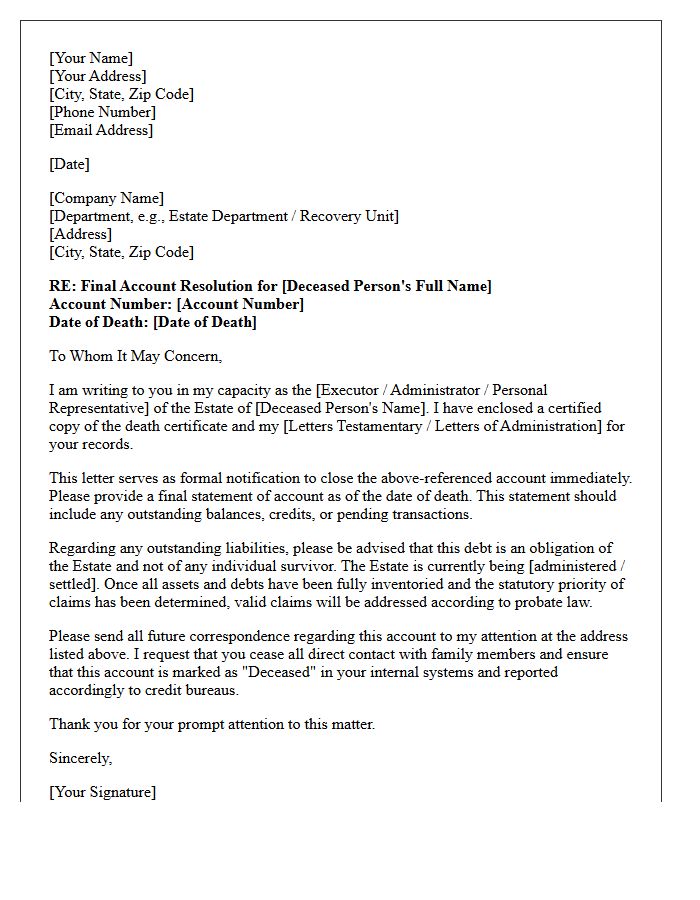
A Final Account Resolution is a legal document used to settle outstanding debts after someone passes away. This process ensures that the estate liability is accurately calculated and addressed using the deceased person's assets. Receiving an estate liability letter indicates that creditors are seeking payment from the estate. It is crucial to verify these claims before distribution to heirs, as executors may be held personally liable for unpaid debts if assets are distributed prematurely. Proper resolution protects the estate and ensures a lawful transfer of the remaining inheritance.
What is a demand letter for an estate settlement deficit?
A demand letter for an estate settlement deficit is a formal legal notice sent to the executor or administrator of a deceased debtor's estate. it requests payment for the remaining balance of a debt that was not fully covered by the initial distribution of assets or the sale of collateral.
Who is responsible for paying a deceased debtor's deficit?
The estate of the deceased is responsible for paying the deficit. If the estate has been closed or assets have already been distributed to heirs, the creditor may pursue the executor for improper distribution or seek to claw back funds from beneficiaries, depending on local probate laws and the priority of the claim.
What should be included in a demand letter for an estate deficit?
The letter should include the total original debt amount, the amount recovered from the sale of collateral or partial payments, the specific deficit balance remaining, copies of the original loan agreement, and a formal deadline for the estate to settle the outstanding claim.
What is the timeline for filing a claim against a deceased person's estate?
The timeline varies by jurisdiction but is strictly governed by the probate court's "creditor's claim period," which typically ranges from four to nine months after the death is published or the executor is appointed. Failure to send a demand letter within this window may result in the debt being legally barred.
Can heirs be held personally liable for a deceased debtor's deficit?
Generally, heirs are not personally liable for the debts of the deceased. However, if an heir received an inheritance before the estate's debts were satisfied, they may be required to return those assets to the estate to cover the deficit. Liability only extends to the value of the inherited assets, not the heir's personal wealth.

Comments