
Recovering funds lost to cybercrime requires immediate legal action. A Demand Letter for Fraudulent Wire Transfer serves as a formal notice to financial institutions or recipients to freeze and return stolen assets. This document is a critical first step in the formal dispute and recovery process. To help you take action quickly, below are some ready to use templates.
Image cover: Official Demand Letter Templates for Fraudulent Wire Transfer Recovery
Letter Samples List
- Initial Notice Of Fraudulent Wire Transfer Demand Letter
- Urgent Stop Payment And Recovery Demand Letter
- Formal Demand Letter For Unauthorized Wire Recall
- Receiving Institution Fraud Recovery Demand Letter
- Inter-Bank Fraud Collaboration And Recall Letter
- Escalated Legal Demand Letter For Wire Transfer Reversal
- Notice Of Liability And Restitution Demand Letter
- Final Pre-Litigation Fraud Recovery Demand Letter
- Regulatory Compliance Escalation Demand Letter
- Beneficiary Account Freeze And Reversal Demand Letter
- Wire Recall Request And Indemnity Letter
- Demand Letter For Swift Recall And Fund Sequestration
- Compliance Officer Fraud Notification And Demand Letter
Initial Notice Of Fraudulent Wire Transfer Demand Letter
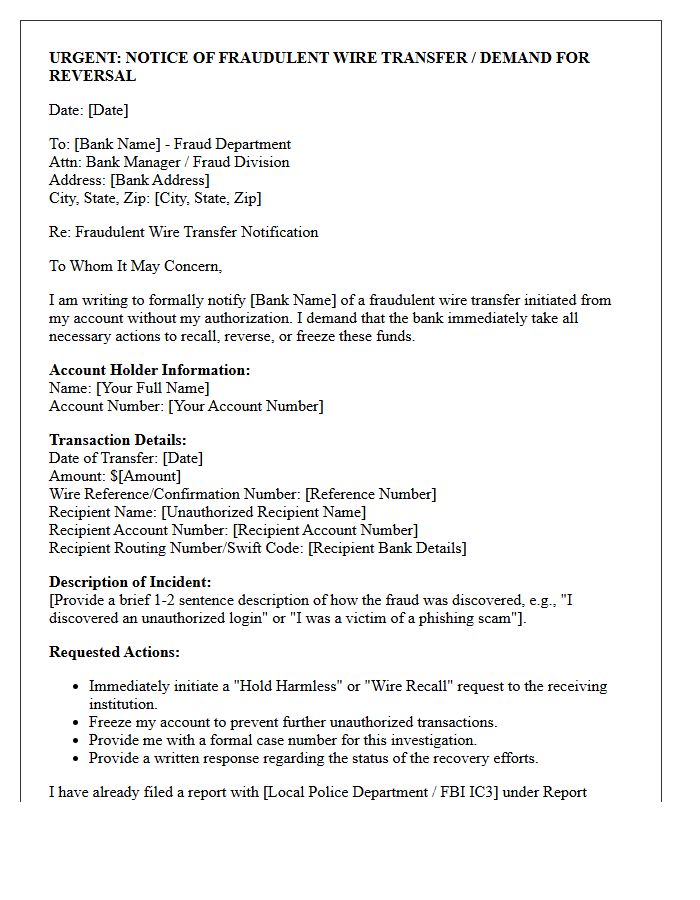
An Initial Notice of Fraudulent Wire Transfer Demand Letter is a critical legal document used to freeze stolen funds immediately after a cybercrime occurs. It formally notifies receiving banks of a wire fraud incident, demanding an urgent recall and administrative hold on the account. Timely delivery is essential for asset recovery, as it establishes a paper trail for potential litigation and alerts compliance officers to suspicious activity. Sending this notice rapidly increases the chances of intercepting unauthorized transfers before cybercriminals can withdraw or redistribute the stolen capital.
Urgent Stop Payment And Recovery Demand Letter
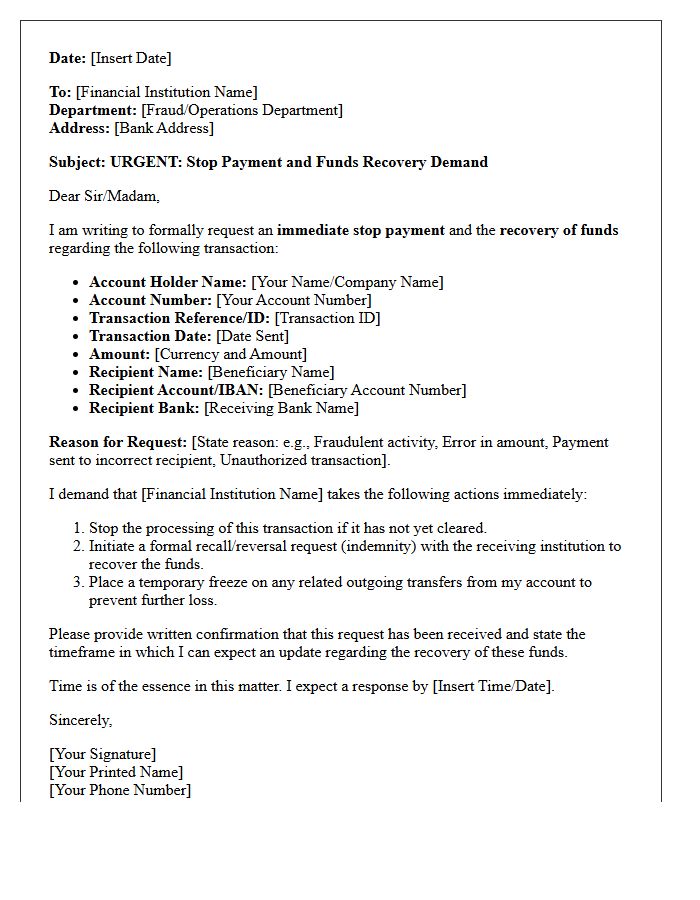
An Urgent Stop Payment And Recovery Demand Letter is a formal legal notice sent to financial institutions or recipients to halt unauthorized transactions. It serves as a critical legal record to mitigate financial loss and initiate the restitution process. To maximize effectiveness, the letter must clearly identify the disputed transaction ID, account details, and the specific legal grounds for the clawback. Promptly issuing this demand is essential for meeting statutory deadlines under banking regulations, ensuring the best chance of successful fund recovery and protecting your consumer rights against fraud.
Formal Demand Letter For Unauthorized Wire Recall
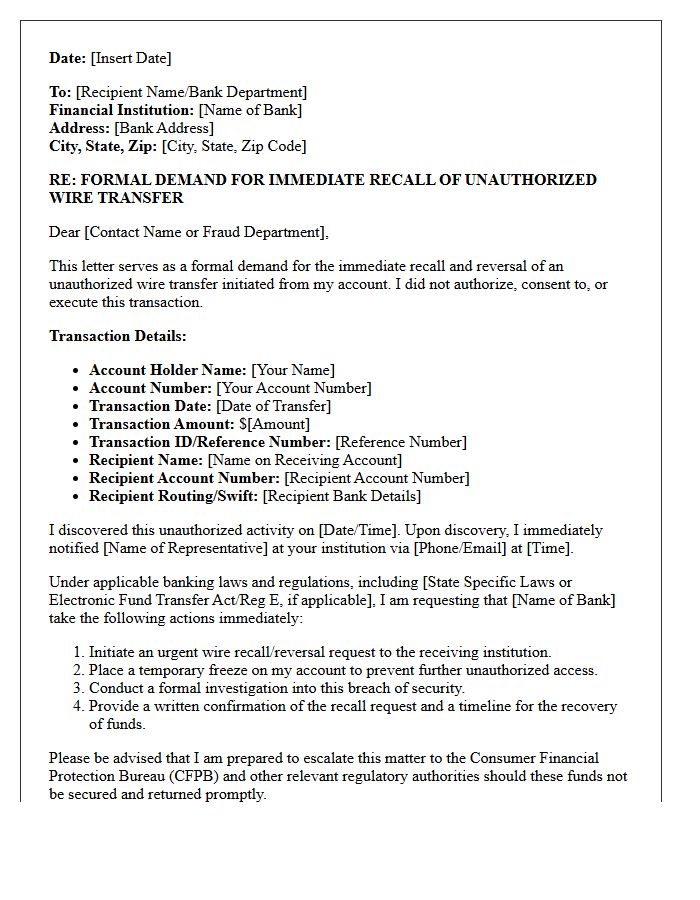
A formal demand letter for an unauthorized wire recall serves as a critical legal notice to a financial institution regarding fraudulent activity. This document must clearly state the transaction details, including the date, amount, and recipient account information. It asserts your right to a fund reversal under electronic transfer laws and provides evidence of non-authorization. Sending this letter via certified mail creates a formal paper trail, forcing the bank to investigate the security breach and initiate the indemnification process to recover lost capital promptly.
Receiving Institution Fraud Recovery Demand Letter
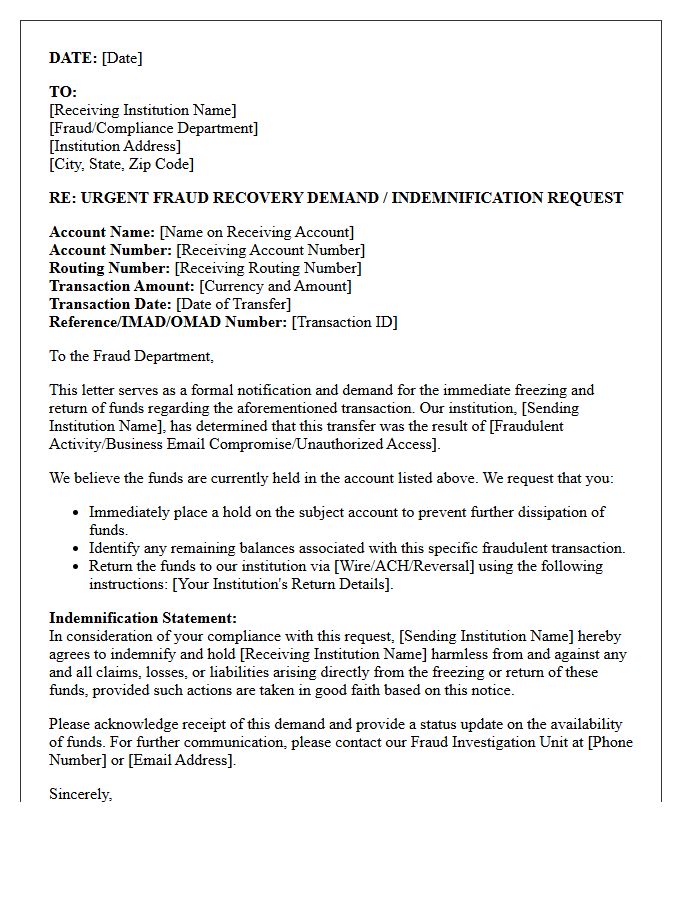
A Receiving Institution Fraud Recovery Demand Letter is a legal notice sent by a victim's bank to the bank that accepted stolen funds. This formal request initiates the indemnification process, demanding the return of assets lost through wire fraud or scams. It serves as critical evidence that the transaction was unauthorized. To maximize the chances of successful restitution, the letter must be sent immediately after detecting the fraud, as it alerts the receiving bank to freeze accounts before the criminal can withdraw or transfer the illicit proceeds elsewhere.
Inter-Bank Fraud Collaboration And Recall Letter
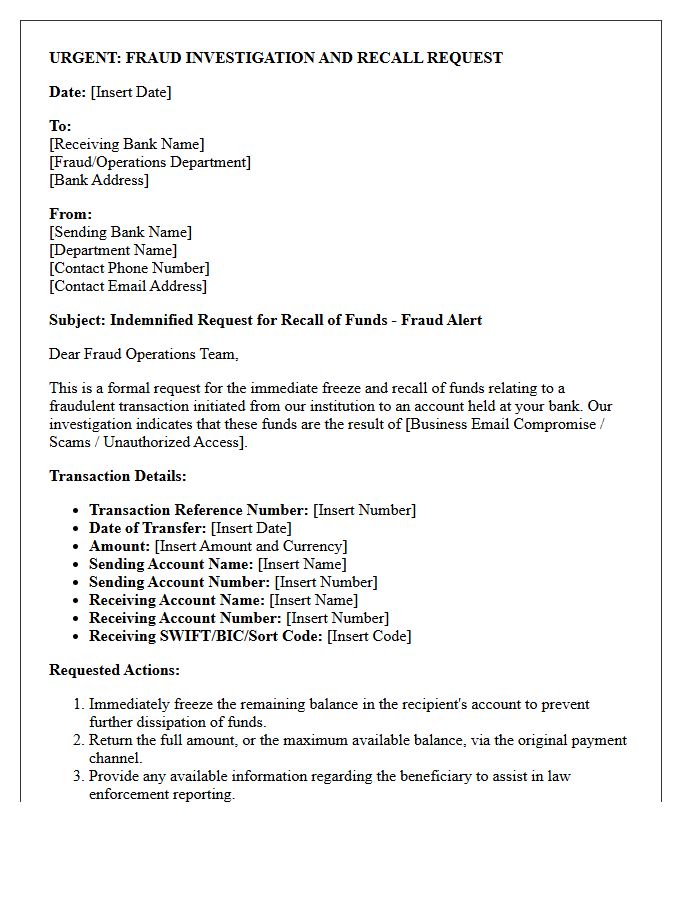
An Inter-Bank Fraud Collaboration is a critical security protocol where financial institutions share real-time data to detect and prevent illicit activities. When a fraudulent transaction occurs, the victim's bank issues a Recall Letter to the receiving bank. This formal request aims to freeze funds and initiate the recovery process. Timely communication between banks is essential to mitigate losses, as these letters serve as the legal foundation for reversing unauthorized transfers. Understanding this collaborative framework is vital for asset protection and maintaining the integrity of the global financial system.
Escalated Legal Demand Letter For Wire Transfer Reversal
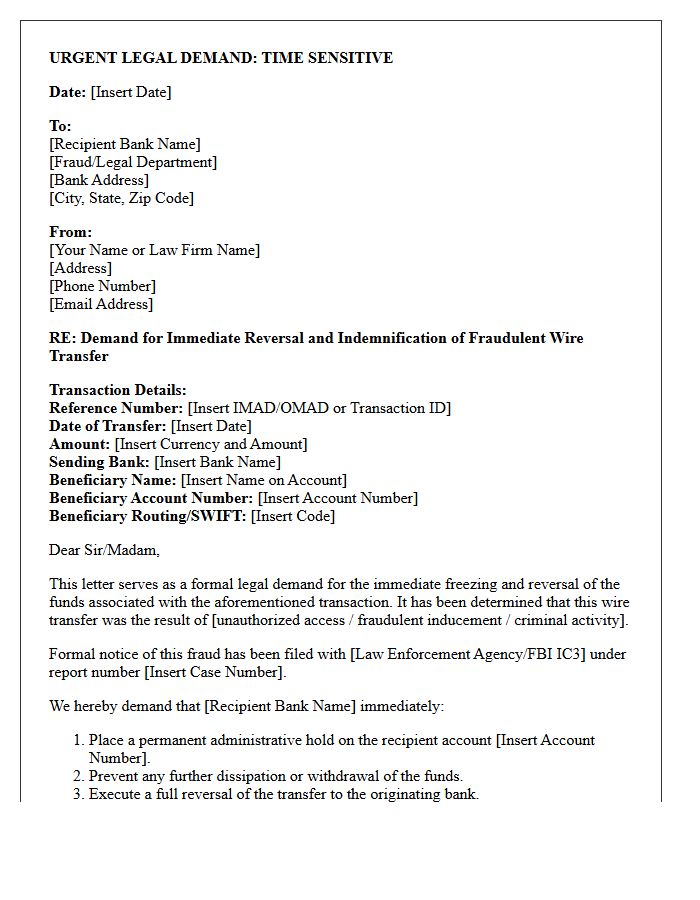
An Escalated Legal Demand Letter is a critical formal notice sent to a financial institution or recipient to compel a wire transfer reversal. It signifies that previous recovery attempts failed and litigation is imminent. The document must clearly cite specific statutes, such as UCC Article 4A, and provide evidence of fraud or error. Time is essential, as banks prioritize requests backed by legal counsel to mitigate liability. Issuing this letter immediately serves as an official record of the dispute, often being the final step required before filing a lawsuit to recover lost funds.
Notice Of Liability And Restitution Demand Letter
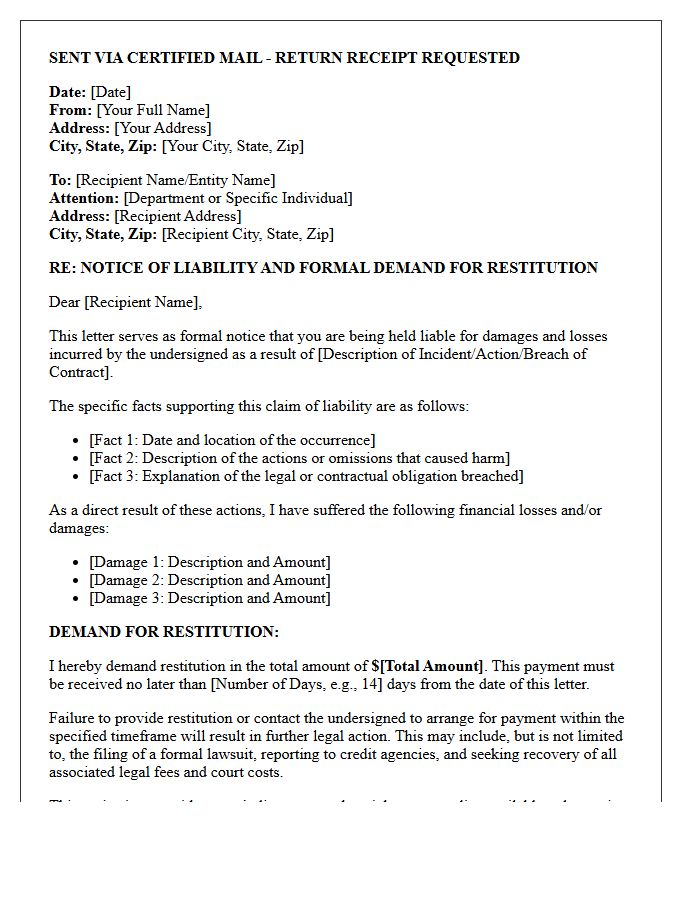
A Notice of Liability and Restitution Demand Letter is a formal legal document used to hold a party accountable for damages. It serves as a pre-litigation requirement, clearly identifying the legal basis for a claim and the specific financial restitution sought. By providing formal notice, the sender establishes a timeline for compliance and creates a documented evidence trail for potential court proceedings. This letter is essential for protecting legal rights and attempting to resolve disputes efficiently through settlement before pursuing formal lawsuits.
Final Pre-Litigation Fraud Recovery Demand Letter
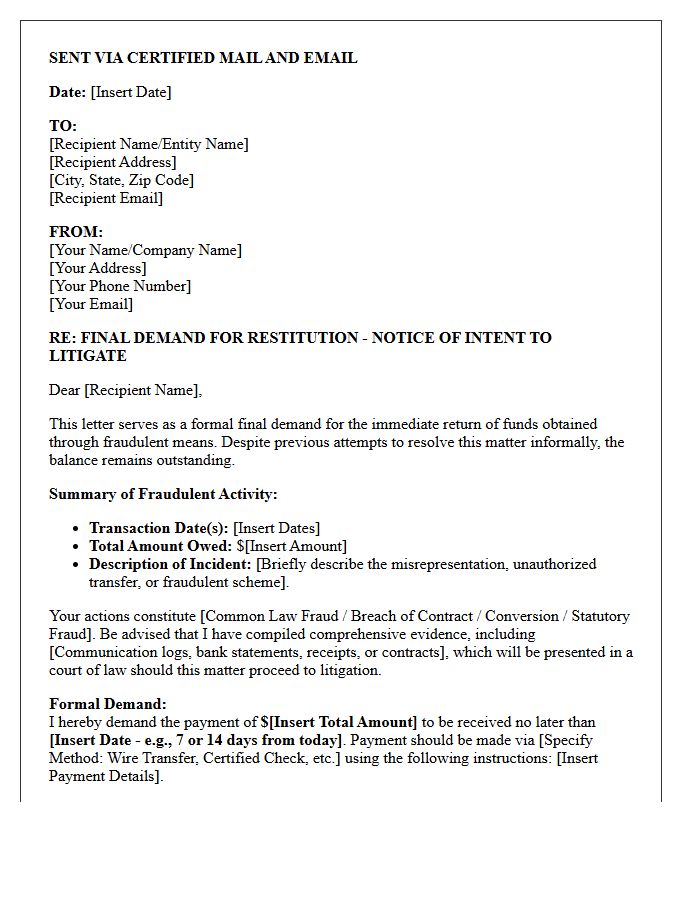
A Final Pre-Litigation Fraud Recovery Demand Letter serves as a formal legal notice to a wrongdoer before initiating a lawsuit. It clearly outlines the specific fraudulent acts, the financial losses incurred, and a strict deadline for restitution. This document is essential for demonstrating a good-faith effort to resolve the dispute out of court. By presenting compelling evidence and a legal ultimatum, it pressures the recipient to settle immediately to avoid costly litigation, public disclosure, and potential criminal referrals. It is a critical step in professional debt and asset recovery strategies.
Regulatory Compliance Escalation Demand Letter
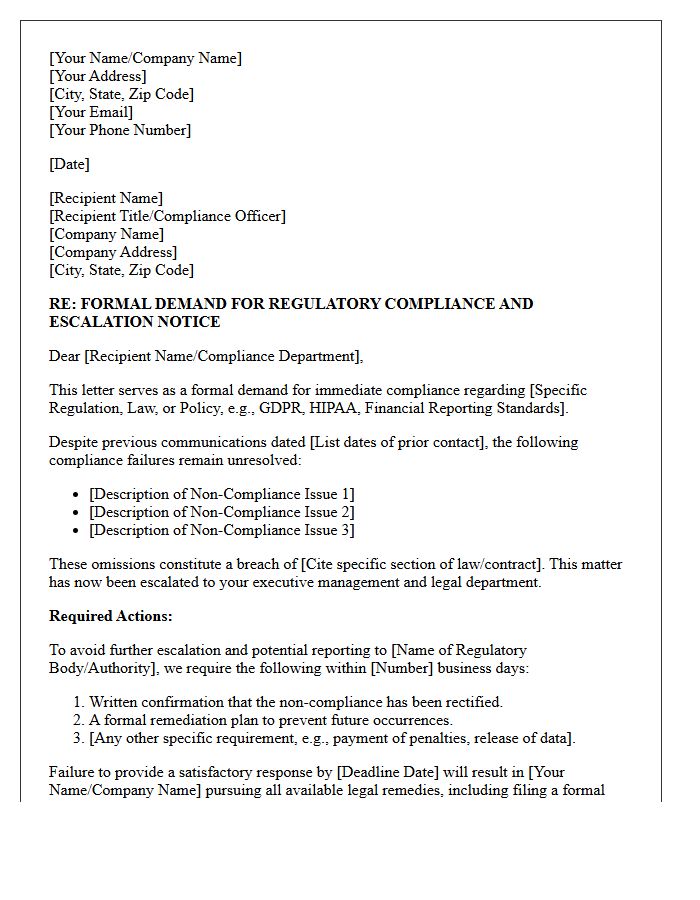
A Regulatory Compliance Escalation Demand Letter serves as a formal notification to a company regarding persistent legal or safety violations. It is a critical tool for mitigating risk before pursuing litigation or reporting to government agencies. The letter outlines specific regulatory failures, demands immediate corrective action, and sets a strict deadline for response. By documenting non-compliance in a structured legal format, it creates a formal record that can be used as evidence. This legal instrument is essential for ensuring accountability and enforcing industry standards within a business environment.
Beneficiary Account Freeze And Reversal Demand Letter
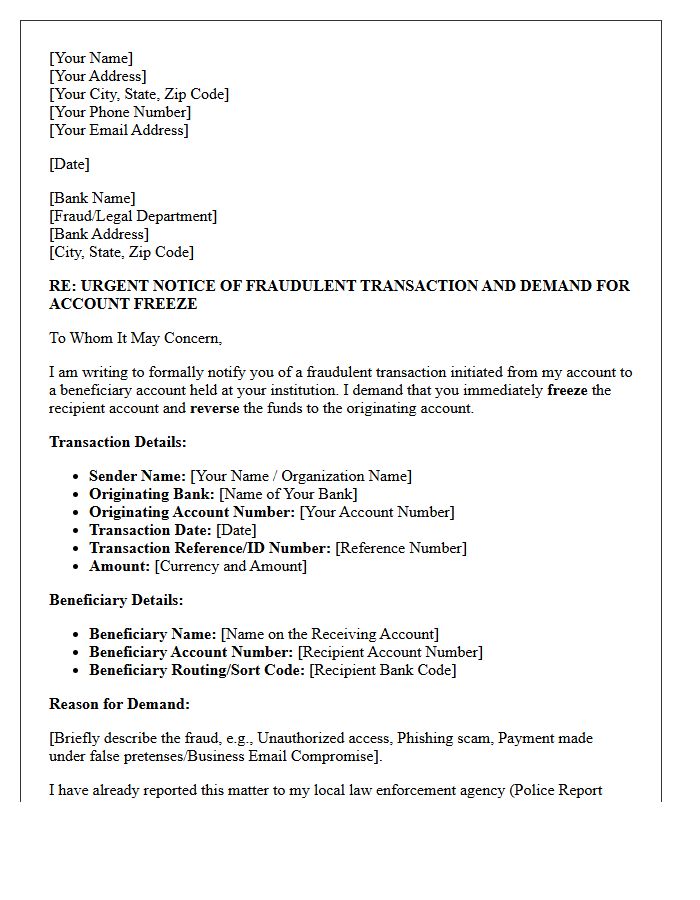
A Beneficiary Account Freeze and Reversal Demand Letter is a formal legal notice used to dispute unauthorized transactions or fraudulent transfers. It demands that a financial institution immediately halt outgoing funds and return them to the rightful owner. Providing specific transaction details and legal justification is essential to compel bank compliance. This document serves as critical evidence for potential litigation or regulatory complaints if the bank fails to act swiftly. Prompt delivery is vital to recover assets before they are withdrawn from the recipient's account.
Wire Recall Request And Indemnity Letter
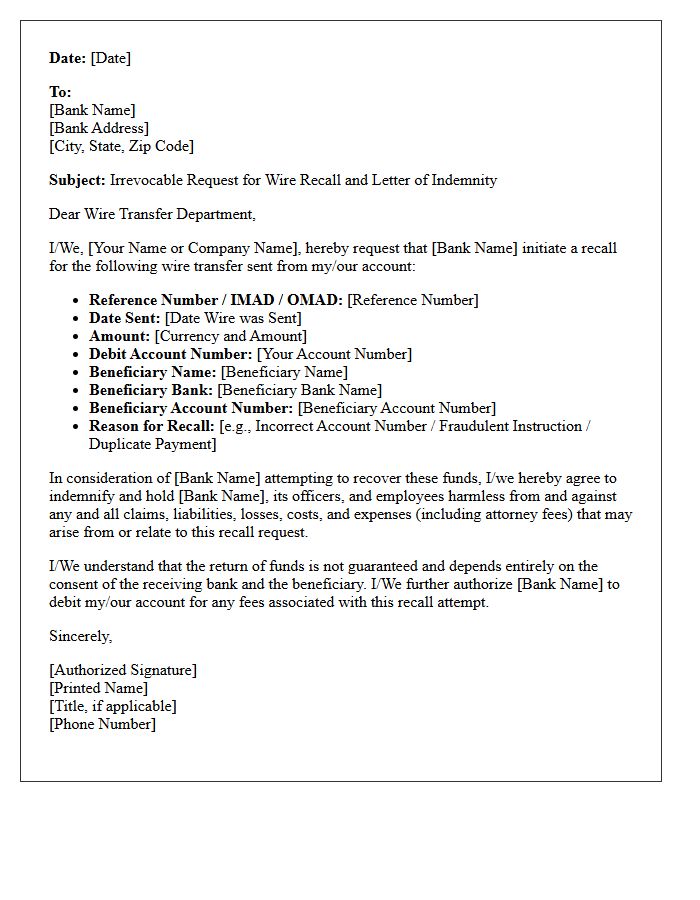
A Wire Recall Request And Indemnity Letter is a formal document sent to a bank to reverse a sent wire transfer. Since wires are generally final, this letter provides a hold harmless agreement, protecting the bank from legal liability if the recall causes losses. It is typically used for erroneous payments or fraud. However, the receiving bank must obtain consent from the recipient before returning funds. Submitting this request immediately is critical, though recovery is never guaranteed once the beneficiary bank has credited the account.
Demand Letter For Swift Recall And Fund Sequestration
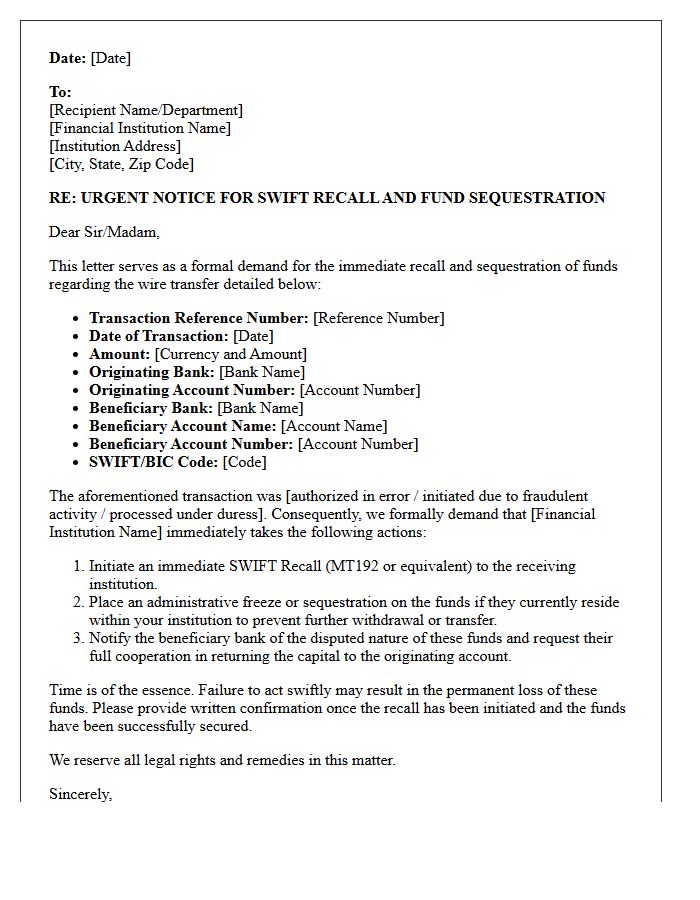
A demand letter for Swift Recall and fund sequestration is a formal legal notification sent to a financial institution to recover misappropriated assets. It serves as an immediate instruction to freeze and secure disputed funds before they are permanently moved. This document is essential in cases of wire fraud or erroneous transfers, acting as a critical step to initiate the clawback process. By demanding immediate sequestration, you provide the necessary legal leverage to hold banks accountable and prevent further loss while investigations proceed.
Compliance Officer Fraud Notification And Demand Letter
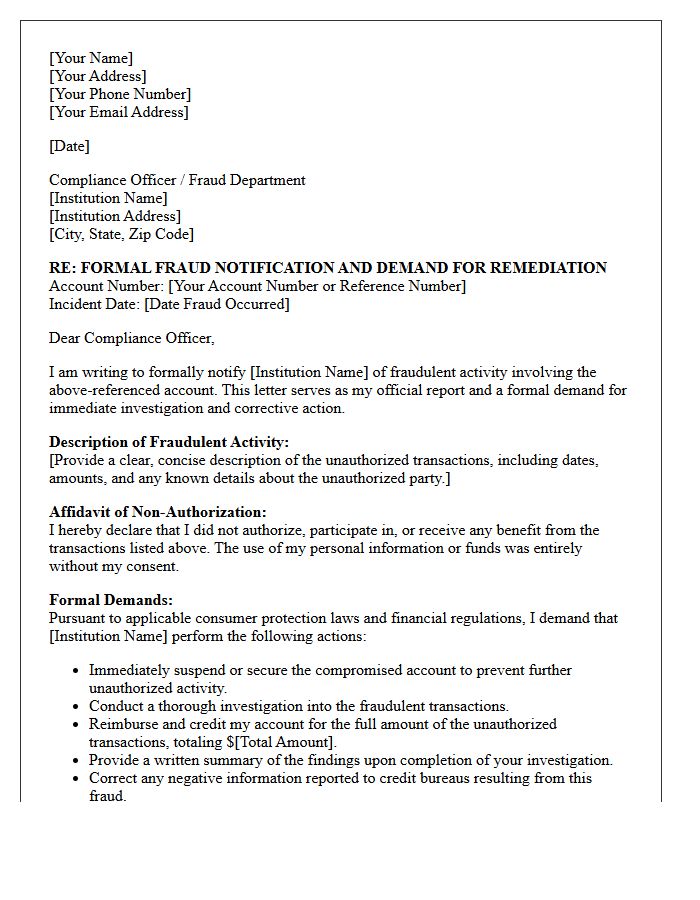
A Compliance Officer Fraud Notification and Demand Letter is a formal legal document used to alert a company of internal financial misconduct or regulatory breaches. It serves as an official record, demanding immediate remediation and the cessation of illegal activities to mitigate corporate liability. This letter is critical for establishing a legal paper trail, protecting whistleblowers, and ensuring that management addresses fraudulent actions promptly. Timely delivery can prevent severe regulatory penalties and safeguard the organization's integrity during potential government investigations or audits.
What is a demand letter for fraudulent wire transfer recovery?
A demand letter is a formal legal document sent to a bank or a recipient to officially notify them of an unauthorized or fraudulent wire transfer. It outlines the details of the fraud, asserts the victim's legal rights, and demands the immediate return of the stolen funds before further legal action is taken.
When should I send a demand letter after a wire transfer scam?
You should send a demand letter as soon as you identify the fraudulent activity, ideally immediately after filing a police report and notifying your financial institution. Prompt notification is critical to potentially freezing the funds before they are withdrawn or moved by the fraudster.
What key details must be included in a wire transfer recovery demand letter?
The letter must include the exact transaction date, the specific amount transferred, the originating and receiving account numbers, the Swift/BIC code, a copy of the police report, and a clear deadline for the funds to be returned to avoid litigation.
Can a demand letter help recover funds from a bank's negligence?
Yes, if a bank failed to follow security protocols, ignored "red flag" indicators of fraud, or failed to act promptly upon notification, a demand letter serves as a formal notice of liability. It establishes the groundwork for a legal claim based on the Electronic Fund Transfer Act (EFTA) or Uniform Commercial Code (UCC) Article 4A.
Is a demand letter legally required before filing a lawsuit for wire fraud?
While not always mandatory by law, many jurisdictions and contracts require a formal notice of dispute before litigation. Sending a demand letter is a strategic first step that demonstrates a good-faith effort to resolve the fraud out of court and provides essential evidence of the request for recovery.

Comments