
Late payment fees can be unexpected and costly, often resulting from simple oversights or technical errors. This guide explains how to effectively submit a request for reversal of late payment fee to protect your credit score and save money. Learn the best communication strategies to negotiate with creditors successfully. Below are some ready to use templates to help you get started.
Image cover: Polite Request for Late Payment Fee Waiver: Professional Templates and Samples
Letter Samples List
- Letter Requesting Reversal of Credit Card Late Payment Fee
- First-Time Offense Late Payment Fee Forgiveness Letter
- Mortgage Late Payment Fee Waiver Request Letter
- Auto Loan Late Fee Reversal Appeal Letter
- Personal Loan Late Payment Penalty Reversal Letter
- Letter for Reversal of Late Payment Fee Due to Bank Error
- Medical Emergency Late Payment Fee Forgiveness Letter
- Loyal Customer Late Payment Fee Waiver Letter
- Letter Requesting Reversal of Late Payment Fee Due to Technical Glitch
- Small Business Account Late Fee Reversal Letter
- Letter of Request for Corporate Credit Card Late Fee Reversal
- Financial Hardship Late Payment Fee Reversal Letter
Letter Requesting Reversal of Credit Card Late Payment Fee
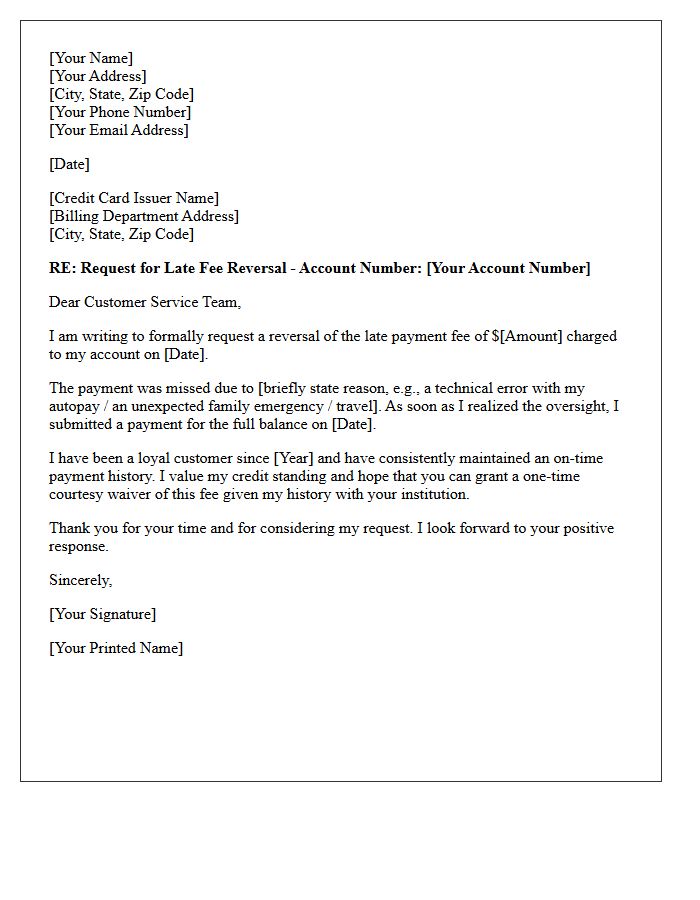
To waive a penalty, write a formal Letter Requesting Reversal of Credit Card Late Payment Fee to your issuer. Clearly state your account details and emphasize a consistent payment history to demonstrate reliability. Explain the specific reason for the delay, such as a technical glitch or emergency, and politely ask for a one-time courtesy adjustment. Mentioning your long-term loyalty as a customer often encourages the bank to grant the waiver. Submit this request promptly through secure messaging or mail to restore your balance and protect your credit score.
First-Time Offense Late Payment Fee Forgiveness Letter
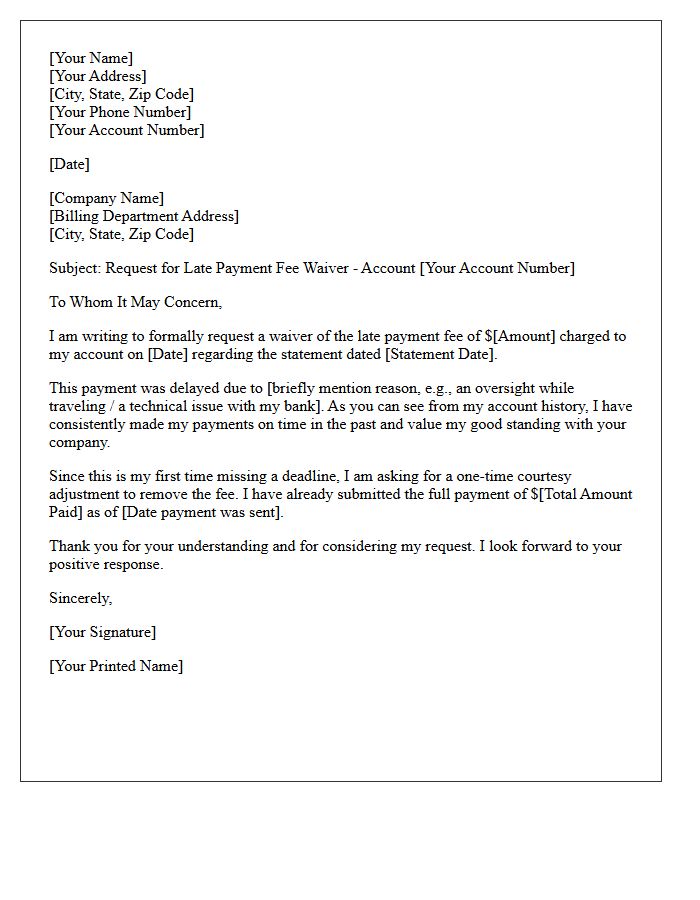
A First-Time Offense Late Payment Fee Forgiveness Letter is a formal request sent to a creditor to waive a penalty due to an isolated oversight. To maximize effectiveness, clearly state your account details, acknowledge the missed deadline, and explain the brief circumstances. Emphasize your consistent history of on-time payments to demonstrate reliability. Politely asking for a courtesy adjustment can protect your credit score and save money. This professional communication reinforces your commitment to future financial responsibility while maintaining a positive relationship with your financial institution or service provider.
Mortgage Late Payment Fee Waiver Request Letter
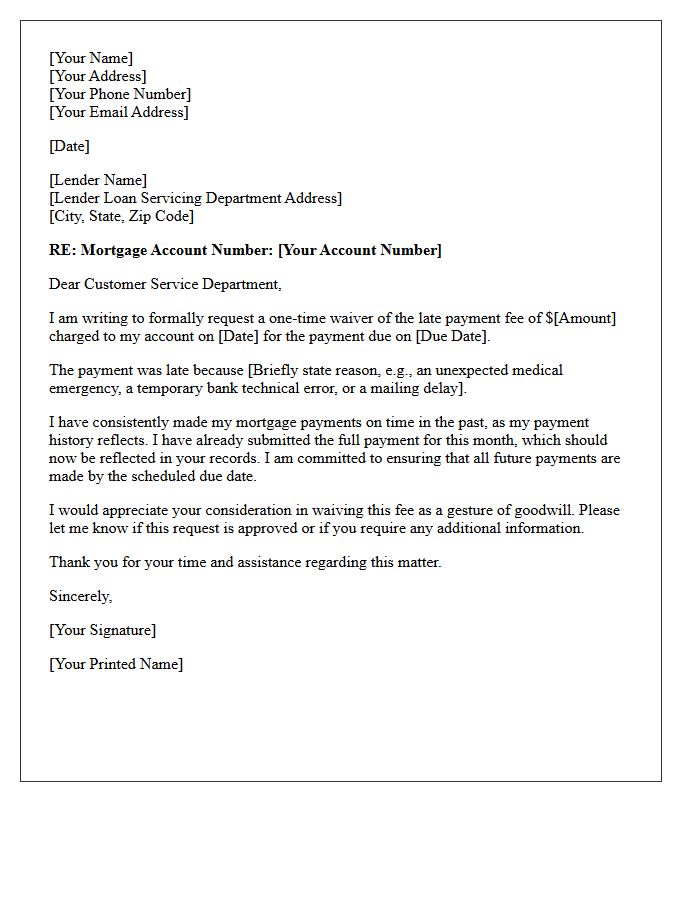
A Mortgage Late Payment Fee Waiver Request Letter is a formal appeal to your lender to cancel penalties incurred due to a missed deadline. To be effective, clearly state your loan number, the specific fee amount, and the reason for the delay, such as a financial hardship or technical error. Emphasize your history of timely payments to demonstrate reliability. Promptly submitting this written request can protect your credit score and maintain a positive relationship with your loan servicer while seeking financial relief during temporary setbacks.
Auto Loan Late Fee Reversal Appeal Letter
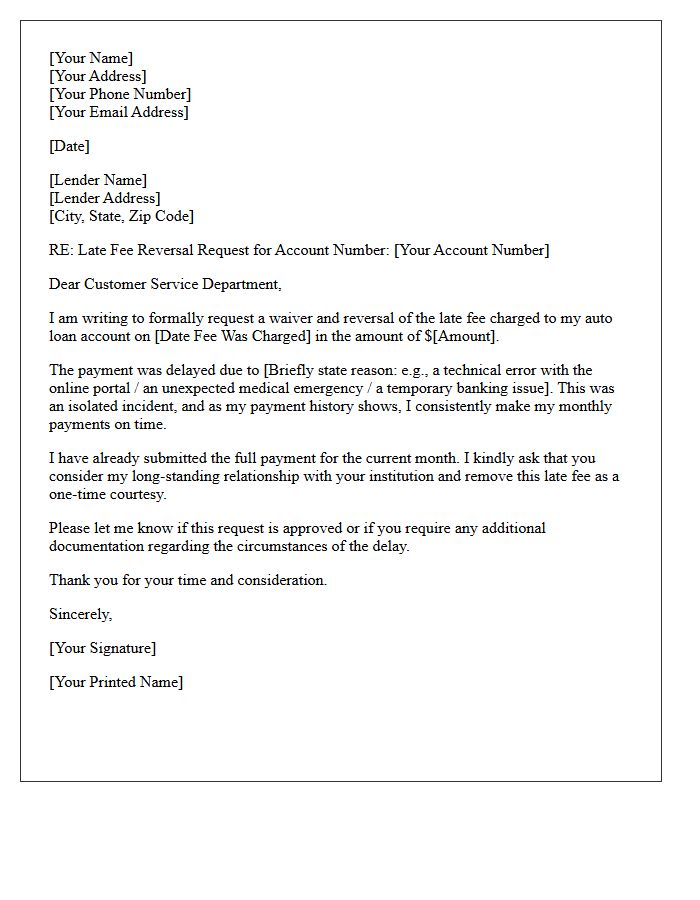
An Auto Loan Late Fee Reversal Appeal Letter is a formal request sent to your lender to waive penalties. To be effective, clearly state your account details and the specific charge amount. Briefly explain the extenuating circumstances, such as a medical emergency or technical glitch, that caused the delay. Emphasize your positive payment history to demonstrate reliability. Providing supporting documentation can significantly increase your chances of success. A professional tone helps maintain a good relationship with the financial institution while potentially saving money and protecting your credit score from negative impacts.
Personal Loan Late Payment Penalty Reversal Letter
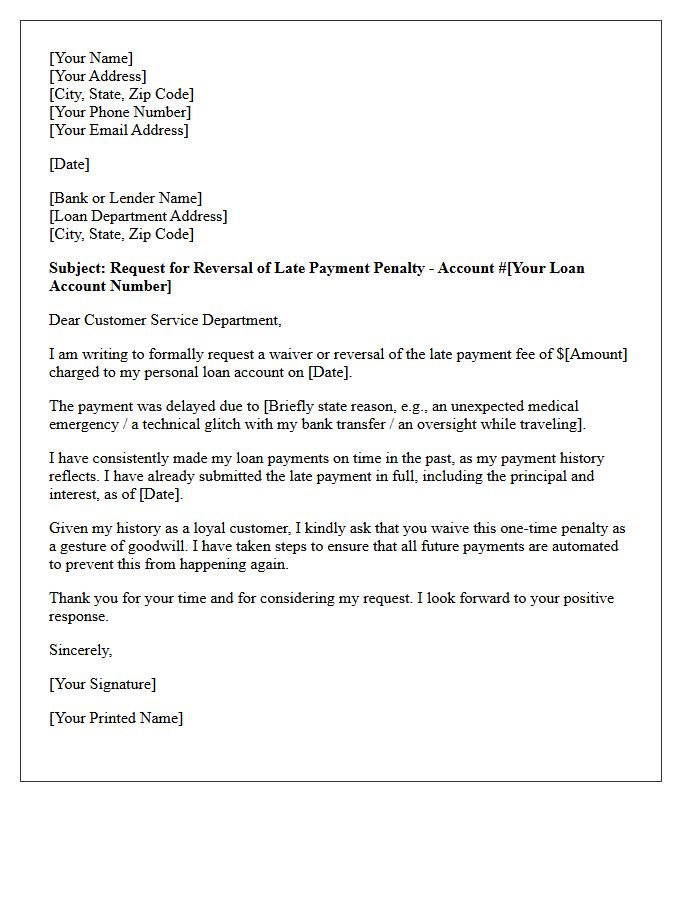
A personal loan late payment penalty reversal letter is a formal request sent to your lender to waive late fees and remove negative credit marks. To be effective, you must clearly explain the extenuating circumstances that caused the delay, such as a medical emergency or technical glitch. Highlighting a consistent history of on-time payments can significantly increase your chances of success. Providing supporting documentation ensures transparency, helping you protect your credit score and maintain a positive relationship with your financial institution while seeking financial relief.
Letter for Reversal of Late Payment Fee Due to Bank Error
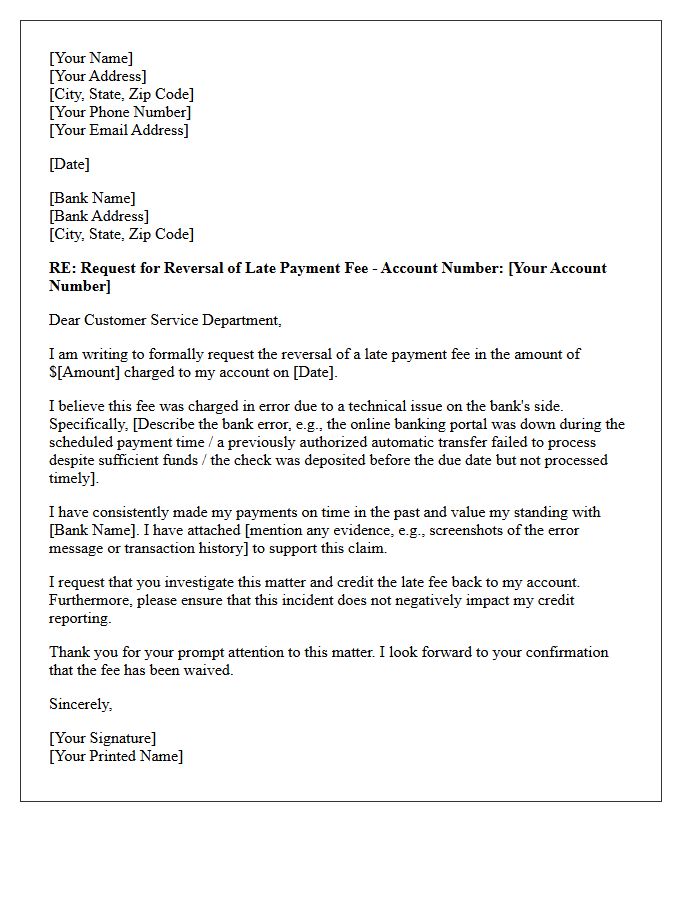
When requesting a reversal of late payment fees caused by a bank error, clarity is essential. You must explicitly state that the banking mistake, such as a technical glitch or processing delay, prevented a timely transaction. Provide specific evidence, including transaction IDs or screenshots, to prove you had sufficient funds. Formally demand a refund to your account and insist on a correction to your credit report to prevent long-term financial damage. Use a professional tone to ensure the institution acknowledges its liability and rectifies the oversight promptly.
Medical Emergency Late Payment Fee Forgiveness Letter
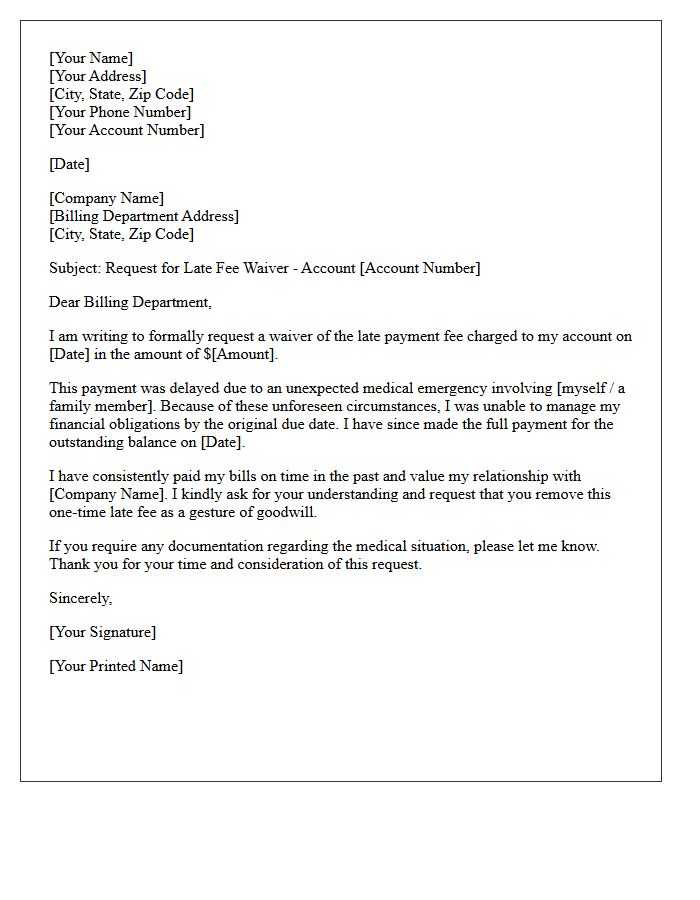
A medical emergency late payment fee forgiveness letter is a formal request to waive penalties due to unforeseen health crises. When drafting this document, clearly explain the medical hardship that prevented timely payment and provide supporting documentation, such as physician notes or hospital records. Maintaining a polite tone while highlighting your consistent payment history increases the likelihood of approval. This letter serves as a critical tool for financial relief, helping patients protect their credit scores and manage unexpected healthcare costs during difficult recovery periods.
Loyal Customer Late Payment Fee Waiver Letter
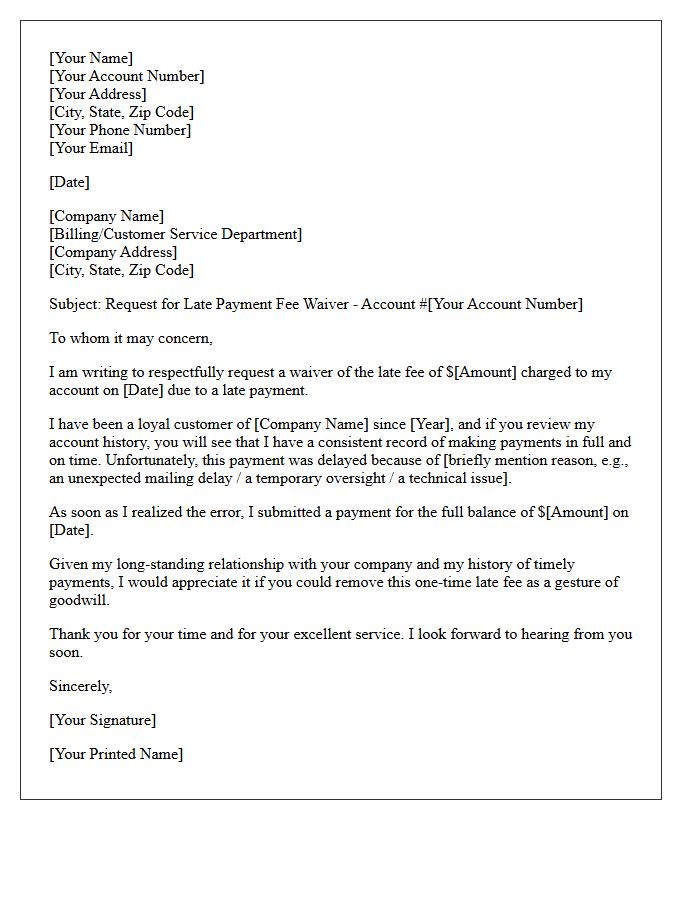
A Loyal Customer Late Payment Fee Waiver Letter is a formal request sent to a creditor to remove a penalty. Highlighting your positive payment history and long-term relationship is essential for success. Clearly state the reason for the oversight, provide the account details, and confirm that the balance has been settled. This document serves as a professional appeal to preserve your credit score and maintain goodwill. By demonstrating accountability, loyal clients can often leverage their track record to secure a one-time courtesy adjustment and avoid unnecessary financial costs.
Letter Requesting Reversal of Late Payment Fee Due to Technical Glitch
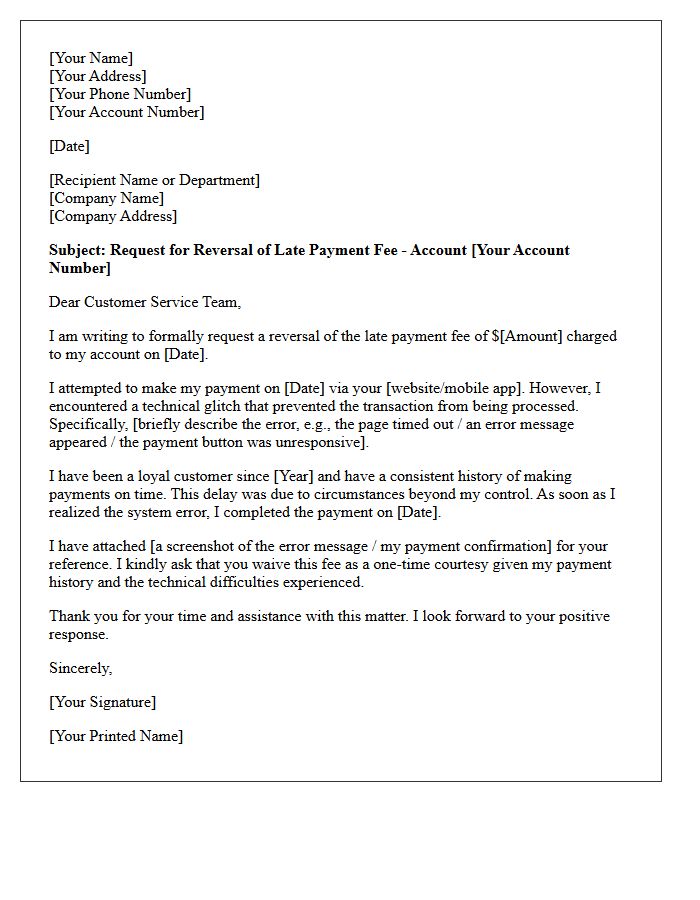
When drafting a formal appeal to waive a penalty, clearly state that a technical glitch prevented your timely transaction. Provide specific details, such as the error message, date, and time of the incident. Emphasize your consistent payment history to demonstrate that the delay was an isolated event beyond your control. Attach supporting evidence like screenshots or system logs to substantiate your claim. Politely request a reversal of the late payment fee to maintain your account standing and credit score integrity, ensuring the service provider understands the fault lies with their infrastructure.
Small Business Account Late Fee Reversal Letter
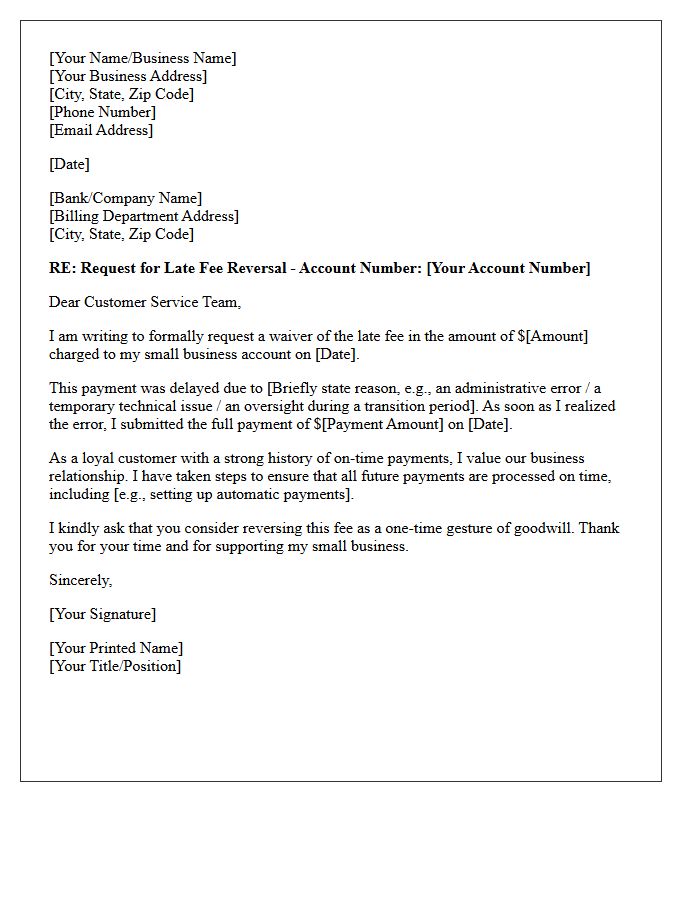
A Small Business Account Late Fee Reversal Letter is a professional request sent to a financial institution to waive penalties. To be effective, the letter should clearly state the account details, the specific fee amount, and a valid justification for the delay. Maintaining a polite tone while highlighting your history as a loyal customer increases the likelihood of approval. Clearly outlining steps taken to prevent future occurrences demonstrates financial responsibility. This formal communication serves as a vital tool for protecting your business's cash flow and maintaining a positive banking relationship.
Letter of Request for Corporate Credit Card Late Fee Reversal
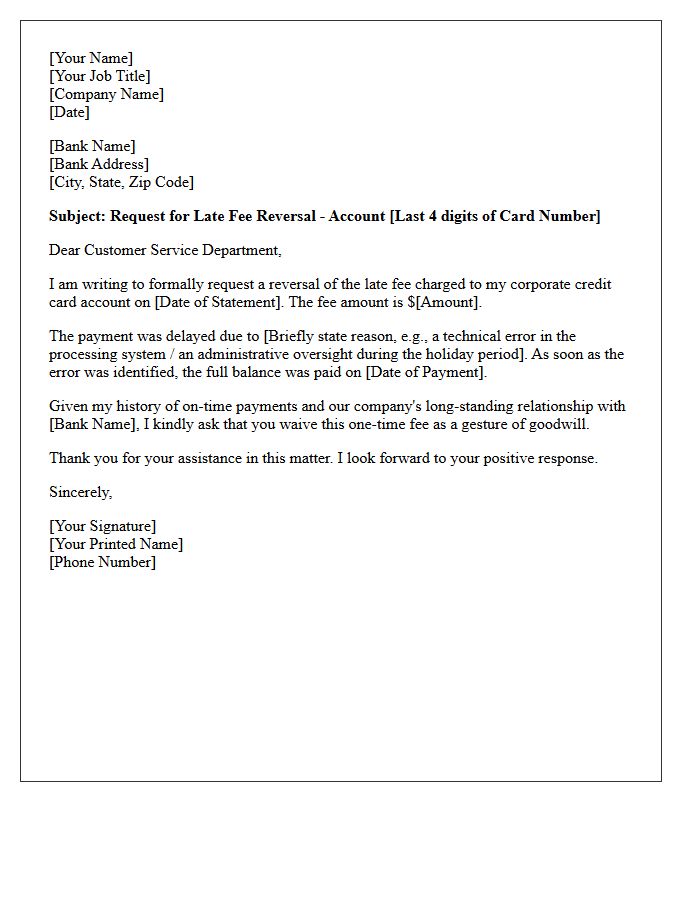
When drafting a Letter of Request for Corporate Credit Card Late Fee Reversal, it is essential to maintain a professional tone. Clearly state your account details and identify the specific charge you wish to waive. Briefly explain the reason for the delay, such as technical glitches or administrative oversight, while highlighting your history of on-time payments. Emphasizing your loyalty as a corporate client encourages the bank to grant a one-time courtesy reversal, protecting your company's credit standing and maintaining a positive financial relationship with the issuer.
Financial Hardship Late Payment Fee Reversal Letter
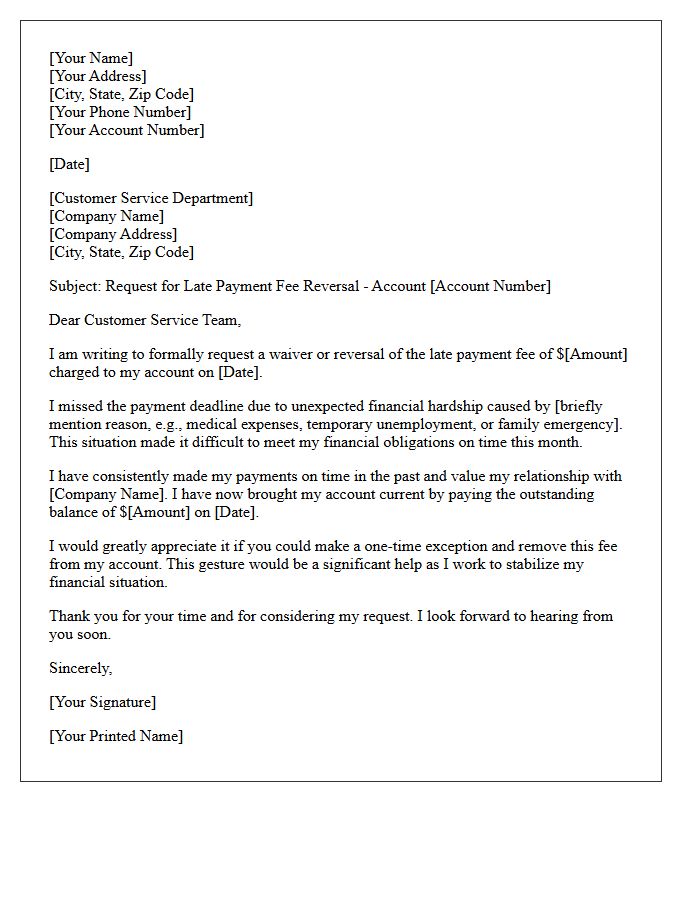
A Financial Hardship Late Payment Fee Reversal Letter is a formal request sent to creditors to waive penalties due to involuntary economic instability. To be effective, the letter must clearly state the specific cause of hardship-such as medical emergencies or job loss-and provide a timeline for returning to regular payments. Professionalism and documented evidence increase your chances of success. Reversing these fees helps protect your credit score and reduces the overall debt burden, making it a critical tool for maintaining long-term financial health during temporary setbacks.
How do I request a reversal of a late payment fee?
To request a reversal, contact our customer service department via phone, secure message, or live chat. Clearly state that you are requesting a one-time fee waiver and provide the reason for the delayed payment.
What are the valid reasons for a late fee waiver?
Commonly accepted reasons for a fee reversal include technical glitches with the payment portal, unexpected postal delays, medical emergencies, or a consistent history of on-time payments. Providing supporting documentation can strengthen your request.
Does a late fee reversal remove the late payment from my credit report?
A fee reversal only cancels the monetary penalty. If the payment was more than 30 days late, you must specifically ask for a "goodwill adjustment" to have the late mark removed from your credit report, as these are handled separately.
How long does it take for a late fee reversal to appear on my account?
Once approved, the credit for the late fee typically appears on your account balance within 24 to 48 hours. However, it may take one to two billing cycles to reflect on your physical or digital monthly statement.
Can I get a late fee waived more than once?
Most financial institutions offer a one-time courtesy waiver for long-standing customers. Frequent requests for reversals are usually denied, as fee waivers are generally reserved for isolated incidents rather than recurring payment issues.

Comments