
Missing a credit card deadline happens, but acting quickly is essential to avoid late fees and penalty interest. A friendly reminder can help you regain control of your finances while maintaining a positive relationship with your bank. Prompt communication is the best way to protect your credit score. To simplify this process, below are some ready to use template.

Image cover: Friendly Payment Reminders: Email Templates and Best Practices for Missed Credit Card Minimums
Letter Samples List
- Friendly Reminder Letter for Missed Credit Card Minimum Payment
- Initial Notice Letter for Overdue Minimum Credit Card Payment
- Gentle Reminder Letter Regarding Missed Credit Card Minimum Due
- First Notice Letter for Outstanding Credit Card Minimum Payment
- Courtesy Reminder Letter for Missed Minimum Credit Card Payment
- Account Update Letter for Overdue Credit Card Minimum Balance
- Polite Notification Letter for Pending Credit Card Minimum Payment
- Standard Courtesy Letter for Missed Credit Card Minimum Obligation
- Early Intervention Letter for Past Due Credit Card Minimum Payment
- Client Communication Letter for Missed Credit Card Minimum Payment
- Grace Period Reminder Letter for Overdue Credit Card Minimum
- Banking Relationship Letter for Missed Credit Card Minimum Payment
Friendly Reminder Letter for Missed Credit Card Minimum Payment
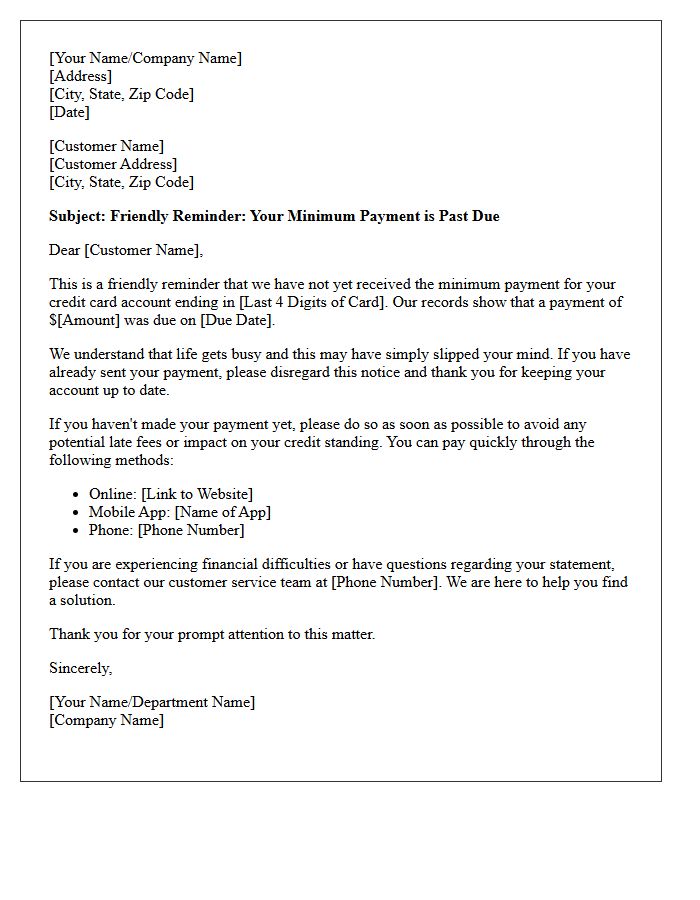
A friendly reminder letter serves as a prompt notification to help you avoid further financial penalties. Missing a minimum credit card payment can lead to late fees and a potential increase in your interest rate. If the delinquency exceeds thirty days, it may negatively impact your credit score. It is essential to settle the outstanding balance immediately to maintain your account in good standing. Most issuers offer a short grace period, so acting quickly ensures you preserve your financial health and prevents long-term credit damage.
Initial Notice Letter for Overdue Minimum Credit Card Payment
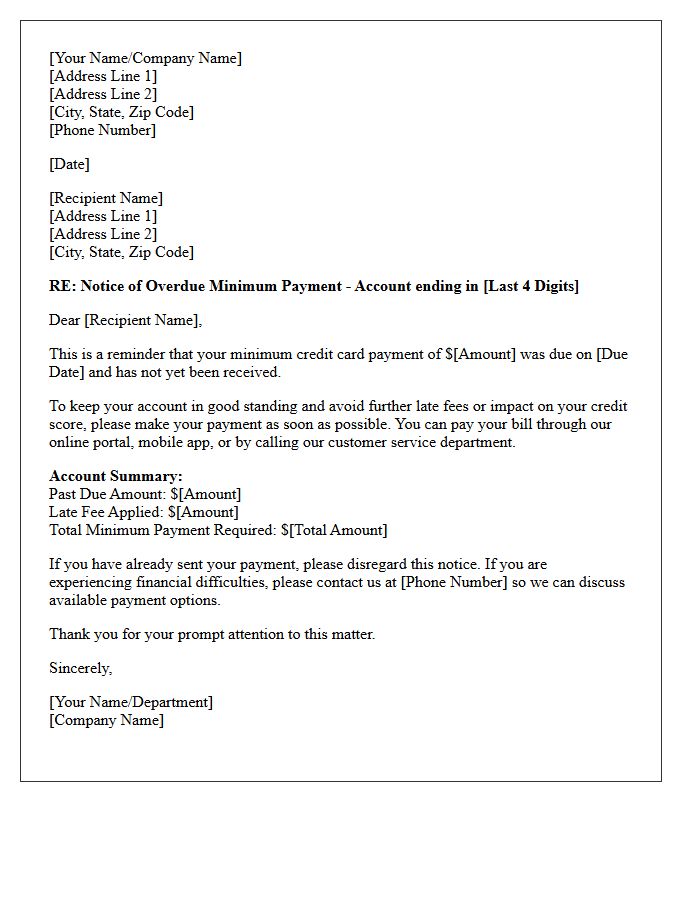
An initial notice letter serves as a formal alert that your account is delinquent due to a missed deadline. Receiving this document means you must immediately pay the minimum amount due to avoid costly late fees and penalty interest rates. Ignoring this warning can lead to negative reporting on your credit score, which stays on your record for years. To protect your financial standing, contact your lender promptly to discuss payment options or potential fee waivers before the delinquency escalates to a formal collection status.
Gentle Reminder Letter Regarding Missed Credit Card Minimum Due
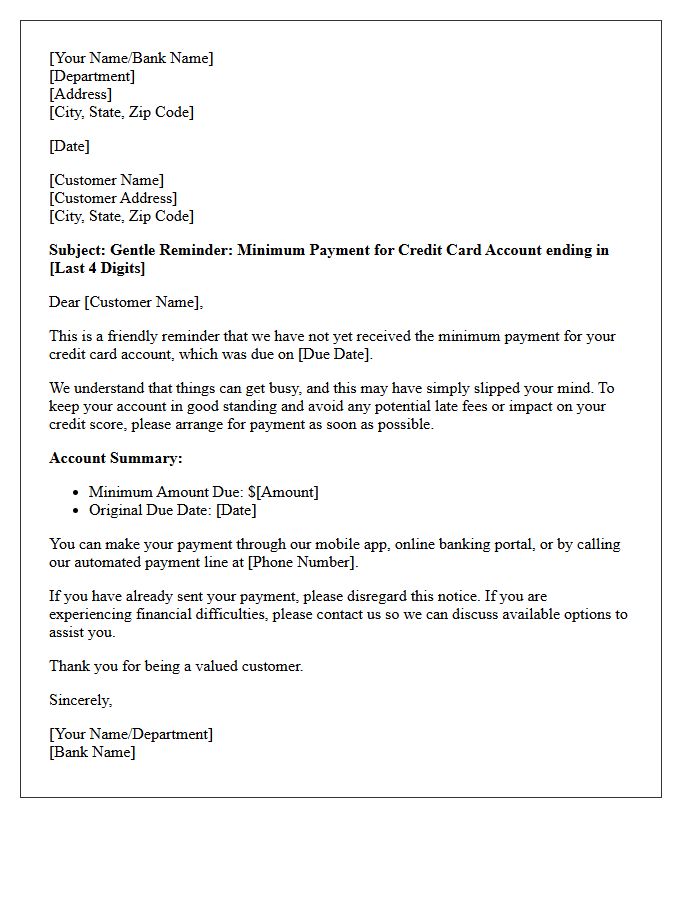
Receiving a gentle reminder letter for a missed credit card minimum due is a critical notification to help you avoid late payment fees and potential interest rate hikes. It serves as a brief grace period to rectify the oversight before the delinquency is reported to credit bureaus, which could negatively impact your credit score. Acting immediately upon receipt ensures your account remains in good standing. Always verify the payment details to maintain your financial health and prevent further collection actions or penalties from your banking institution.
First Notice Letter for Outstanding Credit Card Minimum Payment
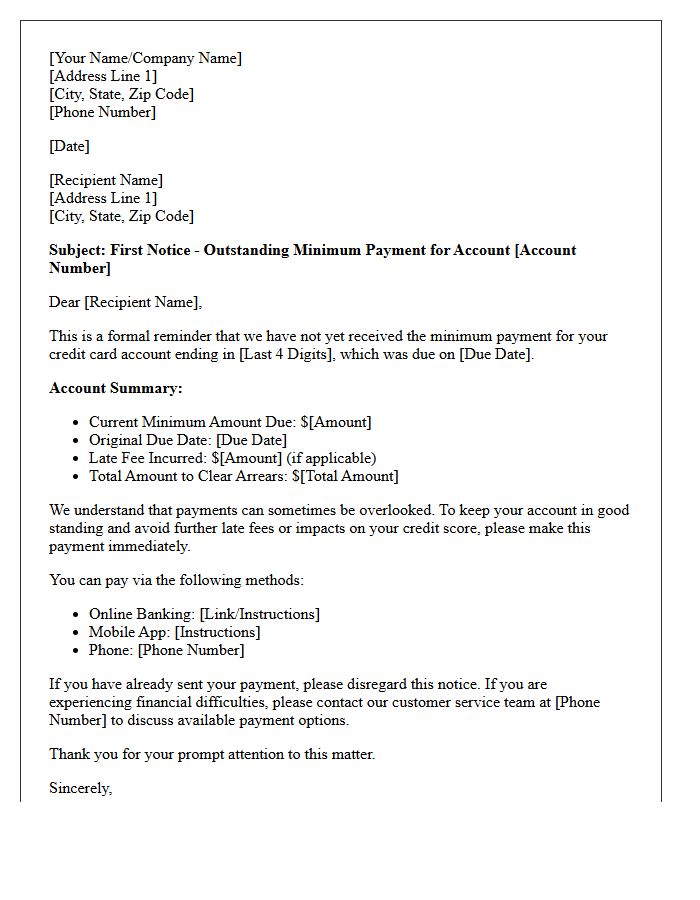
A First Notice Letter is a formal notification issued by your bank when you miss a credit card minimum payment. This document alerts you to the delinquency status of your account and specifies the outstanding balance plus potential late fees. Ignoring this notice can lead to credit score damage, increased interest rates, and eventual collection actions. It is crucial to address this immediately by making the payment or contacting the lender to arrange a repayment plan, ensuring your account returns to good standing and avoiding further financial penalties.
Courtesy Reminder Letter for Missed Minimum Credit Card Payment
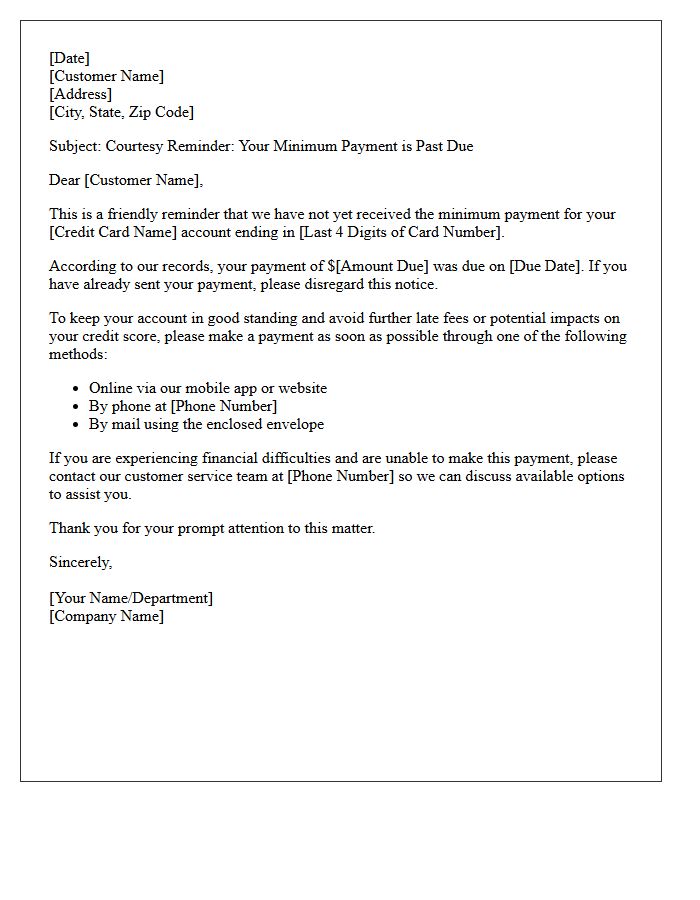
A courtesy reminder letter for a missed minimum credit card payment serves as an urgent notice to prevent financial penalties. Receiving this means your account is past due, which could trigger late fees and a higher penalty APR. To protect your credit score from significant damage, you must act immediately. Most issuers offer a short grace period before reporting the delinquency to credit bureaus. Paying the minimum balance right away helps maintain your account standing and avoids the long-term consequences of a recorded late payment on your history.
Account Update Letter for Overdue Credit Card Minimum Balance
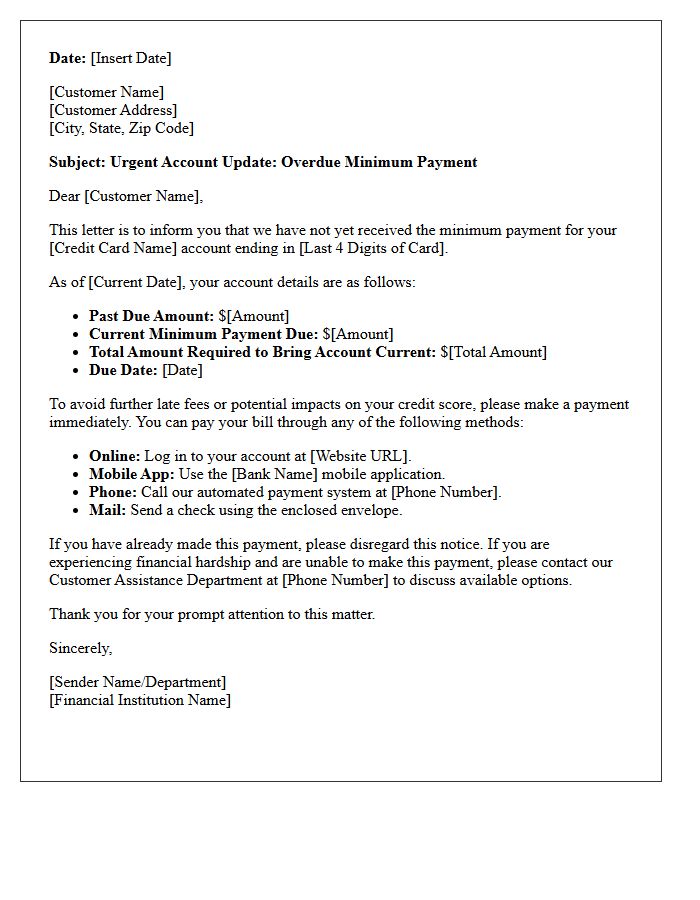
An Account Update Letter serves as a formal notification that your credit card has an overdue minimum balance. This document outlines the specific amount required to bring the account current and the final deadline to avoid penalties. Ignoring this notice can lead to late fees, increased interest rates, and negative reports to credit bureaus. To protect your credit score and maintain account standing, you should remit the requested payment immediately or contact the issuer to discuss a repayment plan and prevent further collection actions.
Polite Notification Letter for Pending Credit Card Minimum Payment
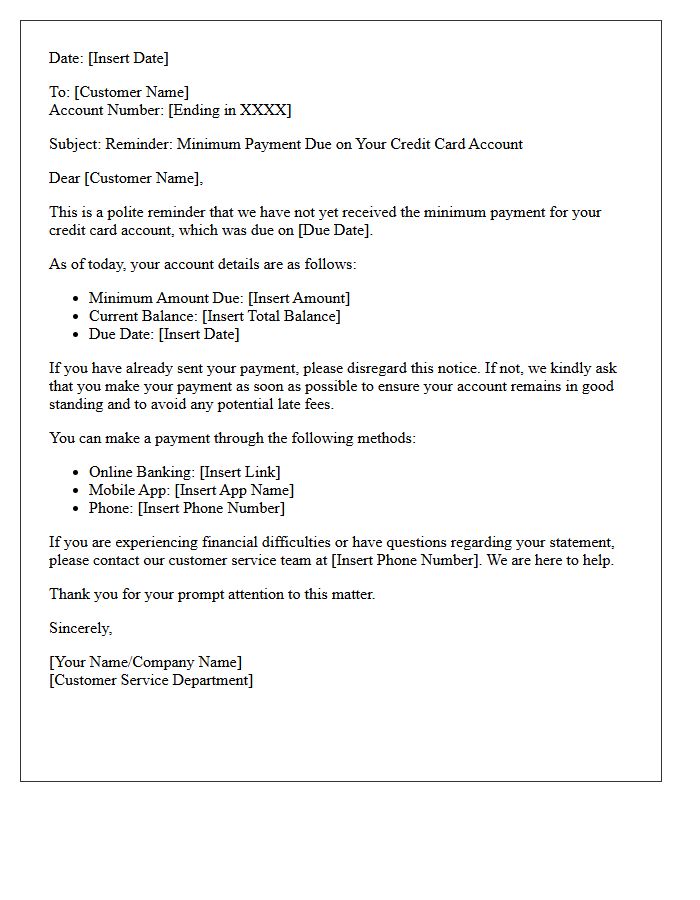
A polite notification letter serves as a courtesy reminder to help you avoid late payment fees and negative impacts on your credit score. This communication typically highlights the minimum amount due and the upcoming deadline. It is important to act quickly because missing this payment can trigger higher interest rates or penalty charges. If you are experiencing financial hardship, contact your bank immediately upon receipt. Timely action ensures your account remains in good standing while maintaining a positive relationship with your financial institution and protecting your long-term credit health.
Standard Courtesy Letter for Missed Credit Card Minimum Obligation
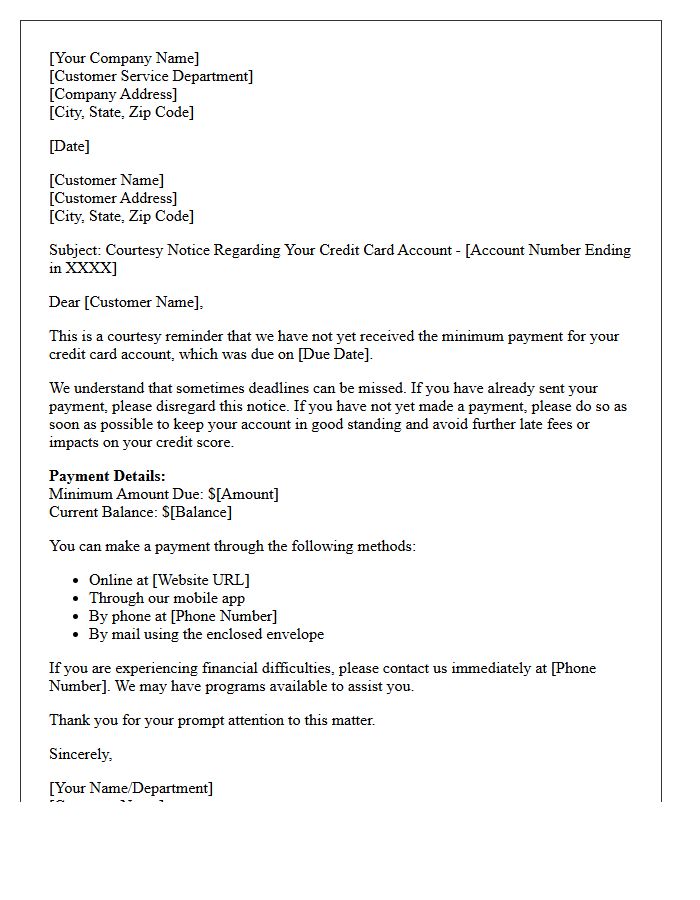
A Standard Courtesy Letter is a formal notification issued by creditors when a minimum payment is missed. This document serves as a gentle reminder to rectify the delinquency before it impacts your credit score or incurs late fees. It outlines the outstanding balance, due date, and potential consequences of continued non-payment. Proactively addressing this notice helps maintain a positive credit history and prevents the account from entering formal collections. Always contact your lender immediately after receiving one to discuss repayment options or hardship assistance.
Early Intervention Letter for Past Due Credit Card Minimum Payment
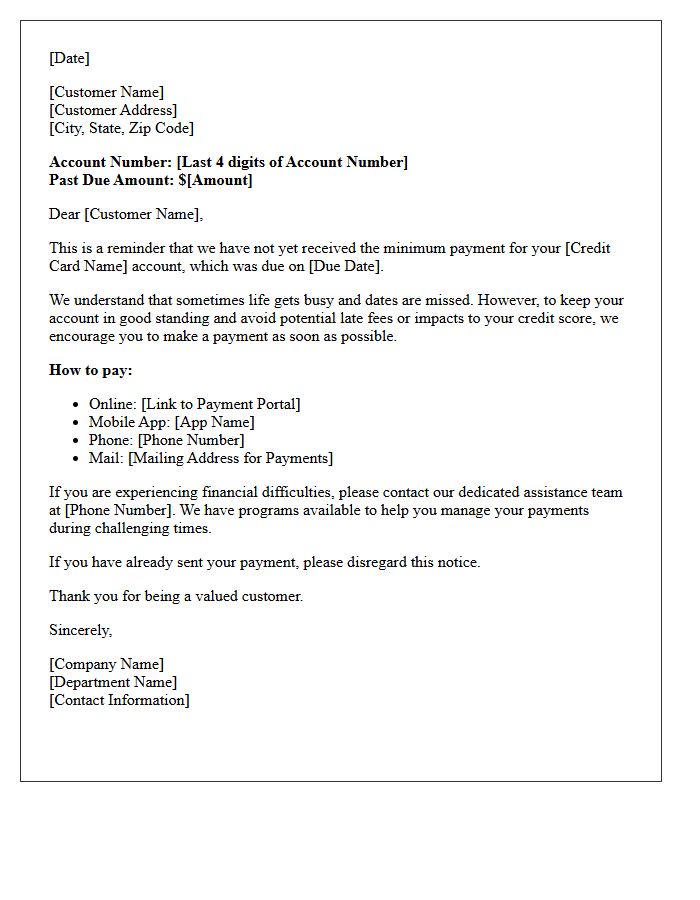
An early intervention letter is a proactive notice sent by issuers when a credit card minimum payment is missed. Its primary goal is to prevent accounts from falling into delinquency by offering immediate assistance. These letters often contain repayment options, budget counseling resources, and warnings about potential credit score impacts. Promptly responding to this communication can help you avoid late fees and protect your financial standing. Addressing the issue early allows for debt management solutions before the account is formally charged off or sent to collections.
Client Communication Letter for Missed Credit Card Minimum Payment
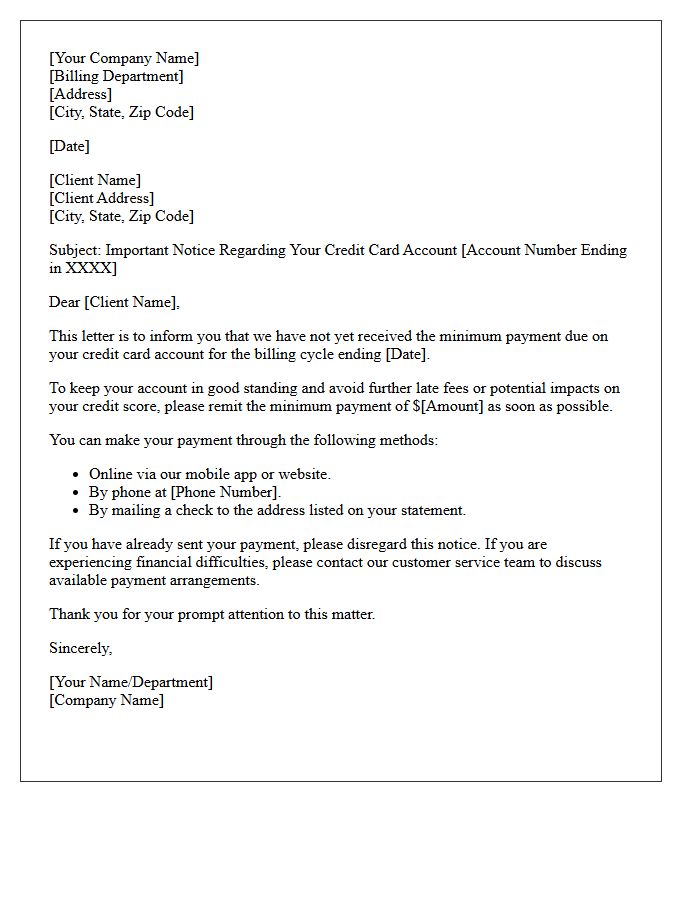
A client communication letter for a missed credit card minimum payment serves as a critical notice to prevent further financial escalation. It must clearly state the overdue balance, applicable late fees, and the immediate deadline to avoid negative reporting to credit bureaus. Providing flexible repayment options or hardship assistance can help preserve the customer relationship while encouraging prompt action. Professionalism and clarity are essential to ensure the cardholder understands the impact on their credit score and the necessity of maintaining consistent payment habits to regain account standing.
Grace Period Reminder Letter for Overdue Credit Card Minimum
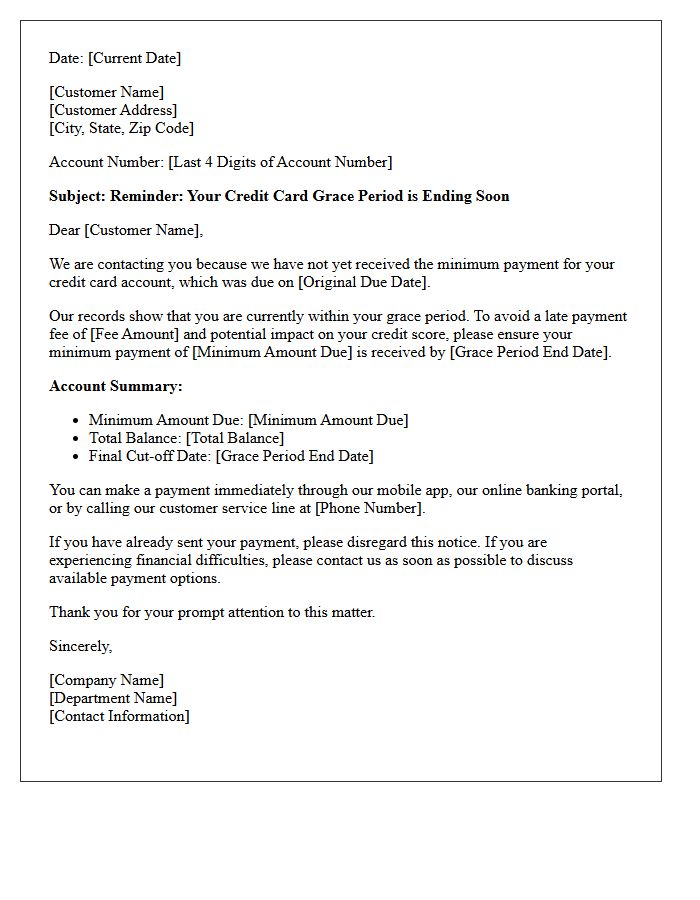
A Grace Period Reminder Letter serves as a formal notification that your credit card minimum payment is past due. It informs you that the standard interest-free window has closed, and accrued interest will now apply to your balance. Acting immediately helps you avoid late payment fees and prevents negative reports to credit bureaus. This document provides a final opportunity to settle the overdue amount and restore your account standing before facing penalty interest rates or potential credit score damage. Prioritize payment to maintain financial health.
Banking Relationship Letter for Missed Credit Card Minimum Payment
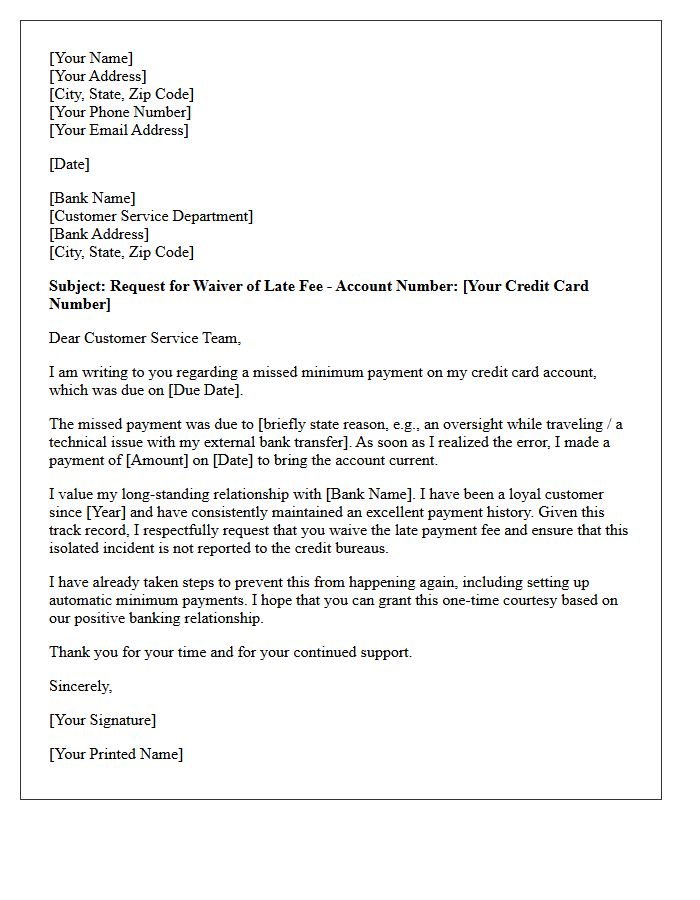
A banking relationship letter for a missed credit card minimum payment serves as a formal notification regarding your account delinquency. It highlights the immediate requirement to settle the outstanding balance to prevent penalty fees and increased interest rates. Maintaining a positive credit standing is crucial, as consistent defaults can lead to reported credit score damage or account closure. Proactive communication with your bank may facilitate a payment plan or fee waiver, helping to preserve your long-term financial relationship and overall borrowing eligibility.
What should I do if I missed my credit card minimum payment deadline?
If you missed your payment, the best first step is to make the payment as soon as possible through your online portal or mobile app. Once paid, you may wish to contact customer service to let them know the payment is on its way and ask if they can offer a one-time waiver for any late fees.
Will a single missed minimum payment affect my credit score?
Most credit card issuers only report payments to credit bureaus once they are 30 days past due. If you make your payment before that 30-day window closes, it is unlikely to negatively impact your credit score, though you may still be subject to a late fee from the bank.
Are there late fees for missing the minimum payment due date?
Yes, most credit card agreements include a late fee for missed payments. However, if you have a history of on-time payments, many issuers are willing to waive this fee as a courtesy if you call and resolve the balance immediately.
How can I avoid missing my credit card payments in the future?
The most effective way to ensure on-time payments is to set up "Auto-Pay" for at least the minimum amount due. Additionally, you can enable text or email reminders through your bank's mobile app to notify you a few days before your statement is due.
Does missing a payment increase my credit card interest rate?
If a payment is significantly late (usually 60 days or more), some issuers may apply a "penalty APR," which is a higher interest rate. Making your payment immediately helps you avoid this penalty and keeps your standard interest rate intact.


Comments