
A mortgage grace period typically offers a fifteen-day window to submit your payment without penalty. Once this timeframe ends, lenders apply late fees and report delinquencies to credit bureaus, potentially damaging your credit score. Understanding your loan terms is vital to avoiding financial setbacks and protecting your home equity. To help you communicate effectively with your lender, below are some ready to use template.
Image cover: Mortgage Grace Period Expiration: Official Notice Templates and Samples
Letter Samples List
- Standard Mortgage Grace Period Expiration Letter
- Urgent Mortgage Payment Grace Period Expiration Letter
- Final Warning Grace Period Expiration Letter
- Commercial Mortgage Grace Period Expiration Letter
- Residential Mortgage Grace Period Expiration Letter
- Impending Grace Period Expiration Reminder Letter
- Grace Period Expiration and Late Fee Assessment Letter
- Delinquent Account Grace Period Expiration Letter
- Grace Period Expiration Default Warning Letter
- Post-Grace Period Expiration Penalty Letter
- Initial Notice of Grace Period Expiration Letter
- Grace Period Expiration and Action Required Letter
Standard Mortgage Grace Period Expiration Letter
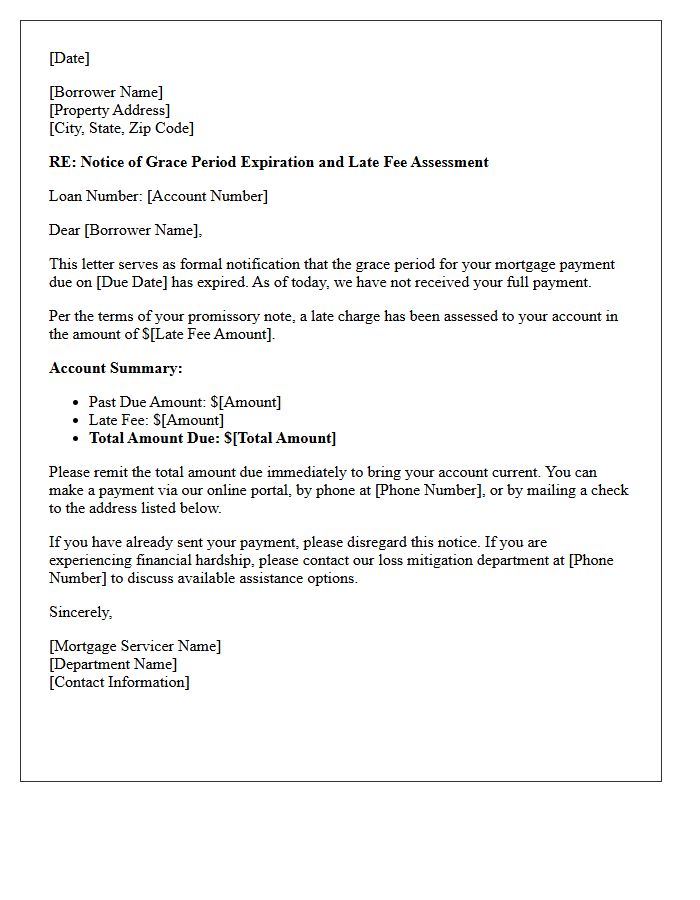
A Standard Mortgage Grace Period Expiration Letter notifies borrowers that their monthly payment deadline has passed without receipt of funds. This formal notice confirms the late payment status and marks the end of the grace period, typically fifteen days. Receiving this document signifies that late fees are now being assessed and your credit score may be at risk. It serves as a final warning to settle the outstanding balance immediately to avoid further penalties or the commencement of formal foreclosure proceedings. Timely communication with your lender is essential to resolve delinquency.
Urgent Mortgage Payment Grace Period Expiration Letter
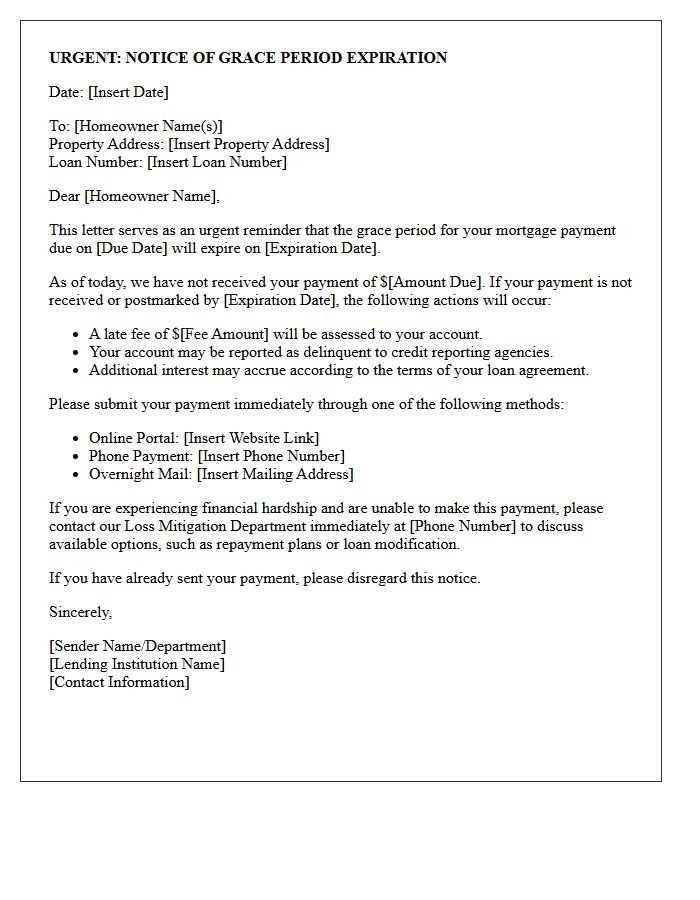
Receiving an Urgent Mortgage Payment Grace Period Expiration Letter signifies that your temporary window to pay without penalty is closing. This formal notice warns that failure to submit the outstanding balance immediately will result in late fees and negative reports to credit bureaus. To protect your home and financial standing, you must prioritize this missed payment to avoid the initiation of foreclosure proceedings. Contacting your loan servicer immediately to discuss loss mitigation options is essential if you are experiencing long-term financial hardship or cannot meet the upcoming deadline.
Final Warning Grace Period Expiration Letter
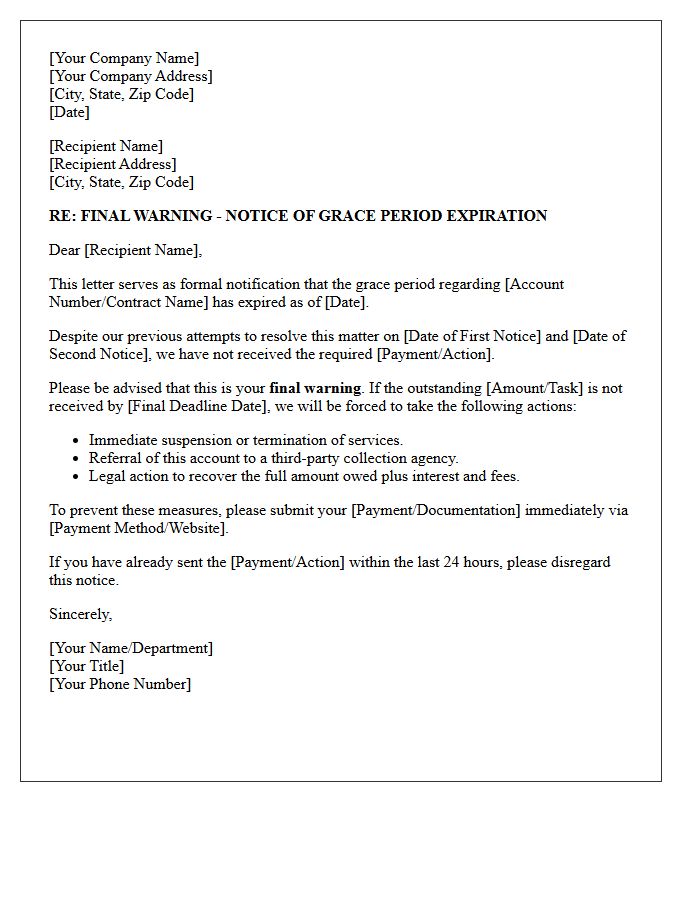
A Final Warning Grace Period Expiration Letter is a critical formal notice indicating that the deadline for remedial action has arrived. This document serves as the last opportunity for a recipient to resolve an outstanding default or breach before legal or administrative consequences commence. It clearly outlines the necessary steps to achieve compliance, the specific expiration date, and the subsequent penalties for non-compliance. Understanding this letter is essential, as it marks the absolute end of leniency, signaling the immediate transition toward formal enforcement or contract termination.
Commercial Mortgage Grace Period Expiration Letter
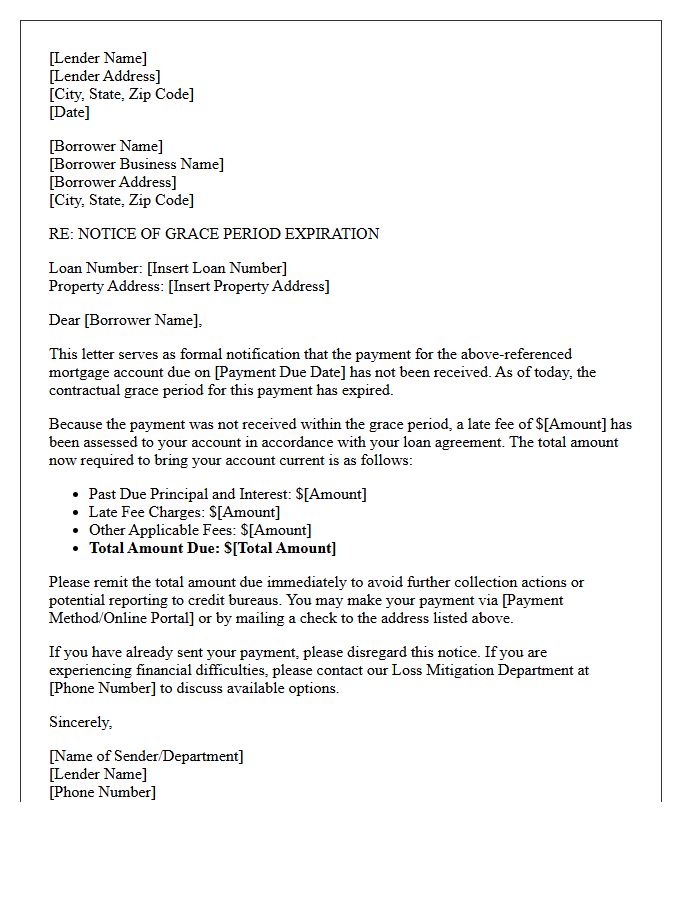
A Commercial Mortgage Grace Period Expiration Letter is a formal notice sent by lenders when a borrower fails to submit a payment by the agreed due date. This document warns that the grace period is ending, after which late fees will be assessed and a default may be recorded. It serves as a critical final reminder to rectify the delinquency before the lender initiates foreclosure proceedings or legal action. Borrowers should prioritize immediate communication with their servicer upon receipt to negotiate repayment terms and protect their credit rating.
Residential Mortgage Grace Period Expiration Letter
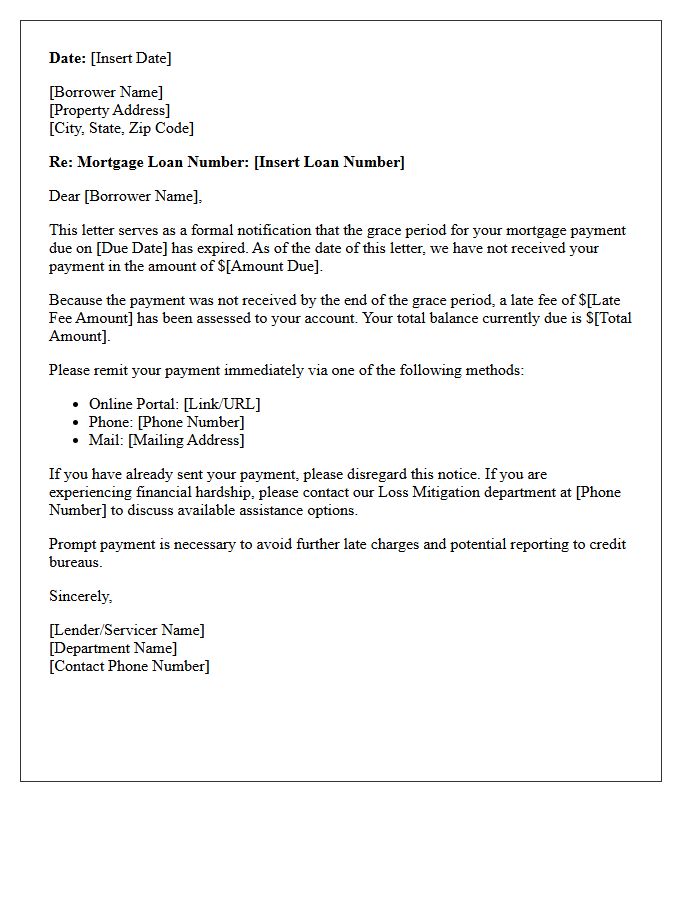
A Residential Mortgage Grace Period Expiration Letter is a formal notice sent by lenders when a payment exceeds its due date. It signifies that the grace period has ended, triggering late fees and potential credit reporting. This document serves as a final warning before the account enters delinquency. Homeowners must act immediately to settle the balance or contact their servicer for loss mitigation options. Ignoring this letter can lead to formal default proceedings, making it a critical communication for maintaining financial stability and preventing foreclosure.
Impending Grace Period Expiration Reminder Letter
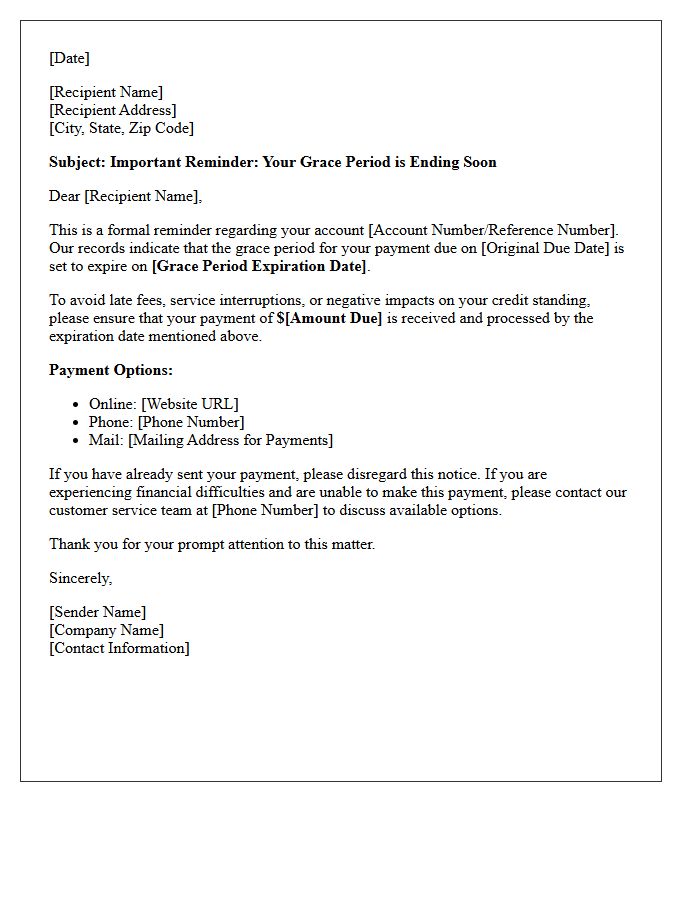
An Impending Grace Period Expiration Reminder Letter is a critical formal notice alerting policyholders that their payment window is closing. This legal notification serves as a final warning before a contract or insurance policy undergoes termination or a lapse in coverage. To maintain active status, recipients must prioritize the due date and settle outstanding balances immediately. Failure to act upon this urgent reminder may result in the permanent loss of benefits, late fees, or the requirement to undergo a complex reinstatement process to restore previous service levels.
Grace Period Expiration and Late Fee Assessment Letter
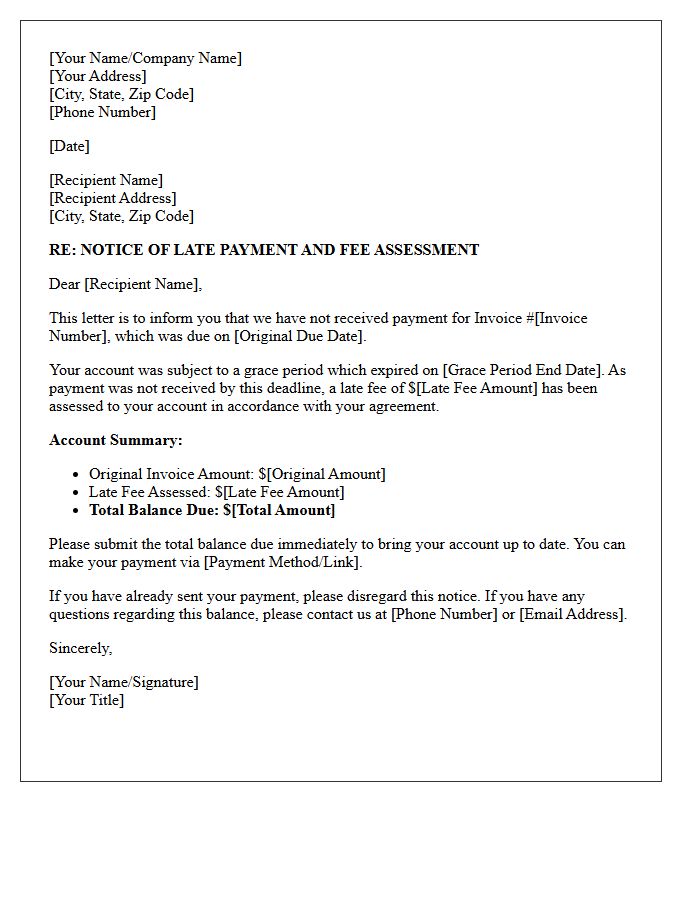
A Grace Period Expiration and Late Fee Assessment Letter notifies a borrower that their payment deadline has passed. This formal notice confirms the end of the grace period and specifies the late fee now added to the balance. It serves as a legal record of delinquency and a final reminder to settle the outstanding amount to avoid further credit damage or collection actions. Reviewing this document immediately is essential to understand the updated total amount due and the deadline for avoiding additional penalties.
Delinquent Account Grace Period Expiration Letter
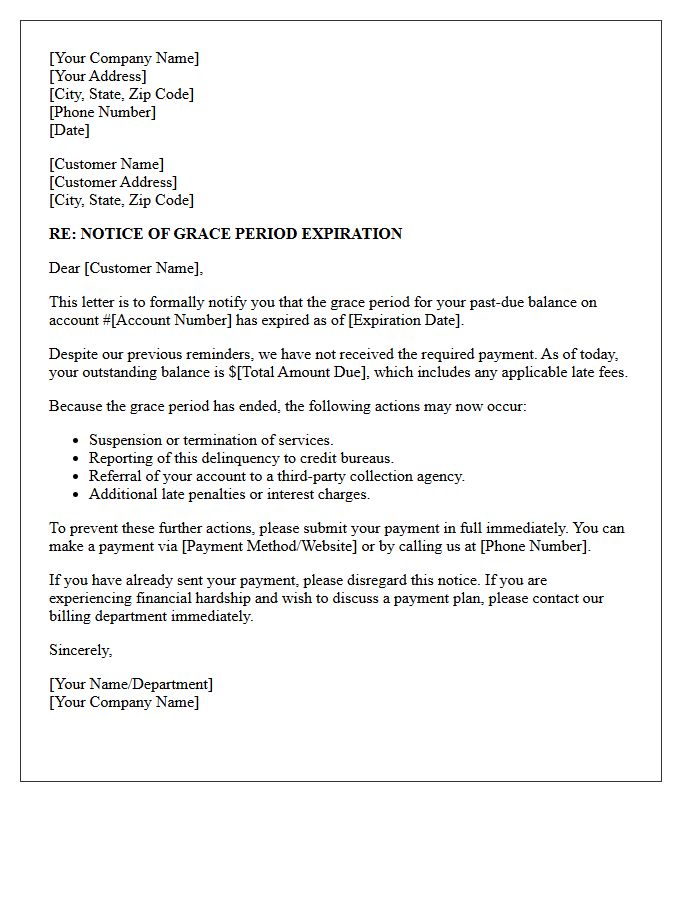
A Delinquent Account Grace Period Expiration Letter serves as a final formal notice before a creditor initiates collection actions or imposes penalties. It informs the debtor that the extension period has ended and full payment is now mandatory to avoid negative consequences. Understanding this document is crucial because it often represents the last opportunity to resolve a balance without damaging your credit score or facing legal escalation. Immediate action is required to prevent account termination or the referral of your debt to a third-party collection agency.
Grace Period Expiration Default Warning Letter
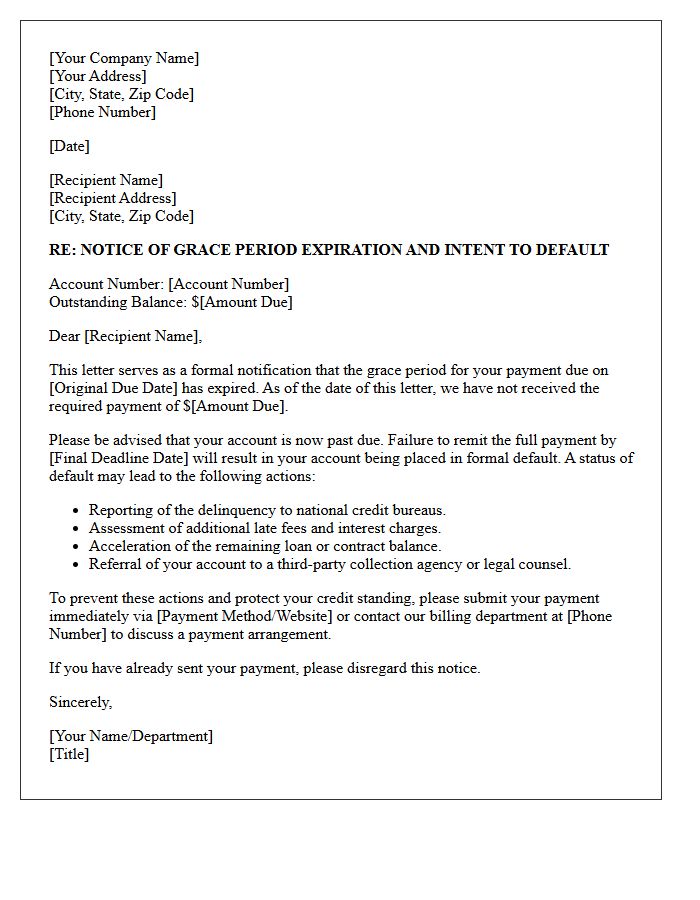
A Grace Period Expiration Default Warning Letter is a critical formal notice sent to borrowers. It signifies that the extended timeframe allowed for late payments has officially ended without a resolution. Receiving this document indicates that you are now in default, which can trigger immediate legal actions, debt acceleration, or foreclosure processes. This letter serves as a final alert to settle outstanding balances or contact the lender to avoid severe damage to your credit score. Prompt action is essential to prevent permanent financial consequences or the loss of collateral assets.
Post-Grace Period Expiration Penalty Letter
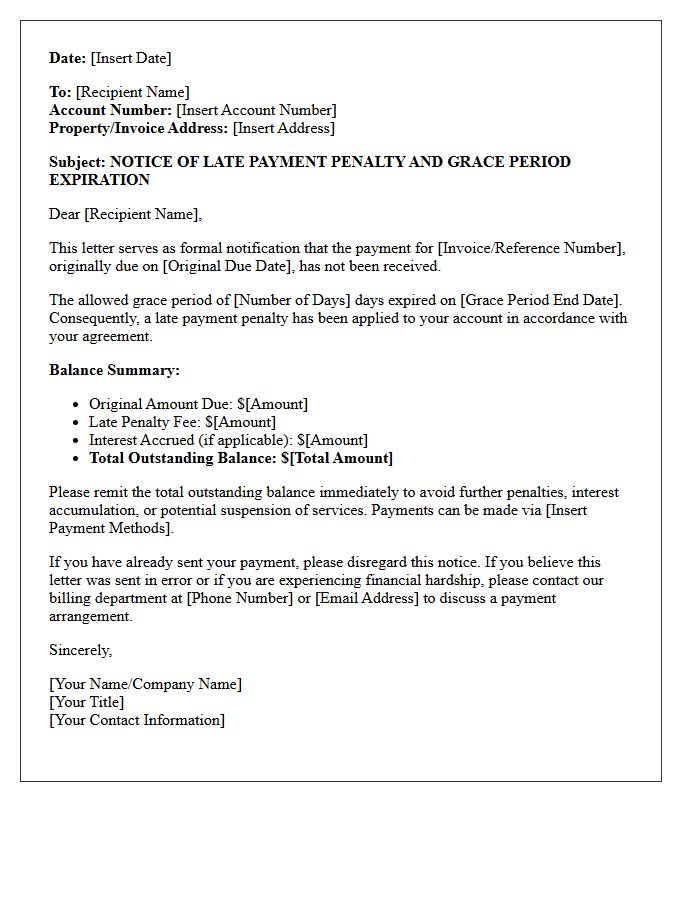
Receiving a Post-Grace Period Expiration Penalty Letter signifies that your payment deadline has passed and additional fees are now being applied. This formal notice confirms that the standard extension period has ended, resulting in immediate financial penalties or interest accrual. It is crucial to settle the outstanding balance immediately to prevent further legal action, credit score damage, or service disconnection. Always review the letter for the total amount due, including new late charges, and contact the issuer to discuss potential payment plans or mitigation options before the debt escalates further.
Initial Notice of Grace Period Expiration Letter
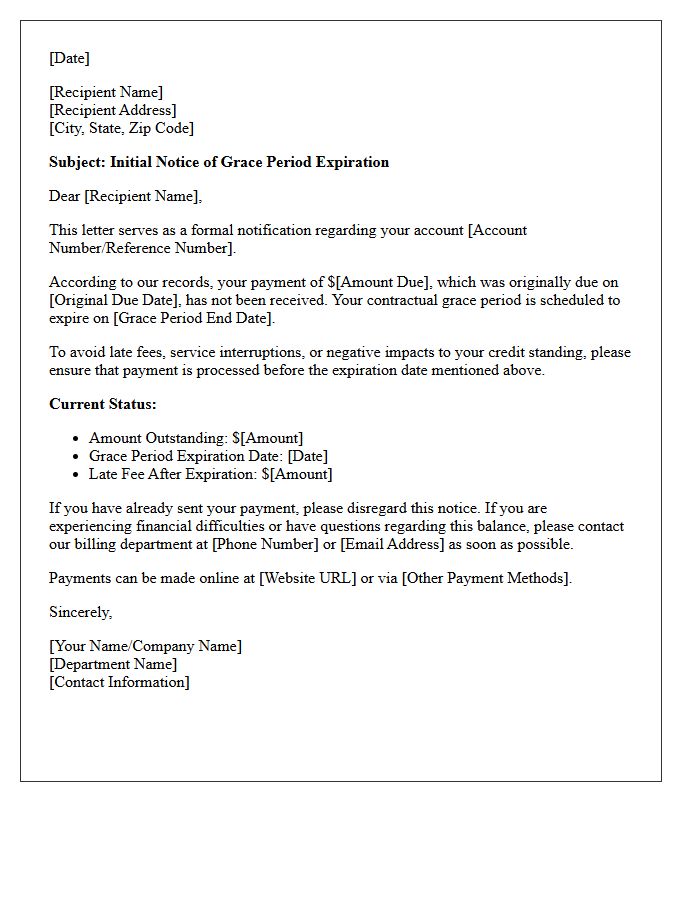
The Initial Notice of Grace Period Expiration is a critical formal alert sent by insurance providers or lenders. It signifies that your payment deadline has passed and the allotted grace period is nearing its end. This document serves as a final warning that failure to remit the outstanding balance immediately will result in coverage termination or policy lapse. Understanding this notice is essential for maintaining continuous protection and avoiding legal or financial penalties. Always verify the expiration date specified to ensure your essential services remain active and uninterrupted.
Grace Period Expiration and Action Required Letter
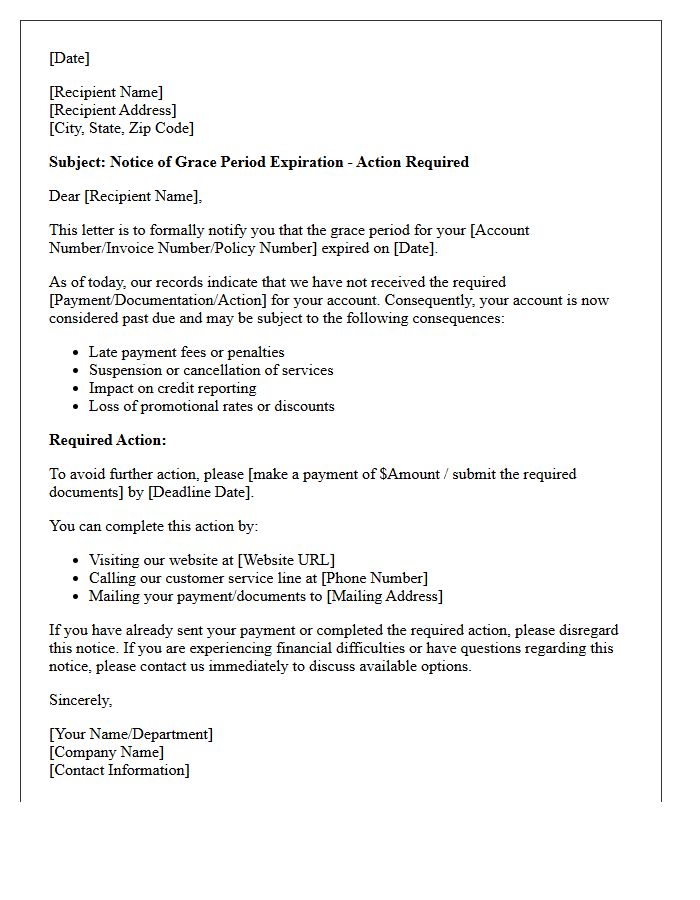
A Grace Period Expiration and Action Required Letter is a formal notice stating that your temporary extension for a payment or filing is ending. It serves as a final warning that you must take immediate action to avoid penalties, interest charges, or loss of coverage. To prevent negative consequences, you must settle the outstanding balance or submit required documentation before the specified deadline. Ignoring this notification typically results in the termination of services or legal repercussions. Always verify the required steps outlined in the letter to ensure your account remains in good standing.
What is a mortgage grace period expiration notice?
A mortgage grace period expiration notice is a notification sent by a loan servicer informing the borrower that the standard window to pay their monthly installment without penalty (typically 15 days) has ended and a late fee will now be applied.
When will I receive a late fee after my payment due date?
Most mortgage agreements include a 15-day grace period; if the full payment is not processed by the end of this window, a late fee is automatically assessed on the 16th day following the original due date.
How does an expired grace period affect my credit score?
While an expired grace period usually triggers a late fee immediately, most lenders do not report the delinquency to credit bureaus until the payment is a full 30 days past the original due date.
Can I request a waiver for a late fee after the grace period expires?
Borrowers with a strong payment history may contact their loan servicer to request a one-time courtesy waiver of the late fee, though the success of this request depends on the lender's internal policies and the borrower's account standing.
What happens if I miss my mortgage payment beyond the expiration notice?
If the payment remains unpaid after the grace period expires, the account enters delinquency, leading to further collection efforts, potential negative credit reporting after 30 days, and eventually the risk of foreclosure if the default continues.

Comments