
Managing vendor vulnerabilities is critical for organizational resilience. This guide explores the latest regulatory expectations and strategic frameworks for a robust Third-Party Risk Management Advisory Letter. Learn how to communicate security standards, ensure compliance, and mitigate supply chain threats effectively through formal documentation. Strengthen your governance and protect your ecosystem today; below are some ready to use template.

Image cover: Mastering Third-Party Risk: Expert Advisory Letter Samples and Templates
Letter Samples List
- Vendor Due Diligence Advisory Letter
- Regulatory Compliance Assessment Letter
- Cybersecurity Incident Response Notification Letter
- Third-Party Service Level Agreement Remediation Letter
- Annual Vendor Risk Assessment Advisory Letter
- Data Privacy and Protection Compliance Letter
- Cloud Service Provider Risk Mitigation Letter
- Financial Stability and Going Concern Advisory Letter
- Subcontractor Risk Management Notification Letter
- Cross-Border Data Transfer Regulatory Letter
- Vendor Termination and Offboarding Advisory Letter
- Business Continuity and Disaster Recovery Audit Letter
- Anti-Money Laundering Vendor Compliance Letter
- Fourth-Party Risk Exposure Advisory Letter
Vendor Due Diligence Advisory Letter
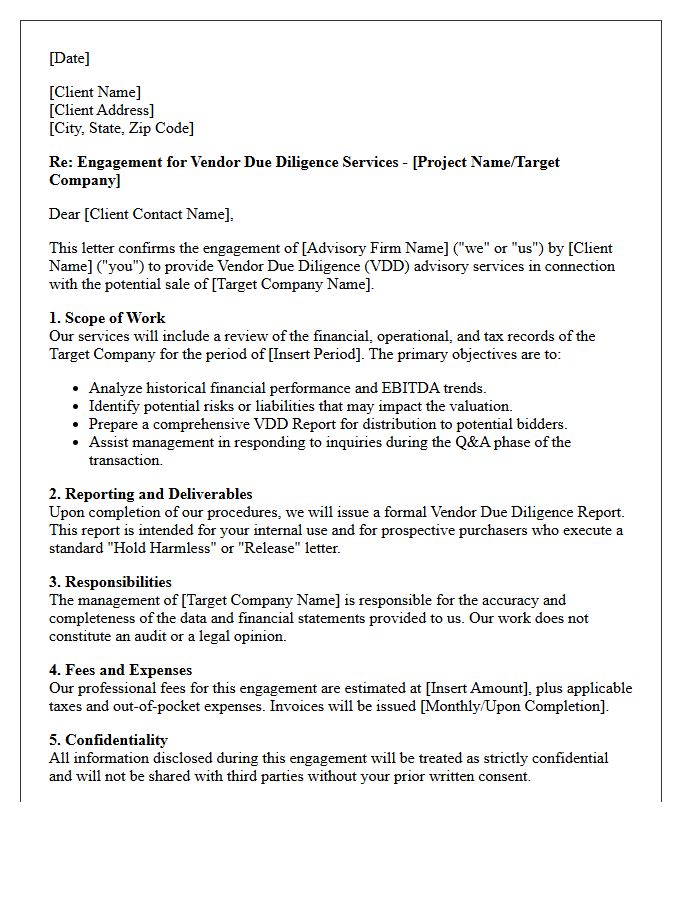
A Vendor Due Diligence Advisory Letter provides potential buyers with an independent, objective analysis of a target company's financial health. Prepared by professional advisors on behalf of the seller, it highlights key value drivers, potential risks, and normalized earnings. This document streamlines the sale process by offering a credible baseline for negotiations and reducing the time required for buyer-led investigations. It ensures transparency, minimizes surprises during deal execution, and helps maintain competitive tension among bidders by providing a standardized data set for all interested parties during an M&A transaction.
Regulatory Compliance Assessment Letter
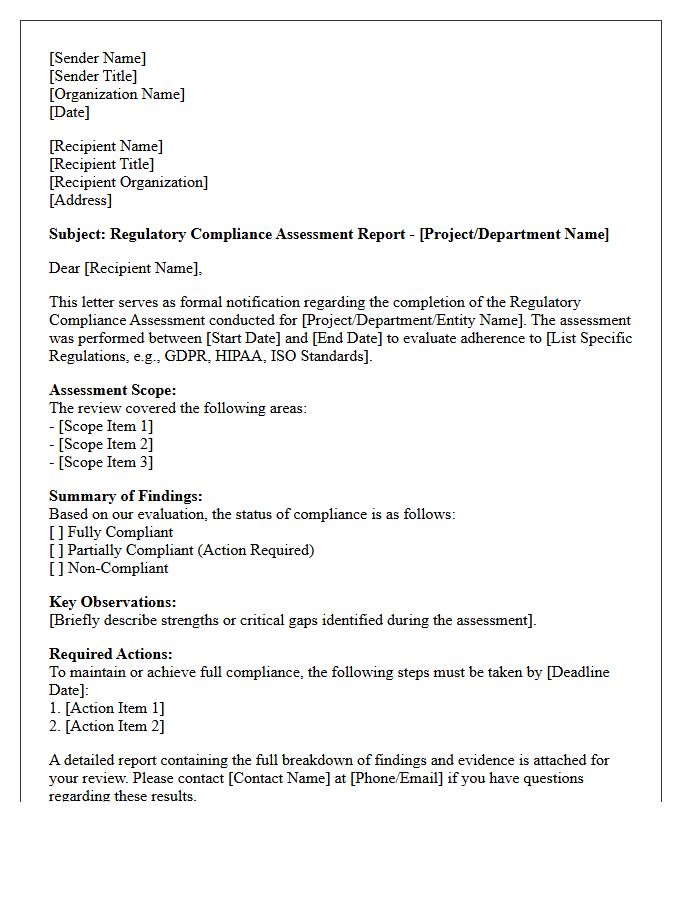
A Regulatory Compliance Assessment Letter is an official document verifying that a business or project adheres to specific legal standards and industry regulations. It serves as a formal audit summary, identifying potential risks or confirming full alignment with statutory requirements. Stakeholders and oversight bodies use this letter to ensure transparency and mitigate legal liability. Obtaining this assessment is crucial for maintaining operational licenses, securing investments, and demonstrating accountability within highly regulated sectors like finance, healthcare, or environmental services.
Cybersecurity Incident Response Notification Letter
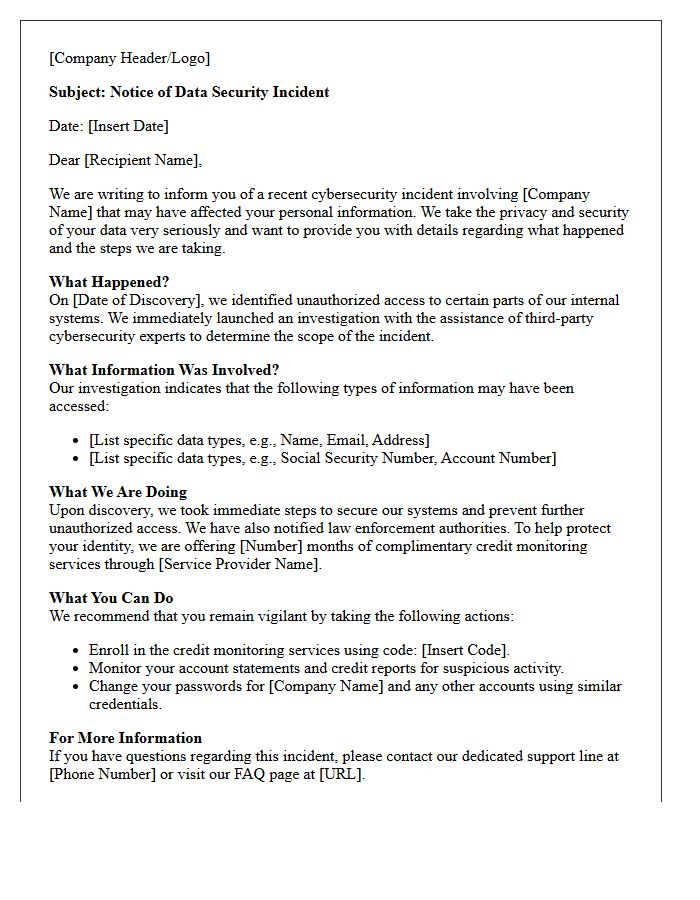
A Cybersecurity Incident Response Notification Letter is a formal document sent to individuals whose data was compromised during a security breach. Legally required by many jurisdictions, it must clearly explain what happened, what specific information was exposed, and the actions the company is taking to mitigate damage. The primary goal is to provide transparency while offering protective steps, such as credit monitoring services. Timely delivery is essential to comply with data privacy regulations like GDPR or CCPA and to maintain organizational trust after a cyberattack occurs.
Third-Party Service Level Agreement Remediation Letter
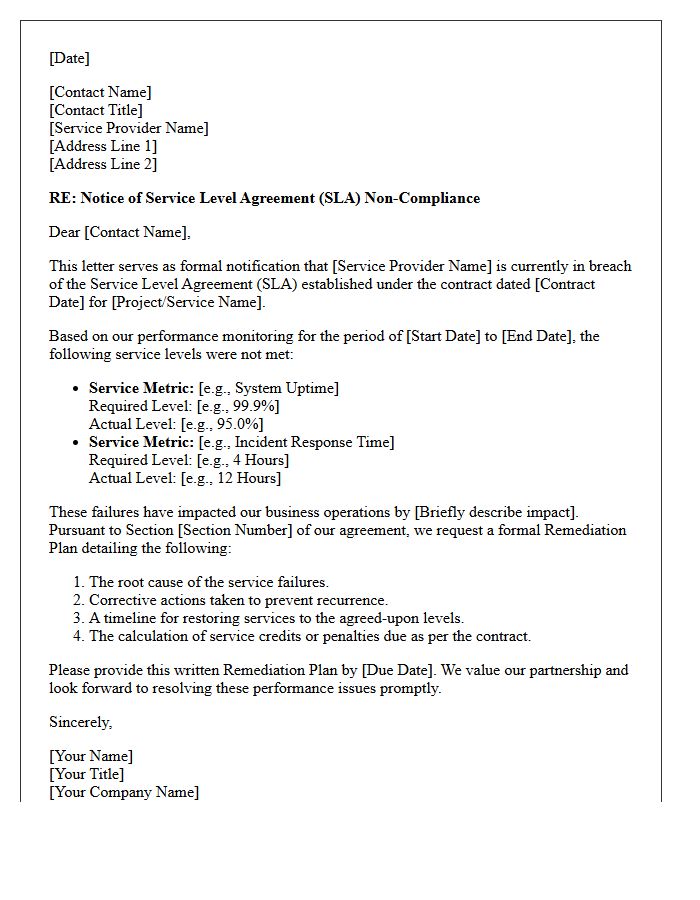
A Third-Party Service Level Agreement Remediation Letter is a formal notification sent to a vendor when they fail to meet contractual performance standards. This document serves as an official record of the SLA breach, outlining specific deficiencies and required corrective actions. It is essential for maintaining accountability, initiating service credits, or establishing grounds for contract termination. Clear communication in this letter ensures the provider understands the urgency of performance improvement to mitigate operational risks and restore agreed-upon service quality within a defined timeframe.
Annual Vendor Risk Assessment Advisory Letter
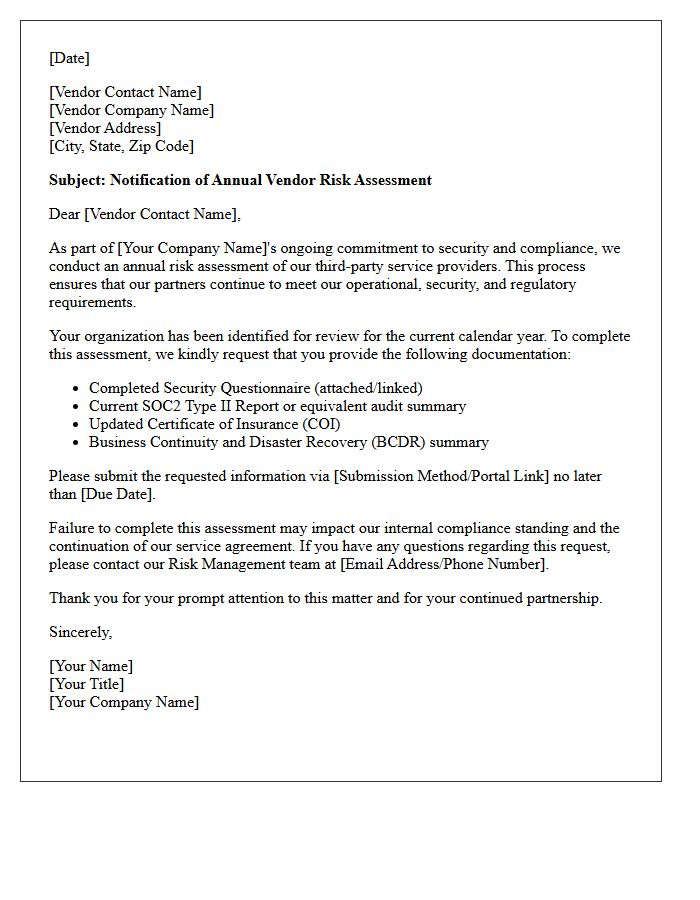
The Annual Vendor Risk Assessment Advisory Letter is a critical regulatory notification requiring organizations to evaluate the security posture of their third-party partners. This document outlines necessary compliance audits and performance reviews to mitigate potential data breaches. It serves as a formal roadmap for identifying operational vulnerabilities within your supply chain. Organizations must respond by documenting risk mitigation strategies and ensuring all service providers meet current cybersecurity standards. Proactive adherence to this advisory helps maintain institutional integrity and protects sensitive information from evolving digital threats throughout the fiscal year.
Data Privacy and Protection Compliance Letter
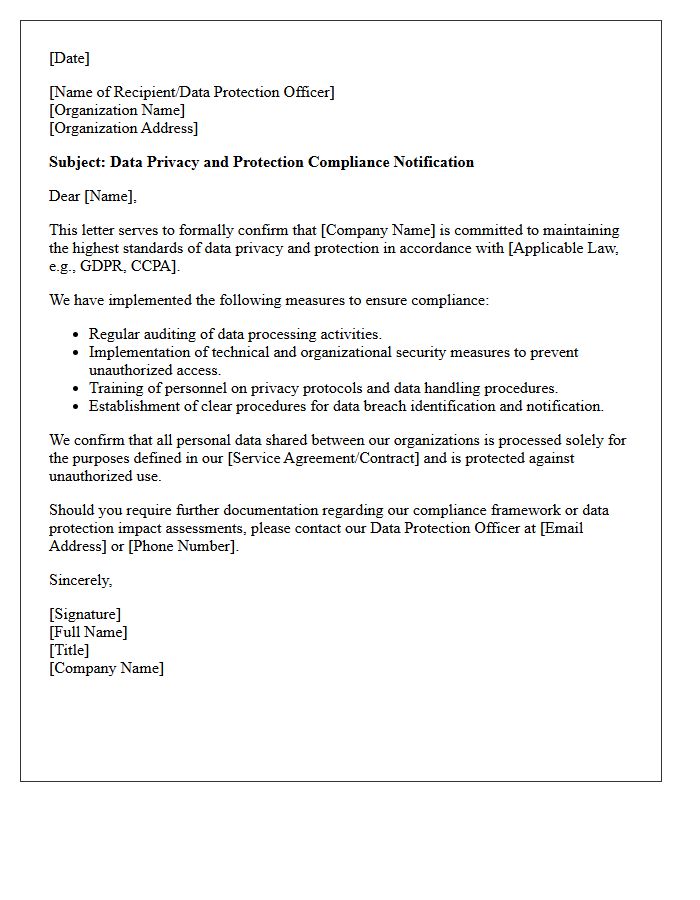
A Data Privacy and Protection Compliance Letter serves as official documentation verifying that an organization adheres to legal standards like GDPR or CCPA. This formal statement confirms that data processing activities meet rigorous security requirements and privacy protocols. It is essential for building trust with stakeholders and fulfilling contractual obligations during audits. Providing this letter demonstrates a proactive commitment to safeguarding sensitive information and ensures regulatory alignment within the digital landscape, ultimately mitigating legal risks and protecting the brand's reputation in a global marketplace.
Cloud Service Provider Risk Mitigation Letter
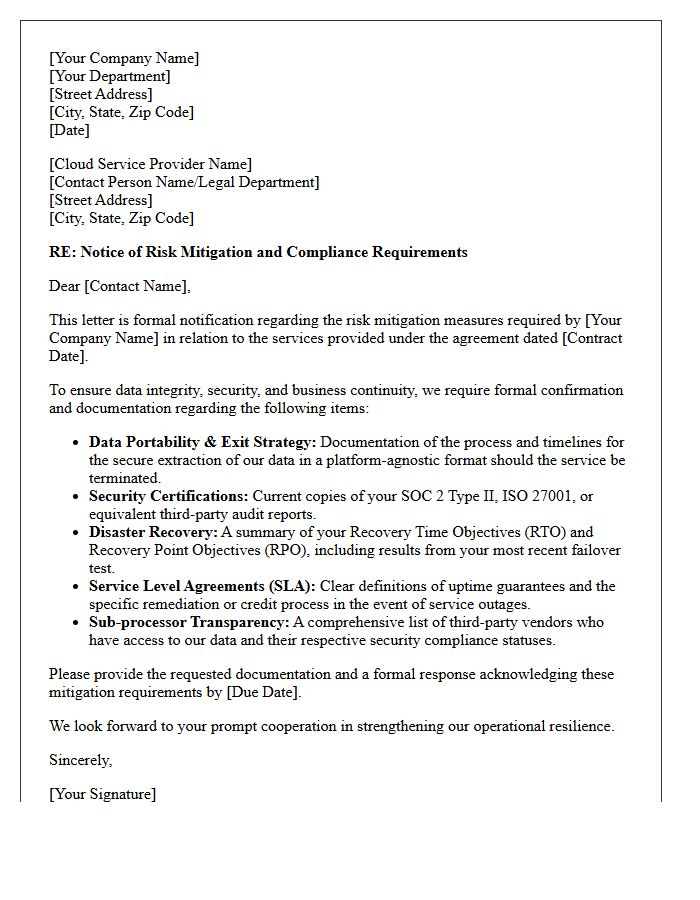
A Cloud Service Provider Risk Mitigation Letter is a formal document used to address security vulnerabilities identified during third-party audits. It serves as an official commitment from the vendor to resolve specific technical or compliance gaps within a defined timeframe. For organizations, this letter is a critical due diligence tool that balances operational risk when a provider cannot immediately meet all safety standards. It ensures accountability, provides a roadmap for remediation, and helps legal teams evaluate the contractual liability associated with hosting sensitive data in a multi-tenant cloud environment.
Financial Stability and Going Concern Advisory Letter
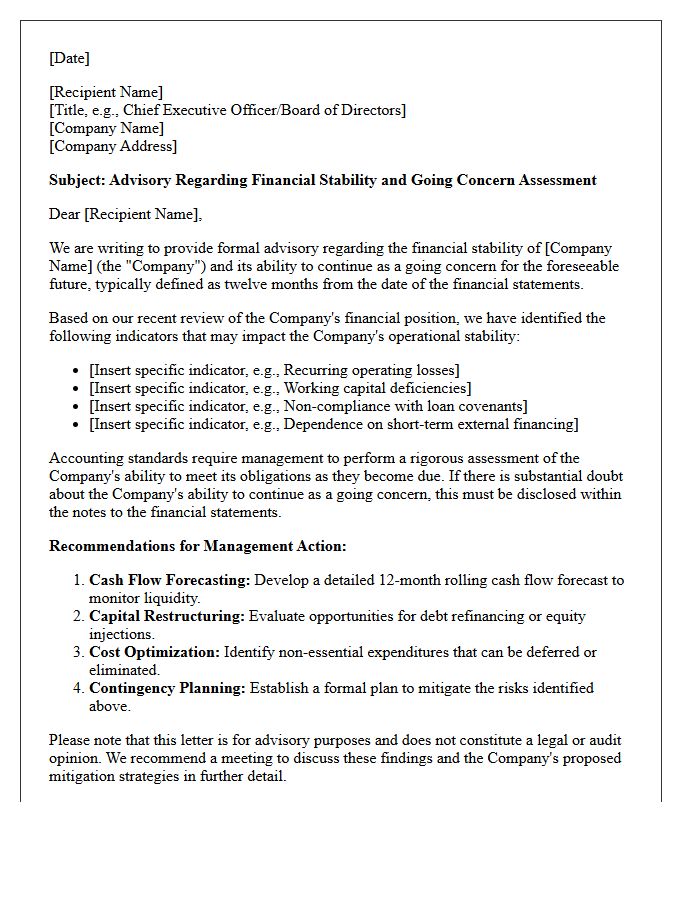
A Financial Stability and Going Concern Advisory Letter provides a critical assessment of an organization's ability to sustain operations for at least twelve months. It focuses on liquidity risks, operational cash flows, and potential solvency issues. This document is essential for stakeholders as it confirms whether a company can meet its obligations without liquidating assets or ceasing activity. Professional advisory identifies mitigation strategies to address financial distress, ensuring transparency in financial reporting and helping management maintain business continuity through strategic planning and risk management.
Subcontractor Risk Management Notification Letter
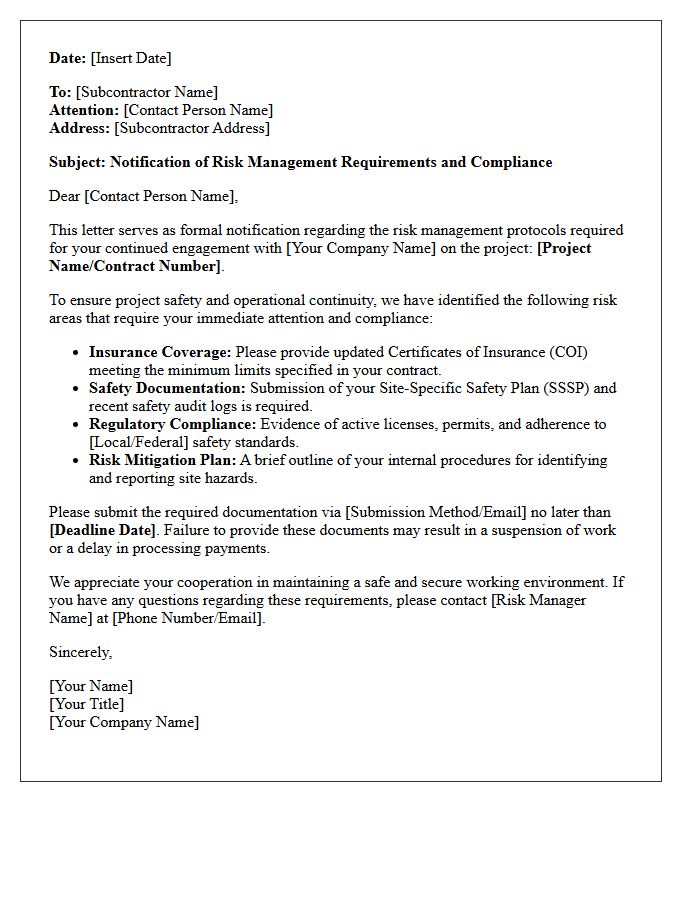
A Subcontractor Risk Management Notification Letter is a formal document used to inform third-party partners of identified safety or financial hazards. This critical communication ensures compliance with project standards and outlines necessary corrective actions. By documenting potential liabilities, the letter protects the primary contractor from legal exposure and maintains operational integrity. Timely notification is essential for mitigating workplace risks and ensuring that all onsite personnel adhere to established insurance and safety protocols, ultimately securing the overall success of the construction project or contractual agreement.
Cross-Border Data Transfer Regulatory Letter
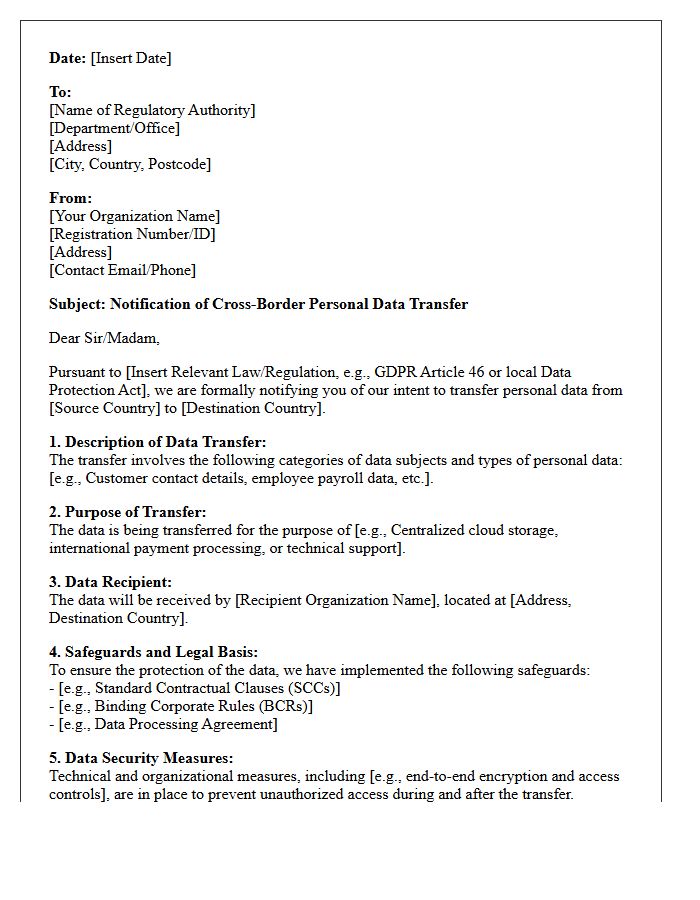
A Cross-Border Data Transfer Regulatory Letter is a formal notice issued by data protection authorities to ensure international data sovereignty. It outlines legal requirements for moving personal information across jurisdictions, emphasizing compliance with frameworks like Standard Contractual Clauses or Binding Corporate Rules. Organizations must respond promptly to demonstrate adequate safeguards and technical measures, such as encryption. Failure to align with these regulatory demands can result in significant fines and the suspension of global data flows, making legal transparency and risk assessments essential for maintaining operational continuity.
Vendor Termination and Offboarding Advisory Letter
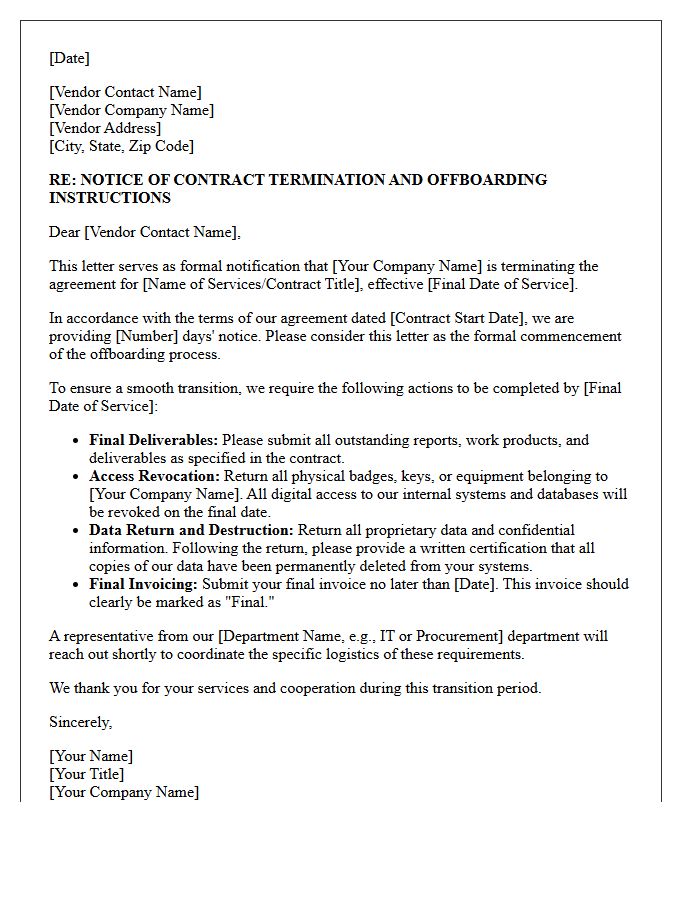
A Vendor Termination and Offboarding Advisory Letter is a formal notice used to legally conclude a service agreement. It ensures a secure transition by detailing critical steps such as final payment schedules, the return of physical assets, and the immediate revocation of digital access. Clear communication in this document mitigates operational risks and reinforces strict compliance with data confidentiality obligations. By providing explicit instructions on post-termination duties, organizations protect their intellectual property and maintain regulatory alignment during the final phase of the vendor relationship lifecycle.
Business Continuity and Disaster Recovery Audit Letter
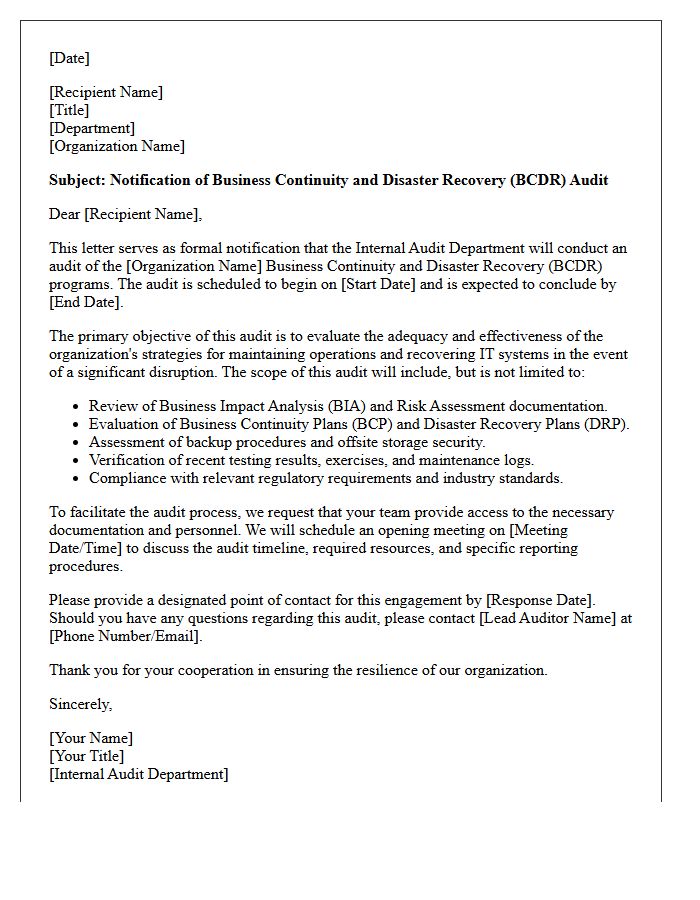
A Business Continuity and Disaster Recovery Audit Letter provides independent assurance that an organization can maintain operations during a crisis. This document confirms that risk assessments, failover testing, and data backup protocols meet regulatory standards. It serves as vital proof for stakeholders and regulators that resilience strategies are effective. By evaluating the recovery point and time objectives, the audit verifies that mission-critical systems are protected against unforeseen disruptions, ensuring long-term stability and compliance within the business ecosystem.
Anti-Money Laundering Vendor Compliance Letter
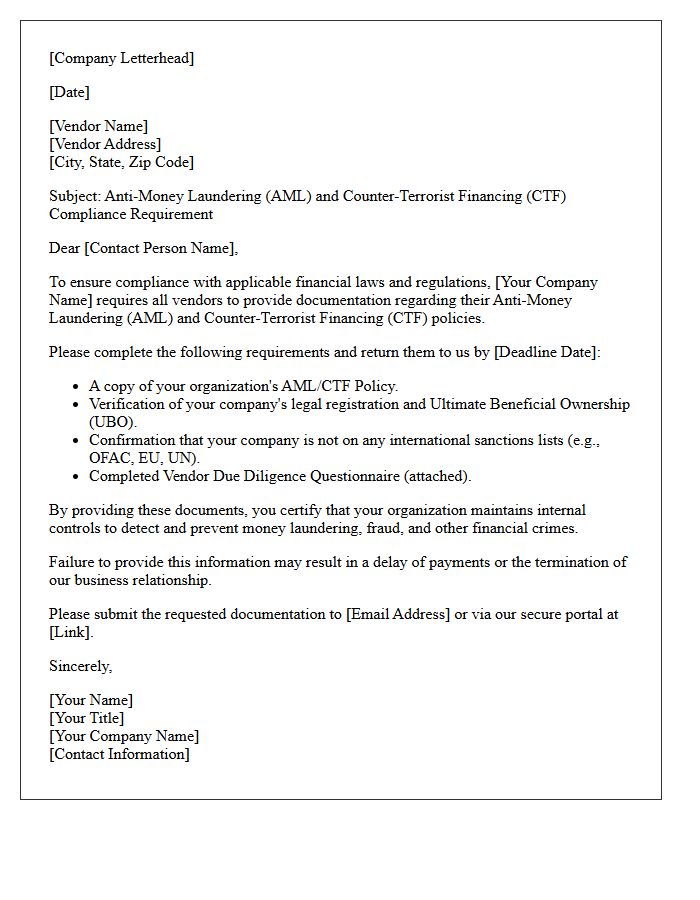
An Anti-Money Laundering Vendor Compliance Letter is a formal document used to verify that a third-party service provider adheres to strict regulatory standards. It confirms that the vendor has implemented effective due diligence protocols to prevent financial crimes. Businesses issue these letters to mitigate risk and ensure that their partners maintain robust internal controls against illicit activities. Providing this verification is essential for maintaining legal compliance and protecting the integrity of the global financial system during onboarding and ongoing professional relationships.
Fourth-Party Risk Exposure Advisory Letter
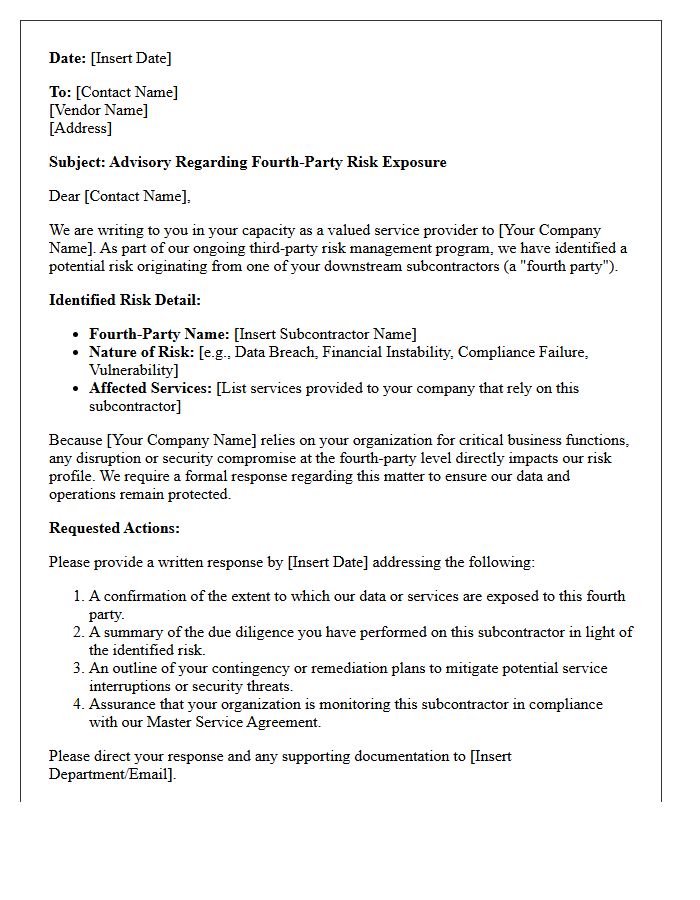
A Fourth-Party Risk Exposure Advisory Letter is a formal notification sent to stakeholders regarding vulnerabilities within the extended supply chain. It highlights risks originating from the sub-service providers of your direct vendors. These external entities can create hidden security gaps, data breaches, or operational dependencies that bypass primary defenses. Understanding this advisory is essential for maintaining compliance and ensuring robust resilience against indirect threats. Proactive monitoring of these deep-tier relationships helps organizations mitigate systemic failures and protect sensitive information across the entire digital ecosystem.
What is a Third-Party Risk Management (TPRM) advisory letter?
A TPRM advisory letter is a formal document issued by consultants or regulatory bodies that provides strategic recommendations, identifies security gaps, and outlines best practices for managing risks associated with external vendors and service providers.
Why do organizations need a TPRM advisory letter?
Organizations require these letters to ensure compliance with industry regulations, validate their vendor due diligence processes, and provide executive leadership with actionable insights to mitigate potential supply chain vulnerabilities and data breaches.
What key components are included in a TPRM advisory letter?
A standard advisory letter includes an executive summary of the risk landscape, detailed findings from vendor assessments, a gap analysis against frameworks like NIST or ISO, and a prioritized roadmap for remediating identified third-party risks.
How does a TPRM advisory letter support regulatory compliance?
The letter serves as documented evidence for auditors that the organization is actively monitoring its ecosystem, meeting requirements for mandates such as GDPR, HIPAA, or SOC2, and maintaining a defensible security posture regarding outsourced services.
When should an organization seek a third-party risk advisory assessment?
Advisory assessments should be conducted during the onboarding of high-risk vendors, following a significant security incident in the supply chain, or as part of an annual governance review to adapt to evolving cyber threats.

Comments