
Experiencing a transaction error where an ATM fails to dispense cash despite your account being debited can be stressful. To recover your funds, submitting a formal Grievance Letter for ATM Cash Dispensation Failure to your bank is a critical first step for a quick resolution. This guide explains the essential details to include. To help you get started, below are some ready to use template.
Image cover: Formal ATM Cash Withdrawal Failure Grievance Letter Samples and Templates
Letter Samples List
- Grievance Letter for Incomplete ATM Cash Dispensation
- Initial Grievance Letter for Failed ATM Transaction
- Formal Grievance Letter for Account Debited but Cash Not Dispensed
- Urgent Grievance Letter for Unresolved ATM Dispensation Failure
- Customer Grievance Letter for Off-Us ATM Dispensation Error
- Final Appeal Grievance Letter for ATM Dispensation Dispute
- Branch Escalation Grievance Letter for Faulty ATM Cash Withdrawal
- Ombudsman Escalation Grievance Letter for ATM Dispensation Failure
- Commercial Account Grievance Letter for ATM Cash Dispensation Error
- Evidence Submission Grievance Letter for ATM Dispensation Claim
- Priority Grievance Letter for International ATM Dispensation Failure
- Reimbursement Request Grievance Letter for Delayed ATM Refund
Grievance Letter for Incomplete ATM Cash Dispensation
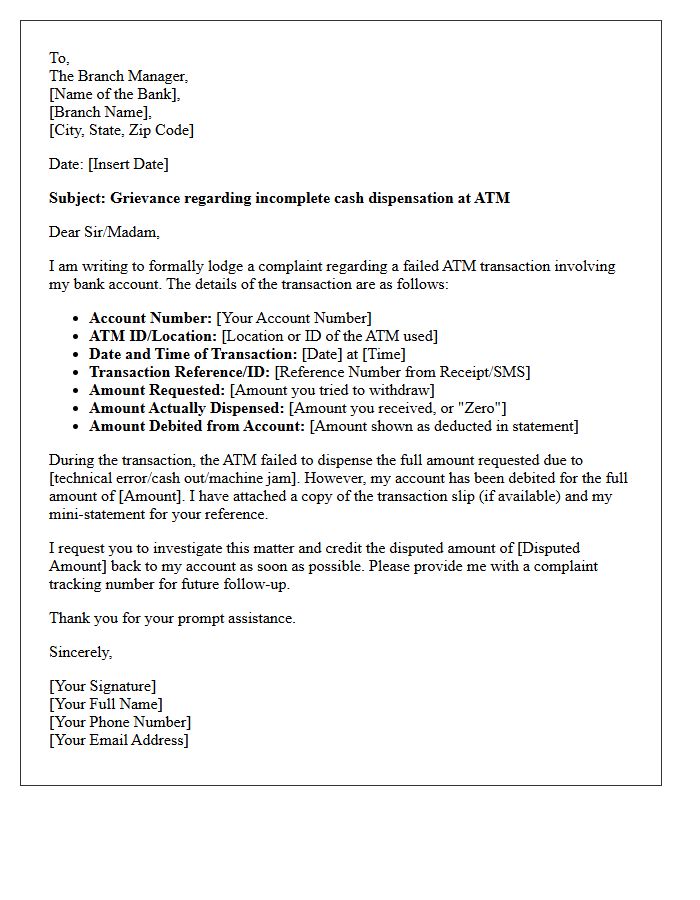
When drafting a grievance letter for incomplete ATM cash dispensation, you must include the transaction date, exact time, and the ATM ID number found on the machine. Clearly state the requested amount versus the actual cash received. Under the Reserve Bank guidelines, banks must resolve such discrepancies within a specific timeframe or pay daily compensation. Always attach a copy of the transaction slip or a bank statement screenshot as evidence to ensure a swift investigation and the successful recovery of your missing funds.
Initial Grievance Letter for Failed ATM Transaction
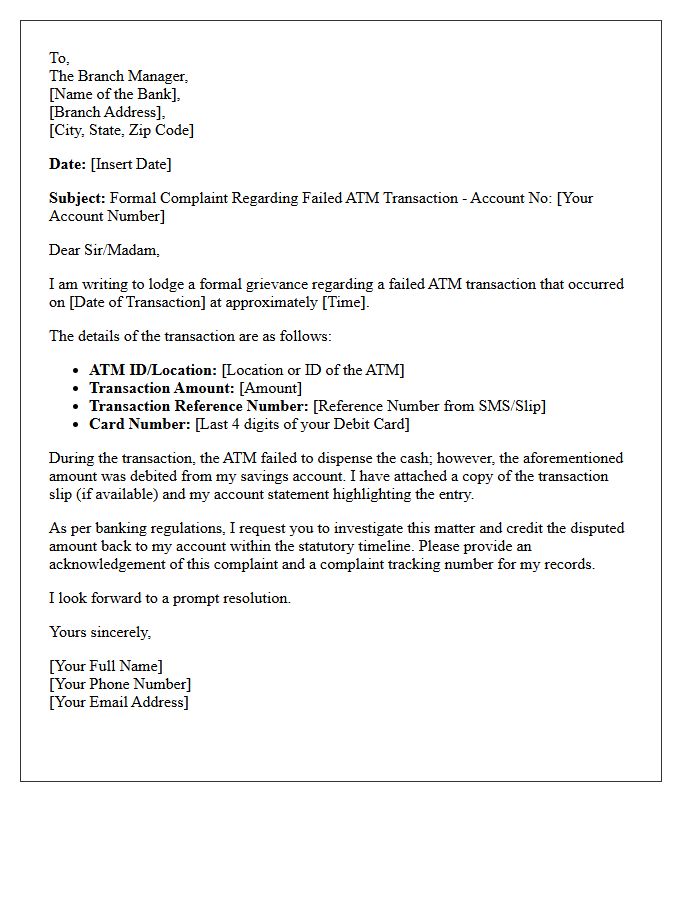
An Initial Grievance Letter is a formal document submitted to your bank to report a failed ATM transaction where funds were debited but not dispensed. It must include your account details, transaction date, and the specific ATM location. This written record serves as legal evidence under consumer protection laws, ensuring the bank initiates a chargeback investigation. Promptly filing this letter within the regulatory timeframe is essential to secure a mandatory reversal of the missing funds and protect your financial rights against technical banking errors.
Formal Grievance Letter for Account Debited but Cash Not Dispensed
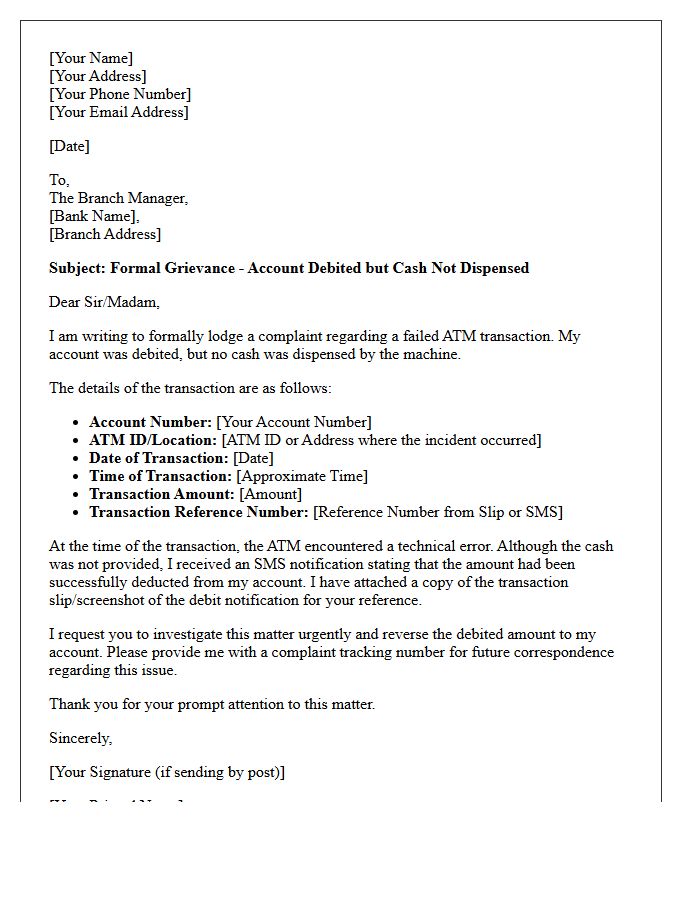
A Formal Grievance Letter is your primary legal tool for resolving a failed ATM transaction where your account was debited but no cash was dispensed. You must clearly state the transaction date, ATM location, and unique transaction ID. Under banking regulations, banks must credit the reversal amount within a specific timeframe, typically five to seven working days. If the bank fails to resolve this failed transaction, your written complaint serves as essential evidence for escalating the matter to an Ombudsman for recovery.
Urgent Grievance Letter for Unresolved ATM Dispensation Failure
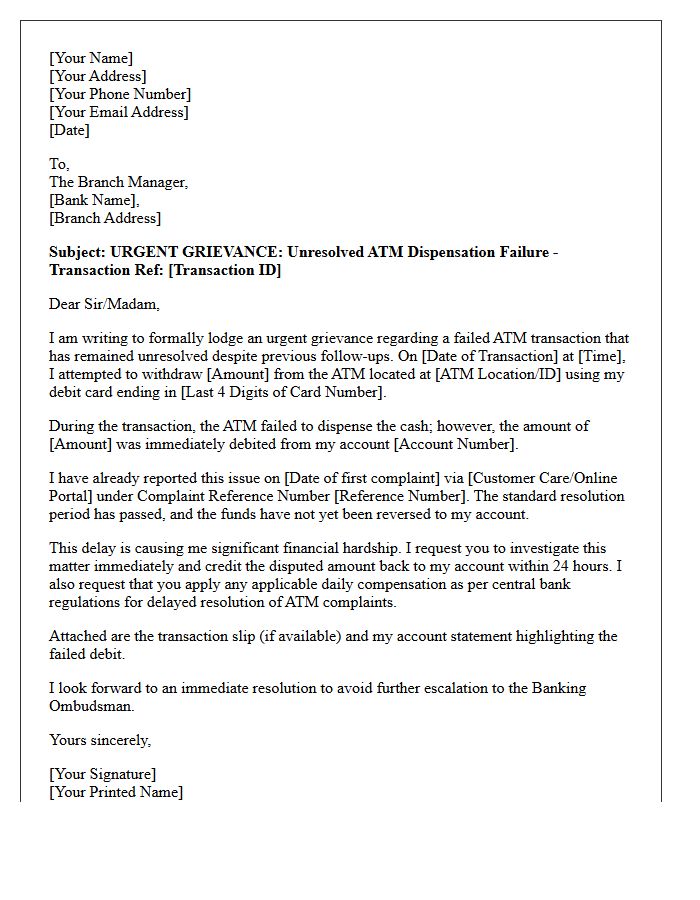
When drafting an Urgent Grievance Letter for an unresolved ATM dispensation failure, you must provide the transaction reference number, exact date, and terminal ID. Clearly state that the amount was debited despite no cash being issued. Emphasize the statutory timeline for resolution, as many banking regulations mandate a reversal within specific working days. Mention that failure to resolve this will lead to an escalation with the Banking Ombudsman. Attaching a digital copy of the transaction slip or account statement ensures a faster, evidence-based recovery of your funds.
Customer Grievance Letter for Off-Us ATM Dispensation Error
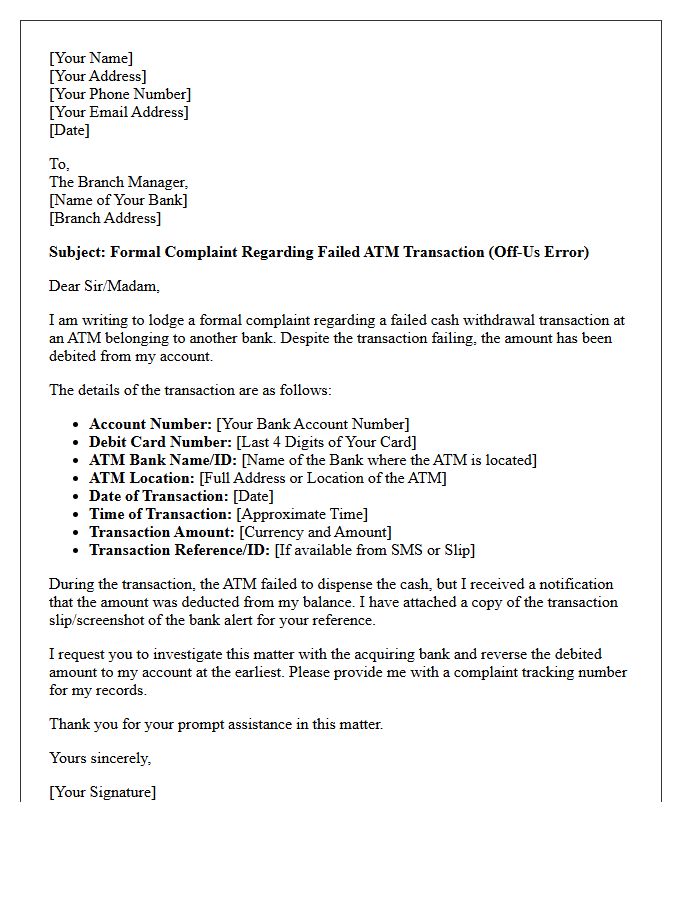
When drafting a customer grievance letter for an off-us ATM dispensation error, precision is vital. Clearly state the transaction date, exact amount, and ATM location. Highlight that funds were debited despite the cash dispensing failure. Mention the unique transaction ID and your account details to facilitate tracking between the acquiring and issuing banks. Formally request a reversal of charges within the statutory timeframe prescribed by central banking regulations to avoid financial loss. Providing clear evidence ensures a faster dispute resolution process and protects your consumer rights effectively.
Final Appeal Grievance Letter for ATM Dispensation Dispute
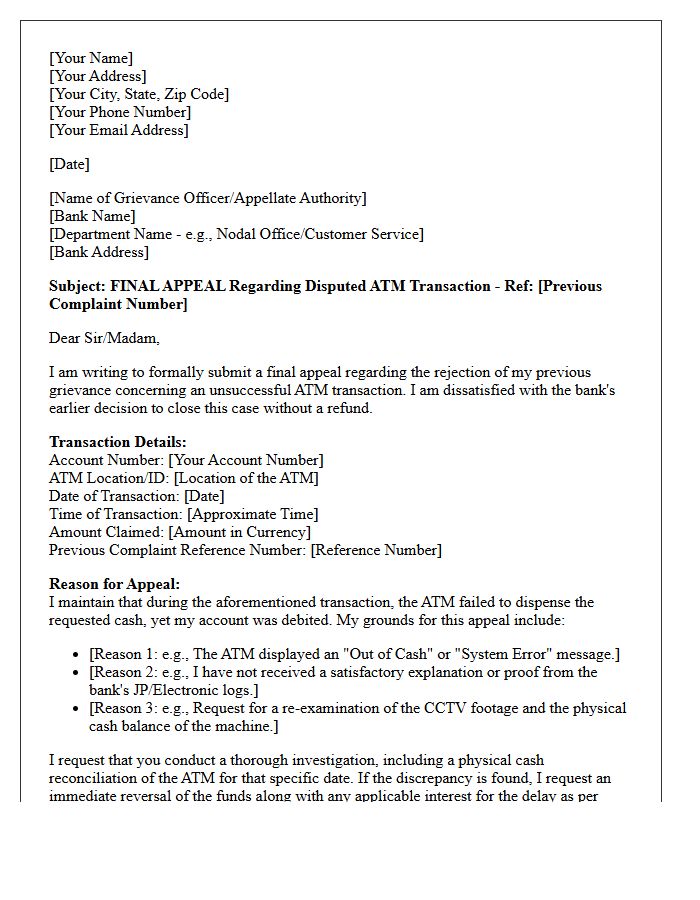
A Final Appeal Grievance Letter is your last formal opportunity to resolve an ATM cash dispensation error directly with your bank. You must clearly state the transaction date, location, and exact amount missing. Attach evidence such as ATM receipts, witness statements, or police reports to strengthen your claim. Explicitly request a comprehensive audit of the machine's internal journal and physical cash balancing logs. Sending this letter via certified mail creates a legal paper trail, essential if you later escalate the dispute to a financial ombudsman or regulatory authority.
Branch Escalation Grievance Letter for Faulty ATM Cash Withdrawal
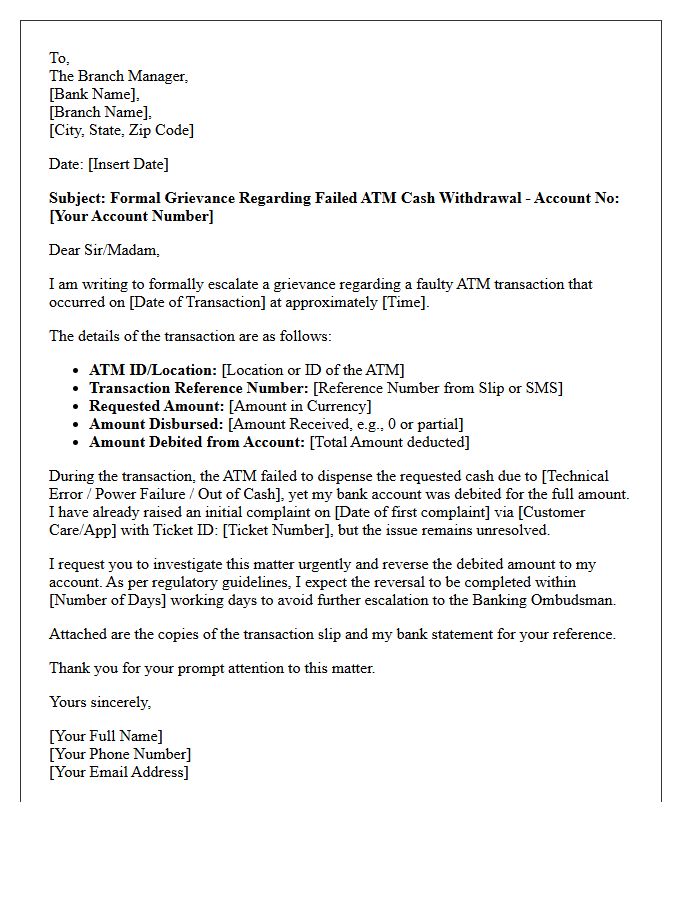
When drafting a Branch Escalation Grievance Letter for a faulty ATM withdrawal, you must clearly state the transaction date, location, and the exact amount failed. Formally request a reversal of charges under the Reserve Bank guidelines, which typically mandate a resolution within specific working days. Attach your transaction slip or bank statement as evidence. Explicitly mention that failure to resolve the discrepancy will lead to a formal complaint with the Banking Ombudsman to ensure your consumer rights are protected and funds are recovered promptly.
Ombudsman Escalation Grievance Letter for ATM Dispensation Failure
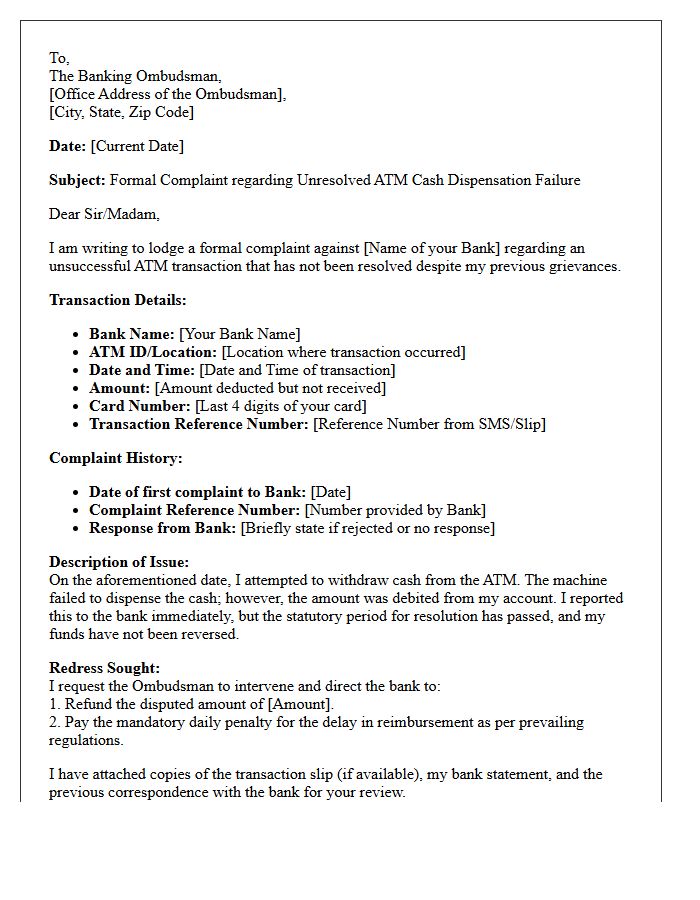
When an ATM fails to dispense cash but debits your account, you must first file a formal complaint with your bank. If the bank fails to resolve the ATM dispensation failure within 30 days, you should escalate the matter via an Ombudsman Escalation Grievance Letter. This legal document must include your transaction ID, terminal location, and proof of the initial complaint. The Ombudsman acts as an impartial mediator to ensure regulatory compliance and mandate the immediate reversal of funds plus potential compensation for the delay.
Commercial Account Grievance Letter for ATM Cash Dispensation Error
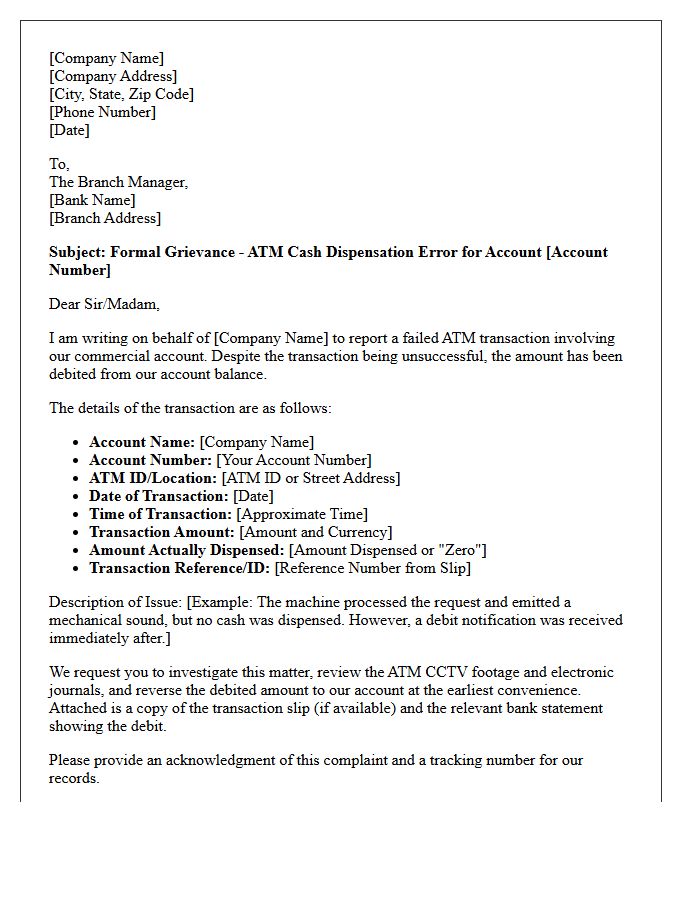
When an ATM cash dispensation error occurs on a commercial account, you must act immediately. Formally submit a written grievance letter to your financial institution to initiate a Regulation E or internal banking investigation. Clearly state the transaction date, terminal ID, and the exact discrepancy amount. Unlike consumer accounts, commercial dispute windows can be narrower; therefore, attaching receipt copies or video timestamp evidence is vital. Request a formal tracking number and a specific timeline for the reversal of funds to ensure your business cash flow remains protected during the audit.
Evidence Submission Grievance Letter for ATM Dispensation Claim
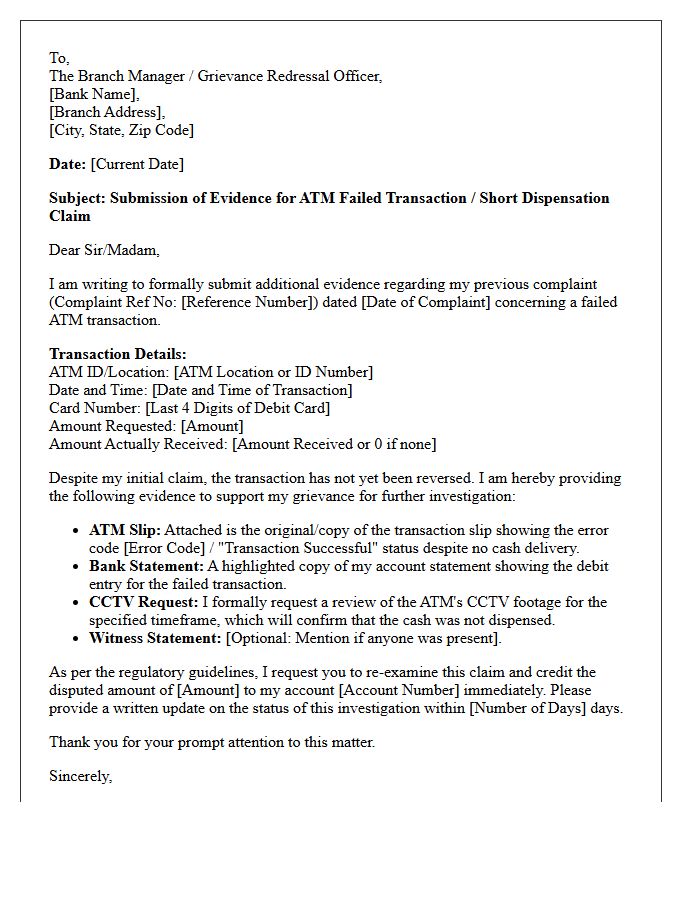
When drafting an Evidence Submission Grievance Letter for a failed ATM transaction, precision is vital. Clearly state that the machine failed to dispense cash despite a successful account debit. Highlight critical details including the transaction date, terminal ID, and the exact amount lost. Attach supporting documentation like a transaction receipt or bank statement to validate your claim. Explicitly demand a formal investigation and a full reversal of the funds. This letter serves as a formal record, ensuring your consumer rights are protected during the bank's dispute resolution process.
Priority Grievance Letter for International ATM Dispensation Failure
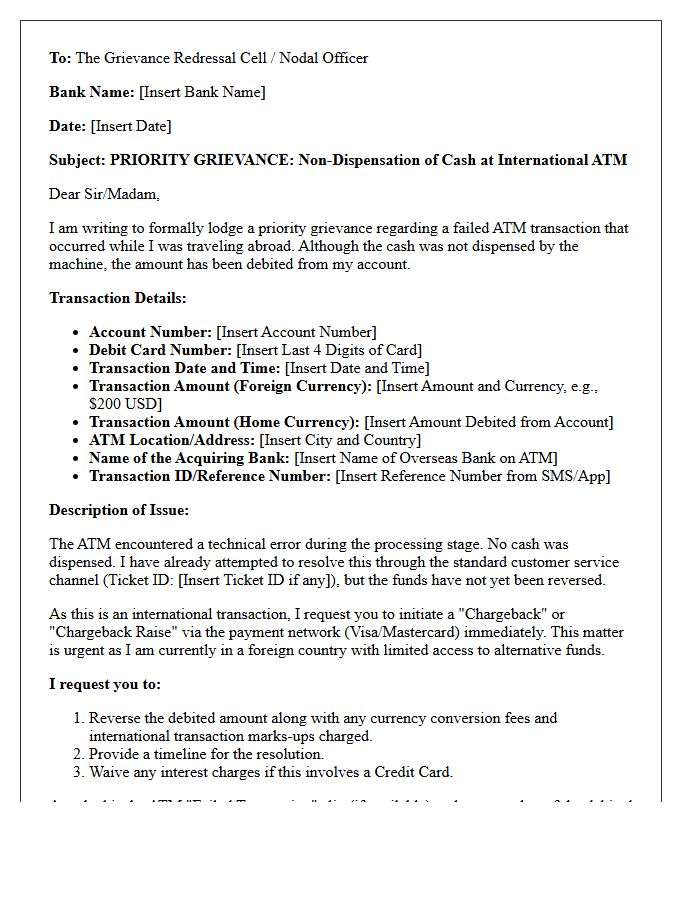
A Priority Grievance Letter is the most effective way to recover funds after an international ATM dispensation failure. When a foreign machine fails to provide cash but debits your account, you must immediately notify your home bank in writing. Explicitly mention the Transaction Reference Number, exact location, and time to ensure a formal investigation under banking regulations. Filing this formal dispute creates a legal paper trail, forcing banks to coordinate via international payment networks like Visa or Mastercard to reverse the erroneous charge and restore your balance promptly.
Reimbursement Request Grievance Letter for Delayed ATM Refund
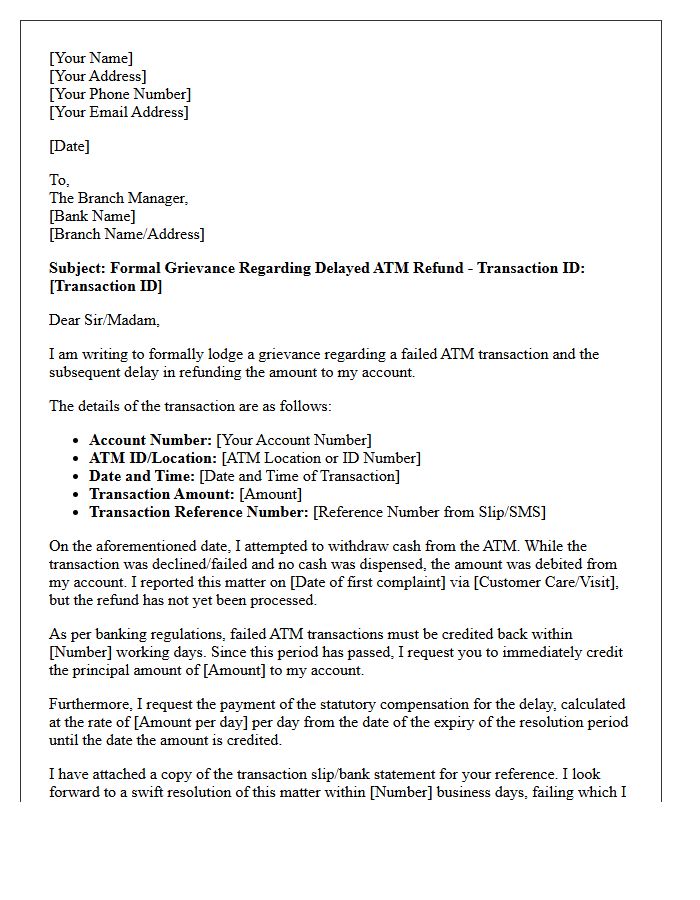
When drafting a Reimbursement Request Grievance Letter for a delayed ATM refund, you must clearly state the transaction date, location, and the specific amount failed to dispense. Formally demand a reversal of the debited funds under banking regulations, such as the Electronic Fund Transfer Act. Emphasize the unreasonable delay and mention your intent to escalate the issue to the Ombudsman or regulatory authorities if not resolved immediately. Providing a clear timeline and your transaction receipt number is essential to expedite the investigation and ensure your consumer rights are protected.
What should I include in a grievance letter for an ATM cash dispensation failure?
Your letter should include your account number, the specific ATM ID or location, the exact date and time of the transaction, the amount requested versus the amount received, and the transaction slip (or a reference number from your mobile alert).
What is the deadline for filing a complaint about an ATM transaction failure?
Most banks and regulatory bodies, such as the RBI, recommend filing a formal grievance within 30 days of the failed transaction to ensure a smooth investigation and timely reversal of funds.
How long does the bank take to refund money after a failed ATM withdrawal?
According to standard banking regulations, banks are typically required to credit the failed transaction amount back to the customer's account within 5 to 7 working days from the date of the complaint.
Can I claim compensation if the bank delays the refund for an ATM failure?
Yes, many central banks mandate that if the bank fails to re-credit the amount within the stipulated timeframe (usually 7 days), they must pay the customer a daily penalty for every day of delay.
What should I do if the bank rejects my ATM grievance claim?
If the bank rejects your claim or fails to respond within 30 days, you should escalate the matter to the Banking Ombudsman or the internal nodal officer of the bank with all supporting evidence and previous correspondence.


Comments