
Handling the estate of a loved one is difficult, especially when financial institutions fail to provide professional service. If a bank or company has mismanaged an estate settlement, you must submit a formal grievance letter for mishandling of deceased customer account to protect your rights and demand corrective action. To help you navigate this process, below are some ready to use template options.
Image cover: Professional Templates and Samples for Addressing the Mishandling of a Deceased Customer's Account
Letter Samples List
- Grievance Letter for Mishandling of Deceased Customer Account
- Grievance Letter for Unauthorized Withdrawals From a Deceased Customer Account
- Complaint Letter for Unreasonable Delays in Closing a Deceased Customer Account
- Demand Letter for the Release of Funds From a Deceased Customer Account
- Grievance Letter for the Loss of Original Documents Regarding a Deceased Customer Account
- Dispute Letter for Improper Beneficiary Recognition on a Deceased Customer Account
- Escalation Letter for Poor Staff Conduct During the Settlement of a Deceased Customer Account
- Grievance Letter for the Unjustified Freezing of a Deceased Customer Account
- Complaint Letter for Unauthorized Fees Deducted From a Deceased Customer Account
- Grievance Letter for the Failure to Transfer Assets From a Deceased Customer Account
- Warning Letter for Breach of Protocol in Handling a Deceased Customer Account
- Grievance Letter for Misinformation Provided About a Deceased Customer Account
Grievance Letter for Mishandling of Deceased Customer Account
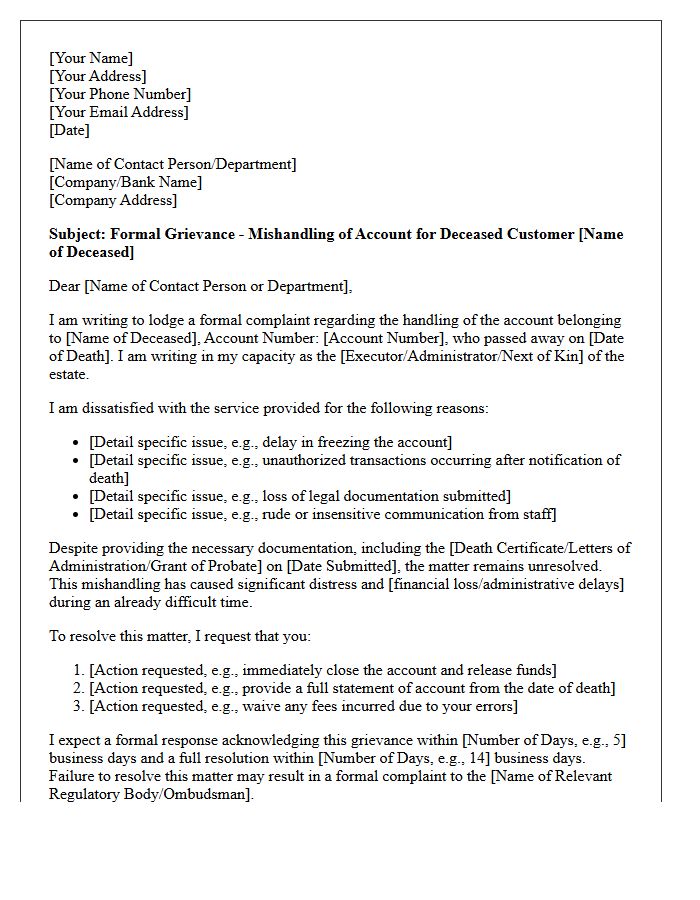
A formal grievance letter is essential when a financial institution fails to follow legal protocols after a client's death. It should clearly outline the mishandling of the deceased customer's account, such as unauthorized fees, frozen funds, or poor communication. State specific account details, provide evidence of the error, and reference the Executor's rights. This document serves as a vital record for the Ombudsman if the bank fails to resolve the issue promptly, ensuring the estate is protected and the deceased's final wishes are respected without unnecessary delays.
Grievance Letter for Unauthorized Withdrawals From a Deceased Customer Account
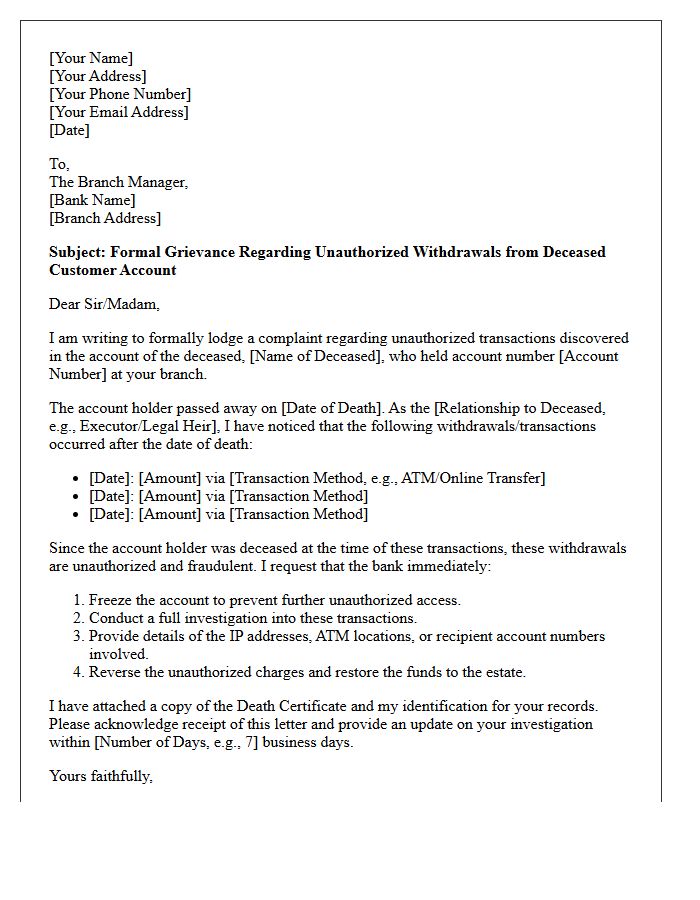
When drafting a grievance letter for unauthorized withdrawals from a deceased customer's account, you must immediately notify the bank to freeze the assets. Clearly state the account details, date of death, and specific suspicious transactions. Attach a certified copy of the death certificate and proof of your legal authority, such as letters of administration. Demand a formal investigation and a full restitution of funds. Promptly reporting these discrepancies is essential to prevent further financial loss and ensure the estate is protected from fraudulent activity or identity theft.
Complaint Letter for Unreasonable Delays in Closing a Deceased Customer Account
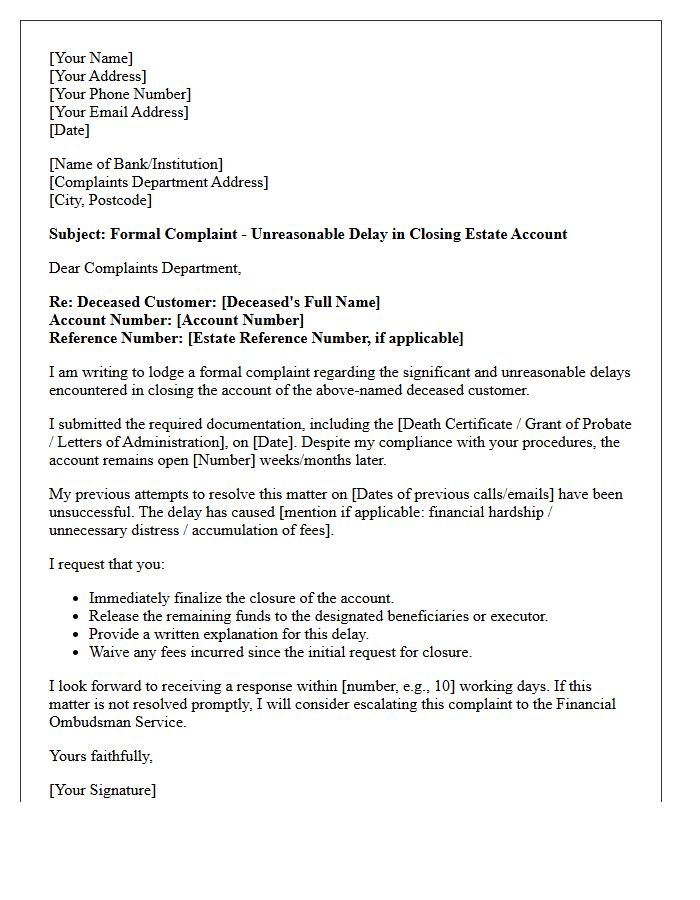
When drafting a complaint letter for unreasonable delays in closing a deceased customer's account, clearly state the executor's authority and provide the formal reference number. Emphasize that the probate process has been completed and highlight the specific timeline of inaction. Demand an immediate final settlement and a detailed explanation for the postponement. Mentioning a potential escalation to the Financial Ombudsman often accelerates the resolution. Ensure all supporting documentation, such as the death certificate, is re-attached to prevent further administrative excuses during this sensitive time.
Demand Letter for the Release of Funds From a Deceased Customer Account
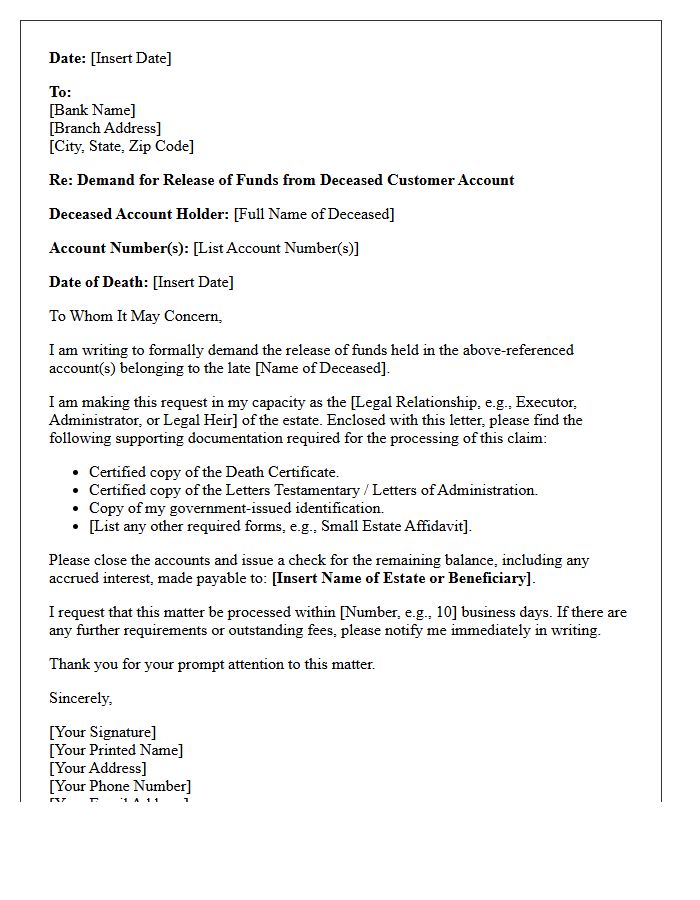
A Demand Letter for the Release of Funds is a formal legal request sent to a financial institution by an executor or beneficiary. It serves to initiate the transfer of assets from a deceased customer's account to the rightful heirs. The document must include a certified death certificate and proof of legal authority, such as Letters Testamentary. Clearly stating the account details and providing a specific deadline for compliance helps ensure the bank processes the distribution of inheritance efficiently while minimizing administrative delays or legal disputes during the probate process.
Grievance Letter for the Loss of Original Documents Regarding a Deceased Customer Account
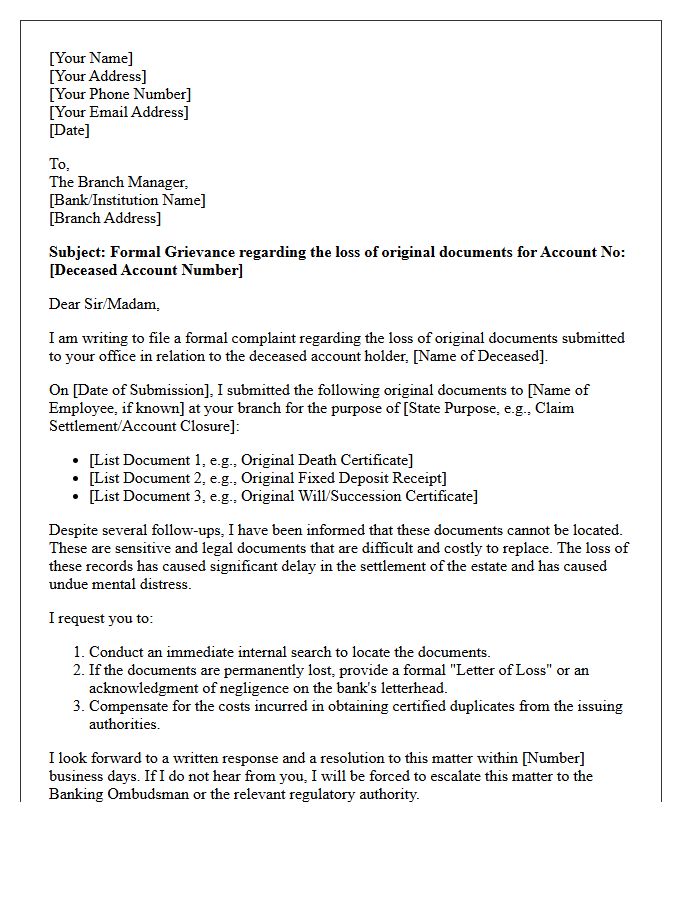
When drafting a grievance letter for the loss of original documents concerning a deceased customer's account, it is vital to provide specific details. Clearly state the account number, the nature of the lost records, and the impact on the probate or settlement process. Formally request an immediate investigation and demand a certified written explanation from the institution. Ensure you attach copies of correspondence and tracking receipts as evidence. This document serves as a formal record of bank negligence, protecting your legal rights during the estate distribution process.
Dispute Letter for Improper Beneficiary Recognition on a Deceased Customer Account
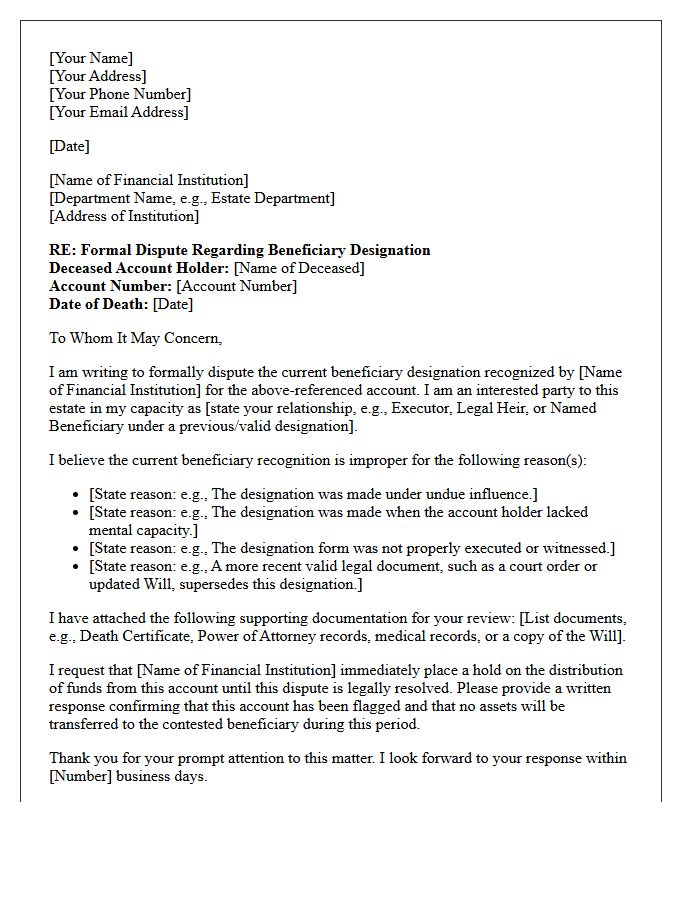
When an inheritance error occurs, a formal dispute letter is essential to challenge improper beneficiary recognition on a deceased customer's account. You must clearly state the account details, provide legal proof of your claim-such as a valid will or court order-and demand a freeze on asset distribution. Timely action prevents the bank from releasing funds to the wrong individual. This document serves as legal notice to the financial institution, ensuring they fulfill their fiduciary duty and correctly identify the rightful heirs according to governing laws.
Escalation Letter for Poor Staff Conduct During the Settlement of a Deceased Customer Account
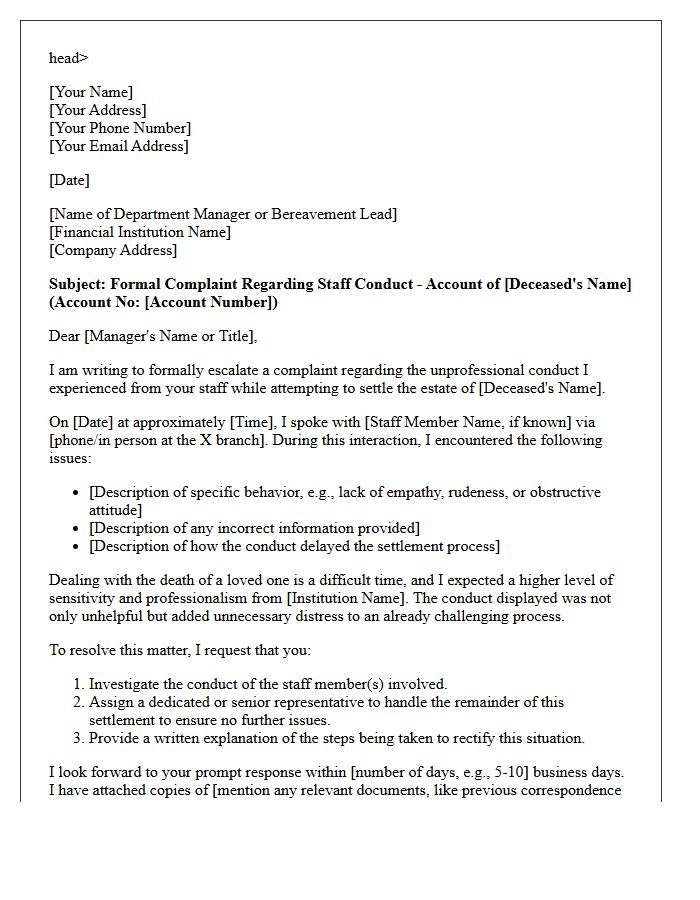
When drafting an escalation letter for poor staff conduct during a deceased customer account settlement, clarity is essential. Formally document specific instances of unprofessional behavior, including dates, names, and communication failures. Emphasize how this conduct hindered the probate process or caused undue emotional distress during bereavement. Address the correspondence to the complaints department or senior management to ensure a formal review. Clearly state your desired resolution, such as an apology, immediate account resolution, or compensation for delays, to hold the institution accountable for their service standards.
Grievance Letter for the Unjustified Freezing of a Deceased Customer Account
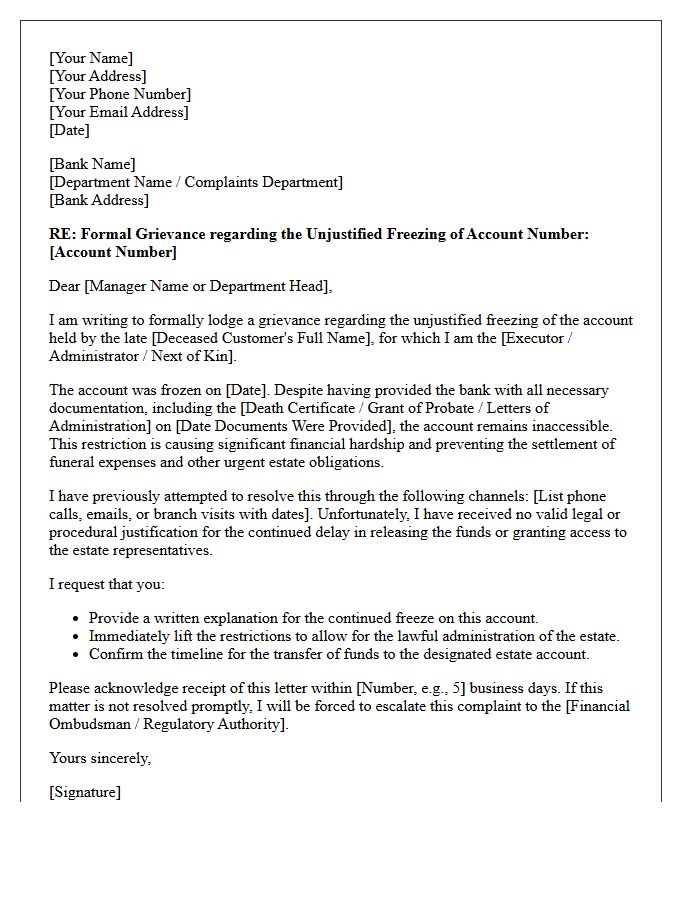
A formal grievance letter serves as a legal challenge against an unjustified account freeze following a depositor's death. It is essential to highlight that undue delays in releasing funds can cause significant financial hardship for beneficiaries. The letter must clearly outline the executor's authority and provide necessary documentation like the death certificate. By formally disputing the freeze, you compel the bank to provide a written explanation or resolve the access restrictions immediately. This document acts as vital evidence should the dispute escalate to a financial ombudsman or legal proceedings.
Complaint Letter for Unauthorized Fees Deducted From a Deceased Customer Account
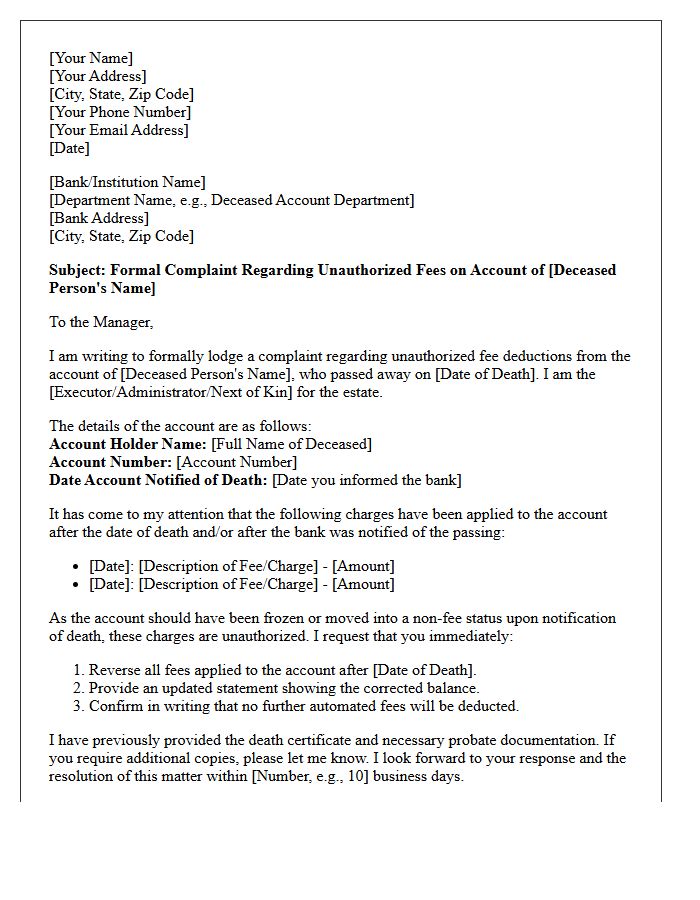
When drafting a formal complaint letter regarding unauthorized charges on a late client's account, you must act quickly to protect the estate. Clearly state the deceased customer's full name, account number, and date of death. Explicitly demand an immediate refund for any fees deducted after notification of passing. Attach a certified copy of the death certificate to verify your authority as the executor or next of kin. This document serves as legal evidence to dispute unauthorized transactions and ensures the financial institution rectifies administrative errors promptly to preserve estate assets.
Grievance Letter for the Failure to Transfer Assets From a Deceased Customer Account
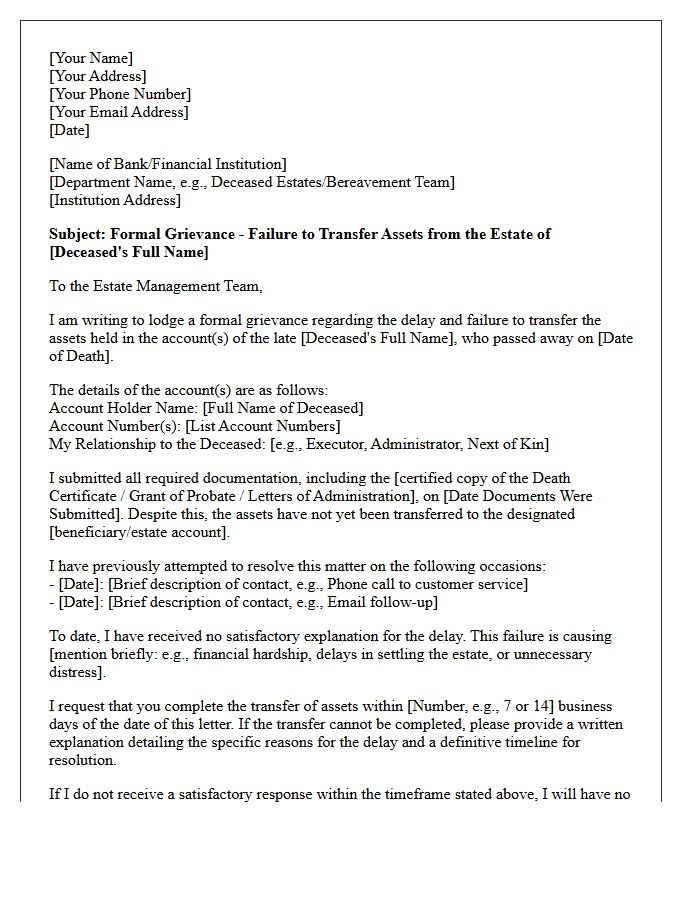
A formal grievance letter is essential when a financial institution fails to execute a legal asset transfer from a deceased customer's estate. This document must clearly state the account details, the executor's authority, and the specific failure to comply with probate instructions. It serves as a critical evidence trail for regulatory complaints or legal action. Ensure you demand a specific timeline for resolution and cite the bank's fiduciary duty to prevent further delays in estate settlement and protect the beneficiaries' rightful inheritance.
Warning Letter for Breach of Protocol in Handling a Deceased Customer Account
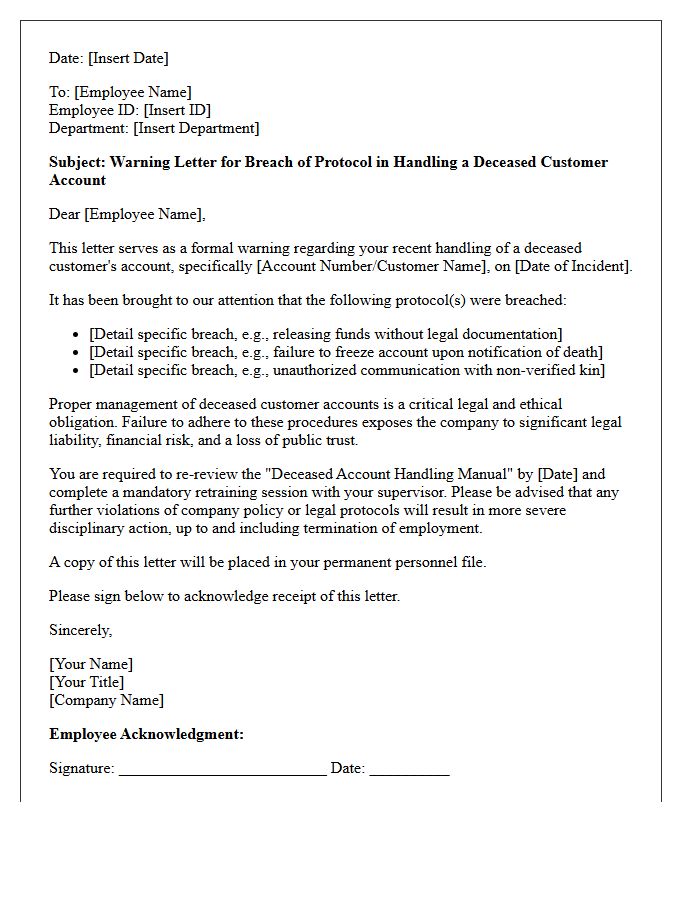
A warning letter for a breach of protocol in handling a deceased customer account serves as a formal disciplinary notice. It highlights a failure to follow strict legal and compliance procedures regarding asset protection and privacy. Key violations often include unauthorized data access or improper fund transfers before legal verification. Maintaining regulatory compliance is critical to prevent fraud and protect the bank's reputation. Employees must adhere to established internal controls to avoid legal liability or further employment termination resulting from procedural negligence during the sensitive bereavement process.
Grievance Letter for Misinformation Provided About a Deceased Customer Account
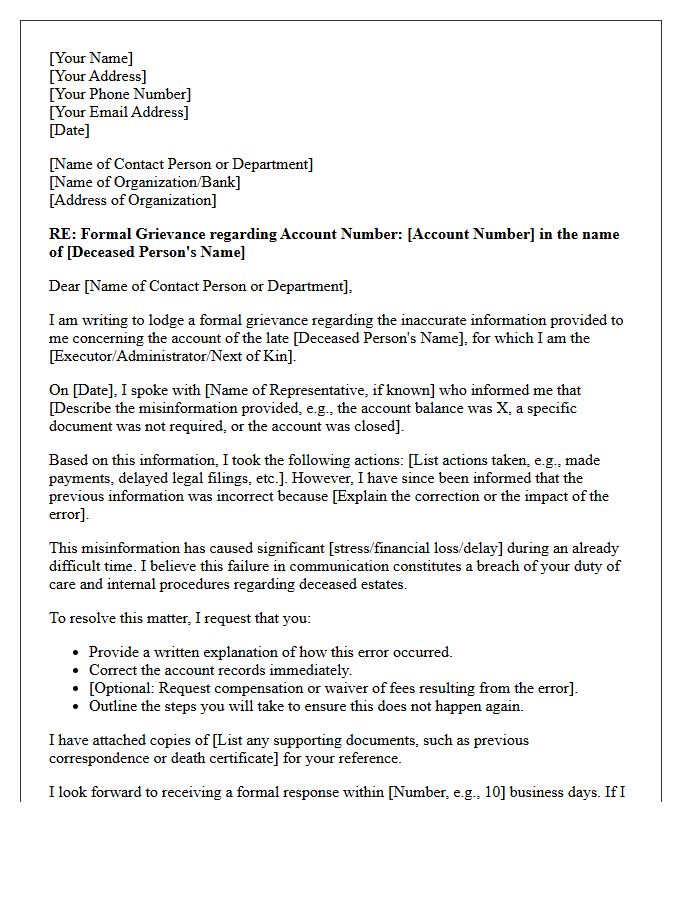
Submitting a formal grievance letter is essential when a financial institution provides incorrect information regarding a deceased customer's estate. Clearly outline the specific misinformation received, the dates of communication, and the resulting financial or emotional distress. Demand a thorough internal investigation and a corrected statement of account. Attaching supporting documents, such as death certificates or prior correspondence, ensures a semantic and factual record. This formal complaint serves as critical evidence if you must escalate the dispute to an ombudsman or legal authority to protect the beneficiary rights.
How do I write a formal grievance letter for the mishandling of a deceased customer's account?
A formal grievance letter should include the deceased person's full name, account numbers, and a clear timeline of the errors occurred. State specifically how the institution failed to follow probate instructions or legal documentation, and outline the specific resolution you expect, such as the release of funds or a formal apology.
What constitutes "mishandling" of a deceased person's bank or investment account?
Mishandling occurs when a financial institution fails to freeze accounts upon notification, allows unauthorized transactions after death, loses original legal documents like Death Certificates or Letters of Administration, or provides conflicting information that delays the distribution of the estate to lawful beneficiaries.
What information must be included in a complaint about an estate account error?
To ensure your complaint is processed, include the deceased's date of death, your legal authority as Executor or Administrator, a reference number for any previous correspondence, and specific details regarding the financial discrepancy or administrative failure you are reporting.
What are the legal timeframes for a bank to respond to a grievance regarding a deceased client?
Most financial institutions are required to acknowledge a formal grievance within 5 working days and provide a final written response within 8 weeks. If the mishandling involves a breach of probate law or causes financial loss to the estate, you may have grounds to escalate the matter to a Financial Ombudsman.
Can I claim compensation for the poor handling of a late customer's affairs?
Yes, if the institution's negligence resulted in financial loss to the estate (such as missed interest or penalty charges) or caused significant emotional distress to the grieving family, you can request "distress and inconvenience" payments as part of your formal grievance resolution.

Comments