
Managing the accounts of a late customer requires accuracy and sensitivity. This guide explains how to draft a formal Deceased Depositor Information Inquiry Response Letter to provide legal heirs or executors with necessary account details while maintaining security compliance. Streamline your banking correspondence and ensure professional communication during the estate settlement process. Below are some ready to use template.
Image cover: Official Response Templates for Deceased Depositor Account Inquiries
Letter Samples List
- Deceased Depositor Account Balance Inquiry Response Letter
- Deceased Depositor Required Documentation Request Letter
- Deceased Depositor Estate Administrator Verification Letter
- Deceased Depositor Account Status Confirmation Letter
- Deceased Depositor Beneficiary Information Response Letter
- Deceased Depositor Funds Release Authorization Letter
- Deceased Depositor Next of Kin Inquiry Response Letter
- Deceased Depositor Account Closure Confirmation Letter
- Deceased Depositor Trust Account Inquiry Response Letter
- Deceased Depositor Joint Account Survivor Notification Letter
- Deceased Depositor Unauthorized Inquiry Denial Letter
- Deceased Depositor Safe Deposit Box Inquiry Response Letter
- Deceased Depositor Outstanding Loan Obligation Response Letter
Deceased Depositor Account Balance Inquiry Response Letter
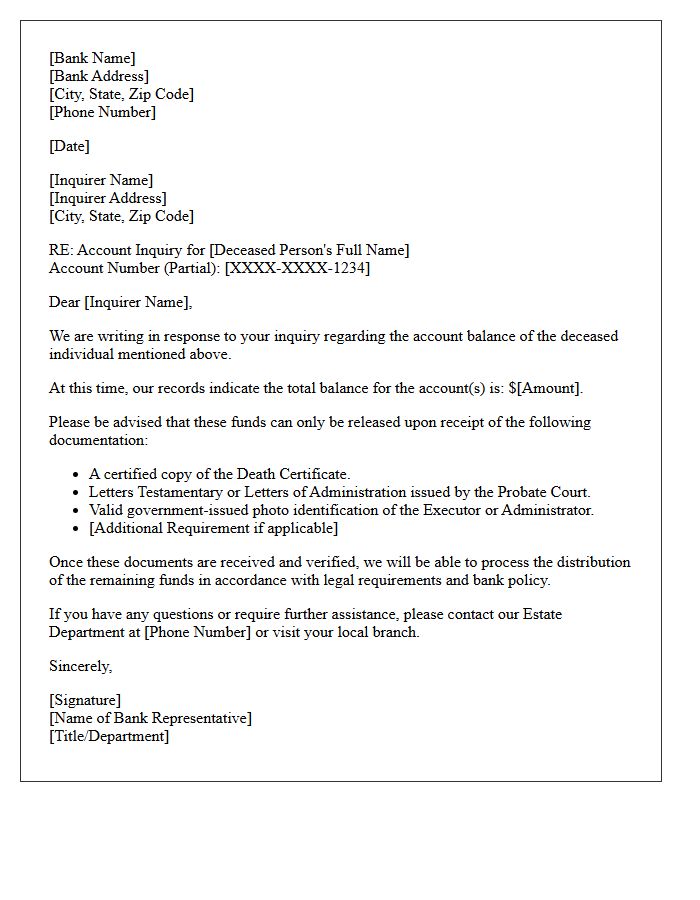
A Deceased Depositor Account Balance Inquiry Response Letter is a formal document issued by a bank to confirm account holdings following a client's death. It provides authorized legal representatives with precise financial data needed for probate proceedings and estate valuation. To receive this information, applicants must typically present a certified death certificate and letters of administration. This response ensures transparency for beneficiaries while maintaining strict privacy standards. It serves as a critical evidentiary record for settling outstanding debts and facilitating the lawful distribution of assets to rightful heirs.
Deceased Depositor Required Documentation Request Letter
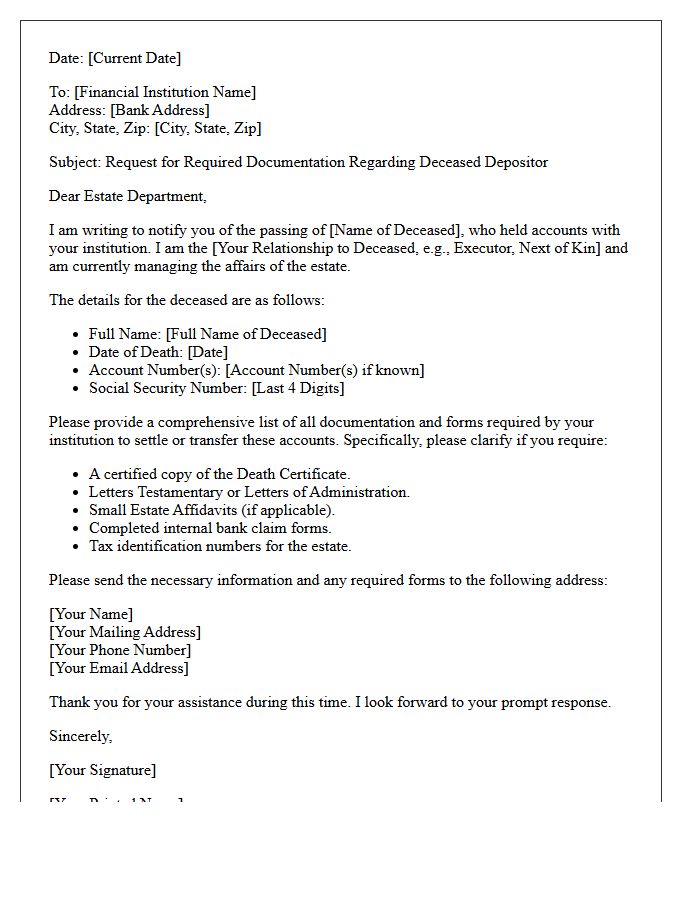
A deceased depositor documentation request letter is a formal notice sent to a bank to initiate the estate settlement process. This letter serves to identify the legal executor or administrator authorized to manage the decedent's assets. Essential requirements typically include a certified copy of the death certificate, valid government identification, and letters testamentary issued by a probate court. Submitting these documents promptly ensures the secure transfer of funds while adhering to legal compliance and banking regulations during the sensitive transition of financial responsibilities.
Deceased Depositor Estate Administrator Verification Letter
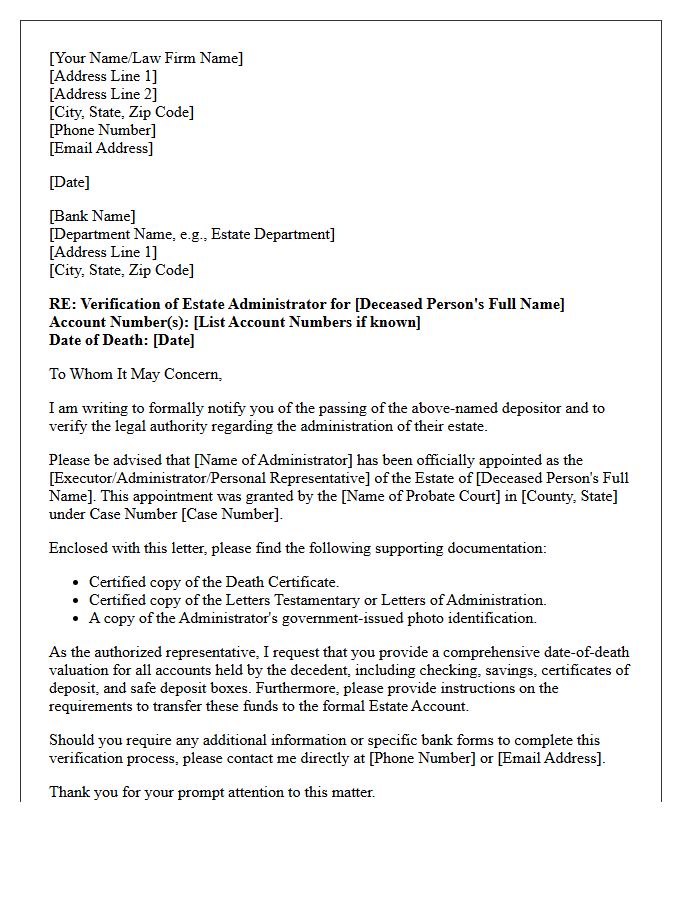
A Deceased Depositor Estate Administrator Verification Letter is a formal document required by banks to confirm an individual's legal authority to manage a decedent's bank account. This letter validates that the Estate Administrator or executor has been officially appointed by the probate court. It serves as essential proof to access funds, pay outstanding debts, and distribute assets to heirs. Without this verified authorization, financial institutions cannot release private financial information or transfer balances, ensuring the estate remains protected against unauthorized claims during the probate process.
Deceased Depositor Account Status Confirmation Letter
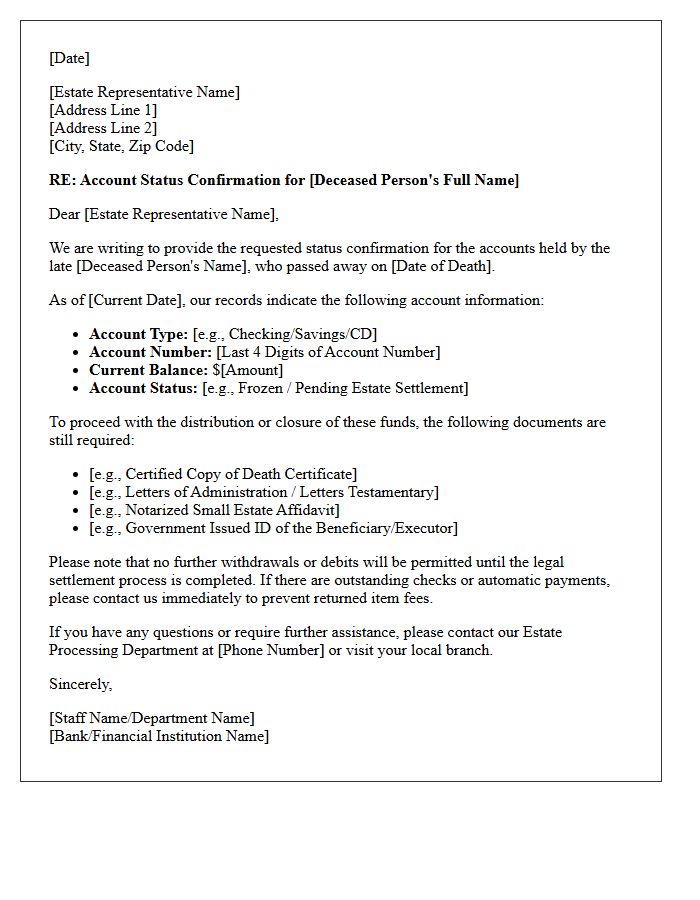
A Deceased Depositor Account Status Confirmation Letter is a formal document issued by a bank to verify the financial standing of a late account holder. It outlines current balances, outstanding debts, and accruals necessary for estate settlement. This letter serves as essential legal evidence for executors or administrators to manage probate proceedings accurately. It ensures transparency between the financial institution and the legal heirs, facilitating the secure transfer of assets while complying with banking regulations and tax requirements during the distribution of the decedent's legacy.
Deceased Depositor Beneficiary Information Response Letter
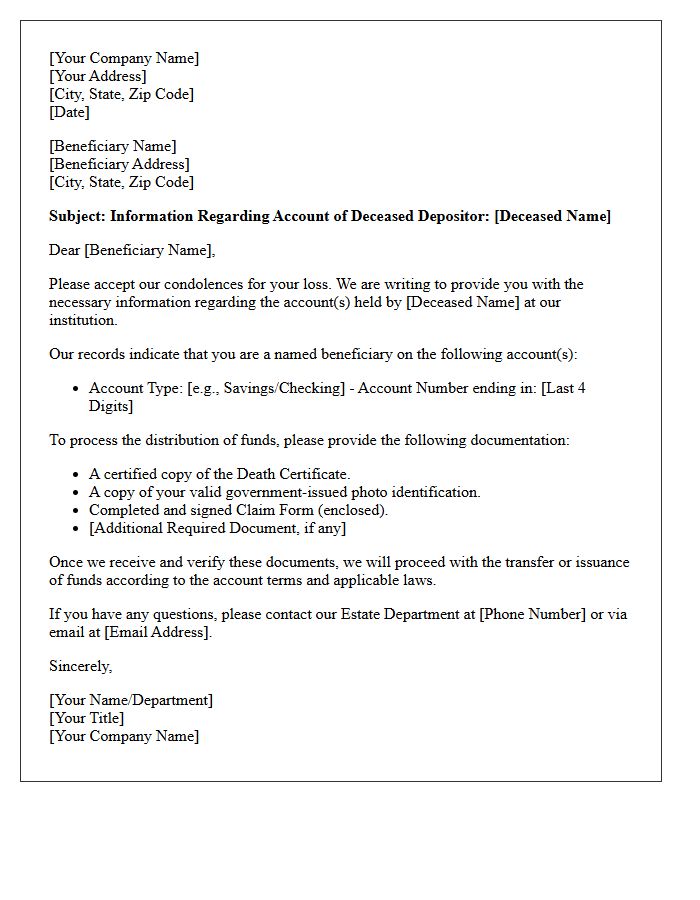
A Deceased Depositor Beneficiary Information Response Letter is a formal document issued by a financial institution to clarify inheritance rights. This legal notice outlines the specific requirements, such as a certified death certificate or letters testamentary, needed to release funds. It serves as a critical guide for designated beneficiaries to understand the distribution process and timelines. Providing an accurate response ensures the asset transfer complies with probate laws and bank policies, effectively securing the decedent's estate for their rightful heirs while minimizing potential legal delays during the settlement phase.
Deceased Depositor Funds Release Authorization Letter
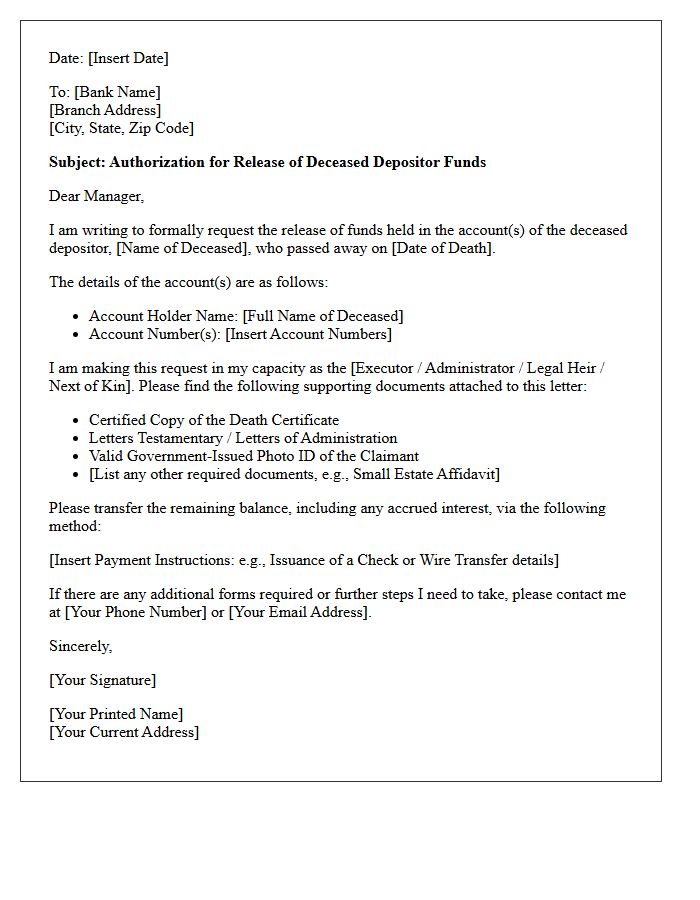
A Deceased Depositor Funds Release Authorization Letter is a legal document used to request the transfer of assets from a bank account belonging to a late individual. It must clearly state the executor or legal beneficiary authorized to receive the balance. Financial institutions typically require this letter alongside a certified death certificate and probate court orders to prevent fraud. Providing precise account details and identification ensures a smooth settlement of the estate while complying with banking regulations and inheritance laws during the asset distribution process.
Deceased Depositor Next of Kin Inquiry Response Letter
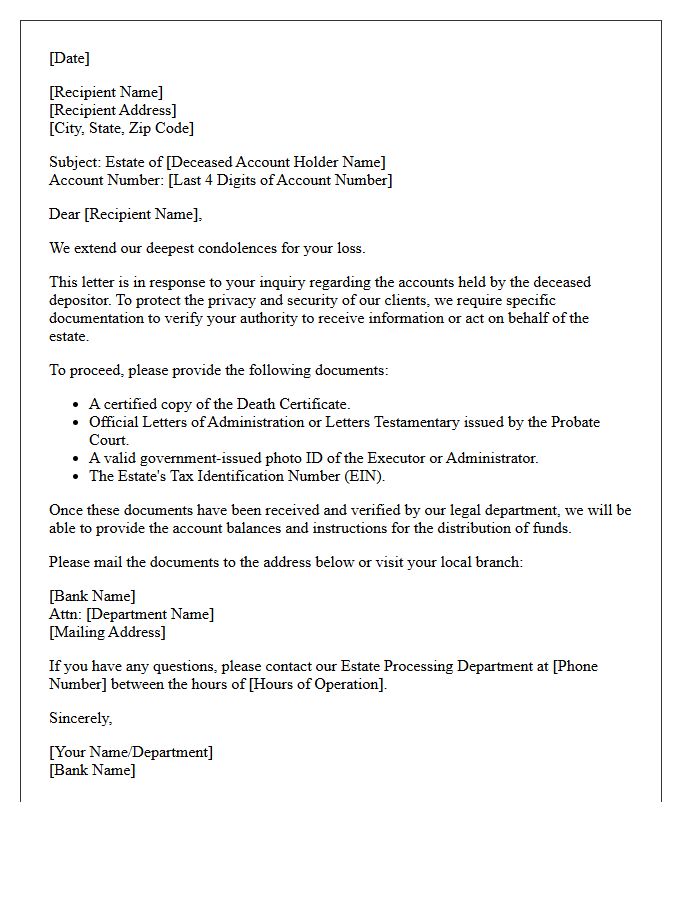
A Deceased Depositor Next of Kin Inquiry Response Letter is a formal communication from a financial institution outlining the legal requirements for accessing a late customer's funds. It serves as a compliance roadmap, detailing necessary documentation such as death certificates, letters of administration, or small estate affidavits. The primary goal is to ensure the secure transfer of assets to rightful heirs while mitigating bank liability. Understanding these probate protocols is essential for beneficiaries to navigate the settlement process efficiently and ensure all regulatory verification standards are met.
Deceased Depositor Account Closure Confirmation Letter
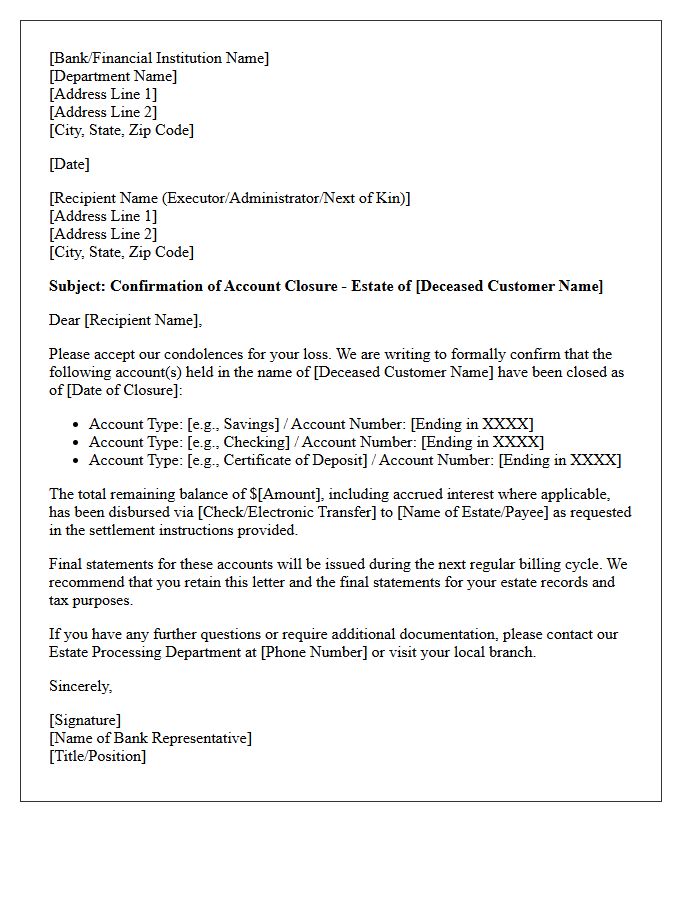
A Deceased Depositor Account Closure Confirmation Letter is a formal document issued by a bank verifying that a probate settlement has been finalized. This letter serves as legal proof that the decedent's accounts are officially closed and remaining funds have been distributed to designated beneficiaries or the estate executor. It is essential for tax filings and finalizing the estate administration process. Recipients should carefully review the transaction summary and retain this document as a permanent record to prevent future identity theft or claims against the closed accounts.
Deceased Depositor Trust Account Inquiry Response Letter
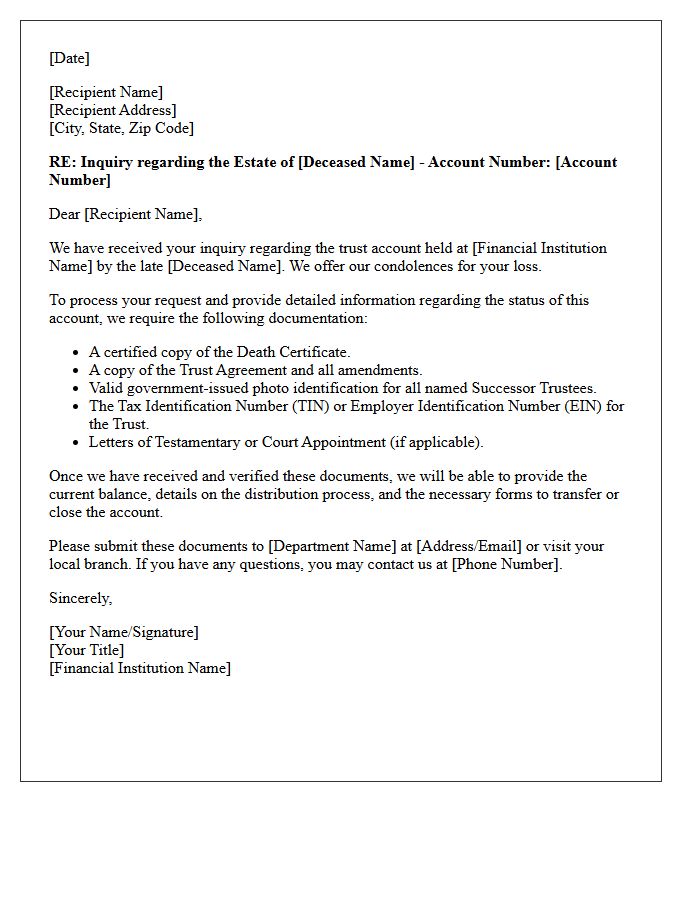
A Deceased Depositor Trust Account Inquiry Response Letter is a formal document issued by financial institutions to verify the status of a decedent's trust assets. This correspondence outlines the necessary legal requirements, such as a death certificate and letters of trust, required to facilitate the transfer of funds. It serves as a legal record for beneficiaries and executors, clarifying whether the account will be distributed through probate or according to specific trust provisions. Understanding these requirements ensures a compliant and efficient settlement process for the estate.
Deceased Depositor Joint Account Survivor Notification Letter
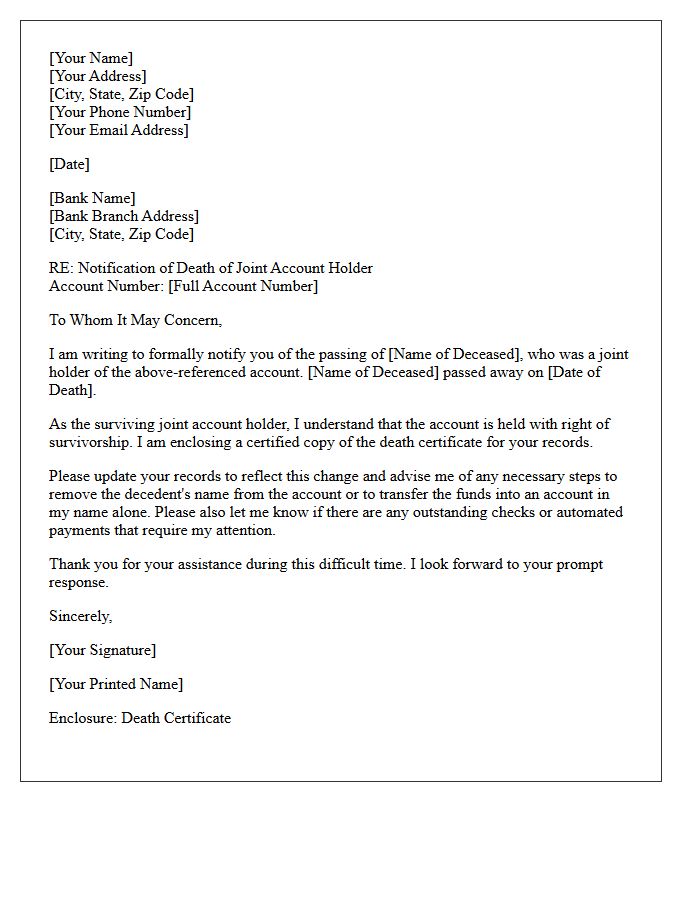
A Deceased Depositor Joint Account Survivor Notification Letter is a formal document sent to a bank to report a co-owner's death. It ensures the financial institution updates its records while confirming the right of survivorship, allowing the surviving partner to maintain access to funds. To process this transition, the bank typically requires a certified copy of the death certificate. Providing timely notification prevents account freezes and ensures legal compliance during estate settlement. Clear communication helps secure the survivor's uninterrupted access to shared assets without the need for immediate probate intervention.
Deceased Depositor Unauthorized Inquiry Denial Letter
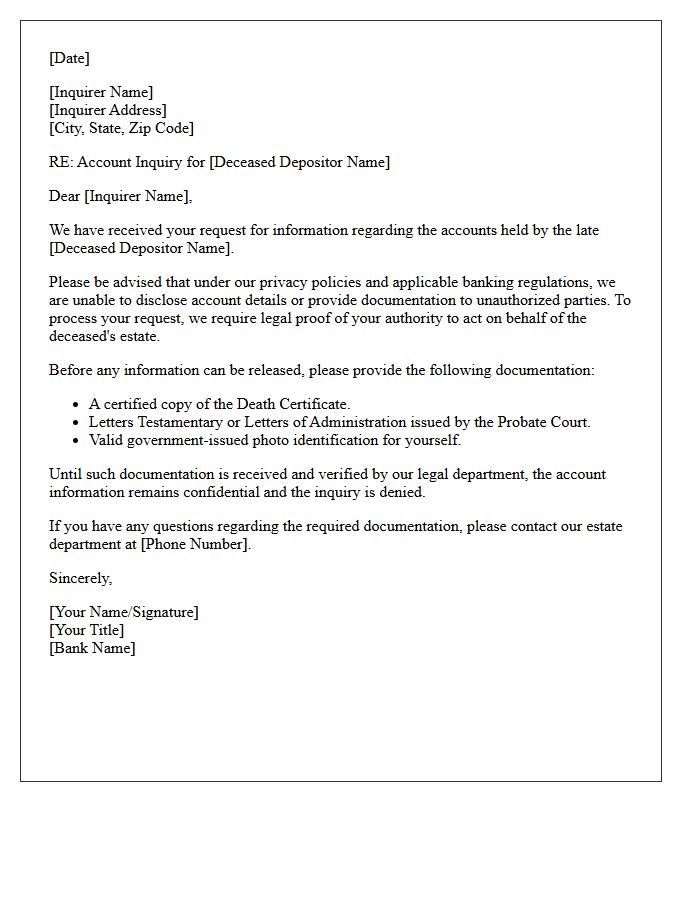
A Deceased Depositor Unauthorized Inquiry Denial Letter is a formal notification issued by financial institutions to protect account privacy. This document informs third parties that their request for information or funds has been denied due to a lack of legal authority. To gain access, claimants must typically provide letters of administration or probate court documentation. This ensures the bank complies with privacy laws and prevents identity theft or unauthorized asset distribution, safeguarding the decedent's estate until a legal executor or rightful beneficiary is officially verified through proper documentation.
Deceased Depositor Safe Deposit Box Inquiry Response Letter
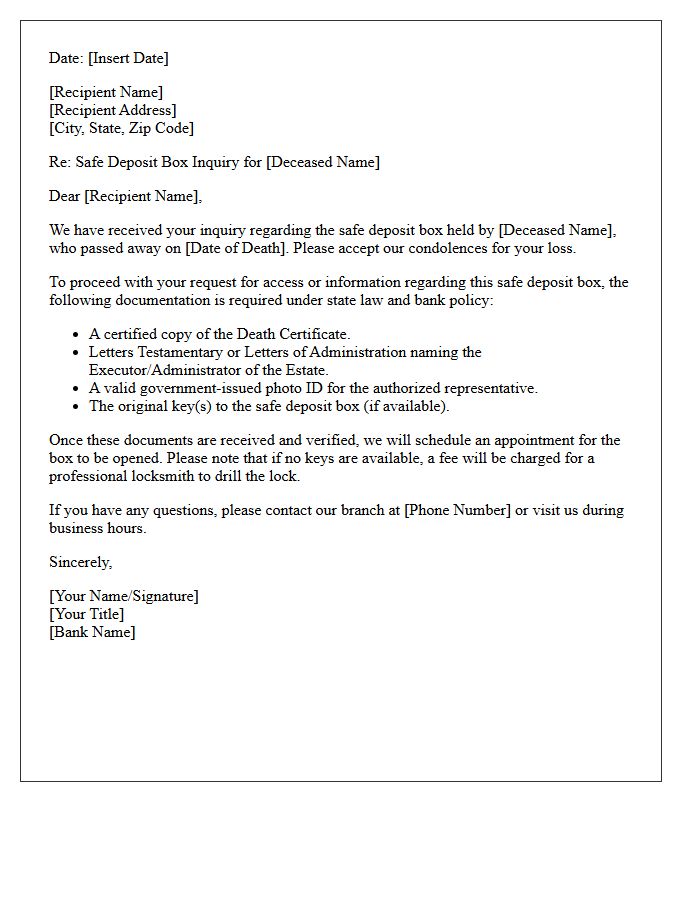
A Deceased Depositor Safe Deposit Box Inquiry Response Letter is a formal document issued by a financial institution to clarify the legal requirements for accessing a late client's assets. The Letter of Testamentary or legal appointment is the most important document needed to grant entry. This response outlines specific state laws and bank policies regarding inventory procedures and the release of contents to authorized executors. Providing this information ensures the probate process remains compliant while protecting the privacy and security of the decedent's belongings during the estate settlement phase.
Deceased Depositor Outstanding Loan Obligation Response Letter
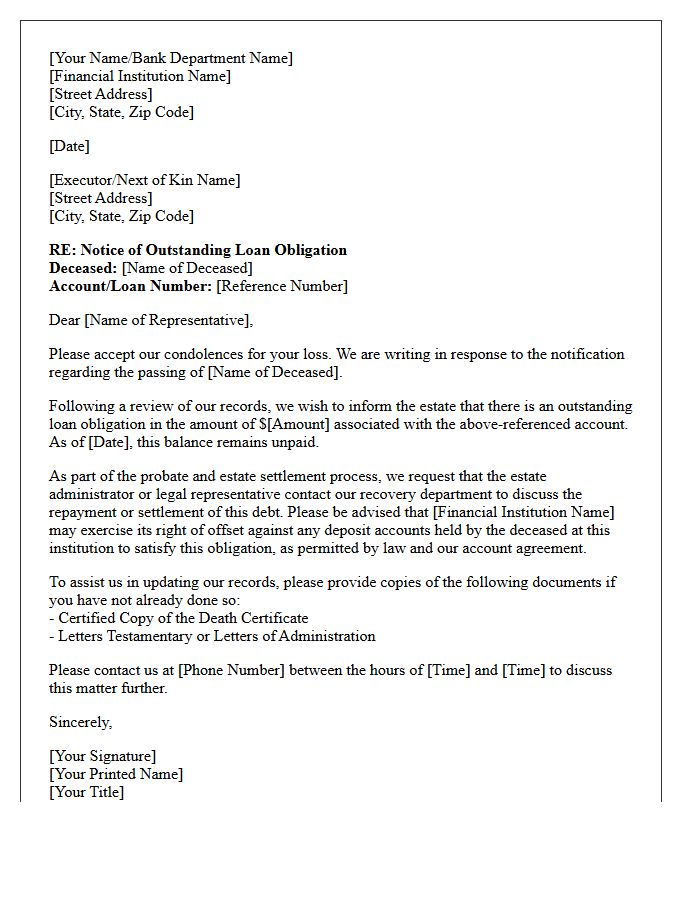
A Deceased Depositor Outstanding Loan Obligation Response Letter is a formal legal notice sent by a financial institution to the estate's executor. This document outlines the unpaid debt owed by the decedent, including principal balances and accrued interest. It serves as a formal claim against the estate assets during the probate process. Recipients must verify the debt's validity and ensure compliance with creditor priority laws before authorizing payments. Timely communication is essential to resolve liabilities, prevent additional penalties, and facilitate the accurate distribution of remaining funds to rightful heirs.
What is a Deceased Depositor Information Inquiry Response Letter?
A Deceased Depositor Information Inquiry Response Letter is an official document issued by a financial institution to inform authorized representatives about the account status, balances, and requirements for settling the estate of a deceased account holder.
Who is authorized to receive information about a deceased depositor's account?
Information is typically released only to legally recognized parties, such as a court-appointed executor, an administrator of the estate, or a verified beneficiary, provided they present valid identification and legal documentation.
What documents are required to initiate an inquiry for a deceased person's account?
Generally, you must provide a certified copy of the death certificate, letters testamentary or letters of administration, and a valid government-issued photo ID of the person making the inquiry.
How long does it take for a bank to respond to a deceased depositor inquiry?
Most financial institutions aim to provide a formal response letter within 10 to 15 business days after receiving and verifying all required legal documentation and the formal written request.
Will the response letter include details on all types of accounts held by the deceased?
Yes, the response letter typically provides a comprehensive summary of all associated holdings, including checking and savings accounts, certificates of deposit (CDs), safe deposit boxes, and any outstanding loan balances or liabilities.

Comments