
A Direct Deposit Trace Inquiry Response Letter is a formal document sent by banks or employers to address missing electronic funds. It provides essential tracking details, such as the ACH trace number, to verify transaction status and resolve payment discrepancies quickly. This guide explains how to communicate effectively with financial institutions. Below are some ready to use template options to assist you.
Image cover: Official Direct Deposit Trace Inquiry Response Templates and Letter Samples
Letter Samples List
- Direct Deposit Trace Successful Funds Located Response Letter
- Direct Deposit Trace Pending Investigation Notice Letter
- Incorrect Routing Number Direct Deposit Trace Response Letter
- Closed Account Direct Deposit Return Trace Letter
- External Financial Institution Trace Inquiry Resolution Letter
- Employer Payroll Direct Deposit Trace Confirmation Letter
- Government Agency ACH Trace Inquiry Response Letter
- Unmatched Account Name Direct Deposit Rejection Letter
- Insufficient Sender Information Direct Deposit Trace Letter
- Funds Successfully Posted Direct Deposit Trace Resolution Letter
- International Direct Deposit Trace Inquiry Response Letter
- Suspected Fraud Direct Deposit Interception Trace Letter
Direct Deposit Trace Successful Funds Located Response Letter
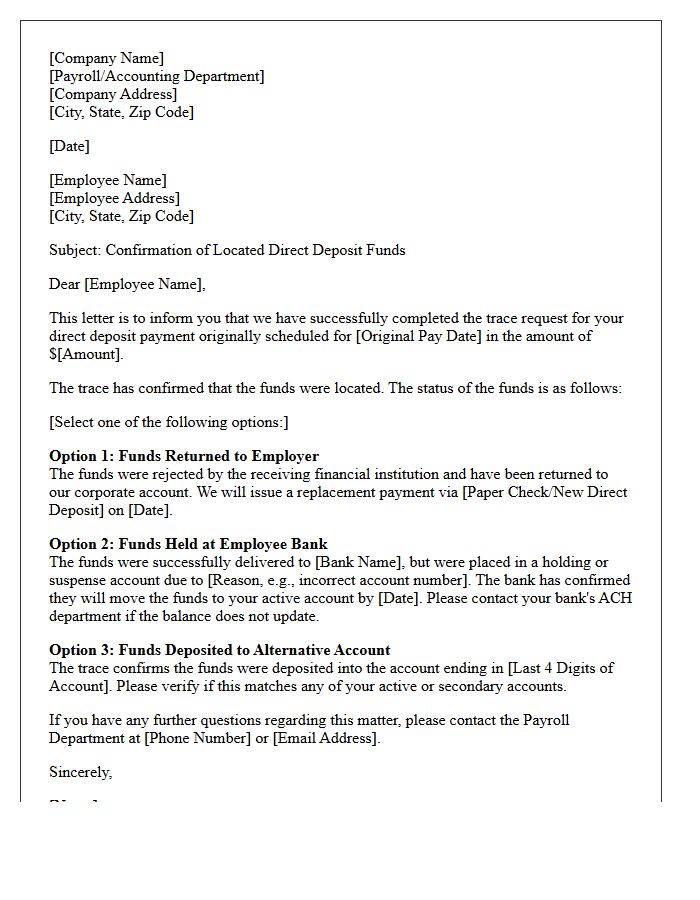
A Direct Deposit Trace Successful Funds Located Response Letter is a formal notification confirming that a missing electronic payment has been found. This document provides crucial evidence that the ACH transfer was successfully recovered or correctly routed to the recipient's bank. It typically includes the original transaction date, trace number, and current status of the capital. Receiving this letter ensures that the financial discrepancy is resolved, allowing for the timely reconciliation of accounts and providing legal proof that the funds are no longer lost within the banking system.
Direct Deposit Trace Pending Investigation Notice Letter
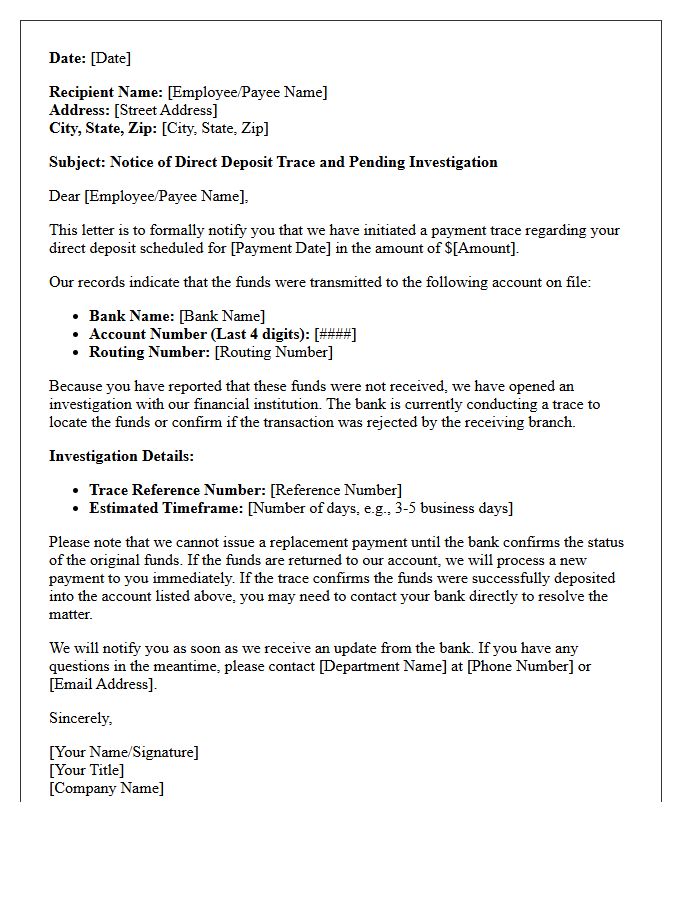
A Direct Deposit Trace Pending Investigation Notice Letter is a formal notification from a financial institution or government agency, such as the IRS, stating that a payment trace has been initiated. This occurs when a recipient reports a missing electronic transfer. The letter confirms that an inquiry is underway to locate the funds or determine if they were misdirected. It is crucial to verify your banking details during this period and allow up to six weeks for the investigation to conclude before expecting a reissued payment or status update.
Incorrect Routing Number Direct Deposit Trace Response Letter
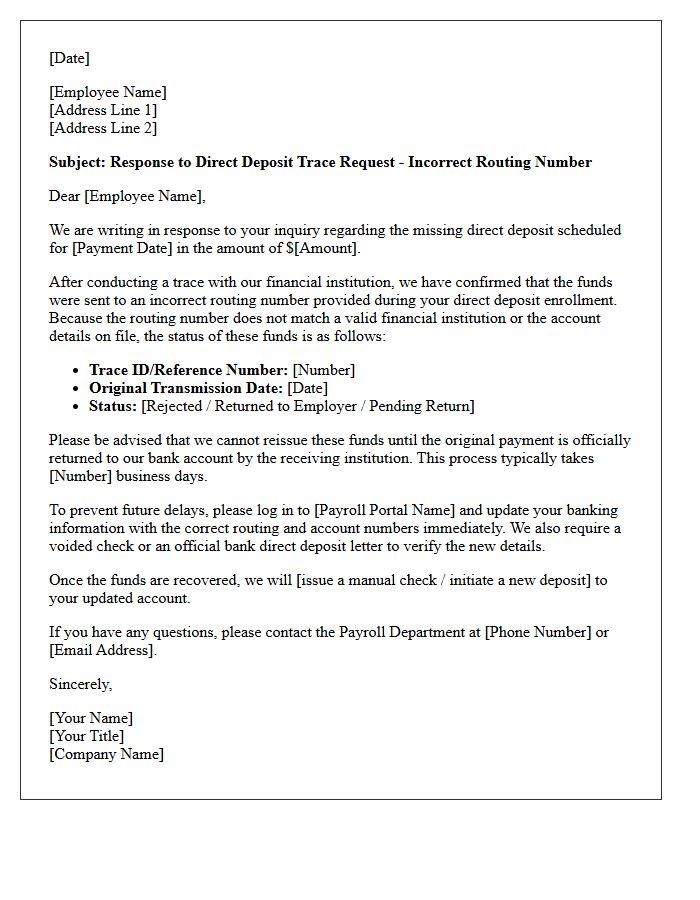
An Incorrect Routing Number Direct Deposit Trace Response Letter notifies you that funds cannot be located due to an invalid bank identifier. It is essential to confirm the correct 9-digit routing number with your financial institution immediately. This official communication often confirms that the payment was returned to the sender or held in a suspense account. To resolve the issue, provide your employer or the paying agency with a voided check to ensure accurate electronic fund transfers and prevent further payment delays or processing errors.
Closed Account Direct Deposit Return Trace Letter
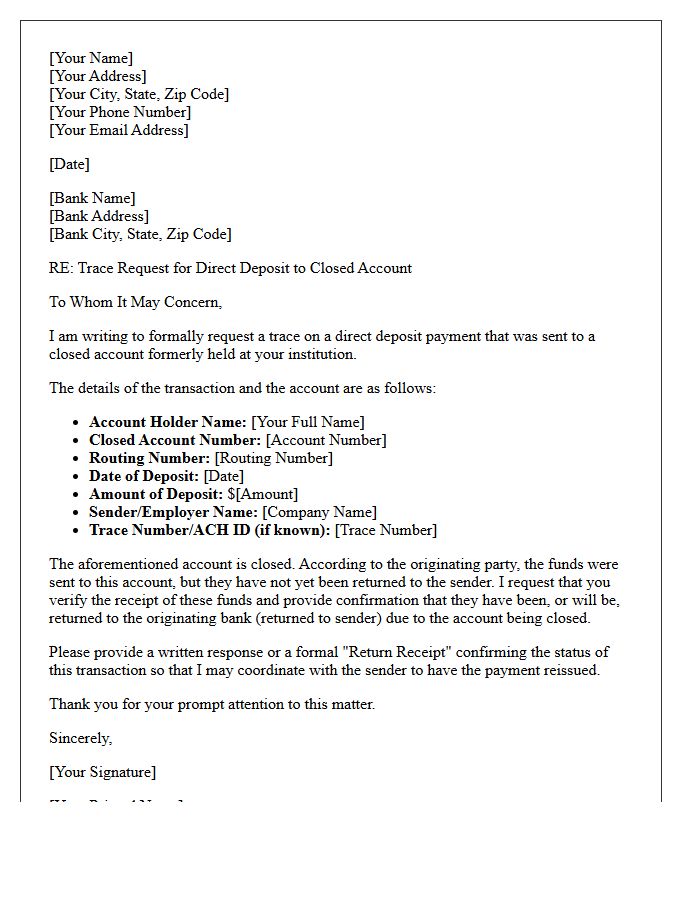
A Closed Account Direct Deposit Return Trace Letter is a formal document used to track funds sent to an inactive bank account. When a transfer fails, the receiving bank issues a Trace Number or ACH reference code to locate the missing transaction. This letter serves as official proof of the return, allowing the sender's payroll department or agency to verify the rejection. It is essential for initiating a reissue of payment to a new, active account and ensuring the recovery of misplaced electronic funds quickly and accurately.
External Financial Institution Trace Inquiry Resolution Letter
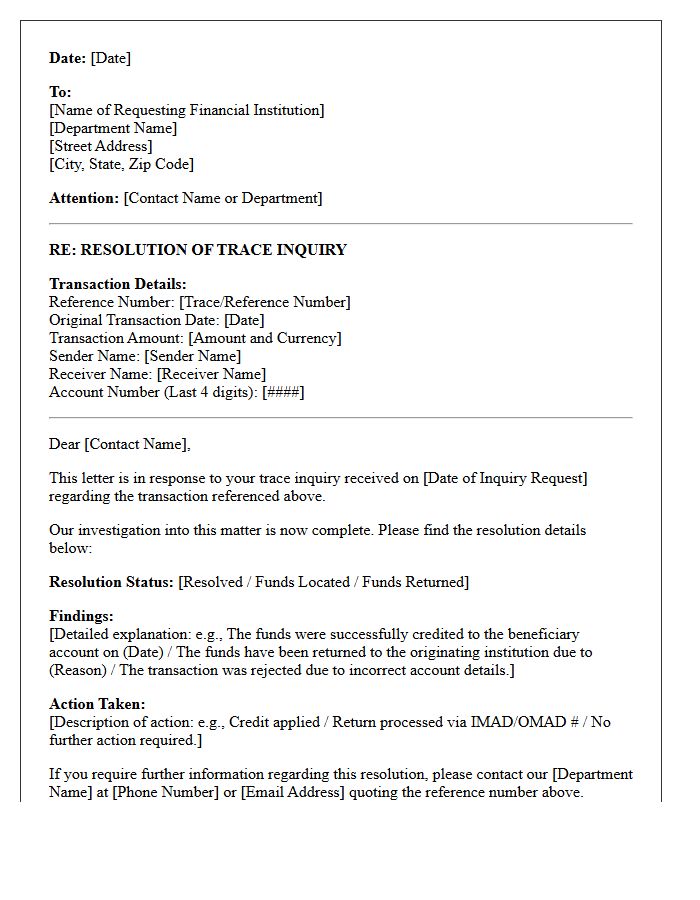
An External Financial Institution Trace Inquiry Resolution Letter is a formal document used to confirm the status of a wire transfer or electronic payment. It provides definitive proof that a transaction was successfully completed, returned, or located after an investigation. This letter serves as essential legal verification for businesses and individuals to resolve payment disputes, rectify clerical errors, and ensure financial transparency between banks. Receiving this document signifies the final closure of a payment trace, providing the necessary audit trail to reconcile accounts and settle outstanding claims effectively.
Employer Payroll Direct Deposit Trace Confirmation Letter
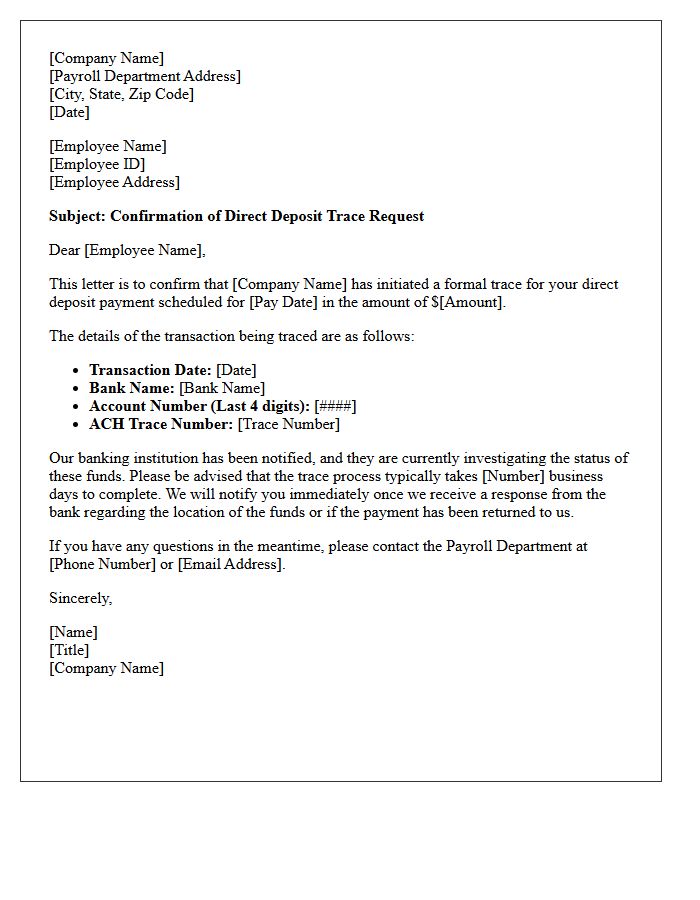
An Employer Payroll Direct Deposit Trace Confirmation Letter serves as official verification that a missing payment has been formally investigated. This document contains a unique Trace ID or Federal Reference Number, which allows your bank to locate the funds within the banking system. It confirms the transaction date, account details, and the ACH network status. Obtaining this letter is the essential first step for employees to resolve payroll discrepancies and recover lost wages when a direct deposit fails to appear in their personal bank account.
Government Agency ACH Trace Inquiry Response Letter
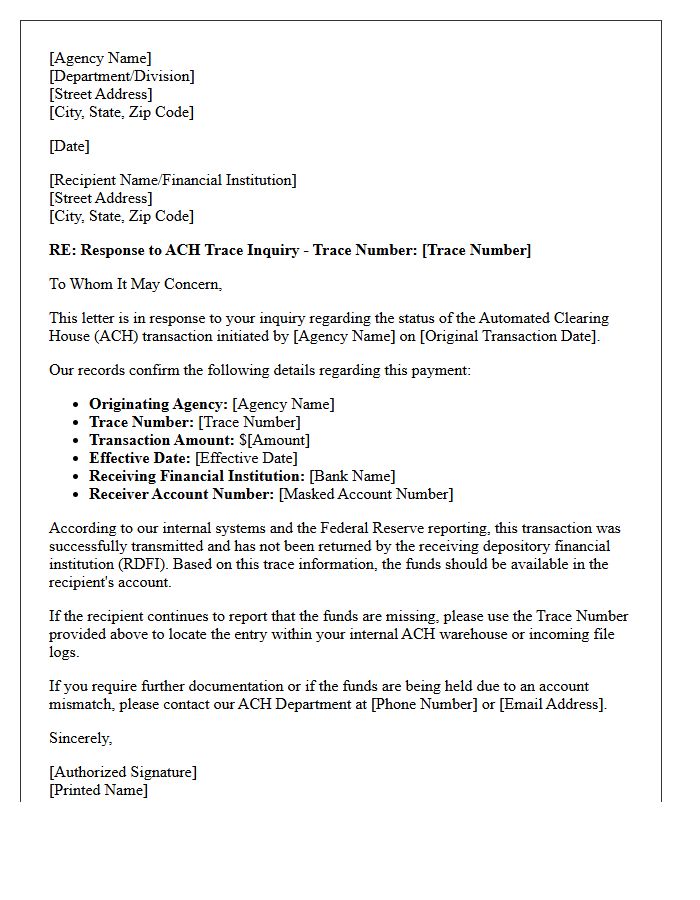
A Government Agency ACH Trace Inquiry Response Letter confirms the status of a Federal benefit payment. This document provides the Trace Number, which acts as a unique identifier for tracking electronic funds transfers. It clarifies whether a payment was successfully deposited, returned, or remains pending. Beneficiaries use this letter to resolve missing deposits or verify transaction history with their financial institution. Understanding this response is essential for ensuring payment accountability and correcting banking errors effectively.
Unmatched Account Name Direct Deposit Rejection Letter
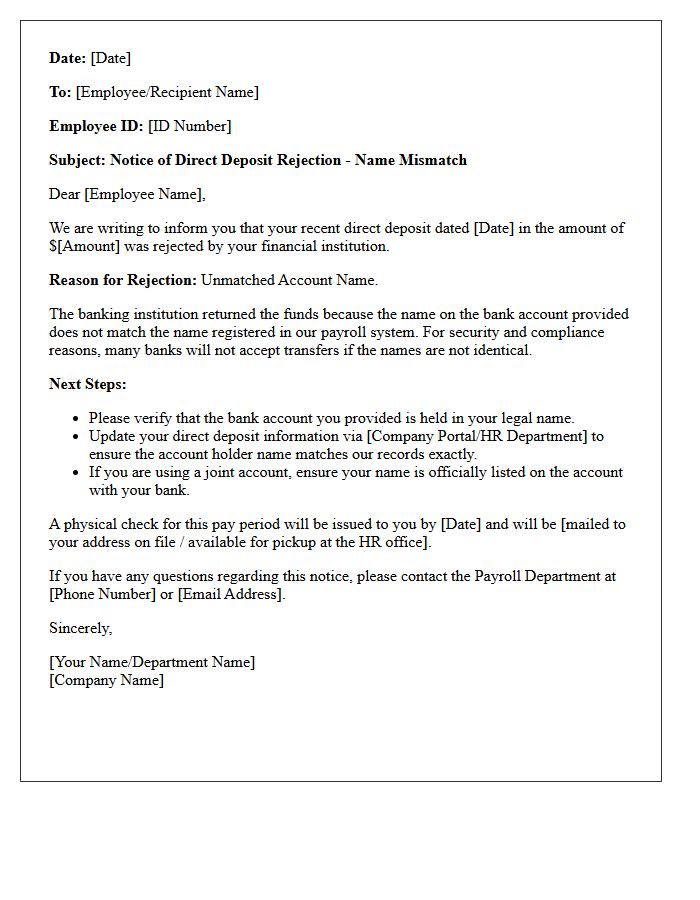
An Unmatched Account Name Direct Deposit Rejection Letter is a notification sent when the name on an incoming transfer does not align with the registered account holder. Financial institutions reject these payments to prevent fraud and ensure regulatory compliance. If you receive this notice, it means the ACH transaction was returned to the sender. To resolve this, verify that your legal name matches your banking profile exactly. Contact the originating source, such as an employer or government agency, to update your disbursement details and prevent future deposit failures.
Insufficient Sender Information Direct Deposit Trace Letter
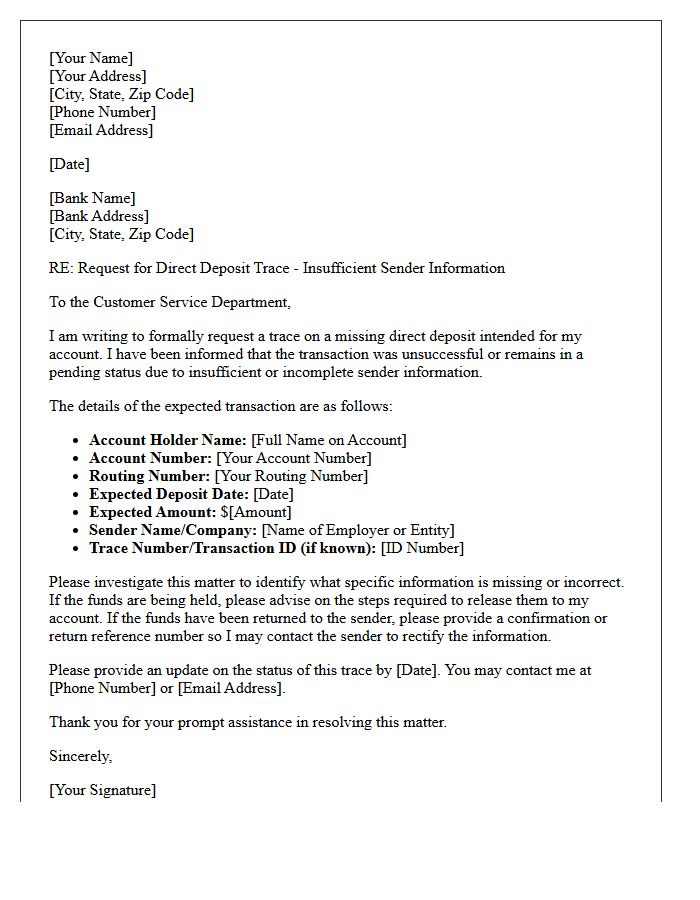
An Insufficient Sender Information Direct Deposit Trace Letter is a formal request sent by a financial institution to locate a missing electronic transfer. This occurs when critical data, such as the originator's name or account details, is incomplete or inaccurate, preventing the funds from being credited. To resolve this, you must provide a valid Trace Number (or TRN) and specific transaction details to track the payment's path. Timely submission ensures the bank can identify the sender and successfully reconcile the pending deposit into your account.
Funds Successfully Posted Direct Deposit Trace Resolution Letter
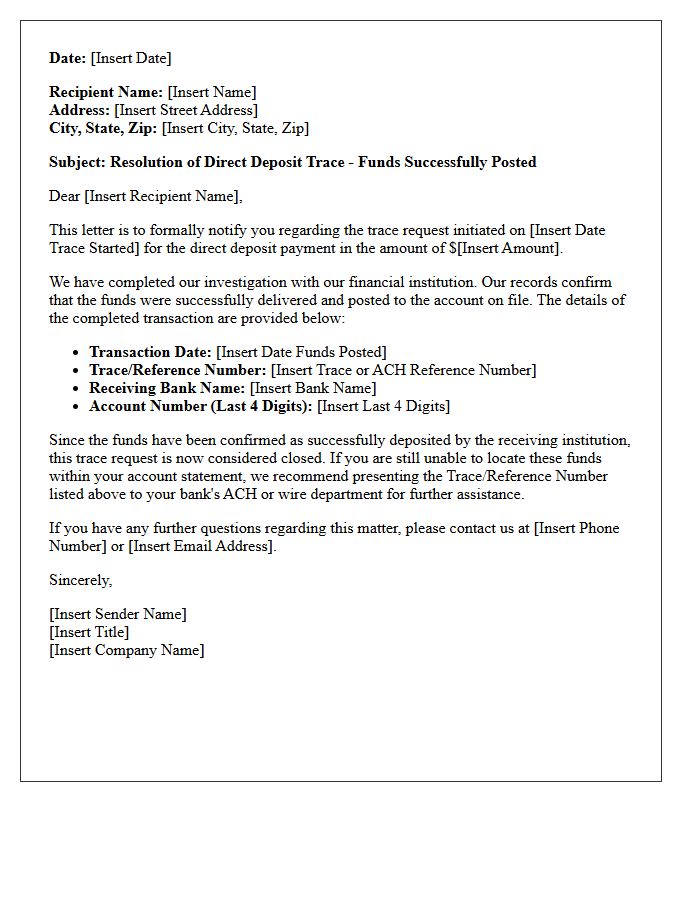
A Direct Deposit Trace Resolution Letter serves as official confirmation that a missing payment was located and credited. This document provides a Trace Number, proving the transaction reached the recipient's account. It is the final step in resolving ACH transfer discrepancies between banks. If your funds were delayed, this letter verifies the settlement date and confirms the Funds Successfully Posted, ensuring your financial records are accurate and providing peace of mind that the electronic transfer was completed as intended.
International Direct Deposit Trace Inquiry Response Letter
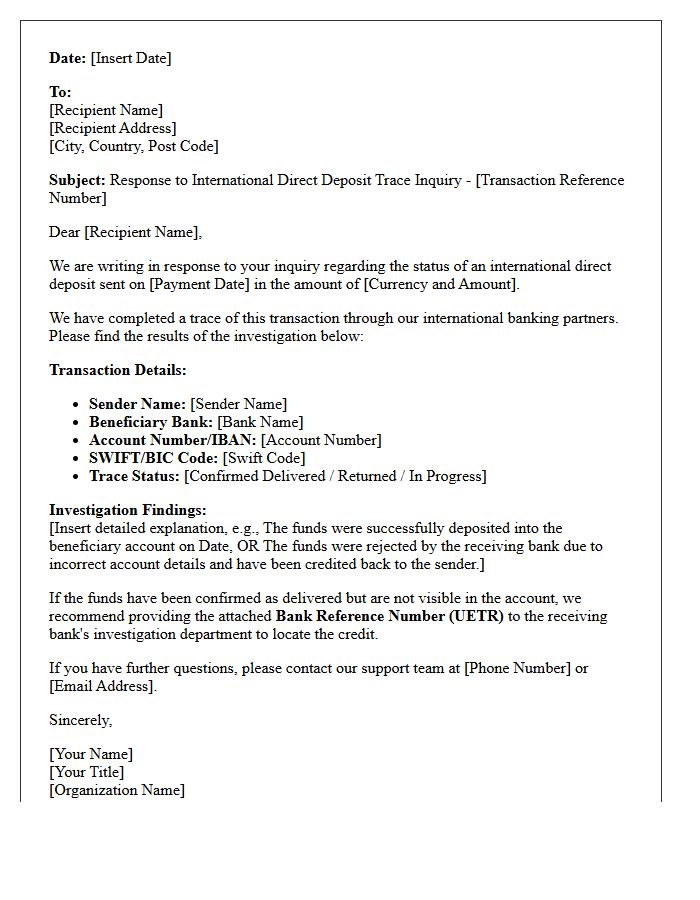
An International Direct Deposit Trace Inquiry Response Letter is a formal notification from a financial institution confirming the status of a cross-border payment. The trace inquiry process tracks funds that failed to arrive in a foreign bank account. This letter provides the unique tracking number, payment date, and final status to resolve missing transactions. It is essential for verifying if funds were successfully credited, returned, or held by an intermediary bank. Understanding this document helps recipients reconcile international transfers and ensures financial accountability across different global banking systems.
Suspected Fraud Direct Deposit Interception Trace Letter
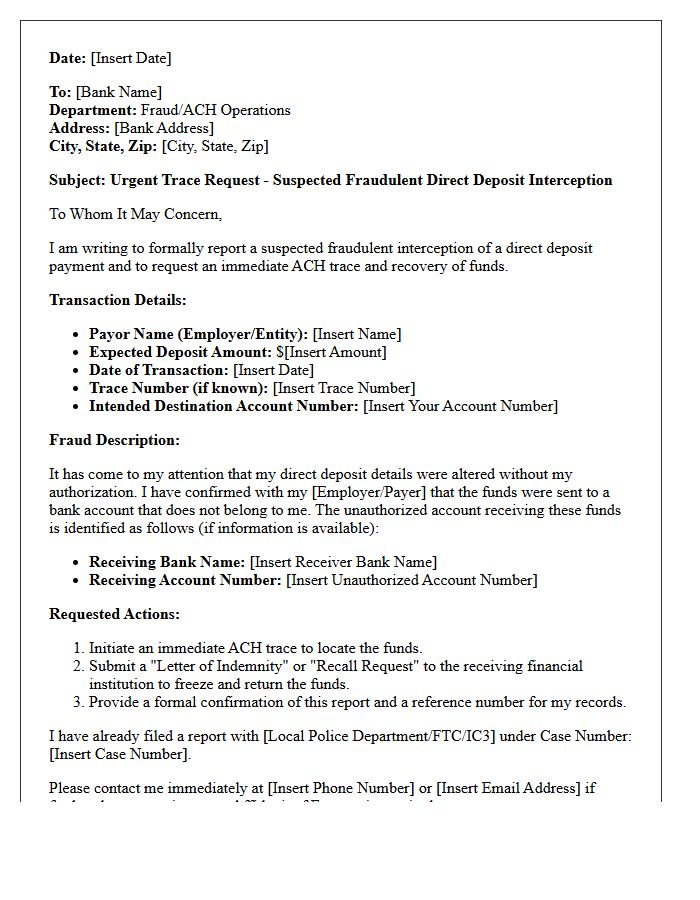
A Suspected Fraud Direct Deposit Interception Trace Letter is a formal notification issued when payroll funds are diverted to an unauthorized account. This document initiates a trace request through the ACH network to recover stolen wages. Employers must act immediately to verify routing details and contact their financial institution to flag the transaction. Timely filing is essential for recovery efforts and legal documentation. Ensuring secure employee portals and multi-factor authentication is the best way to prevent future interception attempts and maintain financial security.
What is a Direct Deposit Trace Inquiry Response Letter?
A Direct Deposit Trace Inquiry Response Letter is an official document sent by a financial institution or government agency to confirm the status and location of a missing electronic fund transfer (EFT) after a trace has been initiated.
How long does it take to receive a response to a direct deposit trace?
Most banks and agencies provide a formal response letter within 7 to 10 business days after the trace request is submitted, though international transfers or complex banking errors may extend this timeline.
What information is included in a trace inquiry response?
The letter typically includes the ACH trace number, the date the funds were released, the destination routing and account numbers, and a status update confirming if the funds were successfully deposited, rejected, or returned to the sender.
What should I do if the response letter states the deposit was successful but the funds are missing?
If the letter provides a "Front-End Trace Number" or "Reference Code" confirming a successful deposit, you must present this document to the receiving bank's ACH department to manually locate and credit the funds to your account.
Can a Direct Deposit Trace Inquiry Response Letter help recover stolen funds?
Yes, the response letter serves as legal evidence of where the money was directed. If the letter shows the funds were deposited into an unauthorized account, it can be used to file a fraud claim or police report to begin the recovery process.

Comments