
Successfully managing a Regulatory Compliance Audit Inquiry Response Letter requires precision, transparency, and timely communication. Providing a structured reply helps address auditor concerns while demonstrating your organization's commitment to legal standards and operational integrity. This guide explains how to draft professional responses that mitigate risks and ensure full compliance. To help you get started, below are some ready to use template.
Image cover: Official Templates and Samples for Regulatory Audit Inquiry Response Letters
Letter Samples List
- Anti-Money Laundering Compliance Audit Inquiry Response Letter
- Know Your Customer Documentation Regulatory Audit Response Letter
- Bank Secrecy Act Audit Findings Clarification Letter
- Consumer Financial Protection Bureau Inquiry Response Letter
- Data Privacy Security Controls Audit Response Letter
- Liquidity Coverage Ratio Regulatory Inquiry Response Letter
- Fair Lending Practices Audit Clarification Letter
- Capital Adequacy Assessment Regulatory Audit Response Letter
- Third-Party Vendor Management Compliance Inquiry Letter
- Suspicious Activity Report Filing Audit Response Letter
- Foreign Account Tax Compliance Act Inquiry Response Letter
- Credit Risk Management Policy Audit Clarification Letter
Anti-Money Laundering Compliance Audit Inquiry Response Letter
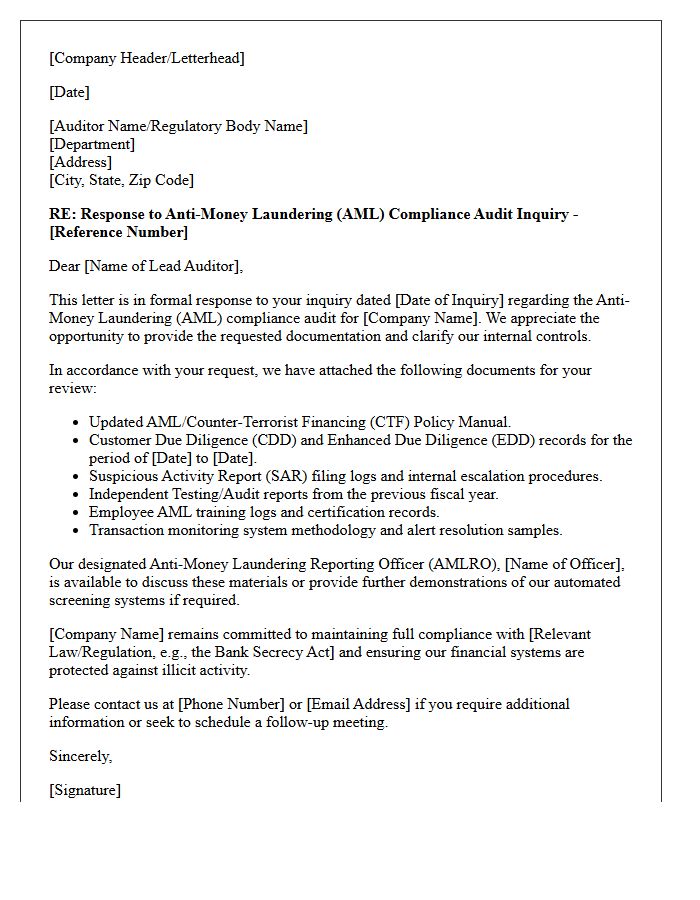
An Anti-Money Laundering (AML) audit inquiry response letter is a formal legal document addressing deficiencies identified during a regulatory examination. It is crucial to provide a transparent explanation of internal controls, risk assessments, and remediation plans. This letter serves as evidence of your institution's commitment to financial integrity and regulatory compliance. A well-structured response must include specific corrective actions, implementation timelines, and supporting documentation to mitigate enforcement risks. Timely and precise communication is essential to satisfy auditors and avoid severe penalties or loss of banking licenses.
Know Your Customer Documentation Regulatory Audit Response Letter
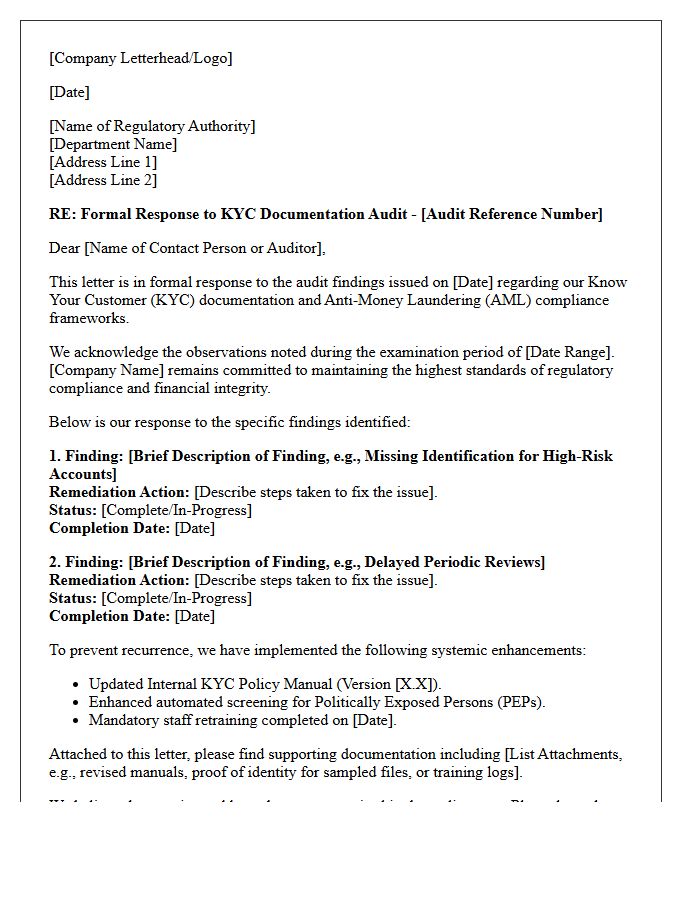
A Regulatory Audit Response Letter is a critical legal document addressing deficiencies identified during a compliance examination. When responding to findings regarding Know Your Customer (KYC) documentation, firms must provide clear evidence of remediation and enhanced due diligence procedures. The response must demonstrate regulatory alignment by detailing specific corrective actions taken to verify client identities and mitigate financial crime risks. Timely, transparent communication is essential to satisfy oversight bodies, ensure operational compliance, and avoid severe penalties or formal enforcement actions during the investigative follow-up process.
Bank Secrecy Act Audit Findings Clarification Letter
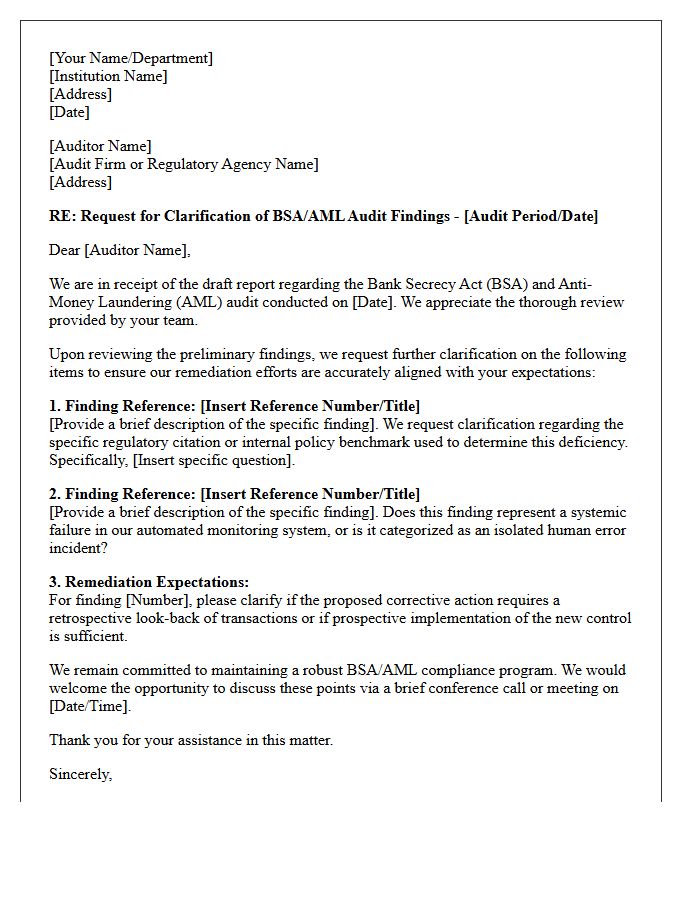
A Bank Secrecy Act Audit Findings Clarification Letter is a formal response issued by a financial institution to address deficiencies identified during an AML compliance examination. This document provides essential context, corrects factual inaccuracies, and outlines specific remediation plans to resolve regulatory concerns. It serves as a critical communication tool to demonstrate proactive governance and commitment to legal standards. Ensuring clear, evidence-based explanations within this letter can mitigate potential enforcement actions and improve the institution's overall risk profile before the final audit report is solidified.
Consumer Financial Protection Bureau Inquiry Response Letter
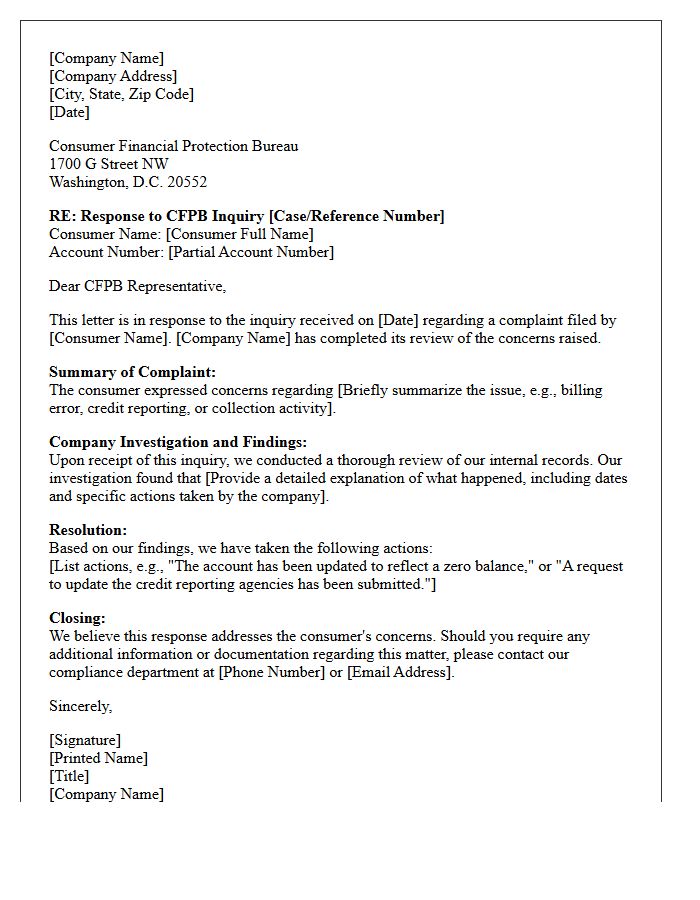
A Consumer Financial Protection Bureau (CFPB) Inquiry Response Letter is a formal document issued by a financial institution to address a consumer complaint filed through the bureau. It is essential to review the response for accuracy, as it outlines the company's official position and any corrective actions taken. This letter serves as a critical regulatory record that can influence your credit report or legal standing. Consumers have the right to provide feedback if the resolution is unsatisfactory, making this document a key tool in resolving disputes and ensuring fair treatment within the marketplace.
Data Privacy Security Controls Audit Response Letter
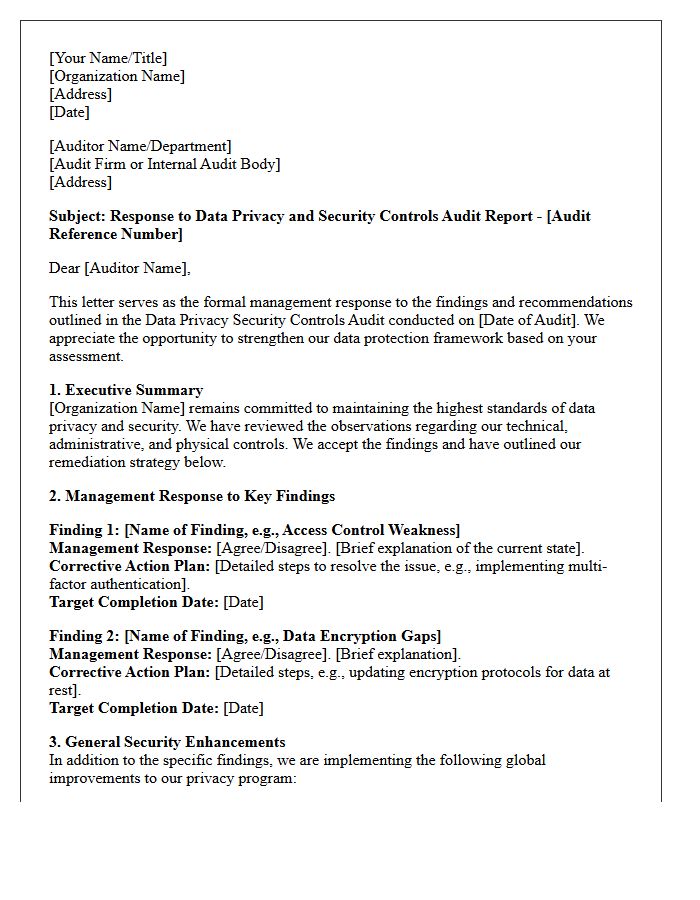
A Data Privacy Security Controls Audit Response Letter is a formal document verifying an organization's compliance with protection standards. It addresses specific inquiry points from auditors regarding technical safeguards, administrative policies, and encryption protocols. This letter serves as critical evidence that sensitive information is managed according to legal frameworks like GDPR or SOC2. Clear documentation of remediation actions and control effectiveness is essential to build stakeholder trust and mitigate legal risks. Providing precise, evidence-based answers ensures a successful audit outcome and demonstrates a robust commitment to information security and data integrity.
Liquidity Coverage Ratio Regulatory Inquiry Response Letter
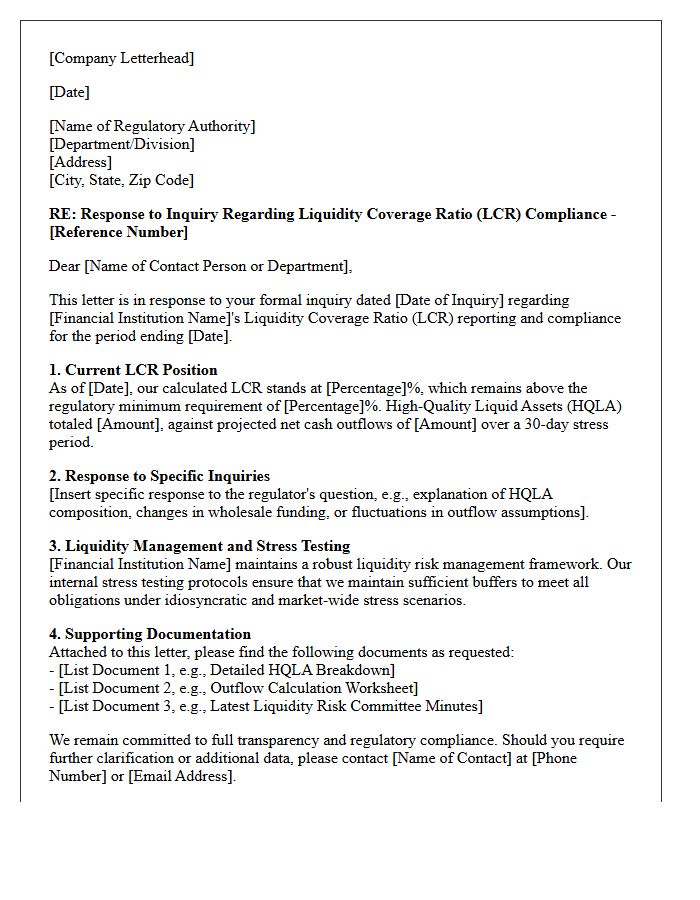
A Liquidity Coverage Ratio (LCR) Regulatory Inquiry Response Letter is a formal document submitted to financial supervisors addressing specific concerns regarding short-term liquidity resilience. It must provide granular data on High-Quality Liquid Assets (HQLA) and projected net cash outflows over a thirty-day stress period. The primary objective is to demonstrate compliance with Basel III standards by proving the institution maintains sufficient liquidity to survive severe market turbulence. Accuracy is vital, as this response informs regulatory assessments of the bank's overall financial stability and risk management capabilities.
Fair Lending Practices Audit Clarification Letter
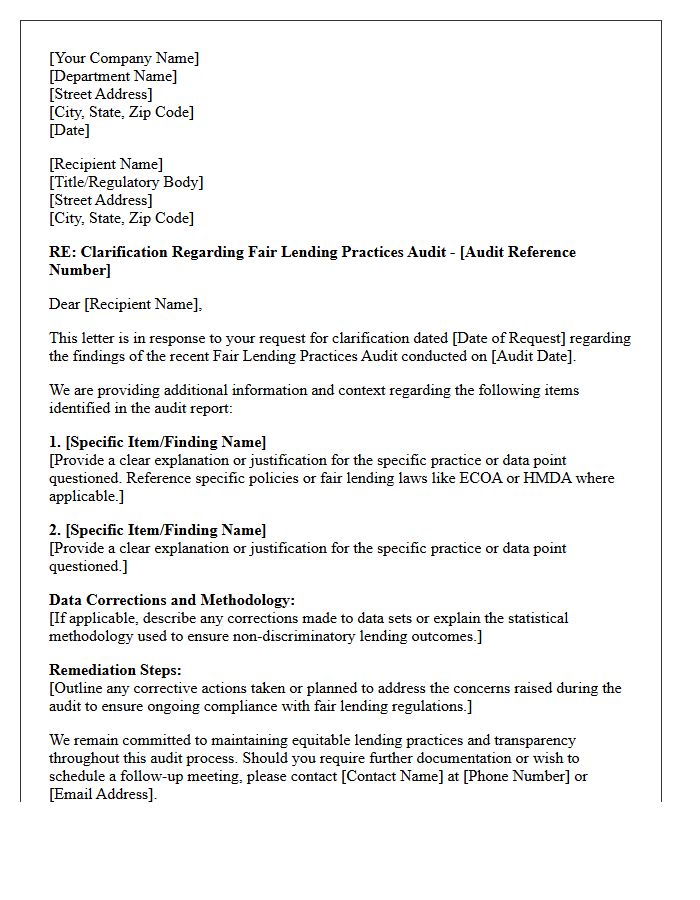
A Fair Lending Practices Audit Clarification Letter is a formal document issued by regulatory bodies or auditors to resolve discrepancies found during a compliance review. It requests specific evidence to ensure a financial institution adheres to Equal Credit Opportunity Act (ECOA) standards. The letter focuses on identifying potential disparate impact or discriminatory patterns in lending decisions. Timely and precise responses are critical to demonstrate transparency, justify underwriting variations, and avoid legal penalties or reputational damage. This process ensures all loan applicants receive equitable treatment regardless of protected characteristics.
Capital Adequacy Assessment Regulatory Audit Response Letter
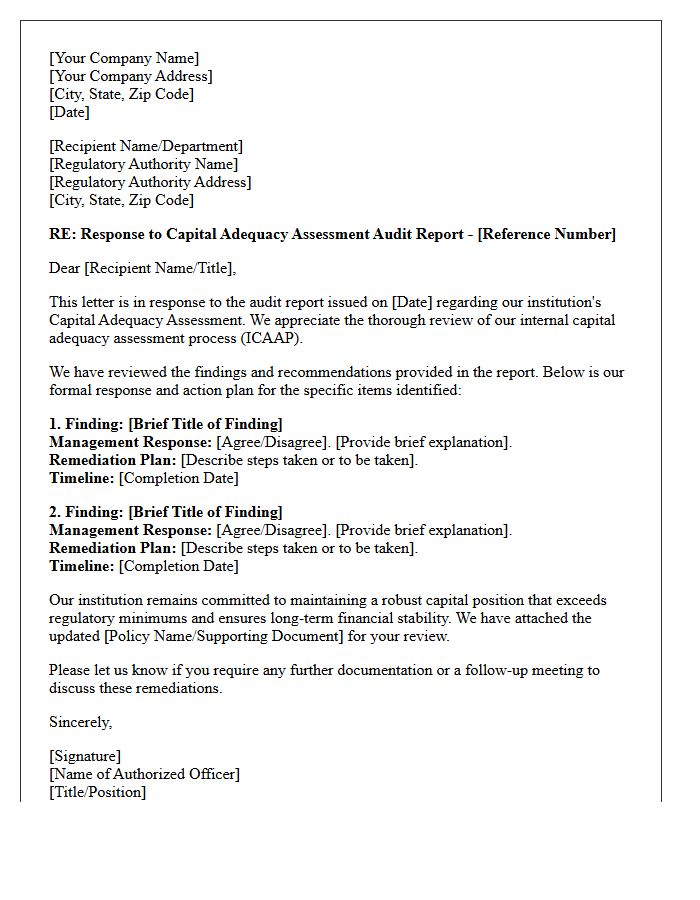
A Capital Adequacy Assessment Regulatory Audit Response Letter is a critical document addressing findings from a financial oversight review. It must formally detail remediation plans and corrective actions taken to ensure solvency compliance with Basel III or local standards. The letter serves to demonstrate that the institution maintains sufficient equity to cover risk-weighted assets. Providing a clear, data-driven timeline for resolving deficiencies is essential to satisfy regulators, mitigate legal risks, and maintain the bank's operational license by proving long-term financial stability and robust internal risk management protocols.
Third-Party Vendor Management Compliance Inquiry Letter
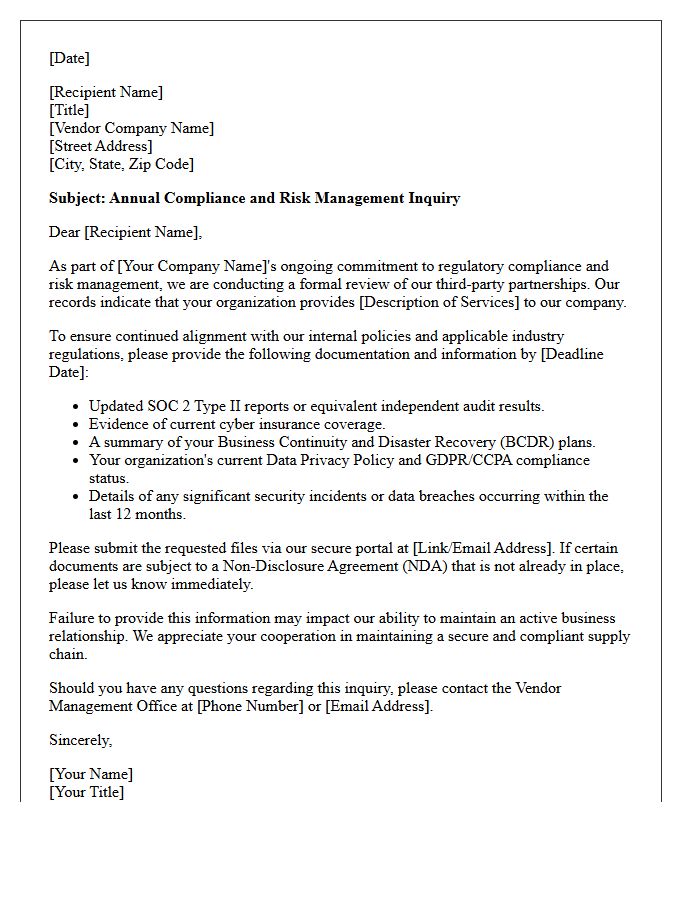
A Third-Party Vendor Management Compliance Inquiry Letter is a formal document used to assess whether external partners meet specific regulatory standards and security protocols. This inquiry is a critical component of due diligence, ensuring that vendors mitigate operational risks and protect sensitive data. Organizations use these letters to verify compliance with frameworks like SOC2, GDPR, or HIPAA before finalizing contracts. Proactively managing these inquiries helps prevent legal liabilities and strengthens the overall integrity of the supply chain by identifying potential vulnerabilities in a service provider's internal controls.
Suspicious Activity Report Filing Audit Response Letter
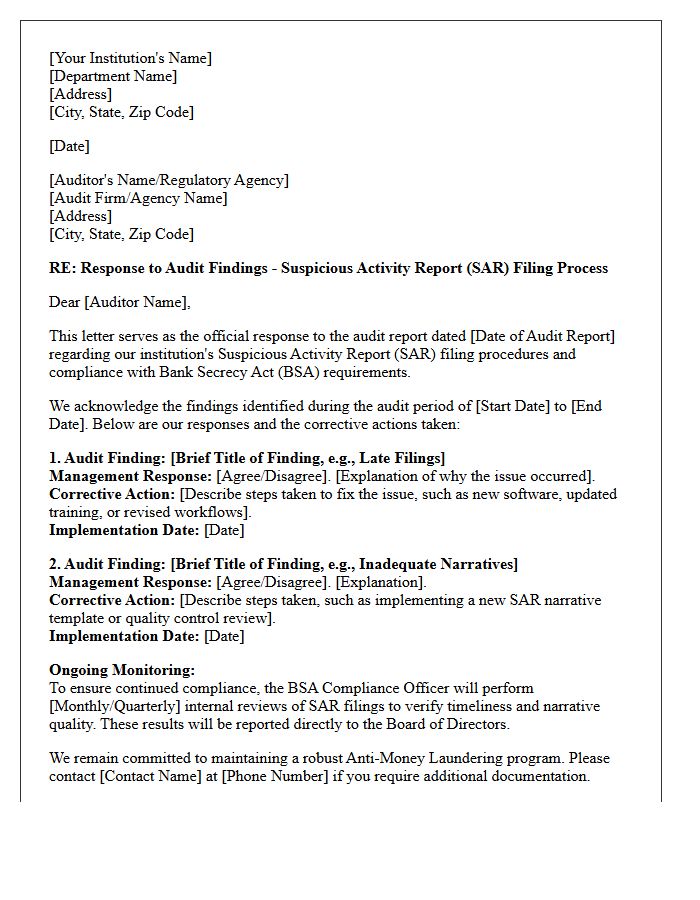
A Suspicious Activity Report (SAR) Filing Audit Response Letter is a formal document submitted by a financial institution to regulators or auditors. It addresses identified deficiencies in anti-money laundering (AML) compliance protocols. This communication must detail specific remediation actions taken to correct filing errors, improve monitoring systems, or enhance staff training. Providing a clear, evidence-based response is critical to demonstrating regulatory compliance and mitigating potential legal penalties. Timely submission ensures the institution remains in good standing with governing bodies like FinCEN by proving robust internal oversight of financial reporting obligations.
Foreign Account Tax Compliance Act Inquiry Response Letter
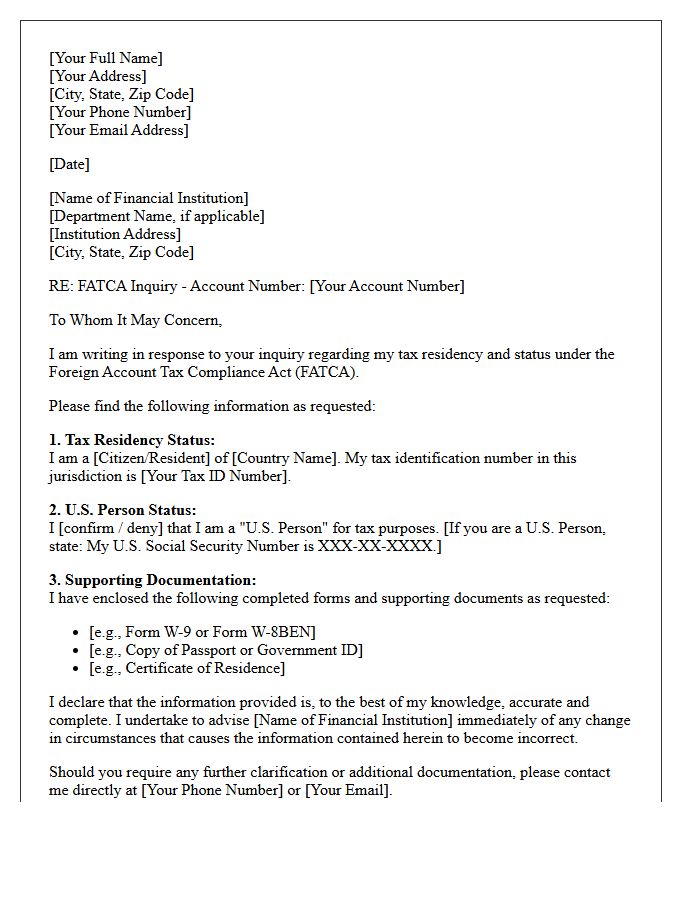
A Foreign Account Tax Compliance Act (FATCA) inquiry response letter is a formal document sent to a financial institution to confirm your tax residency status. It typically requires you to complete Form W-9 or Form W-8BEN to certify whether you are a U.S. person. Providing an accurate and timely response is essential to avoid mandatory tax withholding or account restrictions. This process helps banks comply with international reporting standards designed to prevent offshore tax evasion by ensuring that relevant financial data is shared with the Internal Revenue Service.
Credit Risk Management Policy Audit Clarification Letter
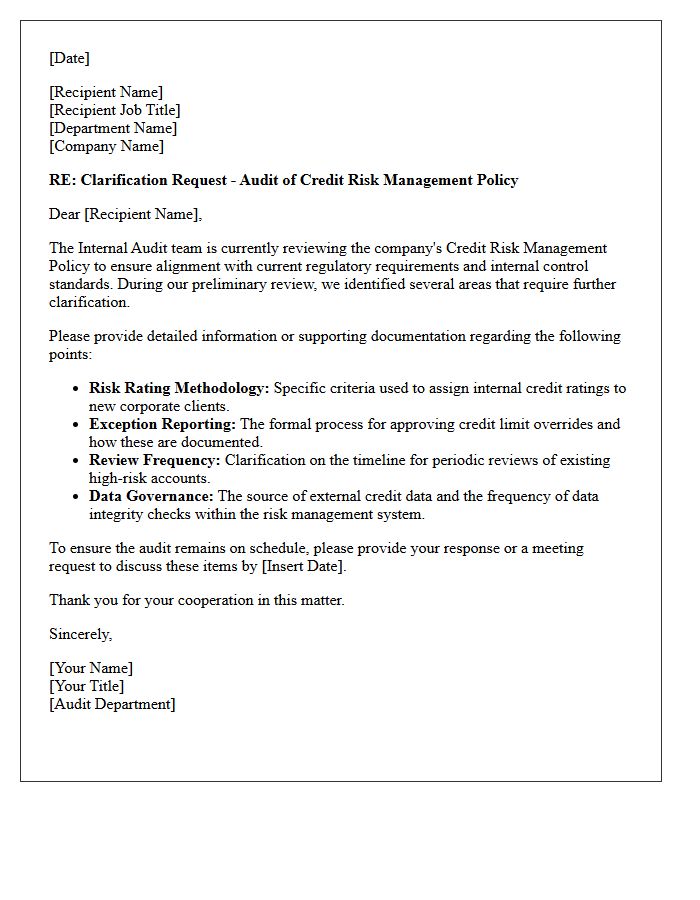
A Credit Risk Management Policy Audit Clarification Letter is a formal document issued to resolve discrepancies identified during an evaluation of lending practices. It serves to provide transparency regarding internal controls, underwriting standards, and mitigation strategies. This letter ensures that institutional policies align with regulatory expectations and financial safety benchmarks. By addressing specific audit findings, organizations can refine their risk appetite frameworks and maintain compliance. Clear communication through this letter helps stakeholders understand the corrective actions taken to safeguard assets and optimize the credit portfolio against potential defaults.
What is a Regulatory Compliance Audit Inquiry Response Letter?
A Regulatory Compliance Audit Inquiry Response Letter is a formal document drafted by an organization to address specific questions, concerns, or findings raised by a regulatory body during or after a compliance audit.
What key elements should be included in a compliance audit response?
An effective response must include a clear reference to the audit inquiry ID, detailed explanations addressing each observation, supporting documentation or evidence of adherence, and a defined timeline for any required corrective actions.
How should an organization address identified non-compliance issues in the letter?
Non-compliance issues should be addressed by acknowledging the finding, explaining the root cause, outlining the immediate remedial steps taken, and describing the long-term preventative measures implemented to ensure future conformity.
What is the recommended tone and format for a regulatory response letter?
The tone should be professional, transparent, and cooperative. Use a structured format with clear headings or numbered lists that correspond directly to the auditor's specific inquiries to ensure easy navigation for the regulatory official.
Why is the submission deadline critical for a regulatory inquiry response?
Submitting the response within the mandated timeframe is crucial to demonstrate the organization's commitment to compliance; failure to meet deadlines can result in financial penalties, increased oversight, or legal escalations.

Comments