
This article provides a comprehensive overview of the official Memorandum on Interest Rate Adjustments for savings accounts. Understand the key legal requirements, financial implications, and notification procedures necessary for communicating rate changes effectively to your banking clients. Ensure compliance while maintaining transparency in all institutional updates. Below are some ready to use templates.
Image cover: Official Notification Templates for Savings Account Interest Rate Changes
Letter Samples List
- Executive Board Notification Letter
- Branch Manager Directive Letter
- Customer Service Briefing Letter
- High Net Worth Client Advisory Letter
- General Customer Notification Letter
- Regulatory Compliance Reporting Letter
- Shareholder Update Memorandum Letter
- Marketing Department Strategy Letter
- Internal Staff Policy Change Letter
- Wealth Management Advisor Alert Letter
- Corporate Treasury Department Letter
- Regional Director Implementation Letter
Executive Board Notification Letter
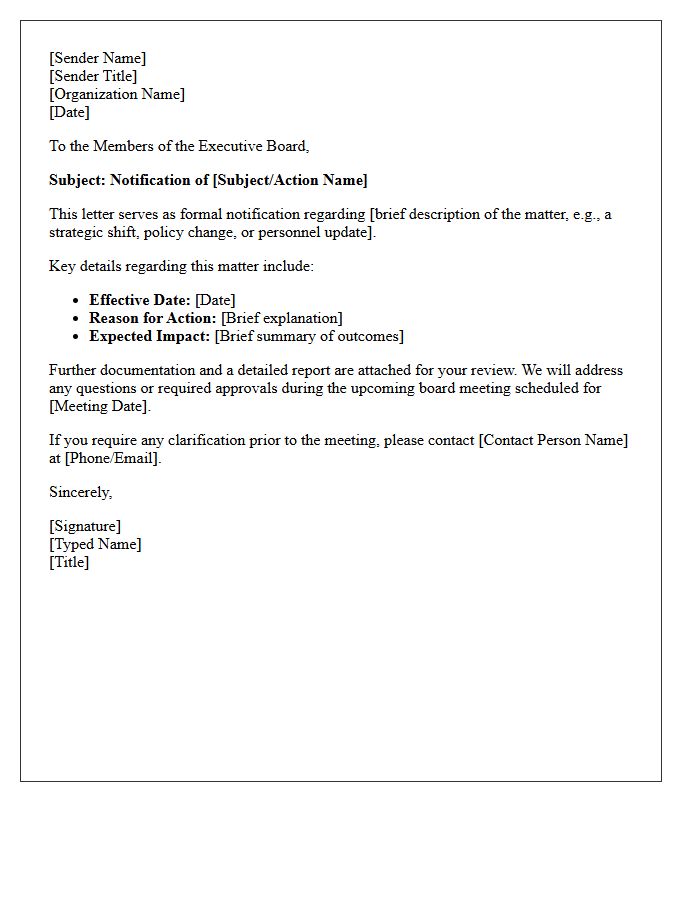
An Executive Board Notification Letter is a formal document used to inform leadership about critical corporate developments or strategic decisions. It serves as an official record to ensure transparency and legal compliance within an organization. This communication typically outlines personnel changes, financial shifts, or urgent policy updates requiring immediate oversight. For clarity and accountability, the letter must be concise, professional, and delivered through secure channels. Understanding its contents is essential for maintaining proper governance and aligning board members with the company's long-term objectives and regulatory obligations.
Branch Manager Directive Letter
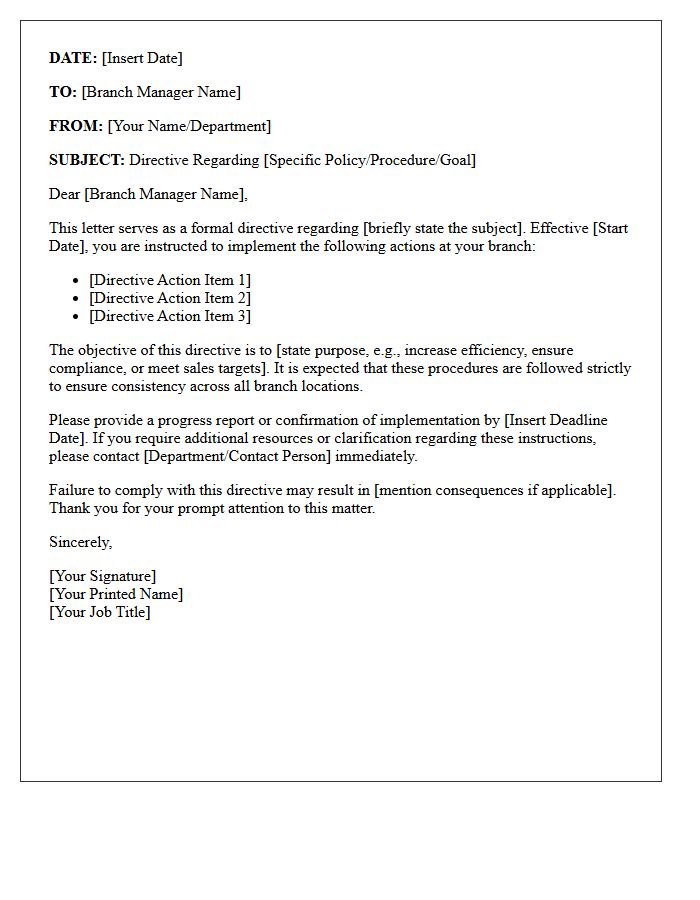
A Branch Manager Directive Letter is a formal document issued to provide specific instructions or mandate operational compliance within a local office. It serves as an authoritative guide to ensure all staff adhere to corporate policies, legal regulations, and strategic goals. This directive outlines clear expectations, deadlines, and consequences for non-compliance, ensuring accountability and uniformity in service delivery. Understanding these letters is crucial for maintaining internal controls and achieving consistency across the organization's network, directly impacting overall performance and risk management protocols.
Customer Service Briefing Letter
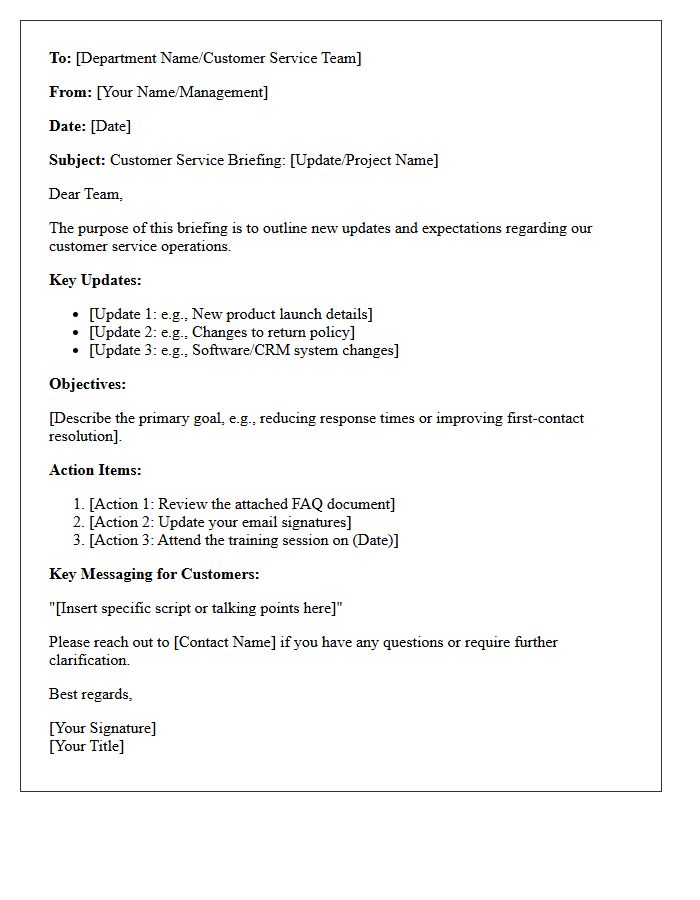
A customer service briefing letter is a vital strategic communication tool designed to align support teams with organizational goals. It provides essential updates regarding product changes, promotional campaigns, or policy shifts to ensure consistent messaging. By outlining specific performance expectations and key talking points, the letter empowers representatives to handle inquiries efficiently. Clear documentation fosters operational transparency and enhances the overall customer experience by minimizing misinformation. Use this document to streamline internal workflows and maintain a professional brand voice across all service touchpoints.
High Net Worth Client Advisory Letter
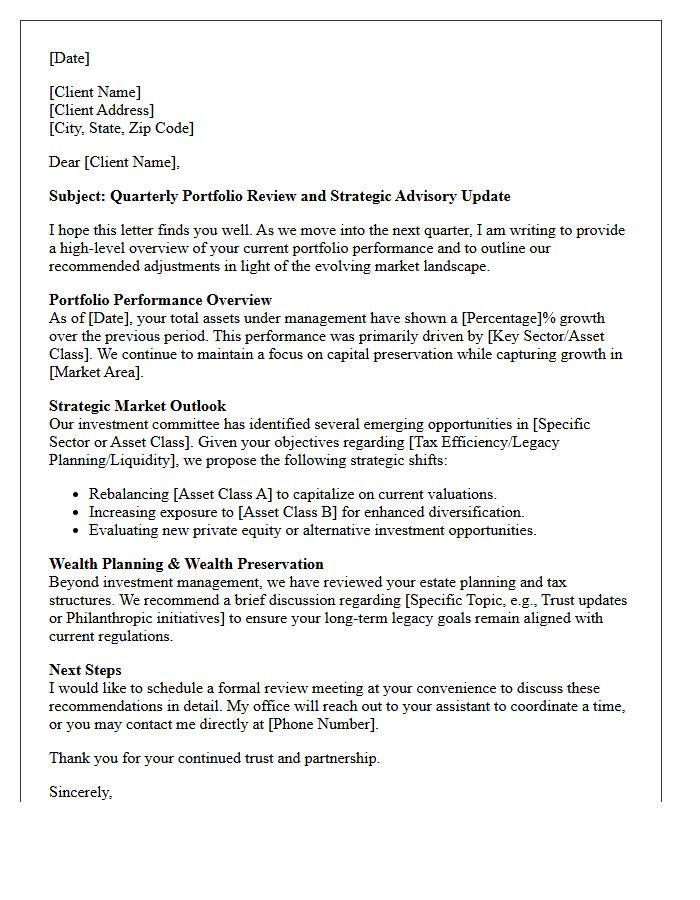
A High Net Worth Client Advisory Letter is a strategic communication tool used by financial professionals to deliver personalized market insights. These letters provide a comprehensive overview of complex portfolio performance, tax mitigation strategies, and estate planning updates tailored to affluent individuals. By addressing wealth preservation and unique risk profiles, they foster long-term relationships and ensure alignment with sophisticated investment goals. Clear, professional, and data-driven, these documents are essential for maintaining transparency and demonstrating proactive management in an ever-evolving global economy.
General Customer Notification Letter
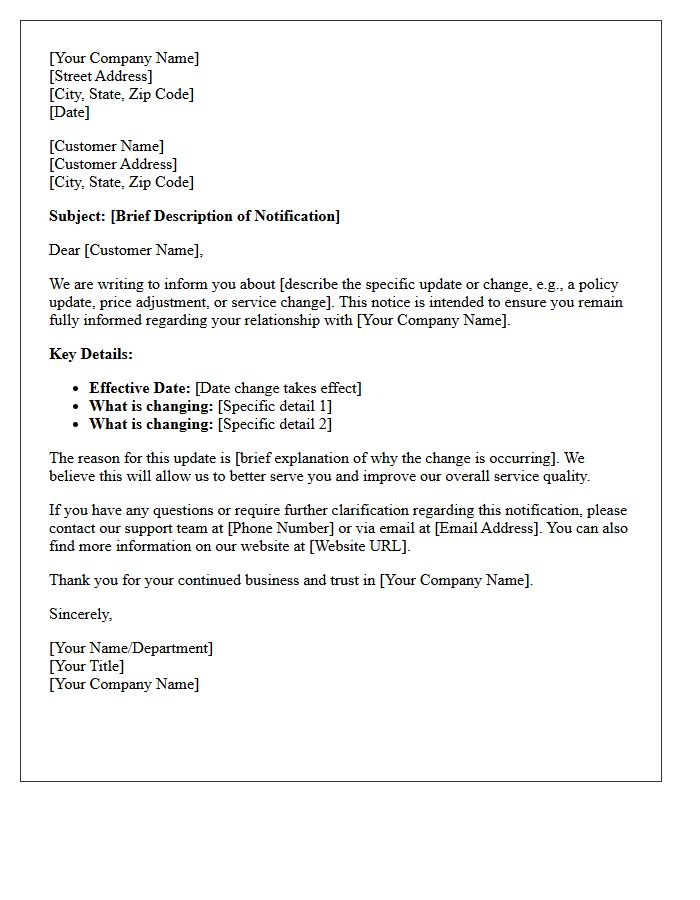
A General Customer Notification Letter is a formal document used to communicate essential updates regarding business operations, policy changes, or service interruptions. To maintain professional transparency, the letter must clearly state the reason for contact and any necessary action steps required from the recipient. Effective notifications prioritize clarity and brevity to ensure customers understand how the news impacts their relationship with the brand. Providing a direct point of contact for support is vital for preserving customer trust and ensuring a positive user experience during transitions or updates.
Regulatory Compliance Reporting Letter
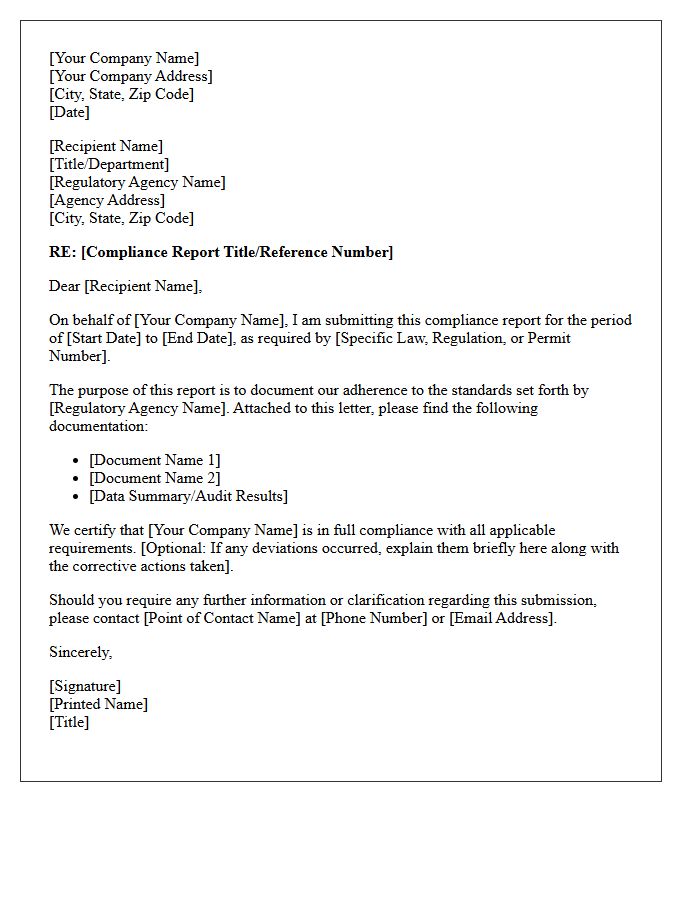
A Regulatory Compliance Reporting Letter serves as an official certification that an organization adheres to specific industry mandates and legal standards. This document provides transparency for stakeholders, auditors, and government agencies by validating operational integrity. It typically outlines internal controls, audit findings, and risk management protocols to ensure full alignment with statutory obligations. Maintaining accurate documentation is essential to mitigate legal risks, avoid financial penalties, and demonstrate corporate accountability within a strictly regulated environment.
Shareholder Update Memorandum Letter
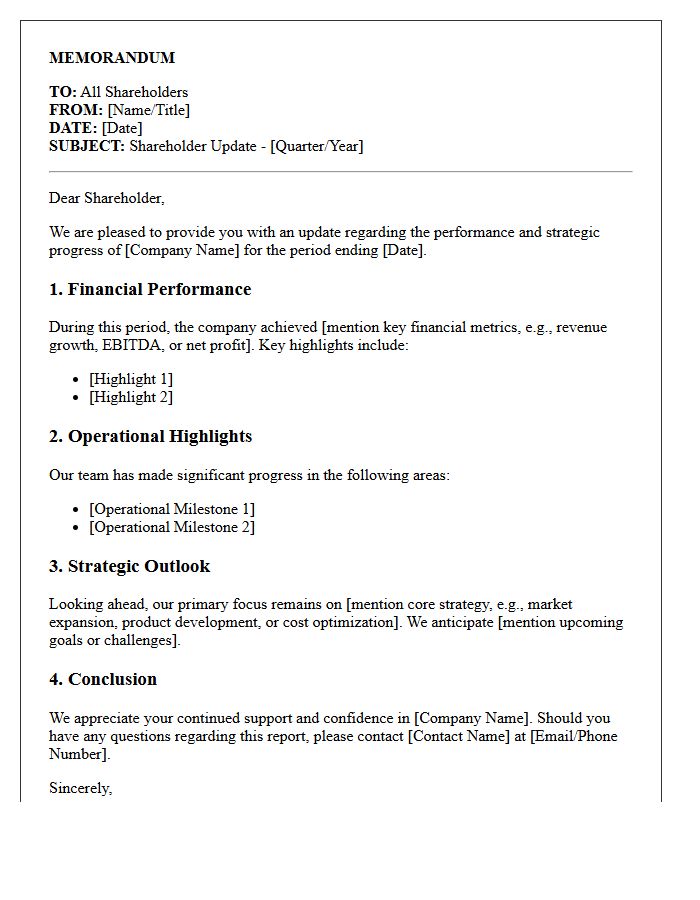
A Shareholder Update Memorandum Letter is a vital communication tool used by companies to maintain transparency with investors. This document provides a concise summary of the organization's financial performance, operational milestones, and future strategic goals. By delivering regular updates, management builds trust and ensures stakeholders remain informed about key developments that impact equity value. It serves as a professional record of progress, addressing both achievements and challenges. Effectively written letters foster long-term investor relations and ensure alignment between the board of directors and the company's owners regarding long-term vision.
Marketing Department Strategy Letter
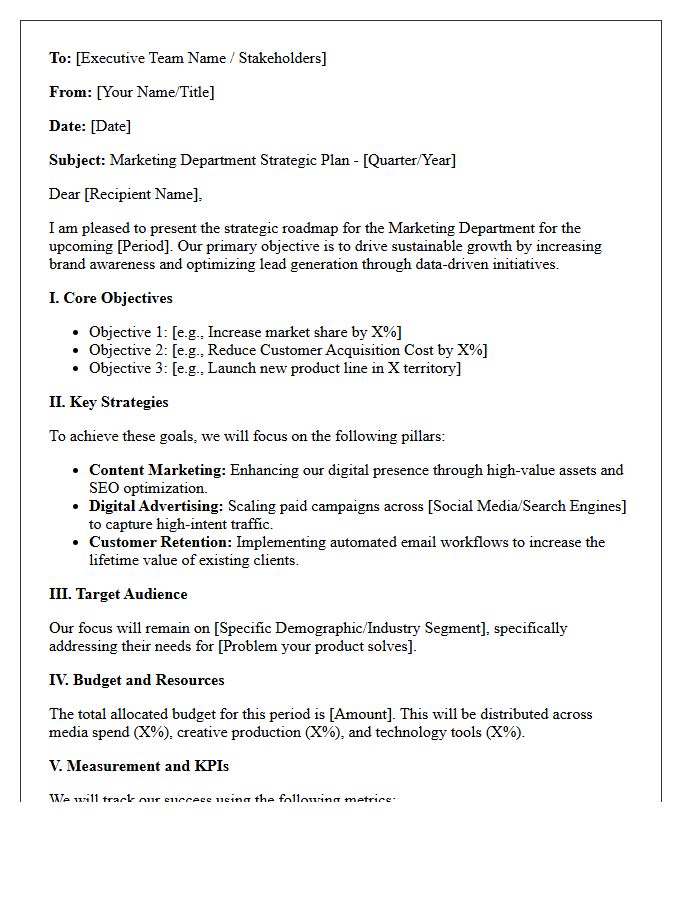
A marketing department strategy letter serves as a strategic roadmap, aligning organizational goals with actionable campaign tactics. It must clearly communicate the value proposition to stakeholders while defining key performance indicators for success. By outlining target demographics and budget allocations, the document ensures cross-functional synergy and operational focus. This letter functions as a formal commitment to brand growth, ensuring every team member understands their role in driving engagement and revenue. A well-crafted strategy bridges the gap between vision and execution, fostering a unified approach to market dominance and long-term sustainability.
Internal Staff Policy Change Letter
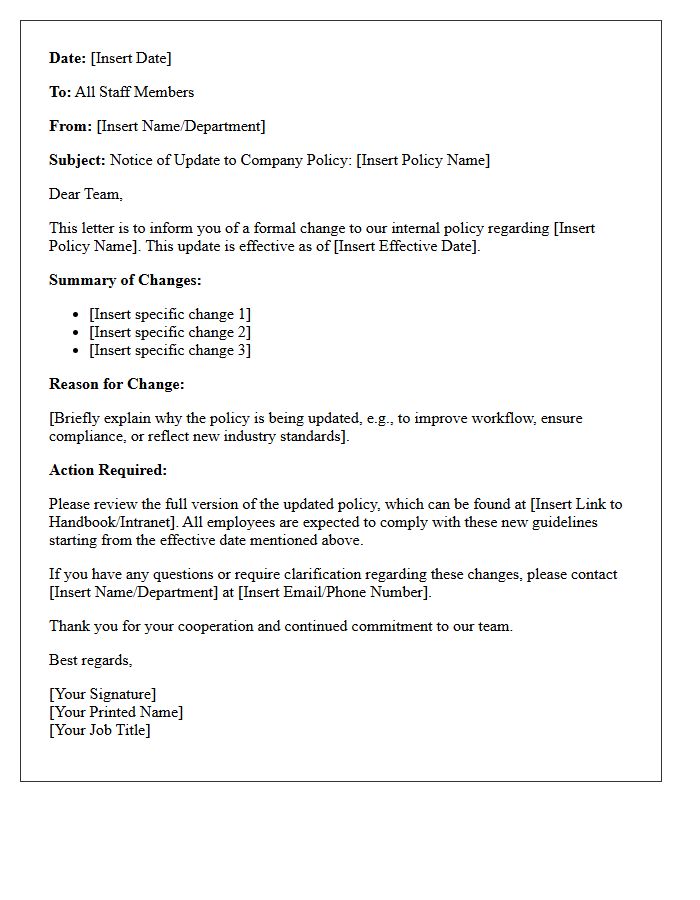
An Internal Staff Policy Change Letter serves as a formal notification to employees regarding updates to workplace regulations. It is essential to clearly explain the specific modifications, the rationale behind the update, and the official effective date. Providing a designated point of contact for questions ensures organizational transparency and maintains legal compliance. To ensure smooth transitions, staff members should be required to sign an acknowledgment receipt, confirming they have read and understood the new expectations within the professional environment.
Wealth Management Advisor Alert Letter
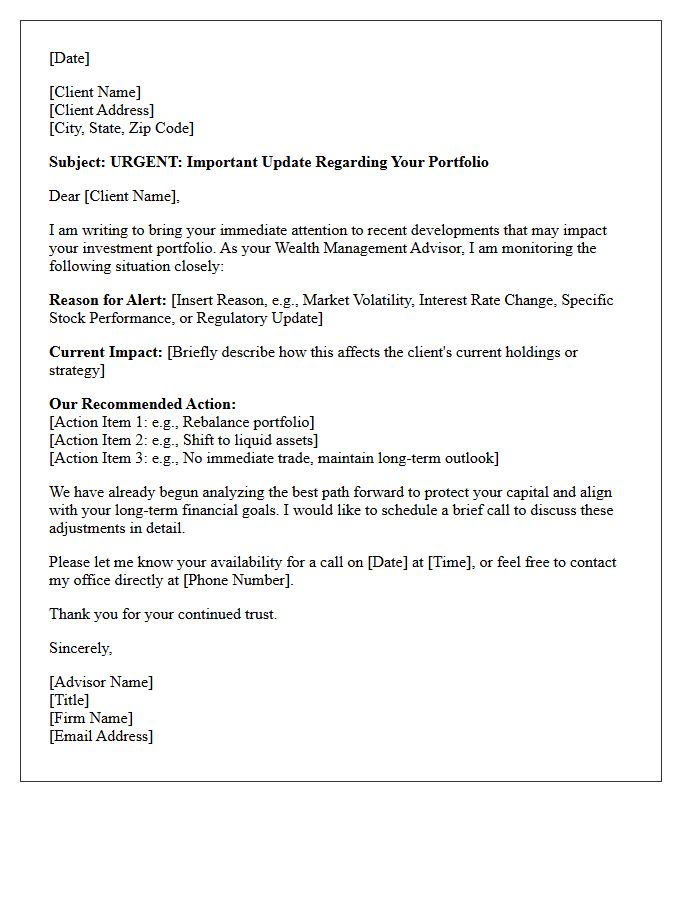
A Wealth Management Advisor Alert Letter is a critical notification regarding regulatory changes, portfolio risks, or significant market shifts affecting your investments. It serves as a formal communication to ensure investor protection and transparency between financial professionals and their clients. Reviewing these alerts promptly is essential for maintaining a strategic financial plan and mitigating potential losses. Understanding the implications of these updates allows you to make informed decisions about your assets while ensuring your advisor remains compliant with current fiduciary standards and legal requirements.
Corporate Treasury Department Letter
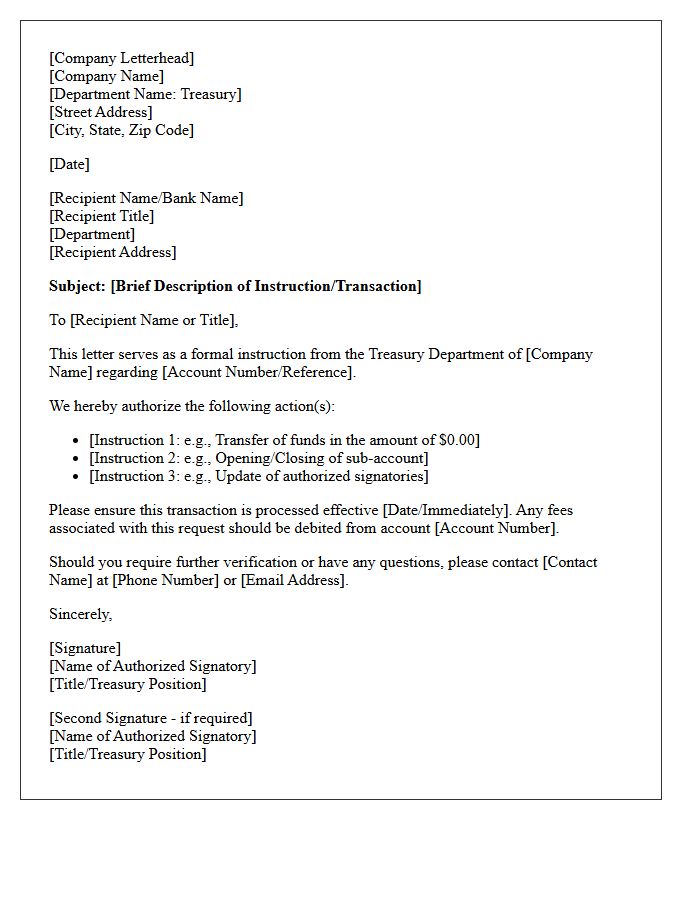
A Corporate Treasury Department Letter is an official document used to manage a company's financial assets and liabilities. It typically serves to authorize specific banking transactions, update signatory lists, or confirm debt obligations. To ensure legal compliance and security, these letters must be printed on formal company letterhead and signed by authorized executives. They act as a critical communication link between a corporation and its financial institutions, providing a verified paper trail for liquidity management, risk mitigation, and internal auditing purposes to safeguard the organization's capital.
Regional Director Implementation Letter
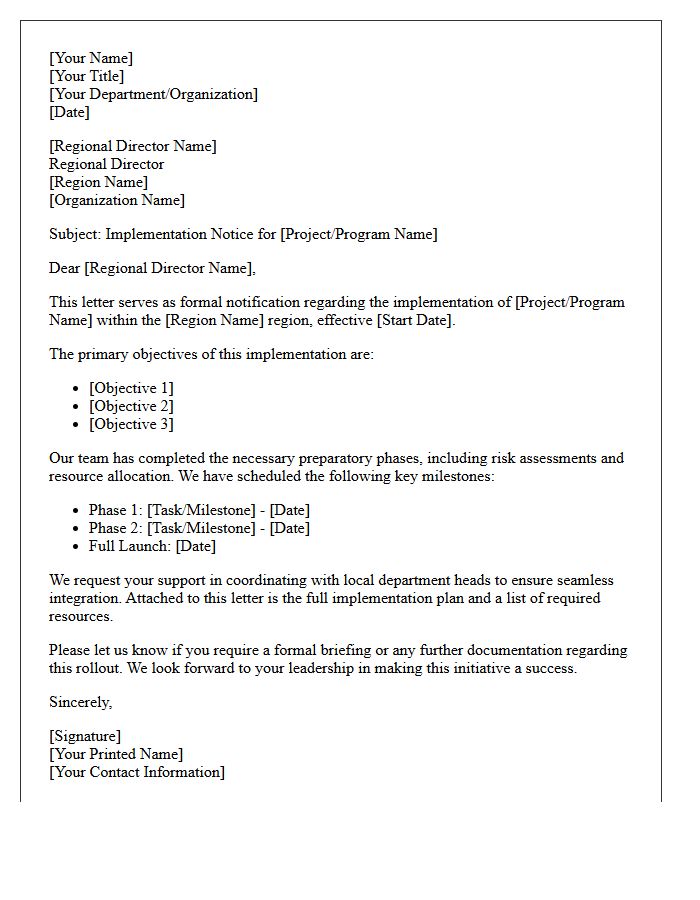
A Regional Director Implementation Letter is a formal document used to authorize and detail the execution of specific project components. It serves as a binding operational agreement between an agency and its regional leadership, ensuring all activities align with established strategic goals. This letter outlines key responsibilities, timelines, and resource allocations necessary for successful local integration. Understanding this document is essential for maintaining compliance and achieving measurable outcomes within a designated territory, as it bridges the gap between high-level policy and practical field implementation.
What is the purpose of the Memorandum on Interest Rate Adjustments?
The memorandum serves as an official notification regarding changes to the annual percentage yields (APY) applied to specific savings account tiers, reflecting current market conditions and central bank policy shifts.
When do the new interest rate adjustments take effect?
The adjusted interest rates become effective on the date specified in the "Effective Date" section of the memorandum; all interest accruals from that midnight forward will be calculated based on the new rates.
Which types of savings accounts are affected by these rate changes?
These adjustments apply to Statement Savings, High-Yield Savings, and Money Market accounts, unless the account is under a fixed-rate promotion or a specific term agreement like a Certificate of Deposit (CD).
How is the interest calculated following the rate adjustment?
Interest continues to be calculated daily based on your end-of-day collected balance and is typically credited to your account on a monthly basis using the new daily periodic rate.
Where can I find the specific updated rate for my account balance?
The updated rate schedule is detailed in the "Revised Rate Table" attachment of the memorandum, which categorizes interest rates and APYs according to various balance requirements and account tiers.

Comments