
Efficiently managing cash logistics requires a precise ATM replenishment schedule to ensure constant availability and minimize operational costs. This memorandum outlines standardized procedures for tracking currency levels and coordinating secure refills with armored services. Establishing a rigorous routine prevents downtime and enhances customer satisfaction. To streamline your documentation process, below are some ready to use templates.

Image cover: Optimizing Your ATM Replenishment Strategy: Essential Memorandum Templates and Scheduling Guides
Letter Samples List
- Letter of Introduction for the Revised Automated Teller Machine Replenishment Schedule
- Vendor Notification Letter Regarding ATM Replenishment Times
- Branch Manager Instruction Letter for Cash Replenishment Procedures
- Memorandum Acknowledgment Letter for ATM Servicing Operations
- Holiday Schedule Adjustment Letter for Automated Teller Machines
- Security Protocol Compliance Letter for ATM Replenishment Schedules
- Emergency Replenishment Authorization Letter for High-Volume Terminals
- Replenishment Schedule Audit Review Letter for Banking Operations
- Service Delay Notification Letter for ATM Replenishment Routes
- Contract Addendum Letter for Armored Transport Replenishment Services
- Executive Approval Letter for Automated Teller Machine Routing Schedules
- Regional Directive Letter on ATM Cash Management Schedules
Letter of Introduction for the Revised Automated Teller Machine Replenishment Schedule
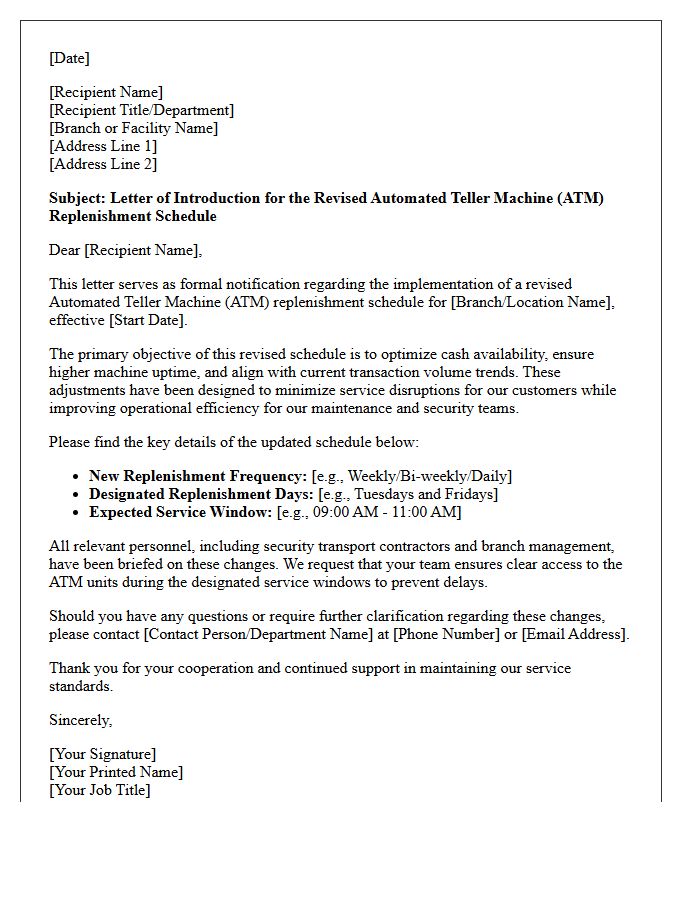
A Letter of Introduction serves as formal authorization for personnel managing the Revised Automated Teller Machine Replenishment Schedule. It validates the identity of technicians and armored car services, ensuring secure access to ATM terminals during updated service windows. This document is critical for maintaining operational security and preventing unauthorized tampering during cash loading. Financial institutions must issue these letters to synchronize logistics with security protocols, ensuring that the new replenishment timing does not compromise site safety or cash availability for customers.
Vendor Notification Letter Regarding ATM Replenishment Times
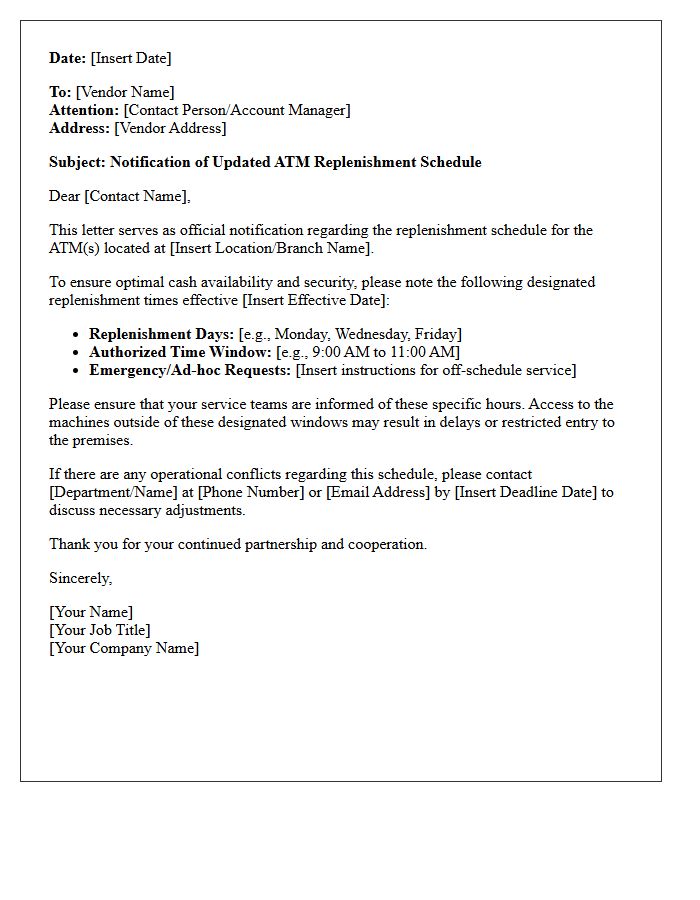
A Vendor Notification Letter is an essential formal communication used to establish clear expectations for ATM replenishment times. This document ensures that service providers adhere to specific schedules, minimizing machine downtime and maintaining cash availability. By outlining Service Level Agreements (SLAs) and emergency protocols, the letter helps prevent missed pickups or delays. Clear documentation protects the financial institution's reputation and ensures consistent customer access to funds. Providing precise timing requirements allows vendors to optimize their armored car routes while maintaining high operational efficiency and security standards for cash-in-transit operations.
Branch Manager Instruction Letter for Cash Replenishment Procedures
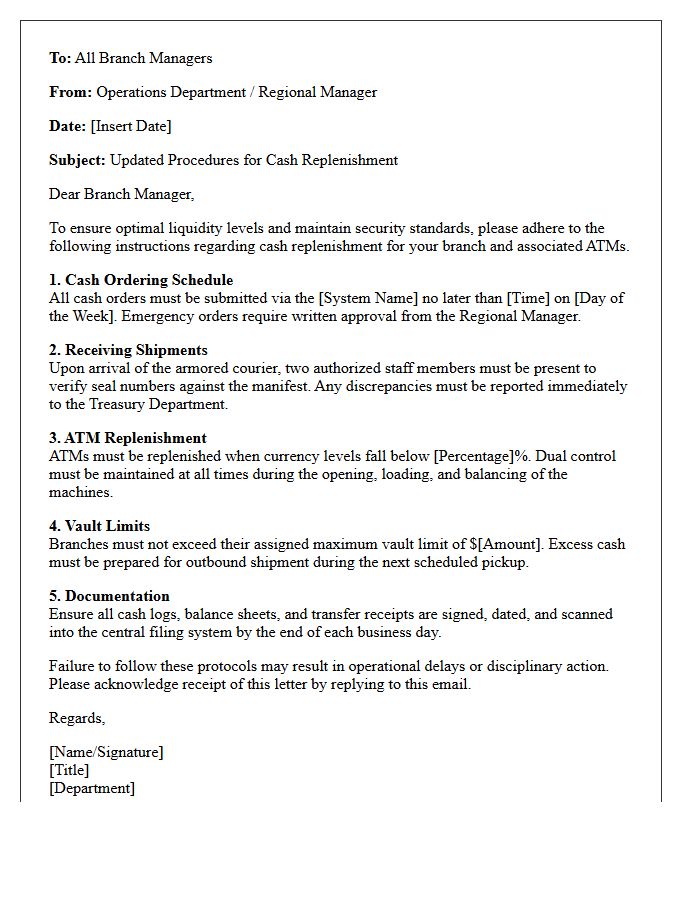
A Branch Manager Instruction Letter provides essential protocols for secure cash replenishment. It outlines mandatory steps for verifying vault balances, managing armored car handovers, and updating inventory systems. Compliance ensures operational transparency and mitigates risk during physical currency transfers. Key focus areas include dual control measures and strict adherence to internal audit requirements to maintain institutional security.
Memorandum Acknowledgment Letter for ATM Servicing Operations
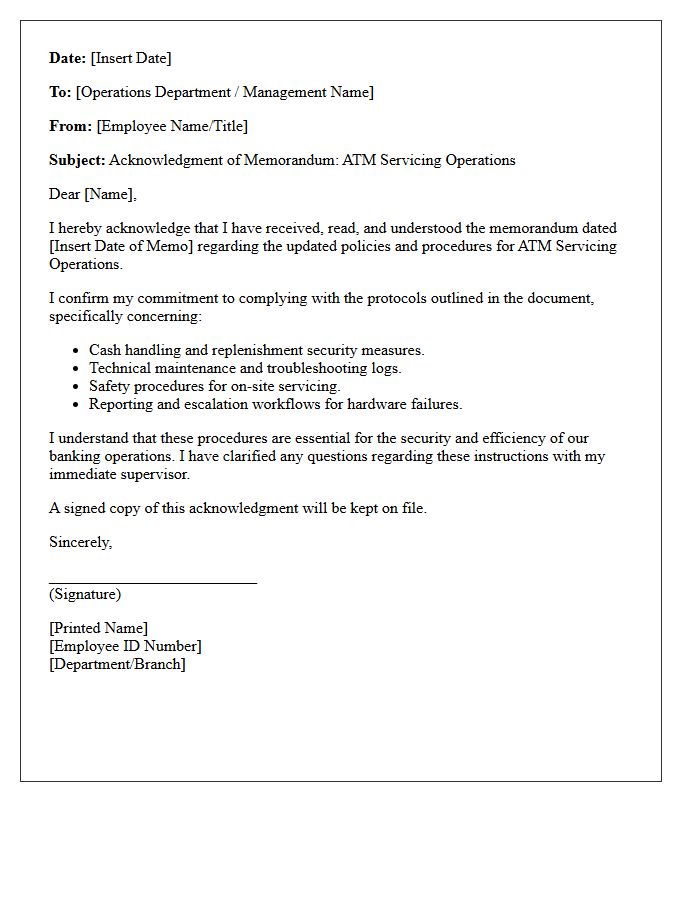
A Memorandum Acknowledgment Letter is a critical compliance document in ATM servicing operations. It serves as formal confirmation that technical staff or third-party vendors have received, understood, and agreed to adhere to specific operational protocols, security updates, or maintenance procedures. Ensuring these letters are signed and archived mitigates liability, maintains a clear audit trail, and guarantees that all personnel are aligned with the latest safety standards. This process is essential for maintaining regulatory compliance and operational integrity within the financial self-service network.
Holiday Schedule Adjustment Letter for Automated Teller Machines
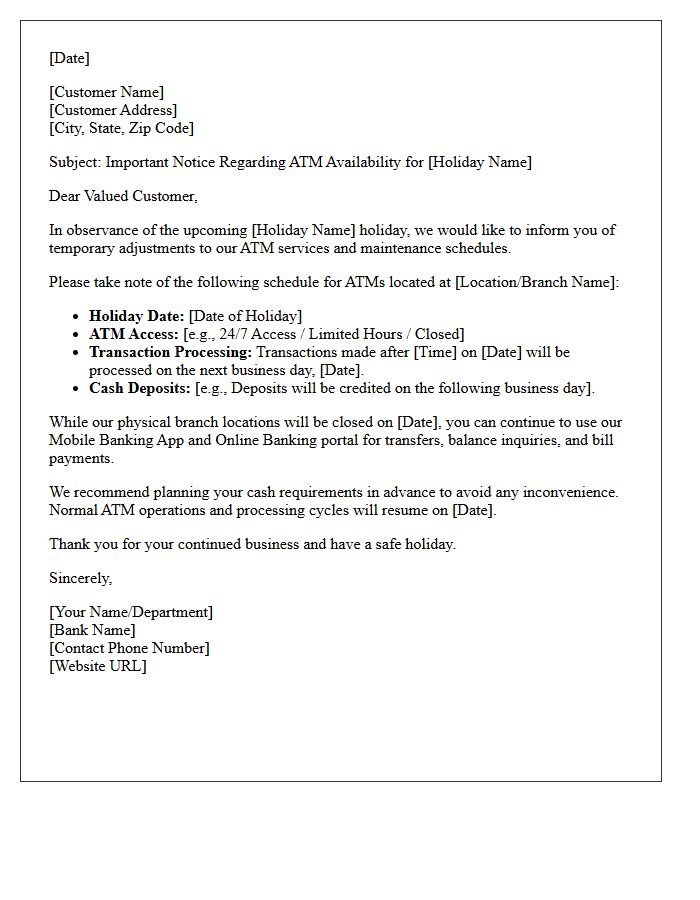
A holiday schedule adjustment letter for Automated Teller Machines (ATMs) is essential for informing clients about temporary service interruptions or maintenance windows. It ensures transparency regarding cash availability and transaction processing delays during public holidays. Clear communication helps manage customer expectations and prevents frustration by highlighting alternative banking channels, such as mobile apps or online portals. Banks must distribute these notices in advance via email or physical signage to maintain trust and reliability throughout the festive season, ensuring a seamless experience for all account holders.
Security Protocol Compliance Letter for ATM Replenishment Schedules
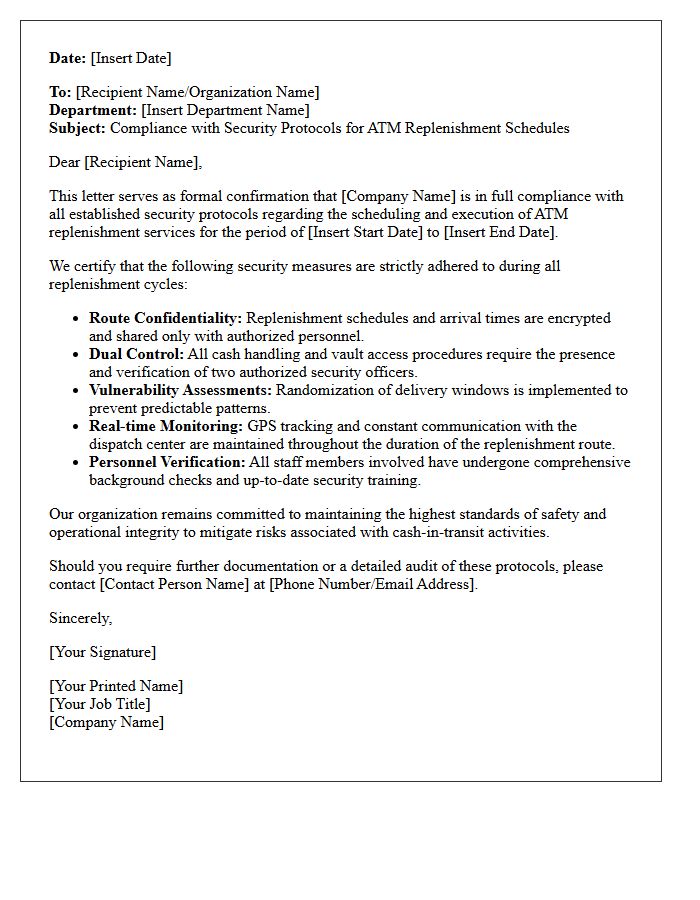
A Security Protocol Compliance Letter is a mandatory document verifying that ATM replenishment schedules adhere to strict safety standards. It confirms that cash-in-transit providers follow authorized routes, timing, and armed escort requirements to mitigate robbery risks. Financial institutions use this letter to ensure regulatory alignment and insurance validity. By formalizing these operational safeguards, banks protect physical assets and personnel during the high-risk replenishment process. Maintaining an updated compliance letter is essential for risk management and legal accountability within self-service banking networks.
Emergency Replenishment Authorization Letter for High-Volume Terminals
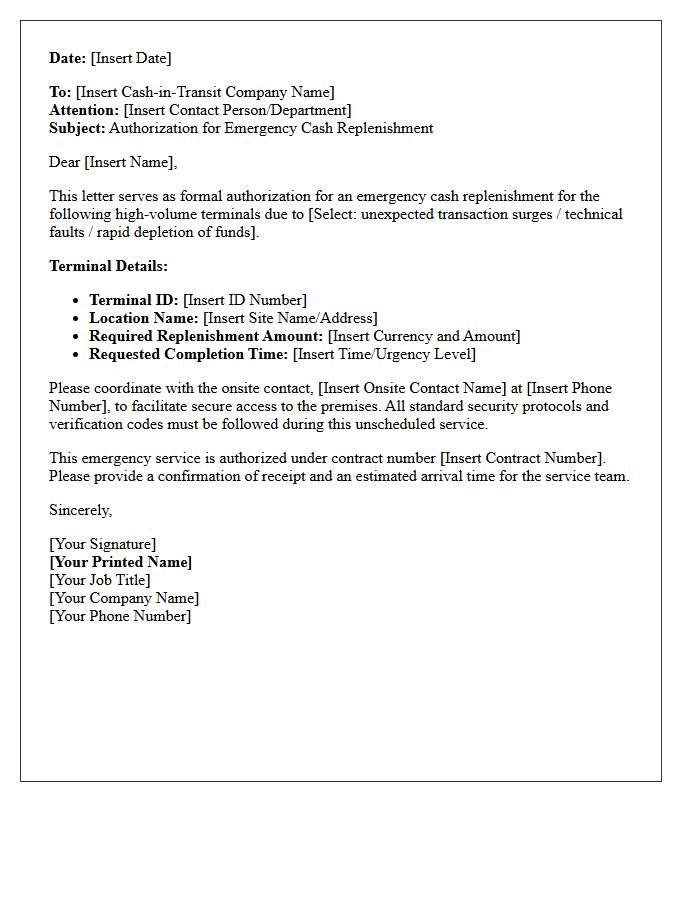
An Emergency Replenishment Authorization Letter is a critical document enabling immediate liquidity restoration for high-volume terminals experiencing unexpected cash depletion. This formal authorization permits armored car services or bank personnel to perform unscheduled vault loads outside of standard cycles. It ensures continuous operational uptime and prevents service disruptions during peak demand. The letter must specify the terminal ID, authorized personnel, and funding limits to maintain strict security protocols and financial oversight during urgent restock events.
Replenishment Schedule Audit Review Letter for Banking Operations
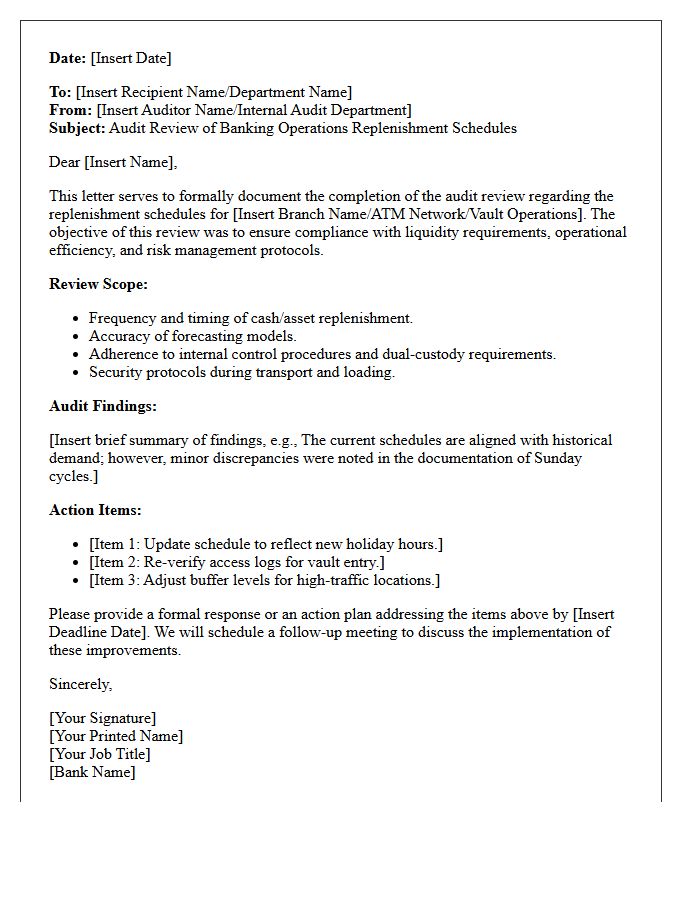
A Replenishment Schedule Audit Review Letter is a formal document verifying that cash injection cycles for ATMs and branches align with operational liquidity requirements. It ensures that banking operations maintain sufficient physical currency while minimizing idle cash risks. Auditors use this review to validate internal controls, reconcile transactional data, and confirm adherence to compliance standards. Receiving this letter signifies that the institution effectively balances service availability with financial security, mitigating potential discrepancies in the cash supply chain through rigorous periodic oversight.
Service Delay Notification Letter for ATM Replenishment Routes
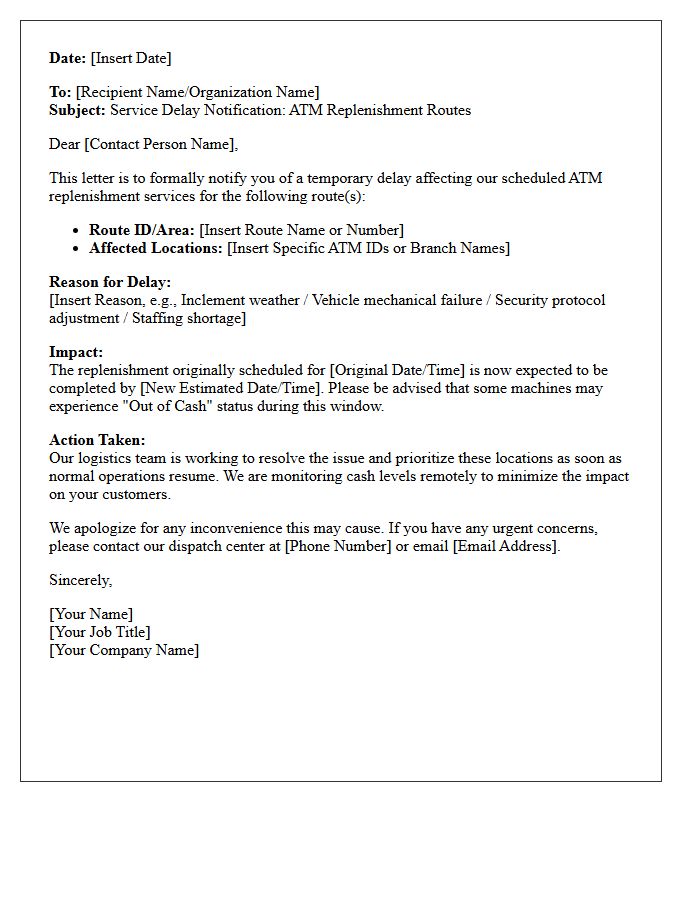
A service delay notification letter is a vital communication tool used to inform bank branches and stakeholders about disruptions in ATM replenishment routes. This document explains the specific reason for the scheduling setback, such as mechanical failure, traffic, or security issues. Providing an estimated time of arrival helps maintain operational transparency and allows staff to manage customer expectations effectively. Timely alerts are essential for liquidity management, ensuring that cash-out scenarios are minimized and terminal uptime is restored as quickly as possible to maintain high service standards.
Contract Addendum Letter for Armored Transport Replenishment Services
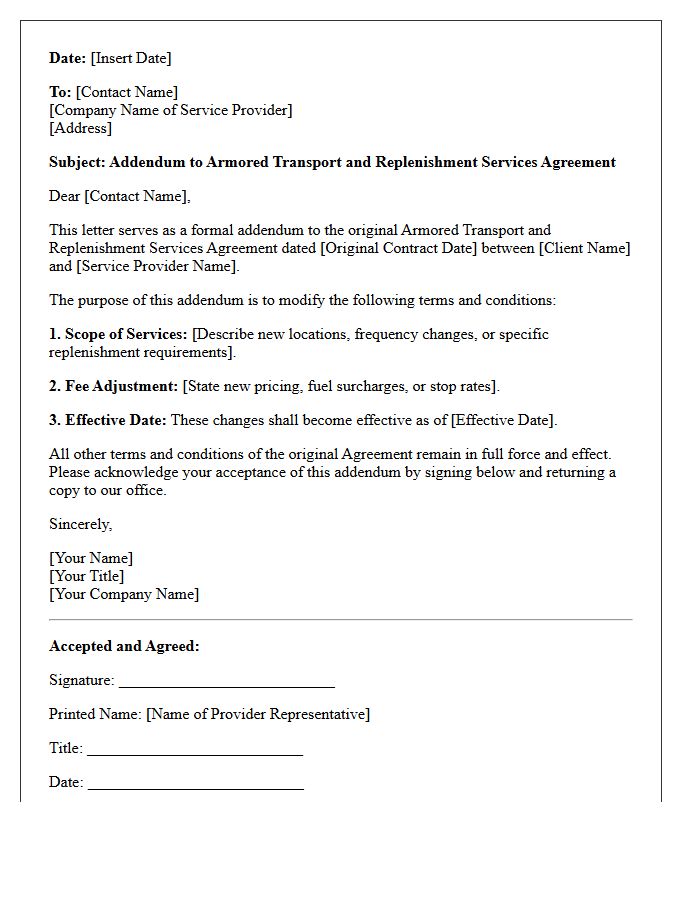
A Contract Addendum Letter for armored transport replenishment services officially modifies existing agreements between financial institutions and carriers. It is crucial for documenting changes in service frequency, liability limits, or specific ATM cash loading protocols. By clearly defining updated operational scope and pricing adjustments, this document ensures legal clarity and service continuity. Using an addendum avoids rewriting the entire contract while addressing new security requirements or route expansions. Both parties must sign to validate these amendments, maintaining a precise audit trail for high-security logistics and cash management operations.
Executive Approval Letter for Automated Teller Machine Routing Schedules
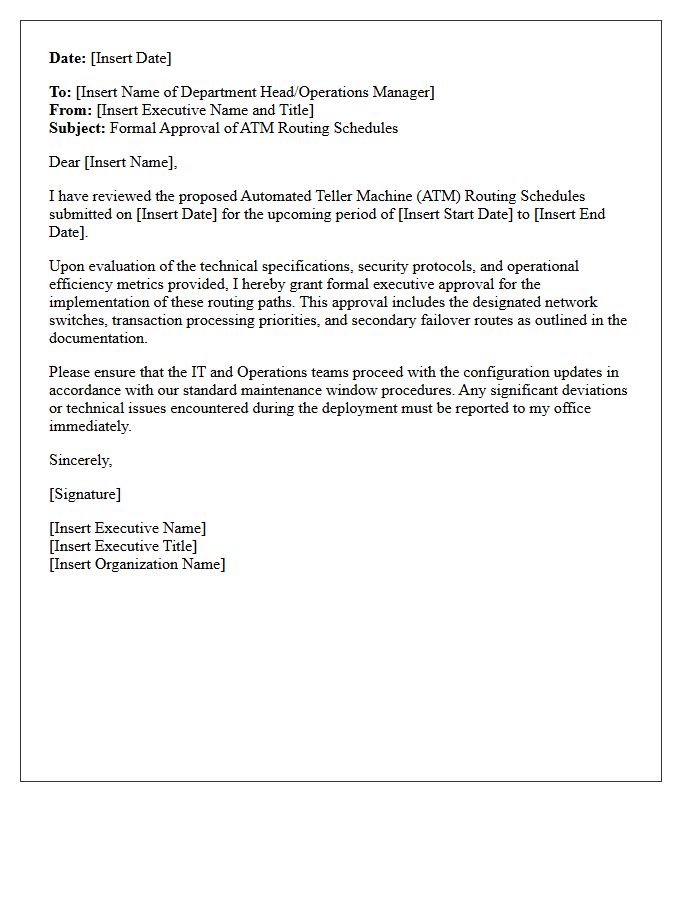
An Executive Approval Letter is a formal document authorizing specific ATM routing schedules within a financial network. This letter validates the sequence and priority of electronic fund transfers, ensuring compliance with banking regulations and operational security. It serves as a binding mandate from leadership to technical teams, confirming that the proposed transaction pathways meet efficiency standards and risk management protocols. Obtaining this signed approval is a critical step in maintaining the integrity of automated teller machine operations and ensuring seamless consumer access to banking services.
Regional Directive Letter on ATM Cash Management Schedules
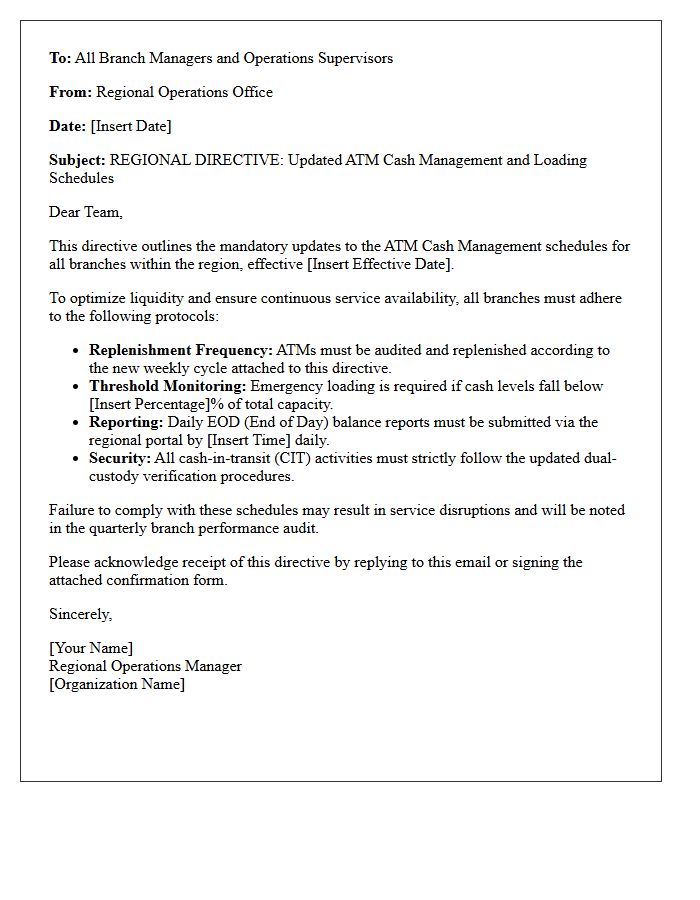
The Regional Directive Letter establishes mandatory protocols for ATM cash management schedules to ensure financial liquidity. It dictates the precise frequency of cash replenishment and emergency vault balancing to minimize downtime. Compliance is essential for operational efficiency, as these guidelines standardize how regional branches coordinate with armored transport services. Adhering to the specified timelines reduces the risk of cash-outs, ensuring consistent customer access to funds while optimizing security measures and internal auditing procedures during transit and loading cycles.
What is the purpose of the Memorandum on Automated Teller Machine Replenishment Schedules?
The memorandum outlines standardized procedures and timing for refilling cash reserves in ATMs to ensure consistent uptime, minimize security risks during transit, and optimize liquidity management across all branch locations.
How is the frequency of ATM cash replenishment determined?
Replenishment schedules are calculated based on historical transaction volume, seasonal peak demands, and real-time cash-out alerts monitored through the centralized ATM management system.
What security protocols must be followed during ATM replenishment?
Authorized personnel must adhere to dual-control authentication, maintain a secure perimeter with armored transport services, and document the unique seal numbers of both incoming and outgoing cash cassettes.
What happens if an ATM runs out of cash before its scheduled replenishment?
The memorandum mandates an emergency replenishment trigger if cash levels fall below 10% of capacity, requiring a priority dispatch of the service provider within a four-hour window.
Who is responsible for auditing the ATM replenishment logs?
The Internal Audit Department is responsible for reviewing replenishment logs and reconciliation reports monthly to verify that actual cash loads match the recorded system data and the approved schedule.


Comments