
Protect your rights by issuing a formal Cease and Desist for Unauthorized Fraudulent Activity to stop deceptive practices immediately. This legal notice demands an end to identity theft, financial scams, or misrepresentation while documenting the violation for potential litigation. Establishing a clear paper trail is essential for recovery and legal protection. To assist you, below are some ready to use templates.
Image cover: Formal Cease and Desist Templates for Halting Unauthorized Fraudulent Activity
Letter Samples List
- Cease and Desist Letter for Unauthorized Account Access
- Cease and Desist Letter for Fraudulent Wire Transfers
- Cease and Desist Letter for Bank Identity Spoofing
- Cease and Desist Letter for Unauthorized Credit Card Transactions
- Cease and Desist Letter for Fraudulent Loan Applications
- Cease and Desist Letter for Phishing Scams Targeting Bank Customers
- Cease and Desist Letter for Unauthorized Use of Bank Trademarks
- Cease and Desist Letter for Check Forgery and Alteration
- Cease and Desist Letter for Fraudulent Beneficiary Changes
- Cease and Desist Letter for Unauthorized ATM Skimming Operations
- Cease and Desist Letter for Fake Debt Collection Under Bank Name
- Cease and Desist Letter for Fraudulent Mortgage Modification Offers
Cease and Desist Letter for Unauthorized Account Access
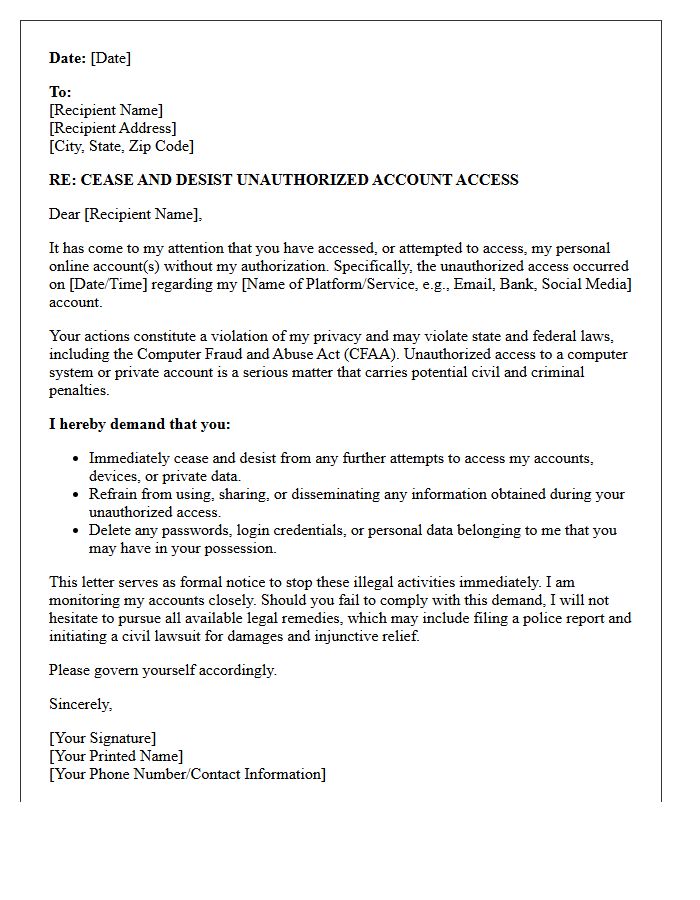
A Cease and Desist Letter for unauthorized account access serves as a formal legal notice to stop illicit entry into private digital profiles. This document creates a documented paper trail of the violation, demanding the recipient immediately terminate all unauthorized login attempts and data exploitation. It explicitly outlines potential litigation or criminal prosecution under cybercrime laws if the behavior persists. Sending this letter is a critical first step in protecting your digital privacy and establishing evidence of non-consent for future legal proceedings or law enforcement investigations.
Cease and Desist Letter for Fraudulent Wire Transfers
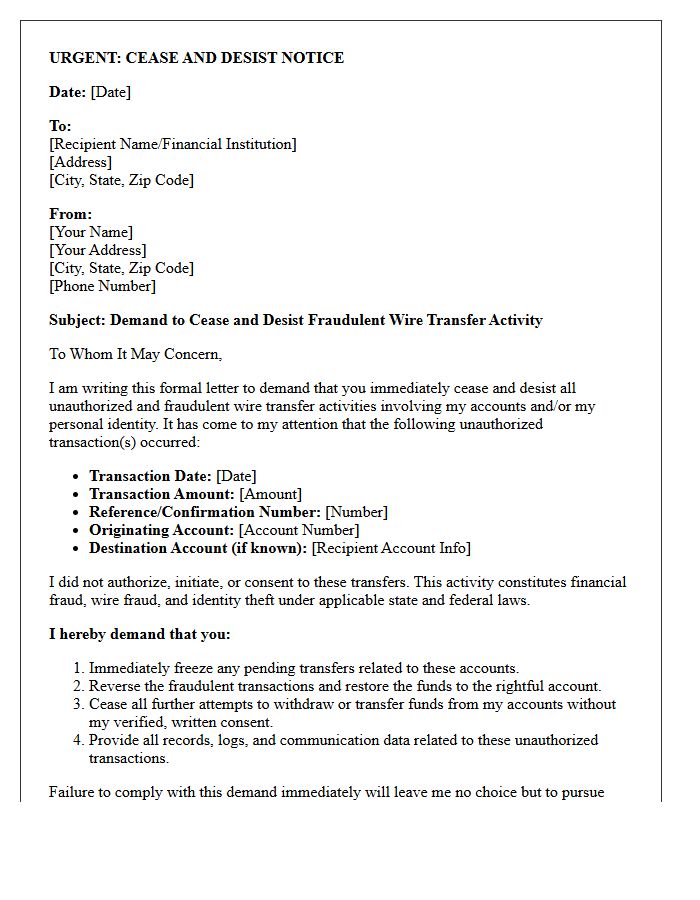
A Cease and Desist Letter for fraudulent wire transfers serves as a formal legal demand to halt unauthorized financial activity and reclaim stolen funds. It establishes a critical paper trail for law enforcement and banking institutions, documenting that the transaction was non-consensual. To be effective, the notice must clearly identify the disputed transaction details, demand an immediate stop to further communication, and outline potential legal action. Sending this document via certified mail provides essential evidence for fraud recovery efforts and potential litigation against the perpetrator or negligent financial intermediaries.
Cease and Desist Letter for Bank Identity Spoofing
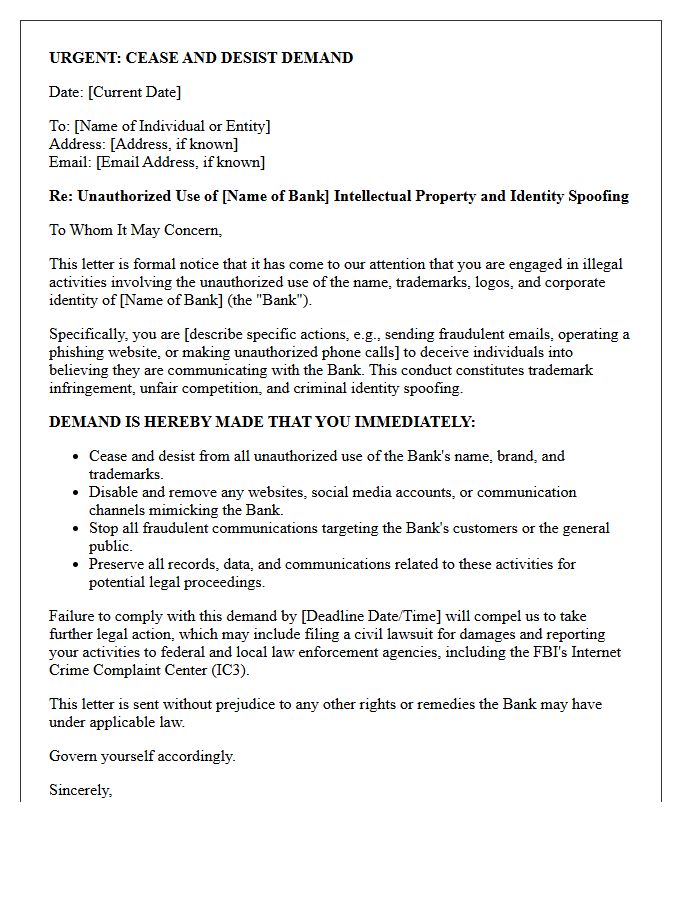
A Cease and Desist Letter for bank identity spoofing is a formal legal demand used to halt the unauthorized use of a financial institution's brand. This document targets entities using deceptive domains, logos, or trademarks to mislead customers through phishing or fraudulent communications. It serves as a critical first step in trademark protection and mitigation of cybercrime. By establishing a paper trail of the infringement, banks can pursue further legal action or domain suspension if the malicious activity continues, ultimately safeguarding their corporate reputation and client security.
Cease and Desist Letter for Unauthorized Credit Card Transactions
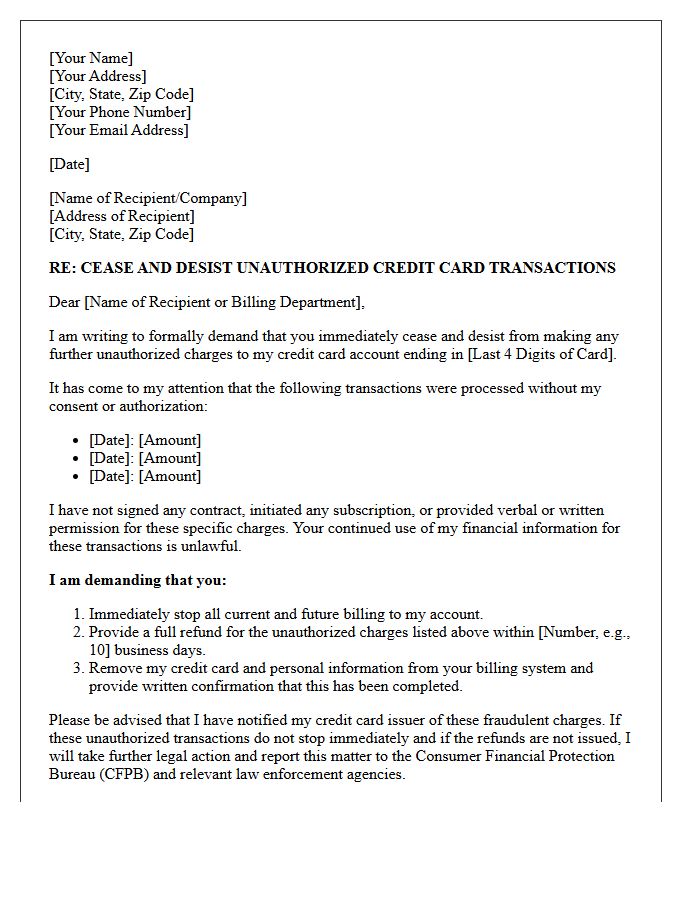
A Cease and Desist Letter for unauthorized credit card transactions is a formal legal notice sent to creditors or debt collectors. It demands the immediate termination of collection efforts regarding fraudulent charges you did not authorize. Under the Fair Credit Billing Act, providing written notice helps protect your consumer rights and establishes a paper trail of your dispute. Clearly state that the transactions are unauthorized, request an investigation, and insist they stop all harassment or negative reporting to credit bureaus to safeguard your financial reputation.
Cease and Desist Letter for Fraudulent Loan Applications
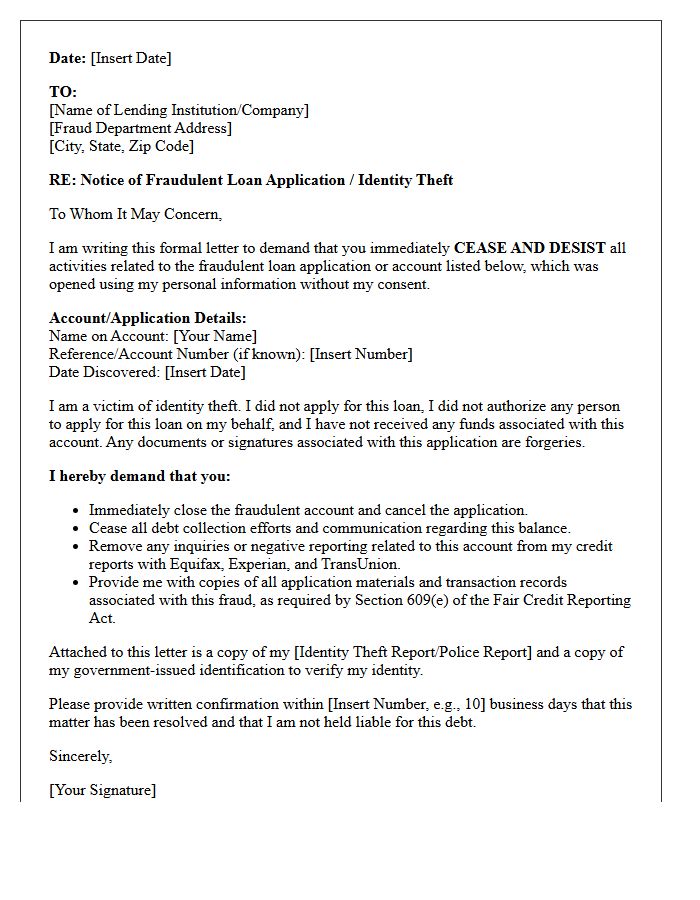
A Cease and Desist Letter for fraudulent loan applications is a formal legal demand used to stop identity theft and unauthorized credit inquiries. It serves as official notice to lenders and debt collectors that a loan was fraudulently obtained without your consent. By sending this document via certified mail, you create a vital paper trail to dispute illegal debts and protect your credit score. This proactive step helps halt collection efforts and compels financial institutions to investigate the forgery, effectively mitigating long-term financial damage caused by criminal activity.
Cease and Desist Letter for Phishing Scams Targeting Bank Customers
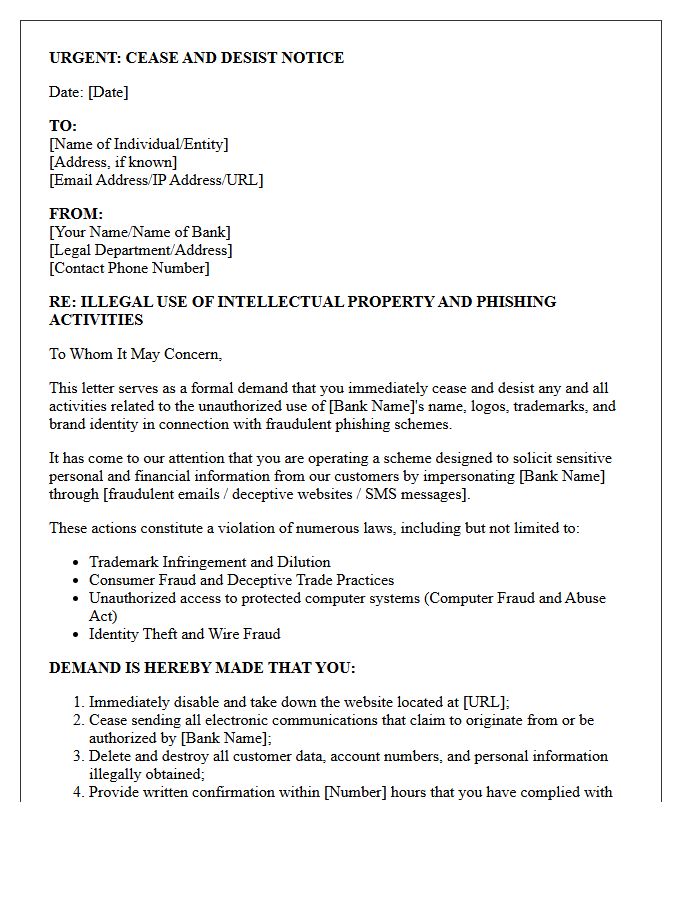
A Cease and Desist Letter is a formal legal demand used to halt fraudulent activities. When bank customers are targeted by phishing scams, these letters serve as a critical first step in establishing a legal paper trail. They notify malicious actors or hosting providers to immediately stop impersonating financial institutions and delete deceptive content. While often used to protect a bank's intellectual property and reputation, these notices also warn scammers of pending legal action, helping to mitigate financial loss and protect sensitive consumer data from unauthorized access.
Cease and Desist Letter for Unauthorized Use of Bank Trademarks
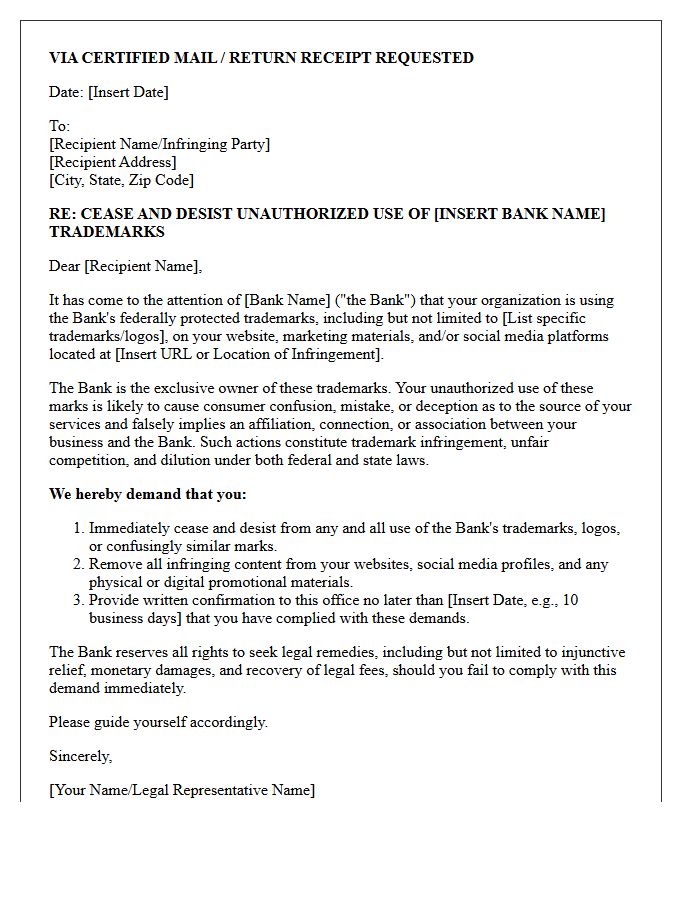
A cease and desist letter for unauthorized use of bank trademarks is a formal legal notice demanding that an entity stop using protected assets like logos or brand names. Banks issue these to prevent consumer confusion and protect their corporate reputation from fraud or affiliation claims. Ignoring this document can lead to costly trademark infringement lawsuits and statutory damages. If you receive one, it is vital to verify the claim's validity and ensure all infringing digital or physical materials are removed immediately to avoid further litigation.
Cease and Desist Letter for Check Forgery and Alteration
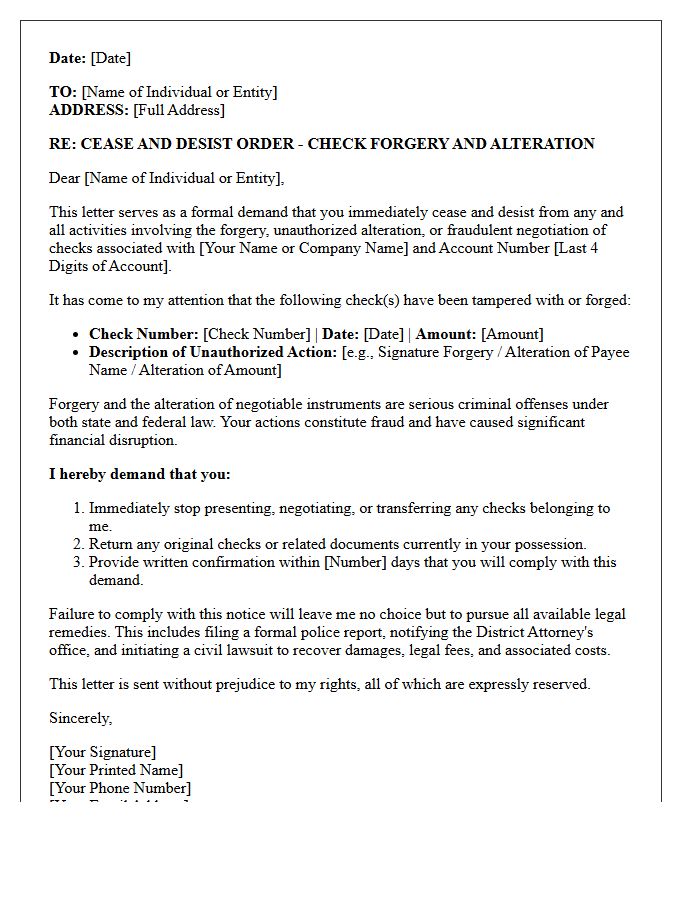
A Cease and Desist Letter for check forgery and alteration serves as a formal legal demand to stop unauthorized financial activity immediately. It notifies the recipient that fraudulent signatures or modified payment amounts have been detected, violating criminal and civil laws. Sending this document creates a critical paper trail for future litigation or law enforcement investigations. It must clearly outline the specific instances of check alteration and demand the return of misappropriated funds. Taking swift action helps mitigate further financial loss and protects your banking reputation from long-term damage.
Cease and Desist Letter for Fraudulent Beneficiary Changes
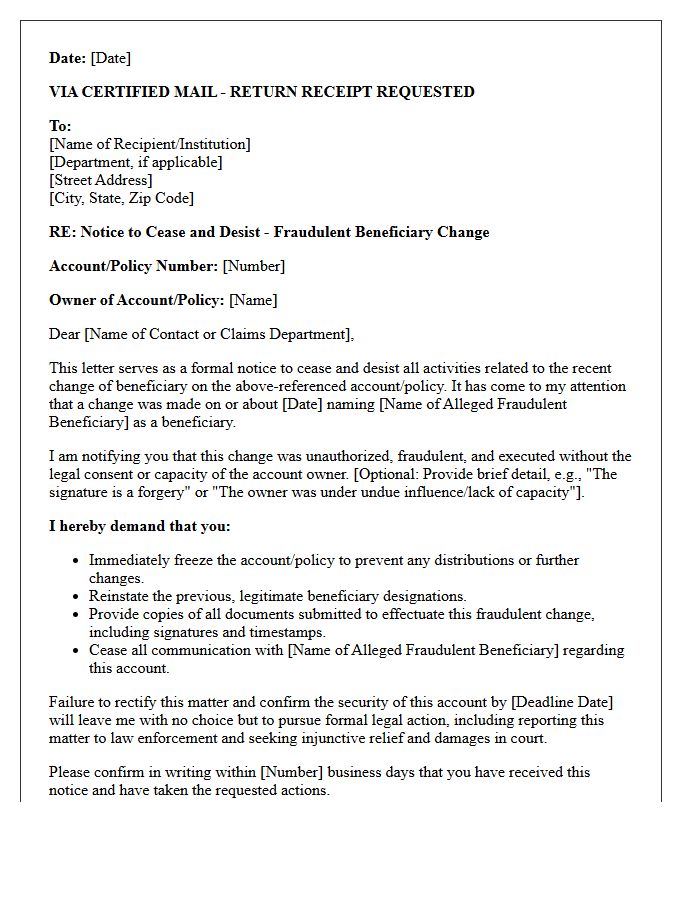
A cease and desist letter for fraudulent beneficiary changes is a critical legal tool used to halt unauthorized alterations to insurance policies or trusts. It serves as formal notice to wrongful actors, demanding they reverse illegal updates and stop further interference. This document establishes a clear evidentiary trail, crucial for potential litigation to protect your inheritance rights. Acting swiftly ensures that assets remain secure before they are misappropriated, effectively signaling that legal action will follow if the deceptive activity does not cease immediately.
Cease and Desist Letter for Unauthorized ATM Skimming Operations
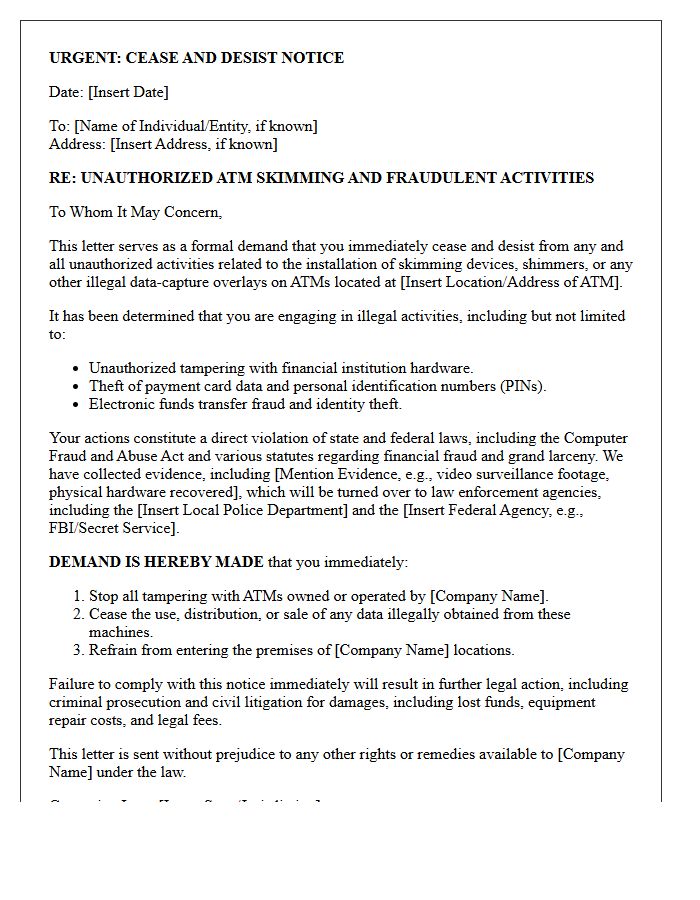
A cease and desist letter for unauthorized ATM skimming operations serves as a formal legal demand to halt illegal card data harvesting immediately. This document notifies the perpetrator that their fraudulent activities have been identified, outlining potential criminal prosecution and civil litigation if the behavior persists. It acts as critical evidence of notice in court, aiming to protect financial integrity and consumer privacy. To ensure legal validity, the notice must specify the prohibited conduct and demand the permanent removal of all recording devices and malicious software from the banking infrastructure.
Cease and Desist Letter for Fake Debt Collection Under Bank Name
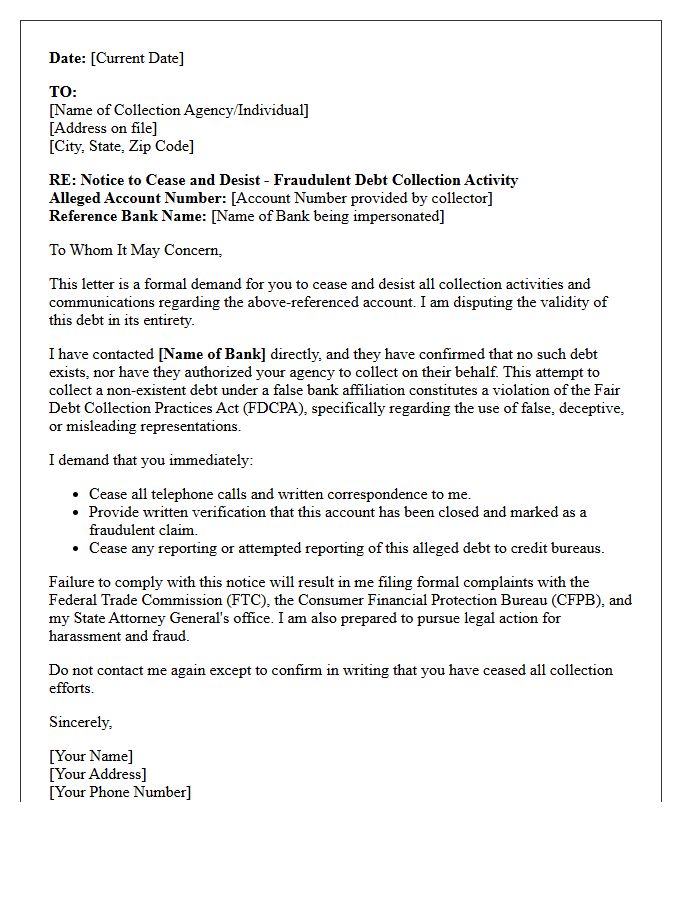
A cease and desist letter is a critical tool to halt harassment from fraudulent entities. When receiving a fake debt collection notice using a bank name, you must demand immediate cessation of all communication. Legally, these scams often violate the Fair Debt Collection Practices Act. Clearly state that the debt is not recognized and request verification in writing. Do not provide personal financial details. Sending this letter via certified mail creates a legal paper trail, protecting your rights against identity theft and deceptive financial coercion tactics used by scammers.
Cease and Desist Letter for Fraudulent Mortgage Modification Offers
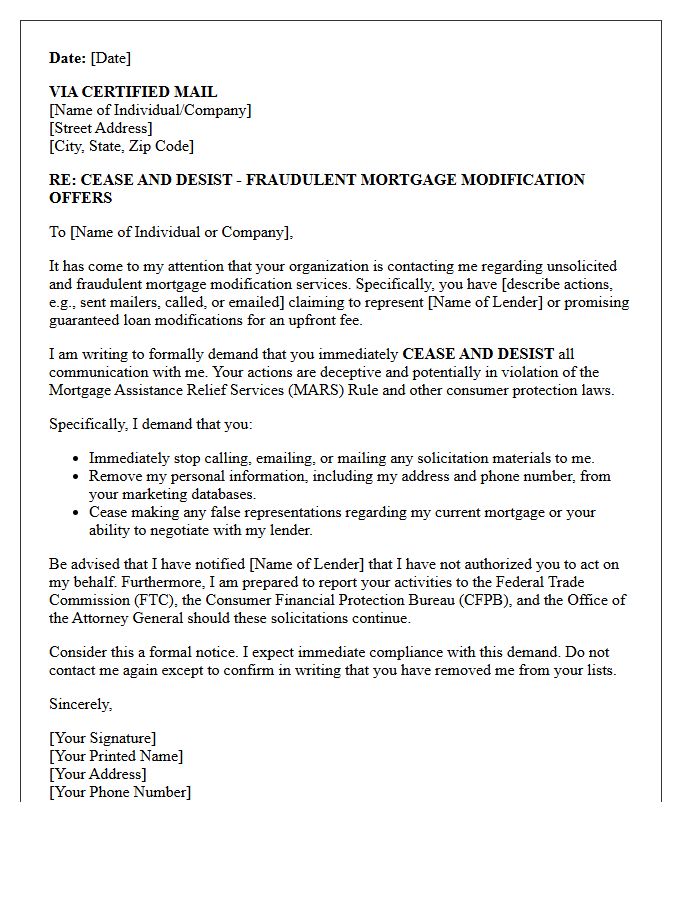
A Cease and Desist Letter is a formal legal notice used to stop scammers from contacting you with fraudulent mortgage modification offers. These predatory schemes often demand upfront fees or trick homeowners into signing over property deeds. Sending this document creates a written record that you have revoked their right to communicate with you. If the unlawful solicitation continues, this letter serves as vital evidence for reporting the foreclosure rescue scam to the Consumer Financial Protection Bureau or state authorities, helping protect your home and financial security from further exploitation.
What is a Cease and Desist letter for fraudulent activity?
A Cease and Desist letter for fraudulent activity is a formal legal notice demanding that an individual or entity immediately stop engaging in unauthorized or deceptive actions, such as identity theft, unauthorized use of branding, or financial misrepresentation.
When should I send a Cease and Desist for unauthorized fraud?
You should send this letter as soon as you identify unauthorized activity, such as someone using your personal information for credit applications, impersonating your business to scam customers, or illegally accessing your financial accounts.
What should be included in a fraud-related Cease and Desist notice?
The notice should include a clear description of the fraudulent behavior, the specific dates the activity was discovered, a formal demand to stop all unauthorized actions, and a deadline for a written response before further legal action or police reports are filed.
Is a Cease and Desist letter for fraud legally binding?
While the letter itself is not a court order, it serves as a critical legal document that establishes a "paper trail." It proves the perpetrator was notified of their illegal conduct, which can be used as evidence in future criminal proceedings or civil litigation.
Can I send a Cease and Desist if someone is using my business name for scams?
Yes, if an entity is using your business name or intellectual property to commit fraud, a Cease and Desist letter is a necessary step to protect your brand reputation and notify the bad actor that you are prepared to pursue trademark infringement and fraud charges.

Comments